
Locking Pliers Guide: How to Use Vise-Grips Effectively
Locking pliers, or more commonly known as Vise-Grips (this is a brand that is very much associated with the product), are a versatile tool that can be found in both tradespeople’s and home handymen’s tool kits. In addition, these pliers have already been provided with the strength and skill required, and thus it is no matter whether you are dealing with a tough repair, fixing materials for a project, or even loosening a rusted bolt; they will perform the task. However, as with any instrument, to reap the full benefits of your Vise-Grips, it is first to know their functions and then to apply the appropriate methods. Thus, we are going to direct you through the very wide domain of using locking pliers effectively. You will, of course, be educated about different ways they operate, and also be given a lot of practical tips and tricks, which will surely lead to your being ready to face a variety of problems not only with assurance but also with speed.
Introduction to Locking Pliers
What are Locking Pliers?
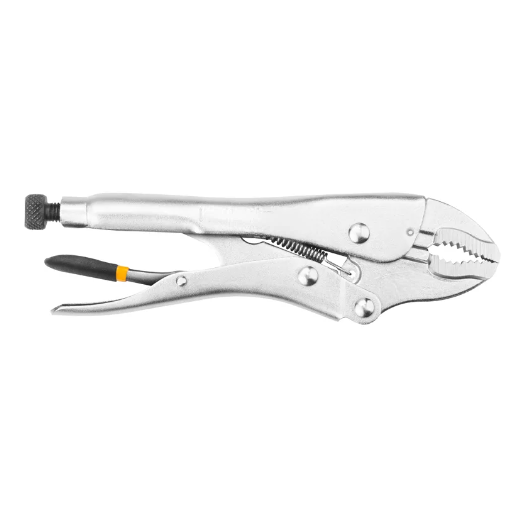
Locking pliers are commonly referred to as “Vise-Grips,” which is their trade name, and they are very handy tools that come with a unique feature that allows them to hold firmly any type of object regardless of its shape or size. The tool generally consists of two handles, two jaws, and a screw that can be adjusted at the bottom of one handle. The screw adjustment gives the user the control to set the grip size. After the user sets the grip size to his/her liking, the pliers can be locked and will be able to exert a large force when holding the objects.
Locking pliers are the most universal and the most used tools in mechanical work, welding, and any other applications where a firm hold is a requirement. Their versatility is the reason for their high appreciation, as they can perform clamping, twisting, crimping, and even acting as a temporary replacement tool for others, thus making it a necessity for every toolbox. Furthermore, their ability to handle even the toughest surfaces has made them a unique product in the market due to their strength and reliability.
Types of Locking Pliers
There are several types of locking pliers, and each type is very much categorized according to the performance or application the tool will offer. Below are some of the most commonly known types:
Straight Jaw Locking Pliers
They are the most versatile and commonly used locking pliers straight jaw pliers. They are very good at gripping flat, square or hexagonal objects and thus they are suitable for general-purpose tasks.
Curved Jaw Locking Pliers
These are locking pliers with a jaw that is curved. That is why they can be round objects, such as pipes or rods, and the pliers will hold them securely. They also fit plumbing and automotive repair because their shape gives a strong grip.
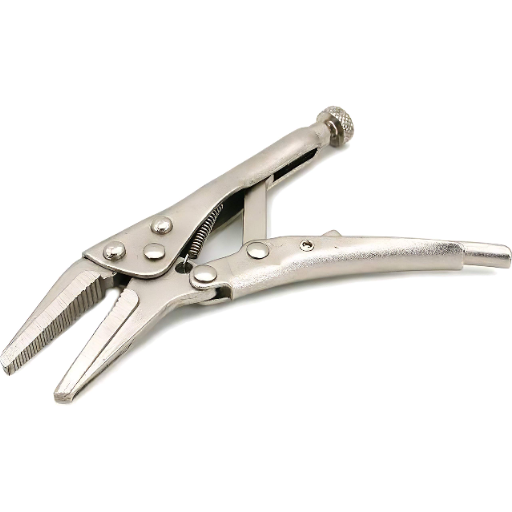
Long Nose Locking Pliers
These are locking pliers with a narrow pointed jaw. Long nose locking pliers are perfect for getting into really tight spaces or picking up very delicate things. They are the ones that get serviced most when working on electronic and craft projects.
C-Clamp Locking Pliers
These pliers come with large, smooth jaws that can hold even the biggest objects with a clamp. They are most often used in welding or woodwork to secure parts in position while being repaired or assembled.
Sheet Metal Locking Pliers
If you are an avid metalworker, then you know how important it is to have the right tools when working with sheet metal; flat, wide jaws, and even pressure—these are exactly the qualities that make these pliers a favorite among metal fabricators.
Each locking plier variety is engineered around the corresponding demand providing experts and amateur DIY’ers alike, a tool that is both specialized and trustworthy. It does not matter if one is dealing with intricate tasks or heavy-duty projects; appropriate locking plier type selection guarantees both effectiveness and accuracy.
Key Features of Locking Pliers
Essential Features
- Adjustable Jaws: Provide a very strong grip on different materials and objects that are of various shapes and sizes
- Locking Mechanism: Guarantees a tight grip so that the user’s hands can be released for giving more convenience during detailed tasks
- Alloy Steel Construction: A very tough and high-quality material that lasts longer and resists being worn out and torn
- Ergonomic Handles: Improve the comfort of use and lessening of hand fatigue for those who use them for long periods of time
How to Use Locking Pliers
Adjusting the Jaw for Optimal Grip
For a secure and effective grip with locking pliers, the first step is to adjust the jaw width. This procedure involves rotating the adjustment screw at the bottom of the handle. The rotation of the screw clockwise will reduce the jaw size for small objects, while rotating it counterclockwise will increase the size for bigger ones.
Step-by-Step Process:
- Rotate the adjustment screw clockwise for smaller objects or counterclockwise for larger ones
- Place the pliers around the object once the jaw width is determined
- Press the handles together until the locking mechanism operates
Important: The correct setting makes sure that the material is not damaged while a strong hold is maintained. Recent information from searches shows that users are often curious about the significance of proper jaw sizing—it not only prevents slipping but also makes it safer and more accurate in a variety of tasks from auto repair to crafting.
Locking Mechanism Explained
A pliers’ locking mechanism is still a pivotal aspect appreciated in different applications for the tool’s ability to grip firmly. Recent search trends indicate that the public addresses, through their queries, whether this feature has the advantage of reducing hand fatigue while multitasking, thereby increasing the output. The mechanism is such that the user gets to place the required tension or pressure after clenching the handles so there is no more need for constant effort the tool remains locked in the same position as it were.
Benefits of the Locking Feature:
- Enables workers to complete tasks quicker
- Increases safety since slipping is less likely to occur
- Prevents accidents or tearing up the material
- Crucial especially in fields where exactness is needed like car servicing and metalworking
Tips for Effective Use
Best Practices:
- Ensure the locking feature is completely engaged before force is applied in order to avoid slippage
- Always select the right tool in terms of size and type according to the task so that the efficiency is at its maximum and wear is at its minimum
- Periodically check the locking system for dirt or wear, since these factors can eventually reduce the performance
- Proper storage along with maintenance will help in keeping the tool’s functionality and durability intact
Choosing the Best Locking Pliers
Features to Look for in Locking Pliers
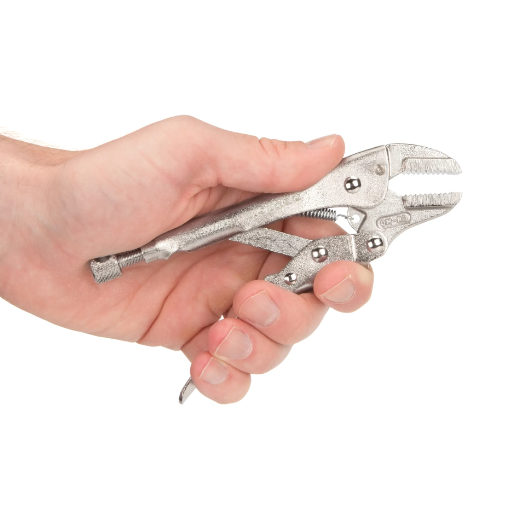
When it comes to choosing the right locking pliers, there are several main factors to take into account that will guarantee quality and functionality.
Pro Tip: Always go for the products from trusted manufacturers with high ratings; this is the way of ensuring durability and performance over time.
Comparing the Different Types: Straight Jaw vs. Curved Jaw
The decision between the two types will be determined by the specific application—they are straight jaws when precision & control are required and curved ones when different shapes need to be handled. It is important to properly evaluate the requirements of your project, as this will lead to the right choice being made.
Applications of Locking Pliers
Using Locking Pliers in Automotive Repairs
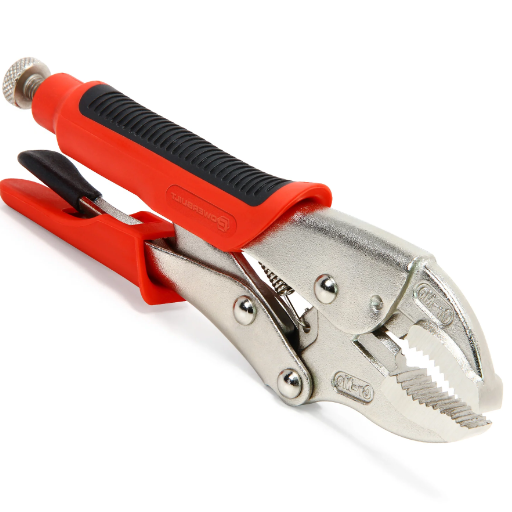
Locking pliers are powerful grips and versatile tools that make them very effective for auto repairs. They perfect for such work as loosening stubborn bolts, clamping parts for welding, or even just keeping small parts in the right place during maintenance.
Automotive Applications:
- Curved Jaw Pliers: Most helpful when the parts are rounded or irregular, e.g., exhaust pipes or hose connectors
- Straight Jaw Pliers: Just right for gripping flat surfaces or doing precision work, like securing metal sheets
Locking Pliers in Household Tasks
Locking pliers can be looked at as incredibly adaptable tools which found their significance in household tasks. The most recently provided data supports the idea that people are searching for locking pliers mainly in terms of their applications in DIY projects and home repairs.
Common Household Uses:
- Loosening stripped screws
- Guaranteeing the stability of materials while gluing
- Repairing furniture during maintenance
- Plumbing purposes to grip pipes and connectors easily
The adjustable locking mechanism lets you apply equal pressure, thus, not needing extra tools at all, making them a favorite among homeowners who want to do repairs or participate in creative projects.
Professional Applications of Locking Pliers
Locking pliers are very much sought after in professional environments because of their versatility and reliability.
Maintenance and Care for Locking Pliers
Cleaning and Lubrication
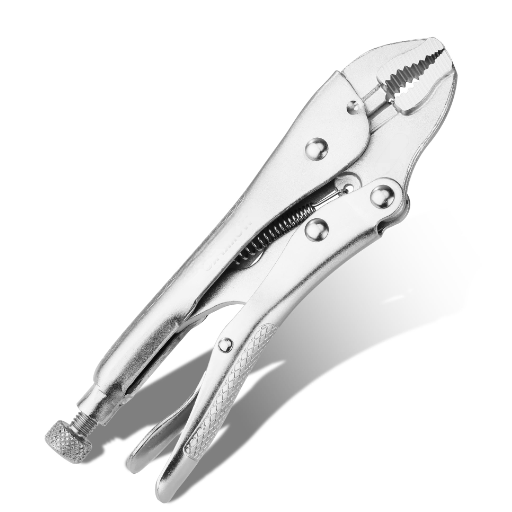
The correct cleaning and lubrication are irreplaceable actions to ensure the locking pliers’ longevity and peak performance.
Maintenance Checklist:
- Regularly wipe the tool down with a clean cloth to get rid of dirt, debris, or grease that might hinder its operation
- For really tough residues, use a mild solvent or soapy water to loosen and clean the surface
- Dry the pliers carefully to avoid any rust formation
- Apply high-quality machine oil or multipurpose lubricant around rotating points and the adjusting mechanism
Regular lubrication will lessen friction, keep corrosion away, and ensure smooth operation over a prolonged period.
Storage Tips for Longevity
Correct storage plays a huge role in the condition and operation of your locking pliers. To prevent the occurrence of moisture, which can lead to rust and corrosion after a while, always store your tools in a dry and clean place. You can not only keep your pliers neat but also save their life unnecessarily by using a toolbox with compartments or a tool rack mounted on the wall. If you want to keep something for a long time, consider placing silica gel packets or rust inhibitors in the storage container to regulate the moisture. Check your tools for rust regularly and treat the rusted parts quickly to lessen the damage. These tips will both help to maintain your locking pliers in the best condition, and make them ready for use all the time.
Common Issues and Troubleshooting
One of the frequent issues with locking pliers is the difficulty in adjusting the grip or the inability to safely close the jaws. Still, sometimes you can easily come to a solution just by cleaning the adjustment screw and checking if it is not blocked with anything, as the debris could be the one causing the mechanism to be unresponsive or slow in operation. If the pliers do not lock properly, inspect the entire mechanism for any wear or damage and also consider applying lubricant to the moving parts to restore the smoothness of operation. Rust or corrosion being the other most common issues which can be easily controlled by just cleaning the tool thoroughly and then coating it with a rust preventive solution. If there is a damaged or worn-out component, then either replacing the part or the entire tool may be the option for safe and effective use. Regular maintenance and quick fault repair would be the measures to prevent these problems from arising again.
References
-
The Ultimate Guide to Using Vise Grips for Beginners
Read more here -
UC Berkeley Library Makerspace: Hand Tools
Read more here
Frequently Asked Questions (FAQ)
How do I choose the right locking plier set for my shop?
The locking plier set should be selected according to the main activities done in the shop: heavy duty clamping, precision wire work, or pipe gripping. The sets of curved jaw locking pliers, long nose models, and a mixture of vise-grip and mole grips should be looked upon for their versatility. The presence of adjustable knobs for fine adjustment, swivel pads for protection of surfaces, and quick-release or quick mechanisms for faster operation are some of the features that can be a part of your consideration. Some of the well-known brands like Milwaukee, Irwin Tools, and Knipex are recognized for their quality and gripping power, but the cost and warranty are also factors to be considered. If you need to use torque lock or pinch off locking capability for particular tasks, make sure that the set contains those specialized pliers. Suggested unused terms: pipe, weld, metal.
Can needle-nose locking pliers replace my long-nose pliers for precision work?
Needle nose locking pliers are sometimes better than long nose pliers for precision because they allow for the narrow tip to reach tight areas while also providing locking pressure for highly stable holds. Needle nose versions with advanced design and adjustable knobs offer accurate gripping power for wire and delicate components without damaging them. For electronics or jewelry, opt for precision or narrow jaw profile and look for a smooth release or quick release mechanism to avoid sudden slips. However, standard long nose pliers may still be the best choice for bending or shaping where non-locking feel is preferred. Suggested unused terms: c-clamp, knob, fast.
What is the difference between vise-grip, vice grips, and cobra pliers?
Vise-grip and vice grips are frequently mistaken for each other when it comes to describing locking pliers with a locking mechanism and release lever; on the other hand, Cobra pliers are mainly used to refer to adjustable tongue-and-groove pliers with a quick adjustment mechanism. Vise-grip style locking pliers, whether curved jaw or straight jaw, emphasize a robust clamp and are supplied in various styles including those with swivel pads for uneven surfaces. Instead of having the same locking mechanism as traditional locking pliers, adjustable pliers like Cobra and others are only good for rapid size adjustments and are mostly used in plumbing for pipe work. Some users have a collection of both vice grips and cobra-type pliers to meet their needs for both heavy-duty clamping and quick-adjustable tasks. Suggested unused terms: angle, collection, torque lock.
How do I maintain and access replacement parts like swivel pads and knobs?
Locking pliers are made to last and regular maintenance is the reason behind it: clean off debris, apply a little lubricant to the pivot and release mechanism, and check swivel pads and knurled knobs for wear. Major brands like Milwaukee, Irwin Tools, and Knipex provide replacement parts or service info; check the equipment manual or the manufacturer’s shop for parts availability. Swivel pads need to be replaced in case they get deformed as they are crucial for preventing damage to the work surfaces—keep spare knobs if you make use of pliers regularly. Properly storing in a toolbox or rack will protect the tool and allow you to access it quickly when you need it. Suggested unused terms: buying, quick release, knurled.
Are there locking pliers designed specifically for pipe and nut work?
Locking pliers for pipe and nut work are characterized by the pipe jaw or serrated curved jaw, which often comes with a mechanism for adjustable sizes to fit different diameters. Models that are labeled specifically for pipe or that have reinforced jaws and high gripping power will do the job of dealing with stubborn nuts and fittings without slipping. Some heavy-duty versions come with torque lock features or longer handles to increase leverage while keeping a secure clamp. In plumbing tasks, using quick-release or pinch-off locking pliers can be helpful for temporary shutoffs or holding sections of pipes in place. Suggested unused terms: nut, pipe, heavy duty.
Which locking pliers offer the best quick release and gripping power for DIY projects?
Locking pliers that provide a dependable, quick-release mechanism and the ability to grip strongly should be the priority for DIY projects as they will enable doing work in a diverse range of materials quickly and safely. Combination or adjustable designs that have both long nose and curved jaw options offer maximum flexibility for home repairs, while a knurled knob allows fine adjustment for different thicknesses. Milwaukee and Knipex are two of the brands that are very often praised for their ergonomic handles, durable steel construction, and consistent release performance. In addition, consider using mole grips or vice grips for heavy tasks and check if the set has a cutter if you also want the integrated wire cutting capability. Suggested unused terms: wire, handle, irwin tools.