
Forged vs Cast Hand Tools: Which Are Better?
Among the hand tools there is a debate that continues among professionals and DIY enthusiasts: are forged tools the best or the cast ones? And vice versa? Regardless of your level of expertise, knowing the main differences between the two is crucial. In this post, we are going to get into a very interesting subject of production of tools, and we will be comparing forged and cast hand tools to guide your decisions. We will consider their pros and cons as well as suitable use cases so that you can confidently pick the right tools according to your needs. Wait for the moment when we dismantle the uniqueness of forged and cast tools and which one might be the best for you.
Understanding the Difference Between Cast and Forged Tools
What is Forging?
The term forging refers to a process of manufacturing where metal is shaped by the application of force compressively. The heating of the metal to a high temperature is usual in this process, which makes the metal more ductile and easier to shape. Depending on the desired shape and characteristics of the final product, forging can be done using different techniques such as hammering, pressing, or rolling.
✓ Key Advantage
The imparting of strength and durability to the metal is one of the most significant advantages of forging. The alignment of the grain structure of the material to the contours of the forged shape is done by the process which subsequently leads to the production of a material with improved mechanical properties and thus greater resistance to wear and fatigue.
The tools that have been forged are often preferred due to their toughness and long lifetime. For instance, wrenches, hammers, and other hand tools that can take a lot of use without breaking are the examples of such tools. Forged tools might cost more than cast ones, but often their exceptional performance and longevity over time can be termed as the only reason for the higher cost which might be true in case of professional or industrial usage.
What is Casting?
Casting is a process of manufacturing a product that involves pouring melted material, such as metal, into a mould to get a specific shape. After the material has cooled and solidified, the mould is taken away and the product is now ready. This method of casting is famous for its offering of intricate shapes and designs which other processes would not be able to create at all or would have problems with the complexity.
One of the principal benefits of casting is its multifunctional character. It is capable of dealing with a variety of materials ranging from metals, plastics, to ceramics and at the same time, it can produce both minute detailed components and large heavy items. Casting is relied upon by the industries of automotive, aerospace, and construction for instance to provide them with engine parts, structural components, and decorative items among others.
⚠ Important Note
Though the production cost of cast items is usually lower and they can be of very detailed design, the tools made by forging are stronger and more durable. The reason for this is the lesser density of the material used in cast products which may also have defects or weak spots.
Key Differences at the Molecular Level
The major distinctions between forging and casting at the molecular level arise from the material’s structure and properties. Metal forging is a main shaping process which works by exerting controlled deformation through compressive forces and therefore, the process helps to develop the grain structure by making in the direction of the forged shape. Thus, the metal becomes more tightly packed and less, hence the new structure has better mechanical features like, high strength, toughness and high impact resistance.
The reverse process concerns casting, which entails pouring hot metal into a mold, where it will then solidify and take the shape of a mold. The cooling of the metal during solidification is uneven and this is one of the main reasons for the formation of internal defects, such as porosities or voids, and an overall less uniform grain structure. Such a situation is likely to make a cast product not very strong and more easily broken or worn out under the stress.
Application Guide
- Forging: Best for tools, automotive parts, and structural components where strength and durability are critical
- Casting: Ideal for areas where design complexity and cost-effectiveness are the main criteria, such as flashy or detailed industrial parts
Performance Metrics of Forged and Cast Tools
Durability Comparison
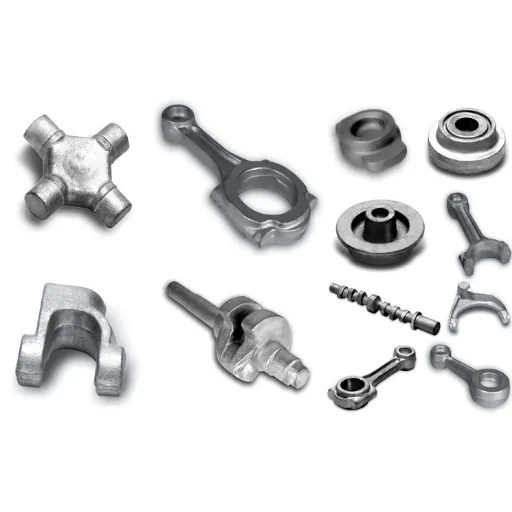
In the matter of durability, the tools that are forged definitely surpass the cast tools by a large margin due to the dissimilarities in their production methods. The process of forging refines the internal grain structure of the metal by aligning it to follow the shape of the forged part. This alignment of the structure results in a very strong and dense material that has an increased resistance to impacts, fatigue, and stress. On the other hand, cast tools are more likely to have such defects as porosity that can lead to the weakening of the tool over time.
📊 Testing Data Insight
Testing data indicates that forged tools are able to easily withstand the pressure that is usually associated with the application of their cast counterparts. Crankshafts and connecting rods made from forged metal show a very high degree of resistance to fatigue even when subjected to dynamic loading continuously.
Nevertheless, it is necessary to emphasize that the durability of the cast tools is not always a disadvantage. The innovations in casting methods like vacuum casting and sand casting with the use of modern material science have resulted in the structural uniformity of cast products to the highest extent. Even though they might not be able to reach the same point of durability as forged tools in extreme cases, cast tools are still up to the mark and even preferable in the case of less demanding environments where precise design detailing or reduced production costs are more needed than the maximum strength.
Structural Strength Analysis
Structural strength plays a major role in the performance and safety of materials, across the board. Modern computational analysis tools, combined with engineering and material science advancements, help to simulate and test the structural loads very precisely in various conditions. For example, the finite element analysis (FEA) software allows the engineers to not only predict the reactions of materials and structures to forces, vibrations, and thermal changes but also to gain very valuable insights without going through the long process of physical prototyping.
🔬 Key Research Findings
Present-day research data indicates that forged materials have a higher tensile strength and fatigue life than cast materials, thus making them the preferred choice for industries such as aerospace and automotive manufacturing, where reliability under heavy stress is the most important factor.
Example: Latest studies on Al-based super alloys comprise a yield strength increase of around 20-30% due to the combination of top-notch casting methods and post-process treatments like hot-isostatic-pressing (HIP).
Impact Resistance of Forged vs Cast Tools
Forged tools have superior impact resistance, absorbing shocks without cracking, while cast tools are more brittle and prone to breaking under impact.
Weight-to-Strength Ratios
Forged Tools: Efficiency in Strength
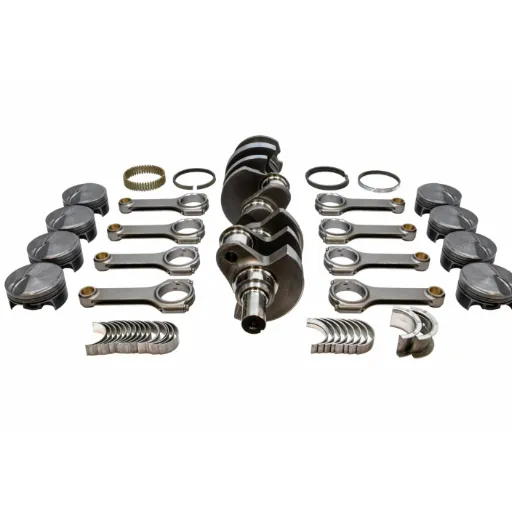
Forged tools are extremely strong and durable, thus they are the best choice in high-performance materials’ applications. The forging method is done by heating and pressing metal to such an extent that it will refine the grain structure and improve the mechanical properties as a whole. Unlike casting, forging gives tools that are stronger, more ductile, and more resistant to sudden impact forces. This property of strength makes the tool of forging perfect for heavy-duty applications where construction, aerospace, automotive, and mining are the main industries.
💡 Industry Insight
Recent research indicated that it is the quality of the materials one selects that determine the efficiency of the forged tools. High-performance alloys like titanium and advanced steel grades are frequently employed to get the best weight-to-strength ratios. For example, forged titanium tools are becoming more sought-after in the aviation sector due to their outstanding strength-to-weight ratio and imperviousness to corrosion.
A very important point about forged tools is that they do not give in to stress even when applied slowly. The process of forging wipes out all the internal voids and defects in the cast products, hence the components are of low porosity and high uniformity. This is the reason that reliability is good and performance is acceptable even with the toughest conditions.
Cast Tools: Balancing Weight and Functionality
The casting method has been recognized as a versatile and cost-effective tool manufacture technique. The alloyed metal for shaping the tools is melted and then poured into the required shape or mold unlike the forged tools produced by hammering. The manufacturers can produce cast products that are handy and at the same time can be made of different sizes and weights for different applications but at a lower cost of production.
Material Benefits
- Aluminum casting: Widely accepted in aviation and motor industries due to lightweight, heat conductivity, and durability
- Cast iron tools: Remain in demand for heavy-duty applications requiring wear-resistance and vibration-dampening features
- Modern innovations: Investment casting and 3D sand printing enable customized and precise tools
Innovations in materials science have played a major role in the performance upgrades of cast tools. In the case of heat treatments, toughened coatings increase the cast component’s durability and corrosion resistance, thus helping to overcome some of the limitations that were once associated with them. Moreover, computer simulation in the casting process makes sure that the tools are not only adequately designed for their uses but that they are actually tested before ever going into production.
Cost Analysis: Initial vs Long-Term Value
Tooling Expenses for Forged and Cast Processes
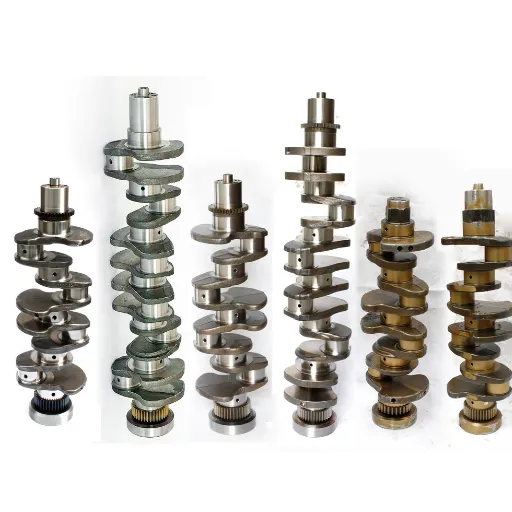
When evaluating the costs of tooling for forged and cast methods, one should take into account not only the initial costs but also the future benefits of the processes. Forging basically demands a larger outlay at the beginning for the necessity of making strong dies that can take the pressure and heat. In contrast, casting processes usually involve less-intensive tooling, hence the initial costs are much lower in comparison.
💰 Cost Factors to Consider
- Initial Investment: Forging requires higher upfront costs for dies; casting has lower initial tooling costs
- Long-term Costs: Forged tools have longer lifespans and require fewer replacements
- Material Waste: Forging may result in more material scrap; precision casting reduces raw material waste
- Energy Consumption: Forging presses require high energy; casting furnaces have relatively lower energy needs
Long-Term Value Considerations
When considering the long-term worth of forging over casting, one has to think about the different factors such as lifetime, costs, and the use case of the component in question. Most of the time, the mechanical properties of forged parts are much better, they include the highest strength and fatigue resistance, which makes them good for use in the critical area of prolonged performance.
Besides, the lifecycle costs are a very important factor too. It is true that casting usually has lower initial production costs, but in the end, forged parts could be more valuable during the entire cycle due to their longer functional life and less caretaking demand. Thus, they turn out to be a cheaper choice for a sector such as aerospace, automotive, and heavy-duty machinery.
Cost-Effectiveness in Different Industries
The variation in cost-effectiveness of casting and forging methods has a wide range of applications across industries that depend a lot on the requirements and the volume of production.
| Industry | Preferred Method | Typical Applications |
|---|---|---|
| Automotive | Casting | Engine blocks, transmission components (complex shapes, high volume) |
| Aerospace | Forging | Turbine disks, landing gear (safety-critical, high strength-to-weight ratio) |
| Construction | Both | Stressed components (forging), non-stressed parts (casting) |
| Energy | Both | Wind turbine shafts (forging), hubs and housings (casting) |
Common Applications of Forged and Cast Tools
Automotive Industry
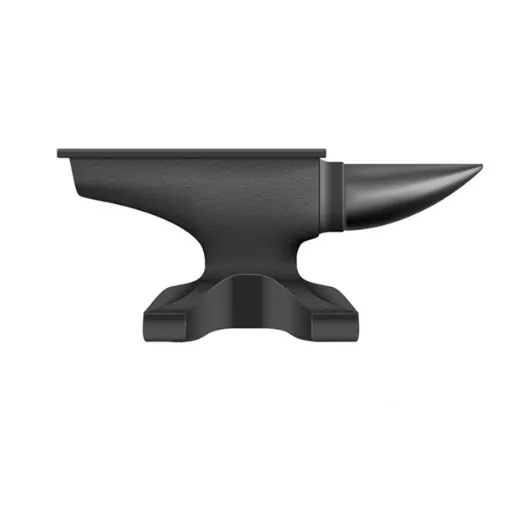
The automotive industry is a great deal dependent on the employment of both forged and cast components because of the rigors placed on performance and durability of vehicles.
🔨 Forged Components
- Crankshafts
- Connecting rods
- Axle beams
Use: Engines, transmissions, suspension systems requiring high stress resistance
🏭 Cast Components
- Engine blocks
- Cylinder heads
- Intake manifolds
Use: Complex shapes, economical manufacturing for less critically stressed parts
The steady infusion of cutting-edge technologies, such as computer-aided simulations and material science, keeps the limits of forging and casting processes in the automotive industry constantly drawn back. One such example is the combination of AI predictive modeling and 3D printing which together allows manufacturers to create, evaluate, and correct the components with more precision and speed than ever before.
Construction Tools
The construction sector has already been experiencing remarkable advances thanks to the adoption of modern gadgets and techniques. The old style and force of nature tools like hammers, saws, and drills are still very significant, however, the new tech has raised a construction industry’s productivity and accuracy to the very next level.
🔧 Modern Construction Tool Features
- Advanced ergonomics for reduced fatigue
- Lithium-ion batteries for extended runtime
- Brushless motors for improved efficiency
- IoT technology for remote monitoring
- Predictive algorithms for project management
Besides, the emergence of smart construction gadgets has made a big impact on the industry. For instance, laser levels are capable of providing first-rate precision in the measurements, thereby avoiding any inconsistencies in the positioning of walls and surfaces. On the other hand, the automatic bricklaying robots and the creation of buildings through 3D printing are gradually becoming common in the construction business, thus allowing for a quicker production cycle at a lower cost of labor.
References
-
SFSA Cast in Steel 2025 – George Washington’s Sword Technical Report
- A technical report discussing forging and casting processes.
-
An Overview of Forging Processes with Their Defects
- A detailed academic paper on forging processes and their comparison with casting.
-
Technology to Improve Competitiveness in Warm and Hot Forging
- A dissertation focusing on advancements in forging technology.
-
Review of Methods to Increase the Life of Forging Tools
- A review article on improving the durability of forging tools.
- Click here to read more.
Frequently Asked Questions (FAQ)
Conclusion: Making the Right Choice
🎯 Key Takeaways
- Choose Forged Tools when you need maximum strength, durability, and impact resistance for heavy-duty, high-stress applications
- Choose Cast Tools when you need complex shapes, cost-effective production, or when working in less demanding environments
- Consider Long-Term Value rather than just initial cost—forged tools often provide better lifetime value despite higher upfront costs
- Evaluate Your Specific Needs based on application requirements, budget, and performance expectations
The debate between forged and cast hand tools ultimately comes down to your specific needs and applications. Both manufacturing processes have their place in modern industry, and understanding their differences allows you to make informed decisions. Whether you prioritize the exceptional strength and longevity of forged tools or the versatility and cost-effectiveness of cast tools, selecting the right option will ensure optimal performance and value for your projects.
Final Recommendation: For professional use and critical applications where safety and reliability are paramount, invest in forged tools. For hobbyists, DIY projects, or applications where intricate designs are needed and stress levels are moderate, cast tools offer an excellent balance of functionality and affordability. Remember, the best tool is the one that meets your specific requirements while providing the reliability you need to get the job done right.