
Wire Cutters vs Cable Cutters: What’s the Difference?
The selection of the correct wire and cable cutting tool is an essential decision and it is a must to be well aware of the differences between cable cutters and wire cutters. A proper tool is designed for a specific purpose that eliminates the use of incorrect tools, leading to loss of efficiency, damaged tools, and even compromised safety. The article is concentrated on the technical differences between wire cutters and cable cutters and goes on to provide a decent amount of information that is necessary for selecting the right tool based on your needs. Whether you are a well-seasoned electrician dealing with large electrical jobs or a person who loves craftwork and is disabled from doing small DIY projects, this manual shall help you make the right choice while at the same time keeping both accuracy and efficiency. The rest of the article comprises the factors that are pivotal in differentiating the tools apart.
Understanding Wire Cutters
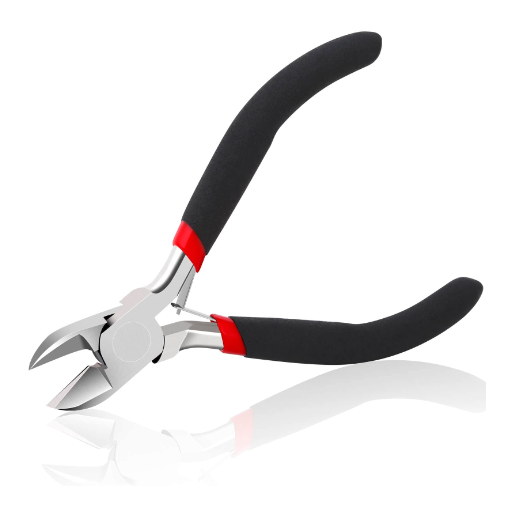
Wire cutters are tools especially made to rip through thin wires or tiny metal strands with great accuracy and sharpness. They come with sharp edges and cutting is done through hardened blades which together ensure a neat and tidy cut without any fraying or deformation of the wire. Wire cutters are mainly used in any field working with electricity, as well as in crafting, and for other use cases with small-sized wires. A wire made of copper, aluminum, or insulated wire is very likely to be used when a wire cutter is needed, but not for thicker cables or high-tension wire, which calls for heavier-duty tools. Moreover, the correct selection of a wire cutter according to the type and thickness of the wire in use can be a way of obtaining the best possible precision and efficiency.
1
Types of Wire Cutters
| Type | Key Features | Best For | Limitations |
|---|---|---|---|
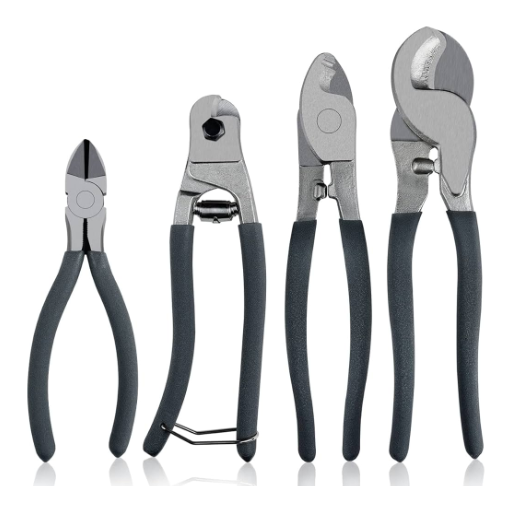
| Diagonal Cutters | Angled blades for clean cuts | Electrical wires, small-gauge wires | Not suitable for hard materials |
| End Cutters | Flat jaws for cutting close to the surface | Nails, rivets, softer wires | Limited precision on small objects |
| Needle-Nose Cutters | Long, tapered jaws with a cutting edge | Tight spaces, detailed wire work | Limited to thin, soft wires |
| Cable Cutters | Sharp blades for clean cable cuts | Thick cables, power cords | Cannot handle steel-core cables |
| Flush Cutters | Precise, flat cuts eliminating sharp edges | Circuit boards, crafting, fine wires | Not ideal for thick or hard wires |
| Bolt Cutters | Heavy-duty jaws for thick materials | Chains, bolts, heavy wires | Overkill for small wires |
| Insulated Wire Cutters | Handles are insulated for electrical safety | Live electrical work | May not cut very thick wires |
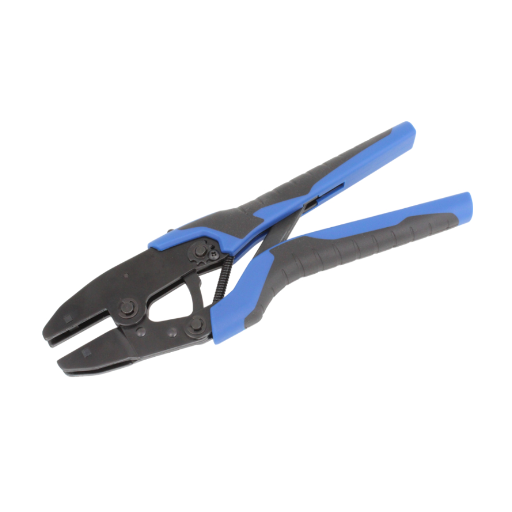
| Ratchet Cable Cutters | The mechanism allows a gradual cutting action | Heavy-duty cables, industrial use | Slower than standard cutters |
2
Features of Wire Cutters
Blade Material
Most wire cutters are equipped with high-carbon steel, chrome vanadium steel, or alloy steel blades. These materials provide longevity, and resistance to dual and sharpness retention. Tungsten or hardened steel blades are typically found in industrial grade applications in order to provide the additional features of cutting accuracy and long cutting life.
Cutting Mechanism
There are different cutting mechanisms on wire cutters, like the scissor-style cutters for precise trimming or the compound mechanisms for higher cutting force that is needed for heavy-duty materials. A ratcheting system allows a controlled and step-by-step action to be used on thicker cables.
Insulated Handles
Insulated wire cutters usually have handles that are rated for electrical resistance, which are still often marked with the voltage rating 1000V to provide safety during live electrical work. They are made from non-conductive materials such as rubber or thermoplastic and are thus indispensable for electrical applications.
Cutting Capacity
The working capability and material for which a cutter is designed are the factors that determine the thickness or wire one can cut. To give an example, the wire cutters most likely to be the work of the standard diagonal pliers can at present cut approximately wires up to 12-14 AWG, while the bolt cutters are designed for diameters over 3/8-inch.
Ergonomics
Wire cutters usually come with soft grips or anti-slip coatings, ergonomically designed handles to alleviate hand fatigue when they’re used for long periods. Spring-loaded handles can also be an advantage since they will reopen the jaws of the tool automatically after each use.
Corrosion Resistance
Moreover, many manufacturers use chromium or nickel plating on their wire cutters as the protection of the items against rust and corrosion is a major concern, as in the case of outdoor electrical tools.
3
Applications in Electrical Work
-
Wire Stripping
A good number of wire cutters have undergone major advancements and therefore allow electricians to carry out the task of removing insulation without damaging the underlying copper conductor. Research, in fact, shows that precision stripping can cut down installation error rates by as much as 25%.
-
Cutting Electrical Wires
Wire cutters are primarily used to cut electrical wires cleanly and accurately, which is essential for ensuring the proper connectivity and avoiding frayed edges that could lead to electrical shorts or hazards. One such example is the application where the clean cuts are very important, especially when it comes to wires of 18 to 2 AWG thickness.
-
Trimming Excess Leads on Components
In the process of component installation on printed circuit boards, such as resistors and capacitors, wire cutters are used for cutting excess leads that result in a neat and properly functioning assembly. This leads to an increase in the durability and reliability of the circuit.
-
Cable Tying and Management
Wire cutters help in organized cable management, which is essential in both residential and industrial electrical systems, by cutting cable ties or trimming the excess lengths of wires and cables.
-
Repair and Maintenance
Wire cutters are a must for cutting off the defective wires in repair and maintenance jobs. The use of an appropriate tool for the live wires and insulated cables applications is particularly important for the safety and work performance.
-
Termination and Connector Installation
The primary operations for a secure joint are the termination of the conductors and their installation into different connector types, such as lugs, crimps, or terminal blocks. Termination requires wire cutting using the appropriate cutting tools for the cables, while the connectors and connector blocks have to be prepared as well.
Understanding Cable Cutters
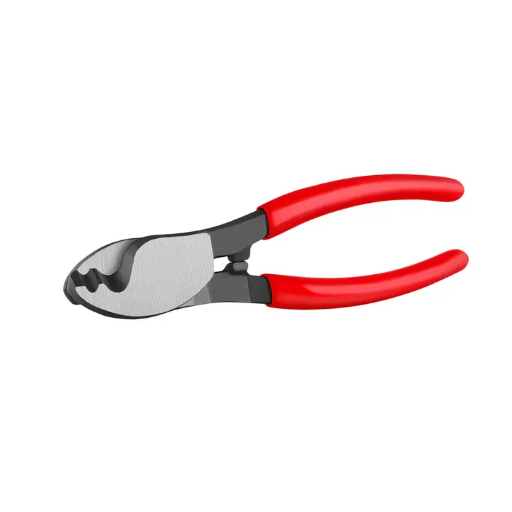
Making the switch from traditional cutting tools to cable cutters will make a clean and proper cut. It means that the cables are still intact at the core even while the operation is ongoing. Manually handling larger, non-uniform cables, such as stranded or insulated types, can be extremely difficult with the help of ordinary wire cutters. The principle of cable cutters stands on two main features: preventing the conductor from deforming and decreasing the effort the user makes while operating with bigger or harder materials. To achieve the best results, the cable cutter must be chosen according to the cable type and its diameter to achieve both safety and effectiveness in electrical installations or maintenance.
1
Types of Cable Cutters
| Type | Key Features | Best For | Ideal Materials |
|---|---|---|---|
| Ratcheting Cable Cutter | Provides high leverage; precise cuts | Cutting thick cables | Large conductors, copper, aluminum |
| Hydraulic Cable Cutter | Uses hydraulic pressure for easy cutting | Cutting high-capacity, thick cables | Overhead or underground power lines |
| Insulated Cable Cutter | Provides insulation for electrical safety | Safe cutting of live cables | Low-voltage and live wires |
| Manual Cable Cutter | Hand-operated and lightweight | General-purpose cutting | Multi-strand and small cables |
| Battery-Powered Cable Cutter | Motorized for effortless cutting | High-volume cutting tasks | Thick copper and aluminum cables |
| Bolt Cutter | Designed for cutting hardened materials | Cutting wire ropes and metal rods | Wire ropes, chain links |
2
Features of Cable Cutters
Material Compatibility
Cable cutters are designed to be able to handle many types of materials, such as copper, aluminum and hardened steel. The blades of the cutters designed at top quality are usually ground to a precise extent before coating them with something that gives them a much greater life span and a smaller wear-off factor.
Cutting Mechanism
Cable cutters may utilize manual, ratcheting, or motorized mechanisms, depending on the model, and these mechanisms only add to the operator’s comfort and cutting power during continued periods of use.
Blade Design and Sharpness
The blades on high-performance cutters are indeed sharp and very often heat-treated which means that the cuts with no burr will be clean because of the minimal damage to cables and thus improved safety of the person working with electrical material.
Ergonomic Design
A lot of the cutters are designed with the operators and their comfort in mind, and one of the best tools is non-slip insulated handles, which, besides the nice feeling, give the highest possible protection from electric shock whenever there are live conductors around.
Cutting Capacity
The cutting capacity of reliable cable cutters is such that these tools come with a scope of diameters wide enough to accommodate the thickest cables, with diameters up to 2 inches, but with their usage, the size ultimately determines if the measurements are even or not.
Portability and Build Quality
The issue of portability and durability is dealt with in a very smart way in the new tool, which is remarkable for its weight and durability. Models with high-quality materials such as aluminum or chromium, molybdenum, and nickel (Cr/Mo/Ni) alloy chromium alloys are very strong and hence very suitable for heavy industrial works.
3
Applications in Automotive Repairs
-
Battery Cable Replacement
In situations where battery cables have been critically weakened or corroded, cable cutters play the vital role of making the cleanest and most accurate cuts possible. By doing so, the vehicle’s electrical system performance is kept at its best, resistance is minimized, and other problems, like non-circuit-breaking ones, are avoided.
-
Brake and Accelerator Cable Adjustments
Up-to-date automotive repair service requires the continuous modification of brake or accelerator cables. One must have the best possible high-quality cable cutters for correctly cutting the extra length and not having the cables frayed, making sure that the car’s performance is always smooth and functional.
-
Wiring Harness Repair and Installation
Since the vehicle wiring systems are getting more and more complex, it is very important to do clean cuts when working with wiring harnesses. Cable cutters provide the opportunity for the technician to prepare the wiring in a way that it will be easier to terminate the wires securely, therefore preventing electrical shorts and system malfunctions in the future.
-
Clutch Cable Maintenance
When the mechanics are dealing with clutch cables on manual transmission vehicles, the exact and necessary cable trimming is, of course, one of the top priorities. Through the utilization of assured, reliable cable cutters, the result is always going to be a neat, clean cut which never causes any slippage or distracts the cable system from functioning properly.
-
Electrical System Upgrades
Cutting wires precisely and dealing with heavy cables that require connectors is necessary when skilled workers are installing the components of advanced vehicles like LED lighting systems, or audio systems that are upgraded, and so forth, while working on the automotive electric systems.
-
Tow Bar and Trailer Cable Adjustments
Using industrial-grade cable cutters when installing trailer wiring or tow bars is the most effective and efficient way to cut heavy cables to the required lengths and comply with load regulations.
Comparative Analysis: Wire Cutters vs Cable Cutters
The use of wire cutters and cable cutters implies two different purposes, which come from the dissimilarities in their construction as well as the best use scenarios. It is right to say that wire cutters are mainly made for the purpose of cutting wires that are thin and soft, like copper or aluminum, in the case of electricity at home or small electric devices. These wire cutters provide precision with light-weight materials, but they are not suitable for thick or reinforced cables because of the possible damage to the tool or imprecise cutting.
To the contrary, cable cutters are created for the thicker and stronger wires only. The regular design of these features has stronger and sharper blades as well as the handles that intensify the power of the person and are used to cope with the cutting of wires of industrial or automotive usage. If one tends to use wire cutters on such cables, it possibly could result in the failure of the tool or non-uniform cutting, therefore, putting safety at stake.
The efficient, safe, and most durable condition of the tool is very important in the process of its selection. It is fine to use wire cutters when you are dealing with such light-gauge wires. However, for heavier cables, in particular multi-stranded or insulated ones, the durability and precision requirements are met with cable cutters.
1
Key Differences
| Feature | Wire Cutters | Cable Cutters |
|---|---|---|
| Primary Use | Cutting thin, single-strand wires | Cutting thick, multi-strand cables |
| Material Capability | Limited to soft and small wires | Handles heavy-duty cable materials |
| Cutting Mechanism | Standard shear-cut mechanism | Specialized blades for precise cuts |
| Durability | Suitable for light-duty applications | Designed for high durability |
| Insulation Cutting | Limited effectiveness | Efficient for insulated materials |
| Tool Longevity | Wears out with heavy use | Long-lasting for rugged operations |
| Versatility | General-purpose electrical tasks | Specialized for heavy cable tasks |
| Precision | Moderate precision | High-precision cutting |
| Required Force | Requires less force | Handles high-force cutting tasks |
| Typical Applications | Household wiring | Industrial and automotive applications |
2
Functionality in Different Tasks
It is important to choose the tool based on the task at hand while comparing wire cutters and cable cutters in terms of their features. Wire cutters are best for usage in smaller gauge wires which are usually found in the household and electronics field. Their sharp, precision-engineered blades can cut through both insulated and bare wires with no or very low deformation, thus giving the wires a clean edge, something very important in sensitive electrical installations.
Cable cutters, on the other hand, have been designed for dealing specifically with thicker, larger diameter and high-capacity cables often found in industries and automotive sectors. They are built with a larger cutting surface and mechanical leverage, resulting in less manual effort being applied to cut the large diameter cables, including steel or copper cables. Moreover, today’s cable cutters are equipped with ergonomic handles and hard-to-beat high-grade, induction-hardened blades, thereby enhancing durability and user efficiency through time-consuming tasks.
In the end, the right cutting tool is determined by the material, diameter, and scenario of use. Where wire cutters are best for complexity in the cut or electrical assembling, cable cutters, on the other hand, are best-suited for much better handling of industrial-grade power cables. The design improvements have so far made both tools a must in the hands of professionals from various industries.
3
Precision Needs and Cutting Capacity
Distinct purposes are behind the design of both wire cutters and cable cutters, which is why they have different sensitivities and abilities to cut. Wire cutters serve their purpose in the field of electronics, where high-precision cutting is required, for example, during the manufacture of motherboards. These cutters come in different shapes and sizes that cater to the needs of various electrical engineers and technicians who deal with circuit boards on a day-to-day basis. The main difference between them lies in the fact that the latter are engineered towards performing the more labor-intensive and bigger-scale side of the process, while the others are used for delicate work such as trimming thin wires and removing insulation from thinner cables.
Wire cutters are usually used to work on materials with AWG (American Wire Gauge) sizes between 10 and 30, depending on the model and blade strength. Such a level of work is usually seen in electronics assembly, telecommunications, and other sectors that require careful work. On the other hand, cable cutters are designed to handle sizes too large for wire cutters; for example, high-performance cable cutters can handle cable diameters of 2 inches or more. The improved design, among which is the ratcheting mechanism that is incorporated in cable cutters, adds to their effectiveness in making straight, hard-to-cut surfaces with little to no force, especially where the conductors are dense and embedded in more layers. The mentioned differences in operation make it imperative for users to have the right cutting tool which will ensure the perfection and lightness of the job.
Choosing the Right Tool for Your Needs
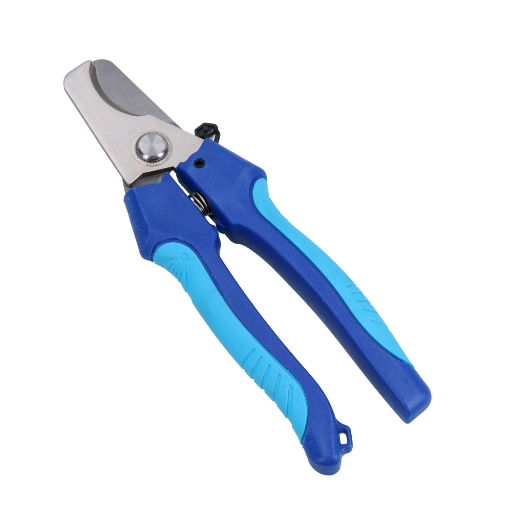
It really just depends on what material you are going to be working on the most: the choice of wire cutters or the cable cutters. For example, wire cutters are your best bet for those very narrow and thin single-strand wires that you often find in electrical and household tasks. They are designed to be such that they can easily cut a wide range of small-diameter wires and make clean, straight cuts.
On the other hand, cable cutters are the tools for cutting thick and multi-stranded cables, such as those used in industrial, automotive, or heavy-duty electrical applications. These tools are capable of cutting the majority of power and data cables and they also make the process much easier due to their automation.
1
Factors to Consider: Material Type and Wire Gauge
When choosing the right tools for cutting, the material type, the wire gauge, and the cutting application have to be taken into account. Different materials like copper, aluminum, and steel have not only hardness and tensile strength but also different levels. An example is copper, which is a soft material and needs less force to be cut by the tool. However, in the case of steel, it might be necessary to use specialized steel, hardened cutting edges or advanced mechanisms. The wire gauge, which is the diameter of the wire, is also a significant factor that affects the tool choice; thinner gauges like 24 or 26 AWG that are usual in electronics would indeed need precision tools that have a small cutting edge to guarantee accuracy without harming the nearby components. Conversely, thicker gauges such as 0 or 2 AWG, which are usually seen in cars or industries, would require cutters with enough power and rigidity so as to deliver accurate cuts on tough materials. It will be possible to pick the right tools, namely, by grasping the characteristics of both the material and wire gauge, and hence do the job with efficiency, accuracy, and durability.
2
Guidelines for Selecting Between Cutters
The choice of wire cutters must take into account the wire’s material composition, as it indeed affects the life and performance of the cutter. Softer wires, like copper and aluminum, can be cut with cutters of standard toughened steel alloys as they are less susceptible to damage. However, tougher materials such as steel wire or fiberglass-reinforced cables may require cutters with heat-treated or tungsten-carbide blades of higher technology to last longer without wearing out too soon. Furthermore, the evaluation of the insulation type is very important because it can lead to the selection of the right kind of cutter with stripping capabilities, thus preventing the damage to the protective coatings or the sheaths.
On top of that, one of the main factors connected to ergonomics has to be the ergonomics in the high-repetition tasks. You are advised to choose such handles that have non-slip grips and cushioning built in to reduce hand fatigue and enhance the accuracy in long-term usage. In case of working with live electric wires, the tools are supposed to be insulated according to the safety standards like ASTM F1505 or IEC 60900 for the electric shock protection of the operator. The perfect tool for a particular application can be chosen by carefully comparing the aforementioned parameters—wire material, cut blade quality, ergonomic design, and safety compliance; hence, productivity, efficiency, and safety will be promoted.
3
When to Use a Wire Cutter vs a Cable Cutter
The distinction between the choice to use a wire cutter or a cable cutter is based on the material’s type and thickness, and on the specific application requirements at the same time. Wire cutters are made to perform on smaller, more delicate materials such as electrical wires, thin copper or aluminum strands, and tight connections. Doing the job in a precise manner, in electrical installations, circuitry, and fine repairs, is very difficult because each one of them needs control and accuracy. The sharp blades of them are made in such a way that they shear through wire gauges without any deformation or fraying.
However, cable cutters stand for a more potent solution for the applications of heavy cables and armored wiring that the cables involve. Their blades are usually in a curve or a round shape to apply force along the cutting line equally, thus reducing the stress on the hands and providing a smooth cut through the heart of dense materials like steel-wire cable, coaxial cable, or insulated power conductors. Besides, the cable cutters are commonly equipped with gear drives. Racheting mechanisms to make the tasks of high tension nice and easy to complete without precision sacrifice.
Specialistness is a common trait found in every given tool. The use of an inappropriate tool for an application will lead to, among others, equipment damage, compromising safety, and also poor results. Selection should be built on a good review of the material labels, construction type, and all other demands of the job in particular. Thus, from the point of view of both operational efficiency and product life extension, it is to the cutting tools ‘ advantage.
Maintenance and Safety Practices

Essential Maintenance Tips
1. Inspect Tools Regularly
Before every use, have a close look at the wire cutter or cable cutter to see if there are any signs of wear, rust, or damage. Make sure that the blades are in good condition, sharp, and without any dents or chips in them, hence ensuring perfect cuts and saving the tool from stress.
2. Keep Blades Sharp
Blunt blades are to be blamed for irregular cuts and may need a lot of force, thus making it easy for accidents to occur. In such a case, it is advisable to get them sharpened professionally or by yourself if the sharpness level drops.
3. Use the Right Tool
Choosing the right wire or cable cutter tool is very crucial. Affirmatively, the user should read the material as well as the cable size to be able to get the one that is designed for that very task.
4. Handle with Care
Make sure you hold the tool very firmly at the grips provided. To eliminate the possibilities of accidental injury due to cutting edges, you should not let your hands or fingers be close to the cutter on any account.
5. Store Properly
Once you finish using it, make sure you clean the cutter by getting rid of the debris and put it away in a place safe and dry. This way, no rust will form on it and your tool will remain good and as new for a very long time.
6. Wear Protective Gear
Wearing safety goggles and gloves while using a wire or cable cutter reduces the chances of getting injured due to sharp material bits or the cutter’s sudden movement.
1
Proper Maintenance Tips for Cutters
- 1
Clean the Cutter After Each Use
Keeping your cutter clean is a mandatory condition for the functionality as well as longevity of your cutting tool. The ideal way of removing the collected dust, oil, and debris from the cutting edges and the joint areas is by using a dry cloth. If dirt is obstinate, a mild solvent can be carefully applied. General cleanliness is a great way to avoid having the residue accumulate, which might lead to poor cutting accuracy.
- 2
Lubricate Moving Parts Periodically
Lubricating the machine parts, like the pivot points and the hinges, with a high-quality lubricant will help the machine run smoothly and will lower the overall operation friction. The best time to do this is every few weeks or every time the machine works a lot. It’s proper lubrication, which is the result of wear and tear on the parts, and the machine’s effectiveness is challenged and deteriorated over time.
- 3
Inspect for Damage or Wear
The moment it shows one of the obvious wear signs, like the blade getting nicks, the blades getting dull, the cutter getting rusted, or the screws getting loose, the cutter should be thoroughly examined. The situation of the damaged part can be a real problem with the precision and also it increases the chance of accidents happening slowly. In the event that damage is found, consider either sharpening the blade or getting a new one.
- 4
Sharpen the Blades Regularly
Cutting efficiency comes down with a cheap blade that requires more power to operate; thus, the possibility of slipping material or doing uncalibrated cuts is multiplied. The most appropriate solution for tackling this is sharpening the blades with a fine file or a professional sharpening tool once in a while, depending on the rate at which you are using them.
- 5
Protect Against Rust
One common sense and very effective practice is to keep the cutter in a dry place and protect it from corrosion by moisture. Adding a thin coat of anti-corrosion oil to the metal parts is a good way to further protect them. In the case of tools exposed to wet conditions, the preventive maintenance activities will have to be more frequent.
- 6
Calibrate Cutting Alignment
Out-of-round blades could cut poorly or damage the workpieces. This can be avoided by simply using an adjustment tool to do the pre-operation check according to the manufacturer’s manual. In this way, precision is ensured during the operation, and unnecessary load on the tool is reduced.
2
Safety Practices While Using Cutters
- 1
Wear Appropriate Personal Protective Equipment (PPE)
Do not be a risk-taker. Always accompany cutting operations with safety glasses or goggles as quality protection for your eyes against debris. Moreover, the protection of your hands from possible injuries due to sharp edges may be covered by using cut-resistant gloves. There is another aspect of safety when the tools are especially loud. The long-term hearing damage can be prevented by using ear protection.
- 2
Inspect the Tool Before Use
Make it a practice to very closely check all the cutters in a physical manner before using them so that you can confirm that they are in good condition to be used. One of the things that can compromise safety is signs of wear, damage, or loose parts. The situation is at its worst if blades are poorly maintained or blunt, as this increases the risk of accidents and, at the same time, could affect precision.
- 3
Use the Right Tool for the Job
Make sure that the cutter being employed is not only right for the material but also for the specific type of cut that is needed. If the wrong tool is used, there are chances for the equipment to shut down, the results to be inaccurate, or safety issues to arise.
- 4
Maintain a Stable Working Environment
It is important to fix the piece tightly by using clamps or a vice so that it does not move when cutting. A constant surface reduces the possibility of injuries and gives a margin of error. The cutting area should be kept as quiet and clutter-free as possible, free from all the potentially interfering elements.
- 5
Adhere to Manufacturer Guidelines
Always be strict in following all the operator’s instructions and the safety precautions that have been provided. This also involves operating the machine within the cutting limits and operational parameters that are recommended. Do not try to be stronger than the tool you are using.
- 6
Utilize Proper Cutting Techniques
Take the cutter up with sure hands and apply the pressure, which is always the same during the operation. Try to get as close as possible to a smooth finish, and do it in a sequence that should be done slowly and smoothly to get the best results.
Reference Sources
- MIT DSpace Repository:Design of educational engineering projects fabricated with the laser-cutter and CNC wire bender
- MIT DSpace Repository:Design and testing of components for a low-cost laser cutter