

Essential Hand Tools Every Professional Should Own
Having the proper tools and knowledge is the secret to any work done smoothly and effectively, with a quality that’s almost upscale. In today’s era, technology and innovation have provided power tools and machines in many respects; yet it still holds true—the importance of accessible hand tools. Hand tools structure the foundation of any professional toolset, providing precision, control, and speed that cannot be replicated by powered equipment. This comprehensive guide takes you through the must-have tools in the hands of every professional, whether carpenter, mechanic, or DIY enthusiast. By the end of this article, you’ll know exactly which tools can elevate your work to a great level.
Introduction to Essential Hand Tools
What Are Essential Hand Tools?
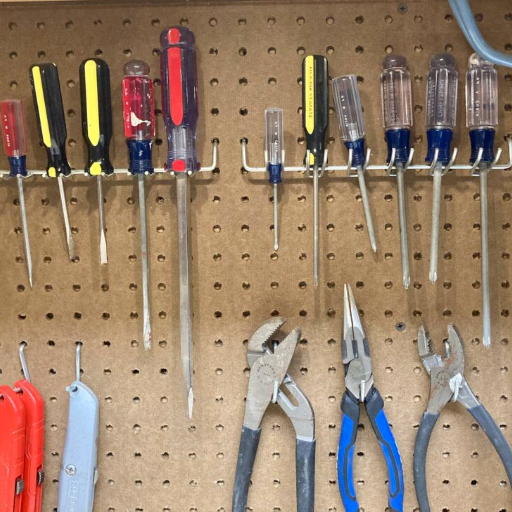
Essential hand tools are unpowered tools that serve as the basis of any professional tool collection. These tools are designed for jobs requiring precision, control, and acute attention to detail, making them invaluable for both large and small projects. According to recent search trends, the most sought-after essential hand tools include hammers, screwdrivers, wrenches, pliers, and measuring tools such as tape measures and levels. These tools generate interest because of their universal applications in carpentry, vehicle maintenance, and simple DIY improvement projects. The combination of longevity and ergonomic designs makes them indispensable to anyone committed to building quality work reliably.
Key Characteristics of Essential Hand Tools
- Unpowered operation for maximum control
- Precision-focused design
- Ergonomic construction for comfort
- Durable materials for long-term use
- Versatile applications across multiple trades
Importance of Hand Tools for Every Homeowner
General hand tools are quite important when it comes to managing day-to-day demands and unforeseen repairs. They act as lifesavers, permitting general fixes without being dependent on professional help for every little hassle. Whether it’s hanging a picture, assembling furniture, or tightening a loose bolt, these tools ensure that no moment is wrong for their use. They definitely guarantee that you’ll always be equipped for future needs and problems, keeping your house maintained and yourself self-sufficient.
Why Professionals Need Must-Have Tools
Tools are of utmost importance for professionals, enabling them to fulfill their duties in the most efficient and precise way. The right tools not only enhance productivity but also ensure the quality and safety of the work being done. A mechanic wielding specialty wrenches, an electrician with insulated tools, or a carpenter measuring and cutting with extreme precision obviously need the right equipment to deliver the goods. These tools allow professionals to carry out complex tasks, produce more effective results, and increase productivity simultaneously.
Basic Hand Tools Every Professional Needs
Screwdrivers: Types and Uses
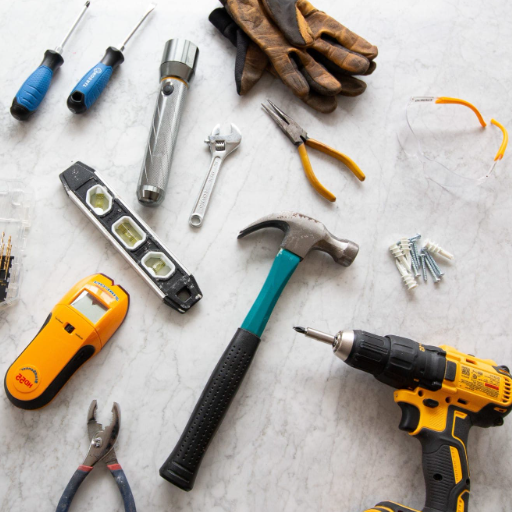
Screwdrivers are indispensable tools found in almost any toolkit, utilized for efficiently driving or removing screws. Several categories of screwdrivers are tailored to different jobs:
| Screwdriver Type | Description | Common Applications |
|---|---|---|
| Flathead/Slotted | Single-slot design for general-purpose work | Slot-headed screws, simple assembly tasks |
| Phillips | Cross-shaped head design | Cross-headed screws, furniture assembly |
| Torx | Star-shaped driving section | Automotive and electronics (requires torque) |
Proper screwdriver selection facilitates secure fastening without damaging the screw or work surface, making it an essential tool for various tasks.
Wrenches: An Essential Variant of the Toolbox
Wrenches are indispensable tools designed for holding, turning, or fastening bolts and nuts. Different types serve different purposes:
Types of Wrenches
- Adjustable Wrenches: Versatile with adjustable jaws, suitable for various sizes
- Combination Wrenches: Open-ended on one side, box-ended on the other for adaptability
- Socket Sets with Ratchets: Excellent for loosening or tightening quickly with ample torque
Once the proper wrench has been selected, the job becomes as easy as possible without damaging any fastener. This makes wrenches mandatory in every comprehensive toolkit.
Pliers: Versatility and Functionality
Pliers are well-known tools for their adaptability and functionality, making them quintessential in every toolkit. They’re designed to grip, bend, twist, or cut various material types, with different styles retained for specific needs.
Needle-Nose Pliers
Perfect for precision work in tight spaces such as electronics repair or jewelry-making
Locking Pliers
Provide powerful, adjustable grip for firmly clamping materials during cutting or welding
Combination Pliers
Versatile for both gripping and slicing wires, ideal for general-purpose work
Wire cutters differ with anatomic-style cutting jaws that provide quick, precise wire-cable cutting, while slip joint pliers offer flexible jaw-width settings for accommodating multiple workpieces. By selecting the right category of pliers, professionals and DIY enthusiasts can tackle numerous tasks more efficiently and suitably.
Woodworking Tools as Essential Hand Tools
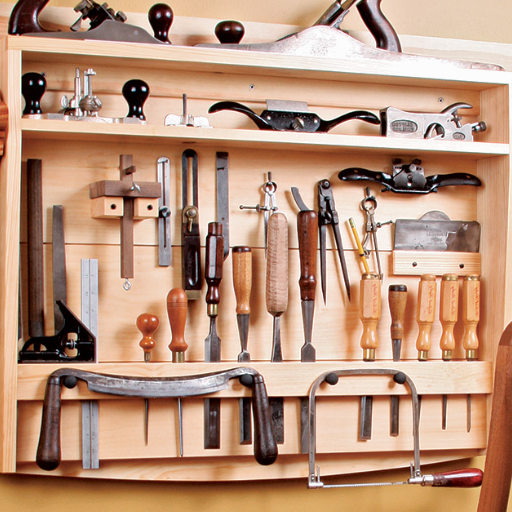
Key Woodworking Hand Tools
Woodworking greatly leans on a core set of manual devices to execute precision and quality in craftsmanship. Among them are various specialized tools, each serving a distinct purpose:
Essential Woodworking Tools
- Chisels: Used to shape, carve, and precisely remove wood
- Saws: Handsaws and coping saws are preeminent for cutting tasks
- Planes: Refine and smooth surfaces, bringing wood to uniform thickness
- Tape Measure & Combination Square: Essential for measurements and gauging exact angles
- Clamps: Hold pieces during assembly or drying phases
- Mallets: Assist when backing chisels or during joining operations
Once these tools have been mastered, woodworkers can skillfully handle any project with precision and finesse.
Utility Knives: For Various Cuts and Crafting
In woodworking and home DIY projects, utility knives are must-have tools for cutting tasks across a wide array of jobs. Sharp blades in utility knives facilitate accurate cuts through wood, foam, cardboard, and even leather. With good ergonomic handles, they relieve hand stress, allowing users to invest energy into easier and more controlled work. Whether you’re trimming, scoring, or doing detail work, the precision offered by utility knives multiplies effort to produce quality projects. Maintaining sharp blades ensures effective use of this essential cutting tool.
Drills and Drill Bits: A Must for Every Woodworker
For woodworking tasks, drills and drill bits are essential tools offering versatility and precision for various operations. Efficient hole-making, countersinking, or driving screws with the proper size bit atop a reliable drill can guarantee quality results. Drill bit sets typically include all sizes and types needed as a baseline, allowing craftspeople to choose the right bit according to requirements—whether for uniform types or hardwood. Drilling machines ensure substantial quality results while saving significant time compared to manual execution.
💡 Pro Tip: Drill Bit Selection
Drill bit selection should complement the task requirement. Proper maintenance of both drill and bits is vital for optimal performance. No woodworker can achieve perfect and professional work without depending on these items for realizing their skill.
Measuring Tools: Essential for Precision
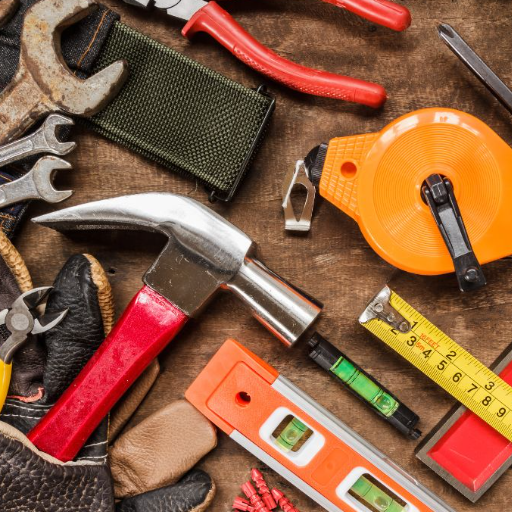
25-Foot Tape Measure: Why It’s Indispensable
A 25-foot tape measure is invaluable because of its splendid usefulness and convenience across different tasks. It provides adequate length suitable for measuring all kinds of surfaces—small and large—making it greatly helpful for construction projects, woodworking, and home improvement tasks. The retractable mechanism helps maintain the tape in perfect condition while ensuring easy storage. With exact and correlated increments, it assures accurate measurements. Whether you need to cut something to size or take measurements for a project, it’s a tool that always offers reliable and quick service—essential for contractors and DIY enthusiasts alike.
Understanding the Working Principle of Stud Finders in Home Projects
For those engaged in home projects involving wall attachments, having a stud finder is essential. What it does is locate either wooden or metal studs lying behind the wall. With the knowledge these tools provide, you can ensure that any heavy item is securely attached to the wall—cabinets, televisions, shelves—thereby preventing damage to both wall and item. Several modern stud finders offer advanced features like deep scanning and live wire detection for safer and more precise readings. Such equipment is extremely valuable for anyone looking for accuracy and assurance in their work, whether professional contractor or hobbyist.
Effective Ways of Using a Measuring Tape
Knowing how to use a retractable measuring tape can save significant time and eliminate the need to re-measure. Follow these effective techniques:
Best Practices for Measuring Tape Use
- Identify the Starting Point: Most tapes have a metal tab at the end that hooks onto surfaces’ edges or corners
- Pull Gently Forward: Avoid letting it snap back too quickly, as this might damage equipment or skew measurements
- Keep Tape Taut and Straight: Essential for accurate measurements
- Use the Tape Lock: For lengthy measurements, lock the tape in place while recording to avoid constant fumbling
- Retract Slowly: Wind the tape in carefully to protect the spring mechanism and your fingers
With proper handling, a retractable tape measure provides sturdy support for any home renovation, DIY project, or construction work.
Building Your Toolbox with Essential Tools
Creating a Comprehensive Tool List
When building a kit beneficial for any task, from small repairs to major projects, certain items are essential. In this world of newer technologies and practices, here are the items that should comprise your toolkit:
| Tool | Purpose | Key Features |
|---|---|---|
| Claw Hammer | Driving nails, repairs | Soft grip handle for comfort |
| Screwdriver Set | Tightening, positioning, loosening fasteners | Flathead and Phillips in various sizes |
| Adjustable Wrench | Plumbing, mechanical work | Fits different-sized bolts and nuts |
| Pliers Set | Gripping, bending, cutting wires | Needle-nose and slip-joint varieties |
| Utility Knife | Cutting various materials | Changeable blades for extended function |
| Power Drill & Bits | Drilling holes, driving screws | Cordless convenience with interchangeable bits |
| Tape Measure | Accurate measurements | Retractable with imperial/metric markings |
| Level | Ensuring straight installations | Spirit or digital options available |
| Stud Finder | Locating wall studs | Ensures secure hanging of heavy items |
| Safety Gear | Personal protection | Gloves, safety glasses, ear protection |
⚠️ Important Safety Note
No toolbox should be considered complete without basic safety gear including gloves, safety glasses, and ear protection. Your safety should always be the top priority.
These tools have been highly recommended across DIY communities and search trends for their indispensability in day-to-day maintenance and repair activities. Investing in quality tools will not only prolong the life of your toolbox but will also make every project both efficient and satisfying.
Choosing the Perfect Toolbox for Your Needs
When choosing your toolbox, carefully weigh your specific requirements and any future projects. Based on recent search trends, users predominantly consider portability, organization, and durability when researching toolboxes. For small home jobs, you can work with a lightweight toolbox featuring several compartments. However, for larger-scale DIY projects or professional work, a heavy-duty toolbox with multiple storage options and reinforcement should be recommended.
Factors to Consider When Choosing a Toolbox
-
- Portability: Weight and handle design for easy transport
- Organization: Number and size of compartments for efficient storage
- Durability: Material quality and construction strength
- Expandability: Stackable or modular systems for future growth
Organizing Your Essential Tools for Easy Access
I do a lot of things to keep my tools organized and within easy reach. One of the methods I use is putting them by classification like hand tools, power tools, and accessories, and selecting a compartment or tray for specific tools in my toolbox. Whoever acknowledges that, from the set of interchangeable tools, frequently used tools should always be on high-accessibility places so that on request, the tools are available whenever and wherever they are needed. It also shows that this girl always spends time in decluttering and keeping his toolbox clean at all times. He values the time saved when putting specific tools in specific cabins, and he can just pick and go.
References
-
University of Wisconsin – Minds Repository
This source discusses the management and utilization of hand tools in a manufacturing and educational context.
Read more here -
Academia.edu – The Significance of Hand Tool Skills in the Fourth Industrial Revolution
This paper focuses on the importance of hand tool skills in preparing learners for modern workplaces, particularly in the construction industry.
Read more here -
PubMed Central – Hepatitis A Virus and a Novel Identify-Isolate-Inform Tool
While this paper primarily focuses on healthcare tools, it provides insights into the development and adaptation of tools for specific professional needs.
Read more here
Frequently Asked Questions (FAQ)
Would the inclusion of power tools among a variety of essential hand tools be necessary?
While the majority of activities can be easily accomplished with the most basic of hand tools, the use of a power tool, for example, a cordless drill, can be a great advantage when drilling and fixing tasks. Besides, it can be very helpful in some of the woodworking projects. Homeowners might find that a good range of tools including screwdrivers, claw hammer, tape measure, and utility knife will take care of most of the home maintenance and small repair work. A power tool might not be required immediately but having the cordless drill and the drill bit set added will boost the number and type of projects you can undertake. In case of woodworking or regular home improving, a circular saw or a random orbital sander would be a great addition. For working in low light or behind walls more safely and more accurately, a stud finder and flashlight are good tools to have in the toolbox.
Where does a set of adjustable wrenches fit into a toolbox for a self-reliant person?
An adjustable wrench is among the tools that are really important to have as it cuts down the necessity of multiple fixed wrenches and is handy for plumbing, furniture assembly, and bolt tightening. It can be used with a wrench set or pliers in tasks of different sizes and for extra grip; needle-nose and slip-joint pliers, in particular, go well with an adjustable wrench. Besides the adjustable wrench, the well-equipped homeowner’s toolkit must also include a 25-foot tape measure, a screwdriver set, and a claw hammer. A soft grip adjustable wrench and a tool bag of good quality are suggested as the most beneficial tools for making a project less painful and more comfortable for the user. The adjustable wrench will be of great help with many fasteners and fittings for the DIYers doing home repairs or the assembly of furniture.
What are the main tools, including the screwdriver set, that a DIY starter should buy?
An extensive screwdriver kit is expected to have both flathead and Phillips screwdriver tips in several sizes, along with a set of precision drivers for working on small electronics and a ratcheting driver for quick work. Combine your screwdriver kit with a tool set of pliers, a utility knife, a claw hammer, and a tape measure and you will be fully equipped for your home repairs. In case of woodworking projects or other heavy work in the home, a cordless drill with a variety of drill bits and a circular saw or hand saws can be added for cutting. A stud finder, flashlight, and a putty knife would be the very handiest to have around for ongoing home repairs. Owning a nice toolbox or a tool kit that can keep a screwdriver set, a wrench set, and a retractable tape measure readily available will be a great help for most of the tasks.
Is the need for tools for DIY homeowners different from that of the tools that are absolutely essential for every homeowner?
Specialty items are found in the woodworker’s or construction worker’s basket, whereas the universal home-maintenance and repair tools cater to every homeowner. The basic items for the every-homeowner-list include a set of screwdrivers, a claw hammer, a tape measure, a utility knife, a flashlight, and an adjustable wrench. By adding a cordless drill driver, an orbital sander, a circular saw, and a stud finder, a person who engages in DIY endeavours increases the basic list. To make the job safer and easier, one has to use quality tools and have a good grip on the frequently used items. Whether you are a person who still uses only a few tools or someone with a larger toolkit, make sure all your tools are good enough to tackle with a variety of common repairs and improvements.
How do you make sure to be equipped with a flashlight and other?
A reliable flashlight is a requirement when you work in dark places such as attics, crawl spaces, and under sinks. It also a must-have for power outages and emergencies. A good sleeper should always have a flashlight or headlight with batteries fully charged, as well as a set of screwdrivers, a utility knife, and a tape measure. This will allow you to safely carry on with your work or project in low-light situations. Get a flashlight as well as a toolkit that also includes a claw hammer, adjustable wrench, pliers, and a good drill driver so that you are totally equipped for most home repairs. A very good person is one who has a toolbox filled with emergency supplies and a set of basic tools that every homeowner requires. In this way, you will not be so dependent on other people for help and will be prepared for any situation to occur. Make sure that your tools and flashlight are in working order by regularly checking batteries and tool condition so that they are always ready whenever you need them.