
Hand Tools Names and Pictures: Visual Identification Guide
The operation of numerous projects basically depends on the use of hand tools by people to be able to perform intricate works and either build things by themselves or easily do them at home. It makes no difference if you practice woodworking daily or just work at home sometimes, you have to know the most common hand tools types and their functions. Nevertheless, the mere looking and naming of them without a proper guidance could produce a contradictory feeling due to the fact that the number of the tools shapes, sizes, and varieties available is too high to pick one. This manual, in particular, is very basic since its primary purpose is to help the readers with depiction and easy-to-follow descriptions in the presence of pictures that are vibrant and clear. With the aid of this guide you will become able to both find and use the exact tool suitable for the work at hand. Be ready to start a visual journey and do not forget that the educational part will be with you all the time so that you will discover that hand tools are not a mystery anymore, and also that you will be amazed to see how easy it is to handle any job.
Essential Hand Tools
Types of Hand Tools
- Screwdrivers – These significant/important/principle tools are created with the Idea of both putting in and pulling out screws. Their variety of styles includes the two common ones flathead and Phillips, all of them with corresponding sizes for different screw heads.
Hammers – Hammers come naturally with this attribute of any thing, that is, they are used for undertaking such different jobs as nailing something, putting things together, and at the same time squashing. The nail hammer is a good example, and its prevalence is because it is not only a hammer but also a nail remover tool.
Wrenches – Wrenches are the perfect instruments for the task where one has to hold tight, fasten, or loosen up a nut or bolt, and presumably, the wrench variety like adjustable wrenches, socket wrenches, and combination wrenches are among the best options.
Pliers – Pliers are one of the imperative tools in the kit, pliers being used for gripping objects or even sometimes manipulating them, come in various styles, such as needle-nose pliers, used for precise tasks or slip-joint pliers that can be used for various purposes.
Tape Measures – Used for taking the correct measures, they are almost everywhere, and every profession, including the DIY career, requires them.
When it comes to the multitude of tools needed to complete the job, these basic ones are always on the list. Craftsmen who have been in the business for many years and amateurs who are just starting their journey both use them.
Hand Tools and Their Uses
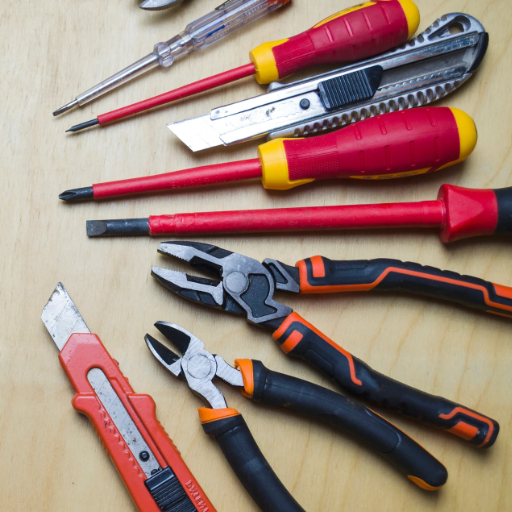
The comprehensive variety of applications is highly reliant on hand tools that are made to be the most user-friendly, powerful, and precise. One example of such tools are pliers that are used to take control of even the tiniest and the most flexible materials, while on the other hand, a tape measure is used to take a measurement quickly. The knife used by workers is extremely sharp and can cut different kinds of materials such as wood, rubber, and paper. That is why it can be called a very adaptable tool. Consequently, these tools united are essential to every professional and amateur and they make possible a great number of projects successfully finished.
Images of the most Common Hand Tools
Different tools could be described as different users, the metaphor here goes exactly the same. Pliers are the most general with their two joined parts that you open and shut by squeezing, they are almost of a kind for every manual operation including the more sophisticated ones of holding, cutting and twisting. The tape measure is hardly to be mistaken, as it is characterized by the part sticking out and going back in, and that is always a steel blade, carful with a tough casing for long-term measuring. One that always pops out as a utility knife could be noted once it is seen with a blade that can be easily changed in a handle, the main purpose of this tool being the cutting. Once these and other features are learned, the user can be at the table with the tool immediately.
Understanding Screwdrivers
Types of Screwdrivers
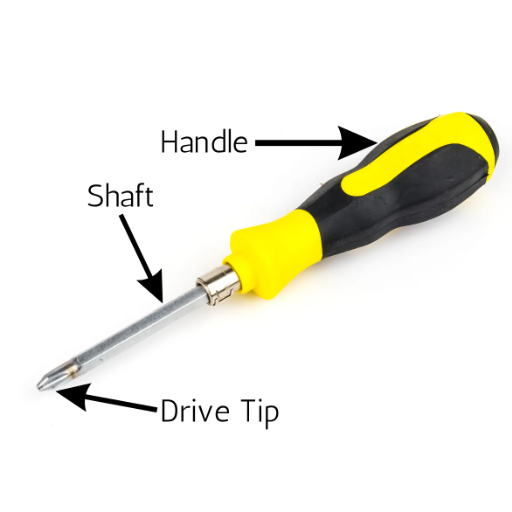
Screwdrivers are classified in different ways, and each type of screwdriver is purposefully produced for a certain screw head. The most typical types are the flathead screwdrivers which have a flat and bipole blade and are made for slotted screws, meanwhile the Phillips screwdrivers are that have a cross shape and are used for the matching indent screws. The other types of screwdrivers are also interesting, for instance the Torx screwdriver that has a star-shaped tip and the hex screwdriver that fits hexagonal screw heads. The basic function of all of them is to fit the screw head correctly, this way the possibility of damaging both the tool and the screw will decrease. The greatest thing about it is that to find the proper screwdriver for every single job the knowledge of the types is indispensable.
💡 Key Point
Understanding the various screwdriver types is crucial for selecting the right tool and preventing damage to both the screwdriver and the screw head.
Screwdriver Set Basics
When you are selecting a screwdriver set, it is necessary to keep factors like flexibility, durability, and the nature of tasks you will be doing in mind. A complete set should have both flathead and Phillips screwdrivers available in multiple sizes for general household maintenance and projects. In case of need for some kind of speciality, choose a set that includes Torx and hex screwdrivers, as these are used very commonly in automotive, electronics, and furniture assembly.
✓ Features to Consider
- Magnetic tips – Prevent screws from falling out and keep your work area clean
- Ergonomic handles – Provide a good grip and prevent hands from getting tired
- Durable materials – Chrome-vanadium steel offers rust resistance and extends tool life
How to Identify Screwdrivers
When you aim to identify the screwdriver type correctly, the tip’s shape and size are the initial things to check. The forms and dimensions of screws with which the screwdriver can be used are indicated by that. Screwdrivers like flathead, Phillips, Torx, and hex are all present in the market. Each kind has its particular usage. The third thing that shows of a tool is the forming and the handle material; in case, the handle is made from material with ergonomic thought and the grip is slip-resistant, it will offer more convenience and control. Also, check if there are any codes or labels on the tool that might reveal its type and material. All of these steps will lead you to the correct screwdriver for the task.
Wrenches and Their Varieties

Types of Wrenches
Varieties of wrenches are made for specific uses, and they come in different types. Primary wrench types that you could find in general are the open-end wrenches, box-end wrenches, and combination wrenches which are less common types; yet more and more popular types being adjustable wrenches and socket wrenches.
| Wrench Type | Description | Best Use |
|---|---|---|
| Open-End Wrench | U-shaped opening at one or both ends | Quick loosening or tightening of nuts/bolts |
| Box-End Wrench | Completely encloses the fastener | Provides strong hold and better torque |
| Combination Wrench | One open-end and one box-end | Versatile tool for various tasks |
| Adjustable Wrench | Adjustable jaw for various sizes | Working with different fastener sizes |
| Socket Wrench | Ratcheting handle with interchangeable sockets | Tight spaces requiring quick work |
However, the application of a particular type is mainly based on the task, the size of the fastener, and the torque requirements.
Metric vs SAE Wrenches
Fasteners have the metric and the SAE wrench systems as the two main methods of measurement, and we could definitely be aided in deciding the right tools based on knowing the distinctions. The metric wrenches bear a one-to-one correspondence to the metric system and their sizes are with respect to millimeters while the SAE wrenches (Society of Automotive Engineers) are based on the imperial system and their sizes are layed out in fractions of an inch.
Metric Wrenches
- Measured in millimeters
- Used worldwide
- Common for non-US vehicles and machinery
SAE Wrenches
- Measured in fractions of an inch
- Primarily used in the United States
- Essential for older American vehicles
There is no doubt that the worldwide acceptance of metric tools is increasing greatly due to the rigid use of the metric system by manufacturers. However, for people who are in the fabrication of American-made goods or serving old equipment, the SAE tools are still a necessity. It is the consensus of a number of professionals and do-it-yourselfers that one must possess both types and that this setup would make their work easier when working on various projects. Accuracy is guaranteed, speed is a companion, and effective projects are the results of using the proper system.
How To Use A Socket And Ratchet
Step-by-Step Guide
- Select the right socket size corresponding to the fastener you are dealing with
- Attach the socket to the ratchet tightly ensuring that it finally clicks
- Place the socket over the fastener and adjust the ratchet’s directional switch
- Turn the ratchet in short, controlled movements
- Check alignment to ensure the fastener is properly secured without over-tightening
Plier Identification

Types of Pliers
Pliers are multi-functional devices which are handy for gripping, bending, cutting, and manipulating materials of different types. There exist different kinds of pliers, each of them specifically made for different tasks. Below are very common types of them:
🔧 Slip-Joint Pliers
The adjustable pliers like those have a pivot point which enables the jaws to open wider making it very difficult for them not to slip off the object. Besides surgeries, they are the right choice for pet grooming, cooking, and even sewing needles.
🔧 Long-Nose Pliers
Oftentimes they are made with side cutters but even those that aren’t are able to do a wonderful job with cutting. A common use for them is knitting wire although the other two tools are specifically meant for wire such as wire cutters.
🔧 Locking Pliers (Vise-Grips)
These pliers have the capability to be locked into place, making it possible to get a tighter hold on items. They find their main usage in handling rounded fasteners, clamps, or any object that should not move.
🔧 Water Pump Pliers (Channel Locks)
The jaws of water pump pliers are adjustable and can be open wide, therefore, they are commonly used for turning and holding pipes or other cylindrical objects.
🔧 Combination Pliers
These pliers are like one-man army as they incorporate a gripping jaw together with cutting edges and are, therefore, equally effective for both gripping and cutting tasks. They have far-reaching applications in different trades.
Understanding the various pliers types and the specific jobs they can successfully accomplish are paramount in the efficient workflow and attaining the desired outcome.
Needle Nose Pliers Explained
Needle nose pliers, also known as long-nose pliers, are tools that serve a variety of functions and are characterized by their thin, sharp-pointed jaws. More specifically, they help in working in spaces that are either very close or very narrow and in handling very small objects with great precision. These pliers are very often used in the electrical sector to bend, cut, or fasten wires, and in creating of jewelry, they have become a vital part of the process especially in chain and wire making. The pliers’ design features the easiness of handling and the precision that they bring, make them an indispensable tool for anyone engaged in detailed tasks.
Non-Slip Grip Pliers
Pliers with a non-slip grip are constructed using handles that have been expertly designed for human hands so that the person using it will have a very firm yet pleasant grip, it can even be used very securely this way even when the job situation is a wet or oily environment.
✓ Benefits of Non-Slip Grip Pliers
- Enhanced safety in wet or oily environments
- Reduced risk of accidents and mistakes
- Improved comfort during prolonged use
- Essential for electricians, pipe fitters, and auto technicians
A search trend analysis of the latest data indicates that the safety aspect is becoming an important factor in the selection of tools that increase productivity. Non-slip grip pliers are also in line with this as they remove the risk of slipping during the performing of a precise task, thus preventing accidents or mistakes. Non-slip grip pliers, which are a perfect blend of safety and comfort oriented design, are a must-have for both a tradesman’s or a DIYer’s toolbox.
Measuring Tools

Using a Tape Measure Effectively
📏 Best Practices for Tape Measure Use
- Position the tape measure using the marks as the starting point
- Pull the tape taut in alignment with the desired endpoint for accuracy
- Use the locking device to fasten the tape and prevent inadvertent retraction
- Refer to both the main scale and smaller divisions for precise readings
- Use the metal hook at the end as an anchor for irregular surfaces
- Store and handle properly to maintain accuracy and longevity
Plumb Line and Its Importance
A level device, usually a heavy metal plumb bob suspended from a line, is essential in the construction and design industry to establish the absolute vertical alignment. This technical choice is not the less due to coming to safety and precise standards through the constant structural integrity of the building. The instrument is a gravity-driven one, and with the level of simplicity versus the power of being authorized by the operation, it is very much awaited in tasks and easily completed by one person, such as the construction of walls, placement of cabinets, or even the fixing of posts. The most elementary and, at the same time, a most effective tool has been around for ages and is still the most incredible one for crafts that need the utmost precision for different project types.
Using a Pencil for Layout and Marking
A pencil is an essential tool in the marking and layout of many sectors such as woodworking and construction. Besides, they are among the tools that are the most user-friendly and the most accurate, pencils permit contractors and craftsmen to draw and erase marks on various kinds of surfaces. A very fine-tipped pencil that people will use is the one that results in a very outstanding line and so this tool is very much suitable for measurements, design plans, and cutting guidelines. Presently, there are different types of pencils in the market, and they are mechanical, or marking and special-purpose; they also have higher hardness and the potential of waterproofing and, thus, besides being able to write on plastics and metals, etc. are not limited. That is the reason pencils occupy a special position in the field of layout and marking for almost any profession.
Using a Pencil for Layout and Marking
A pencil is an unavoidable tool to use for marking and layout in a number of industries, ranging from woodworking to construction. Also, they are among the most easy and exact tools, the pencil lets builders and workers to draw and then cancel marks on many sorts of surfaces. The reason pencils are so much used on job sites and in workshops is that they are very handy for measurements, design plans, and cutting the line precisely. At present, the color in the market is not only normal blue but also green, of course, for which a mechanical pencil is used but the latter is a marking pencil. In addition to the general-purpose pencil, there are other types in the market which are made of different materials and consequently, they have higher hardness making them be waterproof, besides they are the most expensive as they have the characteristics of both the previous versions. Thus, pencils are highly incorporeal tools in the process of the design as they can be laminated or used as a part of the original design.
References
-
Topic C095: Hand Tools – Northern Arizona University
Northern Arizona University offers a detailed PDF guide on hand tools and their maintenance. -
Tool Information | Shasta College
Shasta College lists essential tools for basic tool sets, including hand tools. -
Hand Tool Ergonomics – Know your Job
California Department of Industrial Relations discusses various types of hand tools and their ergonomic use.
Frequently Asked Questions (FAQ)
Do I require a basic repair and a claw hammer?
One of the handiest and most versatile tools to have around is a hammer and claw hammers act as a perfect addition to the pry bar together with serving the function of extracting nails and manipulating the materials. The claw hammer, when of a good quality, is a very versatile tool that can perform a range of household chores from framing to hanging pictures. Even though masonry workers or other heavy building materials users may have to use a contractor’s mallet or a sledge, yet claw hammers are capable of handling most light-to-medium tasks. Beginners should select a hammer with a comfortable grip and a head weight that suits their project needs. Suggested unused terms: chisel, pry bars, hammer head.
How shall I go about selecting the most suitable saw or saws for woodwork?
Carpentry requires the right type of saw or hand saws, depending on the cut, material thickness, and finish that is wanted; for example, switching from a crosscut saw to a rip saw means a different tooth geometry. For detailed joinery, panel saws and backsaws for hand saws are the best, and hacksaws could be more commonly found for cutting metal or plastic. According to the project’s requirements for different sizes and different shapes, the user would choose the most appropriate saw. Make sure to check whether cleaner cuts are required. If the user is looking for a portable and compact option, he may consider either a folding saw or a scissors-type compact saw. Unused words: saw, many different types, variety of sizes.
When would be the appropriate time to use a utility knife instead of a fixed blade or knife?
Utility knife is a multi-functional tool that can be used for various purposes such as insulation cutting, drywall trimming, box opening, and material scoring; the fixed blade knife provides further power and a strong point for heavy-duty cutting tasks. Utility knives that have the feature of replaceable blades are commonly being used at the construction site for safety and convenience, but, however, if the work requires a continuously strong edge, a fixed blade is a superior choice. Keenness and security; might refer to a keyhole or a craft knife, while only a fixed blade is required for building projects. The latter could be also be substituted with a serrated blade if one is dealing with more rigid materials. In all cases, the blade type should match the material, and the blade edge should be sharp at all times. Fixed blade, keyhole, and insulation were terms not heard of by anyone.
What are the most frequent types of clamps and what is the safest method of selecting the most appropriate one for the job?
There are different types of clamps used for the job including, bar, C-, spring clamps, and at the same time handscrew clamps; however, the choice remains as per the job-piece and the pressure force required. In woodworking, for instance, bar clamps and pipe clamps are the perfect choices because they exert force equally along a long area, whereas C-clamps can be used as the means of concentrated holding. The whole process of accommodating the different thicknesses through the adjustable clamping systems is always the best option besides the system being very fast because of the regular release feature. If you work on finished surfaces it is best to use padded jaws or have the clamping forces come in contact with the original surfaces so that the surface is not damaged.
Please provide guidelines on tool maintenance and storage, for example, saws, knives, and hammers.
Proper maintenance to the hand tool can be the key to its longer life. A user must always ensure that the blades remain sharp, and any resin or rust on the tool should be cleaned; in addition, all the moving parts, such as the screws of adjustable clamps or the slides of utility knives, must be oiled. The user should place the tool in a clean and dry toolbox or hang it on a pegboard to avoid breakage, and so the tools will be placed in an organized way and therefore the screwdrivers, socket sets or hammers will be easier to locate. Pay attention to the breakage of handles and the loosening of heads regularly, but more specifically to the loosening of the heads of the tools that are used for striking, such as the hammer. It is also better in the sense of the workshop’s efficiency to group by labeling and to keep tools by their specific tasks, thus avoiding damage caused by one tool out of its place or missing. The tool caddy is a great organizer for the workshop and no tool left behind with the Foam System tray! Apparel included in the sale:, Article,Screwing and unscrewing.