
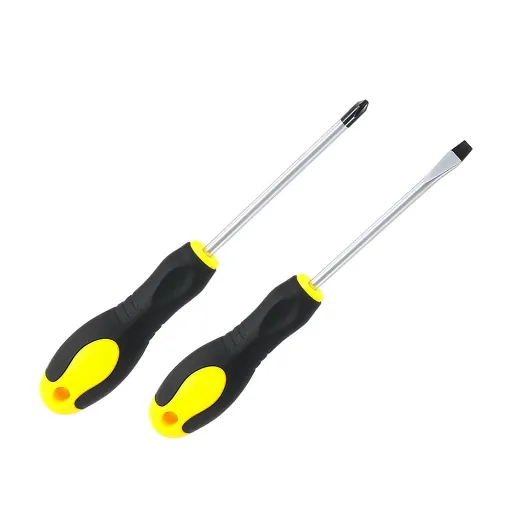
Phillips vs Flathead Screwdriver: Differences, Uses & Sizes
Choosing the right screwdriver affects assembly speed, fastener life, and finished quality. A Phillips vs flathead screwdriver comparison helps buyers, technicians, and procurement teams match the correct tool to each job. Phillips and flathead screwdrivers look simple, but their tip shapes, torque behavior, and sizing systems differ enough to change results on the production line or job site.
This guide explains the key differences between Phillips and flathead screwdrivers. It covers screw head types, typical uses, standard sizes, and practical selection tips. Whether you stock tools for resale, manage maintenance teams, or source hardware for manufacturing, you will find clear guidance for making the right choice.
Phillips vs Flathead Screwdriver: Quick Comparison
| Feature | Phillips Screwdriver | Flathead Screwdriver |
|---|---|---|
| Tip shape | Cross-shaped (X) | Single flat blade |
| Screw head recess | Cross recess | Single straight slot |
| Self-centering | Yes | No |
| Torque transfer | High, stable | Lower, prone to slip |
| Cam-out | Controlled | Frequent under load |
| Best uses | Electronics, automotive, furniture assembly | Woodworking, electrical covers, prying tasks |
| Power tool friendly | Excellent | Limited |
| Size standard | PH000 to PH4 | Blade width and thickness |
This table gives the fastest way to compare the two screwdriver types. The sections below explain each difference in more detail.
What Is a Phillips Screwdriver?
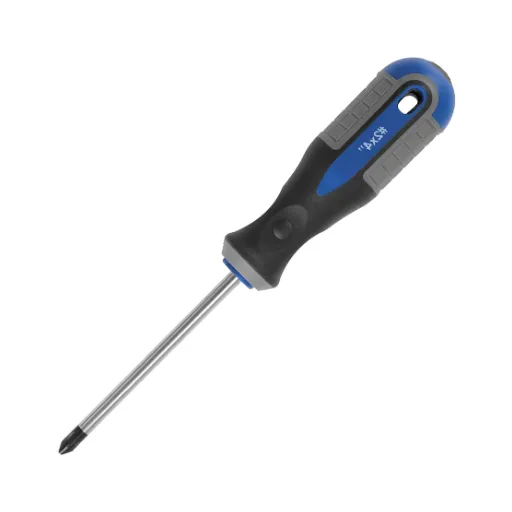
A Phillips screwdriver has a cross-shaped tip that fits into a matching cross recess on the screw head. Henry F. Phillips developed this design in the 1930s to solve a common problem with slotted screws. The cross shape centers the driver automatically and reduces the chance of the blade slipping out.
The Phillips design relies on a feature called cam out. When too much torque is applied, the tip rises out of the recess instead of damaging the screw or workpiece. This controlled release protects delicate assemblies and helps prevent over-tightening.
Key Characteristics of Phillips Screwdrivers
- Cross-shaped tip: Engages four faces inside the screw head.
- Self-centering action: The tip finds the center of the recess quickly.
- Controlled cam out: Releases before the fastener strips.
- Higher torque transfer: Less slip than a flat blade in high-torque jobs.
- Wide availability: Used in consumer products, vehicles, and machinery worldwide.
Common Uses for Phillips Screwdrivers
Phillips screwdrivers work well in applications where precise torque and fast alignment matter. Common uses include:
- Consumer electronics: Laptops, smartphones, appliances, and small devices.
- Automotive assembly and repair: Interior trim, engine components, and electrical connectors.
- Furniture assembly: Flat-pack products, cabinets, and fixtures.
- Light machinery: Covers, guards, and panels that need frequent removal.
- Drywall and construction: Gypsum-board screws with Phillips recesses.
For buyers sourcing tools in volume, Phillips screwdriver sets offer consistent quality across a wide range of sizes.
What Is a Flathead Screwdriver?
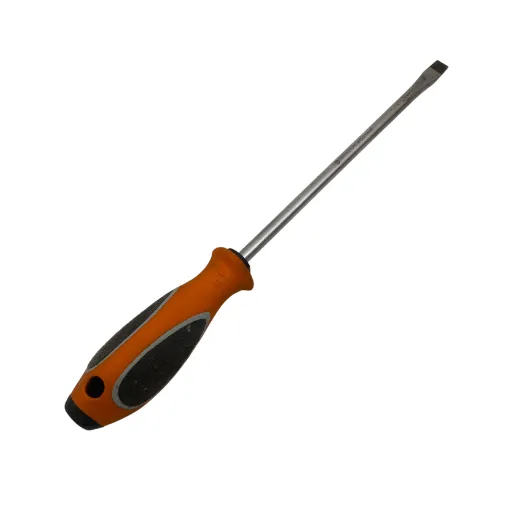
A flathead screwdriver, also called a slotted screwdriver, has a single flat blade that fits into a straight slot on the screw head. This is the oldest and simplest screw head design. The blade must match the width and thickness of the slot for proper engagement.
Flathead screws usually sit flush with or below the material surface. This makes them popular in woodworking, cabinetry, and any application where a smooth finish matters.
Key Characteristics of Flathead Screwdrivers
- Single flat blade: Fits one straight slot.
- Simple design: Easy to manufacture and repair.
- Versatile fit: One blade can fit many slot widths.
- Low profile: Screws can be countersunk for flush surfaces.
- Dual purpose: Can also pry, scrape, or adjust in tight spaces.
Common Uses for Flathead Screwdrivers
Flathead screwdrivers remain useful in many trades and repair tasks:
- Woodworking and cabinetry: Countersunk screws that need a flush surface.
- Electrical work: Switch plates, outlet covers, and junction boxes.
- Antique restoration: Older hardware often uses slotted screws.
- Construction: Simple fasteners where torque control is less critical.
- General maintenance: Prying, scraping, and adjusting small parts.
Because the blade can slip under high torque, flathead drivers are less suited to power-tool use than Phillips drivers.
Key Differences Between Phillips and Flathead Screwdrivers
Understanding the Phillips vs flathead screwdriver difference helps teams avoid damaged fasteners and wasted time. The main differences are design, torque behavior, and ideal use cases.
Design and Functionality
Phillips screwdrivers use a cross-shaped tip that engages four contact points inside the screw head. This gives positive engagement and self-centering. Flathead screwdrivers use a single blade that engages only two contact points. The user must align the blade manually.
The Phillips design works with the screw recess to control torque. The flathead design depends more on the user’s skill and the match between blade width and slot width.
Torque and Grip
Phillips drivers transfer more torque with less slippage. The cross shape grips the recess firmly and the controlled cam out protects the fastener. Flathead drivers transfer less torque and are more likely to slip out of the slot. When a flathead slips, it can damage the screw head or scratch the work surface.
For high-torque production work, Phillips or Torx drivers are usually better choices. For light-duty or flush-finish work, flathead drivers work well.
When to Use Each Type
Use a Phillips screwdriver when:
- You need fast, centered engagement.
- Torque transfer and repeatability matter.
- You use power drivers or assembly automation.
- The fastener is small or in a precision device.
Use a flathead screwdriver when:
- The screw must sit flush with the surface.
- You work with older or antique hardware.
- The slot is wide and torque demands are low.
- You also need a tool for light prying or scraping.
Screwdriver Sizes Explained
Size matching is critical. A driver that is too small will slip and strip the head. A driver that is too large will not fit into the recess at all.
Phillips Screwdriver Sizes
Phillips screwdrivers use a standard numbering system from PH000 to PH4. Each size matches a specific screw recess.
| Size | Typical Applications |
|---|---|
| PH000 | Precision electronics, watches, very small devices |
| PH00 | Small electronics, eyeglasses, delicate assemblies |
| PH0 | Light electronics, small appliances, instruments |
| PH1 | Small screws in fixtures, hardware, and appliances |
| PH2 | General-purpose screws, furniture, construction |
| PH3 | Larger screws, automotive, heavy fixtures |
| PH4 | Industrial machinery, heavy-duty structural screws |
PH2 is the most common size for everyday work. Industrial buyers often stock PH0 through PH3 to cover most applications.
Flathead Screwdriver Sizes
Flathead screwdrivers are sized by blade width and blade thickness. Common blade widths range from 1.5 mm to 12 mm. The blade should fill the slot snugly without overhanging the edges.
| Blade Width | Typical Uses |
|---|---|
| 1.5–3 mm | Precision work, small electronics, instruments |
| 4–5 mm | Light switches, outlet covers, small hardware |
| 5.5–6.5 mm | General household and workshop tasks |
| 8–10 mm | Cabinetry, furniture, medium construction |
| 12 mm+ | Heavy construction, large machinery |
Because flathead sizing is less standardized than Phillips sizing, buyers should test the fit before committing to large orders. Many professional sets include a range of widths to match different slotted screws.
Other Common Screwdriver Types
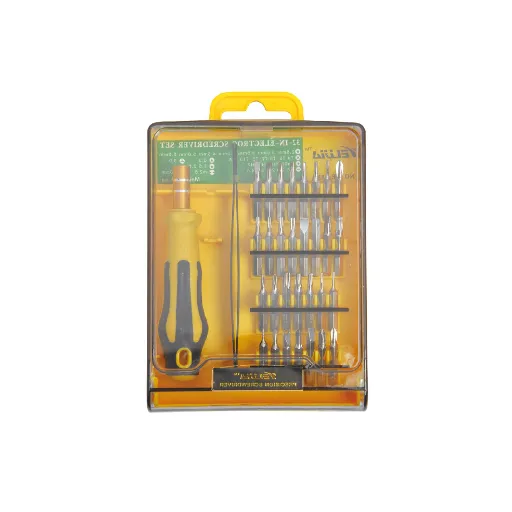
Phillips and flathead are only two of many screw head types. Knowing the alternatives helps buyers stock the right range for their customers or crews.
Pozidriv Screwdrivers
Pozidriv looks similar to Phillips but has extra contact points. The tip has four small ribs between the main blades. This design reduces cam out and allows higher torque. Pozidriv is common in European appliances and machinery.
Robertson Screwdrivers
The Robertson, or square drive, has a square recess that grips the driver tightly. It resists cam-out and works well in woodworking and construction. It is especially popular in Canada.
Torx Screwdrivers
Torx screwdrivers use a six-point star pattern. They transfer high torque with very low risk of slipping. Torx is widely used in automotive, electronics, and mechanical equipment.
Hex Screwdrivers
Hex drivers fit screws with six-sided recesses. They handle very high torque and are common in construction, bicycles, and machinery.
How to Choose the Right Screwdriver
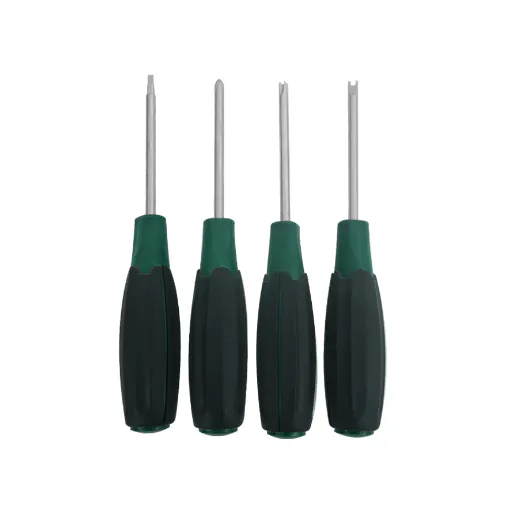
The right screwdriver depends on the screw head, the task, and the working environment. Follow these steps to make a reliable choice.
- Identify the screw head type. Match the driver tip to the recess shape.
- Select the correct size. The tip should fill the recess without wobbling.
- Consider torque needs. High-torque work needs Phillips, Pozidriv, or Torx.
- Check access and clearance. Long shafts or thin blades help in tight spaces.
- Choose quality materials. Hardened tips resist wear and last longer.
- Think about bulk purchasing. Stocking complete screwdriver sets reduces downtime and simplifies procurement.
For businesses that need custom branding or private-label options, screwdriver sets can be configured with specific sizes, handles, and packaging.
Frequently Asked Questions
What is the main difference between Phillips and flathead screwdrivers?
The main difference is the tip shape. A Phillips screwdriver has a cross-shaped tip that fits a cross recess. A flathead screwdriver has a single flat blade that fits a straight slot. Phillips handles torque better and self-centers, while flathead is simpler and allows flush finishes.
Can I use a Phillips screwdriver on a flathead screw?
No. The wrong tip will not engage the slot properly. It will slip, damage the screw head, and may injure the user. Always match the driver to the screw head type and size.
What does cam out mean?
Cam out is when the screwdriver tip rises out of the screw recess under torque. Phillips screwdrivers are designed to cam out in a controlled way to prevent damage. Flathead screwdrivers cam out more easily and with less control.
What is the most common Phillips screwdriver size?
PH2 is the most common size. It fits the screws used in furniture, construction, and general repair. Most multi-bit and standard screwdriver sets include PH2.
How are flathead screwdrivers sized?
Flathead screwdrivers are sized by blade width and thickness, usually in millimeters. The blade should fit the slot width closely for safe, effective use.
Which screwdriver type is better for power tools?
Phillips is better for power tools because the cross tip engages securely and resists slipping. Flathead drivers are harder to control under power and are more likely to damage the screw or workpiece.
Conclusion
A clear Phillips vs flathead screwdriver comparison shows that each tool has a specific purpose. Phillips drivers deliver higher torque, faster alignment, and better power-tool performance. Flathead drivers offer simplicity, flush finishes, and versatility for light-duty tasks.
Choosing the right screwdriver reduces fastener damage, improves assembly speed, and gives a cleaner result. For businesses that depend on reliable tools, stocking quality Phillips and flathead screwdrivers in the correct sizes is a practical investment. Contact our team to learn about factory-direct screwdriver sets, OEM options, and bulk supply solutions for your market.