
Level Types: Complete Guide to Spirit Levels and Laser Levels
The precision and accuracy of the presences of the construction, woodworking, or DIY products are the tools that play a vital role. Thus, one of the very important tools to the instruments are levels—basic tools especially designed to help align surfaces accurately, be it horizontally, vertically, or at a certain angle. This post will take you through the ins and outs of the two main types of levels commonly used, both by professionals and by hobbyists: spirit levels and laser levels. Starting from the assumption of their basic mechanisms to the examination of their individual uses, this paper will supply you with all the information needed to select and use the right type of level for your requirements. This all-inclusive article is for you, whatever your position is in the level tool industry, and it is aimed at both people who have experience in using levels and people who are new to them, if they wish to upgrade their knowledge and strengthen their expertise.
Understanding Different Types of Levels
Spirit levels, which are also called bubble levels, are a relatively cheap but very efficient measuring tool designed to indicate the exact horizontal or vertical position of any surface. They are made of a closed tube which is semi-filled by a liquid and an air bubble that moves to show the direction of the surface. The most well-known spirit levels are string-line models, torpedo models for tight places, and the I-Beam for regular work. They are very popular and can be easily accessed. Thus, they are essential in many professional and infrequent users.
Laser levels are tools used to project very accurate areas or dots of light onto a surface, giving precision for different duties like the placement of tiles, putting up cabinets, or framing the walls. Laser levels are available in various forms, such as the cross-line level, where horizontal and vertical lines can be projected at the same time, rotary level, which provides 360-degree coverage, and dot laser for very accurate points. The application of laser levels is the perfect solution for tasks that demand high precision of alignment within long distances, and they are usually equipped with a self-leveling feature to provide greater user convenience.
Overview of Leveling Tools
The leveling tools have become more sophisticated and are now available in a department of kinds for the specific works in different sectors like construction, carpentry, and interior design. The bubble levels or spirit levels that have been used for many years are still considered to be a good option for the small projects where simple horizontal or vertical alignment is needed. But for the harsher applications, the electronic levels are the ones to go for because they tell the user instantly and very accurately with a digital readout and chip-scale semiconductor sensor set for the transverse axis that is how the levelling correcting is done with digital signal processing (DSP).
Laser levels and other advanced tools are now indispensable in construction and remodeling. The best example is the cross-line laser that is common because of its ability to align several reference points at the same time which is very important when installing shelves or aligning several fixtures. Rotary laser levels create a projection to 360 degrees, and they are very useful in huge projects like building foundations or differentiating land. Some devices have the slope-matching feature that is very important for example, in the case of sloping ground or during the installation of a drainage system. Moreover, the auto-leveling mechanism is a must today with the latest laser levels, this is because it reduces the impact of human error by immediately adjusting to the unevenness of the surface.
Apart from lasers, conventional optical instruments like levels and total stations are mainly the instruments of choice for large-scale or professional surveying projects. Levels with optical aid give height data readings over long distances with a good accuracy, applied in the parallel use of leveling rods for manual reading. Total stations provide leveling, distance measuring, and angle determining in one unit, thus simplifying the multiple steps in such applications as road construction or land division.
Types of Levels: A Comprehensive Breakdown
Importance of Choosing the Right Level
It is crucial to choose the right instrument as it will be the determining factor for the precision and effectiveness of the measurements in various fields, starting from building up to land surveying. If an unsuitable or incorrect level is used, the measurements will be compromised, and the result will be that the structures may not be designed to regulations making them prone to collapse, always a costly project. A tool like an engineer’s or transit level is a must-have for civil engineering projects to establish the right levels and grades which are very crucial for the safety of the structure. Moreover, an automatic level is the most common choice for such applications as roadwork surveying where the work has to be done with the highest possible speed and accuracy. It is because this instrument has a completely embedded compensating mechanism that eliminates measurement inaccuracy caused by the user.
In present times, the latest leveling instruments are provided with new characteristics which are electronic displays, laser-guided markers, and digital calibration, to add to their original precision and the easier use. At the same time, the building materials supplied are still tough, but somewhat lighter, therefore, leading to a gradual increase in their mobility and tough environmental performance. Furthermore, a fastidious selection of the best-fitting level for the project’s conditions, environment, and the required accuracy ensures the high quality of the result and the ease of the work performed, which both increase the reliability of the work.
Spirit Levels: The Traditional Choice
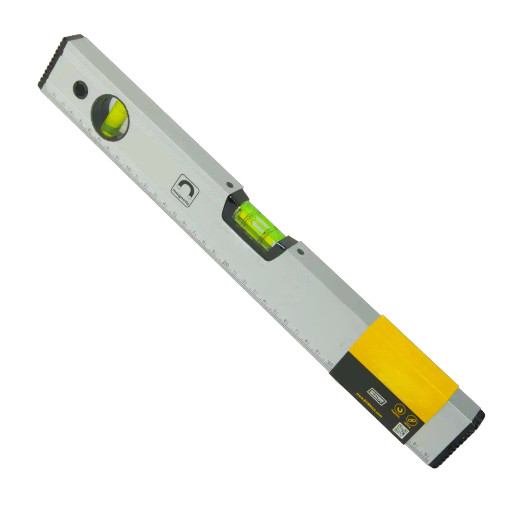
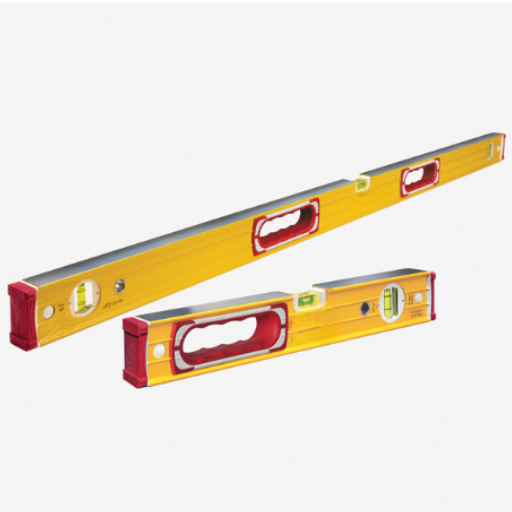
The spirit levels are one of the classic and most used tools to determine if a surface is either in horizontal or vertical alignment. The technology behind the spirit level is quite simple and it involves the usage of a liquid-filled tube with an air bubble and the bubble moves by itself so that the highest point of the bubble is in one line with the center of the tube. This is the so-called and claimed by many, level positioning. The spirit levels are built to be sturdy, user-friendly, and most of all, do not need a battery, hence, they maybe operated on site and range from home DIY to professional constructions. Their precision and easy operation have made them a preferred choice in different sectors.
What is a Spirit Level?
A spirit level, also commonly known as a bubble level, is a tool that is used to find out if a surface is positioned horizontally and vertically. To be easy to handle, the instrument is composed of a solid frame, mostly of aluminum or plastic. The most important kind of the spirit level is the level out of the enclosure, which is mostly bar-shaped or cylinder-shaped and is filled with a liquid such as alcohol or oil to give a high degree of sensitivity towards temperature and to prevent freezing of the liquid. When the surface is level, the air bubble within the vial freely moves in the liquid and conforms visibly to the markings.
It is true that new designs are being made for spirit levels which some are digital displays or some are with laser guides so as to increase the accuracy and usability of the devices. The improvements have made spirit levels more reliable so one can even use them for such applications that require very precise measurements like setting slopes and angles. Their practical design is also user-friendly and the technology upgrades can be opted for. This being the case, spirit levels will always be in need of and widely used across different professions other than the construction one such as carpentry and engineering.
Types of Spirit Levels
Applications of Spirit Levels in Different Industries
1. Construction and Carpentry
In the construction sector, different types of spirit levels serve multiple purposes such as building frames, hanging drywall, and leveling structures. One specific case is that bricklayers and masons use box beam and I-beam levels to make sure that the walls and foundations are fully plumbed and leveled. It has been reported in the construction industry that spirit levels are used in more than 90% of the cases to ensure quality and that the structure is stable.
2. Masonry
While working, it is very usual to observe the use of line levels, box levels, and flashing levels by masons. These tools are employed particularly for bricklaying to keep the walls aligned and strong. However, the water level plays a major role in some situations, like working on uneven grounds or over large distances. The Builders Assistant is that you will be able to have both the good looks and the strength of your building in one and in balance.
3. Landscaping
Apart from some specialty uses, one can never imagine being on a construction site without line levels or water levels. Construction pros have been using these tools from time immemorial for jobs such as soil leveling or setting retaining walls. But if we were to ask landscapers, they would claim that they could lessen their margin of error by 25% with proper leveling.
4. Engineering
In the engineering sector, it is a common practice to make slope measurements or install machines with the help of precise angle levels and digital levels. Calibrating industrial equipment is markedly faster and more accurate if you have a rotating vial mechanism. The industry, as per their own reports, could reduce errors by up to a significant mark if the equipment were properly calibrated by the company staff.
5. Plumbing
Plumbing professionals often employ spirit levels in order to achieve the suitable orientation of pipes and drainage systems. The employment of individualized devices prevents system blockage and facilitates the concurrence with legal acts. Among different types of levels, the adjustable ones are extraordinarily favored for their operational flexibility in pipe setting up.
6. Aviation and Aerospace
Aerospace specialists are the people who use precision digital levels in their day-to-day work of assembling aircraft and spacecraft components. These precision devices are designed to detect even the smallest deviations in angles and operation, which are extremely important for the safety and functionality of the product. It is well known that the use of the best available levels in the manufacturing sector has made the assembly process 15-20% more efficient.
Laser Levels: Advanced Leveling Solutions
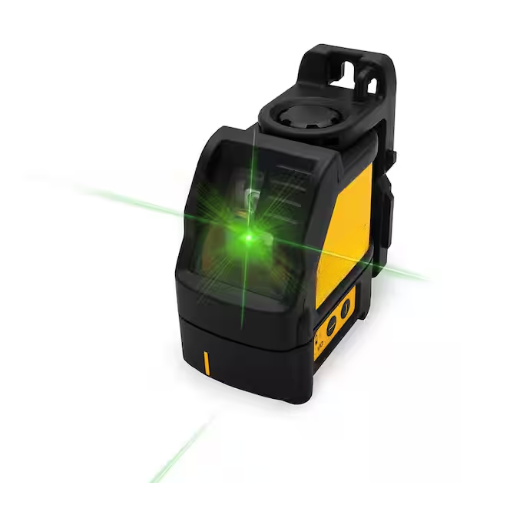
Laser levels are tools of high precision that cast laser beams or streams of laser light on surfaces as a means of achieving accurate alignment or leveling. These tools are used by many in the construction business, surveying, and interior designing because of the seamless accuracy they offer over long distances. Laser levels of today, with the help of the self-leveling feature, not only reduce errors that could come from human beings, but they also make the process of working faster. They have the potential to provide services related to the installation of fixtures, trimming, and securing the work that involves walls and cabinetry, etc., and that ranges from the biggest to the smallest. Their being so multi-functional and trusty are only a couple of the good reasons why they are tools that every professional demanding a high-end one will not miss.
What is a Laser Level?
The laser level is a specific tool that utilizes a highly focused light beam, usually a straight horizontal or vertical line, to work out positioning and accuracy exactly. Such devices are crucial for industries like the building, woodwork, and surveying because the work has to be done with minute precision. Modern laser levels are frequently based on self-leveling technology, which enables the device to be automatically adjusted so that it provides accurate output without manual recalibration. The types include, among others, rotary laser levels, cross-line laser levels, and dot laser levels, each one created for its own specific use. Rotary lasers, for instance, are equipped with a 360-degree line hence proving useful in wide areas such as for leveling floors or assessing the gradient of the land. Technology development has also introduced options with multiple-beam projection, remote control, and additional advantages, such as compatibility with light detectors.
Types of Laser Levels and Their Uses
Advantages of Using Laser Levels
1. Enhanced Accuracy
Laser levels are very accurate tools, possibly through the use of very high precision, and there are models that will reach very fine accuracy of ±1/16 inch at 33 feet. Manual leveling tools are notorious for errors from being human-handled which gets eliminated and therefore enables complex layouts to be aligned perfectly.
2. Versatility Across Applications
Laser levels are very versatile and can be used for a wide range of purposes, starting from easy alignment tasks and finishing with highly specialized applications such as tiling, framing, and grading. Some models of such levels have the ability to project either cross-line, vertical, or horizontal lines, which are perfect for wider-range projects.
3. Time Efficiency
Laser levels can reduce the setting up time significantly in comparison to the traditional bubble levels. The characteristics like an advanced self-leveling mechanism, which can be activated within only a few seconds, make it possible for professionals to concentrate on the given task without any setback.
4. Improved Visibility
Green laser levels are way more visible to the human eye compared to red laser lights and are preferred for outdoor and well-illuminated areas. The visibility can be retained over a distance of even 100 feet and with the help of a receiver, this distance can be extended to more than 300 feet.
5. Durability and Stability
It is worth mentioning that there are many laser levels that are designed with job site conditions in mind having good enough, shock-resistant bodies and housing with IP ratings to shield against dust and water. Models that are made for flooring tasks, such as tile laser levels, supply extra stability, in turn, that ensures the perfect alignment of laser lines without any shift during use.
6. Energy Efficiency and Extended Battery Life
The latest battery-saving propulsion and technologies have sired a new strain of modern laser levels, mostly those with green diodes, that have gained longer battery lives. If one chooses rechargeable laser levels, they will be making a sane choice in terms of the budget as well as having consistent performance.
Box Levels and Their Unique Features
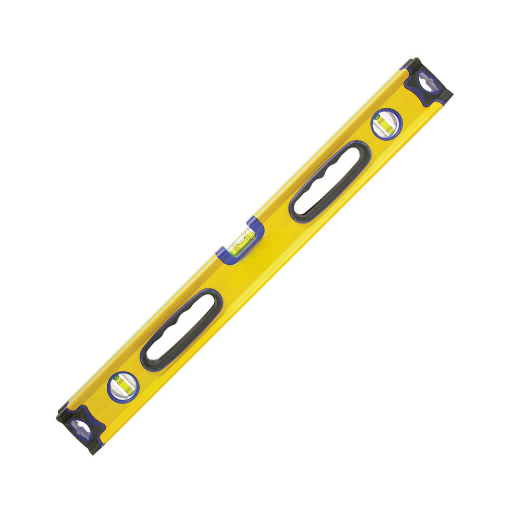
Box levels are tools that have been manufactured with all precision to perform the tasks that are exact horizontal and vertical alignment demanding. Because of the box-like and tough frame, the box level tools are that; the tools are very durable because this frame resists bending when under pressure and this even ensures good reliability in the long-term. The tools usually consist of vials which are easily read and help to keep the precision way high, in many cases with 0.5mm/m or even better accuracy, subject to the model.
On top of all that, the box levels are very often complemented with the handles that are easy to use and the ends which are made of the material that prevents shock and damages the device in case of dropping. The construction is also a strong point; therefore it is not a problem for such a tool to work very well in the case of a heavy-duty application like in the cases of construction and carpentry.
What is a Box Level?
A box level is a precision apparatus that is purposefully made to measure the straightness or flatness of a surface, among others, its alignment to horizontal (level) or vertical (plumb) planes. We can tell its structure by a tough and square frame built from high-quality aluminum or other enduring materials that also makes it bend-proof. With this unique design, not only is the service life of the unit prolonged but also the accuracy of the measurement process is highly taken care of. The latest box levels feature the usage of very precise vial technology based on a liquid filled curved tube that shows exactitude in alignment up to ±0.5mm/m or more.
Some models even incorporate components like digital readouts, magnets in the bases for attaching the levels on metal surfaces, and lasers that help in certain operations. The cooperation of the two qualities, i.e., innovativeness and toughness, makes the box level an indispensable aid for professionals in various industries like construction, woodworking, etc., where accurate measurements are important for the sake of both safety and quality.
Types of Box Levels and Their Applications
Choosing the Right Box Level for Your Project
Picking a box level that will work best for your project is very important. First, it is necessary to evaluate the particular needs of the job to be able to match the capabilities of the tool. To achieve high-accuracy data in projects like engineering or construction that require spot-on measurements, the Advanced Precision Box Level is perfect because of its high sensitivity and the capability to provide high-quality measurements. In situations with larger projects or when the leveling is required to be done on very long distances, the Laser Box Level can be taken into account. The combined laser gives the tool a wider range and better visibility, thus it is the best choice for the large projects that derive benefit from a more comprehensive alignment feature.
So-called Compact Box Levels work best in situations when it is necessary to have equipment that can be easily carried around and moved with great flexibility, for example, while working in tight spaces or on tasks that are small in size. They are very lightweight and simple in their design, thus ensuring the utmost ease of use and at the same time, not at all sacrificing their operational effectiveness. On the contrary, Heavy-Duty Box Levels must be at hand in unfriendly conditions and industrial activities where the primary characteristic is hardiness. With a combination of durable construction and materials that resist shock, the latter withstand the tough conditions and at the same time perform at an optimum level.
For the plumbing and electrical professional or other specialist who knows the trade, nothing can beat the Torpedo Box Level in terms of being versatile and extremely accurate at the same time in such a small, compact package. It has plenty of vials for all the different angles, so it is no problem to use it everywhere. At the same time, it is even better than not needing to use any extra tool at all. The choice of the right type of box level highly determines the work’s efficiency as well as the correctness of the result that is up to the project’s needs. The task nature such as its vicinity, the task’s and the project´s scale, and the task´s sensitivity requirements will point to the tool that is most suitable for the job.
Digital Levels: The Modern Tool
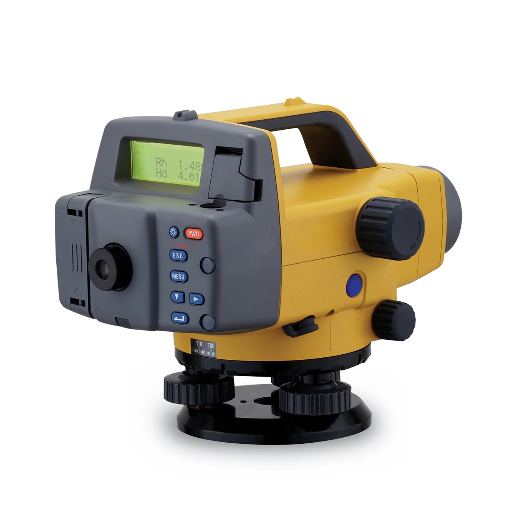
By integrating electronic components into the leveling tools, digital levels have become a leap in terms of accuracy and convenience. They are equipped with tilt and angle sensors which means that any reading is very precise and easy to read from a digital screen. Besides a very sophisticated display, most digital levels also have such functions as audio alerts, data-saving, and the ability to operate under low-light conditions, which makes them very easy to use in both complex and simple applications. Thus, it can be said that while digital levels are adopting modern technology, they are still in accordance with the old-style assumptions.
What are Digital Levels?
Digital levels are instruments of the future that are made to measure angles, slopes, and inclinations very accurately by utilizing electronic sensors and high-tech technology. These instruments consist of accelerometers or gyroscopes which continually detect the changes in the orientation of the sensors and integrate this data to get the accurate angular measurements. They are also commonly used with features such as real-time data processing, Bluetooth connectivity for data transfer and compatibility with advanced software. In the meantime, digital levels have become a solution for workflow challenges in various industries such as engineering, carpentry, and construction. They are of great help to the industry as they give a possibility to have the same and accurate measurements over and over again, which affects the project’s outcome in a positive manner and, in turn, makes the levels an indispensable tool in modern professional settings.
Benefits of Using Digital Levels
1. Enhanced Accuracy and Precision
The higher resolution offered by digital levels is much more accurate than that of traditional analog devices. The presence of advanced sensors and digital readouts reduces imprecisions from men which afterwards leads to extremely exact angle measurements of up to ±0.1°. This accuracy level is very critical in civil engineering places where the slightest variations can cause building collapse.
2. Improved Efficiency and Productivity
Moreover, with the processing of real-time data by the digital levels, the time taken to record and measure the angles or inclinations is greatly reduced. For example, through Bluetooth connection, the users can and manually look up the programs and consequently not need to come back and put the data feeding the calculations on paper.
3. User-Friendly Interfaces
Cutting-edge digital leveling solutions present user-friendly designs that cater to a wide range of professional experience levels from beginners to those who have been in the field for a long time. Backlit displays, sound-enhanced calibration, and indicated instructions on the monitor are examples of aids that also apply to harsh lighting or intricate work projects.
4. Data Storage and Connectivity
A lot of digital levels are typically equipped with embedded memory and wireless connectivity alternatives to enable the data storage and sharing. As such, this function contributes to a more thorough project record and merges well with CAD and BIM systems, thereby enhancing project planning and execution.
5. Durability and Adaptability
To be able to survive harsh environments and situations, the majority of digital levels are either dust-proof, water-resistant or constructed from shock-absorbing materials. Regardless, the available tools are apt for all kinds of different situations, ranging from dusty construction sites to outdoor projects in harsh climate.
6. Multiple Measurement Modes
One can often find in digital levels such constants as slope percentage calculation, relative angle measurement, and zero-setting for speedy recalibration. This kind of flexibility in the tools takes them as appropriate for several measuring jobs, thus ensuring that the professional community’s most requirements are met.
Comparing Digital Levels to Traditional Levels
Reference Sources
- Level Measurement
Read more here - Tool Categories
Read more here
Frequently Asked Questions (FAQs)
What are the main types of levels used in construction and DIY?
There are four main types of levels including the traditional spirit level, bubble level, box level, and digital level, in addition to line laser and rotary laser as the laser measuring pieces. Each of the level tools is the perfect one for a particular job, thus the spirit level is the least complicated one for the short job, whereas the rotary laser is the long distance grading tool. If you are familiar with the types, you can better decide on a level tool that is suitable for both accuracy and convenience. Furthermore, the use of tripods and mounts and other accessories might also affect the leveling tool performance.
How does a spirit level work, and when should I use one?
A spirit level comprises a vial full of liquid with an air bubble in it, as one of its essential parts, and the vial display level or plumb, therefore, the carpenters and hangers find it the most useful tool. Spirit levels are not so much technically advanced, but they are still very trustworthy, and they are almost free to maintain since they need no electricity unlike digital levels or laser levels. The employment of a spirit level is very simple when one needs to see through the level or plumb at a glance only for a relatively large or even short distance; through mild to mid-level light, it is gradual but visible, but one can get lost in the process. For a longer distance, use a continuous reference to one of the proper laser tools such as a line laser or a rotary laser.
What is a laser level, and what are its common types?
A laser level can be defined as a device that projects a visible line or dot using a laser diode and is being produced in various forms like line laser, rotary laser, and dot laser, thus, it can be applied in a variety of works. In general, line lasers are most commonly used for indoor jobs such as tile or cabinet installation, and on the other hand, the preference for rotary lasers is clearly seen in grading and leveling over long distances in the outdoor environment. The situation is such that the majority of laser levels are automatic and provide a more accurate result compared to most manual spirit levels.
When should I choose a digital level over a traditional level tool?
If you require critical angle measurements with degrees readouts and data saving or transferring capabilities for intricate projects, then you should opt for a digital level. Often, digital levels have electronic sensors and can be more accurate than the basic spirit level in the case of extremely close tolerances or high accuracy requirements. They are mostly used in setting slopes, aligning machinery, or in the calibration of equipment where numbers matter. Combining a digital level with a laser level can standardize the work site and at the same time making it quick.