
Digital Calipers vs Dial Calipers: Which is Better?
The debate between digital calipers and dial calipers is still a hot center of concern in the measurement world. This has, on the other hand, its own advantages and disadvantages, which are so unique to each of the calipers that it is very hard, if not impossible, to say what really changes the minds. Are you leaning towards accuracy, ease, or strength the most? In the topic below, the key issues dividing digital and dial calipers usability, accuracy, and convenience, will be mainly concentrated on which most favorably influences your buying decision. A decision will absolutely be taken and you will confidently say which tool can best fit your needs, as machining, engineering, or even DIY projects, as you choose.
Introduction to Calipers
Calipers are instruments that are used to measure the distance between two opposite sides of an object very precisely. They are used in a number of different industries and can be found in different forms such as digital, dial, and vernier calipers. The main role is to display the dimensions correctly, which includes internal, external, and depth dimensions, very often with resolution to the nearest 0.001 inches or 0.01 millimeters. Supportive, efficient, and handy to use, calipers are indispensable where there is a need for the exact fitting or assembly of components.
What are Calipers?
Calipers serve as accurate measuring tools that are used to check the precise dimensions of an object. Traditionally, they are made up of a pair of jaws which close together to measure the internal or external size of an object and a depth rod to ascertain depths. The use of technology has completely transformed the functionality of these tools by making them more user-friendly. Nowadays, digital calipers come with electronic displays for easy reading of dimensions and sometimes even more such as data transfer to a software system for detailed analysis.
The variation of measuring values is often from 0 to 6 inches (or 0 to 150 millimeters) with very little difference between each size which makes the tolerances very strict so it is impossible not to have calipers in industries where tolerances are required to be within the range of 0.0001 inches. They are a group of the major industrial tools used in sectors like the aerospace, the automobile, and the precision manufacturing sector as well. There, the very high precision of the order of 0.0001 inches is a significant factor in the quality and performance of the product, and digital calipers are one of the main assets that help in achieving such a high accuracy.
Types of Calipers: An Overview
| Type | Key Features | Common Applications | Precision Level |
|---|---|---|---|
| Vernier Caliper | Manual scale, no electronics | General precision measurements, machining | Up to 0.001 inches |
| Dial Caliper | Analog dial display | Quick measurements, moderate precision | Up to 0.001 inches |
| Digital Caliper | Electronic LCD display | High-precision, data transfer capabilities | Up to 0.0005 inches |
| Micrometer Caliper | Measures extremely small dimensions | Precision engineering, machining | Up to 0.0001 inches |
| Spring Caliper | Pivoted legs with spring mechanism | Inspection of external sizes, metalworking | Limited by manual skill |
| Oddleg Caliper | One straight leg, one curved leg | Marking tasks, layout work | Limited by manual skill |
| Inside Caliper | Measures internal dimensions | Bore and groove inspections | Limited by manual skill |
| Outside Caliper | Measures external dimensions | Shaft or object diameter verification | Limited by manual skill |
| Jenny Caliper | Sharp-pointed leg for scribing | Woodworking, crafting | Limited by manual skill |
Importance of Calipers in Precision Measurement
Calipers are instruments that play a critical role in exact measurement, and they are the number one choice for many sectors, for example, the production, engineering, and metal industries. The main point of their importance is in that they are able to measure the diameter, length, and depth of an object with a level of precision that enables the products to fit the desired dimensions. Over time, the precision, and thus, the trust in calipers, among other things, has been improved greatly through implementing digital presentations, ergonomic structures, and quite advanced material that is resistant to collapsing and changes in temperature in the atmosphere.
Digital calipers, for example, have an accuracy that is unprecedented with a resolution as fine as 0.01 mm or 0.0005 inches, and thus they are very helpful in measuring by giving real-time data display and by also eliminating manual reading errors. Besides that, vernier and dial calipers are indispensable, especially in the situation where sturdiness is necessary and the usage of electronic devices is not possible. Calipers play a significant role in the context of quality control maintaining, performance optimization and waste reduction production by making sure the parts meet the exact specifications. Their usage points to the intimate relationship that exists between accurate measurement and operationally efficient, thus making calipers the indispensable precision job tool in an era of industry powered by compact and high-tech equipment.
Understanding Digital Calipers
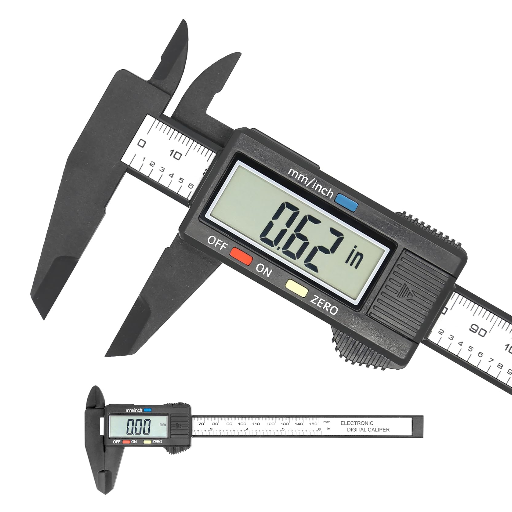
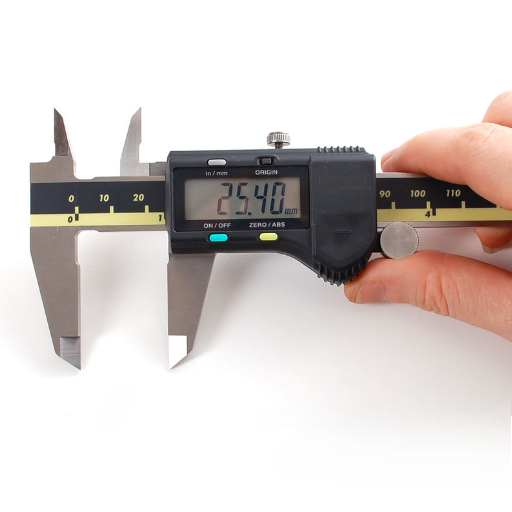
Digital calipers, on the other hand, are highly precise measuring tools suitable for accomplishing internal, external, depth, and step measurements with extreme accuracy. Definitely, digital calipers are much user-friendlier than analog calipers as they can display measurements on an LCD screen. As a matter of fact, these tools are based on electronic sensors that collect and interpret the movement of the jaws and then express it in a digital form. The sectors where digital calipers are mostly used are engineering, manufacturing, and other fields whose operations rely on the continuous and precise measurement, because of the ease of use, high-accuracy specification, and capability to switch between metric and imperial units.
Features of Digital Calipers
- High Measurement Accuracy
In general, digital calipers are very precise, being in the range of ±0.001 inch (±0.02 mm) or even tighter, hence the only choice in very detailed and precise measurements. - Measurement Range
The standard measurement range of most digital calipers is 0-6 inches (0-150 mm), but there are also some extended ranges that can reach 12 inches (300 mm) or even more under their various industrial applications. - Switchable Units
The instruments users have the ability to switch between two measuring systems just by touching a single and hence this instant conversion is the magic behind the tool versatility and adaptability. - Zero Setting Function
A reset function that clears the scale and resets it to zero is such a handy feature, allowing for the measurement of the difference and giving a very user-friendly experience in complicated cases. - LCD Digital Display
The use of digital calipers with a very bright and clear LCD screen to help get rid of the strain makes it simple to get extra accurate readings and reduce reading measurement errors to the bare minimum. - Durable Construction
The main raw materials for making digital calipers are stainless steel and carbon fiber, the latter being even further reinforced by the introduction of taxonomy. This fabrication approach is not only strong but also at the same time withstanding corrosion and giving great performance in rough industrial places.
Advantages of Using Digital Calipers
- High Precision and Accuracy
The treatment of digital calipers gives way to very precise measurements, usually being minimally different from the targeted point, very certain to confirm it to within ±0.01 mm (0.0005 inches). Accuracy of this level is a necessity not only in the aerospace, automotive, and manufacturing sectors but also in any other industry. - Ease of Use
Being equipped with electronic digital read-outs, the aforementioned gauges can also eliminate the manual reading of the vernier scale, thus avoiding possible errors. The zero-setting feature available in some of the digital calipers makes it convenient for gauging discrepancies and resetting the instrument at any place on the job. - Multi-Functional Measurement Capabilities
There is no doubt that with digital calipers one is able to measure internal dimensions, external dimensions, depths, and steps all at the same time. Such an advantage means that one has to spend less on buying different caliper types and thus, ultimately, the labor process is faster, in which case they become one of the most versatile tools in production - Data Transfer Functionality
Most of the modern digital calipers now available in the market are manufactured with data output ports either USB or bluetooth. By this, integration with computer systems for the auto data recording becomes very smooth, hence, performance increases and transcription errors decrease significantly. - Improved Readability
Digital calipers with large LCD screens give easy and convenient readings that are seen very clearly at both metric and imperial units without trouble. The result is a significant reduction in misread measurements, especially in poorly lit or visually difficult work areas. - Durability and Longevity
Digital calipers are made with high-grade materials like stainless steel or reinforced composites, therefore, they are highly durable. They are not attacked by a number of elements like corrosion, mechanical wear, and dust and moisture which make them solid even under the harshest industrial conditions.
Common Use Cases for Digital Calipers
Digital calipers are extremely useful across various industries for exact measurements. These tools are commonly used for one of their main purposes during the production and machining processes, where precise individual part sizes like lengths, diameters, and depths are crucial for the construction of parts which conform to exact design specifications. Quality control processes have been relying on their accurate reading of tolerances for a long time now, given that they have provided a more cost-effective solution compared to other methods that bring less accuracy or take more time to complete.
In the automotive industry, digital calipers are used mainly for the measurement of brake rotor thickness, cylinder bore diameters, and other dimensional checks which are majorly related to the safety and the performance of the vehicles. And also in the field of aerospace engineering, these very accurate instruments are used throughout the fabrication and the inspection of the complicated parts of the aircraft, adding to the safety and the function of the aircraft as a whole.
Digital calipers are useful in storages/pools of industrial settings, where they can be utilized in measuring materials or experimental samples. Besides this, they are day-to-day tools for laboratories involved in scientific research because they assist in measuring experimental materials or specimens. They are also very popular in the jewelry and watchmaking industries because there, even a fraction of millimeter in a wrong measurement can completely spoil the final product’s fit and operation. Not only will they serve globally integrated industries, but the feature of switching back and forth between the modern and traditional units of measurement will add to their popularity as well.
Exploring Dial Calipers
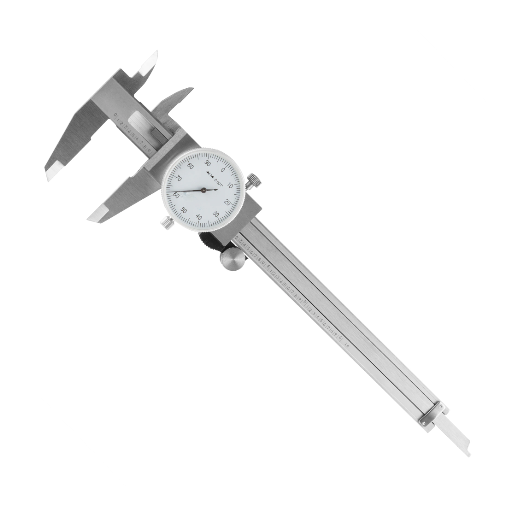
Dial calipers, on the whole, are regarded as a mechanical dial pointer-based classic tool for the purpose of delivering the most accurate and easiest-to-read measurements. To clarify, they are the very opposite of digital calipers. Analogue systems are the keystones of dial calipers where the mechanism of rack-and-pinion causing the dial to be driven and showing measurement instantly is key. Usually, manufacturing, metalworking industry, quality control, and other related fields use them for their measuring of the external dimensions, internal dimensions, depths, and step measurements. The durability of their built and the fact that they don’t have electronic parts make them the first choice among users who have to use calipers in rough conditions where digital tools can’t operate properly, such as magnetic fields, moisture, heat, etc.
Features of Dial Calipers
- Robust Construction
Dial calipers are virtually always being produced from hardened stainless steel, the so-called wonder metal. This makes them tough and as good as new for ages. - Dial Indicator for Precise Readings
The dial indicator is remarkably accurate and repeatable, usually with such high resolution as either 0.001 inches or 0.02 millimeters which makes them the best tool for precision engineering applications being used. - Shock-Resistant Design
The majority of the dial calipers are structured with rigidity to avoid impacts and vibrations; hence, their main purpose is to keep the accuracy and function in such tough environments. - Smooth Sliding Mechanism
The superfine guide track mechanically slides on the precision-ground tracks very smoothly and precisely resulting in almost no errors due to mechanical or material factors. - Locking Screw
The provision of a locking screw is one of the new features for Dial Calipers. This feature prevents the user from inadvertently changing the measurement being checked thus preserving the measurement for comparison or documentation purposes. - Measurement Range
Through their typical adjustment range of 0 to 6 inches (150mm), the smaller dial calipers extend the measurement line. Larger models with expanded ranges extending up to 12 inches (300mm) or more can still be found, depending on the variation in the applications and the customer’s choice.
Common Use Cases for Dial Calipers
The use of dial calipers as indispensable equipment for precision measurement in various industries is a well-established fact. The major bulk of their employment can be seen in the realms of manufacturing and machining, where these instruments are the main tools for measuring the dimensions of components with utmost precision including inside and outside diameters and depths of machined parts. They are also extensively used in the quality control department to make sure that the components are in tolerance and to help achieve consistent production standards.
The next significant field of application involves the automotive and aerospace industries, where precise measuring is essential to the assembling of the very complex mechanical systems. Dial calipers play a key role in particularly small measurements such as the gaps, grooves, and the like features in the engine of a vehicle or building assemblies. At the same time, dial calipers are very popular among jewelers and watchmakers who employ them in measuring the minuscule dimensions and thus to achieve the precision fit and the general high quality in their delicate work.
Finally, dial calipers play a key role in scientific research and laboratory work by providing accurate measurements of materials from experimental setups. Their durability and being user-friendly nature lead to materials having to be one hundred percent precise, no matter what the settings are.
Digital Calipers vs Dial Calipers
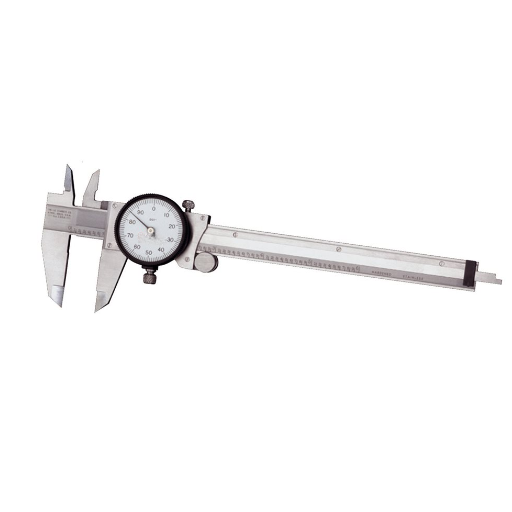
The difference when it comes to digital calipers when compared to dial calipers is that digital calipers are used in fast-paced areas, where human faults due to being tired are reduced as the digital calipers display data on a screen that is easy to read; also, they might be faster and more user-friendly compared to dial calipers. Moreover, digital calipers often have such advanced features as the ability to use Imperial and Metric systems, which allows the user to convert the units and send data that is going to, or back from, an external source.
In contrast, Dial calipers just need a mechanical dial to indicate the measurements. They are very dependable too, as they will not die out on you due to flat batteries or being unable to figure out the reading correctly.
In conclusion, the digital calipers are the more logical choice for the current edge applications needing speed and adaptability. On the other hand, the dial calipers are still the best instrument for people who love classic and simple mechanical precision.
Key Differences Between Digital Calipers and Dial Calipers
| Feature | Digital Calipers | Dial Calipers |
|---|---|---|
| Measurement Readability | Easy to read digital display | Requires interpretation of dial readings |
| Power Requirement | Battery-powered | No power required |
| Accuracy Level | Highly accurate with smaller error margins | Very accurate but susceptible to human error |
| Speed of Use | Fast and efficient in high-paced workflows | Slightly slower due to manual reading |
| Data Output Functionality | Can connect to PCs or other devices | No data output capability |
| Durability | Sensitive to electronic damage | Sturdy mechanical construction |
| Environmental Resistance | Limited resistance to water and dust | Resistant to harsh conditions |
| Cost | Generally more expensive | Usually more affordable |
| Calibration Complexity | May require technical calibration tools | Easier to calibrate manually |
| Weight | Lightweight | Slightly heavier due to mechanical parts |
Accuracy and Precision Comparison
By comparing the accuracy and precision of both electronic and mechanical systems, it can be seen that major divergences, mainly in their structural and operational differences, occur. Electronic systems do, most times, prove to be more accurate because of their capability to handle intricate data with very little variation. This is made possible through sensors and computational algorithms that are extensively advanced and that virtually eliminate uncertainties, thus allowing for thin-margin performance. Meanwhile, mechanical systems might be relatively less accurate, since they directly depend on physical elements which, with time, could be affected by wear and tear.
The reliability of electronic systems in terms of precision might not be of primary concern as such devices are known to have their readings perturbed by the slightest electrical and thermal influences – a reason for periodic tuning. On the other hand, mechanical systems show significant accuracy under fixed operating conditions, especially in circumstances where the given environment demands high robustness as well as the carrying out of the same process repeatedly for a relatively long time. Thus knowledge of the association of the systems’ accuracy and precision will be vital when it comes to choosing the right technology for the application with tolerance and environmental conditions being the chief determinants.
Durability and Maintenance Considerations
Key elements in the overall performance of both mechanical and electronic systems are durability and maintenance. Metals and composites are typical materials used in the production of mechanical systems to avoid wear, fatigue, and the negative effects of environmental loads such as vibration or extreme temperatures. By doing so, the mechanical systems are made to be the best choice for such industries as manufacturing, where the prospects of long-scale operation and the accompanying low probability of mechanical failure are crucial factors.
On the other hand, electronic systems have less wear because they don’t have moving parts, the result is that they are not easily destroyed by mechanical factors. Nevertheless, there is a possibility that their durability is significantly compromised by factors such as thermal expansion, voltage spikes, and humidity or dust, which is regarded as environmental contamination. For electronic systems, the maintenance process is usually aimed at diagnosis, for instance, firmware updates, heat control, and removal of contamination by putting the right guards around. Sensor technology and predictive analytics have improved greatly hence the possibility of early failure detection.
Industry Applications and Preferences
Varying sectors decide on maintenance tactics according to different conditions of the enterprise and the site. In production, for example, prognostic maintenance is the preferred option due to its capability to decrease the unexpected operational interruption and enhance the production plan. Condition-based monitoring, on the other hand, is frequently employed by the energy sector, mainly by the wind and solar power generation, to secure the equipment’s performance when the weather conditions are changing. At the same time, the transportation sector, including aviation and rail, resorts to preventive maintenance to meet the very strict safety standards and the same regulations. Every way is picked in order to take with the industry-specific requirements that will also contribute to the aspect of the reliability, cost, and regulatory compliance — a sort of guarantee that the system will be at its peak.
Which Caliper is Best for Woodworking?
When it comes to choosing a woodworking caliper, one must pay special attention to factors such as quality and strength. Quite naturally, the digital calipers would top the list as the most preferred device since they are very easy to use and highly accurate, with measurement resolutions mostly at 0.0005 inches or 0.01 millimeters. Mitutoyo and iGaging are the leading and most sought-after brands in the woodworking industry because of their excellent performance and robust design. In the case of calipers, the stainless steel models are the most robust because they can endure the effects of wear and moisture, which are the main problems in the woodworking area.
Furthermore, the use of such big, easy-to-read LCD screens, and the perfectly working internal parts will smooth the path for the woodworkers when they have to make quick and accurate measurements. It might be the case that sometimes vernier calipers are the ones that bring the precision you like even if their handling is a bit tricky. Ultimately, the question of the most suitable caliper for you will largely be determined by the exact features of the project that you are dealing with, the level of your own skills, and the consistency of the tools during a prolonged period of use.
Metalworking: Digital or Dial Calipers?
The choice between digital and dial calipers for metalworking is defined by the latter’s precision needs, resistance, and job-specific user’s taste. Digital calipers are well known for their simplicity in use and are able to render the most accurate values of length in both metric and Imperial units by pressing a button. This not only eradicates any possible misinterpretation of the dial calipers’ analogue scales but also reduces the chances of errors at the same time. More than that, top digital calipers could come up with applications already equipped with having data output ports.
On the other hand, dial calipers are known for their exceptional toughness and reliability which is an advantage particularly in cases where electronic equipment is more likely to be damaged or to fail. People never have to worry about dead batteries in dial calipers as they are fully mechanical; therefore, they are more durable than electronic calipers and they are relatively less affected by moisture or temperature extremes. The fact that they are analog means that they still enjoy a “hands on”, “felt”, and controlled usage, which reliability is driven by.
To a great extent, the preference of metalworkers for either digital or dial calipers really boils down to the type of work and the worker’s comfort level. In very high-tech, very controlled environments, digital calipers probably take the cake in terms of fast and accurate measurement, while the dial calipers continue to be the workhorse in the tough and more rudimentary sphere that needs the tools to be tough and reliable.
Automotive Use Cases: Choosing the Right Caliper
A caliper used in the automotive industry must be precise and durable. The mechanics are very fond of digital calipers for requirement like the thickness of the brake rotors, the hole dimensions of the vehicle’s wheel hubs, and the exactness of the alignment of the tires. Hence, the very quick and accurate reading to an LCD display which is also very easy to use give these digital calipers the perfect match to the modern era in automotive repair shops and factories that are so much into efficient processes.
Conversely, dial calipers still have their own place traditionally, it is in very tough places such as workshops loaded with dirt, oil and debris, while at the same time interfering with electronics. The dials do not need batteries, thus minimizing errors in the field. Besides, the dial calipers fill up all the possible gaps in situations where users must feel the measurement and also be ready to measure in old-fashioned or energy-deficient areas.
The choice of instrument must be done based on the type of work, surroundings, and the user’s familiarity with it. Hence, if we take the example of working with high-end vehicles where the accuracy at the micron level is of utmost importance, digital calipers can be the best choice. On the other hand, when it comes to field repairs or heavy-duty work exposed to the most harsh conditions, dial calipers would be the more recommended alternative of usage by strength, with accepting a lack of absolute accuracy still within the automotive standards.
Reference Sources
- Low Cost Data Acquisition From Digital Caliper to PC
Read the paper here - Improved Tissue Caliper
Access the study here
Frequently Asked Questions (FAQs)
Which caliper is easier to read for decimal places?
Digital calipers are normally the simplest to interpret to the last decimal place as the display itself gives the exact value and does not have an interpolation like in the vernier calipers. Dial calipers can give fine resolution and the form of a tactile feel via the rack and pinion mechanism, but interpreting the main scale and lock requires the user to have a solid knowledge of fractions and somewhat think in the vernier spirit, though it is not strictly a vernier caliper since there is no nanometer mark. Digitals reduce mistakes and speed up work for cases where a lot of readings have to be done, particularly very fast and continuously (e.g., when measuring an outer diameter or trying to find out the size of an opening).
Which is better for calibration and gauge blocks?
Metrology laboratories are suitable for both vernier calipers and dial calipers when it comes to calibration against gauge blocks; this is because they give a stable mechanical measurement without electronic drift. With a high-quality digital readout, digital models are useful for recording the values and ensuring consistent decimal precision. However, they might still go out of calibration, need battery checks, and this is actually the time when it is most crucial. The care of the dial and digital calipers in the presence of metal chips or exposing them to shocks is different, but it is actually easier to keep them accurate.
What about maintenance and care needs?
It is an electronics-wise less complex and therefore non-battery-operated dial gauge, which is positive; however, it still requires dust and metal chips to be kept away so that the dial operates smoothly. Battery-operated digital calipers are the right case in point and there is periodic need for electronic examination which makes battery life and keeping spare batteries the two important factors to be considered. Both items require cleaning at all times even though the frequency of cleaning might slightly vary.
What level of accuracy and resolution can I expect?
People who use digital calipers that have a resolution of 0.01 mm or 0.0005 inch are usually very fond of this resolution because of the immediate digital display on the screen. The people who do the jobs that require precision normally find them very useful. On the other hand, dial calipers can have a scale good to 0.001 inches-hundredths of an inch on the dial which in most cases does not really need the use of any tool for the same resolution, and vernier calipers require a precision made by the user to achieve the desired results.