
MIG vs. TIG Welding: Choosing the Best Process for Your Project
When beginning a metal fabrication project, the selection of proper welding process plays a crucial role in ensuring that your assignment is completed in time and to the required level of quality. Two of the most dominant welding techniques in use hence the Metal Inert Gas (MIG) and Tungsten Inert Gas (TIG) welding possess unique features and functionalities. However, how does one make an informed choice between these two techniques that are meant to achieve almost similar purposes? The guideline will offer insights because it provides a comparative study of MIG and TIG welding vis-a-vis the techniques involved, distinctions, challenges faced, plus appropriate scenarios where each would be applied. Whether you are managing a construction management project or working on a competitive layout where precision is the key, this article will help you make a wise choice and improve your welding experiences.
Understanding Welding Processes
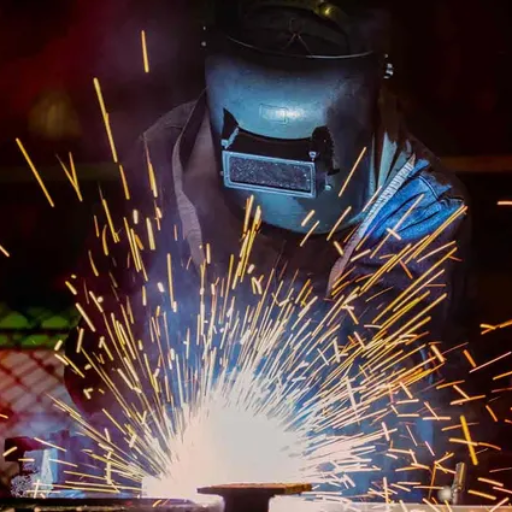
Shielded Arc welding is natural. For one thing, such a technology is known by other names, Gas Metal Arc Welding (GMAW). This technique is in fact all about a continuous solid wire electrode that is pushed through a welding gun and enters the weld pool directly. And this method of welding involves an external gas shield, typically argon or a mixture of carbon dioxide with argon for preventing the weld from airborne over contamination. There is much improvement to say in industries because the MIG welding allows to be used in thicker materials. There are also other industries which have accelerated in growth due to this kind of welding because they include very basic knowledge and fast activities such as building and automotives.
Gas Tungsten Arc Welding, shortened in GTAW or more commonly called Tungsten Inert Gas (TIG) welding makes use of a non-consumable tungsten electrode for joining of metals. Particular advantages of gas tungsten arc welding include its high degree of control over the process and the focus on the weld. As a result TIG welding is extremely useful in projects involving thin or intricate pieces of metalwork such as aircraft parts or ornamental designs of the metal frame. There’s hardly any spatter of the metal beads while welding; however, the quality is high but it’s very slow and demands a higher knowledge angle compared to MIG welding. TIG welding may also be done with or without filler material, which means that it’s useful in a variety of fields.
What is MIG Welding?
Gas Metal Arc Welding (GMAW), called Metal Inert Gas (MIG) in some cases, is a process known to almost every welder because of its simplicity. In this process, a consumable wire is fed to the arc welder in a continuous manner with the help of a welding gun. In this process, the wire electrode performs the dual operation of a filler material and an arc carrier. Shielding gas, often argon, carbon dioxide, or both at once, is used to prevent the weld pool from any air convection (oxygen or nitrogen).
MIG welding is in high demand due to its quick and effective nature that makes it suitable for many high-volume industries including automotive, construction, and metal works. The procedure is not as difficult as TIG welding, and as such is preferred by both novices and experts. Very useful for welding many areas is MIG welding, even when it is not the most energy efficient due to high temperature. Careful routing of the voltage and the wire being used help in the prevention of burn through in MIG welding when attempts are made for thinner steel. One such capability which has sustained MIG welding’s widespread adoption in numerous professional applications is its being a fusion technology with relatively modest level of operational complexity and still operational efficiency.
What is TIG Welding?
TIG welding, or Tungsten Inert Gas welding is a technique which is extremely high in terms of accuracy. It is incredibly precise as the weld is created by an electrode, however, this is a non-consumable tungsten one. Yet it is also known as Gas Tungsten Arc Welding (GTAW) and is especially useful for clean and aesthetic welding on such materials as aluminum, stainless steel, and magnesium. TIG welding for example requires an external filler material in certain applications, whereas in other processes, the metallic materials are melted by the arc and fused together in the end.
The operation the technology employs is to weld under the protection of an inert gas most commonly argon or a helium blend, which is a residue-free water; thus eliminating any atmospheric influences within these areas. For this reason, TIG welding is especially applied into projects that require neat and fine welding of materials or in whose industry such as aviation and automotive industries. Though largely precise, TIG welding normally requires more techniques to learn than other forms of welding such as controlling of heat, speed and filler rod placement. Using TIG welding is time effective unlike cutting the material and brazing the joint on the other hand it is more versatile than seam welding in that, it is preferred due to quality of welds achieved as far as finished surface is concerned.
Key Differences Between MIG and TIG Welding
| Parameter | MIG Welding | TIG Welding |
|---|---|---|
| Heat Source | Continuous wire fed electrode | Tungsten electrode, separate filler rod |
| Expertise Required | Moderate skill level | High skill level required |
| Welding Speed | Faster | Slower |
| Material Thickness | Suitable for thicker materials | Ideal for thin and delicate materials |
| Weld Aesthetics | Moderate finish | Superior and precise finish |
| Equipment Cost | Generally lower | Higher due to complexity |
| Metal Types | Versatile with many metals | Best for stainless steel, aluminum |
| Portability | More portable | Less portable due to complex equipment |
| Filler Material | Integrated into the wire | Separate filler necessary |
| Control Over Weld | Less precise | Highly controllable, detailed welds |
| Common Applications | Construction, fabrication | Aerospace, automotive, fine metal working |
| Shielding Gas | Commonly argon-CO2 mix | Usually pure argon |
| Spatter | Produces more spatter | Minimal spatter |
| Learning Curve | Easier for beginners | Steeper learning curve |
Scroll horizontally on small screens to view all columns.
Material Compatibility for Welding Process
Before the welding takes place, two or more materials must be checked out for compatibility, their difference in composition, melting point and other welding properties. It is customarily to weld together such materials as carbon steel, stainless, or aluminum.
- 1
Carbon Steel – Its good welding characteristics including, but not limited to, predictable melting, limited risk of cracking and ease of manipulation means that it can be welded using almost any other welding process and work out well for most structural and fabrication works.
- 2
Stainless Steel – As to this type of steel, care must be taken in controlling the heat input and selecting appropriate filler materials to prevent oxidation or distortion. It is widely regarded as a high abrasion product and is often used when the environment is a safety concern.
- 3
Aluminum Alloys – These possess added issues since they have a lower solidification temperature and better thermal conductivity. If correct levies are not applied such as meticulous cleaning with the application of argon gas by itself, defects formed like gas holes might arise.
Exploitative extraction and consideration of base material’s mechanical properties contribute significantly to successful welding occurrence and sound quality of the joint.
Materials Suitable for MIG Welding
- 1
Carbon SteelMIG welding on Carbon steel material is facilitated by the relatively low melting point and excellent weldability. This material is often used in establishments where construction is involved, making vehicles, and the maintenance industry. The choice of filler material is also important in this regard; for example, commons such as ER70S-6 are used for higher strength and minimum spatter.
- 2
Stainless SteelStainless steel materials lend themselves to MIG welding for aesthetics and precision. The reasons for doing so include the containment of distortion in component during welding, and maintenance of the corrosion resistance characteristics of the material used. On most alloys, the type of filler wire used is either ER308L or ER316L filler.
- 3
Aluminum and Its AlloysMIG wolfram arc welding of aluminum can be considered challenging due to a low melting point and very high thermal conductivity. It calls for spool gun or push‐pull systems in combination with effective heat management. Typical process modes include 100% argon as a shielding gas and ER5356 or ER4043 filling wires.
- 4
Copper and BrassIt is rare to find welding done on the parent metals such as copper and brass via MIG welding. However, such strategic welding when properly carried out gives rise to joints that are quite durable. Use of pure argon gas or an argon-helium combination serves to better controls the heat duty cycle whereas the use of certain filler materials prevents production complications given the high zinc concentration in brass.
Materials Suitable for TIG Welding
- 1
Aluminum and Aluminum AlloysTungsten Inert Gas (TIG) welding, due to its handling capabilities of soft metals, and intricate forms is best suited for welding of aluminum. To enhance the cleaning of the oxide layer, the application of a pure tungsten electrode and an AC-type welder is ideal in argon welding. Argon being a shielding gas is very necessary in order to prevent contaminants from interfering in the TIG welds. Moreover the joining of a filler metal such as ER4043 or ER5356 increases the combined resistance and design limits the material can be put.
- 2
Stainless SteelStainless Steel is also welded well through the TIG welding process, and the resulting weld is clean and exhibits a nice outlook at the same time. Direct current in welding is preferred especially in cases where more accurate welding is required, with the use of a tungsten electrode that is pointed in a sharp wedge and non-dipped. For sheaves with leaves, it is possible to provide a type of horizontal sheave of the concrete sheave and pole, but to a certain so put them underneath.
- 3
Carbon Steel and Mild SteelCarbon steel greatly houses TIG welding due to its ability to generate neat and good-looking welds. DC welding is commonly utilized and argon becomes the primary shielding gas. Filler materials are also introduced for example ER70S-2 so that steel with dissimilar material can be welded into satisfying mechanical condition.
- 4
Copper and Copper AlloysCopper alloys, being highly thermally conductive, are not easily weldable. However, TIG (tungsten inert gas) welding provides a temperature-controlled assistance system which is regarded as viable. The use of helium-argon gas helps reduce heat input during the process of welding. Whenever welding is to be done to the base metals like bronze and brass for example, specific filler rods are used to prevent porosity as well as metal cracking.
- 5
TitaniumTIG is a preferred process when it comes to welding titanium due to its necessity for controlling heat and prevention of oxidation. Only pure argon is allowed as the shield gas and sometimes other purging methods are employed to purge the cavity from contamination from the atmosphere. To further ensure the lifespan of the articles, the grade of titanium is used and also in some cases such as the one of welding the titanium make up the quality filler materials.
Welding Techniques and Skills
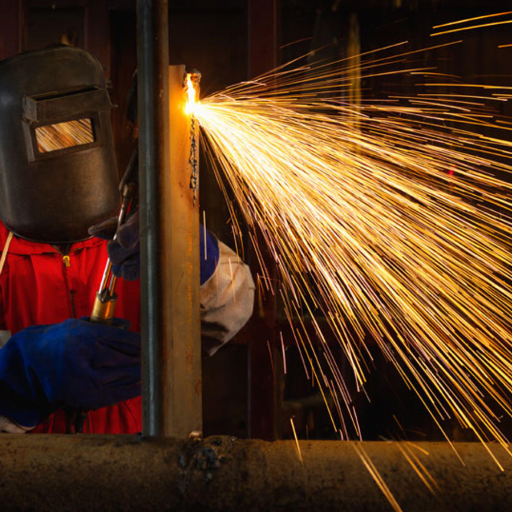
It involves perfecting welding exercises, which is an art that demands precision, knowledge and appropriate tools to attain. It also includes the following the various commonly used welding techniques:
- 1
Shielded Metal Arc Welding (SMAW)Ideal for construction and repair work but this means it is less shielded against contaminants. It is mainly used for Iron and steel welding, especially for building and construction works in the field.
- 2
Gas Tungsten Arc Welding (GTAW)Highly mechanized welding process which facilitates one to make perfect thin welds such as that of stainless steel or aluminum without any dents. It needs a more specialized operation and mostly used in high value end products especially in industries like aerospace and automotive.
- 3
Gas Metal Arc Welding (GMAW)Known as MIG welding, this one is for its speed and ability to cover quickly large instances of work. This is performed in most assembly line structures and can be applied to mild steel to aluminum to stainless steel.
- 4
Flux-Cored Arc Welding (FCAW)Has higher efficiency than the former. Similar to GMAW, it uses a consumable tube that acts as a metal covering for the electrode so that the environment does not affect the welding.
Any approach adopted presupposes the acknowledgment of material characteristics, the selection of correct auxiliary materials, and the provision of a constant gas and heat supply for the creation of robust welds. In addition, it is notable that the room of attention and detail toward safety measures and the runs on equipment are all in full communication.
Basic Techniques for MIG Welding
MIG (Metal Inert Gas) welding is also known as Gas Metal Arc Welding, wherein an organized process is generally needed to ensure the job is done right. It’s imperative as well, that on the basis of the material’s thickness and the type, a suitable voltage, wire-feeding rate and the gas flow rate should be adjusted. It’s the duty of the welder to work with the correct angle for shop as well as field welds usually 10-15 degrees to vertical. This helps in slowing controlled penetration and ensuring desired uniformity of the bead. Properly maintained torches and tips are good since they will prevent feeding problems and poor arc stability.
What’s more, getting the most suitable speed of welding is of great importance since very high speed will give rise to insufficient melting, the reverse will happen with a very low speed and therefore, the residue will burn away. Also for the weld to be complete the workpiece should be very clean throughout as certain things like rust, oil and paint may affect the worth and the useful defective weld may be produced. By mastering these procedures works as a guarantee to the performance of those applications through MIG welding to ensure that there is absoluteness and certainty.
Basic Techniques for TIG Welding
Tungsten Inert Gas (TIG) welding is a type of welding that demands precision and detailed control of the parameters of welding for one to attain high-quality weld to the best ability and this is so for the whole of the process. The welding process employs a tungsten electrode which is not used up during welding, and this electrode produces the arc which in turn calls for several factors to be maintained at the proper levels like current, electrode angle and heat penetration. It is emphasized that the correct arc length be followed since overproduction of the arc can undo the arc balance however, short spacing encourages introduction of dirt in to the weld metal.
When welding with a metal inert gas (MIG) technique, the use of appropriate shielding gas, usually either argon or an argon helium mix, is required to shield the electrode and the weld pool from any contamination arising from atmospheric sources and hence enabling clean, smooth and flawless welds. Since it is mainly the control of filler materials in TIG welds that is the area of concern, one must be able to keep his/her hands completely steady and not only that, relevant control exercises need to be done with respect to the travel angle so that the weld bead becomes neat. The TIG welding transport of the welding wire to the welding position, makes traveling with a travel speed an important feature.
Skill Levels Required for MIG vs. TIG Welding
Metal Inert Gas welding, MIG, is used by beginners as it operates simply, and is, partially automatically linked. The wire-guided pistol serves the user with filler material in a continuous stream, managing the coordinated work by hand. Thus the procedure turned out more fitting for more extensive and less complicated occupations like development of strong structural frames or repairing vehicles. This further includes on the other hand, such a situation that good quality welding still cannot be carried out due to the neglect of the most basic factors like incorrect voltage, unplanned wire feed rate and the type and the level of the shield gas which may all lead to shortcomings like bubble linear cracks and lob welds most fashionable in today’s children.
On the contrary, TIG (Tungsten Inert Gas) welding is the most high-skilled method of welding and needs the highest accuracy as well as standards. This way, operations that are done with both hands require a special training – one learns to alternate between the role of a torch’s pilot light, and that of a filler rod’s operator. Such operations also include adjusting the level of power through a foot pedal which further demands a great deal of care and control. It is common that TIG welding is preferred in the cases where the aesthetic demand of the weld is high, such as aerospace or sculptural applications since it has ability to close the joint with minimal finishing. In contrast, experience is not the only requirement to achieve superior TIG welding quality; it requires understanding as well as enough training which can be frustrating hence less effective for beginners or generally for those who focus in the filling and detailing of metals.
Cost and Efficiency Considerations
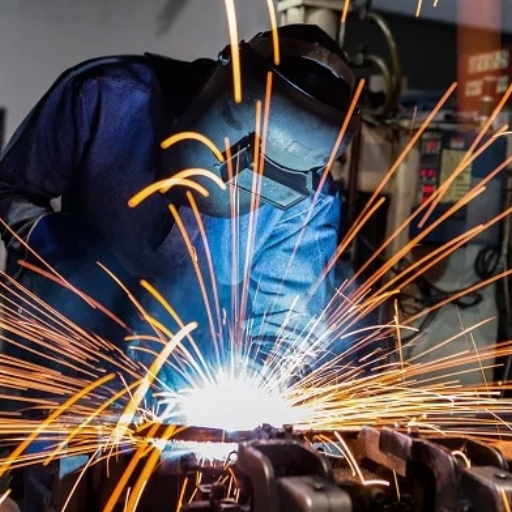
The drawbacks and virtues of TIG welding in terms of its financial implications and how effectively it does the work should be looked upon from two angles; which are the initial extra costs to be incurred and the factors that contribute to the outcome of the work. The equipment used in TIG welding tends to be more expensive than other welding methods because of its better precision and flexibility. Also, the practice demands expertise and a lot of time per weld. Hence, productivity in general will be low. Nevertheless, the very processes that are most time-consuming which are such as tig welding can compensate for cost such that in cases where higher standard is required in join production, for instance in the aerospace or in medical device manufacturing, it is possible to ignore such costs.
Use Cases and Applications
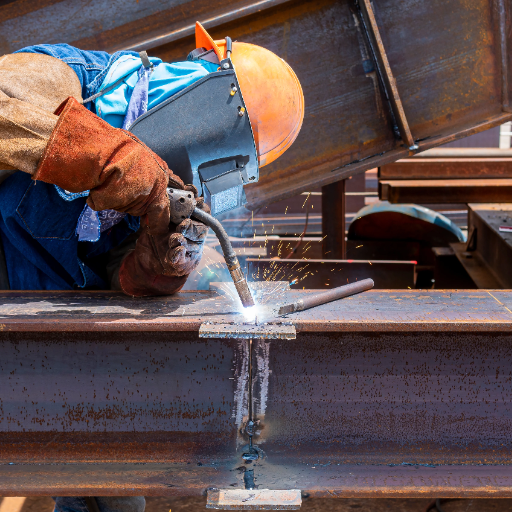
MIG (Metal Inert Gas) welding has been extensively used in settings characterized by the importance of quickness and productivity. Most of its applications revolve in the areas falling within high volume production techniques such as auto fabrication and construction, within the ship hulls. This makes it valuable and extremely convenient joining tool for mainly thin to moderate thickness range of steel and aluminium as such. Being just as versatile and user-friendly as it is, MIG welding is a good deal for large scale requirements that aim at consistently clean welds even when the operator is not that skilled. In the meantime, TIG welding or Tungsten Inert Gas welding, is valued for its precision and the high quality of welds, it is no wonder that this is an integral piece of equipment whenever delicate aspects or high strength structures come to life. With its capability of producing clean and aesthetic looking joints in different metals such as stainless steel, aluminum, and also exotic materials like titanium, it is quite common to find TIG welding being applied in new and interesting sectors such as the aerospace industry, medical equipment manufacturing, and the production of all forms of metal work – both practical and extracurricular. For this purposes it remains the best method when quality matters more than cluttering.
Common Applications for MIG Welding
MIG welding is recognized for its practical aspect and simple operations and is frequently employed in all types of high throughput applications and types of industry. It finds major application in automobile industries where speed and precision in building car frames or exhaust are especially important, as is with the construction. Also one amongst the major consumer of this procedure is the construction Industry for the fabrication of steel structures, bridges and heavy machinery, which allows the welder to join thick sections of metal in less time than other methods of joining such metals.
Furthermore, MIG welding is widely used in the shipbuilding and maritime industry, resulting in tough welds that can deal with intense saline environments without succumbing to corrosion. In addition, this method or welding is used in the development of pressure tubing and vessels in an urge to enhance welders’ adaptability and spend extended periods of time welding without breaks because of long continuous welds. Regardless of the material; be it carbon steel, aluminum or stainless steel, MIG welders are so advanced thus changing the narrative on the scale of operation since they can be applied to small scale workshop still while big industries introduce the same welding machine for various metals and to a full length of useful widths and techniques.
- ■ Automobile manufacturing
- ■ Steel structures & bridges
- ■ Shipbuilding & maritime
- ■ Pressure tubing & vessels
Common Applications for TIG Welding
There is no doubt that the Tungsten Inert Gas (TIG) welding technique is rather precise. Therefore, this is such a perfect technique for industries dealing with production in terms of quality and aesthetics of the weld. It’s one of the main applications is in the aerospace industry where it helps and makes it so easy to join a very thin fine and a brittle materials like aluminum and titanium so accurate and as it should be. By doing this, we get perfect flawless welds where they happen to be the parts which should be working properly for the aircraft.
Furthermore, TIG welding plays a big role in the automotive industry cars especially in exhaust pipes, suspension structures, and racing stuff. This method provides the best quality and long-lasting materials by welding perfectly and eliminating oxides and other dirt deposits. Aside from the industrial use of the TIG welding technique, medical devices and surgical instruments are also optimized in its engineering mainly due to a reduction in such facilities that guarantees application of stainless steel and other biocompatible materials.
The craftsmanship is valued in the realms of art and architectural metalworking, where the main requirement is the simplicity and polished detail of the seams. At the same time, TIG welding is perfect for making decorative sculptures or wall decorations because it assures high precision while welding. In addition, the efficiency of this type of welding becomes quite evident as it can be applied to almost all kinds of metals, from nickel to copper, and can be utilized in each of the industrial applications.
- ■ Aerospace components
- ■ Automotive exhaust & suspension
- ■ Medical & surgical instruments
- ■ Art & architectural metalwork
Reference Sources
📄
Application of MIG and TIG welding in automobile industry
📄
Comparative study of FSW, MIG, and TIG welding of AA5083-H111 based on the evaluation of welded joints and economic aspect