
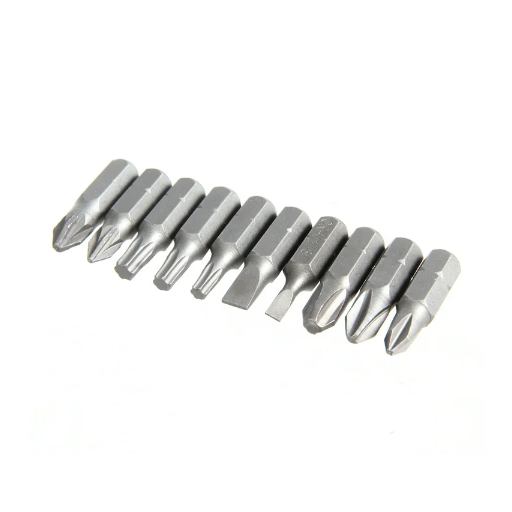
Comparing Screwdriver Bit Materials: S2 Steel vs. Chrome Vanadium
Introduction to Screwdriver Bit Materials
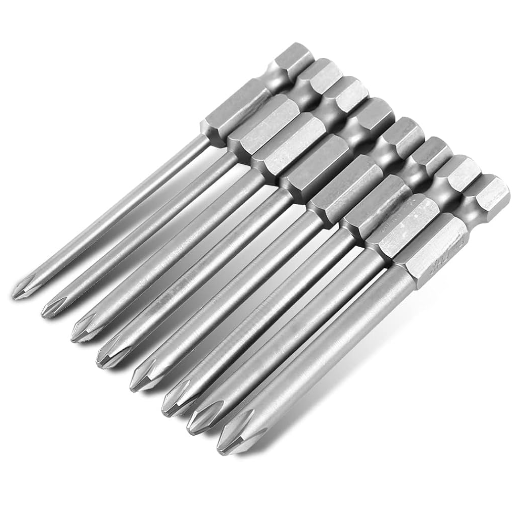
The mechanical characteristics and possible uses of screwdriver bits can significantly hinge upon the type of material used in their construction. For example, S2 steel and chromium-vanadium steel (Cr-V) are amongst the most popular materials used in their production.
Material 01
S2 Steel
The material is so hard that it is intended to resist very high torque, making it very well suited for strongwork. It can resist large impacts and makes up for the weakness of distorting under stress.
Material 02
Chrome Vanadium (Cr-V)
Chrome vanadium in the other hand is known mainly for its tough nature and there are hardly any ranges of flexibilities where it can not be put into use. With moderate tensile strength and resistance to corrosion, chrome vanadium can be utilized in a number of applications.
Different properties are given to each of the materials, S2 steel is magnificently strong and is the main material of choice for the most energy-intensive tasks, whereas Cr-V is prone to wear and tear and can be used easily in many different ways. Choosing the right “tool” from the table above assures improved performance characteristics and better maintenance.
Importance of Choosing the Right Bit Material
Trusty and reliable, bit material chosen will influence performance, durability, and energy charges across the promised service life and more. Technically, each given material characteristic has been standardized for managing the given levels of mechanical or torque stresses. With reference to the other example, S2 steel, which is renowned for its better cracking and smudging resistance, is quite appropriate to be embraced under conditions where industrial tools are exposed to cyclic high stress and high torque.
Nevertheless, Cr-V steel possesses a well-rounded blend of high tensile strength and anti-corrosion properties, making it invaluable for non-intensive and moderate applications. Various studies in the Materials Science field have shown that choosing the wrong material can lead to premature wearing out of the material, as well as low accuracy and tools that break. For this reason, there is a necessity to give considerations to factors such as hardness ratings, effect of environmental conditions and even special fasteners that can be accommodated to guarantee a fit for your requirements and in so doing the efficiency of work will be enhanced and the lifetime of tools will be extended.
Overview of S2 Steel and Chrome Vanadium
| Property | S2 Steel | Chrome Vanadium |
|---|---|---|
| Hardness | Higher, very hard | Moderate to high |
| Durability | Excellent under high torque | Good, less resistant to torque |
| Brittleness | More brittle | Less brittle |
| Resistance to Wear | Superior | Moderate |
| Corrosion Resistance | Limited, requires coating | Good |
| Elasticity | Less elastic | Highly elastic |
| Cost | More expensive | Generally affordable |
| Preferred Applications | High-torque and impact tools | General-purpose hand tools |
| Heat Resistance | Performs well under heat | Moderate heat tolerance |
| Maintenance Requirements | Requires proper care | Lower maintenance |
Purpose of the Comparison
The primary purpose of the comparison study of S2 steel and chrome vanadium as screwdriver bits is to gain insights into their mechanical aspects, application prospects, and relative suitability for different activities that they are used within. This becomes apparent when one looks at the characteristics such as strength, tensile loading resistance, ductility, toughness, corrosion resistance, and the most cost effective material to work with. The main focus is likely to shift to the application, for instance, we can speak of the ability to work at alarming temperatures and pressures for some S2 steel, which makes it highly valuable in shock applications. Cost and bending are factors that affect direct materials such as objects made of chrome vanadium steel in contrast to the above. Such scrutiny in fact ensures that the chosen material will meet the utility requirements with minimum compromise on both the wear period and in-service aspects.
Material Composition
Material Composition
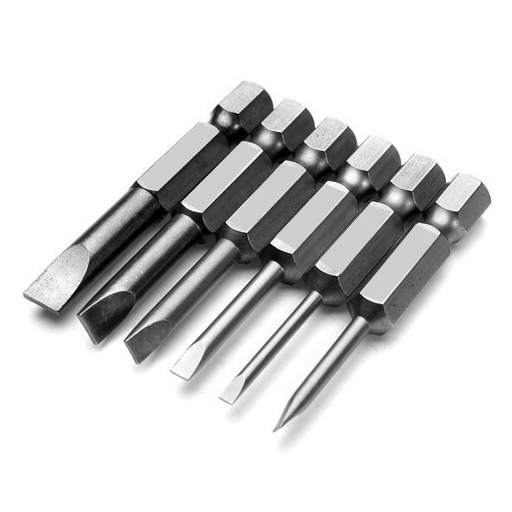
Material characteristic constitutes the study of individual components or constituents that make up a given material, thereby variously defining its characteristics. S2 alloy steel, for example, contains high carbon alloy steel, silicon, manganese and chromium and their presence enhances the hardness and the ability to withstand impacts. The chromium vanadium steel, on the other hand, contains chromium and vanadium as primary alloying elements which increases the steel’s tensile strength, gives it elasticity and increases its corrosion ability. Such recognition enables persons to pick the right materials based on the required performance.
Understanding S2 Steel Composition
Steel S2 contains appreciable carbon content that is characteristic of high-carbon alloy steels, tailored to provide an exceptional toughness and wear resistance properties. S2 steel consists of a significant amount of carbon in comparison to the majority of the alloy steels, usually between 0.55% and 0.65%. The significance of this raised amount of carbon is responsible for making this type of steel extremely hard in addition to resisting abrasion. Apart from the above constituents, there are also other elements that are added such as manganese ranging from 0.60 to 1.00% and silicon content estimated to be 0.20 to 0.35%, acting to improve the elongation and notch toughness.
There is usually a chromium content range of 0.40% to 0.60% in any steel in order to increase the resistance to corrosion and material degradation in aggressive surroundings. These properties are what makes S2 Steel an excellent choice for protective tools in industries such as impact screwdrivers that have to withstand high forces, socket sets and earth moving and heavy construction equipment. Understanding which strategies work best when adding respective elements and why that specific substance was chosen in that, helps that particular application to be employed effectively and sustainably when the chance of failure may be unacceptable.
0.55–0.65%
Carbon Content
0.60–1.00%
Manganese
0.20–0.35%
Silicon
0.40–0.60%
Chromium
Exploring Chrome Vanadium Composition
Most people are not aware that when you hear someone talking about Chrome Vanadium Steel, they will usually abbreviate it as Cr-V, which stands for Chromium and Vanadium, albeit not solely as it contains other elements such as Silicon and Manganese that are dependent on the percentage of Carbon. This arrangement ensures good balance of hardness, tensile strength and wear resistance which is why this chromium-based steel is used for critical metal components. The corrosion resistance of materials increases with chromium content and their ill effects in the presence of oxygen decrease significantly; high-melting-point compound improves toughness as it obstructs the growth of grains.
Chrome vanadium steel is known for its take heat treatment ability due to which the materials can achieve wide range of harness for the various purpose tool making. Among the various types of such tools are precision tools – spanners, sockets, and wrenches, which are subject to repeated loads and high moment torque at the most intense exploitation. Moreover, its pliability and strength towards deformation under high strains render it useful in industries, the auto and aircraft industry. This helps companies to guaranty the durability and dependable operation of their products by using available technologies.
Comparison of Alloy Properties
| Property | S2 Steel Alloy | Chrome Vanadium Alloy |
|---|---|---|
| Composition | High carbon, silicon, molybdenum | Chromium, vanadium, carbon alloy |
| Hardness | Very high | High |
| Toughness | Excellent impact resistance | Good shock resistance |
| Ductility | Moderate | Excellent |
| Tensile Strength | Higher tensile strength | Slightly lower than S2 Steel |
| Corrosion Resistance | Moderate, needs coating | High, resistant to rust |
| Heat Resistance | Moderate | High |
| Applications | Precision tools, industrial usage | Automotive tools, hand tools |
| Cost | Moderate | Lower than S2 Steel |
| Durability | Longer tool lifespan | Moderate lifespan |
Hardness & Toughness
Hardness and Toughness
One of the remarkable features of S2 steel is usually its supreme level of hardness that emanates from the high carbon and silicon content, making it very preferable in the fields that require wear resistance and possession of great strength upon impacts. This increased hardness also adds to its robustness but can make it more fragile if it is subjected to heavier loads. Chrome Vanadium, however, is able to exhibit a somewhat more acquires a balance hardness and very high toughness properties. Though compared to S2 steel it has some less harder characteristics, it does not crack, but will be subjected to deformation over a longer interval without increased level of toughness. It also makes hand tools and motor vehicle applications more desirable because they do not extend up to the extremely strong and ductile tear materials.
Measuring Hardness of S2 Steel
S2 steel, a material that has found applications in areas such as impact mechanisms and fastening requires these tools or fasteners to be properly hardened to meet the quality assumed of it. The steel is believed to have a hardness, significantly to the Rockwell scale of hardness, the Rockwell Hardness C or HRC scale whose applications cover both hardening work and other strength materials. Standard testing involves a particular load that is applied with a steel or tungsten carbide indenter, and the accurate measurement is taken of the depth of penetration. Given the right heat treatment, S2 steel usually registers hardness values ranging from 58 to 62 HRC, which shows its ability to remain intact and keep off all strains and stresses as well as negative wearing. These values are different in case of each steel due to the difference in details of heat treatment, performed chemical modification, and application hence they need regular inspection to control and improve it according to the redlined design.
HRC Hardness Range Comparison
S2 Steel
58–62 HRC
Chrome Vanadium
50–58 HRC
Measuring Hardness of Chrome Vanadium
As a result of its attractive blend of properties like high strength, formability, ductility, and wear resistance chrome vanadium steel is often taken in to tools manufacture. The mechanical strength of chrome vanadium steel is usually evaluated within methods such as the Rockwell hardness evaluation, namely the HRC scale, to elucidate its working features. When chrome vanadium steel is duly heat-treated, it typically achieves a hardness range of 50 to 58 HRC based on the actual grade and tempering conditions.
These parameters include the percentage levels of elements such as chromium, vanadium, and carbon which significantly affects the hardness and toughness of steel. Correct hardness measurements are particularly important especially in cases where certain materials are stressed severely since it ensures that the steel component does not wear easily due to great straining. Moreover, when need arises detailed microstructural examination is devised to link with hardness values the locations and sizes of carbides within the steel structure in a way that brings out the correlation factors in the mechanical performance of the material.
Comparative Toughness of S2 Steel and Chrome Vanadium
S2 steel and Chrome Vanadium are two types of materials that are usually applied to tools and other industrial matters the issue is that they are relatively tough but the composition of each material and even the structure both under stress and without are different. S2 steel, a kind of silicon-manganese alloy tool steel, is known for its toughness and its ability to recover from impact and sustain additional loads without failure. This property is linked to the fact that it is a martensite that has been softened and it has been heat-treated in such a way that it refrains any brittleness even as it surpasses the rockwell scale hardness.
Although similar in properties to S2 Steel, chromium-vanadium steels possess excellent characteristics including strength, wear resistance, and elasticity. It is more brittle than S2 Steel, but has a higher electrical resistance of chromium to corrosion and oxidation, both beneficial for applications that require surface durability under seasonal weather conditions. Vanadium and chromium in steel also make it easier to process the material, in this case in relation to its toughness due to increased quenching, but it also increases the brittleness due to increased quenching compared to the very flexible S2 Steel going to sharp impacts.
Upon comparison of the types, S2 steel comes off as the more preferable material where most demanding users are – users of tools that require high resistance to shock such as toughened screwdrivers or impact bits. In contrast, its rivals, the tools meant for high loadings with specific requirements, in respects of wear and adverse environmental factors, like wrenches in general or spanners if to be more precise, are made of Chrome Vanadium. It is clear that the two materials serve different functions designed for the specific tasks under consideration, and, therefore, care should be taken in the selection of a material in respect to how it is supposed to be used.
Durability & Longevity
Durability and Longevity

S2 alloy has a well-deserved reputation for its incredible strength and the ability to manage repetitive shocks with relative ease. Moderate tools degradation. This metallic alloy is long-lasting in high stress tools like power screwdriver tips, which is also self-explanatory. The reliability of cracking and plastic deformation in S2 steels still stands out even in extreme conditions showing no signs of decay of the material over time. On the contrary, it can be noted that chrome vanadium displays significant improvements in many tools that are subject to wear and any form of rust. The pollutants at high temperatures and the rising humidity do not harm it in devices like spanners and even spanners promote more corrosion factors and therefore remain sustainable. It is not as strong as S2 steel when it comes to dealing with forces that strike objects, but rather its capacity to remain intact when subjected to force throughout helps promote longevity of the material.
S2 Steel Bit Durability
Out of all available bits made from S2, contains an optimize composition and is said to be the most reliable one. One of the advantages of this optimization is an improvement made on the material structure in which the bit can be as hard as between 58 and 62 HRC. This causes the material to be less to any twisting, which seems to be common amongst application tools, failure to which deformation or breakage is bound to occur. Additionally, the structure of S2 steel which is subjected to a special kind of treatment, has a ductile zone, which enables it to sustain further impacts without any threat of twisting and compromising the structure.
Significantly different from other tool steels, S2 is highly appreciated due to the combination of both rigorous sharpness, and slight flexibility, which is considered to be essential in instances where high tensile strength is connected with some measure of elasticity. In the latter case, when working with tools that undergo considerable mechanical stress, their service life, breaking strength and so on, efficiency is an important factor.
Chrome Vanadium Bit Durability
CR-V steel stands for Chrome Vanadium steel, which is extremely hardy, thanks to the incorporation of the specimens of chromium and vanadium within their alloy compounds. The substance is resistant to both vanadium and all kinds of wear, and chromium causes this bit less likely to rust and corrode. These excellent properties support the longevity of these tools in high torque and pressure uses in the field, making them highly suitable for industrial and mechanical use. High quality stainless steel bits constructed from CR-V steel and expert Bitzer technology show a considerable reduction in deformation after extended use and also provides a very good surface finish, which is indicative of their long-term performance. The hardness of the steel, CR-V steel in particular, is in most cases in the region of 54 to 58 HRC (Rockwell Hardness Scale), which is adequate for the use of these bits in such demanding conditions as in the processes of vehicles and construction facilitates repair tools.
Factors Affecting Bit Longevity
Certainly, the reliability of bits is determined by its composition, the conditions of use and the maintenance circumstances. Nowadays, due to the development of modern technological advances, for example, introduction of high-speed tool steels and Cr-V are mainly considered to improve wear resistance tools as less hard materials can deteriorate or break from mechanical and thermal loads much faster. Although even the best bits will not last long if they are loaded above their limits or working with materials which raise their working temperatures. Modern environmentally friendly material nowadays called green building material, can withstand harsher conditions including higher levels of humidity. However, if the bits are not appropriately coated or put away in proper conditions, corrosion as a result of moisture is likely to occur.
Furthermore, regular maintenance procedures like removing debris on the bits stand and keeping the bits, clean, dry and controlled, will help maintain the bits for a longer period and their usefulness as well. The application of any of the above procedures enhances the operational effectiveness and averts the need to replace the bits more frequently even under harsh operating conditions for which their application is intended.
Torque Strength & Performance
Torque Strength and Performance
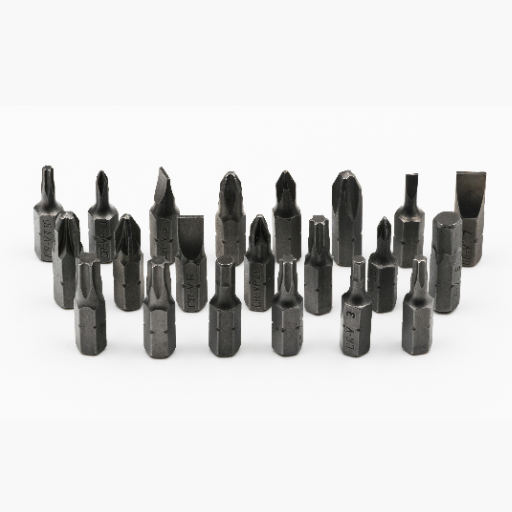
Two types of materials are frequently used for the production of durability tools: chrome vanadium and S2 steel because of their sturdiness when subjected to rotational force. Concerning the S2 steel, it is characterized by the higher surface hardness and wear resistance; most suitable for application requiring high rotational performance. It is also equipped with heat treatment technology to ensure a proper mix of toughness and rigidity levels, thereby significantly reducing the possibility of it breaking under heavy duty. The case of chrome vanadium can also be discussed separately possessing such features as very good bending strength and corrosion resistance. Even though something like chrome vanadium may not offer as much rotational force as S2 steel; it still faces less chances of cracking upon impact or undergoing fatigue due to its deformability.
Torque Strength of S2 Steel Bits
There is no denying the fact that S2 steel is valued for its ability to bear high levels of torque effectively. This metal is used in all kind of applications that require high performance materials. The composition of S2 steel usually incorporates silicon, molybdenum, and chromium among other alloying elements which give it hardness and strength properties that are renowned. When it comes to high-torque applications such as in automotive assembly and disassembly, maintenance of heavy machinery or in manufacturing, S2 steel bits exhibit an excellent resistance to radial loading and are nearly free of deflection.
Based on recent engineering reports, S2 steel undergoes processing to enhance its elongation, often reaching a tensile strength of 1400 MPa or more, which makes it fitting for handling the mechanical stress that is common in power tools usage. Also, owing to the heat treatment process, allowing high torques to be run without any visible distortion, and an aggressive hardening process, the material can be made tougher following this treatment. Furthermore, all those mentioned characteristics contribute to the durability of S2 steel in usage and precision tasks maintenance.
S2 Steel
1,400 MPa+
Tensile strength, making it suitable for the most demanding power tool applications
Chrome Vanadium
1,200 Nm
Maximum turning moment resistance with appropriate design and heat-treatment regimen
Torque Strength of Chrome Vanadium Bits
When manufacturing high-performance tool bits, one of the most common materials used is chrome vanadium (Cr-V) steel. It is renowned for its unmatched ability to withstand torque without getting deformed, thus it perfectly fits unique solutions: numerous tools are constructed with the aim of joining chromium and vanadium with iron and carbon in order to balance between wear resistance, hardness and formability. Whenever these tools are designed of Cr-V steel, they can resist up to approximately 1,200 Nm (newton-meters) in terms of maximum turning moment with an appropriated design and heat-treatment regimen during the manufacturing process.
Adding chromium increases the resistance of the alloy to corrosion, while the vanadium improves the tensile and the fatigue strength hence improving the durability of the bit. In such cases, Cr-V bits are perfectly suited to challenging environments, for example, automotive repair and most importantly industrial use where there is a need for reliable bit performances. It is also worth mentioning that there is a decreased likelihood of such bits cracking or bending out of their original structure after getting worn out over time.
Performance in Heavy-Duty Applications
Steel’s nascent forms may perhaps be more so, ‘metallurgical derivatives’ devoid of the most essential prerequisites when it comes to performance requirements for a neophyte. S2 being highly rigid and impact resilient, it is well suited to the kind of conditions in which torque is to be maximized, and the material is to be used again and again. The heavy carbon, silicon, manganese and other alloying ingredients ensures that steel keeps its cutting edge and resists abrasive wear even under the severest of mechanical stress. As a result, it is not surprising that the usage of S2 within aerospace and heavy machinery professions, where accuracy and robustness are critical, is increasing by the day.
In furtherance of the previous assertions, chrome-vanadium represents a superb material due to perfect combination of its hardness and elasticity, which is most suitable for tools in conditions of dynamic load and high reat pressure. Also, reduced brittleness and a special quality known as sacrifice are essential feature of chrome-vanadium that this material does not produce cracking even in the presence of high strain. That is why it is preferred for use in automotive and bridge-building sectors – industries where hand tools having different loads and harder operational regimes are used.
Whether to go for S2 steel or chrome vanadium depends on the type of work. Additionally, S2 steel is suitable for applications requiring very high surface hardness and very high wear resistance, while Chrome vanadium offers a single solution to jobs that require both resistance and endurance. These materials also maintain their position in the development of performance oriented tools in the respective industries, as each of them has certain characteristics that represent cross-linked applications.
Reference & Support
Frequently Asked Questions
Which is harder: S2 steel vs chrome vanadium steel screwdriver bit?
Speaking in simple terms, where the strength of the S2 bits excels in favor of their use, the higher hardness, thanks to impact and torque, makes the tool oppose the wear much better than other bits of the same class when used with higher torque levels. Nevertheless, hardness that is so increased would make any material too fragile in another case, vanadium enhanced steel bits twists, against raises, simply. In self-repair, what S2 bits win over is their hardness in applications such as repeatedly unscrewing screws and those of other designs.
How do durability and toughness compare between Cr-V and S2 steel in hand tools?
The standard Chrome Vanadium Steel offers toughness and elasticity in such a way that ensures protection against shock waves and S2 tool steel goes towards outstanding element properties in relation to wear and hardness introduced for durability. In practice S2 steel outperforms other tool steels making it suitable for use in top of the range tools, unlike Cr-V steels to bend without cracking. When selecting materials one should therefore bear in mind other factors including stress and impact forces, and the purpose the tool is expected to be utilised at.
Are S2 bits worth the higher cost compared to crv steel or carbon steel options?
Naturally more expensive bits such as the S2 series bits are priced at a premium because of the steel property which undergoes heat treatment and has alloying elements that causes it to have a level of hardness and durability that is higher than what should be expected for one made of plain carbon steel or their standard crv variant. This cost is a reasonable one if the tools neglect between uses or treated with an impact wrench on a regular basis or where precise and high levels of torque is needed. For a person who only engages in very infrequent home projects, Cr-V or carbon steel can be sufficient.
How do bit material and hardness affect performance with an impact driver?
Hard and durable materials, especially S2 steel and the like, are the best fit for impact drivers that involve repetitive bursts of torque, as they help prevent screw bits from rounding or distorting under the influence of high stress. Along these same lines, enhancing bit selection aids in securing a snug fit, consequently preventing the bit from camming out whereby the service life of the tool is increased; Cr-V steel is more susceptible to impact softening. It is essential to use high-quality bit together with appropriate holders and make sure that configurations of the driver correspond to the task being performed.
Reference Sources
- 01
High-Strength Tool Steel: High Wear and Corrosion Resistance
- 02
Screwdriver Bit Material, S2 Steel vs Crv Steel