
Corded vs. Cordless Angle Grinders: The Complete 2025 Buyer’s Guide
The $4.2 billion angle grinder market is shifting rapidly beneath your feet.
A little while back when we had to grind off some metal or whatever in the shop environment, it was corded discs. Today however, cordless angle grinders in the professional space are presently experiencing growth at a handsome 12%. Dynamics have changed and this has seen big players ploughing huge amounts of resources into batteries and battery life. There seems to be some movement as even the professional contractors continue to wait on their briefs.
The differences you see from before with corded versus cordless angle grinders is not one of the more comprehensive comparisons. This requires actual performance data, any performance data, truly, the performance data. Difference actually prevails in respect of other costs, for instance the cost of use and maintenance. Plus, some sense of perspective relates to such tools: whether it is linked to metal fabrication, managing building crews, or purchasing machinery for numbered clicks instead of actual assignments, the most terrible effect in every case is chosen incorrectly.
Our angle grinder in-depth guide offers you the comprehensive view you need to evaluate the viability of a particular type of energy source. You will see how each particular power tool model actually fares under real-use conditions, how much it costs to run an angle grinder over a period of 5 years, and which option best suits one’s needs at any given time. At the end of this drawing together of facts and perspective, you will have the necessary decision-making tools that can help you pick the best angle grinder for your job.
Looking to source angle grinders for your distribution business? Understanding these differences helps you stock the right products for your customers.
Understanding the $4.2 Billion Angle Grinder Market
Market Overview and Growth Trends
The market size of the global angle grinder industry is projected to exceed 4.2 billion dollars by 2025, growth fueled by the active construction market, expanding needs in metal works, and a continual need for mechanical maintainance services. China possesses more than 60% of the total angle gridner manufacturing potential, making it the main production spot for both plug-in and cordless grinders.
The potential market for electric angle grinders, the consumers of both corded and cordless electric angle grinders, is projected to grow at an annual rate of 12%. This is a pace higher than all other tools. A number of factors contribute to this growth:
- Infrastructure investment in developing markets
- Industrial automation requiring precision grinding
- Growth in metal fabrication and automotive repair
- Shift toward cordless tools in professional applications
The Cordless Revolution
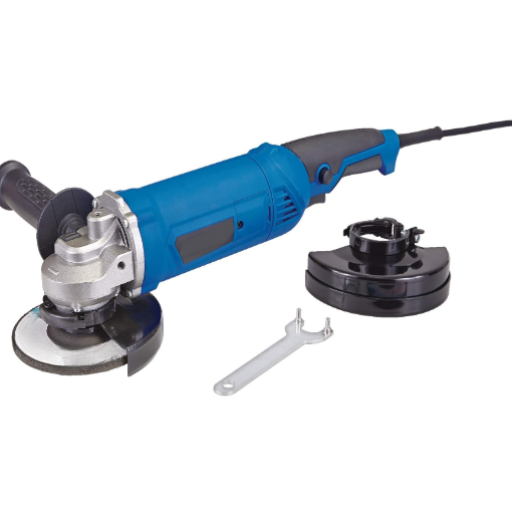
The innovative lithium-ion battery technology effectively changed user expectations of cordless angle grinders. Just five years ago, most users of cordless angle grinders were burdened with performing relatively simple tasks only. This has since changed, thanks to brushless motor technology, for instance, which can deliver power equivalent to 7-amp grinders, with working hours of up to a day’s work or more.
Key technological advances:
- Brushless motors: 50% more efficient than brushed designs, extending runtime and tool life
- High-capacity batteries: 6.0Ah and 9.0Ah battery packs provide extended operation
- Voltage platforms: 18V/20V systems dominate, with 36V options matching high-amp corded performance
- Fast charging: 80% charge in 30-45 minutes enables continuous work with battery rotation
The major players have embraced the advancement in technology and taken the industry to the cloud by robustly supporting cord driver free corded tools, Riding on this change, companies such as Milwaukee, DeWalt, Makita, and Bosch have introduced fully cataloged 18V/20V grade systems that feature each and every tool powered under the regular battery up.
Corded Angle Grinders: Unlimited Power for Demanding Work
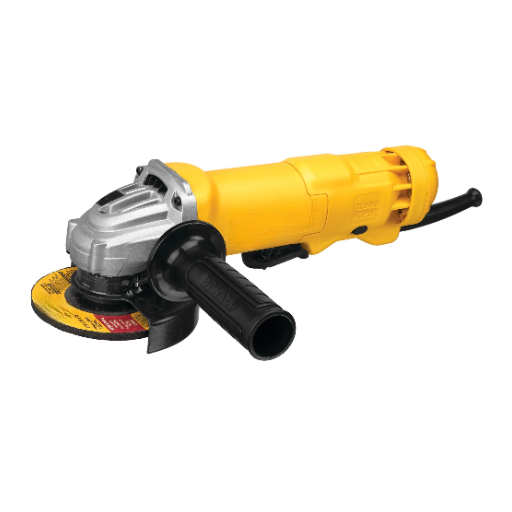
How Corded Grinders Work
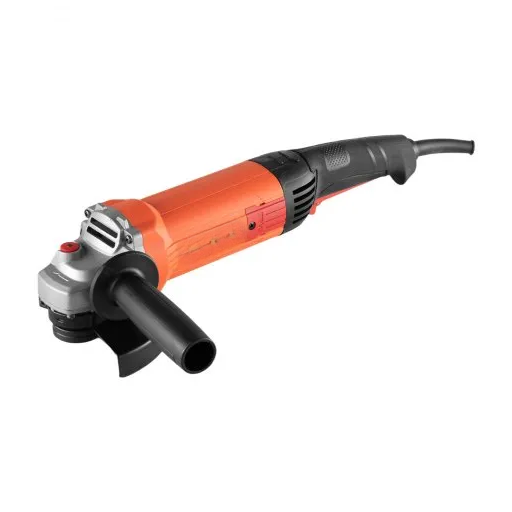
Corded angle grinders transform the electric power input from an alternating current source into rotary motion primarily through the application of universal motors. The power delivered is constant, such that it will not be interrupted as you use the tool for a longer period.
Core advantages of corded power:
- No power fade: Output remains constant from start to finish
- Unlimited runtime: Work continuously without stopping to charge or swap batteries
- Higher peak power: 15-amp models deliver 2,000+ watts for heavy material removal
- Lower operating cost: Electricity costs less than battery replacement over time
Power Ratings Explained
Understanding corded grinder specifications helps you match the tool to your application.
Amperage ratings:
- 7-8 amps: Light-duty grinding, polishing, cutting thin materials (800-1,000 watts)
- 10-12 amps: Standard professional use, most metal fabrication tasks (1,200-1,500 watts)
- 15+ amps: Heavy-duty grinding, deep cutting, industrial applications (1,800+ watts)
RPM ranges:
- Most angle grinders operate at 8,000-12,000 RPM
- Variable speed models allow adjustment for different materials
- Higher RPM increases cutting speed but generates more heat
When Chen upgraded his metal fabrication shop in Guangdong last year, he initially bought cordless grinders for the flexibility. After two months of battery swaps interrupting production runs, he switched to 12-amp corded models for the main workstations. Productivity increased 15% simply by eliminating downtime. The cordless units now serve only for mobile repair work outside the shop.
Best Applications for Corded Angle Grinders
Corded models excel where continuous power and maximum output matter.
Metal fabrication shops: In order to carry out the operation of grinding continuously, preparing the surfaces, or removing significant amounts of material requires channeled power to be sustained. Pieces of the activities such grinders are able to perform are where cordless options fall short.
Industrial maintenance: Factory settings with reliable power access favor corded tools. The unlimited runtime supports extended maintenance windows.
Stone and concrete cutting: Deep cuts in masonry require sustained power that drains batteries quickly. Corded models maintain cutting speed throughout the job.
Production environments: Manufacturing facilities with fixed workstations benefit from corded tools. The consistent power supports quality control and predictable output.
Corded Limitations
Despite their power advantages, corded grinders have practical constraints.
Mobility restrictions: The length of the cord restricts the movement of the user. When everyone of the extension cords makes this work several time longer, they create more severe inconvenience – trip zones for everyone on the construction site included.
Power access requirements: In the places that are too far from a power source the erection of a power generator is necessary which increases the cost and complication.
Cord management: Cables often get caught on building materials and the proper cabling in turn surfaces which necessitates careful routing and the cables themselves tend to deteriorate as they get old.
Setup time: The unwinding and plugging of the power cords, and organizing the electric wires adds a few minutes to every task. This added time becomes excessive during short tasks, destroying the entire cost-effectiveness of the given action.
Cordless Angle Grinders: Portability Unleashed
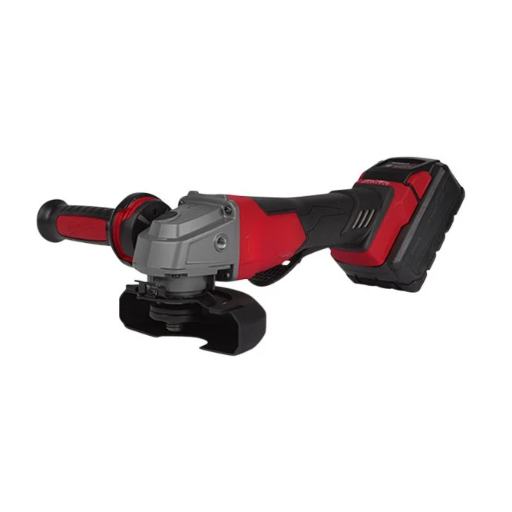
Battery Technology Deep Dive
Corded angle grinders will operate using a lithium-ion battery-powered brushless motor. These two systems are explained in detail to help you predict their actual usage results better.
Voltage systems explained:
- 18V/20V Max: Standard platform offering 800-1,500 watt equivalent power (1,500-2,000 RPM under load)
- 36V: High-voltage systems matching 12-15 amp corded performance for heavy-duty applications
The 18V/20V needs some explaining. These voltages are equal, just spoken differently. Hence, 20V Max means the highest voltage attained at the battery full charge (20 volts). On the other hand, the 18V means the operating voltage at standard condition. Both terms describe identical battery systems.
Amp-hour capacity and runtime:
| Battery Size | Typical Runtime (Light Work) | Typical Runtime (Heavy Grinding) | Best For |
|---|---|---|---|
| 2.0Ah | 20-30 minutes | 8-12 minutes | Quick cuts, touch-ups |
| 4.0Ah | 45-60 minutes | 20-25 minutes | General purpose work |
| 6.0Ah | 60-90 minutes | 30-40 minutes | Extended projects |
| 9.0Ah+ | 90+ minutes | 45-60 minutes | All-day professional use |
Runtime varies significantly by application. Heavy grinding with constant pressure drains batteries 2-3x faster than light polishing or intermittent cutting.
Brushless motor benefits:
- 50% longer runtime compared to brushed motors
- Extended tool life (no brush wear)
- More power delivered to the disc
- Reduced heat generation
Runtime Reality Check
Battery manufacturers advertise maximum runtime under light loads. Professional use delivers different results.
Real-world cordless grinder performance:
- Heavy grinding/cutting: 15-30 minutes per charge on 4.0Ah batteries
- Medium grinding: 30-45 minutes per charge
- Light polishing/cleaning: 45-60 minutes per charge
- Power fade: Performance decreases as battery depletes, unlike consistent corded power
For a construction contractor using angle grinders daily, this means planning around battery limitations. A single battery will not last a full workday under heavy use.
Professional Battery Management
Experienced contractors solve runtime challenges through systematic battery management.
The 2-3 battery rotation system:
- One battery in active use
- One battery on fast charger (80% charge in ~30 minutes)
- One battery cooling/pre-charged (optional third for intensive work)
This shift sequence is for maintaining productivity. Where one battery does the work, the other one charges. Using fast chargers, you can proceed almost continuously using the battery power all the time in bursts if you so wish.
Battery lifespan considerations:
- Lithium-ion batteries last 3-5 years with proper care
- Heat degrades batteries: allow cooling between charges
- Deep discharge reduces lifespan: recharge before complete depletion
- Storage at 40-60% charge extends battery life
Total battery investment for professionals:
- Initial kit: 2-3 batteries (200−200−500 depending on capacity)
- Replacement cycle: Every 3-5 years
- Cost per year: 50−50−100 per battery
Best Applications for Cordless Angle Grinders
Cordless models shine where mobility and convenience outweigh pure power requirements.
Mobile construction sites: Moving between locations without power access makes cordless essential. Scaffolding work, remote areas, and outdoor construction favor battery power.
Overhead and ladder work: When disconnected from the mains, there is no danger of tripping over long cables, which is especially true when climbing up. The inconveniences of extra battery weight are canceled out by the fresh level of freedom in movement.
Quick cuts and touch-ups: In the event grinding is required, the cordless version if favored because it gets rid of all the time lapses associated with setting up a corded machine. Get the tool, cut, move.
Confined spaces: Small and difficult areas that may present tripping risks or obstructions are steadily better done without unplugged cords.
Automotive repair: Automobile mechanics provide vehicle maintenance due to space restrictions and the need for a rapid solution.
Head-to-Head Comparison: Corded vs. Cordless
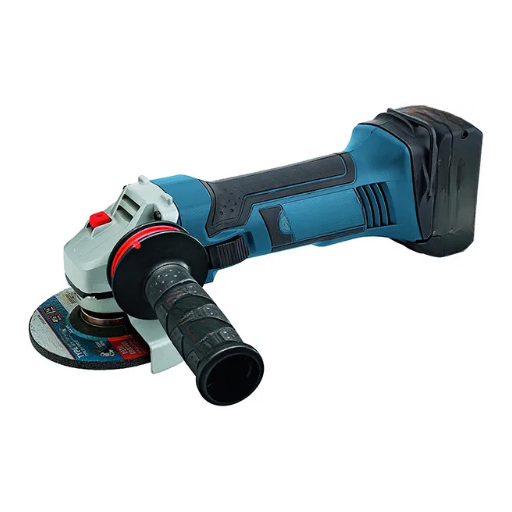
Specifications Comparison
| Specification | Corded (Typical 10A) | Cordless (Typical 18V/5.0Ah) |
|---|---|---|
| Power Output | 1,200-1,500 watts | 800-1,200 watts equivalent |
| Runtime | Unlimited | 20-45 minutes (heavy use) |
| Weight | 4-6 lbs | 5-8 lbs (with battery) |
| RPM | 10,000-12,000 | 8,500-11,000 |
| Initial Cost | 80−80−150 | 150−150−300 (kit with batteries) |
| Operating Cost | Electricity only | Battery replacement every 3-5 years |
| Setup Time | 2-5 minutes (cord management) | Immediate |
Performance Comparison
Cutting speed on metal:
The cord wire grinders are effective when cutting thick materials as they move with a uniform speed. The cordless grinders withdraw slightly under the influence of high loads, but the leading-edge motor with the minimum capacity put in cordless angle grinders will slash and litter such performance drops.
Grinding efficiency:
When it comes to uninterrupted grinding work, cabled grinding machines have an advantage over cordless models by around 20 to 30 percent due to no need for battery changing. Therefore, if one considers the issue of interrupted grinding, the power aspect, surprisingly enough, becomes rather unimportant if at all.
Heat generation:
Grinders with brushless motors tend to run cooler while brushed grinders typically get hotter. Corded as well as cordless models. Moreover, both devices can reach a temperature at which thermal shutdown starts at a similar period of time, but corded grinders operate heavier grinds longer without shutting off.
Cost of Ownership Analysis (5-Year)
Understanding true costs helps businesses make informed procurement decisions.
Corded Angle Grinder (5-Year Cost):
- Initial purchase: $100 (mid-range professional model)
- Electricity (daily use): 25−25−50 over 5 years
- Maintenance/disc replacement: 100−100−150
- Total 5-Year Cost: 225−225−300
Cordless Angle Grinder (5-Year Cost):
- Initial kit (tool + 2 batteries): $300
- Additional battery (year 3): $100
- Electricity for charging: 15−15−30
- Maintenance/disc replacement: 100−100−150
- Total 5-Year Cost: 515−515−580
The additional cost of cordless is about 250−250−280 over a period of five years. For businesses with a fleet of vehicles, this much money can be spent much earlier. However, as the cordless grinder costs more for wood, the benefits of movability could contribute to the extra costs.
Which Should You Buy? Decision Framework
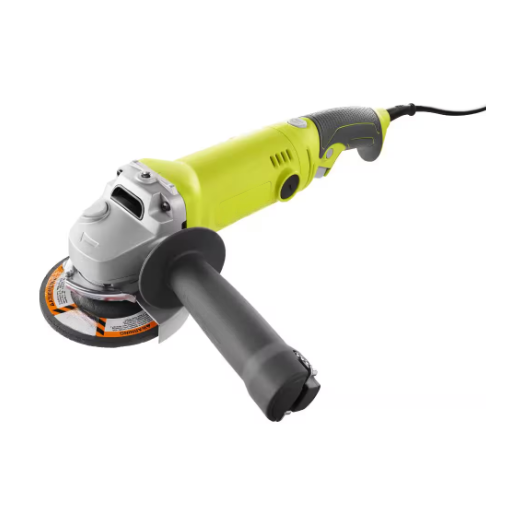
Choose Corded If:
- You work primarily in fixed locations: Shops, factories, and stationary workstations favor corded power
- Continuous heavy grinding is your main task: Production grinding, weld cleanup, and heavy material removal need unlimited runtime
- Maximum power is essential: Cutting thick steel, deep stone work, or heavy industrial applications require 12+ amp performance
- You are budget-conscious: Lower initial cost and no battery replacement expenses reduce total ownership cost
- You have reliable power access: Indoor facilities with adequate electrical infrastructure
Choose Cordless If:
- You work on mobile job sites: Construction, outdoor projects, or locations without power favor cordless operation
- Overhead and ladder work is common: Reduced trip hazards and better maneuverability at height
- You already own compatible batteries: Existing investment in 18V/20V platforms makes cordless angle grinders more economical
- Quick cuts and portability matter more than continuous power: Intermittent use patterns suit cordless strengths
- You maintain a battery rotation system: Professional workflow with multiple batteries enables continuous operation
Industry-Specific Recommendations
Metal Fabrication Shops: Metal fabrication shops typically ensure that the tools of choice are corded grinders and plan a portable or cordless option for a particular location to be repair/maintenance station.
Construction Contractors: For construction contractors, lines that are used by remote working people are always the preferred option. Construction grinding works should be forgotten due to the fact that in this case the use of most of the workers’ view should be deeper than the power capabilities.
Automotive Repair: In the field of automotive repair, use of corded tools is on the decrease as they are mainly used for the purpose of ensuring the continuance of the workshop’s operations. There are instances of compatibility with impact drivers or drilling machines.
Industrial Maintenance: In the field of industrial maintenance, a hybrid approach is preferable: corded tools are used for the shop equipment repairs in the workshop while cordless tools are used for maintenance in the field and emergency situations.
Distributors and Wholesalers: Distributors and wholesalers should naturally offer both types to encourage corded for shoppers on tight budgets and for workshops. They will be the best proponents for batteries and will need to use cordless.
Safety Considerations by Power Type
Corded Grinder Safety
Electrical hazards: Regularly check power cords for wear and tear. Wet situations require ground fault circuit interrupters. Do not pass the cords around doorways or walking areas.
Trip hazards: Every effort should be made to lift or run cables in ducts or against walls. Secure cords which go over the floor with duct tape or equivalent means. Manage extra wire cables with a reel.
Power consistency: It’s easy to get carried away with the consistent force that corded grinders generate. When the equipment cannot keep the speed, it is not performing as would yield torque. Keep your ears open for loud grinding.
Cordless Grinder Safety
Battery handling: Remove batteries before changing discs or performing maintenance. Store batteries away from heat and metal objects that could short terminals.
Weight fatigue: Cordless grinders are 1-2 lbs heavier due to batteries. Extended overhead work causes fatigue faster. Take breaks to maintain control.
Power fade awareness: The functionality of the tools usually output quality deteriorating with the level of power supplied by the battery. Users counter this by increasing the amount of force and will after torque which can increase the threat of a reverse drive.
Universal Safety Requirements (Both Types):
- Always use proper guards and handles
- Wear eye protection, gloves, and hearing protection
- Inspect discs before use for cracks or damage
- Allow tools to reach full speed before contacting work
- Use the correct disc type for the material and application
Conclusion: Making the Right Choice for Your Needs
Among the various portable power tools, cordless vs corded angle grinder is determined by the tools usage and the type of surrounding working environment. Here, there is no definitive scale of “better”. The guiding principle is always finding the right device that can adequately perform the job on hand.
It is the continuous uninterrupted power and cost effectiveness when it comes to corded angle grinders, there are no other tools that can match its power capabilities and ownership expenses. Moreover, it is corded angle grinders that most machinists and worry about, despite the heavy fabrication capability. It is for use in the mobile workshops and anywhere power is available and the unit is not moved a lot.
Installation of expandable curdles: easy to move and free from cord entanglements. Battery-powered grinders are useful for people who are on the move away from power sources. Also, the advantages in terms of productivity are higher and they can be afforded even at an increased cost by mobile service providers and practitioners who already use battery tools.
Key takeaways:
- Corded costs 250−250−280 less over 5 years but limits mobility
- Cordless requires battery management but enables work anywhere
- Runtime expectations: 15-30 minutes heavy use per battery
- Professional workflows need 2-3 batteries for continuous operation
- Match the tool to your primary work environment
In the event that you are responsible for procuring angle grinders for the company or your customers, pay special attention to the needs of the ultimate recipients. Regarding the use of automatic thinning, customers such as steel fabricators require electrical grinders. When the toolbox goes portable as in all construction sites, there is no way a fixed manner type design again with all the portability of technology. Other applications apply both -corded and -cordless grinders to tailor their operations.
Looking forward to sourcing professional equipment from experienced producers of angle grinders? Reach out to us in order to benefit from direct manufacturer’s pricing for both wired and wireless models. We allow for OEM alterations, set smaller limits on MOQ, and make sure our distributors are not worried about adequate product availability in their regions.
Frequently Asked Questions
Which is better corded or cordless angle grinder?
It is irrelevant which type is a better one option. Wired devices do not cap their usage potential and may not be more pricey, making them excellent as far as the workshops and long consumption are concerned. This is in contrast to the wireless grinders that allow easy transport on the job such as walking and lifting objects. Make the choice according to your usage and situation.
How long does a cordless angle grinder battery last?
Runtime varies by battery capacity and work intensity:
- 2.0Ah battery: 8-12 minutes heavy grinding, 20-30 minutes light work
- 4.0Ah battery: 20-30 minutes heavy grinding, 45-60 minutes light work
- 6.0Ah+ battery: 30-45 minutes heavy grinding, 60+ minutes light work
Professional users typically need 2-3 batteries for continuous work.
Are cordless angle grinders powerful enough?
New electric devices called cordless grinders have motors that are up to 1500W rated comparable in productivity to the 7-10 amp corded grinders. With the cheaper 36V batteries, the same 12 amps can be realized. For almost anything requiring the use of a grinder or a cutting tool, cordless tools will be more than enough. It’s only the big industries that regularly utilize electrical power which involves the use of corded tools.
Can a cordless angle grinder cut metal?
Indeed, cordless angle grinders are very effective at working with metal including steel, aluminum, and even stainless steel. You just have to select the right cutting wheel disc for your angle grinder and size the job according to the battery capacity. By the way, multiple cuts into thick materials like stainless steel and brick walls consume the battery more than a usual light grinding process.
What should I look for when buying an angle grinder?
Key factors include:
- Power source: Corded for fixed locations, cordless for mobility
- Amperage/voltage: Match power to your material thickness
- Disc size: 4.5-inch for general use, larger for heavy cutting
- Safety features: Paddle switches, anti-restart protection, adjustable guards
- Ergonomics: Weight, handle position, and vibration control
- Brand ecosystem: Battery compatibility for cordless models
Is an angle grinder worth buying?
Grinders are must-haves in the metal fabrication, construction, automobile repair and maintenance. Given the ordinary basic methods of cleaning, cutting as well as even polishing, it could be said that the Grinders upon purchase could be termed as useful investments. Any serious business enterprise that deals with metal or concrete construction will make sure that they have angle grinders as they are money making assets.
Do cordless angle grinders overheat?
Cordless angle grinders fitted with brushless motors are cooler running compared to the brushed versions. It is important to note however that any angle grinder whether cordless or not and regardless of the design type can overheat if used continuously for long. Most cordless models have built in features that sense high temperatures and will cut off the tool. Take breaks during long hours of operation on industrial angle grinders to allow the motors cool off.