
Multimeter Buying Guide: How to Choose the Right Multimeter
The right multimeter for most professional users in 2026 is an auto-ranging digital model with True RMS, a backlit display, non-contact voltage detection, and at least a CAT III 600V safety rating. Match the CAT rating, accuracy, and features to your actual work environment, and the meter will be safer and more reliable than a bargain unit with a long feature list.
A maintenance supervisor named Carlos learned this lesson on a Monday morning. His team had been using low-cost meters to troubleshoot variable frequency drives on the production line. The readings kept jumping, and two drives were replaced unnecessarily.
An outside technician pointed out the problem. The old meters were average-responding units, not True RMS models. On distorted waveforms from VFDs, they read low by more than 30%. Carlos upgraded the team to True RMS meters with a VFD low-pass filter. Callbacks dropped, and the plant saved the cost of the new meters within the first quarter.
This multimeter buying guide shows you how to avoid that kind of mistake. You will learn what a multimeter measures, how analog, digital, and True RMS meters differ, which specifications matter for professional use, and how to choose the right meter for your application and budget. For the wider family of instruments, start with our complete guide to test and measurement tools.
Key Takeaways
- Choose a multimeter based on your application, not just price.
- CAT ratings define safety for different electrical environments.
- True RMS matters whenever you measure non-sinusoidal or distorted waveforms.
- Auto-ranging, counts, accuracy, and input protection separate hobby-grade from professional-grade meters.
- For industrial use, verify calibration traceability and supplier certifications before buying in volume.
What Is a Multimeter?
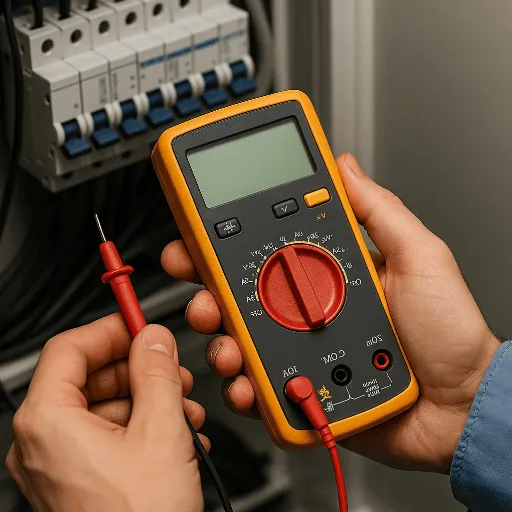
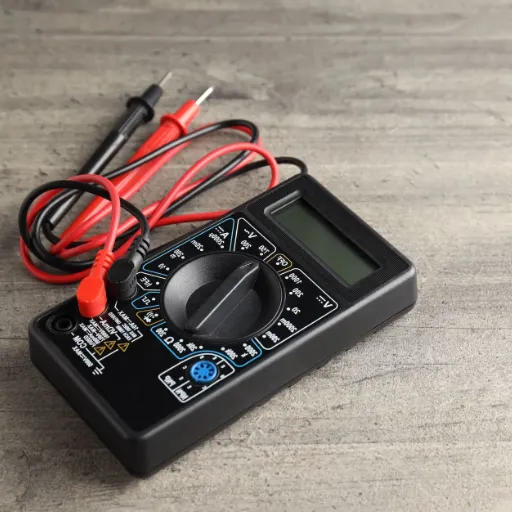
A multimeter is an electrical test instrument that combines several measurement functions in one handheld or benchtop unit. Most digital multimeters measure AC voltage, DC voltage, AC, DC, and resistance.
They also provide continuity testing with an audible beep, diode testing, and often capacitance, frequency, and temperature.
For a broader view of how multimeters fit into the wider family of instruments, see our complete guide to test and measurement tools. Multimeters are one of the most common tools in electrical maintenance, automotive repair, and electronics work because they pack so many tests into a single device.
Modern digital multimeters display readings on an LCD screen. They are easier to read than analog meters, typically more accurate, and usually include features such as auto-ranging, backlighting, and data hold.
That does not mean every digital meter is right for every job. The next sections explain how to separate specifications that matter from marketing noise.
Analog vs Digital vs True RMS
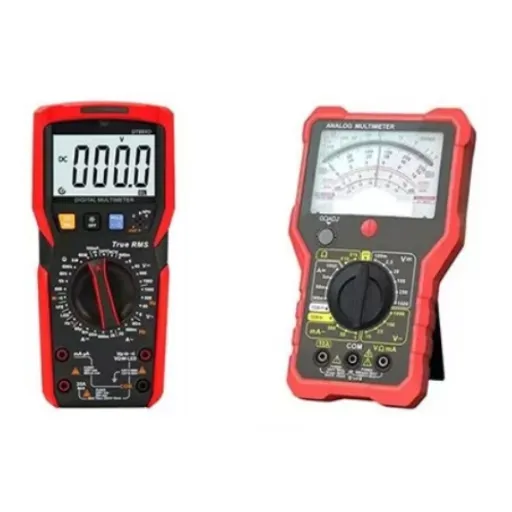
Understanding the three main types of multimeters helps you choose the right technology before you compare brands or prices.
Analog Multimeters
Analog multimeters use a moving needle and a printed scale. They are still useful for watching signals change in real time, such as when adjusting a potentiometer or tuning a circuit. However, they are harder to read accurately, easier to misinterpret, and generally less safe than modern digital meters. For most professional buyers, analog meters are a specialty tool, not a first choice.
Digital Multimeters
Digital multimeters, or DMMs, convert the measured signal into a numerical display. They are the standard choice for electricians, technicians, and maintenance teams. DMMs are easier to read, more accurate for most measurements, and offer more functions in a compact package. Entry-level digital meters are fine for basic household or automotive work, but professional environments demand more.
True RMS Multimeters
True RMS stands for True Root Mean Square. A True RMS meter measures the effective value of an AC waveform accurately, even when the waveform is distorted.
Average-responding meters are calibrated for a pure sine wave. On modern electrical systems with variable frequency drives, LED drivers, and switching power supplies, the waveform is often not a pure sine wave. An average-responding meter can read 20% to 40% low on these loads, which leads to wrong conclusions and unnecessary repairs.
For more details on how multimeters compare to other instruments, read our multimeter vs oscilloscope comparison.
Key Specs That Matter
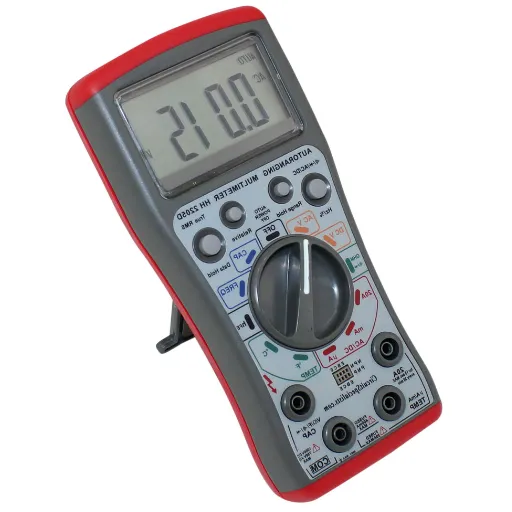
Once you know the type of meter you need, compare models on these specifications. They determine safety, accuracy, and ease of use.
Accuracy and Counts
Accuracy tells you how close the displayed value is to the actual value. It is usually expressed as a percentage of the reading plus several counts. A meter rated at ±0.5% + 3 counts is more accurate than one rated at ±1.5% + 5 counts.
Counts describe the resolution of the display. A 2,000-count meter can display values up to 1,999. A 6,000-count meter gives finer resolution. For most industrial work, 4,000 to 6,000 counts is sufficient. Bench-level electronics work may benefit from 20,000 counts or more, but higher counts usually come with a higher price tag.
CAT Safety Ratings
CAT ratings are the most important safety specification on a multimeter. They are defined by IEC 61010 and describe how well the meter can survive a transient voltage spike in a given electrical environment. Using a meter with the wrong CAT rating can lead to equipment damage, arc flash, or injury.
| CAT Rating | Typical Environment | Examples |
|---|---|---|
| CAT I | Electronics and low-energy circuits | Circuit boards, battery-powered devices |
| CAT II | Single-phase receptacle-level equipment | Appliances, household outlets, power strips |
| CAT III | Fixed-installation distribution panels | Panelboards, machinery, HVAC equipment |
| CAT IV | Utility-level primary supply | Service entrances, utility transformers, and outdoor meters |
For residential wiring and most commercial electrical work, choose at least CAT III 600V. For industrial panels, machinery, and VFDs, CAT III 1000V or CAT IV 600V is safer. Never use a CAT I or CAT II meter on a distribution panel.
Input Protection and Fuses
Input protection includes high-energy fuses, varistors, and isolation barriers that protect the user if the meter is connected to a voltage higher than expected.
Look for meters with HRC fuses rated for the meter’s maximum voltage category. Internal fuses should be accessible for replacement, but they should never be the only line of defense.
Input Impedance
Input impedance is the resistance the meter places across the circuit being measured. A high input impedance, typically 10 MΩ, minimizes the effect of the meter on the circuit. This matters in electronics and low-current work where a lower impedance meter could change the behavior of the circuit.
Auto-Ranging vs Manual-Ranging
Auto-ranging meters automatically select the correct measurement range. They save time and reduce the chance of selecting the wrong range, which is why they are strongly recommended for field technicians and less experienced users. Manual-ranging meters can be faster for experienced users who know the approximate value in advance, but they require more skill and increase the risk of overload.
Industrial Features to Look For
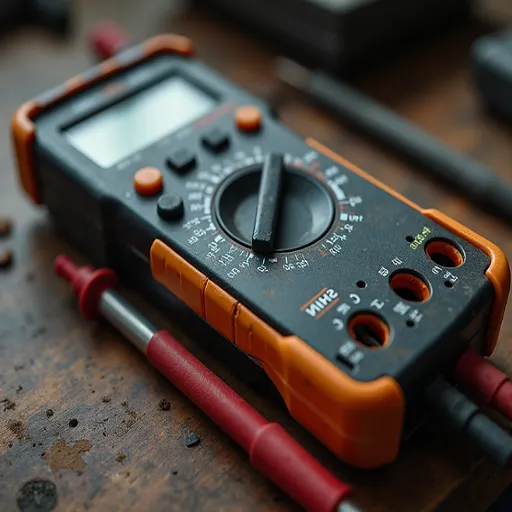
Beyond basic specifications, several features make a multimeter more useful in demanding environments.
Durability and IP Rating
Industrial meters get dropped, bumped, and used in dirty conditions. Look for a rugged housing, protective rubber boot, and a stated drop-test rating. An IP rating, such as IP54 or IP67, tells you how well the meter resists dust and water. IP67 meters can survive temporary immersion, which is valuable for outdoor or washdown environments.
Non-Contact Voltage Detection
Non-contact voltage detection, or NCV, lets you check whether a conductor is live without making contact. It is not a substitute for a proper voltage measurement, but it is a fast safety check that can prevent accidents. Most professional electricians consider NCV essential.
Data Hold, Backlight, and Display
A backlit display and data hold function make it easier to read measurements in dark panels or awkward positions. A large display with clear digits reduces reading errors. Some meters also offer a dual display that shows two readings at once, such as voltage and frequency.
Data Logging and Wireless Connectivity
For predictive maintenance and troubleshooting complex systems, data logging is valuable. Some meters can record minimum, maximum, and average values over time. Advanced models offer Bluetooth or USB connectivity so you can transfer data to a phone or computer for analysis and reporting.
VFD Low-Pass Filter
A VFD low-pass filter helps you measure the fundamental frequency of a motor drive accurately. Without it, a meter can pick up high-frequency switching noise and give unstable readings. If you work on variable frequency drives, this feature is worth the extra cost.
Temperature and Other Functions
Temperature measurement with a Type-K thermocouple probe is useful for HVAC, automotive, and electrical troubleshooting. Other useful functions include capacitance, frequency, duty cycle, and diode testing. Choose the functions that match your typical work.
Matching a Multimeter to Your Job
The best meter for you depends on where and how you will use it.
Homeowner, DIY, and Hobbyist
For basic household tasks and electronics projects, an auto-ranging digital multimeter with CAT II 600V or CAT III 600V is enough. Look for continuity testing, diode testing, a backlight, and a clear display. True RMS is helpful but not essential unless you work on modern dimmers or power supplies.
Residential Electrician
Residential electricians need a durable meter with CAT III 600V, NCV, True RMS, and a backlight. Capacitance and frequency measurement are useful for troubleshooting motors and lighting. A lead-alert feature that warns you if the test leads are in the wrong jacks can prevent blown fuses and injuries.
Commercial and Industrial Maintenance
For panels, machinery, and motor controls, choose CAT III 1000V or CAT IV 600V. True RMS is essential because of VFDs and non-linear loads. A VFD low-pass filter, temperature probe, and data logging add value. Durability and a high IP rating matter because these meters live in tough environments.
Automotive Technician
Automotive work demands good DC voltage and current measurement, continuity testing, and often temperature and duty cycle functions. True RMS is useful for modern vehicle electrical systems. Look for a meter with fused current inputs and robust test leads.
Electronics Lab and Bench Use
Bench work values accuracy and resolution over ruggedness. A 20,000-count or higher meter with manual ranging option, high input impedance, and computer connectivity is ideal. Safety ratings can be lower because the work is on low-energy circuits.
Price Tiers and When to Upgrade
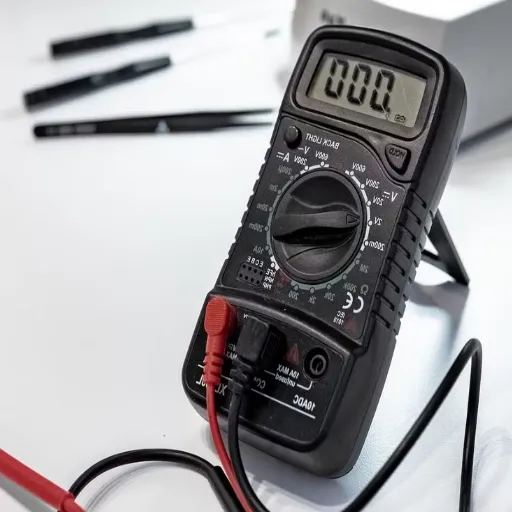
Multimeter prices range from under $30 to over $500. The right tier depends on how often you use the meter and what is at stake if it fails.
Under $50
Budget meters are fine for occasional home use and light automotive work. They usually lack True RMS, have lower accuracy, and may use less robust input protection. Do not rely on them for professional electrical work or safety-critical measurements.
$50 to $150
This tier covers most professional electricians and maintenance technicians. You can get CAT III 600V or 1000V, True RMS, NCV, temperature, capacitance, and a durable case. For many users, this is the sweet spot between features and cost.
$150 to $400
In this range, you find professional-grade meters from established brands. Expect higher accuracy, better build quality, longer warranties, advanced features such as data logging, and stronger input protection. These are the right choice for daily industrial use.
$400 and Above
Premium industrial meters are built for harsh environments and safety-critical work. They offer CAT IV ratings, high drop resistance, sealed housings, and sometimes calibration certification. Choose this tier when the meter is used daily in demanding conditions and downtime is expensive.
Sourcing Multimeters from Manufacturers
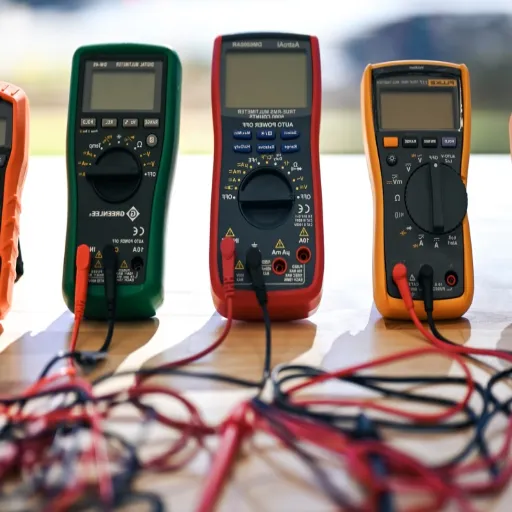
If you are buying multimeters for a team, a distribution business, or a private label line, specifications on paper are not enough. You need to verify that the manufacturer can actually deliver what it promises.
Start by confirming the safety certifications. A genuine CAT III or CAT IV rating should be backed by IEC 61010 test reports from a recognized body. CE marking, RoHS compliance, and calibration traceability are also important for most markets. Be cautious of meters sold at prices that seem too low for the claimed specifications. Counterfeit or mislabeled meters are a real problem in the budget segment.
If you are sourcing at volume, request samples and test them against a known reference before placing a large order. Check that the sample and the production units match.
Ask for pre-shipment inspection reports and certificates of conformity.
For the broader category of electrical instruments, read our electrical test equipment buyer’s guide before you place a volume order.
Conclusion
Choosing the right multimeter is about matching the tool to the job, not buying the most expensive unit or the longest feature list. Start with the environment where you will work and select the CAT rating accordingly. Decide whether you need True RMS based on the types of loads you measure. Then consider accuracy, counts, durability, and extra features that save time in the field.
For professional and industrial buyers, safety and accuracy are not places to cut costs. A reliable multimeter pays for itself through fewer mistakes, safer work, and longer service life. If you are sourcing multimeters for a business, verify the manufacturer’s certifications, request samples, and confirm that production units match the specifications you approved.
Looking for reliable multimeters for your business? Contact us for product samples, specification sheets, or a quote. We can help you source certified digital multimeters that match your application and budget.