
Test and Measurement Tools: A Complete Guide for Buyers and Distributors
Test and measurement tools are the devices used to verify, inspect, and quantify the performance, safety, and quality of electrical, mechanical, and electronic systems. Choosing the right instrument for your operation and sourcing it from the right manufacturer can reduce downtime, prevent safety incidents, and protect your margins. This guide explains what these tools are, how to select them, and how to source them efficiently from China’s manufacturing ecosystem.
The global test and measurement equipment market is projected to reach approximately USD 52.67 billion in 2026 and grow at a 6.4% CAGR through 2032, according to MarketsandMarkets. That growth is driven by demand from automotive, telecom, aerospace, and industrial sectors. Yet many buyers still struggle with one practical question: how do I choose the right test and measurement tools and source them reliably?
Key Takeaways
- Test and measurement tools cover electrical, mechanical, environmental, and RF categories, each with distinct applications.
- The right choice depends on matching the tool to your measurement need, environment, accuracy requirement, and calibration plan.
- China’s manufacturing regions specialize by product type: Guangdong for electronics, Jiangsu for precision instruments, Shandong for material testing, and Zhejiang for mechanical tools.
- OEM and private label options let distributors build their own test equipment brands without operating a factory.
- Calibration, traceability, and pre-shipment inspection should be verified before any bulk order is placed.
What Are Test and Measurement Tools?
Definition and Purpose
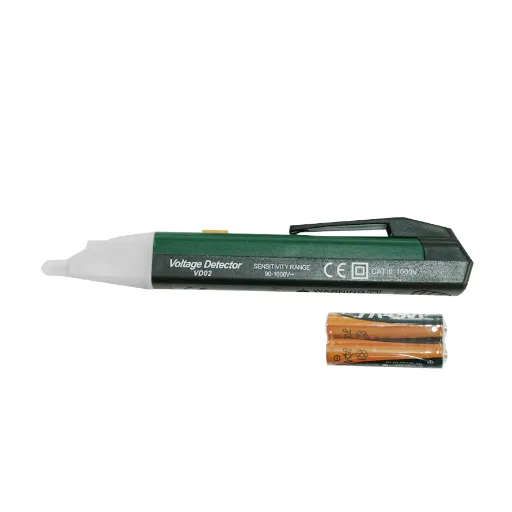
Test and measurement tools are instruments used to evaluate physical, electrical, or environmental properties of materials, components, or systems. They provide the data engineers, technicians, and quality teams need to confirm that products meet specifications, operate safely, and perform consistently over time.
These tools are used across many industries. Manufacturers rely on them for incoming inspection, in-process quality control, and final testing. Maintenance teams use them for troubleshooting and predictive maintenance. Laboratories use them for research, calibration, and certification. Without accurate measurement, it is impossible to verify quality, diagnose faults, or prove compliance with customer or regulatory standards.
The business value is straightforward. A reliable measurement process reduces scrap, avoids warranty claims, and keeps production running. A poor one leads to rejected shipments, safety incidents, and lost customers.
Key Terminology Buyers Should Know
Before comparing products, it helps to understand the terms suppliers use:
- Accuracy: How close a reading is to the true value. A more accurate instrument gives results closer to reality.
- Precision: How repeatable results are under the same conditions. An instrument can be precise without being accurate.
- Resolution: The smallest change the instrument can detect and display.
- Range: The minimum and maximum values the instrument can measure.
- Calibration: The process of comparing an instrument’s readings to a known standard and adjusting if necessary.
- Traceability: Proof that calibration results link back to recognized national or international standards, such as those maintained by NIST or another national metrology institute.
- Measurement uncertainty: The doubt that exists about a measurement result due to instrument limitations, environmental conditions, and operator variation.
- CAT rating: A safety classification for electrical test instruments, indicating the energy level of the environment where they can be used safely.
Understanding these terms helps buyers evaluate specifications on datasheets and ask better questions before purchasing.
Types of Test and Measurement Tools
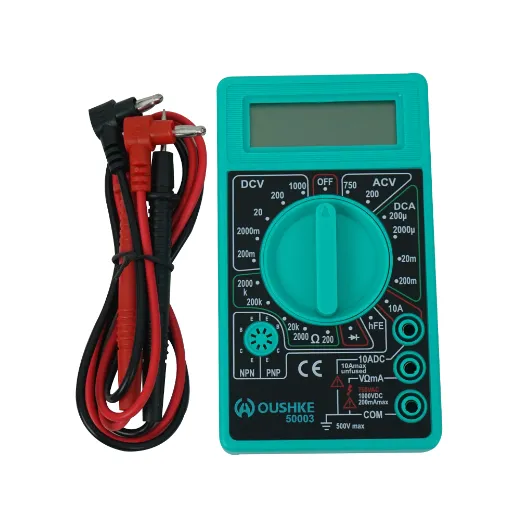
The test and measurement market is broad, but most tools fall into four main categories. Each category serves different applications and requires different technical knowledge. For a deeper breakdown, see our dedicated guide to the types of test and measurement tools.
Electrical Testing Instruments
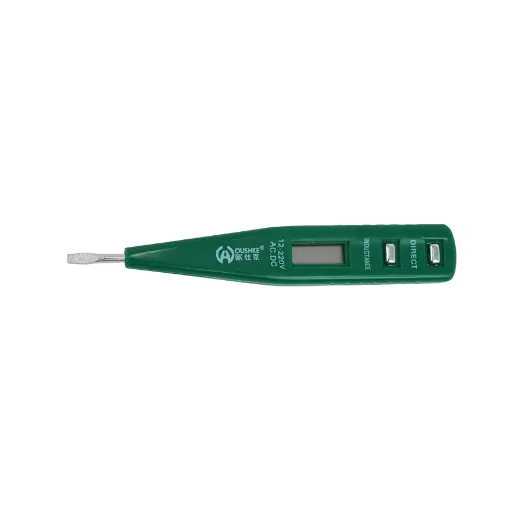
Electrical test equipment is the largest segment. These tools measure voltage, current, resistance, frequency, and other electrical parameters. For a complete buyer-focused overview, see our electrical test equipment buyer’s guide.
- Multimeters: The most common electrical test instrument. They measure AC/DC voltage, current, resistance, and often continuity, capacitance, and temperature. For industrial use, look for True RMS capability and a CAT rating that matches your environment. See our multimeter buying guide for detailed selection criteria.
- Clamp meters: Measure current without breaking the circuit. Useful for field service and panel work.
- Oscilloscopes: Display voltage over time, allowing technicians to analyze waveforms, timing, and signal quality. Read our multimeter vs oscilloscope comparison to decide which instrument you need first.
- Power analyzers: Measure power quality, harmonics, and energy consumption in electrical systems.
- Insulation testers: Apply high DC voltage to verify insulation integrity and detect safety hazards.
A maintenance manager named David once ordered standard handheld multimeters for his industrial panel teams. The units were accurate enough for bench use, but their CAT II rating was too low for distribution panels. During a routine check, one meter failed under a transient spike. No one was injured, but the incident stopped production for half a day and triggered a safety review. After that, David required CAT III 600V minimum for all field electrical testers. The lesson: specifications must match the environment, not just the measurement.
Mechanical and Dimensional Tools
Mechanical testing tools measure physical dimensions, forces, and material properties. For a detailed look at each category, read our guide to mechanical testing equipment types.
- Calipers and micrometers: Measure length, diameter, depth, and thickness with high precision.
- Dial indicators: Detect small linear deviations, runout, or alignment errors.
- Torque testers and torque wrenches: Measure rotational force during assembly or testing.
- Hardness testers: Determine material hardness using Rockwell, Brinell, Vickers, or Shore scales.
- Tensile and compression testers: Apply controlled force to evaluate material strength and deformation.
- Coordinate measuring machines (CMMs): Map complex 3D geometry for quality verification.
These tools are essential in machining, metal fabrication, automotive, and aerospace industries. Accuracy and repeatability depend on both the instrument quality and the operator’s technique.
Environmental and Specialized Equipment
Environmental test equipment measures conditions that affect product performance or reliability.
- Thermal imaging cameras: Detect hot spots, loose connections, and overheating components without contact.
- Data loggers: Record temperature, humidity, pressure, or vibration over time.
- Vibration analyzers: Identify mechanical imbalance, misalignment, or bearing wear.
- Environmental chambers: Simulate temperature and humidity extremes for reliability testing.
- Ultrasonic thickness gauges: Measure material thickness without damaging the surface.
These tools support predictive maintenance, environmental testing, and compliance with product reliability standards.
RF and Wireless Test Equipment
RF test equipment is growing rapidly due to 5G, satellite communications, and wireless device development.
- Spectrum analyzers: Measure signal amplitude across frequencies.
- Signal generators: Produce test signals for calibration and device verification.
- Vector network analyzers (VNAs): Measure impedance and S-parameters for RF components and antennas.
- RF power meters: Measure the power output of transmitters and amplifiers.
This category requires more specialized knowledge and is typically used in telecom, defense, and electronics R&D labs.
How to Choose Test and Measurement Tools
Selecting the right instrument is not just about comparing prices. A structured approach reduces risk and improves long-term value. Our step-by-step guide on how to choose test and measurement tools expands on each of these steps.
Step 1: Define Your Measurement Requirements
Start with the basics. What parameter are you measuring? What is the expected range? What accuracy do you need? What environment will the instrument operate in?
For example, a maintenance team checking motor voltage needs different specs than a calibration lab certifying precision resistors. Industrial field work may require rugged housings, IP ratings, and high safety classifications. Laboratory work may prioritize resolution and traceability over portability.
Write down the measurement requirement before looking at products. This prevents being distracted by features you do not need.
Step 2: Match the Tool to the Application
Different applications favor different instruments. The table below provides a quick reference.
| Application | Common Tools |
|---|---|
| Electrical maintenance | Multimeter, clamp meter, insulation tester, thermal camera |
| Electronics R&D | Oscilloscope, signal generator, logic analyzer, power supply |
| Power quality analysis | Power analyzer, harmonic analyzer, energy logger |
| Mechanical QA | Caliper, micrometer, dial indicator, CMM |
| Material testing | Hardness tester, tensile tester, impact tester |
| Predictive maintenance | Vibration analyzer, thermal camera, oil analyzer |
| RF/communications testing | Spectrum analyzer, VNA, signal generator |
Matching the tool to the application ensures you collect the right data without overspending on capabilities you will not use.
Step 3: Evaluate Accuracy and Calibration Needs
The instrument’s rated accuracy should be tighter than your process tolerance. As a general rule, the calibration standard should be at least four times more accurate than the instrument being calibrated. This is known as the test uncertainty ratio.
Also consider how the instrument will be calibrated. Does the manufacturer offer calibration certificates? Are they traceable to ISO/IEC 17025 or national standards? Will calibration be done in-house, by the supplier, or by a third-party lab?
A quality manager at a mid-sized electronics distributor learned this the hard way. She sourced a batch of digital multimeters that carried factory calibration certificates, but the certificates did not include traceability statements or measurement uncertainty data. When her largest customer audited the supplier records, the certificates were rejected. The entire shipment had to be recalibrated before acceptance, adding cost and delay. Now she requires traceable calibration documentation with every test instrument order.
Step 4: Consider Total Cost of Ownership
The purchase price is only part of the cost. Total cost of ownership includes:
- Calibration costs over the instrument’s life
- Replacement parts and accessories
- Training time for operators
- Downtime if the instrument fails or gives wrong readings
- Cost of returns or rework caused by inaccurate measurements
A lower-priced instrument that requires frequent calibration or replacement may cost more over five years than a higher-quality alternative. For high-volume or critical measurements, durability and service support matter as much as initial price.
Step 5: Plan for Future Needs
Think about how your testing needs may grow. Will you need more channels, higher bandwidth, or additional software features? Modular systems and instruments with upgrade paths can protect your investment. Buying only for today’s needs may force an early replacement.
Sourcing Test and Measurement Equipment from China
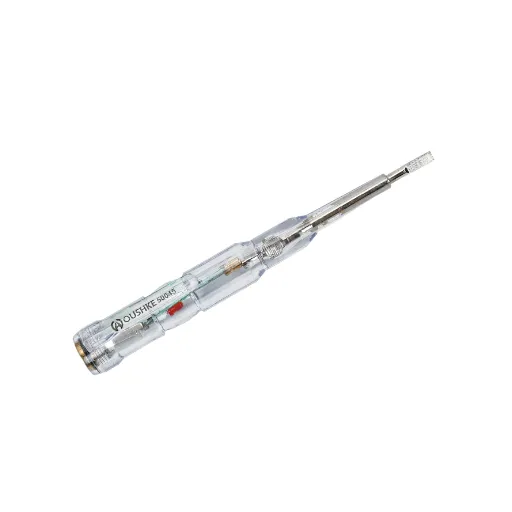
China is one of the world’s largest manufacturing regions for test and measurement equipment. Understanding the regional landscape helps buyers find the right supplier faster. Whether you are a distributor or a procurement team, working with an experienced industrial hardware tools supplier can simplify supplier qualification and quality control.
Key Manufacturing Regions
| Region | Specialization | Examples |
|---|---|---|
| Guangdong (Shenzhen, Dongguan, Guangzhou) | Electronics-integrated measurement devices, multimeters, oscilloscopes, thermal cameras | Electrical test instruments, smart measuring devices |
| Jiangsu/Shanghai (Suzhou, Nanjing, Shanghai) | Precision instruments, lab equipment, CMMs, spectrometers | High-end testing and measurement systems |
| Shandong (Jinan, Qingdao) | Material testing machines, industrial safety equipment | Hardness testers, tensile testers, and large mechanical systems |
| Zhejiang (Hangzhou, Ningbo, Yongkang) | Mechanical measuring tools, inspection technology | Calipers, micrometers, gauges |
Each region has developed clusters of suppliers, component vendors, and logistics providers. Sourcing from the right region improves lead times, technical support, and access to relevant expertise.
What to Look for in a Manufacturer
Not every supplier claiming to manufacture test equipment operates a real factory. Buyers should verify:
- Business license scope: Confirm the company is registered for manufacturing, not only trading. For a full evaluation checklist, read our article on what to look for in a test equipment manufacturer.
- Production facilities: Request photos or videos of production lines, testing stations, and calibration labs.
- Quality system certifications: ISO 9001 is a baseline. For electrical products, look for CE marking and compliance with IEC 61010.
- Calibration capability: Ask whether the supplier has in-house calibration equipment and whether certificates are traceable.
- Export experience: Suppliers with regular export orders understand documentation, packaging, and shipping requirements.
- Engineering support: For OEM or custom work, confirm the supplier has design and tooling capability.
A factory audit, either in person or by video, is one of the most effective ways to separate manufacturers from traders. Once you have qualified a supplier, our guide on how to import test equipment from China walks through samples, customs, and shipment inspection.
MOQs and Pricing for Wholesale Buyers
Minimum order quantities vary by product type and customization level. Typical ranges for common test equipment from Chinese manufacturers include:
- Basic hand-held instruments (multimeters, clamp meters): 100 to 500 units
- Precision mechanical tools (calipers, micrometers): 200 to 1,000 units
- Material testing machines: 1 to 10 units, depending on size and configuration
- Environmental testers: 50 to 500 units
- OEM/private label products: Often require 500 to 2,000 units for branding and custom packaging
For a deeper look at volume pricing and distributor terms, see our guide to wholesale test equipment pricing.
Sample orders are strongly recommended before committing to bulk production. A sample lets you verify build quality, accuracy, packaging, and documentation. Many suppliers accept small pilot orders after samples are approved.
OEM and Private Label Opportunities
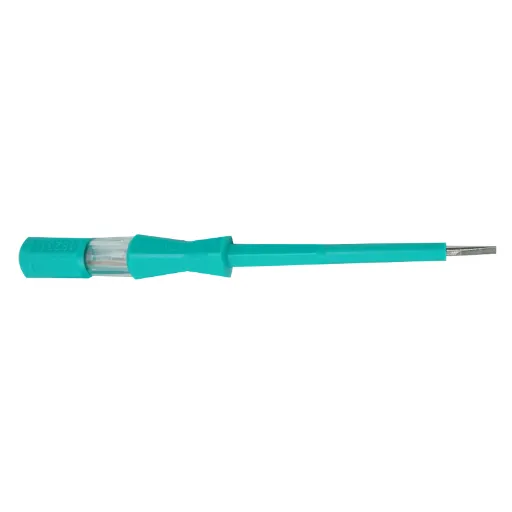
For distributors and brand owners, OEM and private label test equipment offers a path to higher margins and stronger market positioning. If you are new to branded manufacturing, our overview of an OEM tools manufacturer explains how the process works end-to-end.
Custom Branding for Distributors
Private labeling allows you to sell test equipment under your own brand without building a factory. For a practical roadmap, see our guide to OEM test equipment and private label options. Customization options usually include:
- Logo printing on the product
- Custom color schemes
- Branded packaging, manuals, and labels
- Serial number or barcode systems
This is attractive to distributors who want to differentiate from competitors selling the same catalog brands.
Custom Specifications and Packaging
Beyond branding, OEM work can include functional changes. Examples include:
- Custom measurement ranges
- Specific connector types
- Language options for menus and manuals
- Private firmware or software features
- Custom carrying cases or accessory kits
A distributor named Lena worked with a Chinese manufacturer to develop a branded multimeter kit for electrical contractors. The kit included a custom pouch, branded leads, and a manual written for her local market. She priced it 15% below the leading global brand while maintaining a healthy margin. Within a year, the kit became one of her top-selling product lines.
Scaling from Sample to Bulk Orders
The typical OEM workflow is:
- Define product specifications and branding requirements
- Receive and evaluate samples
- Approve samples and place a pilot order
- Confirm quality and packaging consistency
- Move to scheduled bulk production
Starting with a pilot run reduces risk. It lets you verify quality at low volume before scaling up.
Quality Control and Calibration in Test Equipment Manufacturing
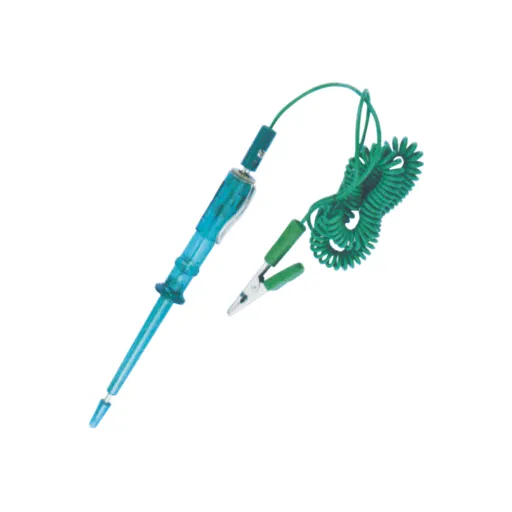
Quality control is critical for test equipment because the buyer’s own quality decisions depend on the instrument’s accuracy. Strong tool quality control processes should be part of every supplier relationship.
Calibration and Metrology Standards
Calibration should follow recognized standards. The most common are:
- ISO/IEC 17025: Requirements for the competence of testing and calibration laboratories
- NIST traceability: Linking measurements to U.S. national standards
- ANSI/NCSL Z540.3: U.S. standard for calibration quality in regulated industries
For a deeper look at intervals, documentation, and traceability, read our guide to test equipment calibration standards.
A proper calibration certificate should include the instrument identification, calibration results, measurement uncertainty, standards used, environmental conditions, date, and the technician’s signature or accreditation details.
Pre-Shipment Inspection
Before goods leave the factory, buyers should verify:
- Quantity matches the purchase order
- Appearance and labeling meet requirements
- Functional testing shows readings within specification
- Calibration certificates are included and valid
- Packaging protects the instruments during transit
Many buyers use third-party inspection services such as SGS or Bureau Veritas for the first few orders. Once a supplier proves consistent quality, inspection can often be reduced or handled by the factory’s own QC team with buyer oversight.
Certifications and Compliance
Common certifications required for test equipment include:
- ISO 9001: Quality management system
- CE marking: Required for products sold in the European Economic Area
- RoHS: Restriction of hazardous substances in electrical products
- IEC 61010: Safety requirements for electrical test equipment
- REACH: Chemical safety for products entering the EU
Buyers should confirm which certifications are needed for their target market and request valid documentation before placing bulk orders.
Conclusion
Test and measurement tools are essential for quality control, safety, and operational efficiency. The right tool depends on matching the instrument to your application, accuracy requirements, environment, and long-term calibration plan. For buyers sourcing at scale, China’s manufacturing regions offer strong capabilities across electrical, mechanical, environmental, and RF test equipment categories.
Working directly with a manufacturer gives you more control over specifications, pricing, branding, and quality. It also reduces the risk of hidden costs from uncalibrated or mis-specified instruments.
If you are sourcing test and measurement tools for your business, start with a clear specification and request samples before committing to bulk production. Look for suppliers with proven export experience, traceable calibration capability, and the flexibility to support your growth.
Ready to source test and measurement tools directly from a manufacturer? Contact us for a product catalog, sample quote, or OEM consultation. We can connect you with the right production capabilities and help you build a reliable test equipment supply chain.