
Types of Test and Measurement Tools: Complete Buyer’s Guide
The main types of test and measurement tools are electrical test equipment, mechanical and dimensional tools, environmental test equipment, and RF/wireless test equipment. Each category measures different physical or electrical properties and serves different industrial applications. Choosing the right category first saves buyers from buying the wrong instrument, overspending on unused features, or creating safety risks on the factory floor.
The global test and measurement equipment market is projected to reach approximately USD 52.67 billion in 2026 and grow at a 6.4% CAGR through 2032, according to MarketsandMarkets. That growth is spread across automotive, telecom, aerospace, electronics, and industrial manufacturing. Yet many procurement teams and distributors still struggle with a basic question: what type of tool do I actually need? This guide breaks down the four main categories, the instruments inside each one, and how to match them to real business needs.
Key Takeaways
- Test and measurement tools fall into four main categories: electrical, mechanical/dimensional, environmental, and RF/wireless.
- Each category uses distinct instruments with different accuracy, safety, and calibration requirements.
- Matching the tool type to your application prevents overspending and safety incidents.
- China has specialized manufacturing regions for each test equipment category.
- OEM and private label options are available for distributors who want branded test equipment.
What Are Test and Measurement Tools?
Test and measurement tools are instruments used to verify, inspect, and quantify the performance, safety, or quality of materials, components, or systems. They provide the data engineers and quality teams need to confirm that products meet specifications and operate reliably.
Grouping these tools by measurement domain makes the market easier to navigate. A multimeter and a hardness tester are both called “test equipment,” but they measure completely different things. The same applies to an oscilloscope and a coordinate measuring machine. For a broader overview of how these tools fit into industrial sourcing, see our complete guide to test and measurement tools.
Electrical Test Equipment
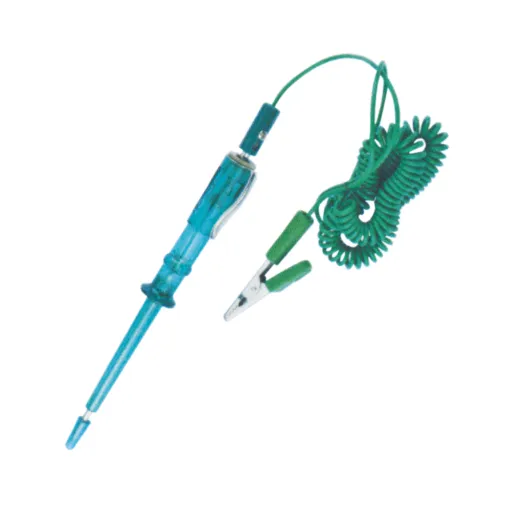
Electrical test equipment is the largest category. These tools measure voltage, current, resistance, frequency, and other electrical parameters. For a deeper buyer-focused look at this category, read our electrical test equipment buyer’s guide.
Core Instruments
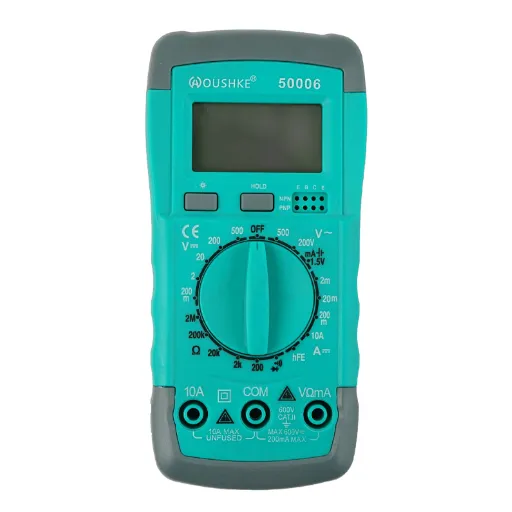
- Multimeters: Measure AC/DC voltage, current, resistance, and often continuity, capacitance, and temperature. Digital multimeters are now the standard for most facilities.
- Clamp meters: Measure current without breaking the circuit. They are common in field service and electrical panel work.
- Oscilloscopes: Display voltage over time so technicians can analyze waveforms, timing, and signal quality.
- Power analyzers: Measure power quality, harmonics, and energy consumption in electrical systems.
- Insulation testers: Apply high DC voltage to verify insulation integrity and detect safety hazards.
- LCR meters: Measure inductance, capacitance, and resistance in electronic components.
A maintenance supervisor named David once bought standard bench multimeters for his field team. The meters were accurate, but their CAT II rating was too low for distribution panels. After one failed under a transient spike, he required a CAT III 600V minimum for all field testers. The right tool for the environment is as important as the right tool for the measurement.
Key Specifications
- Voltage and current range: Must safely cover the values you expect to measure.
- Accuracy: How close the reading is to the true value.
- True RMS: Needed for accurate readings on non-sinusoidal signals.
- CAT rating: Safety classification for electrical environments; CAT III or CAT IV is needed for industrial panels.
- Bandwidth: Critical for oscilloscopes; higher bandwidth captures faster signals.
Common Applications
Electrical test equipment is used in maintenance, electronics R&D, power quality analysis, and safety testing. The right instrument depends on whether you are troubleshooting a motor, validating a circuit board, or checking insulation before commissioning.
Mechanical and Dimensional Testing Tools
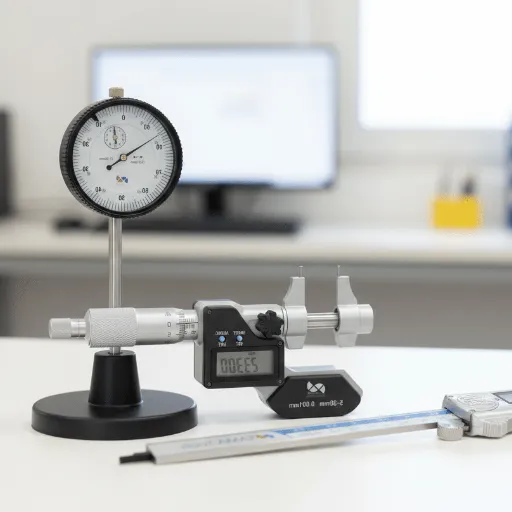
Mechanical testing tools measure physical dimensions, forces, material properties, and geometric accuracy. For a detailed guide to this category, see our overview of mechanical testing equipment types.
Dimensional Measurement Tools
- Calipers: Measure length, diameter, depth, and thickness with good precision.
- Micrometers: Provide higher precision than calipers for small distances.
- Dial indicators: Detect small linear deviations, runout, or alignment errors.
- Gauges: Check specific dimensions such as thread size, hole diameter, or gap width.
- Coordinate measuring machines (CMMs): Map complex 3D geometry for quality verification.
Material Testing Machines
- Hardness testers: Measure material hardness using Rockwell, Brinell, Vickers, or Shore scales.
- Tensile testers: Apply controlled pulling force to evaluate strength and elongation.
- Compression testers: Measure how materials respond to crushing force.
- Impact testers: Evaluate resistance to sudden force or shock.
- Fatigue testers: Test how materials perform under repeated loading.
A quality engineer named Priya once ordered Rockwell hardness testers for a rubber component line. The readings were inconsistent because Shore hardness was the correct scale for elastomers. After switching to Shore A durometers, her team got stable results and stopped rejecting good parts.
Force and Torque Tools
- Torque testers: Measure the rotational force applied during assembly.
- Torque wrenches: Apply a specific tightening torque to fasteners.
- Tension gauges: Measure stretching or pulling force.
- Universal testing machines (UTMs): Combine tensile, compression, and sometimes bending tests in one system.
These tools are essential in machining, metal fabrication, automotive, and aerospace industries. Accuracy depends on both instrument quality and operator technique.
Environmental and Specialized Test Equipment
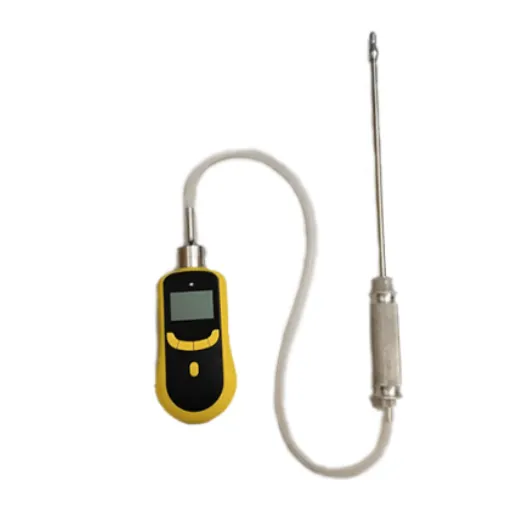
Environmental test equipment measures or simulates conditions that affect product performance, reliability, or safety.
Thermal and Climate Tools
- Thermal imaging cameras: Detect hot spots, loose connections, and overheating components without contact.
- Temperature and humidity chambers: Simulate climate conditions for reliability testing.
- Data loggers: Record temperature, humidity, pressure, or vibration over time.
- Infrared thermometers: Measure surface temperature quickly and safely.
Vibration and Structural Analysis
- Vibration analyzers: Identify mechanical imbalance, misalignment, or bearing wear.
- Ultrasonic thickness gauges: Measure wall thickness without damaging the surface.
- Vibration shakers: Simulate transport or operational vibration during testing.
Reliability and Compliance Testing
- Environmental chambers: Combine temperature, humidity, and sometimes altitude or vibration.
- Salt spray chambers: Test corrosion resistance of coatings and materials.
- IP/dust-water ingress testers: Verify enclosure ratings such as IP65 or IP67.
- Thermal shock chambers: Expose products to rapid temperature changes.
These tools support predictive maintenance, environmental compliance, and product reliability standards. They are widely used in electronics, automotive, and outdoor equipment manufacturing.
RF and Wireless Test Equipment
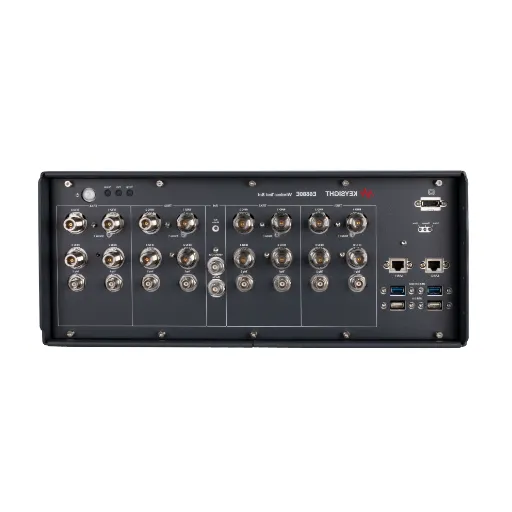
RF test equipment is growing rapidly due to 5G, satellite communications, and wireless device development. The communications test and measurement market alone is valued at approximately USD 11.37 billion in 2026, according to MarketsandMarkets.
Signal Analysis Tools
- Spectrum analyzers: Measure signal amplitude across frequencies.
- Vector network analyzers (VNAs): Measure impedance and S-parameters for RF components and antennas.
- Frequency counters: Measure the frequency of a signal accurately.
Signal Generation and Communications Testers
- Signal generators: Produce test signals for calibration and device verification.
- Cellular protocol testers: Validate mobile device behavior on 2G through 5G networks.
- Wi-Fi and Bluetooth testers: Verify wireless connectivity performance.
- Optical network testers: Test fiber-optic communication links.
EMC and Interference Testing
- EMI/EMC receivers: Measure electromagnetic interference emissions.
- Antennas: Capture radiated emissions during EMC testing.
- Surge/ESD testers: Verify immunity to electrostatic discharge and power surges.
This category requires more specialized knowledge and is typically used in telecom, defense, aerospace, and electronics R&D labs.
How to Choose the Right Category for Your Application
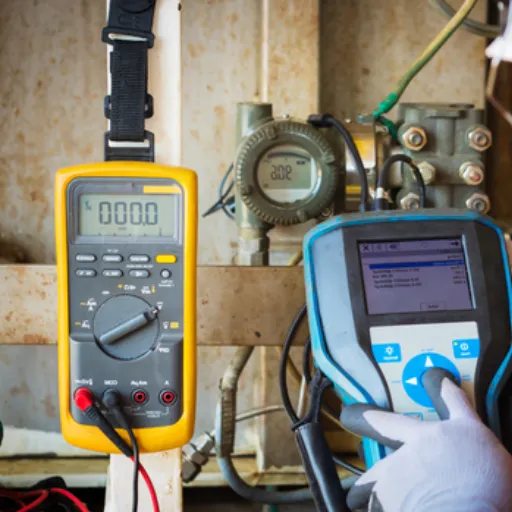
Selecting the right type of test and measurement equipment means matching the measurement need to the right instrument family. Our guide on how to choose test and measurement tools provides a step-by-step framework.
Match the Measurement Need to the Tool Type
Start by identifying what property you need to measure. Voltage and current call for electrical testers. Dimensions call for calipers or CMMs. Material strength calls for hardness or tensile testers. Wireless performance calls for RF analyzers. Writing the requirement down first prevents being distracted by features you do not need.
Consider the Environment and Safety Ratings
A tool that works on a bench may not survive on a factory floor. Field use often requires rugged housings, IP ratings, and high safety classifications such as CAT III or CAT IV. Laboratory work may prioritize resolution and traceability over portability.
Plan for Calibration and Traceability
Every measurement is only as good as its calibration. Ask whether the manufacturer can provide traceable calibration certificates, whether they follow ISO/IEC 17025, and how often the instrument needs recalibration. Strong tool quality control processes protect the value of your investment.
Sourcing Test and Measurement Tools by Category
China is one of the world’s largest manufacturing regions for test and measurement equipment. Different regions specialize in different categories, which affects lead times, technical support, and access to expertise. Working with an experienced industrial hardware tools supplier can help you navigate these options.
China Manufacturing Specializations
| Region | Specialization | Typical Products |
|---|---|---|
| Guangdong (Shenzhen, Dongguan, Guangzhou) | Electronics-integrated devices | Multimeters, clamp meters, oscilloscopes, thermal cameras |
| Jiangsu/Shanghai (Suzhou, Nanjing, Shanghai) | Precision instruments and lab equipment | CMMs, spectrometers, RF analyzers, and environmental chambers |
| Shandong (Jinan, Qingdao) | Material testing machines | Hardness testers, tensile testers, impact testers |
| Zhejiang (Hangzhou, Ningbo, Yongkang) | Mechanical measuring tools | Calipers, micrometers, gauges, and torque tools |
Sourcing from the right region improves lead times, reduces communication costs, and gives you access to suppliers who understand your product category.
OEM and Private Label Options
For distributors and brand owners, several test equipment categories are well-suited to private labeling. Handheld electrical testers, mechanical measuring tools, and basic environmental instruments are common starting points. Customization can include logos, color schemes, manuals, packaging, and even custom measurement ranges.
A distributor named Lena worked with a Guangdong manufacturer to develop a branded multimeter kit for electrical contractors. The kit included a custom pouch, branded leads, and a manual written for her local market. She priced it below the leading global brand while maintaining a healthy margin, and the kit became one of her top-selling product lines within a year.
Conclusion
The four main types of test and measurement tools are electrical, mechanical/dimensional, environmental, and RF/wireless. Each category contains specialized instruments designed for specific measurements, environments, and accuracy requirements. Choosing the right category first is the foundation of a sound procurement decision.
For buyers sourcing at scale, understanding China’s regional manufacturing strengths can reduce cost, improve lead times, and strengthen supplier relationships. OEM and private label options also give distributors a path to higher margins and stronger brand positioning.
Looking for a specific type of test and measurement equipment? Contact us for a category-specific catalog, sample quote, or OEM consultation. We can connect you with the right production capabilities and help you build a reliable test equipment supply chain.