
How to Choose a Reliable Hand Saw Manufacturer (2026 Buyer’s Guide)
A reliable hand saw manufacturer proves four things before you place an order: consistent blade materials, verifiable hardening, multi-stage quality control, and transparent MOQ and lead times. If a supplier can’t show those, the low quote will cost you more than it saves.
The cheapest hand saw quote is often the most expensive order you place all year. Returns, delayed containers, and inconsistent hardness between batches erase any saving fast, and they damage your brand with every complaint.
You already know that choosing the right saw matters. Our best hand saw buying guide covers the product side. This guide covers the supplier side: how to tell a real factory from a trading company, what to verify before you commit, and how to source OEM hand saws without surprises.
Key Takeaways
- A real hand saw manufacturer controls materials, hardening, and QC in-house; a trading company resells and adds a layer of risk.
- Verify steel grade (65Mn or SK5), hardening method, and multi-stage inspection before you talk price.
- Typical MOQ runs 500 to 3,000 pieces for finished hand saws, with 30 to 45 day lead times for custom work.
- OEM and private label let you build a differentiated line, but only if the factory’s quality is consistent batch to batch.
- The right partner lowers total cost of ownership, not just the unit price.
Already comparing suppliers? Send us your spec and we’ll benchmark it against a factory-direct quote.
What a Hand Saw Manufacturer Actually Does
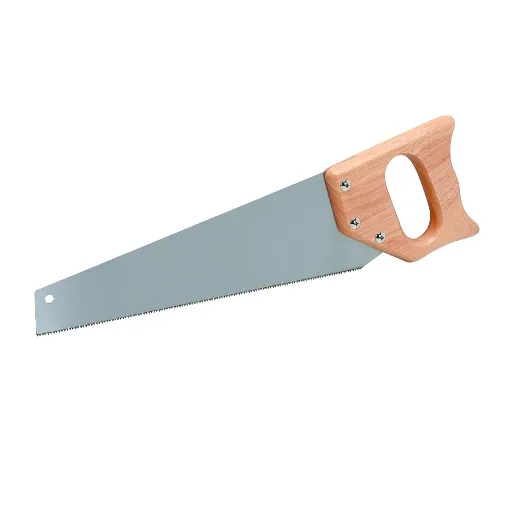
Not every “supplier” makes anything. A true hand saw manufacturer sources steel, cuts and grinds blades, sets and hardens teeth, builds handles, assembles the tool, and inspects the result under one roof. That control is what keeps the thousandth saw consistent with the first.
A trading company sits between you and that process. It can be useful for small mixed orders, but it adds cost, slows communication, and makes accountability harder when something goes wrong. When a batch arrives soft or off-spec, you want to talk to the people who ran the hardening line, not a middleman relaying messages.
For distributors and brand owners, buying factory-direct changes three things: cost per unit, consistency across batches, and how fast problems get fixed. Those are the differences that show up in your margins and your return rate.
Product Range a Capable Manufacturer Should Cover
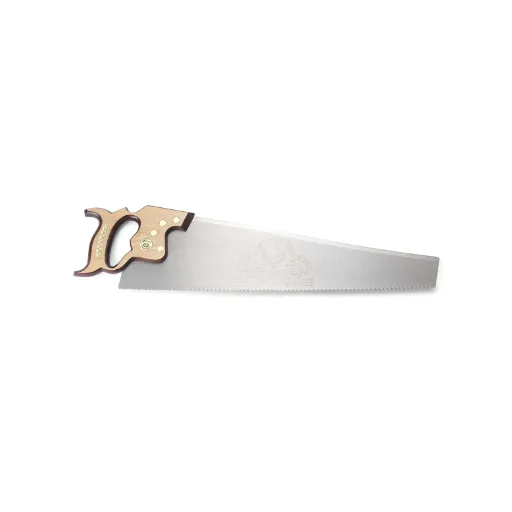
A capable factory covers the main cutting categories your customers ask for, with the materials to match each job. Breadth matters because it lets you consolidate sourcing and simplify your supply chain.
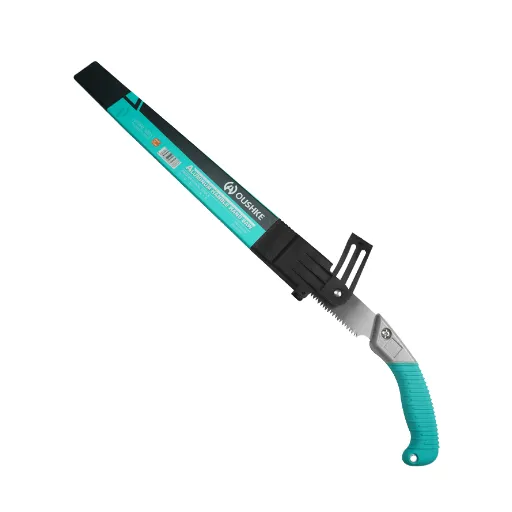
Woodworking and carpentry saws. Crosscut, rip, and universal panel saws form the volume core of most lines. Look for high-carbon 65Mn or SK5 blades, correct tooth geometry for the cut, and handles built for long use.
Japanese pull and specialty saws. Ryoba, dozuki, pruning, and folding saws serve precision and outdoor niches. These reward tighter tolerances and thinner kerfs, so they separate careful factories from casual ones.
Metal-cutting and blades. A serious manufacturer also produces hacksaws and hacksaw blades, including bi-metal options (HSS M2 with a D6a backing) for pipe, conduit, and fasteners.
If a factory only offers one or two of these, you can still work with them, but you’ll juggle more suppliers to fill your hand tools range. One partner who covers the spread is simpler to manage and easier to hold accountable.
How to Evaluate a Hand Saw Manufacturer
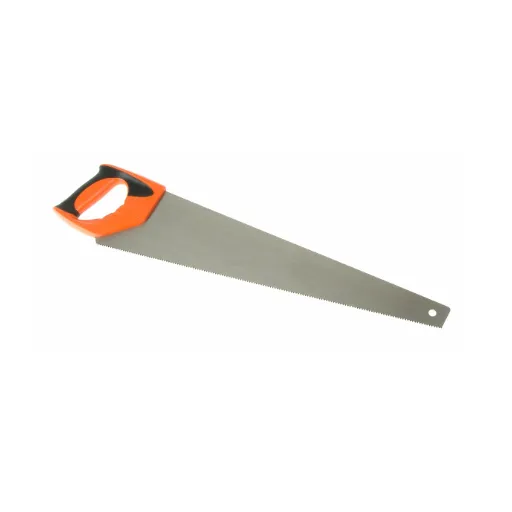
Use this checklist on any factory you’re considering. A reliable hand saw manufacturer clears every item; a weak one hides behind vague answers.
Confirm it’s a real factory
Ask for the business license, production photos or a video tour, and whether they have in-house R&D. On B2B platforms, filter Business Type to “Manufacturer/Factory” and R&D Capacity to “OEM/ODM.” That single filter removes most pure trading companies.
Verify materials and hardening
Get the steel grade in writing, typically 65Mn or SK5 high-carbon steel for woodworking saws. Ask how teeth are hardened (induction hardening holds an edge longer; through-hardened blades can be resharpened). If they can’t answer, they don’t control the process.
Inspect the quality control system
Look for inspection at three points: incoming raw material, in-process (tooth set, hardening, assembly), and final product. Ask what tests they run and whether they provide inspection reports on request.
Check certifications and compliance
ISO 9001 signals a documented quality system, and you can review what it covers at the ISO 9001 overview. Depending on your market, you may also need CE documentation. Request copies before you commit, not after.
Compare MOQ, lead time, and total cost
Benchmarks help you spot outliers. Finished hand saws commonly run 500 to 3,000 pieces MOQ; saw blades can start near 300, and custom hand saw lead times run 30 to 45 days. Price alone misleads; factor in defect rate, lead-time reliability, and rework.
Test communication and samples
Order a sample batch and measure it against the spec sheet. Note how fast and clearly the factory responds, how they handle a defect in the sample, and whether their documentation matches what you asked for. Communication during sampling predicts communication during a 40-foot container.
OEM and Private Label: What to Expect
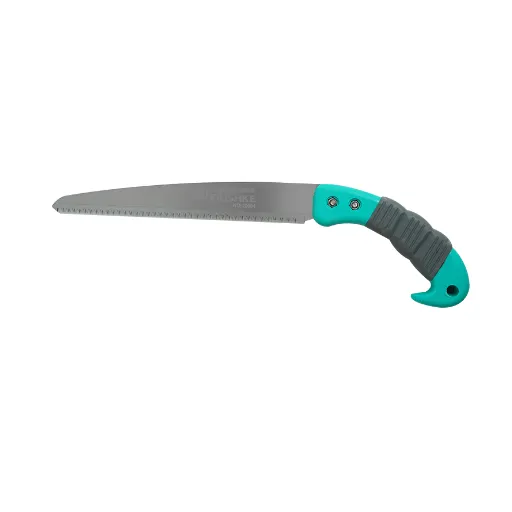
OEM and private label are where a hand saw manufacturer becomes a brand partner, not just a vendor. Done right, you get a differentiated line without building a factory.
The main customization levers are handle design and color, tooth spec and blade length, logo application (laser or silkscreen), and packaging. Standard orders carry lower MOQs; full custom branding usually needs higher volumes and longer lead times. Plan your first order as a test, then scale the SKUs that move.
Private label only protects your margin if quality stays consistent across batches. A saw that performs in the sample but drifts in production turns your brand into the return address. For a deeper look at assortment planning, packaging, margins, and import logistics, see our guide to wholesale hand saws.
A quick story. Aisha runs a private-label tool brand selling into garden centers across Southeast Asia. In 2025 she sourced generic saws from a trading company and spent months fighting soft blades and late shipments. After she switched to a verified factory, ran a 1,000-piece sample, and locked a clear spec, she launched a branded three-saw set that now outsells her old single SKU. The saw barely changed. The supply chain did.
Red Flags When Sourcing Hand Saws
Most sourcing mistakes are visible before you sign. Walk away, or at least slow down, when you see these:
- Vague specs. No written steel grade, hardening method, or TPI range.
- No sample policy, or samples that don’t match the description.
- Evasive on certifications. Promises of ISO or CE with no documents to show.
- Pricing that’s far below the market. It usually means thinner steel, skipped hardening, or a trading company hiding its margin.
- Inconsistent hardness between sample and bulk. The classic sign of weak process control.
- A “factory” that can’t show production. Photos, video, or an audit should be easy to provide.
A second story. Mark, a hardware distributor in the Midwest, took the lowest quote for 10,000 panel saws in early 2026. The price beat every other bid by 18 percent. The first container arrived with soft teeth that dulled in a day, and the replacement shipment slipped six weeks. Between returns, lost shelf space, and a damaged retail relationship, the “savings” cost him more than a quality factory would have charged up front.
Why Buyers Source Hand Saws from Oushike
The global hand tools market reached roughly USD 27.6 billion in 2025, and cutting tools are among the fastest-growing segments, according to ResearchAndMarkets. Asia-Pacific holds the largest regional share, which keeps experienced Chinese manufacturers competitive on both cost and capacity. The question is which factory you trust with your brand.
At Shanghai Oushike Hardware Tools Co., Ltd., we manufacture and supply hand saws for distributors, contractors, and private-label brand owners. Buyers work with us because we combine factory-direct pricing with the controls that protect their business:
- In-house manufacturing across woodworking, pruning, and metal-cutting saws
- Multi-stage quality control from incoming steel to final inspection
- OEM and ODM support for custom handles, tooth specs, logos, and packaging
- Flexible MOQs so you can sample before you scale
- Export experience with documentation and logistics handled
You can review our manufacturing capabilities and the range we build. If you’re comparing factories, we’ll walk you through specs, samples, and lead times in plain terms.
Ready to verify a factory, not just a quote? Request a sample and a factory-direct quote and we’ll respond with specs, lead times, and pricing for your market.
Hand Saw Manufacturer FAQs
What is the typical MOQ for hand saws?
For finished hand saws, MOQ commonly runs 500 to 3,000 pieces depending on spec and customization. Saw blades can start near 300 pieces. Full private-label branding usually requires higher volumes, so many buyers start with a smaller standard order to test demand first.
How do I verify a hand saw factory is real?
Ask for the business license, production photos or a video tour, and proof of in-house R&D. On B2B platforms, filter for “Manufacturer/Factory” rather than trading companies. A real factory welcomes these questions; a reseller deflects them.
What steel is best for hand saw blades?
65Mn and SK5 high-carbon steels are the workhorses for woodworking saws because they balance edge retention, toughness, and cost. Bi-metal blades (HSS teeth with a flexible backing) suit metal-cutting. Match the steel to the material your customers cut most.
How long does OEM hand saw production take?
Standard items ship faster, while custom hand saws typically run 30 to 45 days after samples are approved. Blades and standard specs can be quicker. Confirm lead time in writing and build a buffer into your first order.
Can I get my logo and packaging custom printed?
Yes. Most OEM factories offer logo application by laser or silkscreen, custom handle colors, and private-label packaging. MOQ and lead time rise with the level of customization, so agree on artwork, placement, and packaging specs before production.
Is a trading company ever the right choice?
For small, mixed, one-off orders, a trader can be convenient. For ongoing volume, consistent quality, and private label, a direct factory relationship gives you better cost, clearer accountability, and faster problem-solving.
Conclusion: Choose the Factory, Not Just the Price
The right hand saw manufacturer proves its materials, hardening, and quality control before you commit, and it stays accountable after the container lands. Verify it’s a real factory, confirm steel and hardening in writing, check certifications, compare total cost instead of unit price, and test with samples before you scale.
For B2B buyers, the goal isn’t the cheapest saw. It’s a consistent line that protects your margins and your brand. If you’re building or upgrading a hand saw range, Shanghai Oushike Hardware Tools Co., Ltd. can help with factory-direct pricing, OEM and ODM customization, and flexible order quantities. Contact our team to discuss your requirements and get a quote tailored to your market.