
Hacksaw Blade Selection Guide: TPI, Materials & Buying Tips
A hacksaw blade is the part of the hacksaw that does the actual cutting. Choosing the right blade affects cut quality, blade life, and worker productivity. For distributors, tool brands, and wholesale buyers, understanding blade options helps you stock products that match your customers’ needs.
At Shanghai Oushike Hardware Tools, we manufacture and supply professional cutting tools and hand tools for industrial and commercial buyers. This guide explains how to choose a blade by TPI, material, and application.
What Is a Hacksaw Blade?
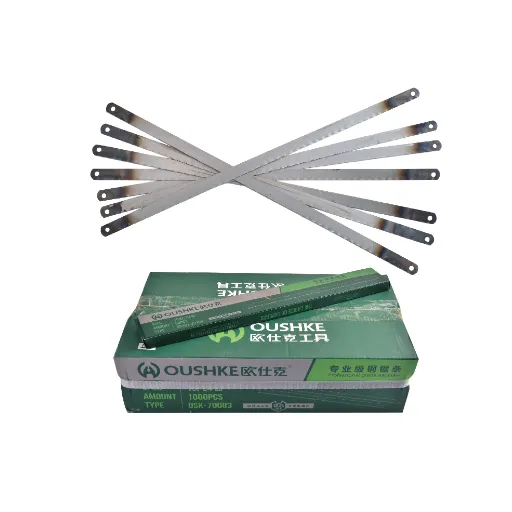
A hacksaw blade is a narrow, toothed blade held under tension in a hacksaw frame. It cuts metal, plastic, wood, and other materials through repeated push strokes. Most standard blades are 300 mm (12 inches) long and fit full-size hacksaw frames. Junior frames take 150 mm (6-inch) blades and fit smaller one-handed frames.
The blade has three main parts:
- Teeth: The cutting edges that remove material.
- Gullet: The space between teeth that carries away chips.
- Back: The body of the blade that supports the teeth and holds tension.
Tooth shape, spacing, and material all affect how well a blade performs on a given job.
Understanding Hacksaw Blade TPI
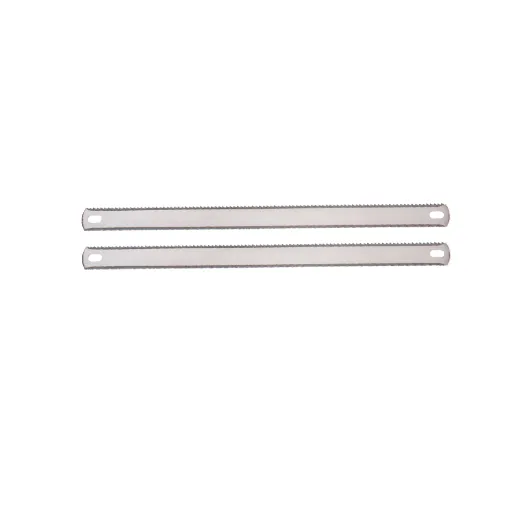
TPI stands for teeth per inch. It is one of the most important factors when selecting a blade. Choosing the right TPI controls cutting speed, finish quality, and how easily the blade clears chips.
- Low TPI (14-18): Fewer, larger teeth remove material faster. Best for thick or soft materials.
- Medium TPI (24): A balanced choice for general metal cutting.
- High TPI (32): More, smaller teeth produce smoother cuts. Best for thin tubing, sheet metal, and hollow sections.
The Three-Tooth Rule
A simple rule for choosing TPI is to keep at least three teeth in contact with the material at all times. If too few teeth contact the workpiece, individual teeth catch and strip, ruining the blade and the cut.
| TPI | Material Thickness | Best For |
|---|---|---|
| 14 TPI | Over 6 mm (1/4 inch) | Heavy solid bar, thick pipe, structural steel |
| 18 TPI | 3-6 mm (1/8-1/4 inch) | General steel bar, angle iron, rebar |
| 24 TPI | 1.5-3 mm (1/16-1/8 inch) | Sheet metal, thin-wall tube, bolts |
| 32 TPI | Under 1.5 mm (1/16 inch) | Copper pipe, conduit, hollow sections |
For pipes and tubes, use the wall thickness, not the outer diameter, when choosing TPI.
Types of Hacksaw Blade Materials
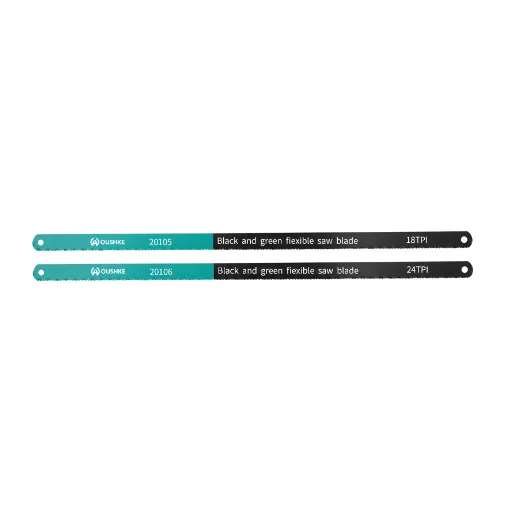
The blade material determines durability, heat resistance, and cost. Reputable manufacturers test common blade types against ISO and ANSI standards for tooth geometry and performance. Here are the most common types.
Carbon Steel Blades
Carbon steel blades are economical and work well for light-duty cutting of soft metals, plastics, and wood. They dull faster than other types and are best for occasional use or low-budget product lines.
High-Speed Steel (HSS) Blades
HSS blades are harder and more heat-resistant than carbon steel. They stay sharp longer and cut harder materials such as stainless steel and alloy steel. HSS blades are a good mid-range option for workshop use.
Bi-Metal Blades
Bi-metal blades combine high-speed steel teeth with a flexible spring-steel back. This design resists breaking while delivering long cutting life. Bi-metal blades are the most versatile choice and suit most professional applications, including mild steel, stainless steel, aluminum, and copper.
Cobalt Bi-Metal Blades
Cobalt bi-metal blades contain 8-10% cobalt in the HSS teeth. They handle higher heat and stay sharp longer on tough materials such as stainless steel, Inconel, and titanium. These blades cost more but last longer in demanding applications.
Tungsten Carbide Grit Blades
These blades have no conventional teeth. Instead, tungsten carbide particles are bonded to the blade edge. They cut abrasive or fully hardened materials that would destroy toothed blades. Use them for hardened steel, ceramics, or fiberglass.
| Material | Best For | Durability | Cost |
|---|---|---|---|
| Carbon steel | Light-duty, soft materials | Moderate | Low |
| HSS | Harder metals, general workshop | Good | Medium |
| Bi-metal | Most metals are used in professional use | High | Medium |
| Cobalt bi-metal | Stainless steel, heat-resistant alloys | Very high | High |
| Tungsten carbide | Hardened or abrasive materials | Very high | High |
How to Choose the Right Blade
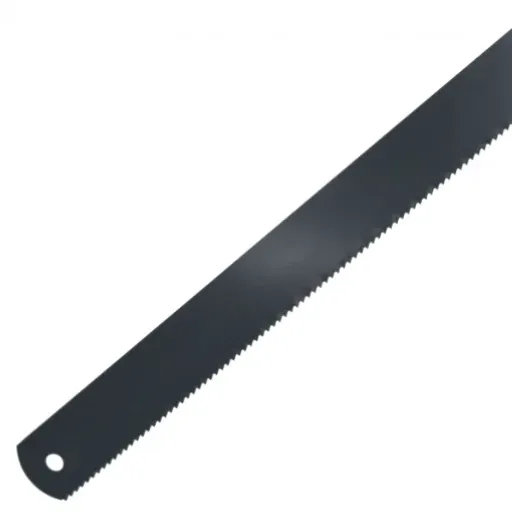
Selecting the right blade means matching the blade to the material, the frame, and the user’s expectations.
Match the Material
Soft materials such as aluminum, copper, and plastic cut easily but may clog fine teeth. Hard materials such as stainless steel generate heat and need heat-resistant teeth. Match the blade material to the workpiece. A blade for metal needs heat-resistant teeth, while a blade for plastic or wood needs coarser teeth to clear chips. The right match gives longer blade life and cleaner cuts.
Choose the Right TPI
Use the three-tooth rule and the TPI table above. When in doubt, choose a finer TPI rather than a coarser one. A finer blade cuts more slowly but is less likely to strip teeth on thin material.
Check Blade Length
Standard hacksaw frames take 300 mm blades. Junior frames take 150 mm blades. Some adjustable frames accept multiple lengths. Make sure the blade length matches the frame to maintain proper tension and safe operation.
Look at Tooth Set and Rake
- Tooth set: Teeth bent slightly outward prevent the blade from binding in the cut.
- Rake angle: Positive rake angles cut more aggressively. Neutral or negative rake angles produce smoother cuts and better control.
Consider Coatings
Some blades have titanium nitride, diamond, or corrosion-resistant coatings. These coatings reduce friction, extend blade life, or protect against rust in humid storage conditions.
Installing and Tensioning a Blade
Proper installation and correct blade tension improve cut quality and reduce blade breakage.
- Point teeth forward: The teeth should face away from the handle. The blade cuts on the push stroke.
- Seat the blade fully: Make sure both pin holes engage securely in the frame.
- Tension firmly: Tighten the wing nut or tensioner until the blade rings when flicked. It should not deflect sideways easily.
- Avoid over-tensioning: Too much tension strains the blade and frame, increasing the risk of snapping.
Cutting Techniques by Material
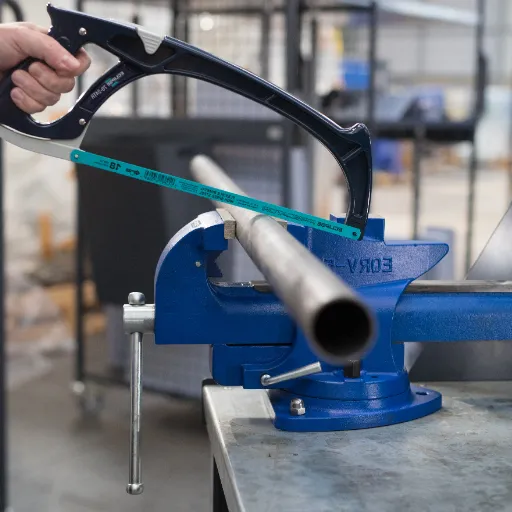
Mild Steel
For mild steel, use an 18 or 24 TPI bi-metal blade. Apply steady pressure on the push stroke and lighter pressure on the return. Cut at 40-50 strokes per minute for the right cutting speed, clean results, and long blade life.
Stainless Steel
Stainless steel work-hardens quickly, so use a bi-metal or cobalt blade. Cut slowly at 30-40 strokes per minute and use cutting fluid. Maintain steady forward pressure to keep the teeth biting.
Aluminum
Aluminum is soft and tends to clog the blade gullet. Use an 18 TPI bi-metal blade and apply a light lubricant such as WD-40 or machine oil. Keep the cutting speed moderate to prevent chip buildup.
Copper Pipe
Use a 24 or 32 TPI blade. Secure the pipe in a vise to prevent rolling. A finer TPI gives a cleaner cut and reduces burrs.
Plastic and PVC
An 18 or 24 TPI blade works well. Use moderate speed and let the teeth cut without forcing the stroke. Too much pressure can melt or deform the material.
Troubleshooting Common Cutting Problems
| Problem | Likely Cause | Solution |
|---|---|---|
| Blade breaks often | Over-tensioning, twisting, or wrong TPI | Reduce tension, keep frame straight, match TPI to material |
| Blade wanders or cuts crookedly | Loose blade or uneven pressure | Re-tension, clamp workpiece firmly, and guide with light pressure |
| Teeth strip quickly | TPI too coarse for thin material | Switch to a finer blade |
| Cut is rough or slow | Dull blade or wrong tooth design | Replace the blade or change the TPI |
| Chip clogging | Soft material with fine teeth | Use a coarser TPI or lubricant |
Maintenance and Storage
Proper care extends blade life and keeps performance consistent.
- Clean chips and residue from the blade after each use.
- Wipe blades dry before storage to prevent rust.
- Store blades flat or hanging in a dry place. Avoid loose toolbox storage where teeth can chip.
- Apply a light coat of oil in humid environments.
- Replace blades when teeth are dull, chipped, or worn unevenly.
Sourcing Checklist for Bulk Buyers
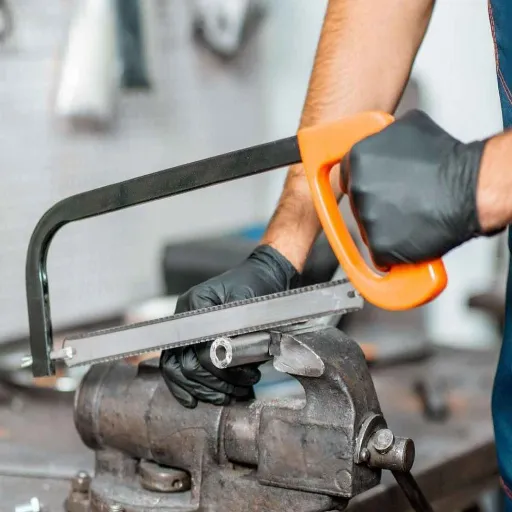
Use this checklist when sourcing blades for resale, rental fleets, or professional tool kits.
- Identify the target market: DIY, trade, industrial, or specialized.
- Choose blade materials: carbon steel, HSS, bi-metal, cobalt, or carbide grit.
- Stock common TPIs: 14, 18, 24, and 32.
- Verify blade length compatibility: 300 mm standard and 150 mm junior.
- Check tooth set, rake angle, and gullet design.
- Review coating options for friction reduction or corrosion resistance.
- Request samples and test on typical customer materials.
- Confirm packaging and private-label options.
- Check lead times, minimum order quantities, and quality control processes.
- Ask about customization: color, branding, specifications, and bulk packaging.
Frequently Asked Questions
What is the best hacksaw blade for metal cutting?
A bi-metal hacksaw blade is the best general choice for metal cutting. It handles mild steel, stainless steel, aluminum, and copper while resisting breakage. For most jobs, 18 or 24 TPI works well.
How do I choose the right TPI?
Match TPI to material thickness using the three-tooth rule. Thicker materials need lower TPI. Thinner materials need higher TPI. For pipes, measure wall thickness, not outer diameter.
Can a hacksaw cut stainless steel?
Yes, but stainless steel work-hardens during cutting. Use a bi-metal or cobalt blade, cut slowly, and apply cutting fluid. Steady pressure helps the teeth keep biting.
How tight should the blade be?
Tight enough that the blade does not deflect sideways easily and rings when flicked. Over-tensioning increases the risk of breakage, while under-tensioning causes wandering cuts.
What is the difference between carbon steel and bi-metal blades?
Carbon steel blades are lower cost and suit light-duty cutting. Bi-metal blades have HSS teeth on a flexible back, giving longer life and better performance on harder materials.
Conclusion
Choosing the right blade means balancing TPI, material, length, and application. A well-stocked product line includes carbon steel, HSS, and bi-metal options in common TPIs to serve DIY users, tradespeople, and industrial buyers.
For B2B buyers, sourcing durable, factory-direct hacksaw blades from a reliable manufacturer helps you build a competitive tool line. Shanghai Oushike Hardware Tools supplies bi-metal, HSS, and carbon steel blades for distributors and tool brands worldwide. With flexible OEM/ODM services and strict quality control, we help you meet your customers’ cutting needs. Contact our team to discuss bulk orders, custom specifications, or private-label packaging.