
Import Saw Blades from China: Supplier & Customs Guide
To import saw blades from China, you need four things in the right order: a written blade specification, a verified factory, a passed sample test, and the correct HS classification. Most first-time buyers get the last two wrong, and the mistake shows up as a duty bill or a container of blades that will not fit the market’s saws.
The sourcing part is not the hard part. Alibaba and Made-in-China will give you a hundred quotes before lunch. The hard part is proving that the factory exists, that the blade performs, and that the goods clear customs at the rate you planned.
Daniel, a distributor in Ohio, learned this on his second order. He bought 2,000 TCT blades on a $1.85 FOB price and budgeted duty at the base rate. His broker classified them under a line that carried Section 301.
The bill added roughly $1,400 he hadn’t priced into the margin. The blades were fine. The landed cost wasn’t.
This guide walks through the import as a project: specification, supplier qualification, sample testing, classification, documentation, shipping, and first-order risk. It is written for distributors, retailers, e-commerce sellers, and brand owners who are buying saw blades from China and want the first container to be the one they planned.
Key Takeaways
- Write a full blade specification before you ask for a quote. “7-1/4 inch blade” is not a specification.
- Verify the factory, not just the certificate. A trading company can hold a valid ISO 9001 certificate and still not own a brazing line.
- Test 5 to 10 pieces per SKU on the material your customers actually cut, and agree on a defect allowance in writing.
- Most saw blade lines are MFN Free under HS 8202. The China-specific cost comes from Section 301 and the 2026 surcharge, roughly 37.5% total on circular blades as of October 2026, excluding AD/CVD.
- Diamond sawblades from China remain under an antidumping order. Scope questions need a broker or trade counsel, not a supplier’s opinion.
What Importing Saw Blades from China Involves
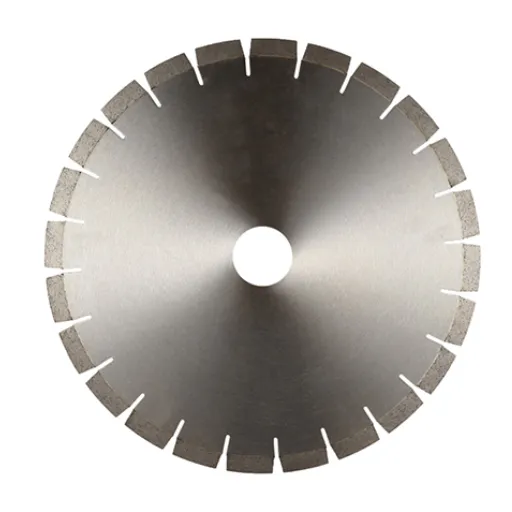
Importing saw blades from China means sourcing circular, band, reciprocating, jigsaw, or diamond blades from a Chinese manufacturer, verifying the factory and the product, classifying the goods under HS heading 8202, and clearing them through customs in the destination market.
The importer of record carries the legal responsibility for all of it. That includes the declared value, the HS code, the origin, and any antidumping or countervailing duty. Your supplier can help with documents. It can’t take the liability off your company.
Five decisions shape the project:
- What blade, exactly. Diameter, bore, tooth count, grind, material, and marking.
- Who makes it. A factory with a production line, or a trader with a catalog.
- Whether it performs. A sample test with written acceptance criteria.
- How it is classified. The 10-digit HTS line drives duty and paperwork.
- How the first order is protected. Inspection, payment terms, and contract clauses.
If you are building a full product line rather than testing a single SKU, start with the circular saw blades supplier guide. It covers catalog standardization and the commercial framework this article assumes.
Why China, and Where the Blade Factories Are
China is the default sourcing market for saw blades because it covers the full range: 110 mm to 400 mm diameters, 16 mm to 30 mm bores, carbide and diamond working parts, and private-label packaging at most volume tiers. The global saw blades market was valued at roughly USD 17.0 billion in 2025 and is forecast to reach USD 22.8 billion by 2034, according to IMARC Group. Circular blades alone are a market of roughly USD 8 billion to USD 13 billion depending on the definition.
That scale matters because it means choice. It also means variance. Two factories in the same city can produce blades that look identical and perform very differently.
Most blade production clusters in China sit in four regions:
| Cluster | Province | Typical strength | Sourcing note |
|---|---|---|---|
| Danyang | Jiangsu | TCT circular blades, diamond blades, drill bits | Dense supplier base for circular and diamond |
| Yongkang / Jinhua | Zhejiang | Hardware, power tools, accessories | Broad ecosystem; confirm blade production is in-house |
| Foshan | Guangdong | TCT and PCD blades, cutting tools | Strong for aluminum and panel-processing blades |
| Shandong | Shandong | Diamond blades, lower-cost ranges | Price-competitive; verify steel and braze quality |
A cluster is a sourcing hypothesis, not a quality guarantee. Plenty of trading companies register an address in Danyang without owning a furnace or a brazing line. The saw blades manufacturer guide explains how the production process actually works, which helps you ask better questions during a factory audit.
China solves range and cost. It doesn’t solve duty, freight, or quality consistency. Those are your job.
Step 1: Lock the Specification Before You Request a Quote
A Chinese factory will quote whatever you send. If you send a photo and a diameter, you will get a price for a blade that may not match your market. The specification is the contract’s technical foundation.
Send this table with every RFQ:
| Field | Example | Why it matters |
|---|---|---|
| Diameter | 7-1/4 in (184 mm) | Determines saw fit and price |
| Bore | 5/8 in (15.87 mm) | The most common source of returns |
| Kerf | 0.071 in (1.8 mm) | Affects cut speed and material waste |
| Plate thickness | 0.047 in (1.2 mm) | Affects stiffness and noise |
| Tooth count | 24T, 40T, 60T | Application and cut finish |
| Grind | ATB, TCG, FTG | Material compatibility |
| Hook angle | 15°, 20°, or negative | Feed force and safety |
| Max RPM | 7,000 | Must meet or exceed the saw’s rating |
| Steel grade | 65Mn or 50# | Body strength and tension stability |
| Carbide grade | YG8 or YG10 | Wear life and toughness |
| Coating | None, TiAlN, or PTFE | Heat and corrosion resistance |
| Marking | Laser etch, max RPM, batch code | Traceability and resale compliance |
Two market details deserve their own line in the RFQ. First, the bore. The US handheld market runs on 5/8 inch, while much of Europe and Asia runs on 20 mm, 25.4 mm, or 30 mm. A 30 mm blade won’t fit a 5/8 inch spindle, and a 5/8 inch blade on a 30 mm spindle is a safety problem.
Second, the diameter convention. A 190 mm blade is a European standard size, not a relabeled 7-1/2 inch blade.
Add acceptance criteria to the same document: defect allowance, the test method used to judge it, replacement terms for early tip loss, and the packaging format. A supplier who resists written criteria is telling you something useful.
Send your blade specification for a factory-direct quote. Include diameter, bore, tooth count, annual volume, and destination market. Request a quote →
Step 2: Separate Factories from Traders, Then Verify the Factory
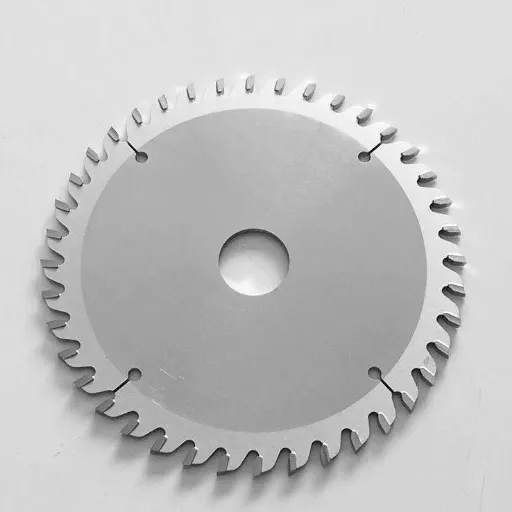
There’s nothing wrong with buying from a trader, as long as you know that’s what you’re doing and you’re not paying factory-direct prices for catalog access. The problem is misrepresentation.
Start with the channels. Alibaba and Made-in-China offer volume and trade assurance. Global Sources skews toward export-ready suppliers. The Canton Fair lets you meet people face to face.
Industry referrals are the slowest channel and usually the most reliable.
Then ask four questions that separate production from resale:
- What is the registered scope of your business license? Manufacturing, trading, or both.
- Do you hold export rights? Ask for the customs registration record.
- Can you show the production line live? Blanking, heat treatment, tensioning, brazing, grinding, balancing.
- Who makes the steel plate and the carbide tips? A factory knows its suppliers. A trader often does not.
A live video walkthrough is the cheapest audit you will ever run. Ask them to walk from the raw steel rack to the brazing line to the inspection bench without cutting the camera. If the “factory” is an office with a sample wall, you have your answer.
Mei runs a trading company in Ningbo. She is good at her job, and she is honest about it. When a buyer asked for a factory audit in 2025, she arranged a video call from a partner factory two hours away. The buyer assumed it was her facility. It wasn’t.
The buyer found out when a subsequent order shipped from a different address. The blades were acceptable. The relationship wasn’t.
Verify the legal entity and the certificate
Match the company name on the business license, the contract, the bank account, and the export documents. A mismatch is a fraud risk, not a clerical error.
For ISO 9001, ask for the certificate number, certification body, scope, and expiry date. Then verify it yourself on IAF CertSearch. Confirm that the certification body is accredited and that the scope actually covers saw blade production.
“ISO compliant” is a marketing phrase. A certificate with a scope that excludes your product is a red flag.
Red flags that end the conversation
- No fixed factory address, or an address that changes between documents.
- Refusal to do a live video walkthrough.
- Prices far below the market with no explanation.
- Stolen catalog photos that appear on five other suppliers’ sites.
- Vague answers about heat treatment, tensioning, or carbide grade.
- A one-day quote for a custom specification that should require tooling.
- A bank account in a different company’s name.
Step 3: Test the Blade, Not the Sample Photo
Order 5 to 10 pieces per SKU from two or three suppliers. Test them on the material your customers actually cut, not on a clean offcut the supplier selected.
| Test | Method | What you are checking |
|---|---|---|
| Dimensions | Calipers: diameter, bore, kerf, plate thickness | Match to the spec sheet and the saw arbor |
| Flatness and tension | Straightedge and feeler gauge; request tension data | Plate stability at speed |
| Runout | Dial indicator on the arbor | Wobble and cut quality |
| Tip hardness | Supplier data; independent lab for high volume | Carbide consistency |
| Braze integrity | Visual under magnification; shear or bend test | Tip retention under load |
| Cut quality | 20 to 50 cuts on the target material | Chipping, burn, burr, raised grain |
| Vibration and noise | Side-by-side comparison at operating speed | Balance and safety |
| Tooth wear | Measure after a fixed number of cuts | Life versus price |
| Markings | Laser etch, max RPM, diameter, bore, batch code | Traceability and resale compliance |
Priya sells saw blade kits on a marketplace in the UK. Her first supplier’s samples looked perfect. After 40 cuts on oak, two of the ten blades had lost teeth.
The supplier called it “normal wear.” She switched suppliers, added a 50-cut test to her acceptance criteria, and now rejects a batch before it ships rather than after customers complain. The test costs her a day. The returns used to cost her a week.
Agree on the defect allowance in writing before the bulk order. A common target is 1.5% or lower. Define how defects are counted and who pays for replacement freight.
If you are still deciding how much to order, the wholesale saw blades guide covers order sizing, MOQ tiers, and packaging economics. This article assumes that decision is already made.
Step 4: Classify the Saw Blades You Import from China
Saw blades sit in HS heading 8202. The subheading depends on the blade type and, critically, on the working part. These are the US HTS lines and MFN rates, verified against the USITC Harmonized Tariff Schedule on October 28, 2026:
| Blade family | HTS line | MFN general rate |
|---|---|---|
| Hand saws (whole) | 8202.10.00.00 | Free |
| Band saw blades | 8202.20.00 | Free |
| Circular, steel working part | 8202.31.00.00 | Free |
| Circular, other | 8202.39.00 | Free |
| — diamond working parts | 8202.39.00.10 | Free |
| — diamond sawblade cores | 8202.39.00.40 | Free |
| — other, including many TCT wood blades | 8202.39.00.70 | Free |
| Chain saw blades, >0.2% Cr/Mo/W | 8202.40.30.00 | 7.2% |
| Chain saw blades, other | 8202.40.60.00 | Free |
| Hacksaw blades | 8202.91.30.00 | Free |
| Other saw blades | 8202.99.00.00 | Free |
Classify by the working part, not the marketing name. A blade with a steel cutting edge is generally 8202.31. A carbide-tipped blade with a steel body is generally 8202.39.
A diamond-segment blade is 8202.39.00.10. Chain saw blades are the outlier at 7.2% when the cutting parts contain more than 0.2% chromium, molybdenum, or tungsten.
The base rate is only the first layer. For Chinese-origin circular blades, add Section 301 at 25% and the 2026 surcharge at 12.5%. That produces a total effective rate of roughly 37.5% under HTS 8202.39.00.70 as of October 2026, excluding antidumping and countervailing duties.
Rates change. Confirm the line and the rate with a licensed customs broker before the first entry.
Diamond blades carry a separate risk. The USITC voted on October 21, 2026, that revoking the antidumping order on diamond sawblades from China would likely lead to continuation of material injury, so the order remains in force. Commerce also opened a covered-merchandise inquiry on October 19, 2026. Scope questions, including third-country assembly, need trade counsel, not a supplier’s assurance.
One more change catches small buyers. The US suspended the $800 de minimis exemption for all trading partners effective August 29, 2025. Sample shipments and small trial orders now incur duty and may require a broker. Budget for it.
Step 5: Import Saw Blades from China: Documents and Shipping
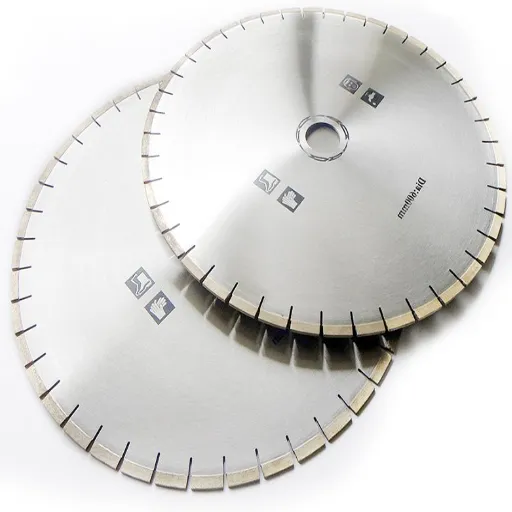
Give your broker the HTS line, origin, value, and Incoterm before the ship sails. Arriving without an entry package is how demurrage starts.
The document pack is standard:
- Commercial invoice with value, terms, origin, and HTS code
- Packing list with carton count, dimensions, and gross/net weight
- Bill of lading for ocean, or airway bill for air
- Certificate of origin
- Mill certificate for the steel and test reports for the blades
- ISPM 15 mark on wood packaging
- AD/CVD scope declaration where relevant
If you are the importer of record, you need a customs bond, either continuous or single-entry. For ocean freight, file the Importer Security Filing, known as 10+2, before the goods load. Your broker files the entry summary on CBP Form 7501 and calculates duty. The CBP basic importing page explains the importer’s responsibilities; a broker handles the mechanics.
Saw blades are dense. A pallet of 7-1/4 inch blades weighs far more than its cube suggests, so freight quotes must use gross weight, not just volume. Compare LCL and FCL on total landed cost, not on the freight line alone. Protect the blades from moisture, and confirm that the supplier uses ISPM 15-treated pallets.
Incoterms decide who clears customs and when risk transfers. EXW puts almost everything on you. FOB is the common middle ground. CIF includes freight and insurance but not destination clearance.
DDP means the supplier delivers duty-paid, which sounds simple but hides the duty inside the unit price. If you are new to the process, the hand tool import guide covers the general workflow, and the test equipment import guide shows the same steps for a different product category.
Step 6: Inspect, Pay, and Protect the First Order
Book a pre-shipment inspection before the balance payment. SGS, Bureau Veritas, Intertek, or your own QC team can run it. Check quantity, carton labels, blade markings, bore, tooth count, packaging, and a random cut sample. Use AQL sampling rather than trusting the supplier’s photos.
Payment terms are leverage. A 30% deposit with the balance before shipment is common. For a first order, consider a letter of credit or an escrow service, and never release the full balance before inspection. Put the specification in the contract as an annex, along with the defect allowance, replacement terms, late-delivery remedy, and logo or tooling ownership.
The first-order ladder keeps exposure small:
- Sample: 5 to 10 pieces per SKU, tested.
- Trial: 50 to 100 pieces per SKU, inspected.
- Core order: 500 to 1,000 pieces per SKU once sell-through is proven.
- Container: only after the range and the supplier have both performed.
If you need a custom blade or a private-label program, the custom hand tools page covers OEM options, and private label explains branding and packaging. For standard stock, browse the circular saw blades range. For the full custom blade playbook, the custom saw blades guide will cover tooling, artwork, and MOQ thresholds when it publishes.
Common Import Mistakes and Red Flags
- Buying on FOB price only, without a landed-cost model.
- Accepting “ISO compliant” without a certificate number.
- Skipping the cut test because the sample looked good.
- Misclassifying diamond blades as ordinary circular blades.
- Assuming de minimis still applies to samples.
- Arriving without a bond or an ISF filing.
- Paying the balance before inspection.
- Letting the supplier choose the HS code.
- Ignoring bore and marking requirements for the destination market.
Import Saw Blades from China: FAQs
What is the HS code for a saw blade?
Most saw blades fall under HS heading 8202. Circular blades are 8202.31 or 8202.39, band saw blades are 8202.20, hacksaw blades are 8202.91, and other blades are 8202.99. The working part decides the subheading.
What is the import duty on saw blades from China?
The US MFN rate is Free on most 8202 lines. Chinese-origin circular blades add 25% Section 301 and a 12.5% surcharge, roughly 37.5% total as of October 2026, excluding AD/CVD. Verify the line and rate with a broker.
How do I verify a Chinese saw blade factory?
Match the business license, contract, and bank account. Request a live video walkthrough of the production line. Verify the ISO 9001 certificate number on IAF CertSearch and confirm the scope covers saw blades. Ask who supplies the steel and carbide.
Are Chinese saw blades good quality?
They can be, and they can be poor. Quality depends on the steel grade, carbide grade, brazing process, tensioning, and batch control. A sample cut test and a pre-shipment inspection tell you more than a certificate or a catalog photo.
What documents do I need to import saw blades?
A commercial invoice, packing list, bill of lading or airway bill, certificate of origin, mill and test reports, and an ISPM 15 mark on wood packaging. As importer of record you also need a customs bond and, for ocean freight, an ISF filing.
How long does it take to import saw blades from China?
Production is typically 7 to 30 days for standard blades and 15 to 30 days for custom specifications. Add ocean transit, customs clearance, and inland delivery. Samples usually take 3 to 7 days plus express shipping.
Can I import a small sample order?
Yes, but the $800 de minimis exemption was suspended for all countries on August 29, 2025. Samples now incur duty and may need a broker, so budget for it in the trial cost.
What is the difference between a factory and a trading company?
A factory owns production equipment and controls the process. A trading company sources from factories and manages the export. Both can be legitimate, but only one can give you direct production control, and the price should reflect which one you are buying from.
Conclusion
Importing saw blades from China comes down to sequence. Write the specification. Qualify the factory. Test the blade. Classify the goods. Document and clear the shipment. Inspect before you pay.
The buyers who get this right are not the ones with the lowest quote. They’re the ones who know what the blade is made of, who made it, and what it’ll cost to land before the container leaves the port.
If you are planning a first order, start with a specification and a sample, not a container. Send your blade type, diameter and bore, tooth count, annual volume, and destination market, and we will quote against a written spec. Request a factory-direct quote →
Sources
- USITC Harmonized Tariff Schedule — HS 8202 classifications and MFN rates, accessed October 28, 2026
- CBP — Basic Importing and Exporting — importer responsibilities and entry
- IMARC Group — Global Saw Blades Market — market size and forecast