
Metric vs SAE Hand Tools: Complete Measurement Guide
Selecting specific hand tools according to the requirements can only be convenient if you are well familiar with the differences between and the relevance of the Metric and SAE measurement units. Regardless of whether you are an automotive technician who has many years of experience, a painter who prefers painting his/her workplace on holidays or a woodworker who makes furniture for a living, it is imperative to identify these measurements. For newbies, work time gets doubled without these tips, and so do the errors when most of the vital ions in the desired material are calculated inaccurately. The goal of this paper is to articulate the outlined distinctions between Metric and SAE hand tools, establish and look at their applications, and help you find out which system will be useful in particular situations.
Understanding Metric and SAE Measurement Systems
Metric tools are based on the International System of Units (SI) and use the measurement units of millimeters (mm) and centimeters (cm). Inch, on the contrary, applies the measurements provided by SAE (Society of Automotive Engineers) tools, which uses the imperial system in so far as readings are concerned whether in inches or parts of an inch. Macroscopically, it is much easier to differentiate the working tools because their measurement units deviate greatly, and this points to the kind of hardware each such nit would perfectly fit.
Metric tools are used in many countries and they are the most prevalent especially in the automotive industry and the industrial sector. SAE tools are used in a number of countries and are most common in countries such as the USA, and they are mostly in old-fashioned machines and vehicles that were made using bolts designed with imperial measures. Whether to use either of the systems largely depends on the nature of the project or the kind of equipment being used; the use of appropriate tools will ensure complete and accurate fixing without damaging any bolts.
Historical Origins of Metric and SAE
Before the development of the Metric system in the late 18th century, the earliest forms of measurement were known as anthropomorphic or foot-based systems. Societies made their measures of weight, length, and volume based on the sizes of their hands, feet, or body proportions. The units were incapable of being verified, and therefore were subjective as different regions held different views. Their symbols did not follow any order, thus making conversion of one unit into another quite difficult. The initial decimalization of weight, length, and capacity units makes further conversion of units and calculations easier and more accurate.
The SAE (Society of Automotive Engineers), to the contrary, is a system that is widely known in the United States and was put in place to standardize tools and dimensions for use in automotive and mechanical engineering. This specific system uses the English units (inch, feet, pound, etc) which actually came from engneering practices in the British colonies. Use of SAE tools is mostly on fasteners that are measured in parts of an inch. Such criteria have roots in the United States’ previous manufacturing methodologies, mostly surrounding the automotive and aerospace sectors.
Currently, the existence of both systems is evidence of the different engineering needs in the world today. Despite most of the world adopting the use of the Metric system, SAE is still found in many regions and sectors that dominate the use of old British measurements. It is important that the history and technologies that separate the two systems are understood because both systems are an important element for the success of various engineering and production objectives of a global scale.
Geographical Prevalence of Each System
The Metric system, officially known as the International System of Units (SI), is the standard measurement framework in almost every country in the world. Regions such as Europe, Asia, Africa and South America exclusively use the Metric system in engineering, production and scientific applications due to the simplicity of the system and its status of international standard. On the other hand, the SAE system based on the old units which are still may be found in the English system dominates in the United States and certain areas of Canada and Liberia. It is prevalent in such areas as automotive and aerospace, above all in the United States, where the inherent in the existing assets of the company causes this system to be applicable. Globally, coordinating cross-border projects requires substantial efforts for Metric and SAE systems compatibility, as it is useful in showing the technical and operational issues in carrying out business between different countries which has different measure systems in place.
Applications in Various Industries
The co-existence of Metric and SAE systems of measurement has dominated in so many fields, inciting the demand for flexible design and operational methodologies. Take for example the automobile industry where this specific SAE and metric compliant engineering is in the common practice while assembling vehicle parts around the world. This is essential in as much as enterprises operate across national boundaries and markets with different measures. In the same context, the dual systems come in handy in the aerospace industry especially in structural design measurements, fit as well as manufacturing tool fabrication, as such operations require inter-continent movements.
There are significant ramifications for the world of construction that involve translation of units from different systems in cross-border projects given these units have to be accurately converted to avoid any aspects of structural strength or alignment that might override the regulations. The picture changes even more dramatically in the oil and gas sectors, where there are multiple corporate businesses with their own factories in many countries, forcing them to work with Metric and engineering equipments in various settings. The efficiency gained in using both systems is back to three-digits in regards total facilities set up or on-going, which most enhances utilization, ensures minimum wastage, and eradicates any mistakes made in the various sectors.
Wrenches: Metric vs SAE
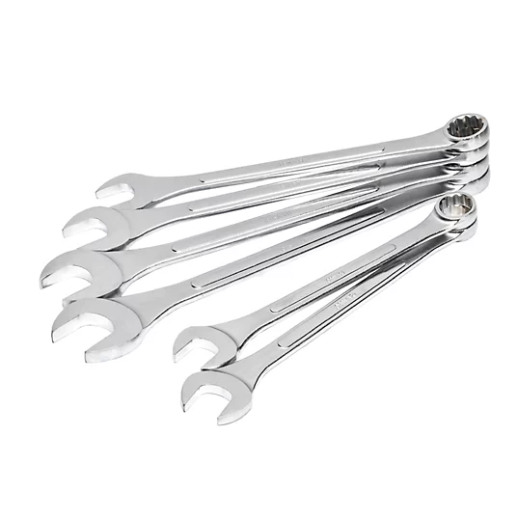
As a norm, measurements are done in metric units in the newer tools and that are generally in millimeters while older ones are done in fractions or full inches if it is SAE specified or compliantly. This is due to the typical usage: metric tools are usually found in vehicles and appliances coming from different parts of the world, while SAE-only tools are used in construction equipment most of the time, which in most cases are made in the country that uses this system. If you know if a tool such as wrench is available in either of the two measurements/approaches, the choice of tool should be guided by great keenness, as choosing the alternative based on the size increases the risk of destroying screws or other parts as the tool would not cycle smoothly. Fortunately, most modern kits brief two different models, with each engineered to maximize ease of access in fastening hardware.
Types of Wrenches
| Type of Wrench | Key Features | Common Applications | Material | Advantages |
|---|---|---|---|---|
| Adjustable Wrench | Adjustable jaw for variable sizes | Plumbing, automotive, home repairs | Steel/Chrome | Versatile, easy to use |
| Combination Wrench | Open-end and box-end in one tool | Pipes, nuts, and bolts | Forged Steel | Dual-functionality |
| Torque Wrench | Measures and applies specific torque | Automotive and machinery maintenance | Steel/Chromoly | Precision tightening |
| Allen Wrench (Hex Key) | L-shaped hexagonal tool | Fastening hex screws | Alloy Steel | Compact design, multipurpose |
| Socket Wrench | Interchangeable sockets for bolts | Mechanic tasks, complex assemblies | Chrome/Vanadium Steel | Efficiency in tight spaces |
| Pipe Wrench | Serrated teeth for pipe gripping | Plumbing and pipe fitting | Cast Iron | Heavy-duty, strong grip |
| Ratcheting Wrench | Gear mechanism for one-way motion | Automotive and industrial settings | Stainless Steel | Quick, efficient tightening |
| Box-End Wrench | Closed loop for better grip | Hex bolts and nuts | Heat-treated Steel | Secure grip and durability |
| Open-End Wrench | U-shaped jaw at each end | General construction tasks | Carbon Steel | Simple and lightweight |
| Crowfoot Wrench | Open-end socket for tight spots | Hydraulic and automotive systems | Steel/Chrome-Plating | Access to confined areas |
Wrench Size Conversion
In selecting the right spanner diameter, there shouldn’t be a problem with knowing the usage of metric and imperial set of measures. Indeed, various fasteners and hand tools may be produced following different standards due to different regions or even usage. So, the length of a metric spanner is indicated in millimeters (mm), on the other hand imperial spanner is indicated in inches (in). And the most popular pairs are close and include the 10 mm range with the 3/8 inch range and the 13 mm range with approximately 1/2 inch range. For certain purposes, there use is a guide or reference card that makes sure that the required bolt or tool is appropriate.
In addition, quick removal systems such as the snap-on and reinforced snap-on quick removal systems require wrench sizes between 4 mm (5/32 inch) and 12 mm (1/2 inch), but for middle of the road requirement, the range is from 13 mm (1/2 inch) to 19 mm (3/4 inch) sizes of wrenches may be sufficient. Any size from 20 mm (13/16 inch) upward may be necessary for bigger bolts or nuts. Fastening, for the general industrial personnel having to work at different cites in different jurisdictions, is most helpfully done with the aid of both metric and standard tools, or simply a crescent wrench.
Wrench Size Conversion Chart
The comparative table shows the use of either metric or standard sizes from the two most common related measures which shall be very helpful in selecting the right tool for each job especially across the range:
| Metric Size (mm) | Closest Imperial Size (inches) |
|---|---|
| 4 mm | 5/32 inch |
| 5 mm | 3/16 inch |
| 6 mm | 1/4 inch |
| 8 mm | 5/16 inch |
| 10 mm | 3/8 inch |
| 12 mm | 15/32 inch |
| 13 mm | 1/2 inch |
| 14 mm | 9/16 inch |
| 17 mm | 11/16 inch |
| 19 mm | 3/4 inch |
| 22 mm | 7/8 inch |
| 24 mm | 15/16 inch |
| 27 mm | 1 1/16 inch |
| 30 mm | 1 3/16 inch |
This table is most important to the professionals working amidst the usage of these systems, as it can facilitate a quick and error free transitioning of wrenches and relevant fastener sizes across the systems.
Socket Sizes: Metric and SAE Comparison
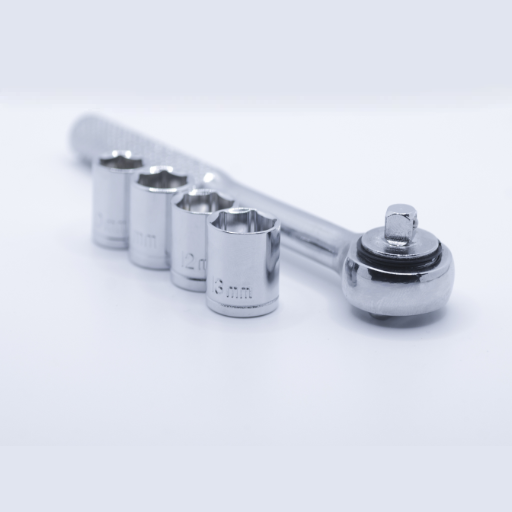
When metric and SAE (Society of Automotive Engineers) socket sizes are compared, it is very important that the fastener size be matched as close as possible so that the correct amount of torque can be applied, and no damage is done. It is a rule of thumb that sizes in the metric measurements are in millimeters while those in SAE measurements are fractions of an inch. For instance, a 19 mm socket will be pretty close to 3/4 inch SAE socket. Nonetheless, remember to always check out if the spanner is the right size because there can be deviations in sizes. More so, always check compatibility issues when dealing with crucial parts. It is recommended to use handy conversion tables to make an exact valuation, such as in the above diagram.
Common SAE Socket Sizes
SAE soft socket sizes are typically classified by their power levels as well as the size of the needed soft sockets. Standard SAE soft socket sizes are always in inches, fitting the screws or nuts used in American equipment. Some of the SAE soft socket sizes available and their corresponding uses include:
- 1/4″ Drive
This size is Useful with small fasteners and is usually available in sizes that range from 3/16 inch up to 9/16 inch. This is good for precision work such as work on electronics and household equipment.
- 3/8″ Drive
A rather versatile choice as it has sockets ranging from 1/4 inch to 7/8 inch. Commonly used for automotive purposes including relatively smaller mechanical tasks.
- 1/2″ Drive
These are made for more demanding tasks which softened socket sizes ranging from 3/8 inch up to 1-1/4 inch are used. This drive size is also the recommended size for those working on the larger bolts and nuts found in automotive suspension and industrial equipment.
- 3/4″ Drive and 1″ Drive
These are used in heavy-duty and industrial applications that require the use of a socket size larger than 2-1/2″. Such tools are normally utilized in conditions when there are instances of high torquing required for proper assembly or during maintenance.
For professionals and those with interests however, all size types in SAE sockets must be available for any foreseeable use from preventive up to corrective maintenance.
Metric Socket Sizes Explained
Metric sizes are denominated in millimeters (mm), which is a common practice worldwide, particularly automotive, industrial, and general mechanical engineering. These sockets are suited to metric fasteners, which are found in most modern vehicles as well as machines. It is usual for metric sizes to run from 4 mm up to 32 mm with the smallest for use in lightly stressing components, and the largest for very high peak loads’ occurrences.
In using knowledge of the reasons and requirements for the most popular precisions, people most often make use of such sizes as 8 mm, 10 mm, 13 mm, 17 mm, and 19 mm. The reason for using them is the fact that there are a lot of different bolts and nuts used in both light and heavy industrial applications. When choosing the right socket size for example, accuracy plays a very big role as the use of an inapt size could potentially lead to slipping or the removal of the hex/also squaring of the high standard fastener. Even more so, there can be an inclusion of standard imperial and metric deep well sockets especially in the metric set to allow for reaching bolts in hard to reach areas. Engineering professionals should always be mindful of the rated torque of their machinery for operational functionality and production in relation to the care of tools and equipment within safe limits.
Choosing the Right Socket Size
Understanding the dimensions of a socket is an essential skill that not only helps to make measurement precise but also prevents any breakages from happening. Normally, sockets can be measured using the metrics, and imperial system of units, millimetres (mm) such as 10mm, 14 mm are commonly used where Imperial measurements are expressed in fractions. Thus, it is important to establish or measure the fastener head to determine an arm size. With all engineering practice today the most accurate measurements are carried out by either digital or analog calipers due to the intricacy of the equipment being worked on. Last but not least, it is important to ascertain the correct drive size- this is in terms of 1/4″, 3/8″, or 1/2″ and it provides assurance that you will get the swivel fit extension and socket tweezers/cardinal wrench.’ Hence, determining the right socket size or confusing similar-looking sizes can mislead the way an equipment works or increase abrasions in tools or encouragethe screwing elements to break.
Conversion Tips and Charts
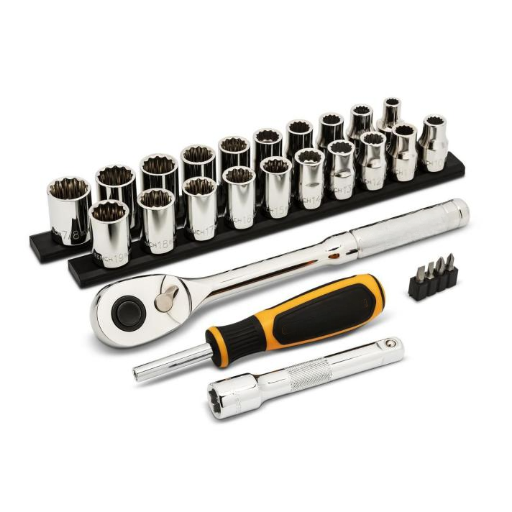
While performing repairs involving the use of tools and equipment accurate conversions between measurement systems need to be carried out. The following is an illustrative table of some common conversions:
- Fractional Inches to Decimal Inches
Example Conversion:
- 1/4″ = 0.25 inches
- 3/8″ = 0.375 inches
- 1/2″ = 0.5 inches
- Inches to Millimeters (1 inch = 25.4 mm)
Example Conversion:
- 1/4″ = 6.35 mm
- 3/8″ = 9.525 mm
- 1/2″ = 12.7 mm
- Millimeters to Inches (1 mm = 0.03937 inches)
Example Conversion:
- 6 mm ≈ 0.236 inches
- 10 mm ≈ 0.394 inches
- 13 mm ≈ 0.512 inches
Before proceeding towards the conversion, always consult a standard table or a reliable electronic source to confirm the results for that particular unit and ensure a high degree of accuracy.
SAE to Metric Conversion Guide
It is very important to be able to convert inches to centimeters in math and in most cases engineering measures. This piece proof provides an illustration for some popularly used fractions and decimals that are interchangeable:
SAE to Metric Wrench Sizes
5/16″ ≈ 8 mm
3/8″ ≈ 10 mm
7/16″ ≈ 11 mm
1/2″ ≈ 13 mm
9/16″ ≈ 14 mm
5/8″ ≈ 16 mm
11/16″ ≈ 17 mm
3/4″ ≈ 19 mm
As with any conversion, the measurement of two different units will be precise or probable and, in a few instances, some inaccuracies might be noticed due to small advantages of manufacture tolerances even if the recommended form factors are available in the relevant standard. It is vital to always use the exact type of tool as provided by the manufacturer for specific applications.
Practical Conversion Tips
- Use Precision Measuring Tools
For accurate measurement conversions, to verify dimensions, always use properly calibrated measuring equipment such as micrometers or digital calipers. These renders are quite useful in eliminating errors that may be due to roundups or such tolerances in critical uses where very high accuracy of dimensions is required. - Cross-Check Metric and Imperial Data
If you are looking for correct sizing guides when you are working in imperial or metric units, use conversion charts or any other available resource to reduce the hassle. This is the case for dimensions of different thread types for either bolts or fasteners often that are referred to specific standards such as ISO or ANSI in order to assemble these parts. - Account for Tolerances
Consider also the differences in sizes when carrying out a conversion. For instance, a 1/4 inch rounded figure will correspond to 6.35 mm, but there may be any limits according to the application from 6.30 mm to 6.40 mm. The main thing is to keep the selected equipment or part within the stipulated specifications. - Understand Fractional Inches
Converting fraction inches into millimeters can lead to confusion. In order to achieve better results, fractions should be converted into decimals before any form of conversion is done. For instance: 1/2″ = 0.5 inches = 12.7 mm, 5/8″ = 0.625 inches = 15.875 mm - Standard Sizes vs. Custom Sizes
Attain the distinction between standard sizes, normally applied in designing various devices, and sizes that are specifically made for a particular piece of equipment. For instance, certain types of tools, such as driver rachets, have 10 mm and 12 mm standards or come in sizes of 3/8″, which are used with machines or other fastening devices as well. - Temperature Considerations in Precision Applications
Material sizes may be change just a bit due to thermal expansion or contraction. In instances when high precision conditions are targeted, check if the converted measurements take into consideration the precautions taken because of the temperature changes. - Automate for Consistency
Utilize available technology like Computer-Aided Design (CAD) Programs which have the latest measurement systems in whatever units one prefers that seamlessly convert. This method is faster and very accurate and prevents people from doing tedious tasks. As a result, the respective systems are well enhanced. - Label Converted Dimensions
It is important that the working dimensions are marked appropriately on the drawings, plans, or other written works, to avoid misinterpretation during the manufacturing or assembly stage. This practice of working in one unit of measure across project teams ensures efficiency and minimizes chances of making schematic mistakes.
Choosing the Right Tools for Your Needs
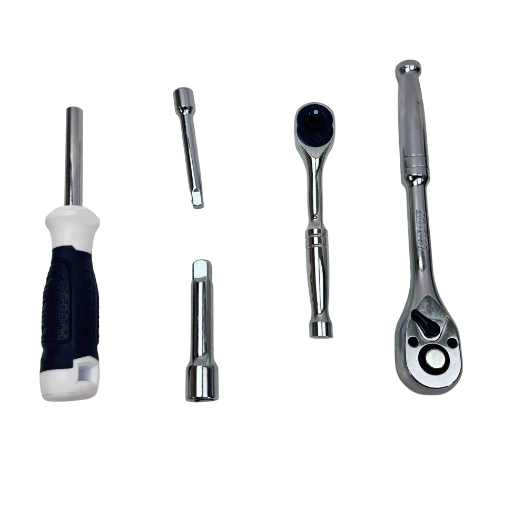
In finding the hardware tools that are needed for a given job, the first step is understanding the exact needs and requirements of the task in detail. If it is necessary to measure something accurately, then digital calipers or laser range finders need to be available, as they have proven to be more accurate than conventional tools. With complex patterns, CAD software is required to refine precision and increase working speed. For converting measurements from one unit to another, tools should have built-in automation, looking at the dangers posed by manual conversions. Task tools combined with user friendliness, for example, are the ones that you should encourage the wearing of because when you do this, working in teams becomes efficient and there are no mixed instructions among the members.
When to Use Metric vs SAE Tools
What one prefers to employ, either SAE (Society of Automotive Engineers) instrumentations or the metric ones, fully substantive to the parameters of the machine being utilized or any other gadgets altogether and the specific locale in question where this instrument is in control. Metrics, which are mainly expressed in millimeters, centimeters, and meters, are widely used by many people and consequently form the worldwide standard. Often applied areas like automobile manufacturing, engineering, and aeronautics, for example, give a clear edge to businesses where small errors can be very costly in terms of design and conformance to norms.
Unlike the metric system, SAE tools use inches as the primary unit, which is a fractional measurement. In addition, the use of SAE tools is higher in the industries that have more of the older equipment or those that are native to North America, for example in the auto and construction industries. For instance, the attachment and connection components and mechanisms of US-assembled cars from the 1980s onward are believed to have been designed using metric measurements.
It is imperative to have knowledge of the scope of work before moving to implementation. For environments with both systems, the use of separate indicators or special tools of measurement is necessary to be accurate and avoid interaction that can destruct the parts or cause defective assembly. In this respect, one’s practice suggests that it is better to have a complete set of both imperial and metric tools when one is in jobs or places where the codes correspond to more than one of the standard tools, rather than having just one type of such tools.
Recommendations for Hobbyists and Professionals
In the event that you are working with tools that require the use of various measurement systems, always consider using tool sets with two scales (dual scales) or adaptors, since it will help you to easily convert from the metric system to the SAE and vice versa. Meanwhile for those who are not serious about their work, a generalist toolkit equipped with shift spanners, different lengths of socket sets, or measuring devices such as slidable rulers and inside calipers will improve their rate of work and the quality as well.
At the same time, experts should have built for them heavy-duty tools of excellent quality that are capable of enduring high stress and frequent applications, for example, calibrated torque wrenches whose precision is determined by ISO and ANSI. They should also ensure that there is the necessary amount of lubrication and there is calibration of the gentleman’s instruments from time to time for continued service and best performance in a very harsh environment.
Final Thoughts on Tool Selection
Choosing the Right Tool: Aligning personal needs with data for proper decisions. Progress in production means that factories are coming up with novel and improved tools which have digital capacity, more accuracy in them, and are also user-friendly and thoughtful towards users to avoid overburdening the body. In particular, recently torque wrenches have been transformed with the addition of Bluetooth connection devices capable of verifying any corrections and keeping a history of data as pertains the scope of work at hand. As such, one can deduce that there is a general acceptance in the market where steel alloys such as chromeva have been fabricated to resist external factors, and are trend used in making tools. By being facilitated by new changes and matching with precise project designs, both novices and professionals could work better, avoid danger, and at the same time reduce the cost in relation to the future plan.
Reference Sources
1. Inderscience Publishers
Title: “Hand tool evaluation: a review of existing hand tool evaluation and selection studies”
URL: Inderscience Online
2. ACM Digital Library
Title: “Standard definitions for driving measures and statistics: overview and status of recommended practice J2944”
URL: ACM Digital Library
Frequently Asked Questions (FAQs)
What are the main differences between metric and SAE hand tools?
One clear difference between metric and SAE (Imperial) hand tools is the method of measurement. The metric tools are measured in millimeters while the SAE tools are in fractional inches. The said factors especially makes it crucial to choose the right system to avoid damage on the fastening or a rounding off error. Use of calipers or a micrometer help one in verifying the size of a tool accurately in addition to keeping both sets and a table of conversion factors within reach. Also note that thread pitch and head types can be different in both metric and imperial systems and so it is advised to observe the fastener before using a torque wrench with the fastener.
How do I accurately measure fasteners in metric vs. SAE systems?
Take note that the best technique is to utilize calipers or a micrometer to establish the diameter in either millimeters or inches, and then the thread pitch or TPI is sought out. If the fastener is in SAE, one must observe the fractional inches and cross reference this with a wrench table for an appropriate wrench size. At times, the metric pitch is subjective and it becomes hard to measure pitches in general inches without application of thread pitch gauge hence the importance in using the needle pitch ratio. There should also be another round of checking before using sockets and hex keys to avoid damage due to stripping.
Can I mix metric and SAE sockets or wrenches safely?
It can be fine to use a metric unit with an imperial one provided that the sizes are similar. However, it is recommended that you avoid normal interchange for mechanical fastening in class 8 bolts to prevent any kind of rounding. Where there is a great need for precision tightening, or it is a powerful application, the data on how this specific type of fastener has to be tightened is used, and the callipers or the micrometer are employed to confirm it. Should the need to use the wrong size tool arise, measure the bolt and choose a tool that fits the bolt tightly, and be prepared to use the fastener in another way.
How do hex keys and Allen wrenches differ between systems?
Both the hex key and Allen wrench sizes have been selected in accordance with the metric and SAE standards. The sizes of the metric hex keys are in terms of millimeters, whereas the SAE includes fractional inches. The discomfort with the use of the key can be avoided, while the foundation is assessed and modified for the prevention of further casualties when the intended fit of the component is not as per the pattern instructions within the procurement manual. If the user has evidence of this, a pair of calipers should be used to measure the hexagon’s dimensions, depending on convenience.