
OEM Nut Runner Manufacturing: How to Source, Customize, and Launch Your Own Brand
OEM nut runner manufacturing allows distributors and brand owners to customize torque tools with their own specifications, branding, and packaging — sourced directly from the factory at margins that resale simply cannot match. Working with a custom nut runner manufacturer, you can adjust torque ranges, voltage, and branding to match your market. A well-executed nut runner OEM program can improve gross margins from 18-25% on resale brands to 35-45% on your own line.
Yet most sourcing guides are generic. They cover power tools broadly but miss the precision requirements unique to torque-controlled assembly. Nut runners are not ordinary power tools. They are instruments. A difference of 2% in torque accuracy can mean the difference between a safe aircraft engine and a catastrophic failure. That precision demands a sourcing process built specifically for torque tools.
This guide covers everything you need to launch an OEM nut runner program: how the process works, where to find qualified manufacturers, what to verify during vetting, and how to protect your margins from hidden costs. If you are a distributor, brand owner, or importer evaluating private-label torque tools, the steps here will help you make confident, informed decisions.
Key Takeaways
- OEM nut runner programs let distributors customize torque, voltage, branding, and packaging for their specific market
- Private-label nut runners can improve distributor margins from 18-25% to 35-45% compared to resale
- The sourcing process takes 3-5 months from specification to first shipment
- China offers the best cost-flexibility balance; Japan leads in precision; Europe excels in compliance
- Torque calibration verification during sampling is non-negotiable — skipping it is the #1 cause of quality failures
What Is OEM Nut Runner Manufacturing?
OEM nut runner manufacturing is a partnership arrangement where a factory produces torque-controlled fastening tools to your specifications and branding. You provide the requirements. The manufacturer handles design, tooling, production, and quality control. The finished products carry your brand name, your packaging, and your market-specific configurations.
Three models exist in the market:
- OEM (Original Equipment Manufacturing): You supply detailed specifications — torque range, voltage, drive type, dimensions. The factory builds to your blueprint. You own the design.
- ODM (Original Design Manufacturing): You select from the manufacturer’s existing platform and add your branding. The factory owns the base design. You customize colors, labels, voltage, and minor specs.
- Private Label: The simplest form. You choose a standard catalog model and add your logo, manual, and packaging. No technical changes. Fastest to market.
Most distributors start with private label or light ODM to test demand. As volume grows, they shift to OEM to differentiate specifications and protect margins. Understanding the different types of nut runners helps you specify the right platform for your brand. If you are new to torque tools, read our complete nut runner guide first to understand the product categories before committing to a manufacturing program.
What can be customized depends on the model and manufacturer. Common options include:
- Torque range and accuracy class
- Voltage and frequency (110V/60Hz for North America, 220-240V/50Hz for Europe and Asia)
- Drive type and socket compatibility
- Grip configuration (pistol, inline, right-angle)
- Reaction arm design
- Housing color and logo placement
- Branded packaging and instruction manuals
- Calibration certificates and compliance labeling
Why Build a Private-Label Nut Runner Brand?
The case for a private label nut runner brand is straightforward: margin control and market differentiation. When you resell an established brand, you compete on price against every other distributor with the same catalog. When you sell your own brand, you control the positioning, the pricing, and the customer relationship.
Henrik Jensen runs a mid-size industrial distribution company in Denmark. For years, he sold a well-known German brand of electric nut runners. The margin was predictable — about 22% — but so was the ceiling. Every price increase from the manufacturer squeezed his bottom line. Every new distributor in his region diluted his market share.
In 2024, he launched a private-label line of cordless nut runners sourced from a Chinese manufacturer with ISO 9001 certification. If you are considering a cordless line, our cordless nut runner buyer’s guide covers battery platforms, runtime expectations, and selection criteria. He customized the voltage to 230V, added Danish-language manuals, and selected a torque range tailored to wind turbine maintenance — a growing segment in his region. For more examples of how nut runners serve specific sectors, see our breakdown of nut runner applications by industry. His landed cost per unit was 40% lower than the branded equivalent. He priced his line 15% below the German brand and still achieved a 43% gross margin. Within 12 months, private-label sales accounted for 35% of his nut runner revenue.
The benefits extend beyond the margin:
- Brand loyalty: Customers who buy your brand return to you for replacements, accessories, and upgrades
- Specification control: You decide which torque ranges, features, and voltages to offer
- Channel protection: Your brand is not available from competing distributors
- After-sales revenue: Spare parts, calibration services, and battery replacements flow through your business
- Market responsiveness: You can add features or adjust pricing faster than waiting for a major brand’s product cycle
Interested in launching your own nut runner brand? Contact our team to discuss OEM programs, flexible MOQs, and factory-direct pricing for your market.
Where to Find OEM Nut Runner Manufacturers
Not all nut runner OEM manufacturing regions are equal. The right choice depends on your target market, quality requirements, budget, and timeline.
| Region | Strengths | Typical MOQ | Unit Price Range | Best For |
|---|---|---|---|---|
| China | Cost-effective, flexible MOQ, fast turnaround, broad product range | 100-500 units | $200-2,500 | New brands, cost-sensitive markets, broad catalogs |
| Japan | Ultra-high precision, advanced electronics, strong R&D | 1,000+ units | $2,000-8,000 | Automotive, aerospace, premium brands |
| Europe | Strict compliance, brand reputation, and technical support | 500+ units | $1,500-5,000 | EU market entry, high-spec applications |
| Taiwan | Precision at mid-range cost, electronics expertise | 300-800 units | $800-3,500 | Quality-cost balance, electronics integration |
China dominates the mid-market segment. Factories in Shandong, Jiangsu, and Zhejiang provinces produce electric and cordless nut runners for export at competitive prices. Many offer ISO 9001 certification, CE marking, and flexible MOQs starting at 100-300 units. For distributors launching a first private-label line, China typically offers the best combination of cost, flexibility, and speed. Working with an experienced OEM tools manufacturer in these regions gives you access to established supply chains and export documentation support.
Japan specializes in high-precision electric and micro nut runners. Companies like Estic, Daiichi Dentsu, and TONE serve automotive and semiconductor manufacturers where ±1% accuracy is mandatory. MOQs are higher, and prices reflect the technology. These partnerships make sense for premium brands targeting aerospace, automotive OEMs, or high-end industrial markets.
Europe offers strong regulatory compliance and local support. German and Italian manufacturers understand CE, RoHS, and EU machinery directives intimately. Lead times are longer, and costs are higher, but the compliance path is smoother for EU-focused brands.
Sourcing Channels
- Industrial directories: DirectIndustry, Kompass, and IPROS GMS list verified manufacturers with product catalogs and certifications
- Trade shows: Canton Fair (Guangzhou), Hannover Messe (Germany), National Hardware Show (USA), and China International Hardware Show (Shanghai)
- B2B platforms: Alibaba (largest base, look for verification badges), Made-in-China (strong for industrial tools), Global Sources
- Direct outreach: Many established manufacturers maintain professional websites with clear product specifications and export experience
- Sourcing agents: For complex custom projects, agents with tool-industry expertise provide on-the-ground auditing and negotiation support
How to Vet an OEM Nut Runner Manufacturer
A custom nut runner manufacturer must do more than assemble parts. A factory that produces excellent standard drills may be completely unsuited for precision torque tools. Nut runners require calibrated torque verification, precision gearboxes, and consistent motor performance. Your audit checklist must reflect these requirements.
The Precision-Tool Audit Checklist
| Audit Item | What to Verify | Red Flag |
|---|---|---|
| Torque testing equipment | In-house calibration system, ISO 17025-accredited lab or equivalent | No torque tester visible; relies on third-party testing only |
| Gearbox testing | Load testing at rated torque, backlash measurement, and durability cycles | Cannot provide gearbox test data |
| Motor specifications | Brushless vs brushed, voltage platform, thermal protection | Vague motor specs; no brand or origin disclosed |
| Assembly capability | In-house vs outsourced gearbox assembly, motor winding, controller programming | Outsources core assembly to subcontractors |
| Quality management | ISO 9001 certification, documented inspection reports, traceability system | No ISO certification; no inspection documentation |
| Export experience | CE, UL, or CSA certificates for target markets; previous export references | No international certifications; no reference clients |
| R&D capability | In-house engineering team, prototyping ability, CAD/CAM resources | No engineering staff; cannot modify existing designs |
| Communication | Technical English proficiency, responsive sales engineering, and willingness to sign an NDA | Poor technical communication; reluctant to sign agreements |
Key Questions to Ask
- “What is your torque accuracy verification process for each unit?” — The answer should include in-house testing on calibrated equipment, not just spot checks.
- “Can you provide torque calibration certificates with each shipment?” — ISO 6789-compliant certificates are essential for credibility.
- “What is your in-house capability vs. what you outsource?” — Factories that outsource gearbox assembly or motor winding lose quality control.
- “Do you have experience with my target voltage and certification requirements?” — A factory experienced with 110V/UL for North America may struggle with 230V/CE for Europe.
- “Can I visit the factory or conduct a video audit?” — Transparency is non-negotiable. Reluctance is a serious warning sign.
Sofia Reyes runs a small tool distribution business in Mexico City. When she first searched for an OEM partner, she contacted six manufacturers. Two refused a video call. One could not explain how torque accuracy was verified. One quoted a price 40% below the others — a clear red flag. She shortlisted three, conducted video factory tours, and requested torque test reports on sample units. Only one factory passed all checks. That partnership produced her first private-label line, which sold out in eight weeks.
Step-by-Step: From Spec to Shipment
The timeline from first contact to first container typically spans 3-5 months. Rushing any step increases risk.
Step 1: Define Your Technical Specification
Before contacting manufacturers, finalize your product requirements. If you have not yet selected a tool type, see our guide on how to choose the right nut runner for your application:
- Torque range and accuracy: What is your target application? Automotive chassis bolts (100-300 Nm) require different tools than wind turbine towers (2,000+ Nm).
- Power source: Electric corded, cordless battery, or pneumatic? See our electric vs pneumatic nut runner comparison for guidance.
- Voltage and frequency: Match your target market. North America (110-120V/60Hz), Europe (220-240V/50Hz), Japan (100V/50-60Hz).
- Drive and socket: Square drive size, socket compatibility, reaction arm requirements.
- Data and traceability: Basic torque control or smart features with MES connectivity?
- Physical constraints: Weight limits, grip style, cable length, battery platform.
Step 2: Create a Tech Pack
A professional tech pack accelerates sampling and reduces miscommunication:
- Reference samples or competitor products to benchmark
- 3D/2D drawings if available, or detailed dimensional requirements
- Bill of materials for custom components
- Branding specifications: logo placement, colors, housing finish
- Packaging requirements: retail box, carry case, pallet configuration
- Compliance targets: CE, UL, CSA, PSE, or NOM by destination market
- Language requirements for manuals and labeling
Step 3: Sampling and Validation
Never skip sampling with precision tools. Plan for 2-3 iterations:
- Prototype sample: Confirm mechanical design, dimensions, and weight
- Pre-production sample: Built with actual production materials and motors
- Torque accuracy verification: Test on calibrated equipment against your specification
- Durability test: Run cycle testing to verify gearbox and motor longevity
Budget 2-4 weeks per iteration and expect to pay for samples. The cost of a bad sample is far lower than the cost of a bad production batch.
Step 4: Negotiate Terms
- MOQ: Standard models often start at 100-300 units. Custom OEM may require 500-1,000.
- Tooling: Clarify who owns molds and dies. You should own the tooling you pay for.
- Payment: Standard is 30% deposit, 70% before shipment. Staged payments tied to milestones reduce risk.
- Quality acceptance: Define torque accuracy tolerance, cosmetic standards, and functional test requirements.
- Warranty and support: Spare parts availability, warranty period, and technical support terms.
Step 5: Production Oversight
- Incoming material inspection: Verify motor specs, gearbox materials, and controller components
- In-process torque testing: Random sampling during production to catch drift early
- Pre-shipment inspection (PSI): Final functional test, dimensional check, packaging verification
- Calibration certificate review: Ensure each unit or batch has documented torque accuracy
For significant orders, hire a third-party inspection company to verify torque output on-site. The cost of inspection is negligible compared to the cost of receiving out-of-specification tools.
Step 6: Import and Launch
- Confirm customs documentation and HS code classification
- Verify compliance labeling on arrival
- Conduct a warehouse quality check before releasing to customers
- Create marketing materials: product photos, spec sheets, comparison charts
- Train your sales team on the product’s unique specifications and advantages
Certifications and Compliance by Market
Every OEM nut runner program must account for strict regulatory requirements. Selling non-compliant tools can result in customs rejection, liability exposure, and brand damage.
| Market | Required Certifications | Voltage | Frequency | Notes |
|---|---|---|---|---|
| North America | UL, CSA | 110-120V | 60Hz | UL listing is mandatory for most industrial buyers |
| Europe | CE, RoHS | 220-240V | 50Hz | CE self-certification; RoHS for hazardous substance restriction |
| United Kingdom | UKCA | 230V | 50Hz | Post-Brexit replacement for CE in UK |
| Australia | RCM | 230-240V | 50Hz | Electrical safety and EMC compliance |
| Japan | PSE | 100V | 50/60Hz | PSE mark required for electrical products |
| Mexico | NOM | 127V | 60Hz | NOM certification for electrical tools |
Torque-Specific Standards
Beyond electrical safety, torque tools must meet accuracy and calibration standards:
- ISO 6789: International standard for torque tool calibration. Manufacturers should test to this standard and provide certificates.
- ISO 5393: Powered screwdrivers and nut runners — assembly tool performance requirements
- VDI/VDE 2645: Assembly tools with measurement systems — German standard widely accepted in the EU
Ask your manufacturer which standards they test to. A factory that cannot explain ISO 6789 is not qualified to produce precision torque tools.
Cost Structure and Margin Analysis
Understanding the full OEM nut runner cost picture prevents unpleasant surprises.
| Cost Component | Typical Range | Notes |
|---|---|---|
| Unit manufacturing | $200-2,500 | Depends on torque class, power source, and electronics |
| Tooling and molds | $3,000-15,000 | One-time cost for custom housings or reaction arms |
| Sampling | $500-2,000 | Per iteration, 2-3 iterations are typical |
| Certification testing | $2,000-8,000 | Per market per model (CE, UL, etc.) |
| Packaging design | $500-3,000 | One-time for branded retail packaging |
| Shipping (sea freight) | $2,000-5,000 | Per 20-foot container |
| Import duties | 5-15% | Varies by HS code and destination country |
| Insurance | 0.3-0.5% | Of shipment value |
Margin Model Example
| Item | Branded Resale | Private Label |
|---|---|---|
| Factory/landed cost | $380/unit | $320/unit |
| Wholesale price | $500/unit | $550/unit |
| Gross margin | 24% | 42% |
| Annual volume (units) | 1,000 | 800 |
| Annual gross profit | $120,000 | $184,000 |
The private-label model produces 53% more gross profit despite lower volume. As brand recognition grows, volume catches up — and margins stay high.
Common Mistakes to Avoid
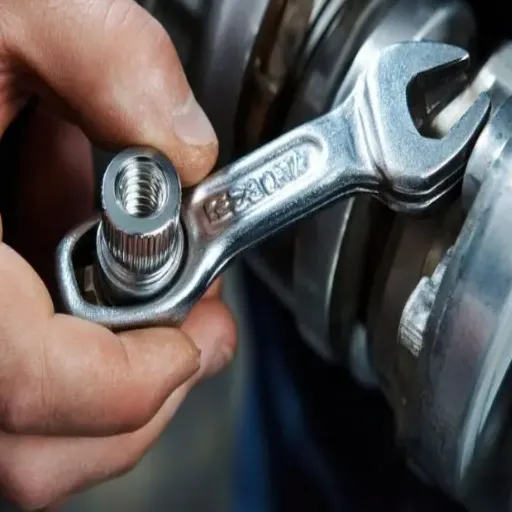
- Skipping torque verification during sampling: The most expensive OEM nut runner mistake is assuming appearance equals performance. A factory may produce excellent housings and terrible torque accuracy. Test the tool, not just the appearance.
- Not clarifying tooling ownership: If you pay for molds, your contract must state you own them. Some factories hold tooling hostage to force continued orders.
- Ignoring voltage compatibility: A 220V tool shipped to a 110V market is useless. Confirm electrical specifications for every destination.
- Underestimating certification timelines: UL testing can take 8-12 weeks. Plan certification into your launch schedule.
- Choosing the lowest price over a quality system: The cheapest quote often means corners cut on motor grade, gearbox tolerances, or calibration frequency.
- Failing to plan spare parts: Factory-direct nut runner programs need after-sales support. Nut runners need periodic maintenance. Confirm spare parts availability and pricing before signing.
David Patel learned this lesson the hard way. He sourced 500 cordless nut runners from a factory that quoted 25% below the next competitor. Understanding how to choose the right nut runner before sourcing prevents costly specification errors. He skipped the pre-shipment torque verification to save $800. When the shipment arrived, 30% of the units exceeded their torque tolerance by more than 5%. The batch was unusable for his automotive repair clients. The rework cost him $18,000 in air freight, replacement parts, and lost customer trust. The $800 he saved on inspection cost him twenty times more in damage control.
OEM Nut Runner Frequently Asked Questions
What is the typical MOQ for OEM nut runners?
Standard models with light customization (branding, voltage) typically start at 100-300 units. Full OEM with custom housings or torque ranges usually requires 500-1,000 units. Some flexible nut runner OEM suppliers accept mixed-SKU container loads for first orders.
How long does nut runner customization take?
Sampling: 2-4 weeks. Tooling: 4-8 weeks. Production: 4-6 weeks after sample approval. Total from specification to shipment: 3-5 months. Certification testing adds 2-3 months if required.
Can I customize the torque range?
Yes, within the manufacturer’s motor and gearbox platform limits. Adjusting torque ranges within an existing platform often requires no new tooling. Custom gear ratios for extreme torque ranges may require new molds.
Do I need to pay for molds and tooling?
For standard platform modifications — labels, voltage, colors — typically no. For custom housings, unique reaction arms, or proprietary designs, yes. Expect $3,000-15,000 depending on complexity. Own your tooling. Store mold specifications independently.
What certifications does my nut runner need?
It depends on your target market. CE for Europe, UL for North America, PSE for Japan, NOM for Mexico. ISO 6789 calibration certificates are recommended for all markets to demonstrate torque accuracy.
How do I protect my brand when sourcing overseas?
Sign NNN agreements (Non-Disclosure, Non-Use, Non-Circumvention) before sharing designs. Register your trademark in the manufacturing country. Own your tooling. Use purchase contracts with clear IP protection clauses. Embed your logo into mold designs where possible.
What is the difference between OEM and ODM for nut runners?
OEM means the factory builds to your specifications, and you own the design. ODM means you customize an existing factory design with your branding. OEM offers more differentiation but higher MOQs and longer timelines. ODM is faster and lower risk for first-time private-label launches.
Conclusion
OEM nut runner manufacturing is one of the most effective ways for distributors and brand owners to improve margins, control product quality, and build long-term customer loyalty. The process requires careful planning — clear specifications, thorough manufacturer vetting, rigorous quality control, and strong contractual protection — but the returns are substantial.
China offers the best entry point for most private-label programs, with flexible MOQs, competitive pricing, and fast turnaround. Japan serves premium precision markets. Europe provides compliance advantages for EU-focused brands. The right choice depends on your target market, quality requirements, and budget.
Success comes down to three principles: verify torque accuracy at every stage, own your tooling and IP, and never sacrifice quality systems for a lower unit price. Distributors who follow these principles consistently outperform those who compete solely on resale pricing.
If you are evaluating nut runners for your facility or planning a new product line, start by mapping your torque requirements and production environment against the selection framework in our complete nut runner guide. The investment in the right OEM partnership pays dividends in quality, margin, and market position.
Ready to source factory-direct nut runners with custom specifications? Contact Shanghai Oushike Hardware Tools Co., Ltd. today to discuss OEM nut runner programs, flexible MOQs, factory-direct pricing, and reliable export support for your market.