

HAND TOOL SOURCING REFERENCE
Hand Tool RFQ Template
An RFQ asks suppliers to quote against a fixed specification so every quote can be compared line by line. This template gives you the exact field set — material grade, HRC, thread standard, MOQ, tooling and Incoterms.
RFQ BASICS
What Is an RFQ and What Goes In It?
An RFQ asks suppliers to quote a price for a specification you have already defined. It is not an RFP — an RFP asks suppliers to propose how they would solve a problem. For tool sourcing, you know the product; you want a price against a locked spec.
THE KEY DISTINCTION
RFQ vs RFP
RFQ
Request for Quotation
SPEC
Quote Against a Locked Specification
An RFQ asks for price, MOQ, lead time, tooling and terms against a specification you have already defined. An RFP asks suppliers to propose the solution itself.
Three vague emails produce three incomparable quotes.
One supplier quotes chrome vanadium, one quotes carbon steel, one forgot tooling. The prices look different and tell you nothing. The RFQ fixes that.
RFQ
Quote a Specification
You have defined the product. You want price, MOQ, lead time and terms.
RFP
Propose a Solution
You have not yet defined the product. Suppliers propose how they would solve it.
5-GROUP CHECKLIST
What to Include in a Hand Tool RFQ
The template is organized into ten field groups. Every one of them changes the number that comes back. Leave one out and the supplier either guesses or pads.
01
Company and Product Specification
Your market, expected annual volume, target end user, quality position. Exact product name, SKU, function, intended use. Attach 2D drawings and 3D files (STEP or IGS) with dimensions, tolerances and weight.
02
Material Grade and Dimensions
Name the grade — 50BV30 chrome vanadium for sockets, 4140 for wrench handles, 304 stainless for spring clips, S45C for brackets, PA6-GF30 for handles. Name the standard: ISO 1711 for wrenches and sockets, DIN or ANSI as your market requires.
03
Finish, Branding and Quality
Plating type and thickness (matte black at minimum 8 microns, or Class 3 chrome at 0.0005″), plus logo position, size and application method. AQL level, defect classification, and required tests — 120% torque load testing per ISO 6789 and 48-hour salt spray.
04
Packaging, Quantities and Price Breaks
Carton type, labeling, palletization, and master-carton quantity. Request tiered pricing — 1,000 / 5,000 / 10,000 / 20,000 units — and a separate MOQ for standard product, custom color, logo printing and custom packaging.
05
Tooling, Incoterms and Lead Time
Tooling cost, ownership, expected life and modification policy — quoted separately so you can pay it as a one-time capital cost and negotiate a lower pilot MOQ. Name the Incoterm (FOB, CIF, DDP or EXW) and the place; a price without an Incoterm is not a quote. Add sample lead time, production lead time, quote validity and payment terms.
FIELD REFERENCE
What a Generic Template Misses
A generic RFQ template asks for product name, quantity and price. It will not ask for the four fields that decide whether a hand tool quote is real — which is why a generic template produces three incomparable quotes.
THE FIELD THAT MATTERS
Material Grade + HRC
THE HIDDEN COST
Tooling
THE REGIONAL CHOICE
ISO / DIN / ANSI
THE CORROSION SPEC
Plating Thickness
01
TOOL-SPECIFIC FIELDS
The Four Fields That Decide a Hand Tool Quote
“Hardened steel” is not a specification. These four fields separate a real factory quote from a trading-company price.
| Field | Why It Matters | What to Ask |
|---|---|---|
| Material grade + HRC | A cheaper factory will substitute 40Cr for 50BV30 and quote lower. A quoted HRC range is a specification you can hold a supplier to; “premium hardened” is not. | Name the grade and the HRC range at the jaw — e.g. 50BV30 at 58–62 HRC. |
| Thread and drive standards | A socket’s drive square and a wrench’s jaw opening are governed by standards. If the RFQ does not name the standard, the supplier picks the one it happens to run. | ISO 1711 for wrenches and sockets; DIN or ANSI as your market requires. |
| Plating thickness | Chrome at 8 microns and chrome at 3 microns are different products with different corrosion life. This is where a quote gets cheap without the buyer noticing. | Specify matte black at minimum 8 microns, or Class 3 chrome at 0.0005″. |
| Tooling cost | Tooling is a one-time capital cost. If it is not quoted separately, it is either buried in the unit price or will appear later as an unplanned line item. | Ask for it as its own number, and ask who owns the mold. |
RFQ VS RFP
One Asks for a Price. The Other Asks for a Solution.
For tool sourcing, you almost always want an RFQ. You know the tool: a 1/2-inch drive, 24-piece socket set in chrome vanadium at 58–62 HRC. What you do not know is what a factory will charge to make it.
RFQ
You have
Specification
→
You want
Price
RFP
You have
Problem
→
You want
Solution
TOOLS
Product defined
Use RFQ
→
Product undefined
Use RFP
02
QUOTE COMPARISON
How to Read the Quotes Back
Unit price is the last thing you should compare first. Lay the quotes into a matrix so the differences that remain are real differences.
| Supplier | Unit Price | Tooling | MOQ | Sample Lead Time | Production Lead Time | Incoterm | Payment Terms |
|---|---|---|---|---|---|---|---|
| A | $0.92 | $1,800 | 1,000 | 14 days | 35 days | FOB Ningbo | 30/70 T/T |
| B | $0.78 | not quoted | 500 | 21 days | 45 days | EXW | 50/50 T/T |
| C | $1.10 | $2,200 | 2,000 | 10 days | 30 days | FOB Ningbo | 30/70 T/T |
THE POINT OF THE RFQ
It turns a vague price into a comparison
you can actually run.
When a supplier sends a detailed breakdown, asks validation questions about the tests you listed, and explains its MOQ logic, that is the quote you take to the next step.
SENDING PROCESS
How to Send the RFQ. And Get Quotes You Can Compare.
The document only works if you use it consistently. The process matters as much as the fields. Send the identical RFQ to every supplier you are shortlisting.
CONSISTENCY ≠ OPTIONAL
Same Document. Same Fields. Same Deadline.
If you let each supplier respond in its own format, you are back to comparing three different scopes. A locked PDF prevents the specification from being quietly altered before the quote comes back.
YOU SEND
Locked PDF
Same spec to every supplier
→
YOU GET
Comparable Quotes
Real differences, not missing information
Ask every supplier for its business registration number.
A legitimate manufacturer answers immediately. A trading company that has to route the request to an unnamed factory hesitates — and that hesitation is the signal you were trying to buy information about.
01
Shortlist 5–8 Suppliers
SHORTLISTMore than eight is unmanageable; fewer than five gives you no basis for comparison. Send the identical document to all of them.
02
Send as a Locked PDF
FORMATAn editable Word or Excel file can come back with the specification quietly altered — a tolerance loosened, a plating thickness dropped. A locked PDF prevents that.
Shortlist
Send PDF
Deadline
03
Set a 7–10 Day Deadline
DEADLINEInclude a clarification cutoff two days before it closes. Request a Proforma Invoice from the top 2–3 responses — a quote is a number; a proforma invoice is a commitment you can check against.
PRACTICAL RULE
The accuracy of the quote follows the specificity
of the document, not the reputation of the supplier.
Lock the specification, send the identical RFQ as a PDF, set a deadline, and ask for a business registration number. That is how you get quotes you can actually compare.
FINAL CHECK
Same RFQ to all
FROM RFQ TO ORDER
Send the RFQ to a Manufacturer, Not a Trading Company
What you want on the other side is a supplier that can answer a specification question directly, hold the quote, and move from pilot order to full program without a compliance surprise at the port.
FACTORY-DIRECT ADVANTAGE
A Factory Answers the Questions Itself
OEM
Factory
A factory answers the material and tolerance questions itself, because it runs the line. It quotes tooling honestly, because it owns the mold.
2,000+
Specifications
5
Categories
1
Inspection Standard
1
RFQ Covers All
One RFQ, five categories
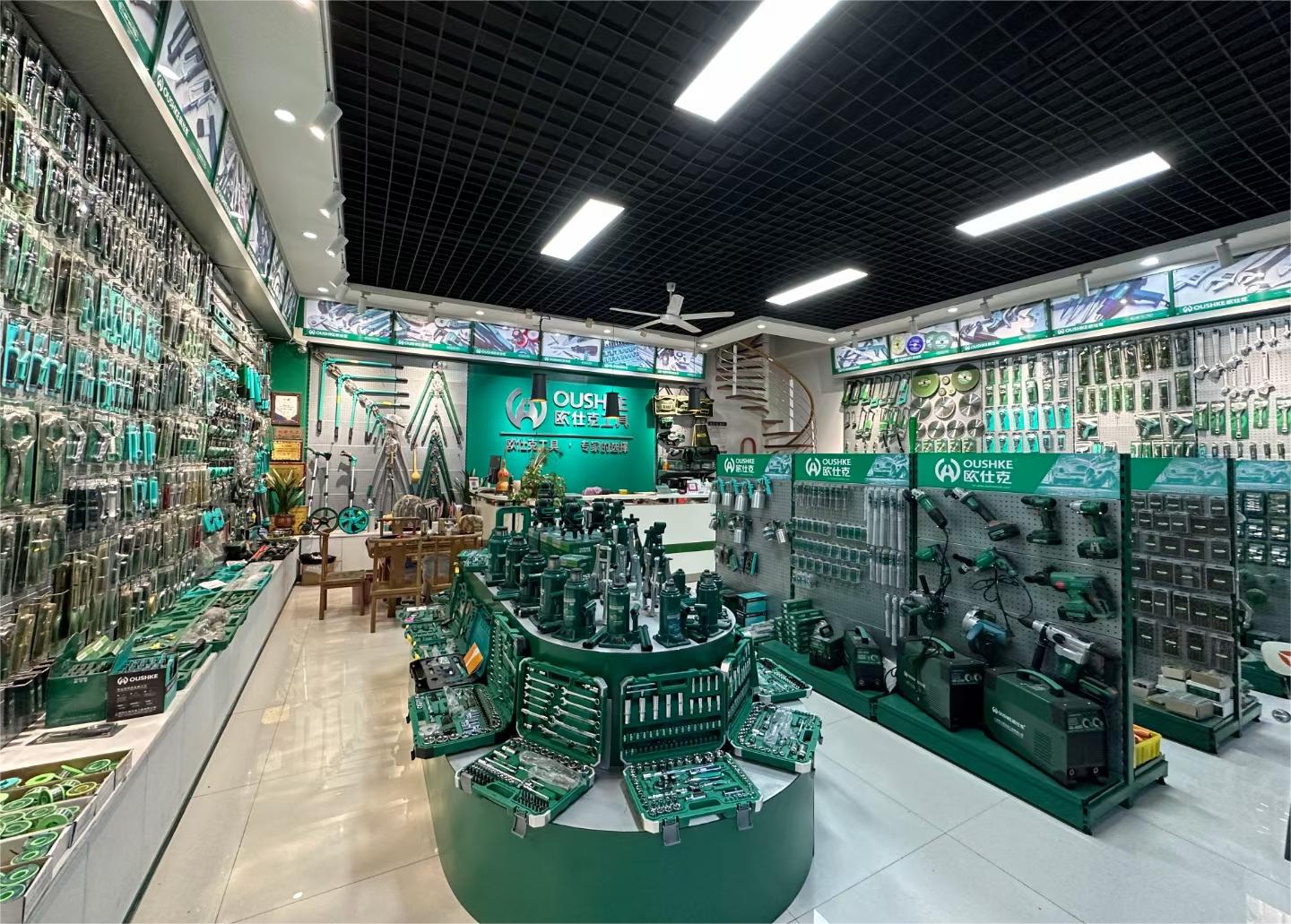
OUSHKE manufactures hand tools, electrical tools, power tools, welding equipment and air tools from the same facility — over 2,000 specifications across five categories — so one RFQ can cover the fittings, sockets and wrenches together, under one inspection standard.
THE ALTERNATIVE
What a Trading Company Cannot Do
A trading company routes the request to an unnamed factory. It cannot answer a tolerance question directly, and it cannot hold a tooling quote without checking with someone else.
TRADING COMPANY
Routes the Request
Cannot answer directly
→
FACTORY
Answers the Request
Owns the line and the mold
WHY IT MATTERS
A legitimate manufacturer answers immediately. A trading company that has to route the request to an unnamed factory hesitates — and that hesitation is the signal you were trying to buy information about.
TWO PRACTICAL STEPS
After the Quotes Are In
A unit price is not a landed cost. Test the MOQ assumption before you commit capital to a full program.
Step 01
Run the Landed Numbers
Step 02
Test the MOQ Assumption
Step 03
Configure the Set
Next
Send Your RFQ
TOOLS TO USE
Before You Write the RFQ
If you are configuring a set rather than a single tool, the hand tool set configurator builds the piece count and contents before you write the RFQ, so the specification you send is the one you actually want to sell.
01
LANDED COST
Tool Order Landed Cost Calculator
Adds freight, duty and inspection so you compare total cost, not invoice price.
Run the Numbers
02
MOQ
Private Label Tool MOQ Estimator
See what a pilot order looks like before you commit capital to a full program.
Test the MOQ
03
SET CONFIGURATION
Hand Tool Set Configurator
Build the piece count and contents before you write the RFQ, so the specification you send is the one you want to sell.
Build the Set
ONE RFQ COVERS FIVE CATEGORIES
Hand Tools, Electrical Tools, Power Tools, Welding Equipment and Air Tools
OUSHKE manufactures from the same facility, so one RFQ can cover the fittings, sockets and wrenches together, under one inspection standard.
CATEGORY 01
Hand
Tools
CATEGORY 02
Air
Tools
ONE INSPECTION STANDARD
One RFQ, One Factory
Over 2,000 specifications
SEND YOUR COMPLETED RFQ
We will quote against it, line by line.
Fill the template once, send it to your shortlist, and read the returns against the matrix above. When you are ready to test the number against a real factory, send us your completed RFQ and target quantity — and we will quote against it, line by line.
QUOTE INPUTS
Spec · Quantity · Market
Frequently Asked Questions (FAQs)
Find answers to common questions about our hand tools, their care, and usage. If you need additional information, our customer support team is ready to assist you.
What should I include in an RFQ for hand tools?
Company overview, product specification with drawings, material grade and HRC, dimensions and thread standard, finish and branding, quality and testing requirements, packaging, quantity and price breaks, tooling cost, and Incoterms with payment and lead time. The ten-field checklist above is the complete set.
What is the difference between an RFQ and an RFP?
An RFQ asks suppliers to quote a price against a specification you have already defined; an RFP asks suppliers to propose how they would solve a problem. For tool sourcing, where the product is defined, you want an RFQ.
How many suppliers should I send an RFQ to?
Five to eight. Fewer than five gives you no basis for comparison; more than eight is unmanageable. Send the identical document to all of them and compare the returns in a matrix, not by unit price alone.
What is a typical MOQ for hand tools?
It depends on the product, the customization and the tooling. Custom color, logo printing and custom packaging each carry their own MOQ, which is why the RFQ should ask for MOQ separately for each. Start with the MOQ estimator to get a realistic range before you send the RFQ.
How do I get accurate quotes from Chinese suppliers?
Lock the specification, send the identical RFQ to 5–8 suppliers as a PDF, set a deadline, and ask for a business registration number. The accuracy of the quote follows the specificity of the document, not the reputation of the supplier.
Should tooling cost be in the RFQ?
Yes, as its own line item. Tooling is a one-time capital cost; quoting it separately lets you pay it once and negotiate a lower pilot MOQ. A quote that omits tooling is hiding a 20–30% cost you will discover later.