

IMPORT COST PLANNING TOOL
Tool Order Landed Cost Calculator
Turn a factory quote into the price that actually lands — FOB + freight + insurance + duty + clearance, calculated per unit before you commit to an order.
FIVE INPUTS, ONE NUMBER
How to Use the Landed Cost Calculator
Enter five inputs and the calculator returns your true per-unit landed cost.
FOB Unit
Price
The ex-works or FOB price from your supplier’s quote — the baseline the whole calculation builds on.
Freight
and Insurance
Ocean, air or road freight plus marine cargo insurance. If insurance is unknown, use the 1.125% proxy.
Duty Rate
and Basis
The tariff percentage for your HS code, charged on the correct valuation basis for your destination.
Quantity
and MOQ
The order quantity, so tooling and one-time costs amortize across the right number of units.
Clearance, Tooling and Inspection
Brokerage, terminal and inland freight, plus tooling amortization and pre-shipment inspection.
TOOL ORDER LANDED COST CALCULATOR
Calculate Landed Cost per Unit
Use the standard landed cost relationship L = (FOB + freight + insurance + duty + clearance) ÷ quantity to estimate the price that actually lands — or reverse it to find the FOB price a target landed cost requires.
INPUT PARAMETERS
Order Conditions
$
Ex-works or FOB price per unit
pcs
Units in the order
$
Shipping quote plus marine cargo insurance
%
Tariff percentage for your HS code
$
Brokerage, terminal handling, port to warehouse
$
Mold cost and third-party batch inspection
$
Enter the per-unit landed cost you need to hit.
CALCULATED RESULT
Live Result
Landed Cost per Unit
12.38
$
Total landed cost per unit at the entered order quantity.
Landed Cost / Unit
$12.38
Landed Cost / Shipment
$12,375
Uplift over FOB
23.8%
Duty Amount
$575
EQUATION
L = (FOB + F + D + O) ÷ Q
($10.00 × 1,000 + $1,500 + $575 + $300) ÷ 1,000 = $12.38
F
$10.00
FOB unit price
Q
1,000 pcs
Order quantity
L
$12.38
Landed cost / unit
The duty basis is not the same everywhere.
Duty is charged on CIF in the EU and India, on transaction value in the US, and on FOB in South Africa. Get the basis wrong and the landed cost is wrong in one direction or the other.
VALUATION REFERENCE
Duty Basis by Destination
Reference values only. Confirm the exact HS code, origin and valuation basis with your customs broker before you commit to an order.
European Union
CIF
India
CIF
United Kingdom
CIF
United States
Transaction
South Africa
FOB
Canada
FOB
COST COMPONENTS
What Is Included in Landed Cost
FORMULA
L = (FOB + F + D + O) ÷ Q
Most importers undercount landed cost because they stop at the freight invoice. A complete tool-order landed cost carries every one of these lines.
Insurance Proxy
1.125%
Of FOB value, when unknown
Landing Charge
~1%
Of CIF, in some markets
Typical Uplift
15–30%
Above factory price
Worked Example
24%
€10 factory → €12.38 landed
| Cost Line | Charged On | Part of CIF? | Typical Level |
|---|---|---|---|
| Factory (FOB) price | Per unit | Yes | Baseline |
| International freight | Per shipment | Yes | 8–15% of FOB |
| Marine cargo insurance | Per shipment | Yes | 0.1–0.5% of FOB |
| Customs duty | CIF or FOB | No | 2–12% of base |
| Import VAT / GST | CIF + duty | No | 0% if reclaimable |
| Clearance and brokerage | Per shipment | No | 1–3% of FOB |
| Inland freight | Per shipment | No | 1–3% of FOB |
| Tooling and inspection | One-time | No | 0–8% of FOB |
!
Calculate per unit, not per shipment. The supplier invoice is a shipment number; your pricing decision is a per-unit number. Dividing by quantity is what turns one into the other — and it is where the tooling line finally shows up.
FACTORY PRICE VS LANDED COST
The Price That Actually Lands
A tool quoted at €10 does not arrive at €10. Freight, insurance, duty, clearance and tooling amortization stack on top — and the gap is large enough to swallow a margin.
EXAMPLE ORDER
Hand Tool Set · 1,000 pcs
FOB unit price
€10.00
Freight + insurance
€1.50 / unit
Duty (5%, on CIF)
€0.575 / unit
Clearance, inland, tooling
€0.30 / unit
SAME ORDER · TWO NUMBERS
Factory Price
What the quote says
10.00
€
VS
Landed Cost
What actually arrives
12.38
€
24%
uplift from factory price to landed cost
on this order
If your margin model started at €10, you were
underpricing by nearly a quarter.
The landed cost, not the unit price, is what a buyer must recover in the selling price. Compare suppliers on landed cost per unit, not on invoice price.
VALUATION BASES
Where Duty Is Charged
The same product can carry a different duty amount in different destinations, because each country applies its rate to a different value.
DESTINATION
Duty Valuation Basis
| Market | Duty Charged On |
|---|---|
| European Union | CIF value |
| India | CIF value |
| United Kingdom | CIF value |
| United States | Transaction value |
| South Africa | FOB value |
| Canada | FOB value |
PROXY VALUES
When Data Is Missing
| Item | Accepted Proxy |
|---|---|
| Insurance unknown | ≈ 1.125% of FOB |
| Landing charge | ≈ 1% of CIF |
| Exchange rate | Official rate on declaration date |
| CIF → FOB | CIF − freight − insurance |
| FOB → CIF | FOB + freight + insurance |
An EU importer who calculates duty on FOB instead of CIF
understates the number and discovers it at clearance. A US
importer who includes freight in the dutiable value
overstates it and leaves margin on the table. Confirm the
basis with your customs broker before you commit.
ESTIMATE ACCURACY
The Error Budget
±30%
Uncertainty when
only the unit price is used
Each cost line you add narrows the estimate. Most importers stop two or three lines too early — which is exactly where the surprise lives.
Unit price only
±30%
+ freight and insurance
±18%
+ duty on correct basis
±10%
+ clearance and inland
±6%
+ tooling and inspection
±3%
Reconciled against shipment
±1%
Δ
A missed tooling line is a 20–30% surprise.
One-time mold costs, pre-shipment inspection and consolidation savings are the lines a generic e-commerce calculator never carries. They are also the lines that decide whether a pilot order is viable.
01
Get the Basis Right
Confirm whether duty falls on CIF, FOB or transaction value before you run the number.
02
Run Two Cases
A normal case and a safety case with a buffer for delays, storage and inspection rework.
03
Respect Significant Figures
A calculated €12.38 is a planning target built on assumptions, not an exact outcome.
TOOL ORDERS SPECIFICALLY
Three Lines a Generic Calculator Skips
Landed cost calculators built for e-commerce parcels do not carry the cost lines a tool order actually generates.
01
Tooling Amortization
Spread mold cost across the order
02
Pre-Shipment Inspection
Third-party batch check before departure
03
Consolidation
Sockets, wrenches and ratchets in one shipment
04
Bank and FX Fees
Transfer charges and conversion costs
!
Consolidation Is a Lever, Not a Detail
Splitting a tool program across three suppliers means three freight invoices, three clearance events and three inspection rounds. Combining categories into fewer, fuller shipments is often the single largest landed-cost saving available.
PRICING DECISION
From Landed Cost to a Supplier Decision
REFERENCE
HS Code
A landed cost figure is only useful when it is attached to a defined product, a defined HS code and a defined shipment — and when it is compared across suppliers on the same basis.
| Risk | Trigger | Typical Impact |
|---|---|---|
| Wrong duty basis | Duty calculated on FOB instead of CIF | 3–8% understated |
| Exchange rate drift Quote vs declaration | Rate moves between quote and customs date | ±2–5% |
| Freight surcharges | Peak season or fuel adjustment | ±5–15% |
| Tooling left out | One-time mold cost not amortized | 20–30% surprise |
01
Per Unit vs Per Shipment
Compare suppliers on landed cost per unit, but budget on the shipment total. The first drives pricing; the second drives cash.
02
Normal Case vs Safety Case
Run the current quote once, then add a buffer for freight volatility and FX. The gap between the two is your risk margin.
03
Quantity Changes Everything
Tooling, inspection and clearance amortize across quantity. A pilot order can land 40% higher per unit than the same program at volume.
04
Factory-Direct Quote
A manufacturer — not a trading company — can answer the specification, packaging and consolidation questions that move the landed number directly.
PLANNING RANGE
15–30%
Keep the Budget Inside the Useful Range
Factory
+15%
+30%
Buffer
Tool imports typically land 15–30% above the factory price. Plan the normal case at the current quote and the safety case with an additional 5–10% buffer for freight and exchange-rate movement.
RFQ TEMPLATE
Hand Tool RFQ Template
Before running the calculator, pull the comparable FOB quote it needs as its first input. The RFQ template is what makes two supplier quotes comparable.
MOQ ESTIMATOR
Private Label Tool MOQ Estimator
Landed cost per unit depends on how many units you order. See what a pilot order looks like before committing capital to a full program.
NEXT STEP
Send us your figures — we will quote against them
line by line.
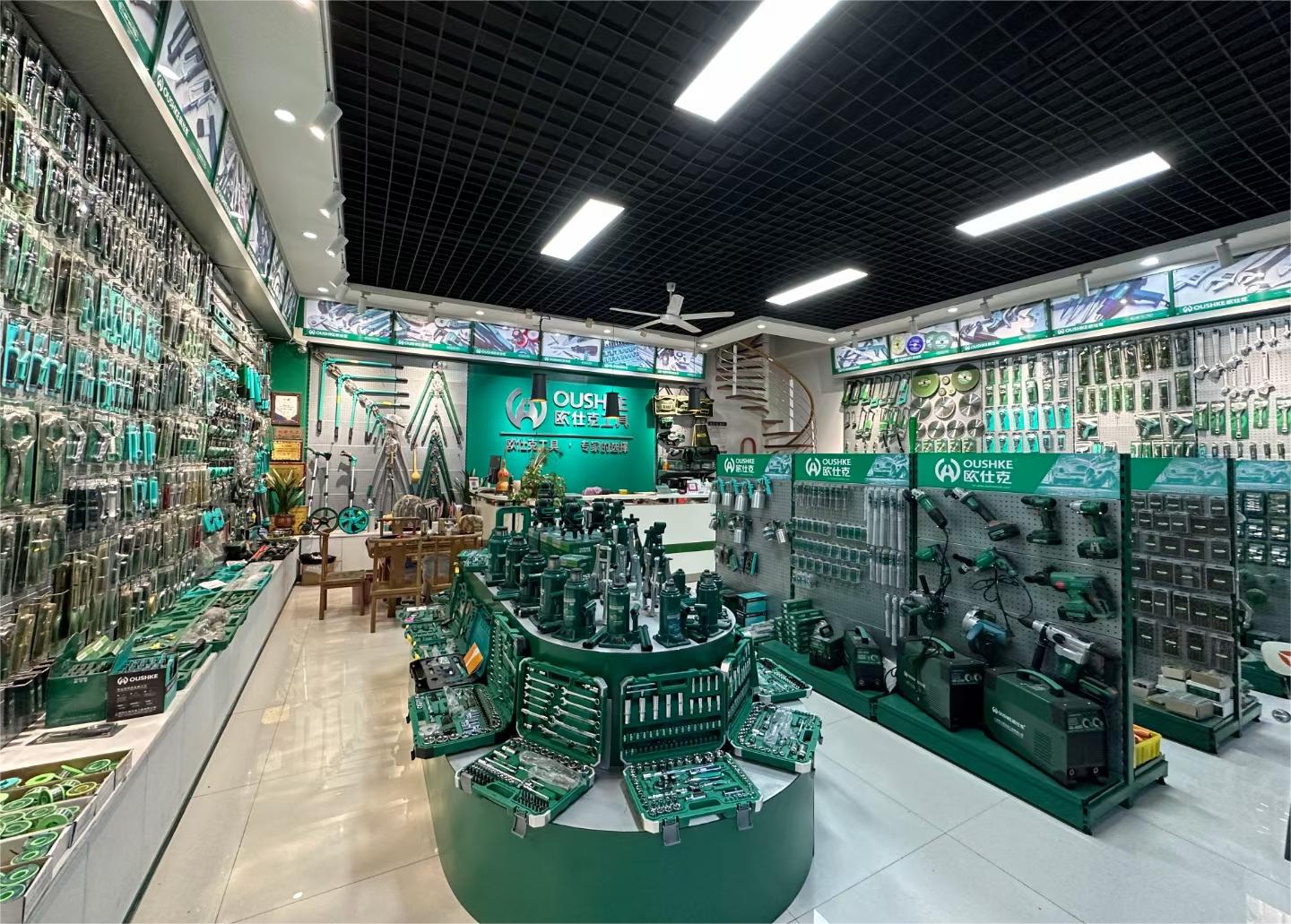
OUSHKE quotes against your target landed cost, not just a unit price. Over 2,000 specifications across hand tools, electrical tools, power tools, welding equipment and air tools come from one facility — so consolidation is a lever you can actually pull. Confirm the landed figure against a real shipment, not a spreadsheet.
Frequently Asked Questions (FAQs)
Find answers to common questions about our hand tools, their care, and usage. If you need additional information, our customer support team is ready to assist you.
What is landed cost?
Landed cost is the total cost of a product once it has arrived at your destination warehouse and is ready to sell — the supplier price plus freight, insurance, customs duty, import taxes, clearance and inland handling. It is the number you price against, not the unit price.
How do I calculate landed cost per unit?
Add the FOB price, freight, insurance, duty, import taxes, clearance and handling, then divide by the order quantity. The formula is (FOB + freight + insurance + duty + taxes + clearance + handling) ÷ quantity.
What is the difference between FOB and CIF?
FOB is the value at the origin port (goods plus origin charges). CIF adds international freight and insurance on top — CIF = FOB + freight + insurance. Which one duty is charged on depends on the destination country.
What is included in landed cost?
Factory price, international freight, insurance, customs duty, import VAT or GST, clearance and brokerage, inland freight, and bank fees. For tool orders, add tooling amortization and pre-shipment inspection.
How much does it cost to import tools from China?
Landed cost for tool imports typically runs 15–30% above the factory price, depending on freight, duty rate, HS code and destination. A €10 factory price can land around €12.38 — 24% higher — before storage and fulfillment.
Is landed cost the same as total cost?
No. Landed cost gets the goods to your warehouse; total cost adds storage, fulfillment, marketing and returns. Landed cost is the subset that matters for supplier and shipment decisions.