
Torque Wrench Guide: Types, How to Use & Calibration
A torque wrench is an indispensible element for grasping the expected price in mechanical jobs. An experienced professional, car enthusiast, and a do-it-yourself admirer all know for a fact that is the correct use and maintenance of the equipment, ensuring the finished end-product is precise, and that the torque wrench is the main tool of all. This complete guide will examine all kinds of torque wrenches and present an all-comprehensive step-ladder on how to calibrate them for consistent results all through its working life.
Understanding the Torque Wrench

Definition and Importance of Torque
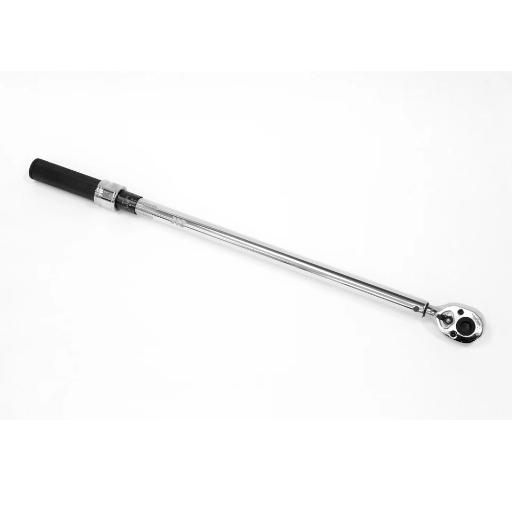
The torque wrench is a specialized twister that is set to apply a defined amount of wrench. A torque wrench is, generally, a work of extremely delicate calibration, digitally dressed out with a tuning dial. So long as the torque setting happens to be changed, anybody is in a position freely to turn the nut itself as far as it should be screwed in; only one set snug, the knob being switched onto the side with a loud click.
Key Benefit: This approach prevents over-tightening, protecting component integrity and ensuring optimal performance of mechanical assemblies.
Common Applications of Torque Wrenches
There is a multitude of industries that utilize torque wrenches to securely fasten components and protect them from damage. These precision tools have become indispensable across various sectors:
Automotive Repair
Securing engine parts, wheels, and suspension systems with manufacturer-specified torque values.
Industrial Machinery
Ensuring safety and proper functioning through precise torque application during assembly.
Construction & Aerospace
Maintaining joint integrity and preventing leaks in critical applications.
Plumbing
Achieving leak-free connections while avoiding damage to threaded components.
Types of Torque Wrenches
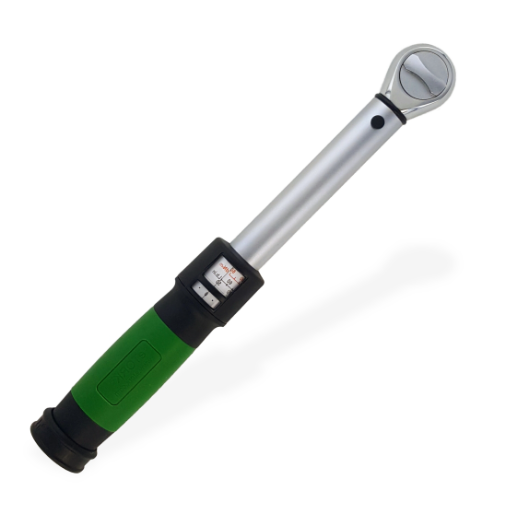
Beam Torque Wrench
A beam torque wrench is a visual feedback mechanical product simply powered by human. The tool is structured with calibrated markings in a long handle and an indicator needle deflected when it meets resistance. Such deflection corresponds directly to the torque applied, letting the user engage with the real-time reading of applied force.
Best For: Situations where the torque requirement is critical but not minute, either by design, cost constraints, or other reasons. A perfect wrench for amateur mechanical work around cars and other general-purpose purposes.
Click Torque Wrench
The click torque wrench is a type of wrench that is quite handy for tight spaces. It will give you the power of the right torque level which will make your fastening system highly reliable. The wrench features click and tactile feel, in which the click indicates the torque and operator to stop applying torque right away.
Industry Standard: Click torque wrenches are significantly applied in automotive production and mechanical engineering where a specific value torque tends to be enforced with great precision. The device assures the right mix of workability, reliability, and user convenience.
Digital Torque Wrench
In a digital torque wrench, the accuracy and ease of use go beyond all bounds. The benefit is the provide of a digital reading, in contrast to conventional mechanical wrenches, that allows the operator real-time torque readings, providing him the necessary flexibility to be totally in charge of the task being performed, thus enabling him to gauge more accurately and so on. Those models these days really codify this technology. They come with readings that could be altered as desired, successful data retrieval, and a few different alerts (either sound or visual), possible (or else).
Professional Choice: Generally speaking, digital torque wrenches have a rather good reputation lately in the aerospace, automotive, and manufacturing industries when it comes to precision. Though starting out at a price a bit higher than its alternative counterparts, the tool is longer-lasting and cost-effective in professional scenarios as it saves time.
How to Use a Torque Wrench
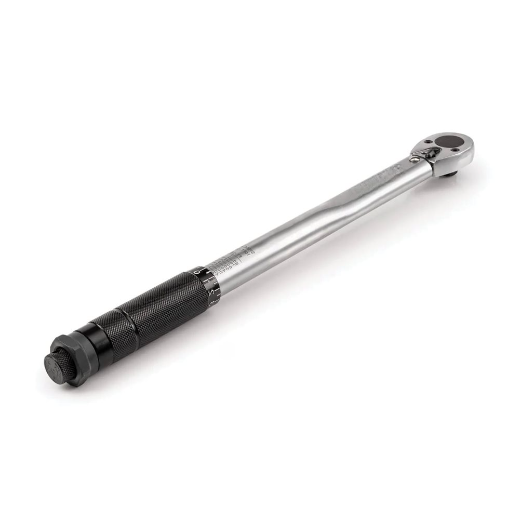
Step-by-Step Guide for Proper Usage
Choose & Insert Socket: Pick the right-sized socket for the fastener you’re using and carefully set it up on the wrench head.
Set the Desired Torque: Cautiously apply torque to the exact specification by turning the handle or activating the digital controls as per the manufacturer’s specifications.
Place Socket: Position the socket at its proper place on the fastener to ensure it fits properly without any kind of wobble or misalignment.
Apply Force Smoothly: Apply continuous even pressure by placing your weight on the end of the torque wrench; avoid jerky motion or sudden application.
Monitor Indicator: Keep an eye on the click/alert-beep/digital display to know once target torque has been reached.
Release Immediately: The indication control will notify the operator of the error. Do not bind against this resistance. Release the wrench immediately the resistance snaps.
Reset Tool: After fully torqued, zero the tool until the next use to conserve and elongate the tool’s life.
Common Mistakes to Avoid
❌ Critical Errors That Damage Tools and Results:
- Skip Calibration: Skipping the calibration leads to lower tolerance on measuring devices and improper tightening that may damage the integrity of the assembly.
- Over Beyond the Click Point: If you keep on turning the tool, you end up over-tightening the assembly and damaging the part, instead.
- Incorrect Tool Selection: When you use a wrench that is too big or too small, you will not verify any measurement past the calibration process.
- Do Not Reset: At the incorrect to zero position, the user may not be aware the wrench has shifted, thus providing an incorrect spark gap, henceforth memory holders of the user reading while at use.
How to Troubleshoot Torque Wrench Issues
Calibration and Maintenance of Torque Wrenches
Why Calibration is Essential
Correct calibration is a key prerequisite for the guaranteed performance of any torque wrench. With subsequent use, the efficacy of the tool naturally declines, producing utterly false torque readings. Errors in such measuring qualities do not only threaten the integrity of the concerned mechanical assemblies but also put the equipment at risk of causing additional indestructible damage, along with safety issues and mill breakdowns.
⚠️ Consequences of Poor Calibration:
A well-implemented periodic calibration program minimizes the risk of torque wrench overperformance or underperformance. This prevents equipment damage, eliminates safety hazards, and ensures operational reliability before issues can threaten your work quality.
How to Calibrate Your Torque Wrench
Calibration Procedure:
Procure The Calibration Equipment: If you have a trusted calibration tool or are prepared to leave the wrench for calibration with an approved service provider, this is the critical point at which that decision is made.
At this stage, fix the wrench with the calibration tool as per the requirements.
Fix the Required Torque: Have the wrench tested for a specific torque setting.
Apply Gradual Pressure: Gradually increase the pressure while checking for the click or signal at the relevant figure.
Making Corrections: Correct the wrench setting by the manufacturer-specified method with the help of set screws or adjustment tools as needed.
Record the Results: Complete the calibration records to refer back to in the future, and ensure they are assessable for recording purposes.
Recommended Schedule: Perform calibration checks annually for regular use, or every two to three years for light home use. Always recalibrate after prolonged heavy operation or if the tool has been dropped.
Best Practices for Longevity
1
Clean Thoroughly
Remove dirt and debris immediately after each use, as these elements will alter precision and affect long-term performance.
2
Store Properly
Keep in a clean, protective case or environment to shield against rust and physical damage. Avoid exposing to extreme temperatures or humidity.
3
Handle with Care
Never subject the wrench to drops, impacts, or overload conditions capable of causing internal damage to calibration mechanisms.
4
Use as Intended
Never use for activities the tool isn’t designed for, such as loosening bolts or breaking free stuck fasteners. Use a breaker bar instead.
5
Reset After Use
Return torque settings to the lowest level before storage to help retain spring integrity and calibration accuracy.
6
Regular Inspection
Check and calibrate regularly per manufacturer instructions to ensure accurate readings and optimal performance over time.
Choosing the Best Torque Wrench
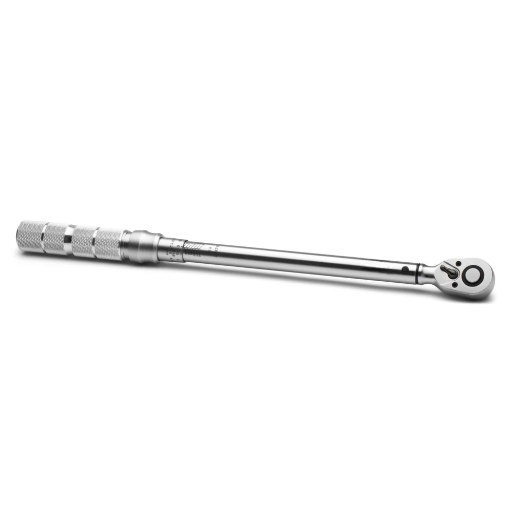
Factors to Consider When Buying
| Wrench Type | Choose between click-type, beam, and digital based on your specific needs. Consider the torque range required for your typical tasks. |
| Accuracy Standards | Select models conforming to ISO or ASME accuracy standards for reliable, precise performance in professional applications. |
| Build Quality | Evaluate design and materials for durability. Look for features like clear scales, audible alerts, or digital displays that enhance usability. |
| Warranty & Support | Consider manufacturer warranty coverage and availability of customer service for long-term peace of mind and support. |
Best Suggestions for Different Needs
- For Maximum Precision:
Opt for digital models adhering to ISO or ASME standards. These provide accurate, high-performing results essential for critical applications.
- For Durability Focus:
Choose products manufactured from high-quality materials with robust construction designed to withstand demanding professional use.
- For User-Friendly Operation:
Select tools with clear, easy-to-read markings, digital displays, and helpful indicators such as audible beeps or visual alerts.
- For Long-Term Value:
Consider manufacturers offering substantial warranties and comprehensive customer service support for sustained satisfaction and reliable assistance.
Comparing Price vs. Quality
It is imperative that an imprecise balance be struck in handling the element of comparison between price and quality. It is high in some perceptions that expensive products or tools match the users’ life quite well, including performing quite consistently over time, and fewer replacements or repair occassions take place. The product will cost more than $3 and the alternative, far less than $2 at the cheapest. If someone were to blow his whole wad on any high-priced gizmo, then it will have been done right for one purpose. It ceases to be an option later on. At times, lower-grade options that may be a perfect fit within your budget can embrace abuses because they compromise durability, tolerance, or are functional. When you decide, two most relevant factors that would come into relationships would be the specific needs you have and the frequency of usage and correspondently the minimum level of required performance that may be met. Maximize your investment potential without sacrificing quality.
References
-
Torque wrench calibration and uncertainty of measurement
Read the paper here
This paper evaluates the calibration and measurement uncertainty of torque wrenches used in dental clinics. -
Optical torque wrench: angular trapping, rotation, and torque detection of quartz microparticles
Read the paper here
This study demonstrates angular trapping and torque detection using quartz particles. -
An implant screw torque training device
Read the paper here
Frequently Asked Questions (FAQ)
Dras-Driven Torque Wrench O BHie should a ratchet-type torque be the circuit device?
A drive or ratchet torque wrench is a device that imposes a predetermined amount of torque on a fastener using an internal mechanism, and either click, slip, or break-point engages once the prescribed torque is reached. In the case of click-type instruments, most users are dependent on both tactile and auditory feedback for learning when torque has actually been produced. Beam and electronic types plainly show torque values, and a micrometer-type scale gives final readings. Use appropriate sockets and tools when tightening so as not to harm any socket or fastener threads. Always routinely check your wrench on a certified tester for correct torque and consider recalibration after lengthy cycles of heavy-duty work. Key concepts: Harbor Freight, patent, 250; lock.
Wither-pound-INCH on the torque was right, or the ft.-pound, or the Newton-meter?
Choose the unit of your vehicle or equipment manual (inch, or ft, or lb/Nm) incorrectly setting which might then be easily under-torqued or over-torqued. Most micrometer-type clicker torque wrenches available today possess the interconversion capability and therefore usually come with a range of values printed against a scale for fasteners, where the values extend below 60 one end to 160 on the other end. Any wrench for motorcycle or electronics repair will fall into inch-lb, while ft-lb and Nm are their common categories with respects to automotive and industrial applications. Setting your click or angle wrench calibrate preset is when you prove the setting accuracy right before the actual tightening. Pick out synonyms from the list: 150, 90°, ball, shaft.
Can a ratchet and socket regular torque wrench be changed by turning the digital one?
Inapplicably contaminating and diluting colloidal particulates, filtration is considered a customary technique. Needing dilution or modification by altering the particle size complemented by added separator-agglomerants; alternatively, many particles form masses of few proportions. It would seem best to take this latter route with things like nano-sized or sticky and slimy colloidals that need co-magnification; otherwise, agitation under the right predominating force could make them take less of an irregular shape, and then that shape may shrink through passage or effect.
What criteria would have informed you of needing to calibrate a micrometer?
Calibration frequency depends on the intended use: Experience analysts should go through and calibrate tools annually for ones being subjected to frequent cycles or professional service; light home usage necessitates testing every couple of years as a minimum frequency, post-event impacts. When using the tool is important for safety or must be based on specifications for engineering purposes, the user should obtain the calibration certificate and maintenance record to have the bread-and-butter service intervals based on duty and cycles. Values of torque shall be verified in accordance with an altered criterion: the torque wrench must be calibrated whenever it falls or is used at the upper limit.
Could we tailor some qualifiers for the click, beam, and digital torque wrench?
Clich clip-type wrenches are kinesthetically and auditorially gratifying upon reaching the specified torque value; the prime means to owning a car seem to prefer going rabid over the wrist wrenches with the click feature, the Hollys of the world who go on about allen keys and garage, while the rest of the camp need to apply some mechanics; the beam types have the cheap, easily quantifiable deflection with the added spectroscopy at a “simple mechanic’s-eye technology.” Electronic/digital torque wrenches can be used to memorize values, measure angles, fine resolution for accurate torque, and enabling them to have alarms at preset levels, and data logging data for reference after calibration. Select torque wrenches with a specified accuracy, operating conditions, and its additional features, angle measurement-90° and another application. The keywords to use are: YouTube, Harbor Freight, 60, torqued
How do I prevent stripped threads or a broken bolt from overtightening?
To be a responsible service provider and also assure never stripping threads or overtightening, you should have half-expected preset to what level of torque is considered necessary for the job and use the right-size socket for the bolt itself. Ensure the proper socket list/build has clean threads. The fastening agent must be lubricated if so required by the manufacturer and assembled where the torque specification would require anything but dryness. When applying torque, slowly do it. Feel the wrenching out for the tactile effect to come and the sound of a single click, or maybe you can start setting for the specified deflection angle. Clamping should really be used instead, if it is feasible or acceptable vis-a-vis potential operation over time, for premature-fastener failure with poor torque parameters. Do not rely on ‘ft Lb. torque’ when you are dealing with little joints only: this falls short of proper practice. Instead, look into the possibility of pre-application clamping force as suggested by a professional. Be sure to re-apply the final torque once upon a partial cycle in the wake of a deliberate starting set, as many joints tend to settle in, show up discrepancies in the applied values, and desperately beg for recalibration. Delete ‘ft lb’ for use in a sentence in any such context.