
Allen Wrench Sizes: Complete Hex Key Guide and Chart
Need to find the right Allen wrench size fast? Using the wrong hex key can strip a screw, damage your tool, and slow down your project. This guide gives you a full Allen wrench size chart for both metric and SAE systems, plus conversion tips and measurement steps. Whether you build furniture, repair bikes, or work on automotive projects, you will learn how to choose the correct hex key size every time.
Introduction to Allen Wrench Sizes
Allen wrenches, also called hex keys, turn bolts and screws with hexagonal sockets. They come in metric and imperial sizes that match the internal dimensions of the socket. Metric sizes use millimeters. Standard or SAE sizes use inches.
Choosing the right Allen wrench size matters. A poor fit can round off the fastener head or wear out the key. A perfect fit transfers torque efficiently and keeps your work safe.
This article covers standard and metric Allen wrench sizes, how to measure them, and how to match them to common fasteners. You will also find conversion charts and answers to common questions.
Why the Right Allen Wrench Size Matters
The interface between the wrench and the fastener must align correctly. When you use the right Allen wrench size, you apply torque without slipping. This protects both the tool and the fastener.
In machine assembly, correct sizing can mean the difference between a safe connection and a loose joint. In bicycle maintenance, the right key ensures brakes and handlebars stay secure. In furniture building, it prevents cam locks and bolts from stripping.
Using the wrong size also wears down the hex flats on the wrench. Over time, a worn key becomes useless and can damage more fasteners. Investing in a complete set of Allen wrench sizes saves time and reduces the risk of costly mistakes.
Common Applications by Industry
Automotive
Mechanics rely on precise Allen wrench sizes for engine components, brake calipers, and interior assemblies. A small misalignment can cause a bolt to loosen or a thread to strip. Many automotive fasteners use metric sizes, especially on European and Asian vehicles.
Aerospace
Aircraft maintenance requires extremely tight tolerances. Even a 0.001-inch error can affect performance. High-quality hex keys that meet ASME B18.3-2012 specifications are standard in this field.
Construction and Infrastructure
Structural connections often use socket head cap screws. The right hex key size ensures the correct clamping force. Using an undersized key can reduce load-bearing capacity and create safety risks.
Medical Device Manufacturing
Surgical instruments and implants need exact fits. Medical fasteners often require small metric Allen wrench sizes with tight manufacturing tolerances.
Electronics and Semiconductor
Microscopic parts demand small, precise tools. A 0.1 mm misalignment can ruin a circuit board or damage a wafer. Precision hex keys with hardened tips are essential.
Energy Sector
Wind turbines and oil rigs use large socket head screws. These applications need long-arm or extra-long-arm hex keys to reach recessed bolts and apply high torque safely.
Overview of Allen Wrench Types
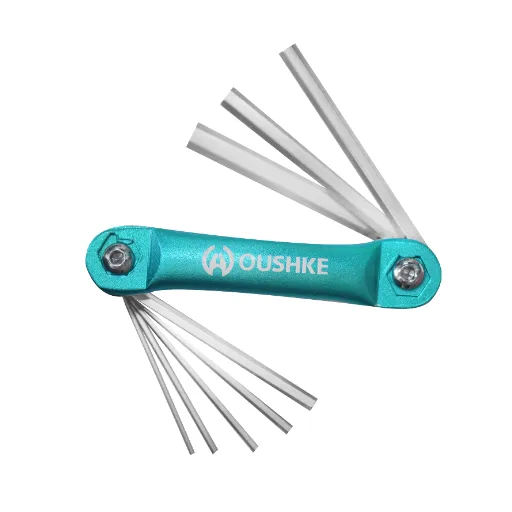
Allen wrenches come in several styles. The most common is the L-key, which has a short arm and a long arm bent at 90 degrees. T-handle keys offer better grip for high-torque jobs. Folding sets keep multiple sizes in one compact tool. Ball-end keys let you turn fasteners at an angle, which helps in tight spaces. If you work with star-shaped fasteners, you may also need a Torx screwdriver. For a broader look at wrench designs, see our guide on the different types of wrenches.
The two main measurement systems are metric and SAE. Each system has its own size chart, and many sets include both.
Standard vs. Metric Allen Wrench Sizes
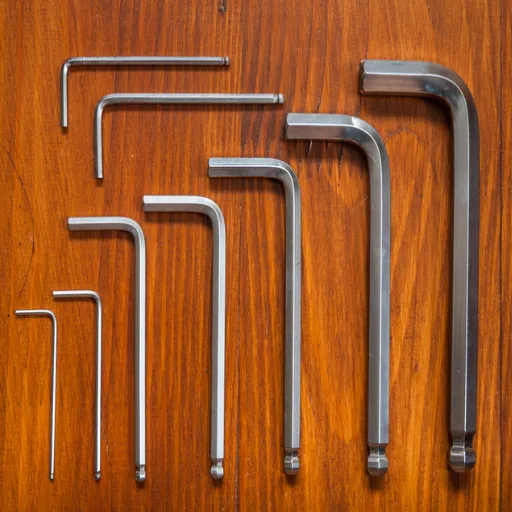
The main difference between standard and metric Allen wrench sizes is the measuring system. Standard or SAE sizes use inches. Metric sizes use millimeters.
Standard sizes are common in the United States and on older American equipment. Metric sizes are used worldwide and on most modern machinery. Using the wrong system can cause the wrench to slip or damage the fastener.
Always match the Allen wrench size to the fastener system. If the bolt is metric, use a metric key. If it is SAE, use an SAE key. When in doubt, measure the socket with a caliper.
Defining Standard and Metric Sizes
Standard Allen wrench sizes typically range from 0.028 inches up to 1 inch or larger. Common sizes include 1/16, 5/64, 3/32, 7/64, 1/8, 9/64, 5/32, 3/16, 7/32, 1/4, 5/16, 3/8, 7/16, and 1/2 inch.
Metric Allen wrench sizes usually range from 0.7 mm to 20 mm or more. Common sizes include 1.5, 2, 2.5, 3, 4, 5, 6, 8, 10, 12, 14, 17, and 19 mm.
Some sizes are close but not exact. For example, a 19 mm wrench is close to a 3/4-inch wrench. A 10 mm wrench is close to 3/8 inch. These near-matches are not exact fits. Using them can strip the fastener or wear the tool. Always use the exact Allen wrench size recommended for the fastener.
How to Choose Between Standard and Metric
Check the equipment or fastener documentation. American-made machinery often uses SAE sizes. Imported or modern equipment usually uses metric sizes.
If you work on both types of equipment, keep a set of each system. A complete Allen wrench set with metric and SAE sizes prepares you for any job. Label the sets clearly so you can grab the right one quickly.
For critical applications, use a caliper to measure the fastener socket. Compare the measurement to the size chart before choosing a wrench.
Conversion Between Standard and Metric Allen Wrench Sizes
One inch equals 25.4 millimeters. Use this factor to convert between systems.
For example, 3/8 inch equals about 9.525 mm. Ten millimeters equals about 0.3937 inches. A 1/2-inch wrench equals 12.7 mm. A 1/4-inch wrench equals 6.35 mm.
Keep a conversion chart in your toolbox or on your phone. Digital calipers with dual measurement modes can also switch between systems instantly.
Do not rely on close approximations for critical work. A few hundredths of a millimeter can make the difference between a secure fit and a stripped head.
How to Measure Allen Wrench Sizes
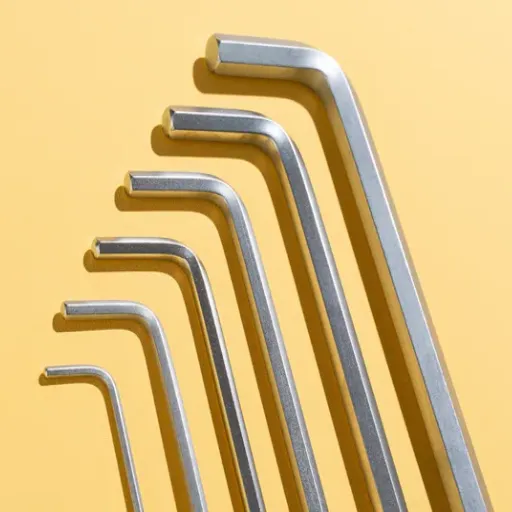
To find the size of an Allen wrench, measure the distance across the flats of the hexagonal tip. Use a caliper for the most accurate reading. A steel ruler works for quick checks.
Place the caliper jaws on opposite flats of the hex. Make sure the jaws are parallel to the flats. Read the measurement in millimeters or inches, depending on the system you need.
Measure the short arm and long arm lengths separately if you need to match a specific tool to a tight space. Lay the key on a flat surface and measure from tip to tip.
Tools Needed for Accurate Measurement
A digital caliper is the best tool for measuring Allen wrench sizes. It reads in both metric and imperial units and reduces human error. For fasteners that need gripping rather than a hex socket, consider using adjustable wrenches for a versatile fit.
A micrometer offers even higher precision for critical tolerances. A steel ruler or tape measure works for rough checks or for measuring arm lengths.
Good lighting and a magnifying glass help you read fine gradations. A clean, flat work surface keeps measurements consistent.
Step-by-Step Guide to Measuring
Step 1: Gather Your Tools
Place the Allen wrench on a flat, stable surface. Have a caliper or steel ruler ready.
Step 2: Measure Across the Flats
Open the caliper jaws and place them on opposite flats of the hexagonal tip. Ensure the jaws are parallel. Record the measurement.
Step 3: Verify the Length
If the application requires a specific reach, measure the long arm and short arm. Lay the key flat and measure from end to end.
Step 4: Check for Wear
Look at the hex flats and corners. Rounding, bending, or cracks mean the tool should be replaced. A worn key can damage fasteners even if the size is correct.
Step 5: Match to a Size Chart
Compare your measurement to an Allen wrench size chart. Confirm whether it is metric or SAE. Then match the key to the fastener you plan to turn.
Allen Wrench Size Chart
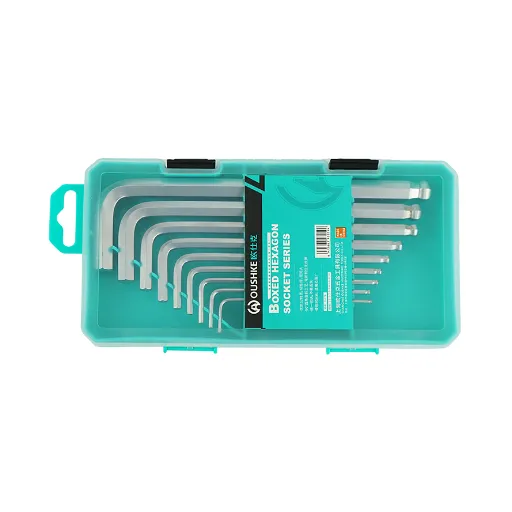
Use the charts below to find the right hex key for your fastener. The metric chart follows DIN 911 / ISO 2936. The SAE chart follows ASME B18.3-2012. Together, they give you a complete hex key size chart for both measurement systems.
Metric Allen Wrench Size Chart (DIN 911 / ISO 2936)
| Size (mm) | Width Across Flats (mm) | Short Arm (mm) | Long Arm (mm) | Typical Socket Head Cap Screw |
|---|---|---|---|---|
| 0.7 | 0.70–0.71 | 7 | 33 | N/A |
| 0.9 | 0.88–0.89 | 11 | 33 | N/A |
| 1.3 | 1.24–1.27 | 13 | 41 | N/A |
| 1.5 | 1.48–1.50 | 15.5 | 46.5 | M1.6–M2 |
| 2 | 1.96–2.00 | 18 | 52 | M2.5 |
| 2.5 | 2.46–2.50 | 20.5 | 58.5 | M3 |
| 3 | 2.96–3.00 | 23 | 66 | M4 |
| 4 | 3.95–4.00 | 29 | 74 | M5 |
| 5 | 4.95–5.00 | 33 | 85 | M6 |
| 6 | 5.95–6.00 | 38 | 96 | M8 |
| 7 | 6.94–7.00 | 41 | 102 | N/A |
| 8 | 7.94–8.00 | 44 | 108 | M10 |
| 10 | 9.94–10.00 | 50 | 122 | M12 |
| 12 | 11.89–12.00 | 57 | 137 | M14–M16 |
| 14 | 13.89–14.00 | 70 | 154 | M18 |
| 17 | 16.89–17.00 | 80 | 177 | M20–M22 |
| 19 | 18.87–19.00 | 89 | 199 | M24–M27 |
Dimensions are nominal. Tolerances vary by manufacturer and series.
SAE Allen Wrench Size Chart (ASME B18.3-2012)
The table below lists common SAE Allen wrench sizes from 0.028 inch up to 1 inch. It includes short-arm and long-arm lengths for each size, plus the socket head cap screw size each key typically drives.
| Fractional Size | Decimal Size (in) | Short Arm (in) | Long Arm (in) | Typical Socket Head Cap Screw |
|---|---|---|---|---|
| 0.028 | 0.028 | 1.125–1.312 | 2.500–2.688 | N/A |
| 0.035 | 0.035 | 1.125–1.312 | 2.578–2.766 | N/A |
| 0.050 | 0.050 | 1.562–1.750 | 2.750–2.938 | No. 0 |
| 1/16 | 0.062 | 1.656–1.844 | 2.906–3.094 | No. 1 |
| 5/64 | 0.078 | 1.781–1.969 | 3.094–3.281 | No. 2–No. 3 |
| 3/32 | 0.094 | 1.906–2.094 | 3.281–3.469 | No. 4–No. 5 |
| 7/64 | 0.109 | 2.031–2.219 | 3.469–3.656 | No. 6 |
| 1/8 | 0.125 | 2.156–2.344 | 3.656–3.844 | No. 8 |
| 9/64 | 0.141 | 2.281–2.469 | 3.844–4.031 | No. 10–No. 12 |
| 5/32 | 0.156 | 2.406–2.594 | 4.031–4.219 | N/A |
| 3/16 | 0.188 | 2.656–2.844 | 4.406–4.594 | 1/4″ |
| 7/32 | 0.219 | 2.906–3.094 | 4.781–4.969 | N/A |
| 1/4 | 0.250 | 3.156–3.344 | 5.156–5.344 | 5/16″ |
| 5/16 | 0.312 | 3.656–3.844 | 5.906–6.094 | 3/8″ |
| 3/8 | 0.375 | 4.156–4.344 | 6.656–6.844 | 7/16″–1/2″ |
| 7/16 | 0.438 | 4.656–4.844 | 7.406–7.594 | 9/16″ |
| 1/2 | 0.500 | 5.156–5.344 | 8.156–8.344 | 5/8″ |
| 9/16 | 0.562 | 5.656–5.844 | 8.906–9.094 | N/A |
| 5/8 | 0.625 | 6.156–6.344 | 9.656–9.844 | 3/4″ |
| 3/4 | 0.750 | 7.156–7.344 | 11.156–11.344 | 7/8″–1″ |
| 7/8 | 0.875 | 8.156–8.344 | 12.656–12.844 | 1-1/8″–1-1/4″ |
| 1 | 1.000 | 9.156–9.344 | 14.156–14.344 | 1-1/2″ |
Dimensions are nominal. Larger sizes are available for heavy industrial applications.
Common Screw Size to Hex Key Size Mapping
| Metric Screw | Hex Key Size | SAE Screw | Hex Key Size |
|---|---|---|---|
| M1.6–M2 | 1.5 mm | No. 0 | 0.050″ |
| M2.5 | 2 mm | No. 1 | 1/16″ |
| M3 | 2.5 mm | No. 2–No. 3 | 5/64″ |
| M4 | 3 mm | No. 4–No. 5 | 3/32″ |
| M5 | 4 mm | No. 6 | 7/64″ |
| M6 | 5 mm | No. 8 | 1/8″ |
| M8 | 6 mm | No. 10–No. 12 | 9/64″ |
| M10 | 8 mm | 1/4″ | 3/16″ |
| M12 | 10 mm | 5/16″ | 1/4″ |
| M14 | 12 mm | 3/8″ | 5/16″ |
| M16 | 14 mm | 7/16″ | 3/8″ |
| M18 | 14 mm | 1/2″ | 3/8″ |
| M20 | 17 mm | 9/16″ | 7/16″ |
| M24 | 19 mm | 5/8″ | 1/2″ |
| M30 | 22 mm | 3/4″ | 5/8″ |
| M36 | 27 mm | 7/8″ | 3/4″ |
Use this chart to quickly match the fastener to the correct Allen wrench size.
Common Uses of Allen Wrenches in DIY Projects
Home Improvement Tasks
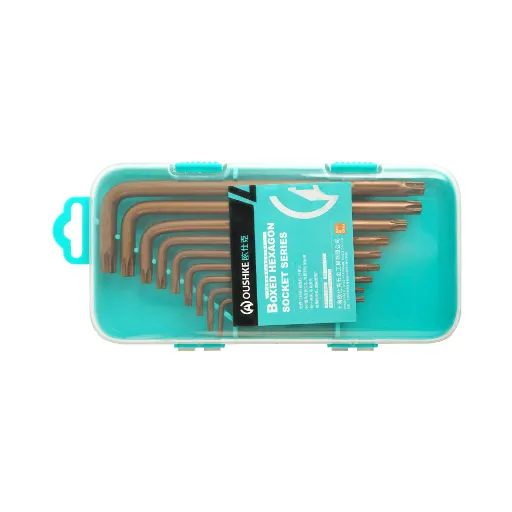
Allen keys are essential for flat-pack furniture, door hardware, and shelving systems. Many ready-to-assemble products include hex bolts that require a specific Allen wrench size. A good set lets you build furniture without hunting for the right tool.
You can also use hex keys to adjust cabinet hinges, tighten towel bars, and install curtain rods. Their compact shape fits into tight spaces where a screwdriver or open-end wrench cannot reach.
Automotive Repairs
Cars and motorcycles use hex bolts in brake systems, engine components, and interior panels. Metric Allen wrench sizes are common on European and Asian vehicles. SAE sizes appear on older American models. If you also work with socket wrenches, compare our guide on socket wrench vs ratchet tools to choose the right option for each job.
Furniture Assembly and Repair
Modern furniture often uses cam locks and hex bolts. The right Allen wrench size ensures a tight joint without stripping the threads. Over-tightening can crack particleboard or damage the fastener.
Keep a set of metric and SAE hex keys in your toolbox. Most flat-pack furniture uses metric sizes, but some imported pieces may use SAE.
Bicycle Maintenance
Bikes rely heavily on hex bolts for stems, seat posts, brake calipers, and derailleurs. Most bicycle fasteners use metric Allen wrench sizes, typically 4, 5, and 6 mm.
A folding hex key set is convenient for road repairs. Make sure the keys are hardened and fit snugly to avoid rounding small bolts.
Reference Sources
- ASME B18.3-2012 Standard
- DIN 911 / ISO 2936 Metric Hex Key Dimensions
- ASME B18.3 Imperial Hex Key Dimensions
- Socket Head Cap Screw Wrench Size Chart
Frequently Asked Questions
How do I choose the correct Allen wrench size for a screw or fastener?
Match the hex key to the fastener socket size. Use a caliper to measure the socket across the flats if you are unsure. A snug fit prevents rounding and ensures proper torque transfer. Keep a set with both metric and SAE sizes so you always have the right tool.
What is the difference between metric hex key sizes and Allen key sizes?
Metric hex key sizes are measured in millimeters. Allen key sizes may refer to metric or imperial standards. The term “Allen key” describes the tool shape, not the measurement system. Always confirm whether you need metric or SAE before choosing a size.
Can I use a smaller Allen wrench if the exact size is not available?
No. A smaller key will not engage the full socket and can strip the fastener head. It may also break under torque. If the exact size is missing, buy a replacement or use a proper extractor instead of forcing an undersized key.
Are Allen wrench sets and conversion charts necessary for DIY projects?
Yes. A complete set with metric and SAE sizes covers most household and automotive tasks. A conversion chart helps when you encounter a fastener from the other system. Together, they save time and prevent damage.
What size Allen wrench do I need for an M6 bolt?
An M6 socket head cap screw typically requires a 5 mm hex key. Always verify the fastener type, as button head and flat head screws may use different sizes.
Are metric and SAE Allen wrenches interchangeable?
Not exactly. Some sizes are close, such as 19 mm and 3/4 inch, but they are not identical. Using an approximate match can strip the fastener or wear the tool. Use the exact system specified for the fastener.
Conclusion
Knowing the right Allen wrench size saves time, protects your tools, and prevents damaged fasteners. Use the metric and SAE size charts above to match hex keys to your project. Measure carefully when you are unsure, and never force an undersized key into a socket.
Keep a complete set of metric and SAE hex keys in your workshop or toolbox. This simple investment prepares you for furniture assembly, bike repairs, automotive work, and countless other tasks.
If you need durable, precision-made hex keys for professional use, explore our hand tool catalog or contact our team for OEM and bulk ordering options.