
Wrenches vs. Spanners: Regional Differences and Usage Guide
The significance of understanding of terminologies when using tools is just as crucial as the tools themselves. Being well-versed with the tools is of utmost importance to seasoned players and doers since they can distinguish to avoid confusion and to make sure the work is accurately done. What’s fascinating is that nights of times, although people refer to those types of tools in general sense, the manner of using each and every of these items will defer from each region and even from culture to culture. This article aims at clarifying all the other aspects that are related to wrenches and spanners such as their historical evolution and past location of use as well as the application of the tools. So next time you are looking for a tool in a US hardware store or are trying to put together a cabinet in England, these differences will help you work more effectively and use the right tool for the right task.
Introduction to Wrenches and Spanners
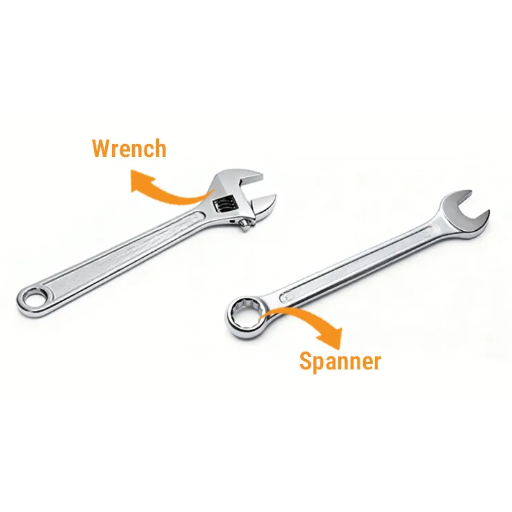
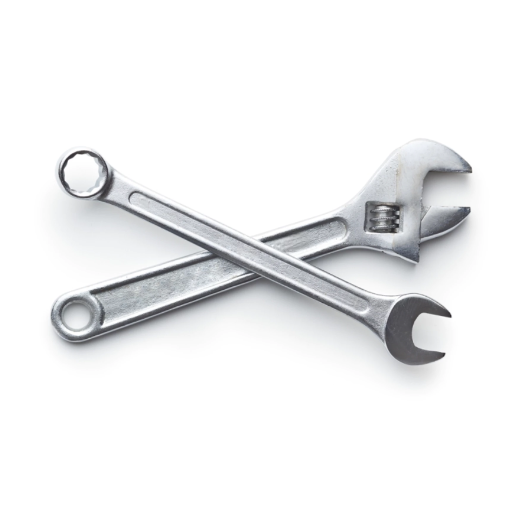
Wrenches and spanners are used for manipulating, squeezing or fastening nuts and bolts or any other objects. Even though the terms are often confused, the geographical distribution is considered the legitimate factor in their use. The term “wrench” is dominant in the United States while the term “spanner” is mainly used in the United Kingdom and other parts of the world. These two tools basically work in the same way only that they are designed differently to accomplish some tasks.
In the case of pliers and a roll wrench, pliers are a fork on the hinge with movable jaws that can be opened or closed to grip an object, while a rool wrench is based on a mechanism. An unnecessary feature of related open end and ring spanners is an open end engaging portion remaining on a top cover portion of the rings. It is important to appreciate the differences as it affects the choice of a tool that satisfies consumer needs attractively.
Understanding the Common Confusion
The subject of conflict assumes to be the core focus point among other tools like spanners and wrenches is due to various reasons, including social and cultural associations and preferences of its users. For example, in the USA, the term “wrench” is mostly used as well as in number of other countries. Alternatively, the term ‘spanner’ is primarily used in a few English-speaking countries including the United Kingdom. Such differences are further complicated by the specific use of the words in particular sectors, and the use of one word or the other interchangeably larger international business environments.
Furthermore, available evidences also show that the concern activates the use of these names in the regions of the countries and raises the level of concern for clear communication in professional and study environments. If both the language and the activities are discerningly explained, it may be easy to communicate the terms to the right audience and to prevent any possible discord. Going to the point during the course of the communication is helpful in making certain that all technical conversations are understood as well as enhancing teamwork between different sectors and locations of any given business setting.
The Importance of Terminology in Tools
Cleverly phrased words in digital marketing are of immense need assuring mitigate of addition of excel sheets and documents to be printed. Professionals have the skill of identifying user-friendly keywords that match recent keyword trends. This benefits the design of web page content so that it is compatible with other spoken languages worldwide. In more simple terms, the accurate or appropriate language or vocabulary largely facilitates the use of a given product or application. The most ideal terms in every approach would avoid hindrance to the rate of using a service ie enhance uptake and make enhance productivity and efficiency within the workplace as a smooth association between the customer and the tool is availed. Such steps further bridge the two ends of technical jargon and the human interface, making them fun again in many areas.
Regional Terminology Differences
The distinction between the two tools ‘wrench’ and ‘spanner’ is different depending on the region. In North America, that is, United States and Canada, ‘wrench’ is used generally and includes such tools as adjustable wrenches, socket wrenches, and open-end wrenches. In contrast to that, British English, Irish English, and most other varieties in the British Commonwealth use the term ‘spanner’. More specifically, the word ‘spanner’ is usually used for spanner nouns but concerning adjustable tools, they may be referred to as ‘an adjustable spanner’. The difference clearly shows how some technical vocabularies change to fit in with the language use and the sociocultural dimension but they both entail instruments of lateral holding, turning or connecting of the fasteners such as screws.
American English
Wrench
The term wrench in American English is used with reference to a broader content of tools specifically made to provide holding and leverage when some force is needed to turn fasteners such as bolts and nuts. These tools are of great importance to various spheres including building and construction, transportation and even manufacturing. Wrenches are customized to many categories e.g. combination wrench, socket wrench, adjustable wrench, as well as torque wrench for an individual application.
Yet, such tools are also adaptable to others. For instance, the use of a torque wrench fixes the exertion of a specific force on fasteners so that there are no human errors like being too careful to fasten up, because excess fastening may distort the structure. The change in wrench forms is the reflection of the multifaceted needs and functional focus in the sphere of professional and technical. This very vivid definition of the concept helps to indicate how essential it is for incorporation in the operational and commercial set of tools.
British English
Spanner
In British English, the term ‘spanner’ refers to the type of hand tool that is used for gripping, fastening and holding an object stationary while another part is manipulated for the purpose of loosening or tightening nuts and bolts as the case may be. Spanners are primarily similar to wrenches in American-English languages, its certain design and terminologies are also significantly in sync with European or Asian standards. Spanners are often differentiated in types, such as the open-ended spanners, ring spanners, and adjustable spanners, each job specific having the advantage of gripping and torque application.
Most dimensions of spanner such as the jaw size and handle length are usually as per the requirements of the International Organization for Standardization (ISO) standards, ensuring that these fit properly with the fasteners used in different industries. It is this sort of attention to detail as well as following of set guidelines that makes spanners, reliable for the automotive, manufacturing and construction industries especially where high performance tools are needed to ‘get the work done’.
Impact on Global Communication in Technical Fields
The expansion of the scope and quality of information technology in the context of normalized software and standards has made a great contribution to technical communication in the sphere of technology. The utilization of ISO standards and such benchmarks helps in consistent use of methods, terminology and instruments, i.e., global teamwork, across cultural and legal barriers. This makes it possible for engineers, scientists and other technical professionals to effectively utilize information, blueprints and novel approaches, thereby improving the speed and accuracy of the results without any confusions or mistakes.
Moreover, use of state-of-the-art applications – for instance, Enterprise Resource Planning systems and real-time analytical systems makes different volumes of data available on tap, thereby revolutionizing competition and the urge to innovate in the field of breakthrough reconstruction, including but not limited to such industries as fuel production, aerospace, renewable, and manufacturing, among others. In addition to deepening regional integration, this model also supports efforts by states dedicated to solving global challenges.
Types of Wrenches and Spanners
- 01
Open-End Wrenches
Open-end wrenches or adjustable spanners have two U-shaped openings of varying sizes in each terminal. Open-end wrenches are utilised to easily and efficiently fasten and loosen nuts and bolts. It is the most effective tool for operating in a compact place as it is very slim.
- 02
Box-End Wrenches
Box-end wrenches are closed loops, with one or both ends with the inner ring meant to fully encase a nut or a bolt’s head. Performance by these spanners are enhanced as they do not slip off apart from working effortlessly to loosen or tighten the nuts or bolts without causing any damage to its corners.
- 03
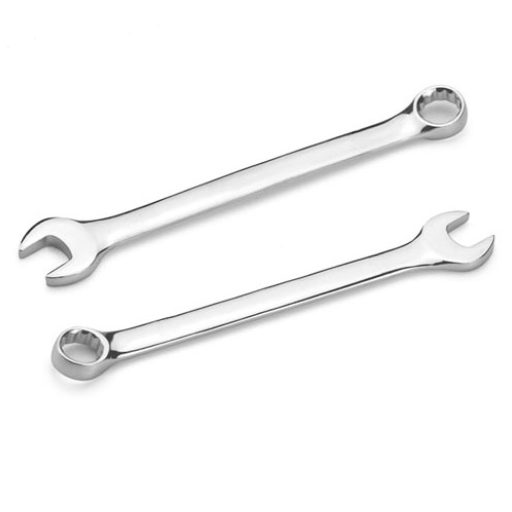
Combination Wrenches
These are wrenches where one reaching is left open and the other ended with a ring. They provide dual functionality. Both sides have the same numerical values and they have immense transversal symmetry. This makes them very practical for daily use.
- 04
Adjustable Wrenches
These instruments have a moveable jaw and hence they can be adjusted to fit the various sizes of the fasteners. Adjustable wrenches are versatile and obviate the necessity of carrying around various fixed sizes of standard wrenches.
- 05
Socket Wrenches
A socket wrench utilizes ratchet mecanism integrating interchangeable sockets that allow it achieve different fastening problems. It is actually perfect to use a socket motion when working in constrained resistance conditions especially the necessity is to finish the work as quick as possible.
- 06
Spanner Variants
Spanners called boxes again in different regions are slotted into the same group as wrenches. They also have the same tools. For instance, a ring spanner, which is like a box end but with a similar offset spanner and an adjustable spanner where the jaw is somewhat adjustable, is being used.
Adjustable Wrench vs. Adjustable Spanner
| Parameter | Adjustable Wrench | Adjustable Spanner |
|---|---|---|
| Region of Usage | Commonly used in the US | Commonly used in the UK and other regions |
| Jaw Adjustment | Uses a thumb wheel for jaw movement | Features a thumb screw for adjustment |
| Primary Purpose | Suitable for a wide range of fasteners | Works effectively with different nut sizes |
| Design Structure | Straight handle design | May include offset handles |
| Terminology Origin | “Wrench” adopted from Old English and German | “Spanner” derived from British terminology |
| Usability | Simple, versatile, and widely available | Equally versatile with regional preferences |
| Build Material | Typically made of steel alloys | Typically made of steel alloys |
| Flexibility | High adjustability for multiple sizes | Similar adjustability with slight variations |
| Offset Angles Availability | Occasionally features angles | Often includes offset angles for ease |
Combination Wrench and Spanner
It is important to know that combination tools such as wrenches are commonly used in manufacturing, assembly, and maintenance due to this reason as demonstrated by the wide usage of this tool in multiple industries and applications. These tools are multipurpose in structure and have both types of grippers that is the box end and open end so that they can accommodate various diameters of fasteners. The same tools are also used worldwide but have different difference types. Sockets are long tubes with a cap-like end so they have a throat. It is likely to assume that all manufactured tools nowadays are made of high-grade steel and their utility lifespan is maximized through the use of hard chrome and nickel substances that do not spoil easily.
Technological progress in the industrial sphere is observed ergonomically – there are anti-slip surfaces and practical jaws in the screws. They are meant to ensure a reliable fastening of the parts of the equipment which needs to be connected. All the angles of the box-end spanners and combination wrenches are designed in such a way that ease of access in confined spaces is enhanced and fatigue on the user reduced. Moreover, both spanners and screws are available in both imperial or metric standard sizes, where the choice is dependent on the regions. The combined wrench and spanner of the automobile, aircraft, and building industries help people everywhere and across industries because of the item’s mechanical efficiency, as evidenced by its ease of use.
Socket Wrench and Ring Spanner
Socket wrenches and ring spanners however are multifaceted tools developed to control the amount of torque being applied and facilitate several operations carried out mechanically. That is why the ratchet wrench adopts an interlocking design for the sockets. The upgradable design allows its users to handle different fastenings without utilizing more than one tool. It is this option that has emphasized this equipment especially in areas where repair works and flexibility are mandatory like in automobile/vehicle repair and maintenance or in working on machinery and equipment in the industries concerned.
In contrast, ring wrenches provide a fully hinged grip completely wrapping the head of the bolt, enhancing more positive and extensive hold to prevent the component form slipping while torque is being applied, this system is very effective in confined spaces where entry is restricted and there is a need to exert great force. More particularly, some additional materials have come to be used in the core of ring spanners, and have added to the strength as well as corrosion resistance of these implements especially within tough environments, and therefore increasing their ability to last longer with such use likewise.
Applications of Wrenches and Spanners
01
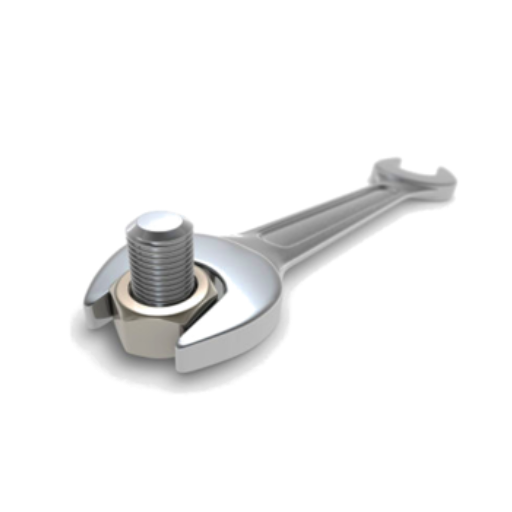
Automotive Industry
The nature of the engagement of an engine maintenance, solid body lining, or wheel grenat is crucial and requires the availability of these tools most, especially a work spaced fuel it permits attainment of excellent results during the repairing of the car and its maintenance.
02
Construction
Wrenches and spanners are used in the attachment and adjustment of different elements, vertical surfaces, frames and equipment. There is a need to ensure that this construction activity does not cause any damage to the component.
03
Manufacturing
It is these tools that make it possible to develop a product out of a system with individual parts without the risk of everything falling apart and making it possible for operation.
04
Energy Sector
Calibrating from fetching natural resources using gas or oil up to noiseless wind turbine or solar photovoltaic installations, wrenches and spanners become indispensible in the management of the pipes, engines and all that will require a stability and accuracy.
Automotive Industry Uses
In the auto sector, spanners and sockets are very important tools when it comes to the assembly of wants as well as any other types of wants. Particular application may be seen in instances where the likes of engines, suspension and or the chassis have to be assembled, with even greater possible considerations from the standpoint of mechanical loads or prote which are highly prevelant especially if one and such what applies to modern automotive manufacturer and quality standards. When such components are broken the tools help in the removal and replacement of these elements for example brake pads, Boot section and automatic tranny section.
Modern technologies, for example, digital focusing of readings on torque tools, provide high precision level necessary and medical plague the designer requirements. Acting like that, to electric car (EV) construction similar to petrol vehicles, numerous special tools are needed due to the high – there is disturbingly grossly in the street these days especially such frank modes of automotive technologyelltinnal erireeting onwards.
Plumbing Applications
When it comes to the plumbing industry, wrenches and spanners are two hardware tools that are classic, devoted themselves to a purpose of assembling, maintaining, and repairing the conjoined threaded pipes. The primary use of these tools is to fasten or loosen threaded pipe fittings such as couplings, unions and valves to prevent fluid leakage. Perhaps the most well-known varieties of wrenches in this respect fall into the category of adjustable pipe wrenches, which are ideal for gripping and turning iron pipes, and basin wrenches that allow for the fixing and dismantling of taps using restricted access, such as in kitchen cupboards.
New plumbing tools have been designed by engineers and gains recognitions for their ergonomic and adjustable jaw features aimed at improving performance standards and reducing user fatigue. Indeed, a good example would be the dynamic-operating tasks in which spanners of sizes do not have to be adjusted manually because the spanners are indeed self-adjusting. Chromova or chrome vanadium are also some of the materials used in welding that improve the tensile strength and corrosion protection for the plant where it is actually damp. These tools still play an important role in providing solutions to people looking to fix pipes in their houses as well as for those involved in installing heating systems in any business establishments or at production sites.
Construction and Maintenance Scenarios
Irrespective of the changing fashions in building designs and the introduction of alternative materials, spanners and wrenches have, for a long time, been a key element in construction projects’ toolbox. For example, when constructing buildings, in addition to other tools, adjustable wrenches cannot be done without especially in putting up the steel structures due to the ability to fit into any size bolt and apply the correct torque to ensure that nothing wobbles. On the contrary, closed spanners are not used for installation purposes, but rather their roles are assigned to areas where a certain amount of repetitive work is expected, such as assembling and erecting building parts and machine components.
These tools, especially in commercial use, are very useful as they perform installation, operation, service and repairs of the physical system like air conditioning, production machinery, automotive engine, water system among others. In all, their user-friendly designs and innovations, are insertion of grips which prevent any accidental slippage, and the materials used are more advanced class of steel or alloys for instance chrome molybdenum help increase easy use and the couple it ensures a longer tool life even in harsh work environment. There are also emerging trends of tools, for instance the introduction of ratcheting wrenches, which are very useful in compact spaces and help the technicians and engineers to carry out their duties faster and with reduced efforts accessing difficult fasteners.
Practical Tips and Buyer’s Guide
-
Identify the Right Type for Your Needs
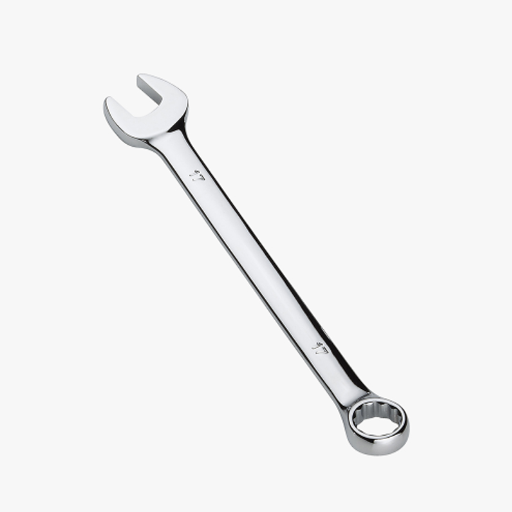
Discuss the types of fastening tools that one can work with. A good example of such a tool is an open-ended wrench which enables, on the other hand, a quick valve control while a box or combination wrench ensures that a high level of torque is applied.
-
Check Material Quality
Always prefer implements whose constitution is made of the likes of chrome vanadium or chrome molybdenum. Such materials provide excellent durability and are resistant against rust and similar typical damages, which would help in the tool’s continuous use.
-
Consider Ergonomic Features
The tools should yet be ones with some sort of added features such as non-slip grip handles, convenience grips as well as small intricate operations, especially if one is exercising restraint. This lessens the agitation in your hands and helps in canning down fine measures or operations that would be daunting.
-
Assess Size and Compatibility
A combination of the four American standard and metric sizes makes a lot of sense in such cases. The use of shut-off plumbing keys can also change in operating in diffrent size shut off plumbing keys.
-
Look for Special Features
Pivoting heads or wrenches with a ratcheting mechanism can significantly reduce time spent, especially when working in awkward conditions. Still, one has to be vigilant and not overdo it, so that it serves the needs of specific applications.
-
Inspect the Finish
Dressing up the spanners or pliers with a bright chrome-like finish will not only protect the tools against moisture and rust, but also make cleaning and taking care of them easy.
Choosing the Right Tool for Your Task
When trying to choose the suitable spanner or wrench for any specific operation, the core tool types should be in mind. For example, we can use adjustable wrenches which have moving jaws enabling handling several size of fasteners. The usage of adjustable wrenches is best for easy repair work but it cannot be so good for fixed size wrenches. Combination wrenches, where one side is open-ended and the other side is the enclosed side of the wrench, is normally used vehicles and other mechanical devices that handle hexagon shapes.
The extent and use of force is a complicated section. Applications of fastener placement, like loosening or tying of bolts, is an example of such a task where accuracy is required in a certain operation such as an engine being built. At the back; a tongue-extension tool, calipers and pliers in this category are used for gripping sewing trimming wrenches sockets and fitting taking tasks as picture frame assembly or appliance simply called screws. Allen or hex cylinder quick installation handles are necessary while working fastening structural components that will require tightening fasteners from inside more in furniture and machine making operations.
Material Considerations
Wrenches and spanners are typically manufactured from high-strength materials in order to enhance toughness strength, wear resistance, as well as tolerance to the deformation caused by high torques. The types of materials used include chromium-vanadium steel which is an excellent material due to the balance it offers between strength and resistance to corrosion because of the different substances present. In cases where there is need for more strength and hardness tempered chrom-vanadium steel is frequently used chrom-molybdenum steel, In particular, in impact-rated tools. The finish also affects the performance of the tools as the majority of wrenches are coated with chrome for resistance to corrosion and provides an easy to clean finish.
Moreover, innovations in industrial engineering have led to the use of thermoplastic rubber and other composites materials to manufacture suitable hand grips that would increase the users comfort during extended usage and decrease hand fatigue. Also, the steel used and the processes involved in making the construction such as forging or drop-forging have to be looked at carefully because they determine the total lifespan and performance of the device when it diverted from its normal use.
User Needs and Preferences
When it comes to choosing a wrench or spanner, priority is often given to durability, ease of use and accuracy of user-friendliness over traditional parameters. The issue of durability in this case largely depends on the material it is made of because consumers today are in favor of tools made of high chromium-vanadium steel due to its tremendous strength and rust preventive capabilities. Furthermore, nickel or chrome plating makes tools more desirable as the fungicides prevent corrosion and wear, particularly in high corrosive environments.
User preferences can also vary depending on the ergonomic factor. Any tool that is equipped with anti-slip insets or is ergonomically right is more comfortable, especially when used for a longer period of time. This is not only for professionals but for all people who love doing things in an advanced way. Moreover, there is another highly respected tool – adjustable spanners, which are dynamic and therefore allow one consumer to hold different fasteners in one tool. In addition, users require high levels of accuracy and perfection; they do not demand much. Reliable performance and a constant level of strength are of interest in high-torque applications, for instance.
Recently it has become apparent that customers prefer more useful features such as quick-release systems or sliding levers and sprocket allowances that are built inside the tool to save time and increase the productivity. Crowded workspaces and the intended target audience also find simple and compact tools to be more convenient and efficient, like space-saving wrenched tools and screwdrivers. Finally, other such considerations add that the requirements relating to the range of switches are related since most capacitate users for extensive sets which can overall be both in metric and imperial to support most of the systems and tools.
Reference Sources
Reference 01
Mixing Spanners with Wrenches
Read more on Google Books →
Reference 02
The Adjustable Spanner: History, Origins and Development to 1970
Read more on Google Books →
Frequently Asked Questions
What is the difference between spanner and wrench vs wrenches?
The origins of and the difference between spanner and wrench is a question that is often asked by many people. To being with, the two tools are often known and referred to by specific names in other regions. In the US, the term wrench is prevalent, while in the UK, the term spanner is more common. The aim of both tools is to fix nuts or bolts as needed. The two types of spanners namely open end and single hex are possible and are simple in terms, both have an equally clear function. They can assist an individual to a certain extent when it comes to picking a tool for performing automotive and household repair work with a few guidelines. You also do not want to miss knowing one crucial component which is the size of the bolts plus are the sockets detachable or one needs a box end spanner.
How do I choose the right spanner vs wrench for a fastener?
Basically, the choice of a particular tool is determined by particular conditions; hence, the type of fastener, the variety needed or considerations making what requires the purchase. For example, combination wrenches are very general and may not be as effective as box wrenches or tubular wrenches which are limited to particular sizes of bolts nuts. Swan neck wrenches and spanner socket with maneuverable sockets are used when working in difficult areas. A proper wrench should be applied to any nuts so that there is no slippage and twisting happens by either tightening or loosening the nut, which in return prevents the nut from stripping.
When should I call a wrench a spanner, and when should I call it differently?
While “wrench” and “spanner” are often thought of as synonyms, depending on the region, they may differ – Americans refer to the adjustable tool as a “wrench” or more specifically “monkey wrench,” whilst in the English speaking United Kingdom people frequently use the word “spanner”. Knowing the right words when it is time to purchase tools or browse through a manual, especially of any complicated tool like a tap wrench or a socket spanner is quite helpful. Hardware shops are a source of information and usually contain catalogues of spanners and wrenches, which offer the user the corresponding fastening system and accompanying works.
What are common spanners and wrenches used in automotive repair?
It is widely acknowledged that pairing ring spanners, box spanners, ratchet spanners and crescent or adjustable spanners deftly solves the problem of addressibility of different tasks and sizes of bolts. Closed and open ring spanners are different in that while closed ends ensure a firm grip, open ends are user-friendly and can be quickly located in compact engine compartments. The better workshop usage features are assured by sockets and handlebars, which can cover various sizes of bolts. Activities requiring access where conventional keys are difficult to use can be completed with a cook’s neck spanner and circular spanners.