

Saw Blades Manufacturer Guide: How to Choose the Right Blade for Industrial Use
As vendor manager for a construction supply distributor in the Midwest, Marcus made the jump from last year and still sought other possibilities with regard to a new saw blade and its manufacturing, possibly leading to minor savings in cost. Such great savings, 34% less defects, and a long practical elimination of customer complaints about premature dulling of asked blades, however, did not belong to the brand name on its container. Factory material control, tooth geometry accuracy, and a constant heat treatment process together explained the fact.
If you source cutting tools for either resale, manufacturing, or field operations, then you already know that the quality of the blade is key to project cycles, labor costs, and the satisfaction of end-users. However, perfecting the type of spike for getting the best into your equipment is only half the problem. It is the work of a good manufacturer of saw blades who can offer the users large-scale, continuous industrial performance. It can be the tool that separates efficient supply chains from the ones you would gladly put yourself through.
In this guide, our goal will be to explain what saw blades are actually made of, how to match blade types to real applications, and what B2B buyers need to look for when sourcing wholesale saw blades or OEM custom orders.
What Saw Blades Are Made Of: Materials Explained
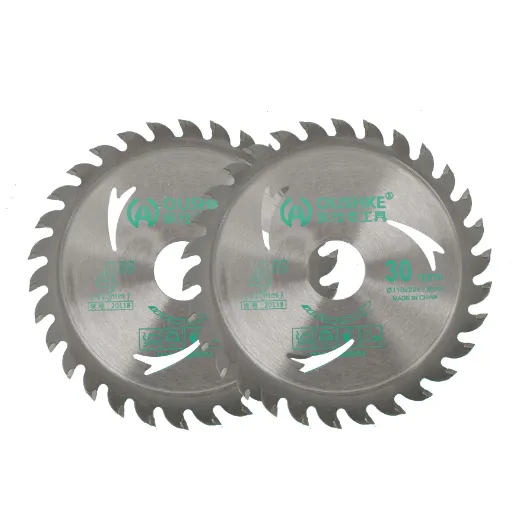
The material used in the saw blade will determine the cost of each cut, cutting speed, resistance to heat, and durability. Understanding such broad tradeoffs is essential to buyers in industries due to the fact that wrong material choice can certainly cause the extension of downtime and waste a valuable amount of stocks, apart from damaging expensive equipment.
High-Speed Steel (HSS)
A carbon steel alloy having any mixture of chromium, molybdenum, and tungsten is termed high-speed steel. Those blades are usually inexpensive, ductile, and quickly sharpened. At low-to-moderate levels, they serve in the cutting of wood, plastic, and soft metals. As a matter of fact, minimally, HSS loses its edge quite fast when it is heated too much to be used properly for continuous operation.
Tungsten Carbide Tipped (TCT)
GT teeth are federally made of a compound that is almost as hard as diamond, called tungsten carbide, brazed to a steel body. It is called the super sharp blade because it can run way, way longer with sharpness compared to HSS, and it can cut tougher hardwoods. Also, it can efficiently chop engineered composites, ferrous metals, and non-ferrous alloys. In 2025, carbide-tipped blades will command an account of about 45% of all material share in the industry, according to industry estimates.
Diamond-Edged Blades
Diamond blades are composed of synthetic diamond particles, which are measured around the steel core. They are the typical cutting tools one can use for concrete, masonry, tile, and particularly abrasive products like stone or abrasive materials. The reasonable initial cost of these diamond blades turns out to make them highly cost-effective due to their long-term usability of the same.
Cermet and Emerging Materials
Cermet is the latest development in the field between ceramics and metallic materials, focusing on the perfect treatment of iron. Ceramic-tipped cladding is an excellent medium for absorbing cuts to the highest quality level possible without the annoyance of cutting speed. Most of the thermal shock that affects industrial applications like heat treatment, can wear a cermet blade. In this modern scenario, good heat resistance combined with excellent wear behavior leads to better results.
| Material | Best For | Lifespan | Relative Cost |
|---|---|---|---|
| HSS | Softwoods, plastics, light metal | Moderate | Low |
| TCT | Hardwoods, composites, ferrous/non-ferrous metals | Long | Medium |
| Diamond | Concrete, masonry, stone, tile | Very long | High |
| Cermet | High-speed steel, stainless steel, and aluminum production | Very long | High |
Types of Saw Blades and Their Industrial Uses

Not all saw blades fit the same tools or deliver the same results. Industrial buyers need to stock or specify the right blade family for each application to maximize performance and minimize returns.
Circular Saw Blades
The most frequently used accessory for cutting is a circular saw blade in construction, woodwork, and metalwork. The tooth count and grind geometry play a decisive role in how a certain blade is best used.
- Rip-cut blades (14–24 teeth): This type of blade cuts with the grain at an extremely fast pace. Its large size gullets ensure rapid removal of chips, but the rough finish.
- Crosscut blades (60–80 teeth): With these types of blades, it cuts across the wood grain, leaving a smooth, fine surface to each tooth. The more teeth there are in the blade, the better the edge quality, but the slower the feed.
- Combination blades (40–50 teeth): These blade forms are multitasking blades, equally good for ripping and crosscutting, popular among regional builders.
- Framing blades (18–24 teeth): very high speed, but a refined finish is not necessary for rough carpentry of dimensioned lumber.
- Fine-finish blades (80–100+ teeth): These blades have the most teeth on them; hence, some say this blade provides the best cut with the least fraying out of particleboard, on melamine-coated, veneered, or even laminated materials.
- Commonly, metal-cutting blades use carbide or cermet tips and sometimes have new revolutionary coatings, good corrosion resistance, and can withstand very high temperatures for super-quality cutting of steel, aluminum, and many other alloys.
- Masonry blades feature diamond grit or segmented edges for concrete, brick, and tile.
Band Saw Blades
Band saws’ blades are a type of continuous loop that go right wheels. They are favorable for straight cuts, curves as well as resawing. The band saws are used in numerous businesses like metal fabrication and lumber mills, mostly in industrial environments. Bi-metal band saw blades are the most common variety for hard alloy cutting because they reduce fatigue and keep the teeth in an edge state, using a flexible carbon steel rack with high-speed steel teeth.
Reciprocating Saw Blades
Reciprocating saw blades, also called Sawzall blades, are used in demolition, plumbing, and HVAC work. Blade selection depends on teeth per inch (TPI):
- 3–11 TPI for wood and demolition
- 6–18 TPI for general-purpose mixed materials
- 18–32 TPI for metal and pipe cutting
- Carbide-tipped or diamond grit for abrasive materials like fiberglass and cast iron
Scroll Saw Blades
Blades of a scroll saw are very thin and have fine teeth; they are used to make minute details in woodwork, crafts, and light metals. They are available from big size #12 blades for the thick wood down to the finest possible #3/0 blade for the most intricate design.
One day, as Elena, an Ohio quality shop boss, stood and watched her crew go through three HSS metal cut blades every day, she decided to change to a TCT blade with a heat-dissipating coating. With this one, they only needed one blade change in a week, and the cut’s quality has since improved with 15 percent less finishing labor. The moral was simple: the right kind of blade will pay for itself in minimizing labor.
How to Choose a Saw Blade for Your Application
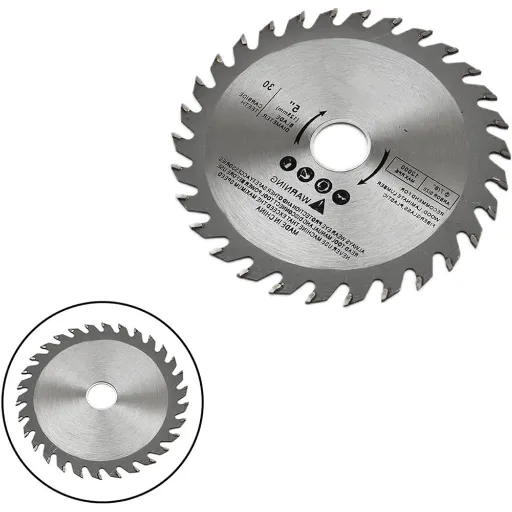
Selecting the appropriate blade lies in four vital aspects. Whether buying from a retail catalog or the assembly floor, this model would be a budget-saver from mismatches in investments.
Match the Blade to the Material
Each material requires a different kind of cutting tool. Wood, metal, masonry, and plastic are each easily cut. Hardwood and harder work composites ask for hard, wear-resistant teeth like TCT or cermet. Softwoods cut well with HSS or standard carbide. If you try to cut masonry or concrete with toothed blades, you are likely to end up with diamond grit that needs to be used. An important rule of thumb is: if you wish to keep your teeth, never put them into metal and surely not into wood.
Match the Blade to the Cut Type
Ripping surges through dead wood, in favor of a fast line along the grain, and needs fewer teeth with much deeper gullets. While crosscutting the grain would require more teeth to cut delicately across the longer fibers without tear-out, and surely you would need a detour if you are operating on either type, a combination blade would save you the changeover time, but remember, a dedicated rip and crosscut blade does the best for each operation.
Match the Blade to the Desired Finish
The greater the number of teeth on a blade, the slower the cut. That at least is consistent, though for most woodworking tasks like cabinetmaking, flooring, or furniture, the ideal is a highly polished and splinterless end, directed towards a very fine-finish 80-teeth. Fewer teeth consume more quickly, cutting through rough edges.
Check Compatibility: Diameter, Arbor, Kerf, and RPM
The best blade cannot dynamically function because it does not echo saw specifications. The blade’s diameter and the size of the arbor hole to fit the tool. The kerf width also entails considerable material impressibility and motor burden. Kerf-thin blades may save even more material and cause less pressure, but may be unstable under applied heavy industrial cuts. Finally, they must also make sure that the maximum rating of the RPM on the blade is considerably greater than the operating speed of the saw.
Industrial Saw Blades: What B2B Buyers Should Look For
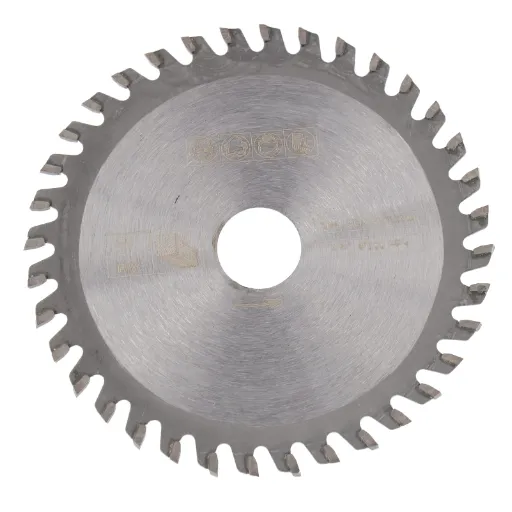
The shippers and distributors that are also the purchasers en masse do not have to check every blade piece by piece, individually, before they ship these blades. It meant that instead of forming themselves like an assessor, they would have to judge the producer’s system or system of systems, specifications, and quality control.
Quality Standards and Certifications
The supplier is able to verify compliance with the most recognized blades by showing it in ISO 9001, a structured means of quality management. The CE marking indicates that the blade was manufactured in conformity with European safety standards. Complementing with TUV or MPA certification attracts tribute for high-performance cutting tools. Doing this actually reduces your risk for resale while adding trust to your customers through such documented certifications.
Tooth Geometry and Grind Types
How the blade cuts into the material is determined by tooth geometry. There are four primary types of cutting:
- Flat top grind (FTG): This type of grind has top and flat edges. This kind of grind makes the teeth ideal for ripping along the grain quickly.
- Alternate top bevel (ATB): With this type of grind, teeth have alternating left and right bevels, easily and cleanly slicing across the fibers of the wood (crosscut).
- Alternate top bevel + raker (ATBR): This type of grind combines ATB teeth with a flat raker tooth, giving them a combination that is very versatile.
- Triple chip grind (TCG): It has a flat-topped tooth following a chamfered tooth. The process used in AXC regarding chip management results in very clean cutting of laminates, plastics, non-ferrous metals, and abrasive materials.
Heat Management and Coatings
When a lot of heat is generated due to industrial cutting, the tooth edges soften and bend the blade plates. So as to engage higher quality, companies will try to resolve this by means of laser-cut expansion slots, antivibration vents, and specially formulated coatings. Common coatings include:
- Teflon Perma-shield coatings allow nonstickability in order to reduce friction and resin stratification.
- NSF or TiAlN coatings allow metal-cutting blades for heightened hardness and oxidation resistance.
- Heat-treated and tensioned steel plates maintain flatness under load.
Resharpenability and Lifecycle Cost
With high-volume applications, the number of times a blade can be resharpened further lowers the cost-per-cut significantly. Industrial TCT and cermet blades by well-known manufacturers can often be resharpened five to 10 times until the plate or teeth expire. To give just one example: calculate the price per unit produced, not the purchase price only.
Sourcing Saw Blades from a Manufacturer: OEM and Wholesale Options
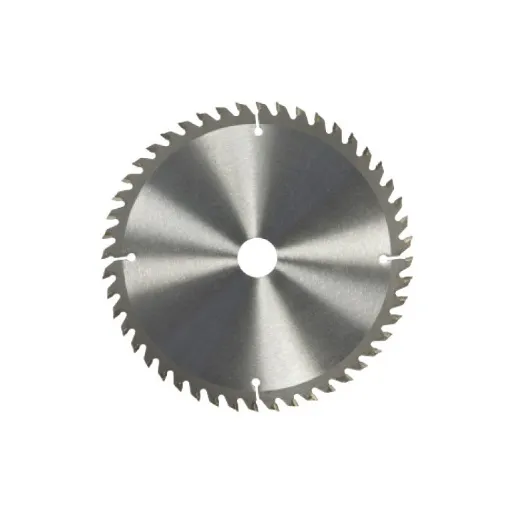
In how purchasing actually matters, as much as just what exactly is purchased, for buyers of distributors, contractors, and brand owners. Offers such as better prices, customizable choices, and the advantage of a stable supply chain are part of the appeal of establishing factory-direct relationships as opposed to those given by branded retail channels.
Factory-Direct Pricing vs. Branded Markups
International firms, including Bosch, Freud, and Diablo, spend quite hefty sums on marketing and on developing distribution networks-all costs that have to be ultimately borne by the end buyers of their products. The factory-direct maker of saw blades produces rather quality and engineering comparable to brand-name but at a reduced price. This decreases the profit margin and incorporates savings directly into the purchase.
OEM Customization: Sizes, Logos, and Packaging
When consumers want to create their tool names, OEM and ODM services offer options to personalize everything from the steels applied, the formulation of each tooth, logos laser etched, the outcome of color printing or retail packaging, and their blade. The blade can be designed to fulfill regional preferences such as metric sizing for a European market or specialized coatings for tropical humidity. Very few of these flexibilities are promoted by the large-market branded suppliers.
MOQ Flexibility for Distributors and Brand Owners
Minimum sales thresholds differ across the bearer products, from being complex or simple custom. Generic LMK brand products could begin from 50 to 100 pieces, on average, per size for standard wholesale saw blades. Custom OEM projects bearing private labels need minimums that can lie toward the higher range of sales, but since some suppliers offer very flexible entry pricing to new buyers testing the market, the restriction can be ignored. At Oushike, we engage with distributors and brand owners to ascertain the minimum sales that accompany their growth stage.
Lead Times and Export Compliance
A reliable delivery is very important for inventory planning. Inquire with potential suppliers about the average production lead time, high season capacity, and availability of shipping alternatives. An exporter with extensive experience will take care of the in-house documentation, such as the certificate of origin, packing lists, and customs declaration, thereby removing a part of the administrative overload from you.
Ready to cut out the middleman and improve your margins? Contact us to discuss wholesale pricing, OEM saw blades, or custom specifications for your product line.
2025 Saw Blade Market Trends for B2B Buyers
The market of cutting tools is changed in the highly developing material science, giving the need to comply with sustainability pressures and respond to every automation trend. Forward-looking decisions to have a better-informed inventory and provide for greater levels of sourcing will carry buyers to the fore of trends.
Cermet-Tipped Blades Gain Share in Metal Cutting
Cermet replaces carbide in machining, where it holds its hardness even at high temperatures because it is a perfect high-speed cutting tool. Automakers, commercial aircraft in aviation, and structural steel in civil construction all enjoy the benefits offered by cermet. Several firm margins are seen in this particular high-growth product category.
Diamond Blade Demand Expands in Construction
FMI estimates that the value of the world market for the diamond saw blade will increase from having been $1.7bn in 2013 to $2.8bn ten years later. Furthermore, rising investment should boost market opportunities, with infrastructure and rapid urban sprawl growth anticipated in the Asia Pacific and North America, boosting demand for cutting concrete, road making, and masonry services.
Sustainability and Recycled-Material Manufacturing
European buyers in particular are prioritizing suppliers who use recycled steel cores, reduced-water manufacturing processes, and recyclable packaging. If you serve Western European distributors, sustainability credentials are becoming a competitive necessity.
Smart Manufacturing and Quality Traceability
To ensure every blade suits stringent guidelines, manufacturers use computer-controlled grinding, laser measurement, and digital batch tracking. Some highly modern factories even begin to test IoT-enabled blades wherein wear data is transmitted to CNC systems. Partnership with a manufacturer with smart production expenditures meant more reliable quality and fewer conflicts for B2B buyers.
David’s a brand owner in Melbourne, and he launched his private label tool Line. He narrated how in an order, a mere 500 pieces of circular saw blades had been acquired. It took only 18 months for the demand to grow into 10,000 units for a quarter. He never had to switch production partners or go back to renewal talks for quality. He thus managed to protect his brand’s reputation as he expanded his territory in some neighboring markets while simplifying his supply chain.
Conclusion
Picking the correct saw blade handles is a four-step decision with respect to material, blade type, application match, and manufacturer reliability. HSS takes care of light duty, TCT occupies duty in wood and metallic industrial cutting operations, diamond takes care of masonry, while cermet is emerging as the premium fastest form for high-speed metal production.
For B2B buyers, real value lies in partnering with a saw blade manufacturer that knows your market. Factory direct pricing allows you to improve your margins, OEM flexibility allows you to build different product lines, and consistent quality control keeps your customers coming back.
For 2025, only the global circular saw blades market turnover exceeded 10.54 billion dollars, and continues to rise in industrial demand. Buyers who stock the right blades and source it from reliable manufacturers will be best placed for growth capture.
Get a custom quote today → for wholesale saw blades, OEM orders, or industrial cutting solutions tailored to your business.