
Test Equipment Manufacturer: What to Look for in a Supplier
The right test equipment manufacturer is a verified factory with the production capability, quality system, calibration discipline, and export experience to deliver instruments that measure accurately and comply with your market’s safety rules. The wrong one is often a trading company with a polished website, expired certificates, and no real assembly line.
A procurement manager named Elena learned this the hard way. She placed a 2,000-unit order for digital multimeters with a supplier she found through a B2B directory. The samples looked fine, the price was attractive, and the sales rep responded within minutes.
When the bulk shipment arrived, 18% of the units failed her incoming inspection. The CAT rating labels did not match the internal construction. The CE certificates belonged to a different product line entirely. The supplier stopped answering emails. Elena had to scrap the lot and start over, losing both margin and a key customer’s trust.
This guide shows you how to avoid that outcome. You will learn which capabilities matter most in a test equipment manufacturer, how to verify certifications, what a factory audit should cover, and how to spot the red flags that separate real manufacturers from intermediaries. For buyers specifically sourcing from Asia, our guide on how to import test equipment from China explains the logistics and documentation steps after you have chosen a supplier.
Key Takeaways
- A qualified test equipment manufacturer must have verified production facilities, an active quality management system, and traceable calibration capability.
- ISO 9001, CE marking, IEC 61010, and RoHS compliance should always be checked directly with the issuing body, not just accepted from a PDF.
- Factory audits should cover legal status, production lines, incoming/in-process/final inspection, calibration labs, and export documentation.
- Guangdong Province leads China in electronics-integrated test equipment, while Jiangsu and Shanghai specialize in precision and benchtop instruments.
- Trading companies and manufacturers can look identical online; business scope, facility photos, and third-party audits are the only reliable ways to tell them apart.
Why the Right Test Equipment Manufacturer Matters
Test equipment is not a commodity. A multimeter, oscilloscope, or power analyzer that drifts out of tolerance can cause inaccurate readings. It can also create safety incidents and warranty disputes. The manufacturer behind the instrument determines whether it performs as specified over time.
For a broader view of how supplier selection fits into your overall sourcing strategy, see our complete guide to test and measurement tools. If you are comparing multiple vendors for volume purchasing, our wholesale test equipment guide covers pricing, MOQs, and supplier negotiation.
The business impact is direct. Reliable manufacturers deliver consistent accuracy, proper documentation, and stable lead times. Unreliable ones create hidden costs. These include rework, returns, customs delays, and damaged customer relationships.
In regulated industries, an instrument without a valid certification can expose your company to liability. These industries include electrical maintenance, automotive testing, and quality labs.
Global demand makes this decision more important than ever. The test and measurement equipment market is projected to grow from approximately USD 48.65 billion in 2025 to USD 76.38 billion by 2032, according to MarketsandMarkets. Asia-Pacific accounted for over 41% of that revenue. China remains the largest regional manufacturing hub. More buyers are sourcing from China, which means more competition and more risk for those who do not verify their suppliers.
Key Capabilities to Verify in a Test Equipment Manufacturer
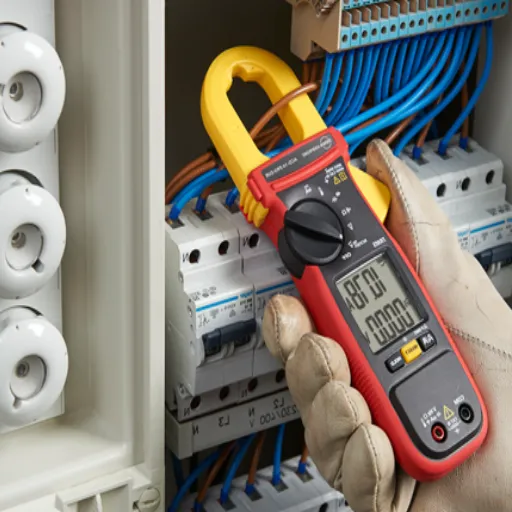
Before you ask for pricing, confirm that the supplier can actually build what you need. These four capabilities separate serious manufacturers from intermediaries.
Production Capacity and Facilities
A real manufacturer owns or directly controls production equipment. For electrical test equipment, look for SMT lines, assembly stations, functional test benches, burn-in areas, and packaging lines. For mechanical testing equipment, look for machining centers, fabrication areas, and load-frame assembly stations.
Ask for the current production capacity and the current order load. A factory running at 90% capacity may struggle to meet your delivery date, even if the price is right. Request facility photos or a virtual tour. If the supplier refuses, treat that as a signal.
Research and Development Capability
R&D matters even for standard products. Manufacturers with in-house engineers can adjust firmware and modify measurement ranges. They can also resolve field issues without sending every question to a subcontractor.
For OEM or private label buyers, R&D capability is essential. If you plan to customize logos, manuals, packaging, or specifications, you need a factory that can validate those changes internally. For a deeper look at building a branded test equipment line, read our guide to OEM test equipment.
Calibration and Traceability
Every test equipment manufacturer must prove that its own measurement instruments are accurate. Ask for a list of calibration equipment, calibration certificates, and accreditation to standards such as CNAS or ILAC. Check whether calibration stickers are current on the instruments used in final testing.
Without a traceable calibration, a manufacturer cannot guarantee that the units it ships meet specifications. This is one of the most common weaknesses found in lower-tier suppliers. For more details on calibration standards and best practices, see our article on test equipment calibration.
Quality Management System
ISO 9001 certification is the baseline for a credible manufacturer. It shows that the factory has documented processes for purchasing, production, inspection, and corrective action. However, a certificate on its own means little.
Verify it through the issuing body’s online registry. Ask to see quality manuals, internal audit records, and non-conformance reports from recent production runs.
A quality system should produce evidence, not just paperwork. Look for incoming quality control (IQC), in-process quality control (IPQC), final quality control (FQC), and outgoing quality control (OQC) checkpoints. Ask how the factory handles defective units. Ask what the typical defect rate is for products similar to yours.
Certifications and Compliance
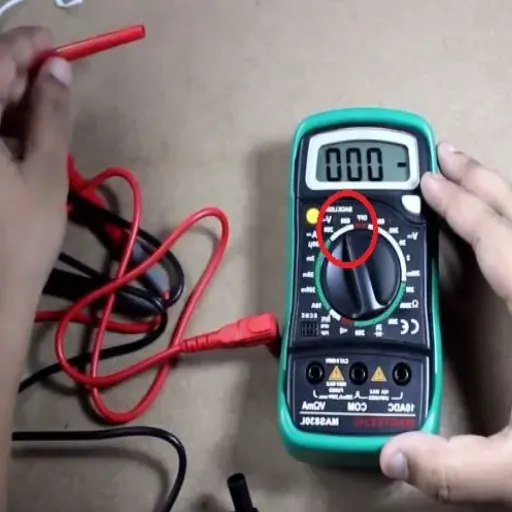
Certifications are where many buyers make expensive mistakes. A certificate image can be copied, edited, or borrowed from another product. Always verify, never assume.
ISO 9001 Quality Management
ISO 9001 is the most common quality management certification for test equipment manufacturers. It covers process control, document control, internal audits, management review, and continuous improvement. Request the certificate number and verify it on the registrar’s website. Check that the scope includes the specific product category you are buying, not just “trading” or “general manufacturing.”
CE Marking and EN/IEC Standards
CE marking is required for most electrical test equipment sold in the European Economic Area. For safety, electrical test equipment must comply with EN 61010-1 or IEC 61010-1. For electromagnetic compatibility, it must meet the EMC Directive. For products connected to mains voltage, the Low Voltage Directive also applies.
Ask for the Declaration of Conformity, test reports, and the notified body number if a third party was involved. Cross-check the report model numbers against the products you are ordering. A valid CE technical file should also include risk assessment, schematics, user manuals, and labeling drawings.
RoHS and REACH
RoHS restricts hazardous substances in electrical and electronic equipment. REACH regulates chemicals in products sold in the EU. These are not optional for most developed markets. Ask for material declarations or third-party test reports covering lead, cadmium, mercury, and other restricted substances.
Other Market-Specific Certifications
Depending on your target market, you may also need UL or cUL certification for North America, FCC for radio emissions, CCC for China, or ATEX/IECEx for hazardous environments. A qualified test equipment manufacturer will know which certifications apply to your product and market, and will have documentation ready before you ask.
Factory Audit Checklist for Test Equipment Suppliers
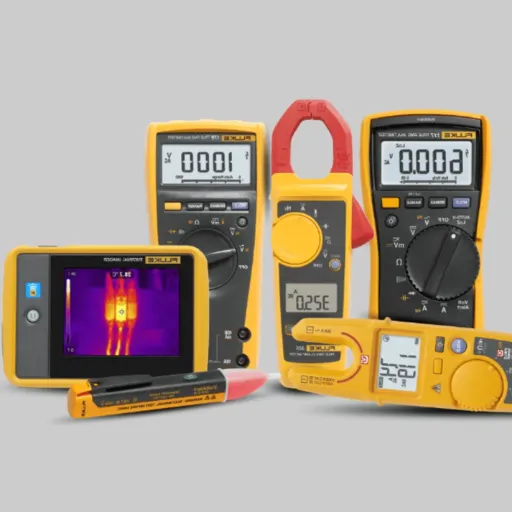
A factory audit is the most reliable way to confirm that a manufacturer matches its claims. You can conduct it in person, through a third-party inspection company, or as a structured virtual tour. The goal is to verify facts, not to be impressed by a showroom.
Legal and Business Verification
Confirm the business license, registered capital, business scope, and export license. The business scope should explicitly include the manufacturing of the product category you need. If it says “trading,” “sales,” or “import/export” without manufacturing, you are likely dealing with an intermediary.
Check the company’s ownership structure and how long it has been in business. A manufacturer with five or more years of export history is usually more stable than a newly registered trading company. Ask for bank references and major client references if possible.
Production and R&D Audit
Walk through the production floor in logical order. Start at incoming material storage, then component preparation, assembly, testing, and finished goods storage. Count the number of production lines and estimate daily output. Look at the age and condition of the equipment. A clean, organized floor usually reflects disciplined management.
Visit the engineering or R&D area. Ask how many engineers work there. Ask what software they use for design and firmware. Ask whether they can support custom specifications. For electronic test equipment, the presence of firmware developers is a strong positive signal.
Quality Control Process Audit
Review the quality manual and recent inspection records. Look for IQC records on incoming components, IPQC checklists during assembly, FQC reports on finished units, and OQC reports before shipment. Ask to see a rejected lot and how it was handled.
A factory that cannot show you recent non-conformance records is either hiding problems or not tracking them. Check whether the factory uses AQL sampling for final inspection. Ask whether inspectors are trained and independent from production. Ask for the defect rate and return rate over the last 12 months.
Calibration Lab Audit
Request a list of all measuring and test equipment used in production and final inspection. Each item should have a current calibration certificate from an accredited lab. Look for calibration stickers with the last and next calibration dates.
Ask how the factory handles instruments that are out of calibration. Ask whether products measured with them are re-inspected. For precision test equipment, measurement uncertainty should be documented. If the factory cannot explain uncertainty, its accuracy claims are questionable.
Facility and Safety Audit
Assess general housekeeping, 5S organization, fire safety, emergency exits, and ESD protection for electronic products. Look at the raw material and finished goods storage conditions.
Poor storage can lead to moisture damage, contamination, or mix-ups. Ask about environmental compliance, waste handling, and worker safety procedures.
Test Equipment Manufacturing Regions in China
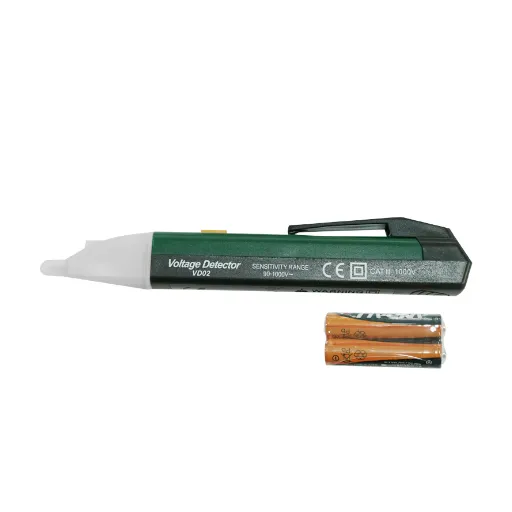
China’s test equipment manufacturing base is not uniform. Different regions specialize in different product types, and matching your needs to the right region improves your chances of finding a capable supplier.
Guangdong Province, Electronics and Handheld Instruments
Shenzhen, Dongguan, and Guangzhou form China’s largest cluster for electronics-integrated test equipment. This region produces digital multimeters, clamp meters, oscilloscopes, power supplies, electronic loads, and related accessories. The supply chain is dense, which supports fast prototyping and competitive costs.
Many Shenzhen suppliers are located near the Huaqiangbei electronics corridor. Some are pure manufacturers, while others are trading or integration companies. Verification is especially important here because the region has both world-class factories and fast-moving intermediaries.
Jiangsu and Shanghai, Precision and Benchtop Instruments
The Yangtze River Delta, particularly Suzhou, Wuxi, and Shanghai, specializes in higher-precision instruments, benchtop test equipment, and automated test systems. Companies such as RIGOL are headquartered in this region. If you need oscilloscopes, power analyzers, semiconductor test systems, or lab-grade equipment, this is the most logical region to source from.
Shandong and Zhejiang, Mechanical and Material Testing Equipment
For mechanical testing equipment such as tensile testers, hardness testers, torque testers, and environmental chambers, Shandong and Zhejiang have strong manufacturing bases. These regions also produce dimensional measuring tools and material testing accessories. Labor costs are often lower than in Guangdong or Shanghai, but lead times and export experience vary more widely.
Red Flags to Avoid
Some warning signs are strong enough to end the conversation. Watch for these common problems.
Fake or Expired Certificates
A certificate that cannot be verified on the issuing body’s website is worthless. Be suspicious of certificates with blurry logos, mismatched company names, or product scopes that do not match what you are buying. When in doubt, contact the certification body directly.
Refusal to Allow Audit or Visit
Any manufacturer with a real factory should be willing to host a visit or a third-party audit. Refusal, endless delays, or offers to meet only in a city office are classic signs of a trading company or a factory with serious problems.
No Calibration Capability or Records
If a test equipment manufacturer cannot show you its own calibration certificates, it cannot verify the accuracy of the products it ships. This is a non-starter for any instrument where measurement accuracy matters.
Business Scope Without Manufacturing
Check the business license scope on China’s National Enterprise Credit Information System. If the scope is limited to sales, trading, or import/export, the supplier is not a manufacturer, regardless of what its website claims.
Pressure for Full Upfront Payment
Reputable manufacturers typically accept reasonable payment terms such as a deposit with balance against shipping documents or after pre-shipment inspection. A demand for 100% payment before production is high risk, especially with a new supplier.
Questions to Ask Before Placing an Order
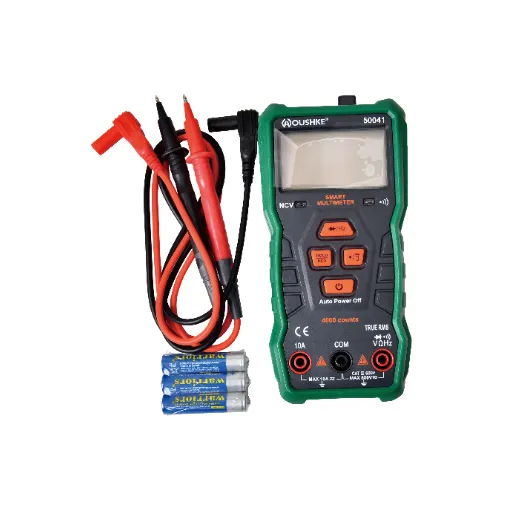
Use these questions to structure your supplier conversations and compare candidates consistently.
Pre-Qualification Questions
- What is your business license scope and registered capital?
- How many years have you been manufacturing and exporting test equipment?
- Which markets do you currently export to?
- Can you provide references from buyers in my region or industry?
- Are you the manufacturer, or do you work with subcontracted factories?
Technical and Quality Questions
- What is your ISO 9001 certificate number and issuing body?
- Which certifications do you hold for the specific model I need?
- Do you have in-house calibration equipment? What standards does it trace to?
- What is your typical defect rate and return rate?
- Can you provide pre-shipment inspection reports and sample approval records?
Commercial and Logistics Questions
- What is your standard MOQ and lead time?
- Can you support OEM, private label, or custom specifications?
- What are your payment terms?
- Do you provide export documentation, including certificates of origin and packing lists?
- How do you handle warranty claims and spare parts?
A sourcing specialist named David used this exact list when qualifying oscilloscope suppliers for a distributor client. One supplier answered every question confidently but could not provide a valid ISO 9001 registration number. Another sent a detailed factory video, current calibration certificates, and a signed quality agreement within 48 hours.
David’s client placed the trial order with the second supplier. The first shipment passed pre-shipment inspection with a 1.2% defect rate. The relationship scaled to a container order within nine months.
Conclusion
Choosing the right test equipment manufacturer is a process of verification, not just comparison shopping. The suppliers that perform best under scrutiny are the ones worth building a long-term relationship with.
Focus on production capability, quality systems, calibration traceability, and valid certifications. Use a structured factory audit to confirm what the website and sales materials promise. Match your product type to the right China manufacturing region. And never ignore red flags such as unverifiable certificates, refusal of audits, or demands for full upfront payment.
If you are sourcing test equipment for your business, start with a clear specification and a shortlist of verified manufacturers. Request samples, conduct audits, and verify documentation before committing to volume. A reliable test equipment manufacturer is not the cheapest option; it is the one that delivers consistent accuracy, compliant documentation, and a stable supply over time.
Looking for a verified test equipment manufacturer? Contact us for supplier verification support, factory audit assistance, or a sample quote. We can connect you with the right production capabilities and help you build a reliable test equipment supply chain.