
Flap Disc vs Grinding Wheel: Removal, Blending and Finish
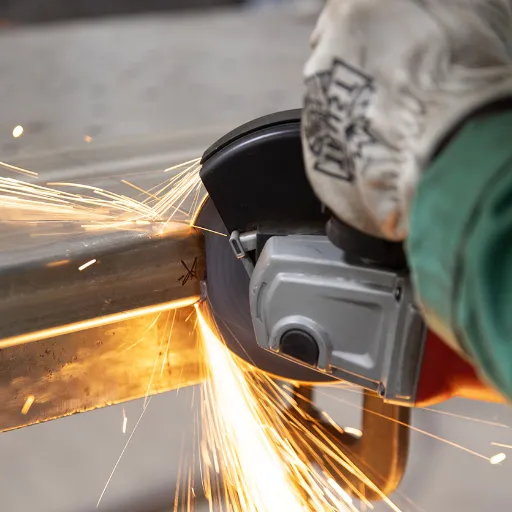
For flap disc vs grinding wheel selection, start with the amount of metal to remove and the surface you must leave. A suitable bonded wheel is a starting choice for heavy removal; a suitable flap disc can remove metal and blend the surface, sometimes within one operation.
A weld removed quickly can still leave a slow finishing job. Both kinds of abrasive may work on an angle grinder, but fitting the spindle doesn’t settle the choice. This guide compares their contact with the part, explains when to switch abrasives, and sets out the checks needed before buying.
Key Takeaways
- Compare removal and finishing together, using the same required finish.
- Flap discs can grind as well as blend; they are not limited to polishing.
- Similar diameters or shape numbers don’t establish a safe swap.
- Check the exact material, disc, mounting, guard and machine instructions.
Explore Oushike’s grinding and polishing options with your starting surface and required finish in mind.
Flap Disc vs Grinding Wheel: What Changes at the Workpiece?

Bonded abrasive versus overlapping coated flaps
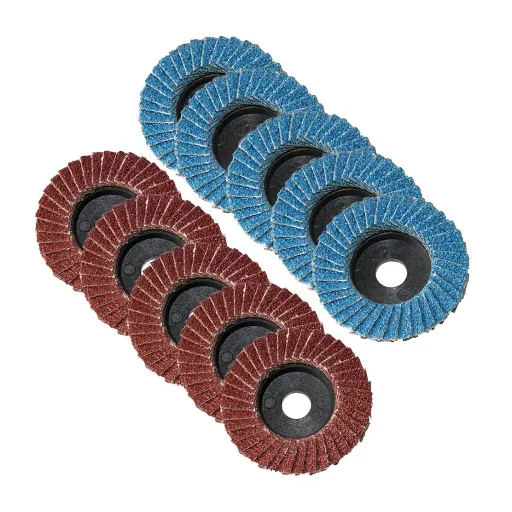
A bonded grinding wheel holds abrasive grains in a bonded body. A flap disc has coated abrasive cloth flaps on a backing plate. The flaps overlap. As Norton explains in its flap-disc selection guide, that construction affects how the tool contacts the surface and follows its shape.
In practice, flap disc vs grinding wheel choice comes down to contact and control. A rigid wheel suits many stock-removal tasks. Flaps can follow contours more readily and combine removal with blending. Neither description guarantees a particular result from every product sold under that family name.
Compare removal, profile and scratches together
| Selection point | Bonded grinding wheel | Flap disc |
|---|---|---|
| Construction | Abrasive within a bonded body | Coated abrasive flaps on a backing |
| Substantial removal | Often a starting candidate when approved | Some products also suit demanding removal |
| Contours and blending | May need a separate blending step | Flaps can help follow the part |
| Scratch finish | May leave scratches requiring further work | Depends on grit, grain and application |
| Wear check | Inspect according to wheel instructions | Inspect flaps and backing as instructed |
| Next operation | Assess whether blending is needed | Assess whether finer finishing is needed |
Read this flap disc vs grinding wheel table as a shortlist, not a product approval. Abrasive grain, grit, disc shape, backing and the actual machine can change how either candidate behaves. A flap disc isn’t automatically gentle, and a bonded wheel isn’t automatically the fastest route to a finished part.
Illustrative scenario: A buyer has a thick carbon-steel bracket with a large weld. The drawing defines what may be removed and what surface is acceptable. The buyer considers a suitable wheel for the first removal stage and a flap disc for blending, then asks whether an approved flap disc could meet both needs. No trial outcome is assumed.
For the other abrasive families, see our abrasive wheel selection guide. Here, grinding wheel means an appropriate portable-grinder product, not a bench wheel. Neither family becomes a cutting disc just because it shares a diameter with one.
Choose by Stock Removal, Part Geometry and the Required Finish
The flap disc vs grinding wheel question is what the part needs next. Write down its starting condition, the permitted removal and the required final surface. A flap disc vs grinding wheel request that says only “make it smooth” leaves the finish unclear.
Substantial welds and edge stock
For heavy removal, start the flap disc vs grinding wheel shortlist with an approved bonded wheel. That is a starting point rather than a rule that excludes flap discs. Some flap-disc products are intended for grinding applications, and their suitability depends on the material and the work involved.
Before leveling a weld, confirm that removal is allowed. Your quality lead must set the weld shape and size. An abrasive guide can’t decide that. Don’t use a flush appearance as the default rule for accepting the part for every welded joint.
Blending visible contours
For blending a visible curve, flap disc vs grinding wheel selection puts surface control ahead of removal alone. Its flaps don’t make gouging impossible. An aggressive grit or contact near a hard backing can still leave damage that needs further work.
| Starting condition | Candidate to assess | Why consider it? | Limitation and next check |
|---|---|---|---|
| Substantial weld or edge stock | Approved grinding wheel | Focus on first removal stage | Confirm allowable stock and later finish |
| Weld needs leveling and blending | Suitable flap disc or two-product sequence | Compare total work | Inspect scratches at the same endpoint |
| Visible curve or transition | Suitable flap disc | More flexible contact | Confirm profile control on a trial part |
| Thin or heat-sensitive part | Exact approved product | Requires close process control | Check material and application guidance |
| Stainless or nonferrous work | Material-approved abrasive | Suitability varies by product | Check exact specification and contamination requirements |
Stop at the required finish
Rough leveling, a blended appearance, coating preparation and polishing are different endpoints. In flap disc vs grinding wheel selection, name the one you actually need. Fine scratches alone don’t prove that a surface is ready for coating. Nor do they prove a mirror finish.
On the bracket example, stop and inspect before the removal stage reaches the limit set by the drawing. Then decide whether blending is needed. Don’t keep grinding merely to use up the disc or make every area look identical.
A meaningful flap disc vs grinding wheel comparison includes the work needed after the first removal stage. Coarse scratches may require another stage; paint should not be assumed to hide them. Ask whoever accepts the part to define the finish before comparing abrasive options.
Flap Disc vs Grinding Wheel: Plan the Removal-to-Finish Sequence

When two abrasives are worth considering
In flap disc vs grinding wheel planning, consider a wheel followed by a flap disc for removal and blending. Use the first product only within its approved application, then assess the remaining stock and scratches before changing tools. The switch point is a part requirement, not a universal number of passes.
This flap disc vs grinding wheel decision should account for changeovers as well as cutting time. A fast first stage may still leave more finishing work. Conversely, asking a finishing-oriented product to remove all the starting stock may be a poor match for the task.
Illustrative scenario: A curved fabrication needs a blended visible surface after leveling. The fabricator compares wheel-plus-flap and suitable flap-only sequences on similar trial areas. The checks include contour, scratches and remaining stock. The example describes what to inspect; it doesn’t claim a measured time saving or an approved process.
When one flap disc may be enough
For flap disc vs grinding wheel trials, a suitable flap disc may grind and blend to the required surface. That possibility doesn’t mean it will also polish the part. A separate finer abrasive or other finishing stage may remain necessary, depending on the required finish.
Keep grit progression tied to scratch removal. Starting too coarse can create extra work later; starting too fine can make the first removal stage inefficient. Avoid turning a grit number into a guaranteed roughness value. Inspect a trial surface like the actual part rather than approving the finish from the package alone.
Compare a defined task instead of declaring a winner
Norton’s Right Angle Grinding Abrasives: Know Your Options, by application engineer Jeremy Spencer, gives a useful bounded example. Its ceramic grinding wheel removed a specified 2 × 1/2 × 1/4-inch weld in 25 seconds; a tested ceramic 36-grit flap disc also took 25 seconds.
That maker’s example challenges the claim that a wheel must always remove a weld faster. It is not an Oushike test, a ranking for all jobs, or a forecast for your part. The flap disc vs grinding wheel result depends on the named products and test task.
For selection background, the following manufacturer video is Weiler’s Choosing the Right Flap Disc. Use it alongside the exact product instructions, rather than as approval for a particular disc-machine combination.
Keep the flap disc vs grinding wheel comparison open until both options reach the same accepted condition. Timing rough removal alone answers only part of the buying question.
Check Material, Grinder Compatibility and Disc Condition
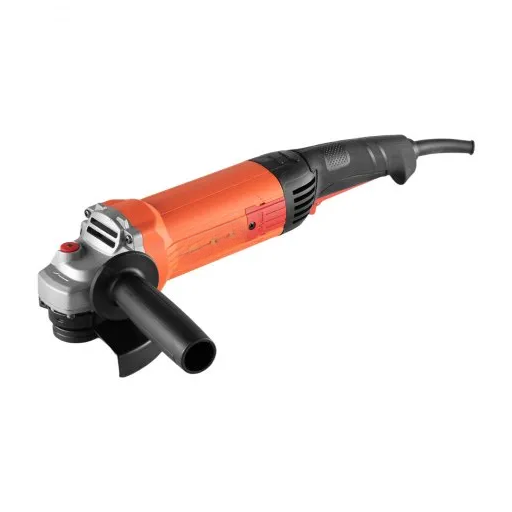
A flap disc vs grinding wheel choice is useful only after you know the disc and grinder work together. A disc can fit the spindle while being wrong for the material, allowed task, guard or speed. Compare the product label and instructions with the exact machine manual.
Check the product and machine together
Confirm these fields before use or substitution:
- Exact workpiece material and approved abrasive use.
- Disc diameter, bore or thread, and specified mounting components.
- Machine model, approved accessory type and required guard.
- Disc top speed rating and the machine’s specified free/no-load speed.
- Permitted working surface, working angle and inspection requirements.
The disc rating must cover the machine speed stated in its manual. Don’t assume a lower dial setting cures a mismatch. Our angle grinder range can help identify equipment, but a collection page doesn’t replace the manual for your model.
Follow the exact angle and pressure instructions
Don’t transfer an angle range from a bonded wheel to a flap disc, or average guidance from different manufacturers. Flap disc vs grinding wheel checks also need the instructions for the exact flat or cone-shaped style. A Type 27 marking alone doesn’t establish the allowed task across abrasive families.
Norton’s flap-disc safety guidance covers guards, inspection and allowed use. Keep required guards and safety gear in place. Reject damaged products according to the maker’s instructions; missing flaps or backing damage are not reasons to improvise repairs.
Diagnose poor cutting without unsafe revival tricks
| Symptom | Checks before continuing |
|---|---|
| Loss of cut with abrasive remaining | Product choice, material, condition and instructed technique |
| Loaded or glazed-looking face | Material approval and maker’s troubleshooting guidance |
| Uneven edge wear | Contact area, condition and approved working angle |
| Heat or discoloration | Process suitability, material requirements and inspection |
| Deep scratches or gouges | Grit, contact, remaining stock and finish sequence |
These checks keep flap disc vs grinding wheel troubleshooting grounded in the product. A symptom alone doesn’t prove its cause. Stop and obtain guidance where condition or suitability is uncertain; don’t prescribe more force as a universal remedy.
Avoid burning flaps, improvised dressing or trimming a generic backing. Only follow operations expressly allowed for the exact product. Likewise, don’t infer stainless or aluminum suitability from colour, a broad family name or an unrelated disc’s label.
Compare Accepted Parts and Write a Clear Buying Request
Use the same acceptance endpoint
For purchasing, flap disc vs grinding wheel comparison should follow the part through its required finish. A low disc price says little if that option leaves another operation or repeated rework. Use parts with the same starting condition. Set one rule for accepting the finish.
Illustrative scenario: A distributor is choosing between wheel-plus-flap and flap-only options for a customer’s fabrication task. The distributor and customer plan what to record in a trial before they order. Both sequences must reach the same accepted surface. No elapsed times, disc life figures or savings are invented for this example.
A practical trial record can contain:
| Record field | Purpose |
|---|---|
| Exact product reference and specification | Identify what was actually compared |
| Material and starting geometry | Keep the removal task comparable |
| Machine and approved setup | Identify equipment differences |
| Removal and blending time separately | Show where work is spent |
| Changeovers and disc use | Capture work beyond the first removal stage |
| Accepted, reworked or rejected condition | Keep the finish requirement visible |
This is a suggested buying record, not a test standard or a performed experiment. Record exceptions, too. If one area starts with less stock, its shorter time should not be treated as proof of a better abrasive.
For a product inquiry, contact Oushike with the workpiece material, starting weld or stock, accepted finish and exact grinder details. Ask about suitable available options rather than requesting the “best disc” without defining the job.
Make the shortlist comparable
Keep these fields beside each offer:
- Grain and grit.
- Flat or conical style.
- Backing and density, where specified.
- Dimensions, mounting and maximum speed.
- Permitted use for the exact item offered.
The broader abrasive wheels and discs collection helps frame the product family; the individual specification must settle suitability.
Your flap disc vs grinding wheel request should identify whether you are comparing an initial-removal tool, a blending tool or a complete sequence. Separate product identity from the finish requirement. Matching grit numbers alone doesn’t mean two products will behave alike.
Ask before approving a substitute
A flap disc vs grinding wheel substitute with a changed grain, shape, backing or mount needs a fresh check. Recheck the replacement against the task and machine instead of carrying approval across from a similar product name. Keep the proposed substitute’s full reference with the original requirement.
Use the flap disc vs grinding wheel trial record to ask specific questions about differences. If the finish is unacceptable, describe the scratches, profile or remaining work rather than declaring that an entire abrasive family failed. That gives a supplier a clearer basis for discussing another candidate.
Questions About Choosing Flap Discs and Grinding Wheels
Can a flap disc remove a weld, or is it only for finishing?
A suitable flap disc can remove weld metal as well as blend a surface. How well it cuts depends on the exact product, metal and job. Check that grinding is an allowed use and that weld removal is allowed by the part requirements. Don’t assume all flap discs are finishing-only products.
Is a grinding wheel always faster than a flap disc?
No universal speed rule settles flap disc vs grinding wheel selection. Suitable bonded wheels are candidates for heavy removal, but maker’s examples show overlap with flap discs. Compare approved products on the same starting task, then include blending and changeovers through the same accepted finish. Don’t generalize from one test.
Can one flap disc both grind and finish a part?
Sometimes, if the product is suitable and its resulting surface meets the requirement. Grinding and blending in one operation doesn’t guarantee polishing or an approved coating profile. Inspect the finished trial surface against a defined requirement; add a separate finishing stage when needed rather than relying on the grit label.
Why does a flap disc stop cutting while abrasive remains?
Remaining abrasive doesn’t establish usable cutting performance. Check material suitability, loading or glazing, disc condition and the instructed contact technique. Appearance alone can’t establish the cause. Follow the manufacturer’s troubleshooting and replacement guidance; don’t burn, force or improvise a dressing operation to revive an unsuitable or damaged product.
Is matching diameter or Type 27 enough to prove a safe swap?
No. A flap disc vs grinding wheel swap needs the exact product and machine checks, including allowed use, material, mounting, guard and speed. A shape number or matching diameter answers only part of that comparison. Obtain missing instructions before approval instead of borrowing details from a similar-looking disc.
Choose the sequence for the required result
Start with stock, geometry and the accepted surface. Shortlist suitable products, verify compatibility, then compare complete sequences. A wheel may suit the first removal stage; a flap disc may handle blending or both stages. The useful flap disc vs grinding wheel answer is the one supported by your task and accepted trial condition.
For your next inquiry, send Oushike the material, removal task, required surface and grinder details. Include the exact products being considered and the questions still open before ordering.