
Budget Hand Tools vs Professional Grade: Is It Worth It?
In finding the most appropriate tools that can efficiently get the job done, people usually have to decide between budget tools and those of top quality. It is a common puzzle among DIYers, hobbyists, and professionals. Do cheap tools deliver as much as necessary and if not, are more expensive professional tools reasonably priced? This topic delves into the most essential differences in the tools’ categories considering issues like endurance, environmental rating, pricing, and scale of the job. Eventually you learn whether going for the upscale tools is the best approach or simply going on with low quality alternatives. If at the moment, you are taking care of some minor projects at home or if you have really synchronised great professional activities, this manual will expose you to which of the two is appropriate concerning the matter in hand.
Understanding Hand Tools and Their Categories
One can distinguish hand tools according to many criteria, e.g., their function or structure, and this in turn helps determine where they can be used and for what purpose. These include such areas as destroying tools (e.g., saws and knives), securing tools (e.g., screwdrivers and wrenches), damaging tools (e.g., hammers and mallets), and gauging devices (e.g., tape measures and levels). Every type is new, come to yourself, tries to provide the purpose goals, and is often constructed in a way that makes it suitable for endless other dull and great work. It is almost impossible to do the wrong thing if you know how the tools you are using are classified.
Definition of Hand Tools
Hand tools are unmotorised tools used to work, which do not require any electrical or pneumatic power. Hand tools range from cutting, shaping, fastening, and gauging tools like chisels, pliers, screwdrivers and tapes. The new innovations in materials and ergonomics has also improved the quality, longevity, and ease at which the user can utilize the tools leading to tools that are not only strong but also are light and usable in various activities. For instance, high-carbon steel and composite materials are some of the materials used to enhance wear resistance and the life of a tool, presence of grips of such tools also presents carrying form operator fatigue. These devices are extremely important to construction, manufacturing, and carpentry as well as to trivial repairs conducted around the house; hence their necessity is acknowledged even in professional domestic usage environments.
Overview of Professional Grade Tools
Professional use tools are developed with the prominent durability, superiority cut and production qualities in view of service needs. As a first illustration, using sophisticated raw materials and technology would be most useful development of cobalt chrome which is a combination of chemicals metals and cobalt. Heat-treatment treatments comply with hardening premium the base and also increase wear resistance of the tools meaning that even when subjected to demanding conditions, there is a less chance of deformation or cracking of the tools. Extreme stress ratios can be reached without breakage or deformations with such weighty tools which are already modified for the better.
One more thing to consider about high-end equipment is their ergonomic design which shod reduces the strain and improve the comfort of the person using them from periods of time. Their handle and weight balance will hardly ever involve slipping, due to the anti-slip grips present among such tools. Components like power switch overhead connection allow decrease in the serious disadvantages such as operator’s fatigue or the inability to hold a precise copy. More features are included in these machines such that even with the addition of tighter tolerances and precision machining, fine detail and cyclic actions in the applications give very accurate results.
Characteristics of Budget Hand Tools
- Material Composition: Cheap tools frequently utilise mild steel or alloy of low quality which decreases the overall toughness and wear resistance. Tools made of such materials, for example, carbon steel, are prone to rust if not handled well.
- Build Quality: There are usually far fewer precision requirements regarding quality of these tools leading to a lower expectation of absolute precision. This may not affect the use of such tools for instance just carrying out casual activities or projects but may cause additional wear to the tools for more drill-intensive applications or more creative activities due to elimination of centering.
- Grip and Ergonomics: Majority of the lower cost tools come with plain plastic or rubber grips at the handles unlike top range types with the handles well contoured to fit the hands allowing users to have the grip for extended periods without any strain.
- Longevity: Low cost tools although lighter in construction and utilizing alternate materials are also designed to sustain for a certain amount of life, which is less if compared to high end tools. For example, if a cutter is used frequently, the cutting tips will wear out quickly, and also the joint will loosen.
- Cost Efficiency: There are many benefits of purchasing budget hand tools and the most significant benefit is that they are cheap. Their low cost makes them a viable option for people who do not use the tools often as well as for tasks where the use of expensive tools is not necessary.
- Warranty Limitations: It is often the case that economic dollar tools come with few to zero guarantees, which represent a trade-off in relation to the cost as well as the extent of protection. A particular widget may come with a warranty of only 90 days instead of the lifetime warranty that some other expensive models have in place.
Comparing Key Factors: Budget vs Professional Tools
- Durability and Longevity: Professional equipment is built from top-notch constituents, mostly out of hardened or reinfored steel ensuring stability in tough usage and handling conditions. This is a more durable approach as regards the DIY items. Since the inexpensive equipment is usually more susceptibe to wear and doesn’t last long.
- Performance: It is presumable that designs of professional tools possess the ability to aim and release, and thereby, quite appropriate for a specially designed task or a task that can be repeated in a regular fashion. With respect to non-professional-standard tools, a lot of them work well enough for use in household and occasional business venture applications, but fall short of what one exactly needs.
- Initial Investment vs Long-Term Cost: Despite the fact that professional tools require a higher capital outlay, the economics of owning one in terms of sustainability and effectiveness are generally favorable. Conversely, budget tools are cheap in the initial phase but will cost a lot to maintain following frequent breakages.
- User Experience: While using tools, comfort and ergonomics also play a role in increasing productivity, for instance, using professional design tools that are well-made and allow for long and comfortable usage without fatigue. It is worth noting that cheap tools are unlikely to have the necessary ergonomics making it impossible for the user to use them for any long periods.
Differences Between Budget and Professional Tools
| Parameter | Budget Tools | Professional Tools |
|---|---|---|
| Cost | Lower initial cost | Higher initial investment |
| Durability | Susceptible to wear and tear | Designed for longevity |
| Material Quality | Basic or cheaper materials | High-grade, durable materials |
| Performance | May lack precision and consistent output | Consistently high performance |
| Ergonomics | Limited or no ergonomic design | Prioritizes user comfort and efficiency |
| Maintenance | May require frequent maintenance | Minimal maintenance required |
| Warranty | Short or no warranty | Long-term warranty |
| Suitability | Best for occasional or light use | Ideal for intensive, professional use |
| Features | Fewer or basic features | Advanced features and functionalities |
| Upfront Value | Saves money in the short term | Better value over time |
Cost Analysis: Cheap vs Expensive Tools
Moreover, when carrying out a comparison of cheap tools and expensive alternatives, performance as well as durability are very critical. Such is the case with cheap tools, which usually use greater quality materials like plastics or very low-grade steels or other impractical alloys, hence quickly deteriorating under extended use. In contrast, for the construction sector, this is different. Professional tools always make use of highly resistant process such as advanced composites and steel with high hardness which extends their life significantly even in very harsh conditions.
Take the low-cost drill bit as an illustration: within a few uses, sometimes heat treatment was done the wrong way, which caused the cutting power to be decreased, on the other hand, a premium quality drill bit has appropriate heat resistance characteristics and engineering tolerances with which it remains sharp for a very long time. Also, it is typical for the high-quality products to be checked meticulously at several stages of production to guarantee consistency in performance over a range of functions as opposed to the more basic varieties. High-cost tools are expensive, not just because of the initial outlay for purchase, but also because of ways to keep costs down in the end by not having to replace or repair the equipment often, which will be very beneficial to those professionals who have to work on high or precision tasks.
Durability: Quality Hand Tools vs Cheap Ones
In assessing the lifespan of high-quality professional tools compared to low-cost ones, specific issues must be considered, such as the type of materials resorted to, the manufacturing process as well as the intended objective of the tool. The expensive categories of hand tools are usually made using efficient materials capable of performing well and excel in most cases. This is thanks to the choice of high-performance materials like chromoly vanadium w. or forged steel and carbon steel that possess excellent tensile strength and resilience to wear and rust. Such working equipment is well cured which helps to change its hardness.
On the other hand, budget tools are usually constructed from cheap materials, so they face issues like cracking and corrosion with time. These budget options are susceptible to breaking, especially under heavy-duty or repetitive use, and even with reduced damage. Researchers assert that the more expensive form of DIY tools especially hand controlled, is said to last nearly twice as long as ones which are cheaper hence decreasing the cost of replacements as well. As far as professional labor or advanced amateurs are concerned, durability concerning very good tools definitely tends to enhance the financial economy of the tools over time, notwithstanding their safety and productive performance. Hence, such kinds of tools that are useful in operations should be willingly invested in.
When to Choose Budget Hand Tools
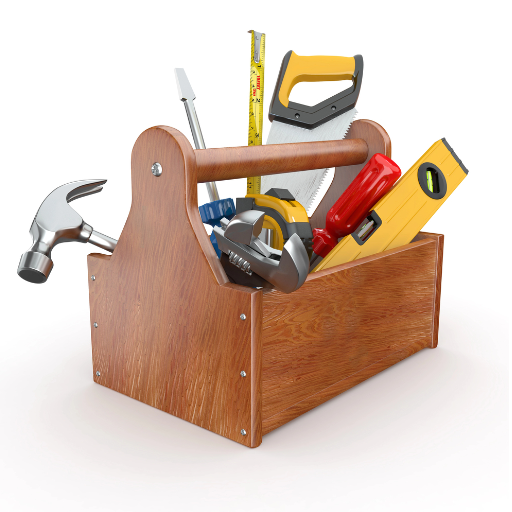
In cases where one needs to conduct quick or casual repairs, and there’s no need to buy high-quality tools, then opting for simple or cheap ones could be logical. For example, an individual may have basic handy jobs, light beddings within the garden or other stress-free situations which require some tools and in such cases, he or she can turn to budgetary available options. In addition, because of the minimal usage, budget tools are great for new endeavors or hobbies where an individual does not necessarily want to procure substantial and expensive equipment, at least at first. However, it is essential to ensure these tools meet modern safety standards and are of acceptable quality even when they are cheap.
DIY Projects and Occasional Use
There are a lot of people who like to engage in inspirit of DIY activity or work with tools from time to time. Therefore, it goes without saying that the choice of tools should be wider when it comes to multifunctionality, resistance or durability. So, for tools designed for average utilisation levels made infrequently it makes sense to strike a balance between cost and quality so that excess costs do not stand in the way of completing work guaranteed for maximum levels utilization. Popular industry studies have identified the need to employ certain materials such as high carbon steel or alloys in the manufacture of parts that perform under high usage. Besides, practical relevance can be even more accentuated through the use of tools that do not mostly bring about stress during use such as repetitive types. Moreover, going for goods which come with spare parts or manufacturer guarantees eases a great deal of the problems, making it easy to address once in a while or what can be called hobby needs.
Evaluating Good Value: Cost vs Quality
Determining the optimal balance between price and quality is essential for successful procurement, more so when it comes to procurements concerning tools and equipment. Quality tools are usually expensive, but the long-term performance and reliability of the products can justify the high acquisition costs by reducing replacement and maintenance costs corresponding with them. The products made from high-grade materials like high-carbon steel or advanced composites for instance are much more durable than products made from the standard cheaper materials. This is as goods made through the modern methods of production, like workshops for precision measurements or heat treatment as an example causes improvement on the strength and durability after a period.
In contrast it may be that what you opt for is much cheaper but it generally can’t be used for doing anything serious. The assessment of such things as the brand popularity, user opinion and after sales conditions is necessary to measure value. It’s also worth considering the technical features of the item in question as well as the technical requirements and limitations since they do help in making a balanced judgement. When these factors are given the necessary priority, consumer choice can be made better appreciated and skills identified, processing the systems that have been acquired and used will be done flawlessly and efficiently and with affordable but effective systems.
Best Budget Tool Sets for Homeowners
During the process of trying to identify a suitable home DIY applicable budget tool set for example, there lurk a good number of benevolent and pocket friendly products available in the market. The BLACK+DECKER 20V MAX Cordless Drill & Home Tool Kit is one of economy as it offers a mixture of more hand tools and a battery operated drill. Intended primarily for light home repair works, this collection incorporates advanced materials with more-naked tools for less fatigue and discomfort when using them.
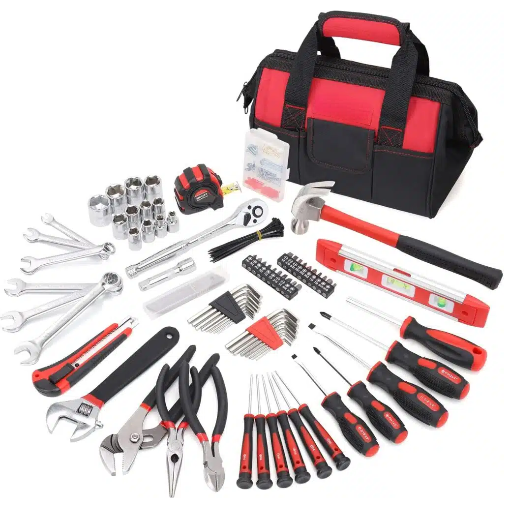
DEKOPRO 168-Piece Tool Set is another cost-effective option that comes with a compartmentalized and durable box made from molded plastic for easy storage and transportation of sizeable number of tools. For instance, it is made up of very sturdy tools made of chrome vanadium steel which guarantees a long period of usage, even when handled very roughly, these tools are very useful for household repairs and people who enjoy doing it themselves.
If you are a homeowner looking for a very small, affordably priced, and yet compact toolkit, know that it will take you more of this Cartman 39-Piece Toolkit. It has all the basic tools present and accounted for in it, and these include bits for screwdriver, hammer, and pliers. Suitable for small house repairs and other quick fixes. Also, this toolbox set is specifically for house maintenance, and as such, it is equipped with all devices that are good for repairing a home. Every piece of equipment in the set complies with ANSI requirements, demonstrating its durability and reliability.
When Professionals Should Invest in High-End Tools
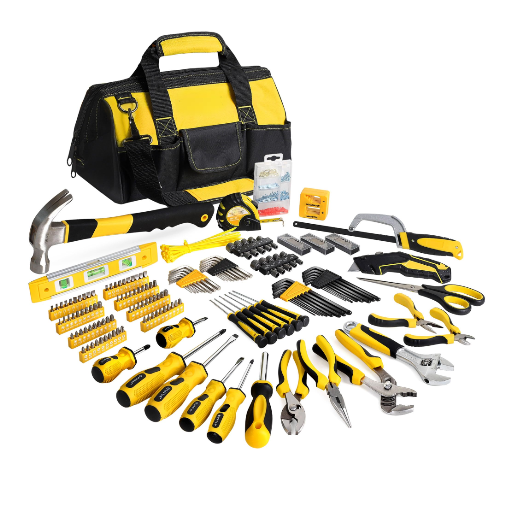
High end tools are imperative investment for any professional who values durability, precision and robustness in their occupation. Firstly, high end tools are fought for their toughness and ability to combat frequent use and unfavorable conditions hence they ensure no breakdowns that could be critical to the on going projects. In fields that are craft oriented like construction, automotives and electrical installations, the use of premium tools helps meet the needed standards of both accuracy and performance without any complications.
Cost is always a big issue for many manufacturers as they also come with extra benefits, such as the trade-in warranty. High end tools are relatively economical to operate because the insurers offer extended warranties. Costs may rise initially but increased productivity, reduction of repairs and quality of the end product are some of the reasons to justify the costs especially to those who use the tools every day in their work.
Long-Term Investment: Why Quality Matters
Quality tools which are quality tested and crafted in a workmanlike manner, guarantee more excellence over their lower-quality versions, which makes them very much popular in industries that demands consistency in performance for long periods. An instance to be taken for this condition is that there are studies that show that the high value materials used in the upper grade tool materials like the vanadium steel and chromium alloys can take care of higher torques and wear better as compared to the normal or usual material. This, by the way, helps the tools not be replaced soon. and therefore ultimately resulting in less expenses being incurred in both the replacement of tools and the other costs associated with their use.
This concise engineering allows for tolerance to be reduced, which is especially important for such areas as aircraft industry, automotive sector, and medical apparatuses. In addition, professionals now have tools equipped with more intelligent power evenly distributed across their handles which further increase efficiency preventing mistakes and reducing products waste. And the list of these technological benefits does not end there since they help in enhancing performance which links to strategic cost management, which furthers the cause of build safety and inventive skills and why these aspects are crucial for any penetration of professional or firm in any specific field of business.
Specific Scenarios Requiring Professional Tools
- Precision Manufacturing
Sectors such as aviation, car engineering, or electronics rely on sophisticated equipment in order to adhere to the highest level of quality or safety. In this connection, for instance, there is a need to use micrometer-calibrated components when crafting parts with precision down to 0.001 inches so that they can be fitted into and work properly in high-energy systems. Such equipment is extremely crucial, for instance, in the market of production of turbines and blades, where even a minor deviation in geometry may well be a cause of a malfunction. - Medical Device Production
The development of medical equipment, including implants and similar surgical equipment, cannot be conducted without exceptional precision and cleanliness. When it comes to medical equipment, the most professional tools are used in sterile environments, and they are made of such materials that as titanium or surgical steel which contribute to ensuring the quality and safety of these appliances. Such stringent demands are important especially when talking of satisfying such governing institutions as FDA and ISO 13485 in how specialized tools are intrinsically connected to patient care. - Advanced Research Laboratories
Advanced tools are also needed for conducting research and experiments in such organizations as the use of electron microscopy or the development of nanoobject replication methods. Such tools include spectrophotometers and micro-manipulators, which aid in the detection and manipulation of substances on a molecular and even an atomic scale, with lots of detail. In such experiments, the quality of the instruments has to be of very high standards to conduct any tests or even to conduct any kind of work meaning that the tools play a crucial role in the field of science. - High-Stakes Construction Projects
With the development of such facilities as bridges, skyscrapers and energy generation plants, there are requirements on the use of tools aimed to safeguard the site and also ensure that safety and soundness of the structure are maintained. For height measurements, weight calculations and geomorphic analysis, laser levellers, hydraulic torques and ground penetrators including others are paramount. Various tasks are equally related to the reduction of construction risks and ensuring compliance with the accepted standards of engineering.
Assessing the Value of Expensive Tools
Assets such as those that have such higher costs in the construction work and civil engineering projects are valuable for the advantages and benefits that can be appreciated but there are consequences that and that some come with limitations. A machine or a high-technical robot arm may be described as wasting costs but offers a simple task for the purpose of completing the specific construction tasks, specifically developed in precision measuring and control of the processes, automation with emphasis on reducing human errors. The use of automated welding, for instance, has been able to improve the quality of the bond, thus increasing the productivity and decreasing expensive reworks as well as late completion of the job.
Furthermore, such tools are expected to minimize operational maintenance costs in the future since they come with improved performance in the sense that they are modeled on special resilient materials that enable their use within various harsh working conditions. Moreover, with the readiness to couple them to a number of digital utilities on construction processes, such as Building Information Modelling (BIM) facility, it becomes possible to synchronise complications in a timely manner and enhance the overall progress and quality of the project.
Making the Right Choice Between Budget and Professional Tools
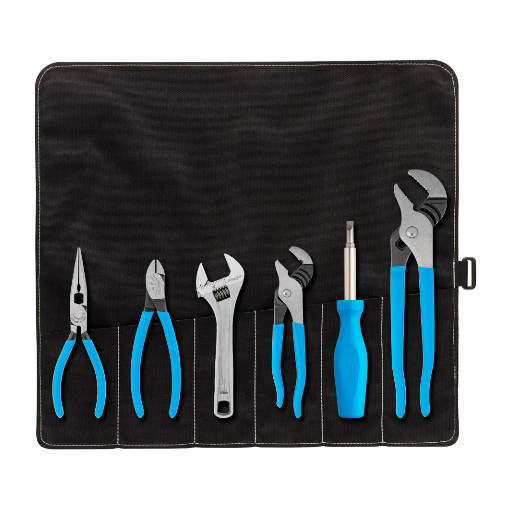
- Project Requirements: Analyze the requirements of the work in terms of its complexity and size. For complex and demanding works, it is usually necessary to use specialized tools with advanced and improved properties, while cheaper but effective tools are used where works are less complex.
- Frequency of Use: If the tools are to be constantly used or for a long time, it is wise to choose professional-grade tools since they can withstand abuse and guarantee steady outcomes rather than the contrary.
- Long-Term Costs: There are costs and long term costs that are attached to the purchase of the professional tools. The purchase of professional tools often requires more than just the purchase price of the tool. The budget tools may require more frequent replacement.
- Safety and Compliance: Professional tools also help to ensure safety and other aspects of safety and compliance with strict safety and other rules in the relevant industries are followed when they are used.
- Available Resources: Aligning the decision with the available resources and budget is essential. However, a revaluation of each option should be carried out according to the factors of efficiency, productivity and longevity.
By using the structure and details given above in making a decision, you will be able to come up with the best choice according to your constraints in cost but one that performs better in terms of meeting your objectives.
Assessing Your Needs and Budget
When it comes to procuring certain tools or services other than cost, all stakeholders must communicate well in order to make the best decision. First, identify the main needs – such as features, location and scope of the activity. For example, if the technology is to be used in a busy environment, consider all aspects of scalability and integration in order to ensure that the technology meets its intended purpose without affecting the performance of the equipment. In contrast, for minor purposes, some flexibility is provided in the range of choices, permitting the use of technologies that lacks certain high-end aspects albeit at a reduced price.
Nevertheless, budgetary control is more specific and includes both the total initial outlay as well as the total cost of ownership (TCO) of an item. These costs comprise those associated with preventive and corrective maintenance, incase potential upgrades are needed in future as well as man power development costs. Allow data trends and industrial analysis so as to gauge the product pricing and constructively analyze in regards to long term benefits in the light of competing products. It is also a good idea to invest in projects that have been shown to last and be flexible as they tend to generate more returns and reduce the costs of replacing them in the future. This integrative approach seeks to apportion appropriate assets for both the instant mission specific aims and future expansion objectives.
Final Recommendations: Balancing Quality and Cost
When appraising choices, research must work along with the recent marketing scenarios to assure the decisions are based on evidence that can be trusted and relied upon. The trends analysis helps in keeping abreast with the industry dynamics and determining where such features as good performance products adapt well to changing requirements. It is a crucial activity to involve cost-benefit analyses which also consider factors like cycle unit costs, support costs, and scalability. Such ideas allow companies to creatively strike a balance between quality and pricing and as a result be able to do business effectively without bearing so high expenditure that it makes the firm unsustainable.
Reference Sources
- “Tools for Simulation; Low Budget and No Budget”
Source - A Student’s Guide to Buying Tools
Link to source
Frequently Asked Questions (FAQs)
Are power tools worth it compared to budget hand tools?
Power tools are time-saving. It is well-known, working with these tools can ease down the strain in heavy work, but for the sake of infrequent use, less-expensive and inbuilding-drivers from brick-and-mortar store may also be sufficient. The top construction timeframe with use of most power tools, namely DeWalt, Milwaukee or Bosch tools, promises lasting use and high satisfaction. Lower-grade power tools might seem like a good option. However, in most cases, spending money on such equipment will cost more in the long run since it will need updated or even replaced on numerous occasions.
What should I consider when choosing a tool brand for my first socket set?
The decision on which tool brand to settle on is dictated by both the pocket and purpose of procurement. Brands such as Craftsman, Tekton, Husky, or Harbor Freight tool sets are fit for those people who only engage in DIY once in a while while for those who are more serious on the operations they work on, they are fit for professionals. In all fairness to those who yearn for the lure of low prices, it should be noted that there is an interesting segment in this field—the middle one. To illustrate, Craftsman or Tekton sockets can serve as the bridge between one that is too costly and unreliable and another that is low cost.
Are pliers from cheaper brands usable for light home projects?
Consumer reports coping with common needs like fixing around the house or performing occasional tasks might need to use low-cost pliers although they may regret the absence of soft grips and strong jaws such as those available with more professional Klein or Knipex products. This can be quite harsh on them as they force themselves to buy best quality devices from accredited stores Harbor Freight and Ryobi have a deal where their budget products are good enough for once-in-a-while scenarios but when compared to branded tools they are not good enough products. Most users would therefore opt for those that they would regularly and become useful tools in the long run.
Does investing in a good tool like Snap-on improve daily workflow?
These tools will work better for professionals since they are usually more reliable, precise, and longer-lasting—all factors contributing to better quality of work and saved time. There is also a portion of increased costs upon acquisition for these tools that, for many technicians, is returned through their extensive arrangements, and spare parts are a standard practice for the users of these tools. Despite that, if all you mostly need from a professional mechanical hand tool is nut tightening or bolt loosening, there are cheap tools from Craftsman and Tekton.