

Circular Saw Blade Tooth Count: Choosing Teeth by Diameter, Material and Cut
Choose circular saw blade tooth count after confirming the saw, blade diameter, work material and type of cut. Then compare the tooth counts offered for that application: more teeth alone do not establish a better blade or a compatible replacement.
A label such as 24T or 40T is useful only with the rest of the specification. Bosch, for example, lists both counts at the same 184 mm diameter, with different cutting-result descriptions. This guide explains how to read such comparisons and turn them into a clear selection brief.
Key takeaways
- Compare tooth counts within a compatible diameter and application family.
- Total teeth and tooth spacing are different: the same count means different spacing on different diameters.
- Material, cut direction and required edge finish guide the choice; tooth geometry also matters.
- A matching count does not confirm bore, speed rating or machine suitability.
- Record the complete blade reference before requesting or approving a replacement.
Start with the saw, diameter and material
Before comparing teeth, identify the exact saw model and its blade requirements. Record the permitted outer diameter, bore or arbor interface, blade speed rating and intended material. A blade that fails those requirements should leave the shortlist before its tooth count enters the discussion.
Check kerf and plate requirements too, including any riving-knife requirements stated in the saw instructions. Kerf means the width of the cut; plate thickness describes the blade body. Neither dimension can be inferred from the number of teeth.
Next, describe the work. Cutting along solid-wood grain, crosscutting timber and trimming a visible plywood edge are different selection tasks. Include material thickness and the required finish rather than asking only for a blade with “more teeth.”
Norton’s saw blade teeth guide also treats material, machine, size and cut as linked selection questions. Use that sequence before applying a general fewer-teeth or more-teeth rule.
For a broader view of blade families and materials, use our saw blade selection guide. Keep the machine details beside you while narrowing the choice here.
What circular saw blade tooth count tells you
Total teeth are different from TPI
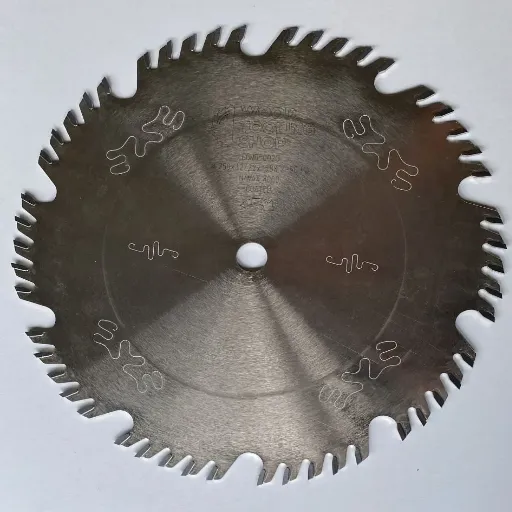
On circular-blade specifications, a number followed by T or Z commonly identifies the total tooth count around the blade. In the Bosch examples below, 24 means 24 teeth around that particular blade.
Teeth per inch, or TPI, describes spacing over a length. Do not transfer a linear-blade TPI recommendation directly into a circular-blade total count. Read the unit and the manufacturer’s own specification fields.
Fewer and more teeth involve a tradeoff
Within an appropriate blade family, fewer teeth generally favor chip clearance and cutting progress, while more teeth generally favor a finer finish. The spaces between teeth, called gullets, help carry chips away. Their shape and size matter alongside the count; a number on its own does not describe the whole cutting edge.
Norton’s guide explains the general relationship between tooth number and finish. Treat it as a selection principle, not a guaranteed cutting speed or surface-quality result for every blade.
Diameter changes the meaning of the number
A 24-tooth blade has the same total number of teeth whether it is 160 mm or 184 mm in diameter. The larger circle has a longer circumference, so its average spacing around the circumference is greater.
As a simple geometric illustration:
Average circumferential pitch ≈ π × blade diameter ÷ total teeth
This explains why comparing counts across diameters can mislead. It is not a formula for choosing a replacement, calculating feed rate or predicting chip capacity. Actual tooth and gullet geometry still need to come from the product specification.
Compare circular saw blade tooth count within the same diameter
The following examples come from Bosch’s Expert for Wood range for corded handheld saws, checked on October 22, 2026. They illustrate how to compare catalog entries; they do not establish suitability for an unspecified saw.
| Bosch part number | Diameter | Bore | Teeth | Listed cutting result | Hook angle |
|---|---|---|---|---|---|
| 2608644041 | 184 mm | 30 mm | 24 | Coarse | 15° |
| 2608644042 | 184 mm | 30 mm | 40 | Fine | 15° |
| 2608644013 | 160 mm | 20 mm | 24 | Coarse | 15° |
| 2608644015 | 160 mm | 20 mm | 48 | Fine | 5° |
At 184 mm, the 24-tooth and 40-tooth options share the listed bore and hook angle, while Bosch describes their cutting results differently. That is a useful comparison for a buyer seeking a different finish within this specific range.
At 160 mm, moving from the listed 24-tooth option to the 48-tooth option also changes the hook angle. Hook angle describes the tooth’s forward or backward orientation. This pair shows why a finish difference cannot always be attributed to tooth count alone.
These are catalog specifications, not results from an Oushke cutting test. The table also does not imply that matching diameter and bore completes the compatibility check.
How should you compare 24T, 40T and 60T?
First ask whether those options exist for your permitted diameter, machine and material. Then compare the manufacturer’s intended cut and finish for each candidate.
The 184 mm pair above supports a specific 24T-versus-40T comparison. It provides no basis for adding a 60T option or treating 24T, 40T and 60T as universal rough, general and finish grades across all sizes.
Illustrative scenario: A buyer has a documented 184 mm wood-cutting application and wants a finer edge. The Bosch pair gives that buyer a reason to investigate the listed 40T option rather than ordering another 24T blade automatically. Approval still depends on the exact saw and complete blade specification.
Match teeth and geometry to the material and cut
Use the job description to choose an application family, then compare the available counts. The matrix below is a selection checklist, not a universal tooth-count chart.
| Task | Selection priority | What to verify before choosing teeth |
|---|---|---|
| Rip solid wood along the grain | A blade documented for ripping | Wood type, thickness, machine suitability and intended cut |
| Crosscut solid wood | The required crosscut finish | Crosscut application, geometry and the maker’s finish designation |
| Cut plywood or veneered panels | The visible surface and edge requirement | Approval for that panel construction and the stated finish |
| Cut laminate or other surface-sensitive board | A documented material-specific blade | Exact surface/core material and machine application |
| Cut non-ferrous metal or plastic | Explicit blade and machine approval | Exact material, section and operating instructions |
Solid wood: distinguish ripping from crosscutting
For a long cut along the grain, start with a blade described for ripping that material. For a crosscut with a visible edge, start with the required finish and the manufacturer’s crosscut options. Avoid selecting solely because a count is higher than the one already fitted.
A general-purpose blade may be worth considering when its documentation covers the intended work. The label must still describe your application; “general purpose” does not mean every material or every machine.
Plywood, veneer and laminate: describe the surface
“Plywood” is an incomplete buying specification when the edge or face must remain visible. State the panel thickness, surface construction and finish requirement, then check that the blade is intended for that work.
Do not prescribe 60 or 80 teeth for every plywood job regardless of diameter. Tooth geometry and the manufacturer’s panel application matter as well. ATB means alternate top bevel; TCG means triple-chip grind. These describe tooth forms, not total counts or universal material approvals.
Metal and plastic: select a documented specialty application
A higher tooth count does not turn a wood blade into a metal-cutting blade. The material must be permitted by both the blade and the machine documentation.
For a separate example, Bosch’s PRO Multi Material range for corded mitre saws lists part 2608642201 at 254 mm with 80 teeth, TCG geometry and a -5° hook angle. Its machine family and geometry belong with the count whenever the example is discussed. It is not a recommendation to fit an 80T blade to any wood saw or to cut any metal.
Current catalogs also separate these decisions. Freud’s GB downloads directory labels its portable-machine product finder release 09.2026; the guide groups blades by materials and machine types. Use that application structure when reading a catalog, rather than assuming a count transfers between groups.
Why more teeth may not solve a poor cut
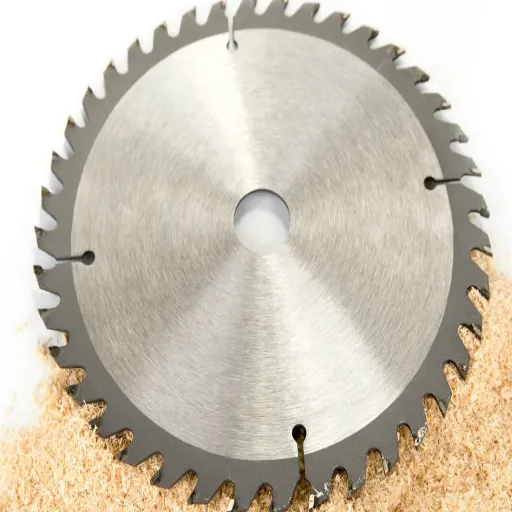
Before buying another blade, identify what is wrong with the cut. A rough edge, damaged surface or burning does not by itself establish that the tooth count is wrong.
Review the candidate blade’s documented application, its condition, work support and the machine setup against the relevant instructions. Keep operating adjustments specific to the saw and blade. There is no single feed rate or setup change that follows from the tooth count alone.
Illustrative scenario: A workshop wants to replace a blade because a veneered panel edge is unacceptable. Ordering the highest available count skips the key question: is that blade documented for the panel and machine? A better purchase brief names the surface and desired finish, then requests a suitable product reference for comparison.
This approach also makes troubleshooting more useful. Record the material, current blade reference and observed defect so that any proposed replacement addresses a defined problem.
Record a complete blade specification before ordering
Use this checklist for a replacement inquiry or an internal purchase request:
| Field | Details to record |
|---|---|
| Saw | Manufacturer and exact model |
| Dimensions and interface | Permitted diameter, bore/arbor details and mounting requirements |
| Speed | Saw speed and required blade speed rating |
| Workpiece | Material, thickness and relevant surface or coating |
| Cut | Rip, crosscut or another documented operation |
| Finish | Visible-edge requirement or the specific defect to address |
| Candidate blade | Maker, part number, tooth count, grind and stated application |
| Other compatibility details | Kerf, plate and applicable riving-knife requirements |
| Documentation | Relevant saw instructions and blade specification |
Keep the product reference with the count. “40 teeth” is too incomplete for a purchase approval; a defined blade reference and application give the buyer something concrete to verify.
For the next sourcing step, our circular saw blade supplier guide covers the broader purchasing discussion. Distributors preparing larger orders can also consult the wholesale saw blade buying guide after resolving the application specification.
When contacting Oushke, send the saw model, permitted dimensions, material, thickness and required cut finish through our inquiry form. Include a candidate part number or blade specification when available, and identify any compatibility point that still needs confirmation.
Frequently asked questions
Is a higher tooth count always better?
No. It may favor a finer finish within a suitable blade family, but the application, diameter and geometry still matter. A higher count cannot correct an incompatible blade specification.
Is a 40-tooth blade better than a 24-tooth blade?
It depends on the work. In the Bosch 184 mm pair above, the 40T entry is listed as fine and the 24T entry as coarse. Use that as a range-specific comparison, not a rule for every blade size or material.
How many teeth should a circular saw blade have for plywood?
Choose from blades documented for the panel construction, permitted diameter and desired finish. There is no single count that applies to every plywood thickness, surface and saw.
Why does diameter matter if the tooth count is the same?
At the same total count, a larger circumference means greater average circumferential spacing. That geometric difference is one reason to compare blades within a defined size rather than transferring a count between diameters.
Does a matching tooth count mean a replacement fits?
No. Confirm the complete machine and blade requirements, including diameter, mounting interface, speed rating, intended material and any kerf or plate restrictions. Tooth count helps choose among suitable blades; it does not establish suitability by itself.