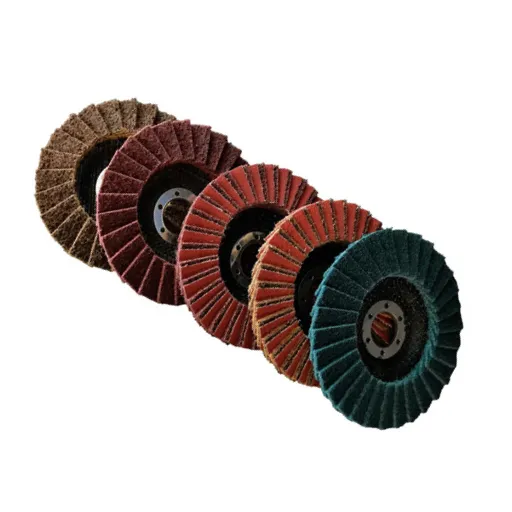


Grinding Wheel Markings Explained: Dimensions, Abrasive Codes and Maximum Speed
Grinding wheel markings identify the wheel’s size, abrasive code, speed limit and use restrictions. Read those fields together, then compare them with the exact machine manual before accepting a replacement.
A number such as 60 can describe grit; 22.23 can describe a bore. Neither answers whether the wheel is approved for your machine. If you’re comparing supplier photos, separating these fields is the first job. This guide explains the reading order, walks through maker examples, and ends with a record you can use for an inquiry.
Illustrative scenario: A buyer receives a clear photograph of an abrasive code, but the speed limit is outside the frame. The buyer asks for the complete label before approving the item. A readable code has answered only part of the question.
Key Takeaways
- Read dimensions, shape and intended task separately from the abrasive code.
- Grit describes grain size; grade describes how firmly the wheel holds its grains.
- Match the machine speed against the wheel’s marked maximum, with the machine at or below that limit.
- Resolve missing fields with the maker; don’t infer them from colour or appearance.
Preparing a sourcing request? Send your wheel label and machine details, together with the material and intended operation, so your inquiry identifies the product you need.
Grinding Wheel Markings: Identify the Wheel, Task and Dimensions
Start with the whole label. Group grinding wheel markings by the question they answer:
- Which product? Record the maker, product name and batch.
- What size and shape? Copy the type and all dimensions, with units.
- Which abrasive? Keep the full code and its maker’s key.
- What limits? Record maximum speed, allowed task and use restrictions.
Copy each field into a separate line. The longest code is only one part of the label.
Separate Shape from Abrasive Specification
New RegiSton’s maker reference distinguishes a Type27 depressed-centre wheel from a Type1 flat wheel. These shape designations answer a different question from the abrasive letters and numbers. They don’t replace the product guide for the allowed working surface or task.
When browsing abrasive wheels and discs, compare the actual product description with the label. A shared category or similar photograph doesn’t prove the same use. Keep wheel type, cutting or grinding duty, and mounting setup visible in your comparison.
Read Diameter, Thickness and Bore in Their Stated Units
For the conventional examples below, dimensions follow D × T × H: outside diameter, wheel thickness and hole diameter. New RegiSton’s indication guide supplies both examples in millimetres.
| Manufacturer example | Outside diameter | Thickness | Hole diameter |
|---|---|---|---|
| 180 × 6 × 22 | 180 mm | 6 mm | 22 mm |
| 205 × 19 × 25.4 | 205 mm | 19 mm | 25.4 mm |
These are reference examples, not ratings for Oushike products. Read the units printed on your own wheel; don’t silently round a bore dimension or substitute a listed catalogue size. Matching the outside diameter leaves thickness, mounting and speed unresolved.
For purchasing records, preserve the full dimension string and the unit. If a quotation drops the final number, ask whether the bore has been omitted. A photograph with a ruler can help describe an item, but it doesn’t supply missing maker data.
Recognize When a Different Code Chart Is Needed
Conventional bonded wheels and diamond or cubic boron nitride (CBN) wheels can use different code systems. A model number on a superabrasive wheel may require its maker’s catalogue. Don’t force every letter into the conventional table below.
Grinding wheel markings are most useful when tied to a known maker and product. Keep the maker and product name with the grinding wheel markings in your record. That record gives the supplier a way to find the right documentation instead of reading a lone number from a worn wheel.
Grinding Wheel Markings: Decode Abrasive, Grit, Grade, Structure and Bond
Read a standard wheel code by position. Grinding wheel markings may place an abrasive designation before the grit, then grade, structure and bond. Prefixes, omitted fields and maker suffixes mean that a universal letter-by-letter translation can be misleading.
Work Through a Manufacturer Example
New RegiSton’s first example separates the abrasive code into A, 36, P, an omitted structure field, BF and classified code 3. Its second separates WA, 60, K, 7, V and classified code 1. Keep these grinding wheel markings as separate fields. Shape, size and maximum speed sit elsewhere on the label.
| Field | First example | Second example | What to establish |
|---|---|---|---|
| Abrasive | A | WA | Maker’s abrasive designation |
| Grit | 36 | 60 | Grain size designation |
| Grade | P | K | How firmly grains are held |
| Structure | Not indicated | 7 | Maker’s stated spacing/structure |
| Bond | BF | V | Bond type |
| Classified code | 3 | 1 | Maker’s own product code |
This layout makes grinding wheel markings easier to read without pretending every wheel follows identical syntax. The final 3 in the first example is not a thickness or a grit. Its position matters.
Abrasive and Grit Are Different Fields
In conventional abrasive positions, A commonly denotes aluminum oxide and C silicon carbide. Maker prefixes can identify more specific abrasive variants. Preserve the full designation, including WA or other prefixes, when requesting an equivalent.
Grit identifies grain size. Within the relevant grading system, a higher grit number indicates finer abrasive. It doesn’t by itself promise a surface finish, removal rate or compatibility with a material. Those decisions need the whole wheel code and task details.
In grinding wheel markings, grit 60 belongs to a different field from a 60 mm dimension or part-number suffix. Check the separators and maker key before comparing two numbers. A larger-looking number elsewhere on the label may have no relationship to grit.
Grade Is Holding Power, Not Grain Hardness
Grade describes the wheel’s ability to retain its abrasive grains. It isn’t the hardness of the abrasive mineral, and it isn’t another way of writing grit. Letters such as J, K or P must be interpreted within the maker’s system.
Norton’s technical explanation of wheel codes makes the cross-brand limitation clear: identical grade letters don’t guarantee identical behaviour between brands. Use Norton’s grinding wheel basics for the distinction between grain, grade, structure and bond.
Illustrative scenario: Two quotations both show a J-grade wheel. The buyer records each maker’s full wheel details and asks for application guidance. The shared letter alone cannot settle whether the products are interchangeable. No trial result or performance equivalence has been established.
For a short supplemental explanation of grit, Norton Abrasives EMEA provides this video:
Manufacturer explanation of grit size; it does not approve a particular wheel-machine combination.
Structure and Bond Need Their Own Key
Structure describes grain spacing and the wheel’s open or dense arrangement. A larger stated structure number can indicate more open spacing within the maker’s system. If grinding wheel markings omit structure, don’t fill the gap with an assumed number. New RegiSton’s depressed-centre example has no structure indication.
V denotes vitrified bond in these examples; B denotes resinoid, and BF identifies reinforced resinoid in conventional bond notation. Position remains decisive: a letter used in an abrasive designation need not mean what it means in the bond field. Maker suffixes also need that maker’s key.
Once identified, use the intended task to navigate grinding and polishing products. Ask for the exact maker code when a prefix, suffix or missing field remains unclear; don’t convert a partial code into an equivalence claim.
Compare Maximum RPM and Peripheral Speed with the Machine

The speed in grinding wheel markings is a limit. It isn’t a target that every suitable machine must reach. The machine’s operating speed must not exceed the wheel’s marked maximum, and the other compatibility checks still apply.
RPM and m/s Describe Different Quantities
Revolutions per minute (RPM) describes rotation. Metres per second (m/s) describes speed at the wheel’s circumference. Diameter connects the two, so the same speed at the rim doesn’t mean two wheel sizes have the same RPM limit.
For an explanation using diameter in millimetres, the relationship is:
Peripheral speed (m/s) = π × diameter (mm) × RPM ÷ 60,000
A hypothetical 125 mm wheel at 12,000 RPM has a calculated speed at the rim of about 78.5 m/s. This sum explains the units. It isn’t a rated limit, and it doesn’t authorize a wheel to run at that speed. Use the rated limit in the grinding wheel markings and the maker’s instructions for the real product.
New RegiSton’s two reference examples show 72 m/s and 33 m/s respectively. These are limits for those examples, not general limits for every depressed-centre or flat wheel. Copy the speed from your exact product when recording grinding wheel markings.
Compare the Correct Limits
Norton’s machine maintenance guidance says that machine speed must not exceed the wheel’s maximum speed. Its guidance also addresses checking machine speed when mounting or remounting a wheel. Use the exact machine manual and the required speed check procedure.
Illustrative scenario: A wheel’s bore matches the machine, but its marked maximum RPM is below the machine’s speed. The buyer sets it aside for clarification. A matching bore doesn’t cure the speed mismatch, and a test run isn’t a way to approve it.
Check the Machine Beyond Its Name
The angle grinder range helps identify equipment families, but a category page isn’t the manual for your exact model. Confirm the machine model, permitted wheel dimensions, wheel type, guard and mounting components from its instructions.
On a variable-speed machine, don’t assume a guessed setting resolves a mismatch. Follow the maker’s rules for wheel type and speed. Grinding wheel markings cannot establish the condition of a guard, the right flanges or how well a machine controls its speed.
Keep the wheel rating and machine speed in separate columns. Write their units beside them. If the comparison needs a guess, leave approval open and obtain the missing records.
Read Restrictions, Traceability and Date Information
Grinding wheel markings also show limits and identity. Read symbols and warnings with the maker’s instructions, including limits on working surface or task.
Permitted Surfaces and Restrictions Govern Use
A shape number is not permission to use every face of the wheel. New RegiSton’s reference explains that working surfaces differ by wheel shape. Check what the specific product allows; don’t derive a mounting direction or side-grinding permission from the placement of a decorative label.
A standard reference or quality symbol also doesn’t replace the use instructions. Record the exact marking if you need proof. Don’t turn an unfamiliar symbol into a claim about certification, fitness for a material or approval for all machines.
Keep Manufacturer and Batch Identity
Record the maker, product reference and batch with the grinding wheel markings that describe the abrasive. These fields serve different purposes from dimensions and maximum speed. They help the supplier identify which records apply when grinding wheel markings conflict with a quote or box label.
For a receiving note, distinguish “speed field cropped from photo” from “speed field absent on product.” The first calls for another photograph; the second calls for maker clarification. Neither justifies copying a rating from a similar-looking item.
Norton’s Date Policy Has a Defined Scope
Norton’s US labelling policy describes a phase-in of “Best If Used By” marking by November 2025 for the organic-bond products it names. It specifies three years from manufacture and an MM/YYYY format.
This policy applies to the named products and market. It is not a three-year expiry rule for every abrasive wheel. Ask the maker about an unclear date or batch code. A date alone cannot show that a wheel is fit for use or free from damage.
For broader task and material decisions after identification, consult the abrasive wheel selection guide. Keep detailed storage and service-life questions separate from decoding a label.
A Buyer’s Checklist for Unclear or Conflicting Markings

Use grinding wheel markings to build a product record before comparing prices or approving a substitute. The aim is to identify what you know, where it came from, and what still needs an answer. Keep photographs and copied fields together.
Record the Full Label and Machine Identity
| Record | Read or obtain from | If unclear |
|---|---|---|
| Maker, product and batch | Full label and packaging | Request traceable product records |
| Type, dimensions and units | Wheel indication and datasheet | Request the exact size and bore details |
| Abrasive, grit, grade, structure, bond | Code plus maker’s key | Preserve the string; ask for its interpretation |
| Maximum speed and units | Wheel label/instructions | Don’t infer a rating from another wheel |
| Permitted task and restrictions | Product instructions | Request the allowed operation and working surface |
| Machine model and accessory limits | Nameplate and exact manual | Obtain the relevant manual before comparison |
Grinding wheel markings and the supplier’s description should refer to the same item. If they disagree, name the field that conflicts in writing. Ask whether the quote describes another model. Don’t merge two sets of details into an item that the maker never offered.
Resolve Missing Information Before Approval
Return to the cropped-photo scenario: the useful next step is a complete label image. If the missing speed cannot be recovered, an abrasive code alone doesn’t supply it. A similar colour, bore or catalogue picture cannot close that gap.
Separate product identity from wheel condition, too. Decoding grinding wheel markings doesn’t inspect a wheel for damage or replace the handling and inspection procedures required for it. Keep those checks in the receiving and use process even when every field is readable.
For your next inquiry, send a full wheel-label photo, machine model, workpiece material and intended task. Include the field that needs an answer and any proposed substitute’s full wheel details. That gives the discussion a defined starting point without assuming that matching one code makes the replacement suitable.
Frequently Asked Questions
What Does A 24 R BF Mean on a Grinding Wheel?
In a standard wheel code, A commonly identifies aluminum oxide, 24 is the grit, R is the grade, and BF denotes reinforced resinoid bond. Confirm that interpretation against the maker’s code key. These grinding wheel markings don’t state all dimensions, permitted operations or maximum speed; read the remaining label fields separately.
Is Wheel Grade the Same as Grit or Abrasive Hardness?
No. Grit describes grain size, while grade describes how firmly the wheel holds its abrasive grains. Abrasive hardness concerns the grain material itself. Grinding wheel markings keep these concepts in separate fields. Don’t compare a grade letter directly with a grit number or treat either as a complete finish specification.
Can Two Brands with the Same Code Be Interchanged?
A matching code alone doesn’t prove that two wheels can replace each other. Manufacturers can use their own abrasive variants, grade characteristics and suffixes. Compare the full wheel details, dimensions, speed limits and allowed uses against the machine manual. Ask each maker about any proposed substitution; don’t assume matching grinding wheel markings prove the same results or fit.
Is the RPM Marking the Same as m/s?
No. RPM measures rotations per minute; m/s measures peripheral speed. Wheel diameter connects them, so different diameters can have different RPM limits at the same peripheral speed. The relationship explains grinding wheel markings, but a calculation doesn’t replace the actual rated maximum or give permission to mount a wheel.
What Should I Do If the Wheel Label Is Unreadable?
Hold the wheel out of use while you seek known maker records and follow the applicable inspection procedure. A missing speed or application field cannot be worked out from colour, apparent grit or a similar catalogue photo. Recover grinding wheel markings from traceable records where possible; don’t approve an unidentified wheel by guesswork.