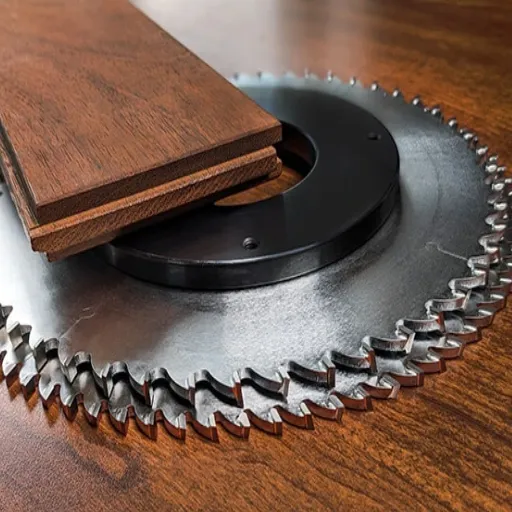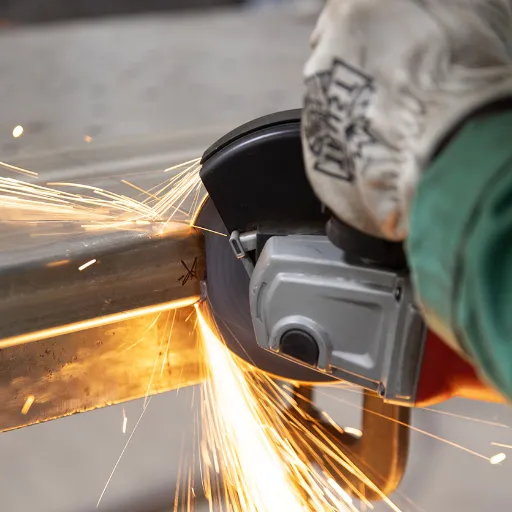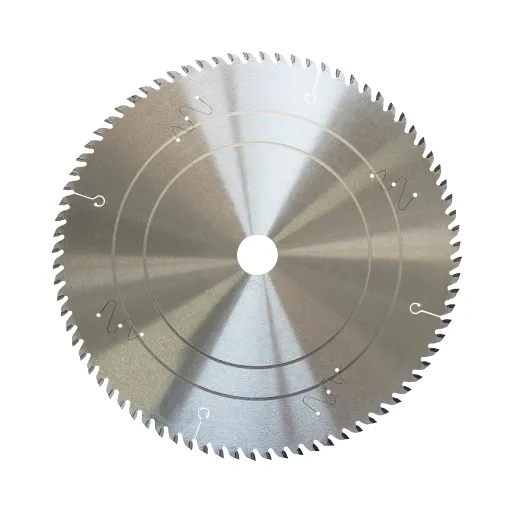


Cutting Disc vs Grinding Disc: Intended Use, Wheel Shape and Machine Checks
A cutting disc separates material; a grinding disc removes surface stock. In a cutting disc vs grinding disc comparison, the decisive detail is the task approved for the exact wheel, followed by its fit and allowed use with the grinder.
Two discs can look alike and fit the same spindle while having different allowed uses. If you’re buying for a workshop or distributor, a diameter and photograph leave too much unanswered. This guide connects the task, wheel instructions and machine checks so you can prepare clear order details.
Illustrative scenario: A buyer receives a photo of a disc beside a steel bar. Before comparing offers, the buyer requests the full label and asks whether the job is parting the bar or removing a weld.
Key Takeaways
- Choose the task before choosing the wheel shape.
- Don’t use a dedicated cutting wheel for side grinding.
- Combination use needs explicit approval for that product.
- Match dimensions, speed, mounting parts and guard to the machine manuals.
For a product inquiry, send Oushke the intended task, wheel label and exact grinder model.
Cutting Disc vs Grinding Disc: Compare the Intended Operation

Cutting disc vs grinding disc: what does the job remove?
Cutting creates a separation through the workpiece. Grinding removes stock from a surface, such as excess weld metal. Finishing can be a further task with its own surface requirement. Treat these as separate jobs when you describe the purchase, even when they occur on the same part.
The cutting disc vs grinding disc decision starts before grit, brand or price. Ask whether you need two pieces from one bar, a reduced weld profile, or a surface ready for another process. Those answers establish what the abrasive must do; they don’t yet name an approved item.
Compare the allowed working surface
| Buying question | Dedicated cutting disc | Grinding disc |
|---|---|---|
| Intended result | Parting or cutting through material | Removing surface stock |
| Working contact | Peripheral cutting edge as instructed | Grinding surface and contact specified by the maker |
| Side grinding | Not an approved substitute for a grinding wheel | Only within the wheel’s stated grinding applications |
| First document to request | Exact cutting-wheel label and manuals | Exact grinding-wheel label and manuals |
| Remaining checks | Material, dimensions, speed, mounting and guard | Material, dimensions, speed, mounting and guard |
A cutting disc vs grinding disc table is a starting filter. It cannot turn a product photograph into permission to use its side, and it cannot approve a wheel for a particular machine. A supplier’s description should lead you to the item number and manuals that resolve those questions.
Separate task selection from technique
For cutting disc vs grinding disc identification, thinness is a clue; it does not prove allowed use. Don’t press the side of a dedicated cutting wheel against a surface to remove a burr. Conversely, don’t assume a wheel sold for grinding may cut simply because its edge can contact the workpiece.
With cutting disc vs grinding disc selection, shared spindle fit does not establish a shared working surface. Changing from cutting to weld cleanup may need a different wheel and guard. Check both in the manuals before work starts.
Use the broader abrasive wheel selection guide for the wider buying context. Keep the current comparison focused on bonded discs for portable angle grinders; bench wheels, diamond blades and flap discs have different selection questions.
Write a task statement such as “part carbon-steel bar, then remove excess weld on a separate joint.” It gives the supplier two defined tasks to address instead of an ambiguous request for a metal disc.
Cutting Disc vs Grinding Disc: Wheel Shapes and Combination Products
Flat and depressed-centre profiles
A flat wheel and a depressed-centre wheel differ in profile around the mounting area. That geometry helps name the product family, but it doesn’t establish every allowed task. Avoid a purchasing rule that treats every flat disc as cutting-only and every depressed-centre disc as grinding-only.
For cutting disc vs grinding disc identification, read the maker, item number, stated uses and restrictions together. If the label is damaged or unreadable, request the matching documents rather than choosing by resemblance to another item. A catalogue illustration may cover a family containing different sizes or applications.
Why a type number needs context
Type designations appear in wheel catalogues and machine manuals, but a number alone doesn’t replace the statement of use. Record the exact designation used by the wheel maker and check it against the machine manual. Don’t silently translate between regional naming systems from a generic chart.
The cutting disc vs grinding disc distinction becomes clearer when an actual product is named. Norton’s Metal A AO Type 27 grinding and cutting wheel explicitly covers cut-off, notching and light side grinding. Its listed thickness is 1/8 inch. This documented combination product shows why a shape-only rule can fail.
That approval belongs to the named product and its manuals. It doesn’t extend to every Type 27 wheel, every wheel of the same thickness, or an unidentified disc with a similar centre. The allowed contact and machine arrangement still need checking for the selected item.
Ask what “cut-and-grind” actually covers
Illustrative scenario: Two depressed-centre offers arrive for a mixed job. One identifies an exact combination product and supplies its use guidance. The other says only “multipurpose.” The buyer holds the second offer for clarification rather than treating the descriptions as equivalent.
This is a cutting disc vs grinding disc document gap before it’s a price comparison. Ask the supplier to name:
- The tasks the wheel maker allows.
- The limits that apply to each task.
- The machine, guard and mount that support those tasks.
A broad sales label cannot answer these questions.
When browsing the cutting disc range, use the category to locate candidates. Then identify the individual product. Category membership is useful navigation; the item label and manuals provide the evidence of allowed use. Keep the document reference with the order so a later substitute can be checked against the same needs.
Check Disc and Machine Compatibility Before Ordering
The cutting disc vs grinding disc choice is incomplete until the selected wheel and machine have been checked together. Bosch Professional’s application guidance covers wheel size, speed, inspection and guards suited to the task. Use the exact machine manual for the final pairing.
1. Identify the machine and isolate its power
Record the complete grinder model and its manual reference. A product-family name or battery voltage doesn’t give all wheel limits. Before inspection, adjustment or a wheel change, disconnect the plug or remove the battery pack as the manuals require.
If you’re comparing machines in the angle grinder range, obtain the specifications for the actual model. Don’t transfer a dimension or speed from a visually similar tool. The same discipline applies when replacing an old workshop machine with a newer version.
2. Match dimensions and mounting interface
Read outside diameter, thickness and bore or mounting interface from the exact wheel information. Check each against the machine’s allowed wheels and mounting hardware. Bore size and spindle thread mean different things in a cutting disc vs grinding disc check; a matching number in an offer may refer to the wrong one.
In cutting disc vs grinding disc purchasing, “it fits” is an incomplete acceptance statement. Don’t force a wheel onto a mount, alter its hole, or improvise an adapter. Follow the selected machine’s manuals for the flange, nut or dedicated mounting system. This guide does not prescribe a universal flange direction.
3. Compare speed ratings explicitly
Record the wheel’s maximum operating speed and the grinder’s rated speed. The wheel’s allowed speed must not be lower than the grinder rating. Keep the units visible; an RPM entry and a peripheral-speed entry cannot simply be compared as bare numbers.
Don’t assume a speed dial resolves an otherwise unapproved pairing. Check the machine manuals and wheel requirements. If either rating is unreadable or its meaning is unclear, stop the comparison and ask the maker to resolve it before selection.
4. Verify the guard, hardware and condition
The guard must suit the task and meet the machine manual. Don’t remove a guard to accommodate a wheel, and don’t treat a grinding guard as automatically approved for cutting. Inspect the wheel and mounting components for damage as instructed; quarantine a questionable wheel pending a proper decision.
For cutting disc vs grinding disc acceptance, keep both sides of each check visible:
| Field | Wheel evidence | Machine evidence | Decision |
|---|---|---|---|
| Dimensions and interface | Label/item sheet | Permitted wheels | Match or clarify |
| Maximum speed | Wheel rating and units | Grinder rating and units | Match or clarify |
| Operation and guard | Approved use | Manual/guard reference | Match or clarify |
| Mounting and condition | Inspection/manuals | Hardware manuals | Match or clarify |
An empty field means unresolved, not approved. This record supports selection; operators still need the complete manuals, training and workplace controls for the actual work.
Norton’s wheel-safety video provides a relevant manufacturer resource alongside the written checks. Follow your product and machine manuals for the specific task.
Match the Material and the Cut-to-Finish Sequence
State the material before selecting a disc
A cutting disc vs grinding disc comparison also needs the workpiece material. “Metal” is too broad for an order. Give the alloy or grade when known, and ask whether the exact abrasive product is intended for it. If the material is uncertain, resolve that uncertainty before accepting a substitute.
For cutting disc vs grinding disc checks, material approval and task approval are separate. A wheel described for stainless steel doesn’t gain permission for side grinding from that description. Likewise, a wheel approved for grinding still needs to suit the material. Treat aluminium and stainless-steel requirements as product-specific checks rather than copying a generic steel recommendation.
Separate parting, stock removal and finishing
Consider a job that needs a bar cut to length and a different joint cleaned after welding. The cutting requirement is separation. The grinding requirement is removal of excess stock. If the drawing calls for a particular final surface, specify that separately instead of assuming the grinding task delivers it.
For cutting disc vs grinding disc ordering, describe that sequence in the inquiry. Request an approved wheel for each stage, or documented combination use where appropriate. When reviewing grinding and polishing options, compare the intended finishing task rather than treating every abrasive as interchangeable.
A new formulation still has a defined task
On 23 October 2026, Norton announced next-generation ultra-thin cutting discs, describing a changed bond system. That is a cutting-product announcement, not blanket approval for side grinding. This does not establish Oushke stock or show how another disc will perform.
The buying lesson for cutting disc vs grinding disc selection is to recheck the exact item when a supplier proposes a newer formulation. Ask whether the use guidance, dimensions or restrictions differ from the previously reviewed product. A familiar family name doesn’t replace that check. Keep performance comparisons separate until both offers meet the same task, material and machine requirements.
Specify the Order With a Verified Disc Record

Build an inquiry that can be checked
For cutting disc vs grinding disc inquiries, send a label photo plus typed product details. A photograph preserves context; typed fields make differences between offers easier to see. Include the material, intended task and exact grinder model before asking about alternatives.
Use this cutting disc vs grinding disc worksheet for each quoted item. It’s a purchasing aid, not a manufacturer’s approval form:
| Record field | Information to request |
|---|---|
| Workpiece | Material/grade and relevant part description |
| Operation | Parting, stock removal, or specifically approved combination use |
| Wheel identity | Maker, exact item number and use document |
| Dimensions | Diameter, thickness, bore/interface and units |
| Speed | Maximum wheel speed, units and machine rating |
| Machine | Full model and manual reference |
| Guard and mounting | Approved guard and required hardware references |
| Restrictions | Product manuals and unresolved questions |
| Acceptance | Reviewer, decision and supporting document references |
Distinguish approve, clarify and reject
Mark the offer for review as follows:
- Clarify: a rating, use document or manual reference is missing.
- Reject for this task: the documented use or machine setup does not match.
- Approve: the responsible person has checked every required field and recorded the supporting documents.
The worksheet records that decision. It does not grant approval on its own.
The cutting disc vs grinding disc record should explain the decision. “Same diameter” doesn’t show that the task, speed and guard were checked. Record what is missing in a clarification request, such as an unreadable speed rating or a use sheet that doesn’t name the quoted item.
Compare like-for-like offers and control substitutes
Illustrative scenario: A distributor receives one request covering cutting and weld cleanup. The buyer splits it into separate task lines, then asks each supplier to name the allowed tasks for each proposed wheel. A combination product remains an option only where its documents and machine checks support the intended work.
This makes a cutting disc vs grinding disc offer comparison more useful than a price list grouped by diameter. Compare prices after the technical requirements align. Don’t invent expected disc life, cut counts or savings to fill an incomplete quote.
Check each substitute as a new item. A changed maker, code or stated use can reopen the checks, even when the pack looks familiar. Keep the original requirement and supporting documents with the purchase record so the next buyer can see why an item was accepted.
Questions Buyers Ask About Cutting and Grinding Discs
Can I use a cutting disc for grinding?
Don’t use a dedicated cutting disc for side grinding. Use a wheel explicitly approved for the grinding task and compatible with the machine. If a product is sold as a combination wheel, check its exact manuals and restrictions; a similar shape or thickness does not extend that approval to another disc.
Can a grinding disc be used to cut metal?
Only select it for cutting when the exact product permits that task and the machine arrangement is approved. Some named combination wheels cover cutting and light grinding. An ordinary grinding label alone doesn’t establish cutting approval. Request the item-specific use document rather than relying on a demonstration or forum comment.
Does a depressed centre mean the disc is for grinding?
No. The centre profile is a geometry clue, not a complete statement of allowed use. Read the maker’s stated uses and exact item number. Norton’s documented Type 27 grinding-and-cutting product illustrates the exception, but its permissions do not apply to every wheel with the same profile or type designation.
Is the same bore enough to prove fit and allowed use?
No. Bore or mounting fit is only one check. Outside diameter, thickness, speed rating, approved task, mounting hardware and guard must also meet the machine requirements. Start with the complete model and manual. Don’t alter a wheel or improvise a mounting arrangement to make a candidate wheel fit.
What details resolve a cutting disc vs grinding disc order?
Send the material, intended task, full wheel-label photograph, exact wheel item number if known, and grinder model. Add the required finished surface when the job includes cleanup or finishing. Ask for the use guidance and any missing machine details before accepting an alternative; an unidentified disc photograph leaves the decision incomplete.
Make the final choice from the documents
A cutting disc vs grinding disc comparison should leave you with a clear task and a checked wheel-machine pair. Begin with separation or stock removal, confirm the product’s allowed working surface, and then check the machine limits. Resolve missing information before approving the item.
Keep the worksheet with the order rather than leaving the decision in a message thread. The next buyer can use it when a wheel or machine changes, or the job adds a new task. This prevents a previously accepted product name from standing in for a new fit and allowed use check.
Ready to discuss cutting disc vs grinding disc requirements for your job? Contact Oushke with the material, intended task, full wheel label and exact grinder model. Include the machine manual reference and any unresolved fields so the inquiry begins with the facts needed to discuss a suitable product.