
Electric Nut Runner vs Pneumatic: TCO and Accuracy Guide for Assembly Lines
For most precision assembly lines in 2025, electric nut runners deliver superior torque accuracy, lower total cost of ownership, and full Industry 4.0 integration. Pneumatic nut runners retain an edge in hazardous environments and high-volume lines with existing compressed air infrastructure. Your choice depends on whether your priority is process control and traceability — or continuous speed in non-connected environments.
Most buyers researching an electric nut runner vs pneumatic comparison make this decision by comparing sticker prices. That is a mistake. The hidden cost of compressed air alone can add $50,000 to $100,000 per assembly line over five years. When you factor in accuracy-driven rework, downtime, and energy consumption, the power source you choose shapes your operating budget for a decade.
This guide breaks down the real differences between electric and pneumatic nut runners. You will get torque accuracy data, a complete 5-year cost comparison, ergonomic and safety analysis, and a decision framework that matches your specific production requirements. If you are new to torque tools, start with our complete nut runner guide for a foundation on tool types and applications.
Key Takeaways
- Electric nut runners deliver ±1-3% torque accuracy versus ±3-4% for pneumatic — critical for safety-critical joints
- Pneumatic systems cost 7-8x more in energy due to compressed air inefficiency (only 10-20% of input energy reaches the tool)
- Over 5 years, electric nut runners typically cost 40-50% less in total cost of ownership
- Electric tools offer full data traceability and MES integration; pneumatic tools provide minimal digital connectivity
- Pneumatic nut runners remain the safer choice in explosive atmospheres (ATEX) and where existing air infrastructure is already sunk cost
At-a-Glance: Electric Nut Runner vs Pneumatic Comparison
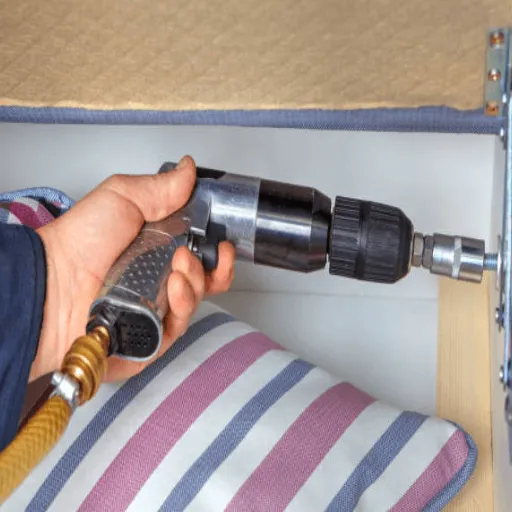
| Factor | Electric Nut Runner | Pneumatic Nut Runner |
|---|---|---|
| Torque accuracy | ±1-3% | ±3-4% |
| Repeatability | Excellent (closed-loop) | Good (pressure-dependent) |
| Data traceability | Full torque/angle logging | Minimal or none |
| Noise level | 75-85 dB | 95-105 dB |
| Energy efficiency | 85-95% | 10-20% (system-wide) |
| 5-year TCO | Baseline | ~1.5-2.0x baseline |
| Continuous duty | Managed cycles | Excellent |
| MES integration | Native Ethernet/Fieldbus | Generally unavailable |
| Maintenance | Minimal | Daily oiling, frequent overhaul |
| Weight | Heavier | Lighter |
| Hazardous environments | Spark risk | Intrinsically safe |
This table captures the headline differences. The sections below explain what each number means for your line, your operators, and your budget.
How Each Technology Works
Understanding the mechanics behind each tool type helps explain why their performance diverges so dramatically. The differences start at the motor and extend through every layer of control.
Electric Nut Runner Mechanism
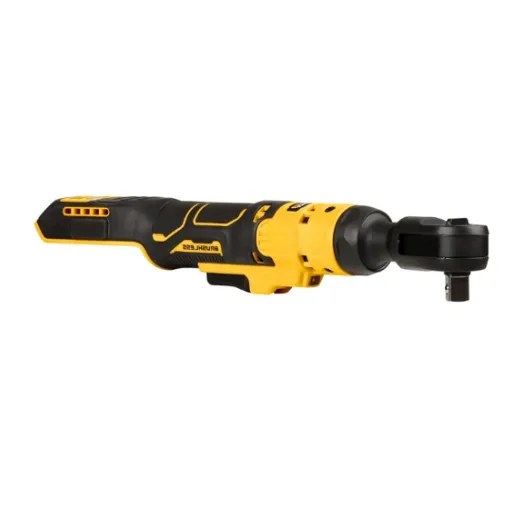
Electric nut runners use brushless DC or AC servo motors connected to precision planetary gearboxes. A transducer measures torque and angle in real time, feeding data to a microprocessor controller that modulates motor speed as the tool approaches target torque.
This closed-loop system enables multi-stage tightening strategies. You can program torque-to-angle control, yield-point detection, and seating detection within a single cycle. The controller decelerates the motor precisely as the fastener tightens, stopping within ±1-3% of the programmed value.
Modern electric nut runners also support different types of nut runners — pistol grip, inline, and angle head — all controlled from the same controller platform.
Pneumatic Nut Runner Mechanism
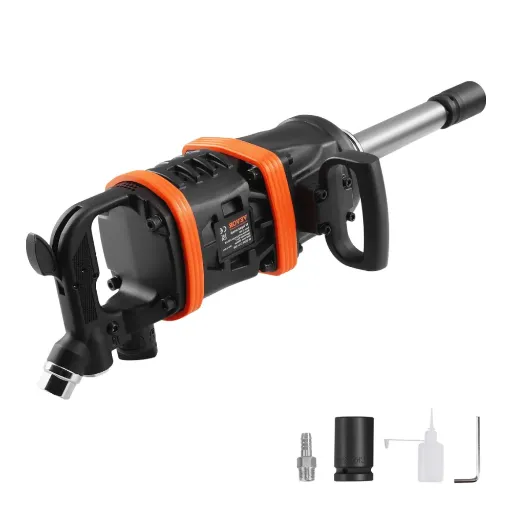
Pneumatic nut runners use compressed air to drive a vane motor. Torque control relies on one of three methods: stall control (the tool stalls at a preset air pressure), mechanical clutch shut-off (a clutch disengages at target torque), or a sensor-based solenoid valve system that cuts air at the set point.
The mechanism is simpler and more robust. There are no electronic controllers to fail. The tool can run continuously for long shifts without thermal shutdown. However, the control method introduces more variance. Air pressure fluctuates with compressor load, temperature, and leaks. The result is typical accuracy of ±3-4%, with some budget models reaching ±5%.
Cordless Battery Nut Runner: A Third Option
Cordless battery nut runners have emerged as a legitimate third choice for mixed-model lines and mobile applications. Using the same brushless motor technology as corded electric tools, they deliver comparable accuracy without the tether of a cable or air hose.
Battery platforms from major manufacturers now support torque ranges up to 2,000+ Nm with runtime sufficient for a full shift. The trade-off is battery weight and charging infrastructure. For lines with frequent changeovers or workstations that cannot accommodate fixed power drops, cordless is increasingly the default. See our cordless nut runner buyer’s guide for a full breakdown of battery platforms and selection criteria.
Torque Accuracy and Quality Control
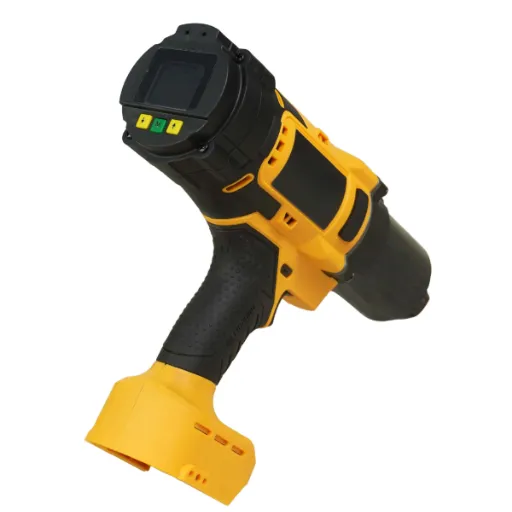
Torque accuracy is the centerpiece of any nut runner accuracy comparison. In applications where every fastener must meet specification, that 1-2% gap is the difference between a passing audit and a rejected batch.
Accuracy Specifications
| Tool Type | Typical Accuracy | Best Case | Control Method |
|---|---|---|---|
| Electric (transducer) | ±1-3% | ±1% | Closed-loop electronic |
| Electric (current control) | ±3-5% | ±2% | Motor current sensing |
| Pneumatic (sensor valve) | ±3-4% | ±2% | Air pressure + solenoid |
| Pneumatic (stall) | ±5-8% | ±3% | Stall at preset pressure |
These figures follow the testing methodology defined in ISO 5393 for powered screwdrivers and nut runners. The top-tier electric nut runners with direct transducer feedback achieve ±1% accuracy reliably. This level of precision is essential for hard joints — metal-to-metal connections where seating torque and angle both matter. Automotive engine assembly, aerospace structural fasteners, and wind turbine tower bolts all fall into this category. For a deeper dive into torque specifications by tool class, see our guide to nut runner torque ranges.
Data Traceability and OK/NOK Verification
Every electric tightening cycle generates a data record: torque curve, angle curve, final torque, final angle, and a pass/fail judgment. This data feeds directly into MES (Manufacturing Execution Systems) and quality databases, creating an audit trail for every fastener on every unit.
Pneumatic tools generally lack this capability. Some premium models offer basic cycle counters, but torque-per-fastener traceability is not available. If your customers or regulators require lot-level torque records, electric is effectively mandatory.
Speed, Productivity, and Ergonomics
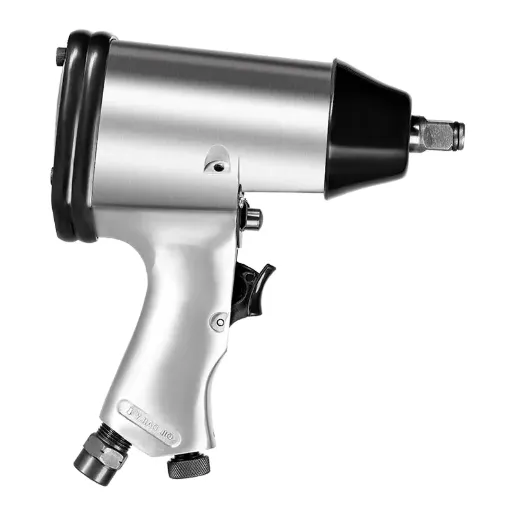
Accuracy is not the only factor that affects line output. Speed, operator comfort, and downtime all influence the total cost equation.
Cycle Speed and Throughput
Pneumatic nut runners traditionally win on raw cycle speed. The air motor delivers instant torque with no ramp-up time. On high-volume lines where operators tighten hundreds of fasteners per shift, that speed advantage adds up. A pneumatic tool might complete a cycle in 1.5 seconds, where an electric tool takes 2.0 seconds — a 25% difference that matters at volume.
However, the gap is narrowing. Modern high-speed electric nut runners with optimized ramp profiles now approach pneumatic cycle times while maintaining accuracy. For lines running 500+ cycles per shift, pneumatic still holds an edge. For lines under 300 cycles, the difference is negligible.
Noise and Vibration: The Hidden Cost
Pneumatic tools operate at 95-105 dB — loud enough to require mandatory hearing protection under OSHA regulations. Compressors add another 60-75 dB to the ambient environment. Over an 8-hour shift, sustained noise at this level contributes to operator fatigue and increases the risk of hearing damage claims.
Electric nut runners run at 75-85 dB, comparable to normal conversation or city traffic. Many facilities can eliminate hearing protection requirements for electric tool stations, improving operator comfort and reducing PPE costs.
Vibration exposure tells a similar story. Pneumatic tools transmit more hand-arm vibration (HAV), which is linked to repetitive strain injuries and vascular disorders. The European Union’s Physical Agents Directive sets strict HAV exposure limits. Electric tools generally operate below these thresholds; pneumatic tools often require job rotation or reduced exposure times.
Weight and Operator Fatigue
Pneumatic tools are lighter because the power source (compressed air) is external. The tool itself is just a motor and gearbox. Electric tools carry the motor, controller electronics, and sometimes a cable. The difference is 0.5-1.5 kg depending on the torque class.
For overhead or extended-reach applications, that weight matters. For bench-mounted or fixtured applications, it does not. Cordless tools add battery weight but eliminate the cable snag hazard that slows down corded electric operators.
Total Cost of Ownership: Nut Runner TCO Breakdown
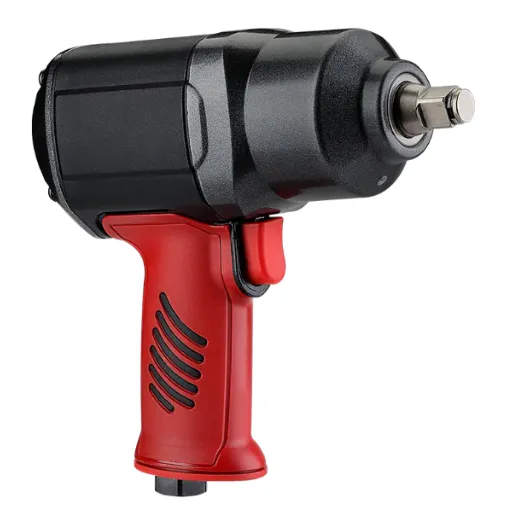
This is where the comparison shifts decisively. Most buyers compare the tool price tag and stop there. The tool is typically less than 20% of the total 5-year cost.
5-Year Cost Breakdown per Tool Station
| Cost Component | Electric Nut Runner | Pneumatic Nut Runner |
|---|---|---|
| Tool purchase | $3,500-8,000 | $2,000-5,000 |
| Controller/infrastructure | $1,500-3,000 | $0 (uses existing air) |
| Compressed air system (amortized) | $0 | $5,000-15,000 |
| Energy (5 years) | $800-1,200 | $6,000-10,000 |
| Maintenance (5 years) | $500-1,000 | $2,000-4,000 |
| Calibration (5 years) | $1,500-2,500 | $2,500-4,000 |
| Downtime/rework (estimated) | $1,000-2,000 | $3,000-6,000 |
| 5-Year Total | $8,300-17,700 | $20,500-44,000 |
These figures assume a mid-torque industrial tool used in a two-shift operation. Actual costs vary by region, electricity rates, and existing infrastructure. The critical insight: even when a facility already has compressed air, the ongoing energy and maintenance costs of pneumatic tools create a significant long-term penalty.
The Compressed Air Tax: Pneumatic Tool Energy Efficiency
Compressed air is one of the most expensive energy sources in manufacturing. According to the U.S. Department of Energy, only 10-20% of the electrical energy used to power an air compressor becomes useful work at the tool. The rest is lost to heat, leaks, and pressure drops.
A typical 0.5-horsepower pneumatic tool consumes roughly 20.7 CFM of compressed air, creating an electrical demand of about 3.3 kW at the compressor. At 4,000 hours per year and $0.12 per kWh, that single tool drives $1,584 in annual electricity costs.
The same work output from an electric tool requires approximately 0.4 kW — about $192 per year. That $1,392 annual difference per tool multiplies across an assembly line with 50 stations: $69,600 per year, or $348,000 over five years.
Global manufacturing loses more than $18 billion annually to compressed air leaks alone. Even well-maintained systems leak 20-30% of their capacity. That is not inefficiency — it is waste built into the technology.
Interested in reducing your assembly line energy costs? Contact our team to discuss electric nut runner options and factory-direct pricing for your facility.
Rework and Quality Failure Costs
Lower accuracy from pneumatic tools increases the rate of out-of-specification fasteners. In safety-critical applications, every failed fastener requires rework: loosening, inspecting, re-tightening, and re-verifying. That rework consumes operator time, delays the line, and introduces the risk of damage to components.
A single out-of-spec event on an automotive chassis line can cost $200-500 in labor and delay. At a failure rate of 1-2% with pneumatic tools versus 0.1-0.3% with electric, the rework cost differential adds $2,000-4,000 per tool station over five years.
Industry 4.0 and Smart Factory Integration
The manufacturing world is moving toward connected, data-driven production. Electric nut runners are designed for this transition. Pneumatic tools are not.
MES and PLC Connectivity
Electric nut runners communicate natively with factory networks through Ethernet, PROFINET, EtherNet/IP, or DeviceNet. Each tightening cycle reports torque, angle, time, and pass/fail status directly to the MES or PLC. This enables real-time quality monitoring, automatic line stop on failure, and complete lot traceability.
Pneumatic tools generally lack digital connectivity. A few premium models offer basic I/O signals (cycle complete, tool ready), but torque data per cycle is not available. Integrating pneumatic tools into a smart factory requires external torque sensors and separate data acquisition systems — adding cost and complexity.
Predictive Maintenance and SPC
Electric controllers monitor motor current, temperature, and vibration patterns. This data supports predictive maintenance algorithms that flag wear before failure occurs. A controller might detect increased friction in the gearbox and recommend service 2,000 cycles before breakdown — preventing unplanned downtime.
Statistical Process Control (SPC) is another electronic-only capability. By tracking torque trends across thousands of cycles, quality engineers can detect drift in the assembly process before it produces out-of-spec parts. Pneumatic tools offer no equivalent capability.
According to industry data, smart nut runners with digital torque monitoring now represent approximately 46% of newly installed industrial fastening equipment. The trend is accelerating as automotive and aerospace manufacturers mandate full traceability.
Safety and Environmental Considerations
Explosive Atmospheres and ATEX
Pneumatic nut runners hold one decisive advantage: they contain no electrical sparks. In petrochemical, pharmaceutical, or grain handling facilities where explosive atmospheres are present, pneumatic tools meet ATEX and NEC safety requirements without modification.
Electric tools require specialized explosion-proof enclosures or intrinsically safe designs for these environments. The added certification and hardware increase cost and reduce tool selection. If your facility operates in a hazardous zone, pneumatic is likely mandatory regardless of the TCO analysis.
Noise Compliance
OSHA mandates hearing protection for exposures above 85 dB over an 8-hour shift. Pneumatic tool stations routinely exceed 95 dB, forcing employers to provide hearing protection, conduct audiometric testing, and document exposure monitoring. Electric tools at 75-85 dB typically stay below the action level, eliminating this administrative and equipment burden.
Carbon Footprint and Sustainability
The energy efficiency gap directly impacts carbon emissions. A facility running 50 pneumatic tool stations might consume 165,000 kWh annually just for compressed air to those tools. Switching to electric would reduce that to roughly 20,000 kWh — a savings equivalent to taking 25 passenger vehicles off the road for a year.
For manufacturers with sustainability targets or carbon reporting requirements, the power source choice has measurable environmental consequences.
Decision Framework: Which Power Source Should You Choose?
Use this framework to guide your industrial nut runner selection and match your requirements to the right technology.
Choose Electric If:
- You need ±1-3% torque accuracy for safety-critical or audit-heavy joints
- You require full data traceability per fastener (automotive, aerospace, medical)
- You are building or upgrading an Industry 4.0 line with MES integration
- Workplace noise and vibration reduction is a priority
- You do not have a reliable compressed air infrastructure in place
- Your annual tool usage exceeds 2,000 hours (energy savings compound)
Choose Pneumatic If:
- You already have a large, efficient compressed air system with available capacity
- Your application is in a hazardous/explosive atmosphere (ATEX Zone 1 or 2)
- You need a maximum power-to-weight ratio for overhead or extended-reach work
- Your line runs 500+ cycles per shift, and raw speed is the top priority
- Absolute torque precision is less critical than durability and continuous duty
Choose Cordless Battery If:
- Your line has frequent changeovers or moving workstations
- You need mobility without cable or hose management
- Your torque requirements fall within the 50-2,000 Nm range
- You want electric accuracy without a fixed power infrastructure
Mini-Story: The Line That Switched and Saved
Marcus Chen manages production engineering at a Tier 1 automotive supplier in Michigan. In 2022, his facility ran 40 pneumatic nut runner stations on a chassis assembly line. The tools were reliable, the operators knew them well, and the compressed air system was already paid for.
Then his largest OEM customer mandated torque-per-fastener traceability for every vehicle. The requirement was non-negotiable: every bolt gets a data record, and every record gets stored for 15 years.
Marcus priced out retrofitting his pneumatic stations with external torque sensors and data acquisition modules: $4,200 per station plus ongoing calibration. He also priced replacing the stations with electric nut runners: $6,800 per station, including controller.
He chose electric. The initial investment was higher, but the external sensor approach would have added maintenance points, calibration complexity, and integration headaches. After 18 months, the energy savings alone had recovered 30% of the price difference. Rework dropped 60%. Operator complaints about noise and vibration stopped entirely.
“The sticker price scared us at first,” Marcus said. “But when you map the full picture — energy, rework, noise compliance, data integration — electric was the only logical choice.”
Conclusion
The electric nut runner vs pneumatic decision is not about which technology is better in isolation. It is about which technology fits your specific production environment, quality requirements, and long-term cost structure.
For new lines in 2025, electric nut runners are increasingly the default choice. They deliver the accuracy, data connectivity, and energy efficiency that modern manufacturing demands. The global electric nut runner market, valued at approximately $1.04 billion in 2024 and growing at 5% annually, reflects this industry-wide shift.
Pneumatic nut runners remain the right choice where explosive atmospheres, existing air infrastructure, or extreme continuous-duty requirements dominate the decision. They are not obsolete — they are simply optimized for a different set of constraints.
The key is to evaluate the decision on the total cost of ownership, not the tool price alone. A pneumatic tool that costs $2,000 upfront but drives $15,000 in energy and maintenance over five years is more expensive than a $6,000 electric tool that runs on $2,000 in total operating cost.
If you are evaluating nut runners for your facility, start by mapping your torque requirements and production environment against the selection framework in our complete nut runner guide. For help choosing between specific models, see our guide on how to choose the right nut runner for industrial applications. And if you are planning a new product line or evaluating OEM nut runner manufacturing, our engineering team can walk you through specifications, sourcing, and integration.
Ready to compare electric and pneumatic nut runners for your assembly line? Contact our team today to discuss torque specifications, factory-direct pricing, and the right power source for your production goals.