
Impact Driver vs Drill: Which Hand Tool Do You Need?
Selecting the right tools is half the battle when undertaking DIY work or industrial jobs, making a monumental difference in productivity and precision. Two of the commonly utilized hand tools in construction, woodworking, and household remodeling are impact drivers and drills. Initially, it might seem these tools are identical but they are not. They are designed for different jobs-they are functional in different ways and offer their respective features and benefits. The objective of this article is to begin the process of understanding and recognizing the principal differences in between the impact driver and a drill which would help you make an informed decision about which would be suitable for your requirements. When assembling furniture, putting screws in, or making holes in various objects, you have to know these hand tools to be in power to compare their pros and cons for your most favorable advantage.
Understanding the Differences Between Drill and Impact Driver

- Functionality: While a regular drill is made optimistic for boring holes properly and for screw-driving, an impact driver is geared for driving long screws and bolts through thick, hardened material by providing rotational force combined with compressive blows.
- Torque: Impact drivers provide far more torque than drills and allow greater functionality in the drills for heavy-duty fastening requirements. A drill retains consistent but minimal (too much proportionate to an impact driver) torque that may be laudably utilized for varied tasks such as drilling clean holes.
- Chuck Design: Drills have a key-type chuck that accommodates bit systems but may move up or down in their opening for fitting bit sizes. Impact drivers are equipped with a single-hex collet that supports screwdrivers for quick-change bits and are better designed for use with high-torque applications.
- Control and Speed: With faster control over speed and torque settings, drills provide a wider range of applications for more intricate tasks, yet pneumatic acquisitions are more suited to impulse driving when rapid but efficient max torques must be compulsorily registered.
- Weight and Size: Drills, on the other hand, look a bit bigger, are generally heavier, and will, in the long run, get uncomfortable to wield for long periods of time, such as when installing cabinets.
What is a Drill?
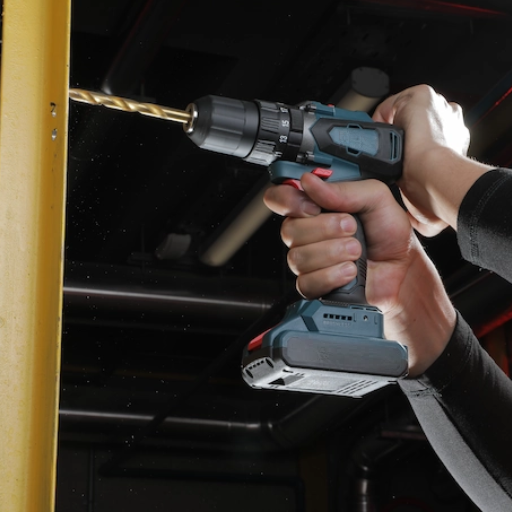
Drill can be an indispensable and very versatile handheld or stationary power device designed to create holes or fasten different materials. A rotating motor simply transmits power into a chuck, which holds the bit securely or other equipment. In modern days, the drills may have a speed control, adjustable torque settings, and reversible direction to ensure the required precision and application diversity. Drills are used generally for wood and metal work, in construction, for professional use, and DIY applications. Special models are used for heavy industry. Cordless versions can lately be used anywhere, have better weight-relative batteries, allow DIYers to move without any harm, or work in environments where electricity would not be possible. Of course, drills are mostly tools that are helpful to a craftsman to drill holes very precisely and mix materials or to screw something together.
What is an Impact Driver?
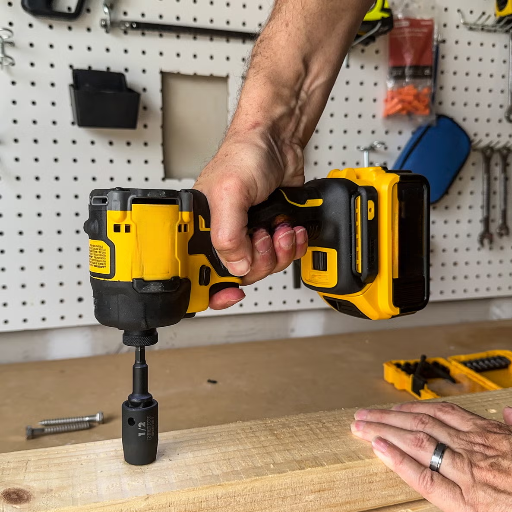
An impact driver is a high-torque tool specifically designed to better and more efficiently drive screws and fasteners into hardy materials than a regular drill. On the other hand, it delivers force by both rotational force and concussive bursts. In this way, the tool is fantastically effective when driving a longer screw into dense wood or blocking high-resistance factors like rusted bolts. Modern impact drivers come with an ergonomic design, variable speed setting, and brushless motors, contributing to overall performance, improved durability, and improved energy savings. Impact driving is a must-have tool in construction, automotive repair, and heavy-duty DIY capacity due to its ability to provide the relevant control with brute power to projects needing it.
Key Features of Hammer Drills vs Regular Drills
| Feature | Hammer Drill | Regular Drill |
|---|---|---|
| Functionality | Drills and chisels into hard materials | Drills holes into wood, metal, or plastic |
| Hammering Mechanism | Yes, adds percussive force | No, rotation only |
| Power Output | Higher, ideal for masonry work | Lower, suited for light-duty tasks |
| Weight | Heavier due to additional components | Lighter and more compact |
| Material Suitability | Concrete, brick, stone | Wood, plastic, metal |
| Speed Control | Typically variable | Typically variable |
| Noise Level | Louder during use | Quieter compared to hammer drills |
| Price | Generally more expensive | More affordable |
| Applications | Construction, renovation, masonry | General household and DIY tasks |
| Tool Longevity | Built for heavy-duty use | Best for moderate loads |
Impact Driver vs Drill: Use Cases
Impact Driver
For purposes of driving long screws or sine fasteners into hard materials like wood or metal, the job most high torque and efficiency with which it can deliver, hence again it becomes a primary choice for construction tasks, decking, and framing. It offers a tremendous benefit in terms of smaller size and powerful performance and is preferable for auto repair, assembly work calling for precision chopping.
Drill
A drill is a versatile tool for making holes in any remaining location without any disruption and driving screws upon any material out there. In the arena of woodworking, drills could be used for things like any light metals and small plastics. Putting up furniture, hanging fixtures, and such are the usual tasks at home involving a drill. On another hand, the right and proper bit would make the drill motor a handy and reliable assistant where we work with materials in the medium range such as precision drilling.
When to Use an Impact Driver
Right tools for any work that demands extremely high torque to drive screws or fasteners into rough or hard material, an impact driver is a must. An impact driver does not behave like a standard drill because impact drivers apply rotational force and impulse blows to provide high torque and precision. This makes driving long screws, lag bolts, and other fasteners extremely simple, what with the impact drivers used for hardwood, metal, or masonry. In all construction sites are where the driver is held in extreme regard for use in decking, framing, and other heavy-duty tasks that require sheer, efficient fastening skills and high torque power. Moreover, speed is controllable with various impact drivers; also they can have brushless motors for added enhancement in performance, energy efficiency, and durability for the more demanding applications.
When to Use a Drill
When to resort to a drill and what the reason is to question this matter? A drill is the most adaptable tool that is able to produce exact holes not only in wood but in metal, plastic, and drywall as well. The drills, in contrast to impact drivers, provide much more control over the tasks that require fine adjustments, such as drilling pilot holes, screwing in, and even delicate materials. They are also great screw drivers when it comes to light to medium, dense materials that do not require much torque. The modern drills are equipped with an adjustable clutch setting and variable speed control, thus increasing the likelihood of unintentional damage to the surface caused by excessive screwed graft. Besides that, the drills can receive an abundance of add-ons such as spade bits, auger bits, and hole saws for various purposes not limited to setting up cabinets, putting together the knock-down furniture, or mixing paint.
Comparing Drill vs Impact for Specific Projects
| Feature | Drill | Impact Driver |
|---|---|---|
| Primary Function | Drilling holes and fastening screws | Driving screws and bolts with high torque |
| Torque Output | Moderate torque | High torque for heavy-duty tasks |
| Speed Control | Adjustable for precision | Limited but efficient |
| Best for Materials | Wood, plastic, light metals | Dense wood, metal, and tough materials |
| Weight | Generally heavier | Lightweight for easy handling |
| Versatility | Highly adaptable with various attachments | Specialized for fastening tasks |
| Skill Level Needed | Beginner-friendly | Requires moderate control |
| Noise Level | Semi-quiet operation | Louder due to high torque |
| Battery Life | Longer for less power-intensive tasks | Shorter under intense use |
| Cost | Affordable for general use | Slightly more expensive |
Types of Drills and Impact Drivers

Drills
- Cordless Drill
A general-purpose, cordless drilling and screw-driving tool; convenient to use as it has great mobility. - Corded Drill
It comes with sufficient power for heavy usage, and ideally, it is for professional use in many professional settings. - Hammer Drill
This specialized tool, on the other hand, combines rotary motion and percussion to drill particularly hard materials such as concrete and masonry.
Impact Drivers
- Cordless Impact Driver
Small and light, this tool is designed for driving screw or bolts into dense elements, with proportionate torque. Best for construction or carpentry. - Brushless Impact Driver
Specifically, it comes to the table with a maintenance-free internal design, brushless motor, offering everything from increased efficiency to extended battery life, especially under extreme circumstances.
Regular Drill vs Hammer Drill
Utility drills are employed for common-and-ordinary purposes which involve comparatively lesser drilling and driving power. Their primary function is tactile response to the selected control level by means of the bit rotation into less abrasive materials such as wood, plastic, or light metals. Utility drills can generally be worked with easily, given their lightweight and handiness, while they can also incorporate settings to adjust speeds relative to the control. The majority of tasks, such as furniture assembly and general house renovations, are more than possible with the suite of tools that utility drills provide.
However, a hammer drill is built purposely for demanding tasks such as masonry, in which it is a combination of a rotational and hammering action. The hammer drilling capability is what sets the drill apart from its standard siblings in the toolbox: it can simply drive a drill bit through tough concrete, brick, or stone. Hammer drills are usually equipped with either a switch that changes the mode-shifted for all drilling alone to hammer drilling—or vice versa. Having this feature makes the hammer drill more versatile than ever. In addition to speed control, more advanced models come in even fancier overloaded versions, hence ergonomically designed encased performer-built tool nibbles for heavy use!
High Torque Impact Drivers
A high torque impact driver is a specialized power tool that is manufactured to provide unmatched rotational force coupled with a high-speed hammering action, which helps these tools to deliver the driving force necessary to drive huge fasteners and bolts deep inside very hard materials. This tool is built with an effective drive mechanism that keeps the reaction torque to the minimal possible, hence maintaining the operator’s precision and control, regardless of the application load. Currently, more powerful impact drivers are rated to produce well over 1,500 inch-pounds for use during auto repair applications, putting heavy equipment together, or any kind of hardcore industrial installation.
The high-tech design includes the brushless motors, which cater to the high-torque drill drivers. This will explain a variety of efficiency and the extended life span of the tool by reducing the wear on the mechanical portion. While on such a model, adjustable torque settings were introduced to protect from overdriving screws or damaging materials. In yet another advantageous position, the introduction of compactness and lightweight design is worthy for the increased use of confined areas. Such improvements as a large, more advanced battery capacity and recharge time for the lithium-ion cell enhance the usefulness even more. And the resulting influence by all of these factors, in realization of such parameters, is one of top importance where high torque impacts are concerned in the hands of professionals and industries.
Choosing the Right Tool for Your Project
When you choose the right instrument for a project, various critical factors have to be matched up to ensure maximum performance and accuracy and reliability in the results. It should start with the simple task of specifying functions, materials to be worked through, and identification of power, torque, and speed requirements. For example, high-torque units are much useful when encountered with high-density materials like metal or hardwood; variable-speed functionality provides flexibility for fragile or variable work processes.
With all factors that need to be considered, also of great concern is the ergonomic design and user-friendliness of tools. Tools that have ergonomically-designed handles, impact-absorbing handles, and are low-weight concurrently help significantly in reducing operator fatigue, especially if the operating runs are long and overhead. Also, an operator should understand their operation better when they are able to analyze technical specifications such as battery capacity, charge time, and motor efficiency to key the motor to the ever-changing needs of the application. A few suddenly popular professional-grade tools now use “brushless motors” showing increased power-to-weight ratio and longer life, thereby outperforming traditional brushed motors, as suggested in recent product data.
Last, but not least, the tool must be assessed for compatibility with accessories, attachments, etc., in terms of its long-term value, since present-day manufacturers offer infused systems with interchangeable batteries among tools, which, besides accommodating minimal to maximal flexibility, also turns out to be resource-efficient in the long term. Keeping an eye on these three elements should provide incentive to potential buyers to opt for tools that would harmonize with their respective immediate projects and future demands, delivering a professional-grade conclusion.
Torque and Performance: Impact Drivers Deliver

Impact drivers can deliver high torque, providing the appropriate level of power and finesse needed for heavy-duty fastening needs. One most significant advantage of these drivers is the amount of rotational force they can generate, making driving screws and bolts into hardwood or metal quite straightforward. Unlike traditional drill/drivers that inflict torque solely through rotation, these drill/drivers use impact action to multiply via blows, maximizing sheer torque while minimizing stress on the user and tool motor. Thus, it delivers comfortable and steady results even under demanding conditions.
Understanding Torque in Drills
Torque in terms of drills would refer to the rotational force that is generated by the motor. The same is a key factor when determining the efficiency of a drill as it works on differing materials and fasteners. It is typically recorded in inch-pounds or newton-meters and poses the drill on how it fares upon to overcome resistance while driving screws or drill bits into various surfaces. With drilled gear becoming more refined, it is able to provide torque settings that are adjustable to the user for various applications, such as delicate screw-driving and brickwork.
Intensive projects such as boring wide holes or fixing lengthy screws into solid materials are much suited to gear reduction and lower speed drilling with high torque. Although excessive torque may cause damage to screws or project materials as mentioned above, this points to the need for the presence of a mechanism for allowing torque control. Advanced drill designs are incorporating electronic clutches just for this purpose: the required torque is electronically preset, and this is essential to keep the tool and material from any kind of loss. Obviously, then, to make the job run smoother and secure industry, production as well as DIY results, learning and managing the torque efficiency cannot be excluded.
High Torque Applications with Impact Drivers
Designed particularly for applications requiring maximal torque, the impact driver is an immensely useful tool, indispensable in heavy-duty situations where highly torque-related fastening or unfastening tasks are required. As compared to a standard drill, the impact driver works on a combination of rotation or concussive force, rendering far more torque. The most common uses would be driving longer screws into sturdy materials like hardwood, tightening large bolts in assembly, or working with lag bolts when used for structural installation.
Impact drivers of today are meant to be placed in the heart of professional operations and often come with brushless motors; this is for longer durability and to save operation costs significantly. In this case also, some of them will boast variable speed settings and some very advanced smart controls, which can give the authority to control and fine-tune torque delivery to allow precision in any application. For example, an impact driver with a total of 2,000 inch-pounds will efficiently handle applications such as steel framing, while minimizing operator fatigue at the same time. Combining power, in a precise environment, taken to an innovative stage, results in the conclusion that impact drivers are an essential tool for professionals as well as for the hands of many DIY projects that need a high PSI to operate.
Expert Recommendations for Buying Tools
- Primary Use Case
- If you want flexibility in terms of drilling, screwdriving, and working with different materials such as wood, plastic, and light metals, go for a drill.
- In case you are dealing with large amounts of torque, and hence, require some sort of tough applications, or if you need to lock long screws frequently, impact driver would be the most suitable option.
- Power and Torque Requirements
Drills have been provided to handle standard use of a power profile while impact drivers are expected to run with more power. These drivers are optimized to produce the highest possible torque for the intended jobs. Consideration for power level should depend on the type of work to be done. - Bit Compatibility
A chuck in drills is made to handle a wide range of sizes and types of bits, making it more universal. An impact driver uses bits with hexagonal shanks which are made to match with larger shank bits with higher torque. - Comfort and Ergonomics
Other considerations when selecting based on intended use include tool weight, grip design, and overall balance. The impact mechanism of an impact driver is considerably less apt to cause wrist strain than the drill while having the feather-lightness and versatility. - Budget and Long-Term Use
A drill might make the more versatile buy if you’re only planning to use it around the house. If your projects will involve a bit more consistent heavy-duty work, considering the impact driver might be worth it because of the more power and durable operation.
What to Look for in an Impact Driver
- Torque and Speed Ratings
A high torque is paramount for driving in long screws or for working with heavy material while variable speed settings supply greater precision and control. Be observant of models with adjustable speed ranges for working through various tasks. - Battery Capacity and Type
Because of requiring high energy density and long cycle life, lithium-ion types of batteries are considered the new standard. This does mean that a higher rating in terms of amp-hour (Ah) is beneficial and obtained by much longer runtimes for longer jobs. - Chuck Compatibility and Bit Type
Most impact drivers are equipped with chucks sized at 1/4 inches hexes, which are good for rapid bit changing. With compatibility for a broad range of common bits and accessories, these drivers may add to their versatility. - Ergonomics and Build Quality
Provide an emphasis on the design based on user comfort and what will be usable for long periods of time. For instance, a rubber-clad grip, small footprint, and light weight will get you through the paces without wearing out, while stronger materials like metal gear housings afford the product long standing. - Additional Functionalities
Take heed about making stock in specific features, such as LED work lights, due to increased visibility in darker environments, for brushless motors for better, high-powered efficiency, and to offer a set of drive modes for various applications. - Brand and Warranty Support
Patronization of the better-known brands often offers a better service period and some peace concerning the maintenance of spares as well as for any repairs down the line.
What to Look for in a Drill
Having defined and compared pertinent performance measures is a crucial help in choosing drills. One of these relevant terms is the output torque, which is measured in inches per pound (in-Lbs). The higher the footage, the weaker the drill. RPMs, or rotations per minute, can also offer a lot of comparative information on the drilling speed. A higher RPM value linked to a motor running too fast usually gives an operative time between medium and low speeds.
At the same time, it is important to look at what kind of battery is being used and how big it is in the case of cordless drills when lithium-ion batteries are popular because of their densely packed energy, lower weight, and very high life cycles. Compare and contrast the amp-hour (Ah) ratings of various batteries and pick one that best fits your needs – batteries with higher ratings last longer. On the other hand, the chuck size is also an important factor affecting the compatibility and ease of use of the drill bit. The 3/8-inch and 1/2-inch are the most common sizes; at the same time, the units might be a little large for many users, but for those working with thick-walled bits, they might be necessary to have a stylus of that same kind. Your ultimate choice needs to take the latter specs into consideration, together with the former ones that match your needs when it comes to projects and tasks.
Reference Sources
- “Auto Driller Improvements and Open Source Modeling Reduce Drilling Time and Trips”
Read more here - “Testing the performance impact of automation applications on different drive systems in unconventional well development”
Read more here - “Authoritative discourse in advanced studio lessons”
Read more here
Frequently Asked Questions (FAQs)
When should I use an impact driver versus a drill to drive fasteners?
The impact driver is the tool which gives higher torque and also prevents cam-out in case hard materials like fastener installation, decking, screws or lag screws are dealt with. The drill and the impact driver are a combination for making holes and driving in screws; the drill is efficient for new bits and tearing out the heaviest loads of holes. However, the impact driver is the gun to be used for the hex-shank bits or the impact driver bits in order to get the utmost bit holding and speedy work. In drilling matters, the drill is faultless and in case of remodeling, where lag bolts or screws are involved, then the impact driver is going to be selected as the tool.
Should you use an impact driver or a drill when drilling holes and driving screws?
Switching the tools from drill to impact driver for the job where fastening is mainly is suggested as the latter is a lot faster in driving screws and also prevents from stripping the screw heads altogether. If you need to drill a hole in the concrete or use the forstner bits, then you definitely need the drill, or a hammer drill if the material is concrete. The hexagonal-shank bits can transform a drill into a light driver but torquewise the impact drivers and the drills are very different. A drill for holes and an impact for fasteners is the consideration for the best tool for the job in big tasks.
Is an impact driver or a drill better for high torque tasks and torquing lag screws?
Drivers are usually referred to as the tools providing higher torque pulses and even torque under load; thus, when it comes specifically to lag screws and fasteners into hardwood, they are the better choice. If dealing with very large bolts and additional torque is still required, the impact wrench is the answer. Using the drill to fasten the small, delicate screws may help prevent over-driving; however, the driver is still the choice for the heavy-duty fasteners due to its speed. Hex bits and hex-shank bits work well to improve the tool’s grip and thus lower the torque requirement for tasks requiring high torque from an impact driver.
How does the impact driver vs drill affect the screw head and prevent stripped screws?
The vibration feature of impact drivers results in lower instances of bit dislodging, thus saving the screw head and preventing it from losing its shape, among others. To gain the advantage of using small screws as well as to sink them at the right amount and location, one has to use a standard drill that has the control of the clutch, and this way, smoother torque and greater accuracy are the consequences. One improvement is to pair up screws with the best-matched driver bits, which can also mean hex bits that cater to the screw head design. Moreover, the same work will go smoother if properly-matched screws, tools, and bits are used.