
Insulated Hand Tools: VDE and IEC 60900 Standards Explained
Talking about electrical systems, safety is the most crucial factor and the tools can greatly influence your safety. Insulated hand tools are made with the purpose to protect workers from electric shocks and accidents, however, not every tool is the same. This is when the standards like VDE and IEC 60900 come into picture, establishing the standard for quality, dependability, and safety. The author of this article discusses the significance of these standards, their distinctions, and their implications for all those working in high-voltage areas. No matter whether you are an electrician, technician, or a professional that takes safety very seriously, it is imperative to comprehend these certifications as they are the indicators of both your safety and the quality of your work.
The Importance of Insulated Tools in Electrical Work
Understanding Electrical Safety
Safety in electricity is absolutely necessary in every work dealing with high-voltage areas. Taking the right measures, among which, like insulated tools, is one of the best in these situations, help to avoid accidents, lower the chances of electric shocks, and make it safe for people working with electricity. When close to live wires, the use of insulated tools which are specially made to offer protection against electric current is the best measure; it gives the workers a vital layer of safety.
One of the most important reasons for putting electrical safety first is the danger that is always there when one works with electricity. The contact of workers with high voltage wires in live electrical circuits can lead to very serious injuries or even death. Such equipment that meets acknowledged standards like VDE or IEC 60900 certifications is used, which shows that the highest insulation levels and protection are provided. Intensive testing is done to the tools to verify that they have the capability of withstanding harsh conditions and decreasing the risk in tough situations.
Moreover, creating a safe working environment is not only about using the right equipment, it also includes the worker’s compliance with the safety procedures like, wearing the appropriate PPE, de-energizing circuits when possible, being aware of their environment, and so on. The use of certified insulated tools along with the observance of these guidelines not only reduces the danger but also instills trust and increases the productivity of the professionals, thus making the tasks done without the risk of safety being compromised.
How Insulated Tools Protect Electricians
The insulated tools were made to ensure that the electricians would not get electrical shocks by creating a barrier between the user and the electrical currents that were alive. Preferably, such tools are used with live circuits, as the coatings on the tools do not allow electricity to pass through since the materials used are non-conductive like rubber or plastic. The extra protection layer in the form of insulated tools is very important for electricians who work in risky places like electric circuit boards where sometimes due to carelessness the wrong thing gets touched.
One of the main attractions of using insulated tools is their capability to resist high voltage levels, which are usually between 500 to 1,000 volts. The manufacturer of each tool conducts a very thorough examination to determine if the tool meets the required safety standards set by professional organizations like ASTM or IEC. The insulated tools not only dramatically decrease the probability of a work-related fatality but also enable the electricians to carry out their work in high-risk areas with a sense of security, as they are backed up with dependable protection against electrical hazards.
Moreover, insulated tools not only help with workplace safety but also assist in compliance with the safety regulations and protocols by their very use. Their use is indicative of a professional attitude towards risk minimization, thus making the performance of tasks efficient while at the same time keeping the workers safe. Insulated tools when used along with training and following the electrical safety regulations form an integral part of the protection kit of an electrician, ensuring safety for both the individual and the team on-site.
Compliance with VDE and IEC 60900 Standards
It is vital that the insulated tools employed in electrical works comply with VDE and IEC 60900 standards in order to guarantee safety and reliability. VDE certification involves the inspection of tools to confirm their conformance with the highest standards for electrical and mechanical safety, prescribed by both German and international norms. In the same manner, IEC 60900 is a standard that is certified and recognized worldwide and it lays down the very stringent requirements for the tools that are to be used on live electrical parts up to 1000V AC and 1500V DC.
Many aspects of the tools such as the insulation quality, impact resistance, and thermal stability under different conditions are the main concerns of these standards. Tools that conform to the standards are tested through and through for their durability and performance. Among the various tests that the IEC 60900-certified tools go through, there are dielectric testing, insulation adhesion tests, and tests for flame and thermal endurance. All of these tests ensure that the tools deliver reliable protection against electrical hazards in the real world.
The compliance with VDE and IEC 60900 standards not only safeguards the workers from getting electrical shocks which could be fatal but also enhances operational efficiency as it lowers the likelihood of tool failures. The use of such compliant tools in professional settings is mandated by many regulatory bodies and industries which in turn reflects their role in the maintaining workplace safety. Electricians and technicians should always check these certifications before they use the insulated tools so that they are sure of both compliance and their safety.
Applications of Insulated Hand Tools Across Industries
Insulated Tools for Electricians
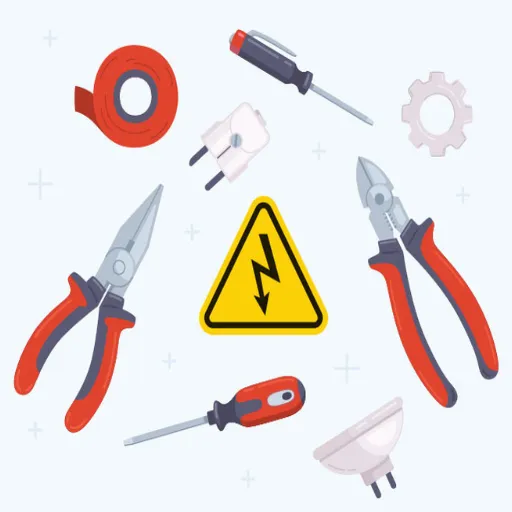
The use of insulated hand tools is an absolute necessity for electricians who want to do their jobs safely when in contact with live electrical circuits or components. Insulated tools such as pliers, screwdrivers, and cable cutters are provided with the insulation that is rated to handle up to 1000V or more, so they are completely protected against electrical shock. These tools not only provide the safety but also improve the efficiency of the work, since they enable the professionals to do the job quickly, precisely and with full control, even in places where the risk of accidents is high.
The development in insulation materials and ergonomic designs has also played a part in making these tools more user-friendly, so that now even the electricians who work the longest hours will not feel any discomfort. Additionally, the professional-grade insulated tools undergo rigorous testing to conform with standards such as ASTM F1505 or IEC 60900, which ensure that the tools offer durability, reliability, and adherence to the safety protocols of the industry. This kind of certification gives electricians the freedom to use their tools in critical and hazardous operations with the maximum of confidence.
The purchasing of these tools is not simply a matter of adherence to law and regulations; it is a major part of the protection of the workers and the guarantee of no interruption in the operation of the industries such as construction, power distribution, and industrial maintenance.
HVAC Technicians: Importance of Insulated Tools
For the HVAC technicians, the insulated tools have become an indispensable part of their performance as they assure safety and efficiency in the business of dealing with electrical components. Working on HVAC systems often means handling live currents, high electrical voltages and complicated wiring. Insulated tools offer the necessary protection of a barrier against electric shocks which in turn lowers the injury risk in the situations that might be dangerous to be in.
Moreover, the use of insulated tools is in line with safety regulations such as the ones set by OSHA, the Occupational Safety and Health Administration, and the NFPA, the National Fire Protection Association, which draws its guidelines based on the very same principle—preventing accidents and enhancing safety at the workplace with properly certified tools. Research has proven that the use of insulated tools contributes not only to better safety outcomes but also to the technicians’ confidence increase which, in turn, creates a more concentrated and efficient working environment. The use of reliable tools marked with insulation and voltage ratings guarantees that the HVAC professionals not only deliver quality results but do so with very little waiting time caused by safety incidents.
Buying the best insulated tools does not just mean taking a preventive measure—that’s the main step one should take in terms of keeping safety, compliance, and uninterrupted service in the HVAC industry. The professionals’ expertise together with these tools is what gives the technicians the confidence and accuracy to meet the ever-increasing demands of modern HVAC installation and repairs.
Automotive Mechanics and Electrical Safety
Modern vehicles rely heavily on electrical systems, and they impressively handle even the most complex tasks such as providing power to the drivers’ and passengers’ aids, lighting, and ignition systems, while simultaneously providing music and other entertainment through the infotainment systems. For automotive mechanics, electrical safety is one of their primary concerns when working on these intricate systems. Electric and hybrid vehicles, for example, could create life-threatening situations if their use was not constantly monitored. Proper training and providing safe working conditions to the electrical system handlers are a must since the safety of the technician and the vehicle’s performance depend on it.
To minimize the risk of electrical shock, there is nothing better than the use of insulated tools that are specifically made for the automotive industry. These tools act as a barrier against unexpected electrical shocks when working with live circuits nearby. Insulated wrenches, screwdrivers, and pliers, for instance, are indispensable in cutting off unintentional contact with the live parts. Moreover, mechanics must rely on the manufacturer’s direction and also employ PPE (personal protective equipment) like insulated gloves and safety goggles when doing maintenance on high-voltage areas.
Moreover, education and the latest movement in the automotive field are two things that cops should really take care of when it comes to their safety. The fact that electric and hybrid cars are now on the market has been a given mostly due to the drastic change in car power supply, the new systems being more than ten times (in some cases) the voltage of a regular combustion-engine car. Training programs can groom technicians for the role of spotting hazards that are lurking in the area and offering them tips on how to apply the safest practices while doing repairs in such high-voltage situations. Taking into consideration the fact that proper tools, thorough training, and strict adherence to safety protocols can all contribute to the efficiency and safety of automotive professionals when dealing with complex electrical repairs or installations, the combination of all of them still remains the best.
Choosing the Right Insulated Tools for Your Tasks
Key Features to Look for in Insulated Hand Tools
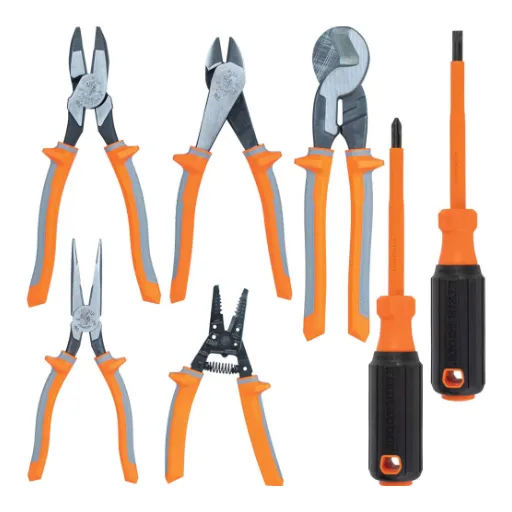
Quality and safety must be guaranteed when choosing insulated hand tools. Below are some of the important features to look at:
- Voltage Ratings: Insulated tools always portray the voltage clearly, and the rating could be up to 1000V or more than that for the professional-grade tools. This rating shows the electrical safety level of the tool and guarantees that the tool will work on high-voltage tasks safely.
- Durable Insulation Materials: The best tools are always the ones that are covered with strong insulating materials like multi-layered plastic or rubber that will not only be able to last but also have good electrical resistance.
- Ergonomic Design: Properly made tools should be bearable to use for a long time. Seek non-slip handles and equal weight distribution for lessening the hand’s feeling of fatigue.
- Certification Standards: The trustworthy tools usually comply with the standards set by the industry, for example, the ASTM or IEC 60900 certification, which ensures that the tools are tested and approved for the use of professional electrical work.
- Bright Colors for Visibility: Insulated tools are usually very bright in color (mostly red, orange, or yellow) so as to quickly tell them apart from the non-insulated and also to be able to see them in poorly lit areas.
- Durability and Resistance: Select tools that can endure an impact, moisture, fire, and chemicals. This means that the tools can survive harsh conditions and at the same time, safety is not compromised.
Purchasing such tools not only boosts the performance but also guarantees the protection while the live electrical systems are being worked on thereby significantly reducing the risk of accidents.
Types of Insulated Tools for Various Applications
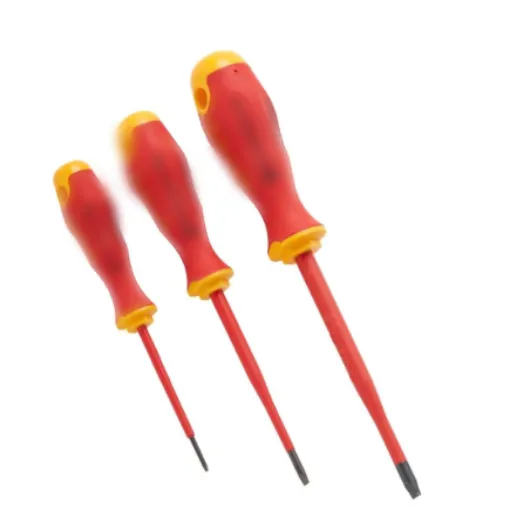
- Insulated Screwdrivers: Insulated screwdrivers, as the name suggests, are primarily meant to keep the user safe from electrical shocks while providing the necessary control electrical work requires. They are the preferred tools of choice for the professional in charge of the live system’s hardware, i.e. the control of screws in electrical panels, sockets, or other related areas, and almost all of them come equipped with ergonomic grips that help in minimizing hand fatigue during their long use.
- Insulated Pliers: These tools have various forms, like needle-nose, combination, and diagonal, among others. Insulated pliers give the electrician a safe way to bend, twist or cut wires. Besides, in some versions, the cutting part is made of hardened steel which is suitable for thick or high-resistance wires.
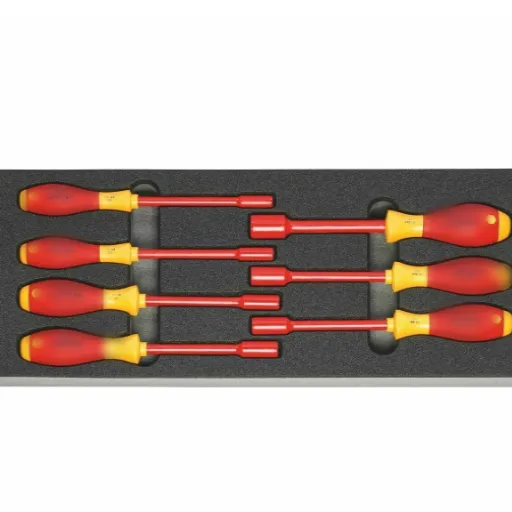
- Insulated Wrenches and Sockets: Wrenches and sockets are insulated in order not to lose their grip on bolts and nuts in the working of electrical assembly and maintenance even when the electrical environment is live. They are, in fact, widely used in industries, automotive, and utility.
- Voltage Testers: Voltage testers are the most important devices to know when an electrical system is energized. Insulated types not only give the right readings but also safeguard the operator from unintentional contact with live parts.
- Insulated Cable Strippers: Insulated cable strippers are specially designed to strip off the insulation of the electrical wires while protecting the user from the possibility of getting shocked. Many strippers today are equipped with adjustable sizes for different wire diameters.
- Insulated Torque Tools: Insulated torque wrenches and screwdrivers are for precision jobs and they make sure that the bolts and fasteners are tightened to the exact torque specification, thus ensuring safety and system integrity. These tools do find their use in high-risk areas, e.g. power grids and aviation systems.
- Insulated Cutting Tools: Cutting tools like insulated cable cutters and utility knives are a must to have in the case of cutting wiring or other materials in live electrical systems. They are made durable and their cuts are precise yet the user is still safe.
The adoption of such tools as part of everyday professional duties not only enhances safety but also maximizes the productivity of tasks that involve live or high-voltage systems, to a big extent. The modern innovations in the insulation materials of tools have made them even more reliable, thus, complying with international standards like ASTM F1505 and IEC 60900. The purchase of insulated tools is a guarantee of safety in carrying out the work with precision and low risk when choosing the right tools for the specific tasks.
Understanding Tool Ratings and Certifications
When using insulated tools, knowledge of their ratings and certifications is very important for safety and compliance. Ratings tell us the highest voltage that the tool can safely bear, and are usually found on the tool by the manufacturer. On the contrary, certifications tell us that the tool has passed the tests and conforms to certain industry standards like ASTM F1505 or IEC 60900, which are globally accepted for the safety of electrical devices.
Internationally accepted certifications assert that a tool has undergone the strictest testing processes, which include dielectric, impact, and puncture resistance test, verifying the tool’s performance in different conditions. For example, insulated tools certified by IEC 60900 are able to withstand the temperature of 40°F and no electrical breakdown occurs at the time of high-voltage exposure. Likewise, ASTM F1505 checks out the insulation’s life and tool design through specific criteria accommodating high-voltage users.
Thus, relying on certified tools, technicians and engineers enjoy the confidence that comes with the equipment, which in turn lowers the risk of accidents or equipment failure. Moreover, the uninterrupted reliability of the tools over time, coupled with their continuous compliance with safety regulations, is assured through regular inspections for wear and damage as part of the maintenance program. It is of utmost importance to use certified tools in the selection of equipment to ensure safety and efficiency not only in high-risk environments but also in others.
Maintenance Tips for Longevity and Safety

Regular Inspection of Insulated Tools
Regular inspections of insulated tools are a must for safety and surrendering a good life cycle. Take the first step by searching carefully for any visible cracks, cuts, or abrasions on the insulating material. If the insulation is damaged, the tool will not be able to protect you anymore by a loss of electrical hazards and that will be a very serious unsafe situation. Furthermore, if the insulated tool has metal components, then it is a must to check them for rust, corrosion or even wear that could lead to a performance decline. Should any defects be found, the first thing to do is to take the tool out of service, followed by either repair or replacement, depending on what is necessary.
As far as insulation integrity is concerned, cleaning of tools after every use must be done. This should be such that there is no dirt, grease, or any other debris on the tool’s surface. Accumulation of such materials can destroy the insulation in the long run and create conditions for electric shocks or accidents to happen. Always make sure to employ the cleaning agents recommended by the manufacturer to prevent chemical reactions that might be detrimental to the insulating material. Proper storage away from extreme temperatures and direct sunlight also greatly helps in maintaining the condition of insulated tools.
Moreover, it is probably one of the best practices to be able to document inspection and maintenance activities. With a detailed log kept, workers are able to follow a tool’s history, including repairs, replacements, and testing results. Most manufacturers recommend dielectric testing at regular intervals to verify a tool’s insulating properties. By practicing this and updating at the same time with safety standards, workplaces can significantly minimize risks, thus assuring both compliance and the health of their teams.
Proper Storage and Care Techniques
The proper storage and care of insulated tools are very important for their ability and life span to last. They are to be stored in clean and dry places always, and even then, the tools should be kept away from sunlight, heat, and chemicals that can harm the insolation materials. By using special racks or cases for tools that have compartments, one can avoid the risk of damages that result from having too many tools or improper stacking. Insulated tools should be wiped with a dry cloth both before and after use to clear off any dust that might be a hindrance to their insulation properties.
Regular inspections are another important thing to do for the tool care. The tools should be checked for cracks, abrasions, or any other signs of wear that are particularly easy to see on the insulated areas. A tool with even a little damage should be pulled from use right away and either repaired or replaced according to the manufacturer’s instructions. For safety, consider using color-coding schemes for tags or labels that show the inspection status or next due date for dielectric testing.
Workplaces can keep safety standards by combining these storage and care methods with the inspection routine, thus prolonging the life of the insulated tools and at the same time reducing the chances of electric failures.
When to Replace Your Insulated Hand Tools
Replacing hand tools that are insulated is very important for keeping the workplace safe and meeting compliance regulations. I am going to replace my tools whenever there are obvious signs of wear, like cracks, abrasions, or changing the shape of the insulating material. Even slight damage can affect the insulation’s ability to protect and that means there will be more accidental electric shocks. The visual inspection that I do regularly, helps me to find these problems earlier and fix them quicker.
Moreover, I take into account the outcomes of the normal dielectric testing as a major factor in deciding when to discontinue the use of my tools. A tool that does not pass this test is said to the insulation that is not working and so the tool must be retired. I make it my priority to arrange for these tests as per the manufacturer’s guidelines or the industry’s standards to ensure safety and compliance. Such a proactive approach helps me to identify probable issues that might not be detected easily.
Finally, I replace the tools that have reached the end of their recommended service life, even if they look like they are in good condition. The manufacturers usually indicate a maximum lifespan for insulated tools and disregarding this advice could result in a hazardous environment. I know that the cost of replacing tools when necessary is very little compared to the risks attached to using faulty equipment. I am always concerned about the safety of the working environment and that is why I always consider the condition of my tools to be the top priority.
Innovations in Insulated Tool Technology
Recent Advancements in Materials and Design
The insulated tool technology arena has experienced marvelous material and ergonomic design innovations that made safety and functionality to a considerable extent. One of the biggest steps forward is the use of super-polymers and composite materials with extremely good insulating properties. These new materials do provide much better insulation than before, but on top of that they also make the tools more durable. That is, the longer the tool is used, the less wear it suffers, which is a plus for its life span. Moreover, the multi-layer insulation systems have now become a standard fitting for most of the tools, thus giving them an extra layer of protection from unexpected electrical currents.
Ergonomic improvements are also a major factor that drives modern tool development. Manufacturers are not only concerned about safety, but also about the operator’s comfort ensuring that such features as non-slip grips, lighter tools and ergonomic handles are fully integrated. These changes go a long way to lessening the grip fatigue, and thus precision during use shall be ensured even if the user is a professional under the most unfavorable conditions. Through a combination of high-tech materials and the principles of user-centered design, these tools will not only protect the workers but also maximize the productivity of the whole site.
The newer developments are also technology driven. With the help of technology, some of the insulated tools now have smart functionalities such as voltage detection indicators or built-in sensors that inform users about potential hazards. The latter are changing the worker-tool communication in an extremely positive way by providing real-time feedback on safety and helping in making more informed decisions.
The Role of Technology in Enhancing Safety
Integrating advanced features into tools and equipment has led to technology being a very important factor in raising safety standards in different industries. These advances not only make operations more efficient but also provide workers with preventive measures against possible dangers. Five of the most important technological innovations that are improving safety are listed below:
- Smart Sensors for Hazard Detection: Current day instruments have smart sensors which are capable of detecting electrical currents, overheating, or structural failures. These sensors warn users immediately, and quick actions can be taken in order to reduce the risks.
- Automatic Shutoff Mechanisms: Now days tools frequently come with automatic shutoff safety features which are triggered when dangerous conditions like overheating or high pressure are detected, thus preventing accidents.
- Ergonomic Design Enhanced by AI Insights: Data analytics and AI have been major influences on ergonomic tool design that led to reduced cases of strain-related injuries as well as increased user comfort during lengthy durations of use.
- Connectivity and IoT Integration: Tools that are outfitted with the Internet of Things (IoT) not only have the capability of giving real-time status updates but also of alerting when maintenance is required and when safety warnings are given, thus enabling managers and operators to monitor the equipment from a distance.
- Augmented Reality (AR) for Training: Augmented reality (AR) technology is transforming the process of safety training in workplaces by making it more realistic and interactive through the availability of hands-on simulations. The workers are allowed to practice on the dangerous situations in a controlled and virtual environment, thus enabling them to be more prepared and at the same time, lessening the occurrence of human errors.
All these improvements give an insight into the great role that technology plays in protecting the health and safety of workers and also helping industries to move towards a safe and efficient future.
Future Trends in Insulated Tools
The insulated tools market is going through a major change, and the change is mainly due to the breakthroughs in material science and the improved safety standards. Among the major trends is the use of smart technology in insulated tools. Such sensors embedded tools are being made that will keep track of the real-time voltage exposure and will thus alert the users when the situation turns dangerous, thus ensuring safety. Moreover, the strong and light composite materials are used more and more, thus improving tool usability without the risk of insulation loss.
One more important point is the ergonomic design. Manufacturers are giving priority to tools that not only minimize user fatigue but also increase accuracy, especially in confined or risky environments. In addition to that, the concern for the environment is getting more attention as companies are looking for eco-friendly manufacturing processes and materials to cater to the increasing market for green products.
The principles of Industry 4.0 are also playing a big role in the transformation of the industry. Insulated tools connected through IoT are allowing better tracking, inventory control and predictive maintenance, thus enabling industries to efficiently optimize the usage of tools. These developments show a future where not only the safety of the users but also the efficiency and the environment goals of the industries will be positively impacted.
References
-
Electrical Protective Equipment – Virginia Tech
This resource discusses the requirements for insulated tools, including voltage ratings and environmental considerations. -
Insulating Protective Equipment (IPE) – OSHA
OSHA provides guidelines on insulating protective equipment, including tools, for safe electrical work. - Click here to read more.
Frequently Asked Questions (FAQ)
Q: What are insulated tools and why are these a must-have?
A: Insulated tools are hand tools that essentially come with a protecting insulating layer around them, hence, they are very useful when one has to work close to live wires. The insulated tools serve as an excellent means for electricians and maintenance personnel who are usually working around energised circuits and these tools help in reducing the risk of electrical shock and even arc flash injuries occurring.
Q: In what way does double insulation along with insulated blades enhance safety?
A: Insulated blades and double insulation together make a strong dielectric defense layer: blades have a protective covering done over the metal, while double insulated tools contain both an inner insulating layer and an outer layer or guard. This second layer of protection makes it less probable that a path of electricity reaching the user and even if one layer fails it still gives safety near the live equipment.
Q: Is it possible to get insulated screwdriver sets that are of many kinds?
A: Insulated screwdriver sets are very much available in different kinds and the usual ones come with the common tip styles like Phillips, slot, and square to cover most applications. Klein Tools and other manufacturers produce insulated tool kits and screwdriver sets which are available in various configurations to cater to the different needs of professionals.
Q: What voltage rating should I look for—are insulated tools rated in VDC?
A: The specific maximum voltage is usually the rating for insulated tools which is mostly given in VDC or VAC depending on the standard; a lot of electrical work insulated tools are rated and tested up to 1,000 V DC or 1,000 V AC. So, always verify the tool’s marking and certification to make sure it corresponds to the energized source you will be working near.
Q: Do insulated tool kits replace the need to de-energize equipment per NFPA 70E?
A: Not at all. Insulated tool kits do provide safety but NFPA 70E states that the best way to remove danger is to switch off the equipment. Insulated tools serve as secondary protection when workers need to do their jobs close to live parts, but they are not a substitute for safe work practices, including lockout/tagout as stipulated by NFPA 70E.
Q: What criteria should I use to select single-insulated versus double-insulated tools?
A: Make your selection depending on how much exposure to live parts and the conditions of the work site: single-insulated tools come with just an outer layer safeguarding from unintentional contact while double-insulated tools have an additional layer or guard for more safety. When dealing with areas that have a greater risk of accidental contact with live parts, double-insulated tools are going to be the wiser option.
Q: Do insulated tools render risks occurring, from injuries, entirely impossible?
A: Insulated tools make it a lot safer in terms of high voltage contact as they lower the risk of accidents. Still, it does not mean that the risk is completely eliminated. Electricity-related injuries can be avoided through proper training, safety standards, correct tool selection (i.e., using insulated blades, the right screwdriver set, or full tool kits), and safe work practices, which would help reduce the risk when working near electrified systems.
Q: What should be the inspection and maintenance routine for insulated tools to keep the protection at the highest level?
A: Regular inspections and maintenance are the keys to keeping the protection at the highest level: check the outer layer and insulation for cuts, nicks, or wear; verify the tool’s markings and voltage rating; and remove damaged tools from service. Many employers have established inspection protocols and replacement schedules to ensure that insulated tools continue to be as safe as they were when first used in close proximity to an energized source.