
M6 Drill Size: Tap Drill & Clearance Hole Guide
For an M6 x 1.0 thread, the standard tap drill is 5.0 mm. If the M6 bolt passes through the hole instead of threading into it, use a 6.6 mm clearance hole. Those two numbers cover most M6 work, and the rest of this guide covers the exceptions that catch people out.
Get the M6 drill size wrong and the tap snaps, the screw strips, or the joint never clamps. An M6 hole sits in a tight range. A few tenths of a millimeter decide whether the thread holds or fails. That margin is why machinists keep a tap drill chart taped to the wall.
This guide gives you the complete m6 drill size reference. You’ll get the tap drill for every M6 pitch, the clearance hole table, the material adjustments that matter, and the drill bit and tap sizes worth stocking. Every value here comes from standard metric thread data, cross-checked against fastener and engineering references and used daily in our own production.
Key Takeaways
- M6 x 1.0 coarse thread uses a 5.0 mm tap drill (about 75% thread engagement).
- Fine threads need a larger hole: 5.2 mm for M6 x 0.75 and 5.5 mm for M6 x 0.5.
- A clearance hole for M6 is 6.4 mm (close), 6.6 mm (normal), or 7.0 mm (free) per ISO 273. Default to 6.6 mm.
- Stainless and hardened steel want 5.1 mm and lower engagement to protect the tap. Soft plastics want about 4.9 mm.
- Forming (roll) taps need a 5.5 mm hole, not 5.0 mm. Never use a cutting-tap drill for a forming tap.
What Size Drill Bit for an M6 Thread?
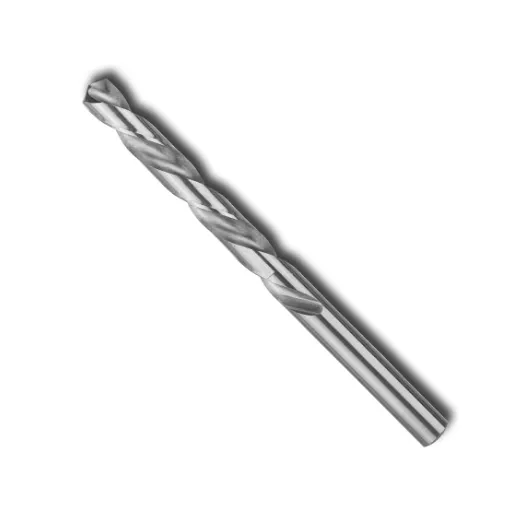
For an M6 x 1.0 thread, the tap drill is 5.0 mm. Fine M6 x 0.75 uses 5.2 mm. For a clearance hole that an M6 bolt passes through, use 6.6 mm, with 6.4 mm for a close fit and 7.0 mm for a free fit.
The first thing to settle is which job you are drilling for. A tap drill makes a hole you cut threads into. A clearance hole lets the bolt slide through so it can thread into something behind it. They are different holes with different sizes, and mixing them up is the most common M6 mistake.
A 6.0 mm hole cannot be tapped for M6. The tap needs material to cut into, so the hole must be smaller than the 6.0 mm thread. Equally, a 5.0 mm clearance hole is too tight for a 6.0 mm bolt shank. Match the hole to the job before you pick up a bit.
M6 Tap Drill Size (Cutting Taps)
The metric formula is simple: tap drill = major diameter minus pitch. For M6 x 1.0, that is 6.0 minus 1.0, which gives 5.0 mm. This size cuts roughly 75% thread engagement, the industry standard.
| M6 thread | Pitch | Cutting-tap drill (approx. 75%) | Notes |
|---|---|---|---|
| M6 x 1.0 (coarse) | 1.0 mm | 5.0 mm | Standard for general use |
| M6 x 1.0 (lighter, about 65-70%) | 1.0 mm | 5.1 mm | Eases tapping in stainless and hard steel |
| M6 x 0.75 (fine) | 0.75 mm | 5.2 mm | Fine-thread tap drill |
| M6 x 0.5 (extra-fine) | 0.5 mm | 5.5 mm | Extra-fine tap drill |
If you only have imperial bits, a #9 wire-gauge drill (0.196 in, 4.98 mm) is the closest match to 5.0 mm. A 13/64 in bit (5.16 mm) also works but cuts shallower threads, so it’s a fallback rather than a first choice.
Fine threads change the tap drill because the pitch changes. If you are unsure which pitch you have, our M6 thread pitch guide explains how to read coarse versus fine markings. When in doubt, measure the thread with a pitch gauge before you drill.
Drilling for a client project? Oushike manufactures power tools and accessories built for consistent performance in demanding shop conditions. Request a quote for your drill and bit requirements.
M6 Clearance Hole Sizes (ISO 273)
When an M6 bolt passes through one part to thread into another, the first part gets a clearance hole. ISO 273 defines three fits.
| ISO 273 fit | M6 clearance hole | When to use it |
|---|---|---|
| Close fit | 6.4 mm | Alignment is critical and you want minimal play |
| Normal / medium fit | 6.6 mm | Default for general assembly |
| Free fit | 7.0 mm | Parts need to shift, or holes are punched rather than drilled |
Use 6.6 mm as your default. Choose 6.4 mm when alignment matters more than play, and 7.0 mm when parts need room to move or when you are drilling through coated material.
A quick word of caution. Some charts label the 6.4 and 6.6 mm columns differently, and a few list 6.2 and 6.4 mm instead. The ISO 273 series is 6.4, 6.6, and 7.0 mm. If you’re working to a drawing, confirm which fit it calls for before you drill.
If the fastener is a socket head cap screw, the head may need a counterbore to sit flush.
Thread Engagement: Why 5.0 mm Works
Thread engagement is how much of the full thread depth the tap actually cuts. It drives both strength and how hard the tap works.
| Engagement | Thread strength | Tapping torque and tap life | Use for |
|---|---|---|---|
| 50-60% | About 75-83% of full | Low torque, longest tap life | Stainless, titanium, hardened alloys, deep blind holes |
| 65-70% | Good | Low | Hard materials and deep blind holes |
| 75% | About 90% | Standard | Most applications |
| 85% | Slightly higher | High torque, shorter tap life | Soft aluminum and plastics for extra strength |
| 100% | Maximum | Very high, tap breakage risk | Not recommended |
The trade-off is the reason 75% became standard. Moving from 75% to 100% engagement adds only about 5-10% more pull-out strength but roughly doubles tapping torque. At 75%, the internal thread already carries about 90% of full-depth load, so the screw typically breaks before the thread strips.
In practice, a 75% thread also keeps taps alive far longer, often three to five times longer than at 85%. When you are tapping hundreds of holes, that difference decides your tooling cost.
One habit worth keeping: if the calculated size isn’t on the shelf, round up to the next bit, never down. Rounding up drops engagement by only 1-3%, which is safe. Rounding down overloads the tap.
Drilling M6 in Different Materials
The 5.0 mm default assumes mild steel, brass, or aluminum. Harder and softer materials both need adjustment.
| Material | Recommended M6 x 1.0 tap drill | Why |
|---|---|---|
| Aluminum, brass, mild steel | 5.0 mm (standard) | Standard 75% engagement works well |
| Stainless steel, hardened steel | 5.1 mm (or 50-60% engagement) | Cuts torque and prevents tap breakage and work-hardening |
| Cast iron | 5.0 mm, cutting tap only | Brittle, so a forming tap will not work |
| Soft plastics | 4.9 mm | Plastics strip easily, so a tighter hole adds grip |
| Wood and engineered board | Use a threaded insert or a nut | Wood has no cut thread, so an M6 machine screw needs a fixing |
Daniel runs a small fabrication shop in Manchester, and he learned the stainless rule the hard way. He tapped a batch of M6 holes into 304 stainless brackets with a 5.0 mm bit. Two taps snapped before lunch, and the third galled a hole beyond repair.
Switching to 5.1 mm, a slower spindle speed, and plenty of cutting fluid cleared the whole batch without another breakage. That extra tenth of a millimeter cost him nothing and saved an afternoon.
Forming (Roll) Taps: Drill 5.5 mm, Not 5.0 mm
Forming taps, also called roll taps, do not cut material. They push it into shape. That single difference changes the drill size.
For an M6 x 1.0 forming tap, use a 5.5 mm drill. A 5.0 mm hole is too small, because the displaced material needs somewhere to go. Using a cutting-tap drill for a forming tap can tear the hole or break the tap.
| M6 thread | Forming (roll) tap drill |
|---|---|
| M6 x 1.0 | 5.5 mm |
Forming taps have real advantages. They produce no chips, which suits blind holes and clean assembly, and they create stronger threads because the grain flows with the form rather than being cut. They only work in ductile materials such as aluminum, copper, and mild steel, though. Skip them for stainless above roughly 30 HRC, hardened steel, and cast iron.
One detail to keep straight: 5.5 mm is also the cutting-tap drill for the extra-fine M6 x 0.5 thread. It’s the same number for two different reasons. Check your tap type and thread pitch before you drill.
Blind vs Through Holes: Getting the Depth Right
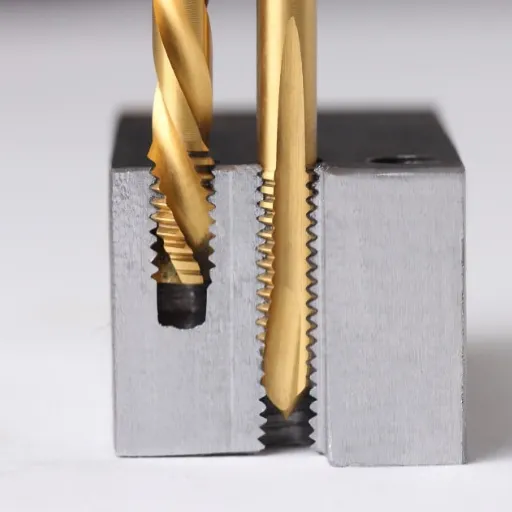
Hole depth matters as much as hole diameter, especially for blind holes.
A through hole goes all the way through the part, so chips exit forward. A spiral-point (gun) tap suits this best.
A blind hole stops partway, and here the tap needs extra room. The first two or three threads of a tap are a lead chamfer that cuts nothing, and chips must collect somewhere. Drill deeper than your required thread depth to cover both. A practical rule is to add at least 1.5 times the pitch beyond the thread depth.
A callout on a drawing often reads something like this: M6 x 1.0 – 6H 12 mm FULL THREAD, 15 mm DRILL DEPTH. The two numbers are not the same, and that is deliberate. Use a spiral-flute tap on blind holes so chips curl back out of the hole.
If a threaded joint strips at the bottom of a blind hole, the thread is usually fine. The depth or the chip room was wrong, and the tap never cut full threads where the screw needed them.
How to Drill and Tap an M6 Hole
Follow the same sequence every time and M6 work becomes predictable.
- Mark the center with a center punch so the bit doesn’t walk. Use a spotting drill for accurate placement on hard materials.
- Drill the correct hole with a sharp bit, keeping it square to the surface.
- Add cutting fluid before you tap. Stainless especially needs lubrication, and forming taps need a high-lubricity oil.
- Control your speed. For reference, stainless runs at roughly 200-300 RPM, while aluminum tolerates 1,000-2,000 RPM. Slow down for harder material.
- Use a tap wrench. A T-handle or bar-style wrench applies even pressure. Pliers or an adjustable wrench apply uneven force and break taps.
- Verify the thread with a go/no-go gauge, or thread an M6 screw in by hand. If you need to check the screw itself, our guide on how to measure screw size walks through diameter, pitch, and length.
Also watch your depth-to-diameter ratio. Standard twist drills tend to wander past about five times their diameter in depth. Past that point, step up to a stub drill or a spotting drill first.
Drill Bits and Taps for M6: What to Buy
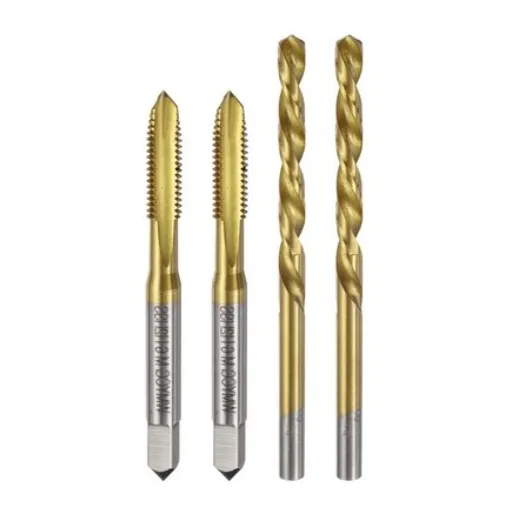
Metric drill bits come in 0.1 mm increments, which makes M6 straightforward to tool for. The sizes to keep on hand are 5.0 mm and 5.5 mm for tapping, and 6.4, 6.6, and 7.0 mm for clearance holes.
Bit material matters as much as size. High-speed steel (HSS) covers general work. Cobalt (HSS-Co, or M35) handles stainless and hard steel, where a standard bit dulls fast.
Carbide suits high-volume production and abrasive materials. Coatings such as TiN or black oxide extend bit life and improve chip flow.
For taps, match the type to the hole. Spiral-point taps clear chips forward and suit through holes. Spiral-flute taps pull chips back out and suit blind holes.
Forming taps suit ductile materials and clean assembly. A tap set with taper, plug, and bottoming taps covers most shop situations.
Sourcing Drills, Bits, and Tap Sets for Your Business
For distributors and brands, a complete drilling and tapping line is a product category in itself. The global power tools market was worth about US$34.7 billion in 2025 and is forecast to reach roughly US$72.3 billion by 2033, growing at nearly 10% a year according to Grand View Research. Drills alone are the largest segment at roughly 36% of that market, and the fastest growing.
That demand is why stocking the tools that make M6 holes is a practical line, not a niche. A focused range covers metric drill bit sets that include 5.0 and 5.5 mm, cobalt bits for stainless, and M6 tap sets, paired with the drills that drive them.
Oushike supports that line with factory-direct pricing, flexible MOQ, and multi-stage quality control on every batch. We also offer OEM and private label programs, so you can build a branded drill and bit set without carrying manufacturing overhead. Whether you need standard drill bits or a customized set for your market, our team can help.
M6 Drill Size FAQ
What size drill bit for an M6 tap?
For an M6 x 1.0 thread, use a 5.0 mm tap drill. It cuts about 75% thread engagement, the standard for general use. Round up to the next available size if 5.0 mm isn’t on hand.
What size pilot hole for an M6 screw?
For a tapped metal hole, the M6 pilot hole is the tap drill: 5.0 mm for M6 x 1.0. It becomes a threaded M6 hole once tapped. In wood, “pilot hole” means a smaller guide hole that stops the screw splitting the grain, so an M6 machine screw there needs a threaded insert or a nut.
What size drill for an M6 x 0.75 fine thread?
Fine M6 x 0.75 uses a 5.2 mm tap drill because the smaller pitch needs a slightly larger hole. Extra-fine M6 x 0.5 uses 5.5 mm.
What size clearance hole for an M6 bolt?
Use 6.6 mm for a normal clearance hole. Choose 6.4 mm for a close fit or 7.0 mm for a free fit, following ISO 273. Most assembly work defaults to 6.6 mm.
Do I use the same drill for a forming tap?
No. A forming (roll) tap for M6 x 1.0 needs a 5.5 mm hole, not 5.0 mm, because it displaces material instead of cutting it. Never use a cutting-tap drill size for a forming tap.
Can I use a 13/64 inch bit for M6?
Yes, in a pinch. A 13/64 in bit measures 5.16 mm, close to 5.0 mm, but it cuts shallower threads and lowers engagement. A #9 drill at 4.98 mm is a closer match if you have one.
How deep should I drill for a tapped M6 hole?
For a blind hole, drill deeper than your thread depth to allow for the tap chamfer and chip buildup. A working rule is to add at least 1.5 times the pitch beyond the required thread depth.
What drill for M6 in stainless steel?
Use 5.1 mm, or drop to 50-60% engagement, and tap slowly with cutting fluid. The slightly larger hole cuts torque and protects the tap from breakage.
Where can I buy M6 drill bits and tap sets in bulk?
Oushike manufactures power tools, drill bits, and accessories for distributors and brands. Request a quote for bulk orders, OEM, and private label programs.
Conclusion
The m6 drill size you need depends on the job, and now you’ve got the full picture. Drill 5.0 mm to tap an M6 x 1.0 thread. Use 5.2 mm for fine M6 x 0.75 and 5.5 mm for M6 x 0.5.
Drill 6.6 mm for a standard clearance hole, 5.1 mm for stainless, and 4.9 mm for soft plastics. If you’re using a forming tap, go to 5.5 mm and never reuse the cutting-tap size.
Two habits keep M6 work reliable. First, always match the hole to the job before you pick up a bit. Second, respect the material.
Stainless, plastics, and blind holes each ask for an adjustment, and ignoring it costs taps and parts. For the full fastener picture, see our M6 screw size guide, and pick the right driver with our M6 Allen key and tool sizes.
Oushike supplies power tools, drill bits, tap sets, and accessories for distributors and brands worldwide. Factory-direct pricing, flexible MOQ, and consistent quality come standard. Contact our team to request a catalog or a bulk quote.