
Nut Runner Maintenance: Calibration Schedules and Best Practices
A well-maintained nut runner can last ten years or more on a production line. A neglected one can drift out of tolerance in six months and start producing bad joints without anyone noticing. Nut runner maintenance is the difference between predictable assembly quality and unexpected rework, warranty claims, or field failures.
Yet most facilities treat maintenance as an afterthought. Tools run until they break. Calibration schedules exist on paper but are rarely followed. Operators ignore early warning signs because production pressure takes priority. This approach works until it does not. When a critical joint fails in the field, the cost of that skipped calibration becomes obvious.
This guide gives you practical nut runner maintenance schedules organized by power source, explains calibration standards and frequencies, and provides a troubleshooting framework you can use immediately. Whether you manage a single assembly station or a plant with two hundred tools, these procedures will help you prevent downtime and extend tool life.
Key Takeaways
- Calibrate nut runners every 12 months or 5,000 cycles under normal conditions, and every 3 months for critical applications.
- Daily visual inspections, proper lubrication, and power supply checks prevent 80% of common failures.
- Pneumatic tools need daily oiling and moisture control; electric tools need clean motor vents and battery care.
- ISO 6789 governs hand torque tools, while ISO 5393 and VDI/VDE 2645-2 apply to powered production nut runners.
- Apply the 50% rule for repair vs. replace decisions: if repair costs exceed half the replacement price, replace the tool.
- Operating within specified torque ranges and maintaining proper records can extend tool life by 30% or more.
Why Nut Runner Maintenance Matters
Maintenance is not a cost center. It is an investment in predictable quality. When a nut runner drifts out of calibration, it does not fail all at once. It produces a growing percentage of joints that are undertightened or overtightened. That variance spreads through your production line quietly until an audit catches it, or worse, a customer does.
The Hidden Cost of Poor Maintenance
Unplanned tool downtime on a high-volume automotive line can cost $500 to $2,000 per hour in lost production alone. That figure does not include the cost of rework, scrap, or the labor to isolate and re-torque suspect joints. A single failed field recall can erase years of savings from skipped maintenance.
An automotive plant in Detroit learned this lesson firsthand. Their procurement team selected nut runners rated exactly to their cylinder head bolt torque requirement of 120 newton-meters. They skipped the recommended six-month calibration cycle to save on service costs. After nine months of production, torque audits revealed that 3% of tightenings fell below specification due to calibration drift and joint friction variation. The plant faced a recall investigation, reworked three weeks of production, and upgraded their entire tool fleet. The skipped calibrations saved $2,000. The fallout cost nearly $50,000.
How Maintenance Affects Torque Accuracy
A nut runner’s internal components wear with every cycle. Gearbox tolerances loosen. Clutch surfaces degrade. Transducers drift. These changes happen gradually, which makes them easy to miss. Regular calibration catches drift before it affects product quality.
Compliance and Warranty Implications
Many industries require documented calibration records for audit purposes. Aerospace, medical device, and automotive suppliers must demonstrate traceability to ISO standards. Missing calibration certificates can block shipments, void warranties, or trigger supplier quality holds. Preventive nut runner maintenance protects more than tool life. It protects your customer relationships.
Daily Nut Runner Maintenance Checklist
Regardless of power source, every nut runner benefits from a consistent daily routine. These checks take two minutes and prevent the majority of common failures.
Before Each Shift
Inspect the tool housing for cracks, damage, or loose fasteners. Check warning labels and pictograms to ensure they are legible. Examine the drive accessory: impact sockets, reaction arms, spring clips, and circlips should show no deformation or wear. A damaged reaction arm is a safety hazard, not just a maintenance issue.
Verify the power supply. For electric tools, check cables and plugs for fraying or exposed wire. For pneumatic tools, inspect hoses and fittings for leaks. For cordless tools, confirm the battery is charged and within its operating temperature range. For hydraulic tools, check hose integrity and connector tightness.
Listen during the first few cycles. Unusual noise or vibration often signals bearing wear, gearbox damage, or misalignment. Catching these signs early prevents catastrophic failure.
After Each Shift
Wipe down the tool with a soft, lint-free cloth. Never use water, solvents, abrasive cleaners, or high-pressure air on motors, bearings, or electronic components. Store the tool in its transport case or designated holder. Disconnect power before any cleaning or inspection.
Nut Runner Maintenance by Power Source
Each power source has unique maintenance requirements. Organizing your nut runner preventive maintenance plan by power type ensures nothing gets overlooked.
Pneumatic Nut Runner Maintenance
Pneumatic tools are robust but sensitive to air quality and lubrication. Poor maintenance causes the majority of pneumatic nut runner failures.
Daily tasks: Lubricate the tool with manufacturer-approved oil at the start of each shift. Check the air supply for moisture. A water separator or desiccant dryer upstream of the tool is essential. Moisture in the air line causes internal corrosion, seal degradation, and erratic torque output.
Weekly tasks: Inspect air filters and drain moisture traps. Check regulator settings against the manufacturer’s specification. A drop in line pressure reduces torque output even if the tool appears to run normally.
Quarterly tasks: Service the motor and gearbox. Replace worn seals and gaskets. Inspect the shut-off clutch for wear. Refresh lubrication in the planetary gearbox. Tools used in dusty environments or multi-shift operations need this service every three months. Standard single-shift operations can extend to six months.
The most common pneumatic failure is stalling under load. In most cases, the cause is insufficient lubrication. A maintenance supervisor at a Midwest stamping plant traced 80% of their pneumatic nut runner stalls to skipped daily oiling. After instituting a checklist at each workstation, stall-related downtime dropped by 75%.
Electric and Cordless Nut Runner Maintenance
Electric tools require less daily attention than pneumatic tools but are more sensitive to contamination and heat.
Daily tasks: Clean motor air intake vents with a soft cloth. Clogged vents cause overheating, which degrades motor insulation and shortens tool life. Inspect cables, connectors, and battery contacts for damage or corrosion. Check the LED display or controller for error codes.
Weekly tasks: Verify torque settings against the work instruction. Inspect the spindle and output shaft for wear. Check that the reaction arm mounts securely without play.
Monthly tasks: Review cycle counts if the tool tracks them. Many modern DC nut runners display or log cycle counts. This data helps predict calibration needs before tolerance drift occurs. Clean battery contacts with a dry cloth. Store spare batteries at 40-60% charge in a cool, dry location. Never leave batteries in direct sunlight or in freezing conditions.
Quarterly tasks: Lubricate the spindle assembly and planetary gearbox per manufacturer specifications. Use the recommended grade of oil or grease. Wash off old grease before reapplying to prevent contamination. Inspect internal wiring, especially on transducerized tools, where damaged sensor cables cause erratic torque readings.
Hydraulic Nut Runner Maintenance
Hydraulic systems are the most forgiving in harsh environments but require attention to fluid integrity and pressure system integrity.
Daily tasks: Check hydraulic fluid levels and inspect hoses for abrasions, kinks, or leaks. Verify that quick-connect fittings seal properly. A leak at 10,000 psi is both a safety hazard and a torque accuracy problem.
Weekly tasks: Clean external surfaces, especially around the piston and reaction arm mounting points. Inspect the torque wrench head and square drive for deformation.
Monthly tasks: Check hydraulic fluid for contamination. Water or particulate matter in the fluid damages seals and reduces pressure consistency. Replace fluid per the manufacturer’s schedule, typically every 6-12 months depending on duty cycle.
Quarterly tasks: Have a qualified technician inspect the hydraulic pump, relief valve, and pressure gauge calibration. The pump output directly affects torque accuracy. If the pump is out of spec, the tool will be too, regardless of the tool’s own condition.
Nut Runner Calibration Schedules and Procedures
Calibration is the cornerstone of nut runner maintenance. If you are wondering how to calibrate a nut runner correctly, the process depends on the tool type, application criticality, and the standard your quality system requires. A tool can look fine and sound fine while delivering torque that is 10% or more off target.
How Often to Calibrate
Calibration frequency depends on application criticality and duty cycle. Here are the standard industry intervals:
| Application Type | Calibration Interval | Cycle-Based Guideline |
|---|---|---|
| Standard industrial assembly | 12 months | Every 5,000 cycles |
| High-volume production | 6 months | Every 2,500 cycles |
| Critical joints (aerospace, medical, engine assembly) | 3 months | Every 1,000-2,000 cycles |
| After repair or component replacement | Immediate | Before returning to production |
For critical applications, many manufacturers recommend calibrating at 20%, 60%, and 100% of the tool’s rated capacity. Testing at multiple points across the range identifies non-linear drift that a single-point test might miss.
Modern DC electric nut runners with built-in cycle counters may signal calibration needs automatically. Some models flag service intervals at 100,000 cycles. Always defer to the manufacturer’s manual when it specifies a different interval.
ISO Standards Explained
Three standards govern nut runner calibration, and understanding the difference matters for compliance.
ISO 6789 applies to hand torque tools such as click wrenches and dial-indicating torque screwdrivers. It specifies calibration procedures, measurement uncertainty, and certificate requirements. The current edition is ISO 6789:2017-2. For a practical overview of calibration principles from an industry leader, see the Atlas Copco Pocket Guide on Calibration.
ISO 5393 applies to powered rotary torque tools, including electric and pneumatic nut runners. It defines machine capability tests (MCT) that measure a tool’s accuracy and repeatability under production conditions. This is the standard most relevant to powered nut runner calibration.
VDI/VDE 2645-2 is a German standard gaining global acceptance for testing power assembly tools. It provides additional test methodologies that complement ISO 5393, particularly for tools with advanced control strategies like torque-angle monitoring.
In practice, your calibration provider should test powered nut runners to ISO 5393 or VDI/VDE 2645-2, with torque measurements traceable to ISO 6789 principles. Always use an ISO/IEC 17025 accredited laboratory for official calibration certificates.
In-House vs. Accredited Lab Calibration
Some large facilities maintain in-house calibration benches for routine checks between formal calibrations. This is practical for verifying that a tool has not drifted significantly. However, in-house checks do not replace formal calibration from an accredited lab. Audit-ready certificates must come from an ISO/IEC 17025 accredited provider.
What a Calibration Certificate Should Include
A proper certificate documents “as-found” and “as-left” data at each test point. It includes the reference standard used, its traceability, ambient temperature, and measurement uncertainty. Keep these records for the life of the tool plus any period required by your quality system. They are your proof of compliance.
Nut Runner Troubleshooting: Common Failure Modes and Fixes
Effective nut runner troubleshooting starts with knowing the early warning signs. Recognizing symptoms before they escalate helps you act before a tool damages product or injures an operator.
Electric and Cordless Tool Failures
| Symptom | Likely Cause | Action |
|---|---|---|
| Tool will not start | Depleted or faulty battery; battery outside temperature range | Charge or replace battery; allow battery to reach ambient temperature |
| Overheating quickly | Clogged motor air intake vents | Clean vents with soft cloth; reduce duty cycle |
| Tool shuts down with error code | Internal overheating; torque rate exceeded; software needs update | Allow cooling; verify bolting parameters; check for firmware updates |
| Unusual noise or vibration | Worn gearbox bearings or loose output shaft | Stop use; inspect bearings and shaft; send for service |
| Burning odor | Motor failure or electrical short | Shut down immediately; do not use; send for professional repair |
| Torque not reached consistently | Incorrect process parameters; calibration drift | Review bolting strategy; schedule calibration |
Pneumatic Tool Failures
| Symptom | Likely Cause | Action |
|---|---|---|
| Slowing or stalling under load | Insufficient lubrication; worn internal components | Oil tool daily; inspect motor and gearbox |
| Low power output | Worn seals; excess moisture; damaged regulator | Check air dryer; inspect seals; verify regulator setting |
| Air leaks | Damaged seals, loose fittings, cracked housings | Do not use; tag out and repair immediately |
| Erratic torque | Moisture in air line; worn clutch | Drain moisture traps; inspect and replace clutch if worn |
Hydraulic Tool Failures
| Symptom | Likely Cause | Action |
|---|---|---|
| Slow piston return | Low hydraulic fluid; contaminated fluid | Check and replace fluid; inspect pump output |
| Torque variance | Worn seals; pressure gauge drift | Inspect seals; verify pump calibration |
| External leaks | Damaged hose or fitting | Shut down; replace damaged components before resuming |
When to Stop Using a Tool Immediately
Never operate a nut runner that shows visible housing cracks, damaged electrical cables, air or hydraulic leaks, or a compromised reaction arm. Tag the tool out of service and send it for repair. Operating a damaged tool risks operator injury and product liability.
Extending Tool Life: Best Practices
Beyond scheduled maintenance, several operational habits significantly extend tool life.
Operate Within Specified Ranges
Running a tool at its maximum rated torque for every cycle accelerates wear. Select a tool with 20-30% headroom above your typical requirement. This margin reduces stress on the gearbox, clutch, and motor. Proper tool selection is part of good nut runner maintenance.
Train Operators Properly
Many failures stem from misuse rather than wear. Operators should know how to recognize abnormal noise, vibration, or torque feedback. They should understand when to stop and tag out a tool. A fifteen-minute training session at onboarding prevents days of downtime later.
Control the Environment
Excessive dust, moisture, and temperature extremes shorten tool life. Pneumatic tools suffer in humid environments without proper air drying. Electronic components in electric and cordless tools degrade in high heat. Store tools in clean, dry conditions between shifts.
Maintain Records
Track calibration dates, cycle counts, maintenance actions, and repairs for each tool. This history helps you identify patterns, predict failures, and justify replacement timelines. It also satisfies audit requirements in regulated industries.
A German wind energy contractor implemented a simple logbook system for their fifty-tool fleet. Each tool carried a card recording every calibration, repair, and battery replacement. After two years, they could predict battery failures two weeks in advance based on cycle count trends. Preventive replacements eliminated unplanned downtime during their critical spring maintenance season.
Repair vs. Replace: A Decision Framework
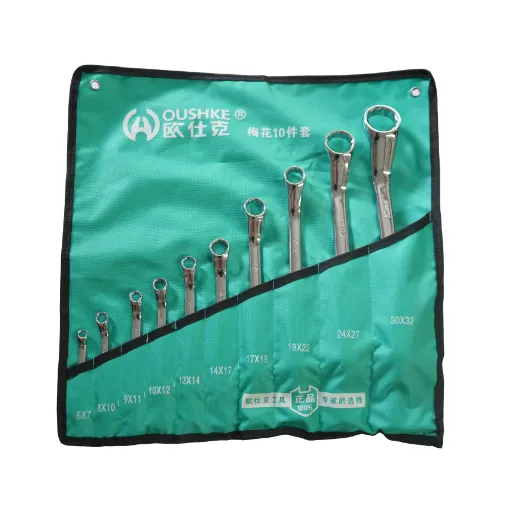
Every maintenance program eventually faces the repair or replace question. A clear framework prevents emotional decisions and keeps costs predictable.
The 50% Rule
The standard guideline in industrial tool management is simple. If the repair cost exceeds 50% of the replacement price, replace the tool. This accounts for the fact that heavily worn tools often suffer cascading failures. Fixing one problem reveals another.
Consider Cascading Failures
A tool that has not been regularly maintained often hides multiple worn components. The gearbox may need rebuilding, the clutch may be worn, and the transducer may be drifting. Repairing all three often approaches replacement cost. It also leaves you with a tool whose remaining components are still aged.
Factor in New Technology
Replacement tools often include improvements the old tool lacks. Newer electric nut runners offer better battery technology, improved ergonomics, or data logging capabilities that older models do not. When the repair cost is close to the threshold, the added value of new features can tip the decision toward replacement.
Calculate Downtime Cost
Do not compare only the repair cost to the replacement price. Factor in the downtime. A repair that takes two weeks may cost more in lost production than a next-day replacement. For critical stations, keeping a spare tool on hand eliminates this calculation.
Conclusion
Nut runner maintenance is not optional upkeep. It is quality assurance. A consistent schedule of daily inspections, periodic lubrication, and regular calibration keeps your tools accurate, your operators safe, and your production predictable.
Start with the daily checklist. Add power-specific maintenance tasks based on your tool mix. Set calibration intervals based on your application’s criticality. Track records. And apply the 50% rule when repair costs mount.
For a broader view of nut runner technology and selection, see our complete nut runner guide. To understand the torque specifications that should guide your tool selection and maintenance planning, refer to our nut runner torque range guide. For workplace safety practices that complement your maintenance program, read our guide to nut runner safety and ergonomics.
If you need support with OEM nut runner solutions, spare parts, or factory-direct tool sourcing, contact our team. From standard products to custom specifications, we help you maintain reliable performance on your production line.