
Hammer Types: Complete Guide to Every Hammer Style
Regardless of whether you are a professional in the trades or simply someone who enjoys doing home improvement projects, hammers are without a doubt among the most versatile and indispensable tools that one can keep in their tool kit. The variety of hammer types is so vast and eclectic that each one has been custom-designed for a specific function. Knowing their characteristics and distinctive applications is essential for selecting the appropriate hammer for the job. The article would embrace everything concerning hammers right from the hard-wearing framing ones used in major construction projects to a range of soft mallets in the woodwork or even given by artisans in gentle restorations. This all-inclusive overview will not only give you the basics of the tool but also enable you to be skillful in choosing and applying the right hammer for any job, be the case your intention to get the utmost efficiency from your work or just to expand your knowledge on hand tools.
Introduction to Hammers and Their Uses
What is a Hammer?
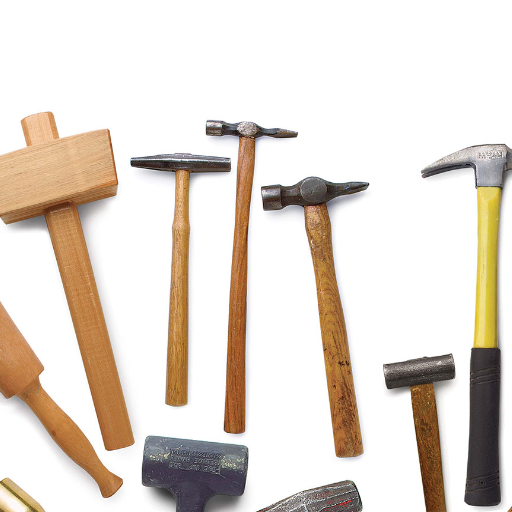
A hammer, so to speak, is a very strong hand tool that can perform a lot of different actions. It is mainly used for building, repairing and making new things. The hammer is made of two parts: the handle and the head, the latter being heavy and metallic, usually one part is for striking while the other is designed for activities such as prying or pulling nails. Different types of hammers in different sizes have been made to perform various operations like driving nails, breaking things, shaping materials, or even doing precision work. It is its long life and versatility that have caused its widespread use in various fields and applications.
Knowing Different Hammers
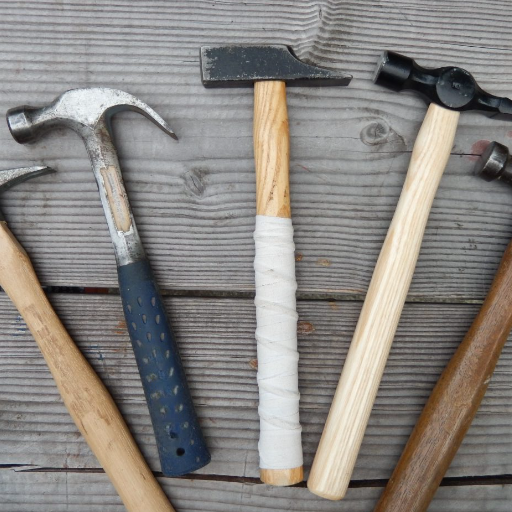
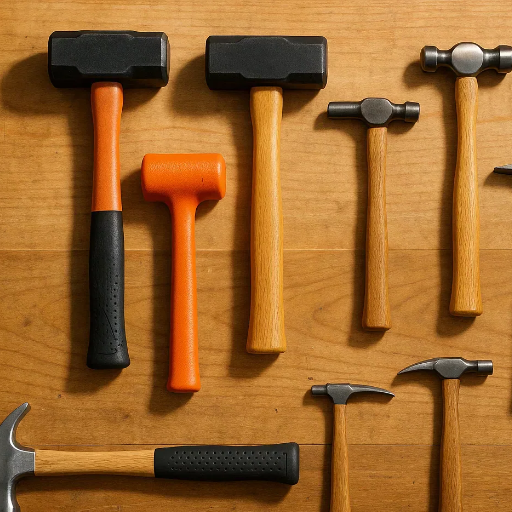
Hammers differ in types but they all belong to one category namely- hand tools. Claw hammers, being the most commonly used, with its striking surface and curved claw for pulling nails, are the first among the classification. Next in line is the ball-peen hammer which is favored in metal working, due to its rounded peen which is ideal for shaping metal and closing rivets. Sledgehammers are very large and heavy thus require significant impact for tasks like breaking concrete and they are the ones to be used. However, for precise tasks like woodworking, mallets with soft or rubber heads are used to avoid damaging delicate surfaces. Specialty hammers like brick hammers or electricians’ hammers are for specific industries that reveal the versatility and purpose-driven engineering of these tools.
Left Hammer Choice Importance
The selection of the proper hammer is elemental, the impact on the rest of the factors like erasing even the smallest mistakes and the safety of the process is definitely a big one. It every time that a hammer is used according to the type of material and the specific purpose that moment, not only will there be no damage to the workpiece, but also the user will feel less tired. As an instance, the heavyweight of a sledgehammer is just perfect for demolition while a claw hammer is for the opposite process of driving and pulling out nails. However, if a wrong hammer is applied, like a steel-headed hammer on softwood, it will either smash the workpiece totally or not yield very good results. It is up to professionals and DIYers to decide upon which of the following criteria they would like to include- hammer weight, head material, handle grip, and task requirements- in order to come up with the most effective and optimal methods and results.
Common Hammer Types
Claw Hammer
The claw hammer, which is one of the most versatile and commonly used hammers, is primarily intended for driving and extracting nails. This type of hammer has two sides, one for driving nails and the other for removing them without tearing the surrounding area too much. Generally, the hammerhead is steel for the sake of durability, while the handle is made of wood, fiberglass, or metal with an ergonomically designed grip that provides control and less fatigue. The hammer’s light weight in combination with a perfectly balanced buildup is the main reason why it is so good for woodworking and general construction tasks, if used correctly, it will ensure both efficiency and accuracy. The choice of the right claw hammer according to its weight and type of handle is the key to getting the desired result without straining or damaging the material.
Ball Peen Hammer
The ball peen hammer, a tool with multiple purposes, is commonly known as a machinist’s hammer and is primarily used for metalworking and shaping. It has a pair of heads placed opposite to each other—the flat one meant for the purpose of driving punches or chisels and the other that is rounded and ball-shaped which is used for riveting, texturing or smoothing metal surfaces. A hammer of this type is typically produced from tough steel, and has a wooden or fiberglass handle that allows the hammer to withstand the impact of regular use. Choosing the appropriate size and weight is critical to obtaining the best results without exhausting the user, particularly when it comes to metal fabrication or repairs, which are already difficult tasks.
Framing Hammer
A framing hammer is a heavy tool, especially for hammering, in fact, the longest among all hammers and the strongest in doing so. The hammer’s longer handle is made of steel, fiberglass or wood and it usually gives maximum leverage and the force of driving. The weight of the hammerhead of framing hammer is heavier than that of a regular claw hammer that usually ranges between 20 and 32 ounces enabling it to drive large nails into even the hardest of materials promptly. Most of the framing hammers are built with a milled face that helps to keep the nails in their positions during strikes and also that comes along with a straight claw for the purpose of prying apart boards or dismantling structures. The hammer size and its materials are determined in such a way that they maximize durability, lessen fatigue and increase precision, where the application is high impact.
Specialized Hammers
Dead Blow Hammer
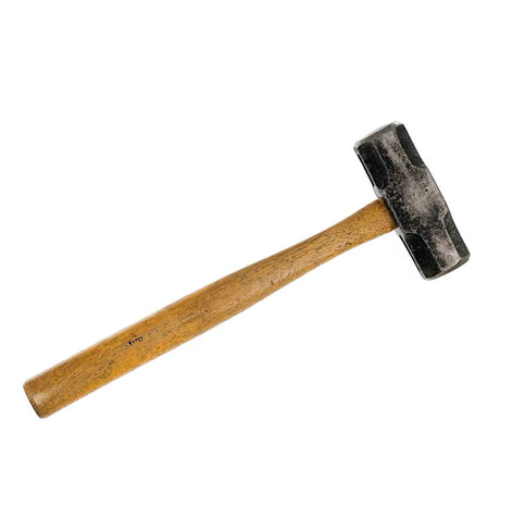
A dead blow hammer is a tool that has been designed specifically to absorb the force and to deliver a precise strike without leaving a mark on the surface struck. This effect comes from the hammer’s hollow head which is filled, to a certain extent, with either sand, steel shot or some other granule that absorbs the vibrations from the impact and prevents the hammer from rebounding back after the hit. Therefore, the dead blow hammer finds its application where the utmost precision is needed, for example, in automotive work, assembly and maintenance where even slight excess force might lead to accidents or damages. In addition, the hammer’s head made of long-lasting materials such as polyurethane or rubber does not only leave no marks but also keeps the surface from getting damaged during the process. Its ergonomic design which emphasizes energy transfer is a user’s fatigue-free working scenario and an ergonomic treatment of the application area.
Brick Hammer
A brick hammer, also known as a mason’s hammer, is an assistant for brick laying and a masterpiece of an expert tool. The hammer has a very smartly designed double-purpose with a flat striking face on one side for the breaking and shaping of bricks and stones and on the other side a chisel-like blade for the careful scoring and splitting. The head is usually made of hard metal which enables the tool to withstand the impacts repetitively while at the same time providing a degree of durability to the user; in addition, the handle is commonly made of wood, fiberglass, or metal according to their strength and shock absorption qualities. The tool is a must for such operations as brick sizing, mortar removal, and stone shaping, and is very much utilized in the construction sector, gardening, and other masonry crafts. It is built to support both controlled precision and heavy impact, hence, it is a must-have for both top-notch builders and home improvement hobbyists.
Electrician Hammer
An electrician hammer is a specialized tool for electrical work that emphasizes safety and precision in the application. The head commonly has a claw for removing nails and is hardened for fastening activities, along with a flat striking area that is perfect for driving in nails or staples. The handle is usually covered with non-conductive materials such as rubber or fiberglass to protect the user from electric shocks when working on live circuits. This unique design allows the electrician hammer to be a versatile and essential tool for electrical workers since it offers both safety and ability to work in a wide range of places.
Using a Hammer Effectively
Proper Grip and Technique
To operate a hammer skillfully, first, confirm a gripping position that is strong and yet comfortable on the handle, placing your palm towards the end of the handle for the utmost leverage. Make the hammer head point to the exact spot and control the motion by swinging with smoothness and with the right amount of force, not using brute force. Coordinate the movement of your wrist and arm, keeping the hammer’s striking surface in line with the nail or material, thus ensuring precision and efficiency. Proper technique minimizes injury risk, improves accuracy, and the tool’s life is also extended.
Safety Tips When Using Hammers
- Always put on the proper protective gear, such as safety goggles, to protect your eyes from any debris that might fly
- Before using, check the hammer for any defects, such as loose or broken handles, to prevent the hazards that might occur during use
- Keep a tight hold on the handle and make sure you work in a well-organized place to minimize the chances of an accident
- Always choose the right hammer for the job, as this will not only boost efficiency but also save both the tool and the material from damage
- Do not use more force than is necessary, as this may result in loss of control or even an injury
- Keep hammers in a place that is safe and dry, so their condition is not compromised, and they are always ready for the next use
Maintenance of Hammers
Hammers, if they are treated well, will have a long life and will be safe for handling. Can you see the hammer? Look for any signs of trouble such as the hammer’s head coming loose, showing cracks on the handle, or having splinters, it is something you should always be aware of, and fix each problem before it gets too late. After each use of the hammer, remove the dirt or the residue and let the hammer dry very well to keep rust away. If your hammer is with a wooden handle, give it a soaking with linseed oil occasionally so it gets and stays tough and doesn’t dry up or crack. Never keep hammers in a place where there is moisture, they will lose their luster, and use a certain tool rack or toolbox to prevent them from getting injured. By treating this tool well, you are not only extending its life but also keeping it sharp for use.
Choosing the Right Hammer for the Job
Factors to Consider
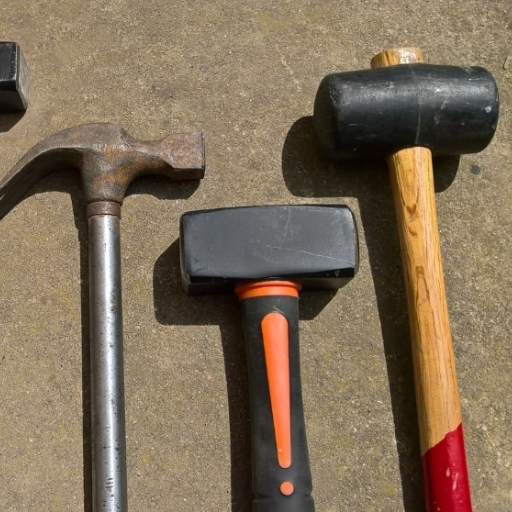
Hammer Head Weight: The principal factor that determines the overall impact of the hammer and the one that most certainly influences the force delivered by each blow is the hammer head’s weight. In situations where very delicate and fine work such as making cabinets or covering furniture is done, a hammer of 8 to 16 ounces is recommended, while for demolition or framing a hammer of more than 20 ounces is required.
Handle Material: Handle material is also one of the most important factors, and the most frequently used ones are wood, fiberglass, and steel. Each one has its advantages and disadvantages—wood soaks up the shock but requires care; fiberglass is light and sturdy; and steel allows the user to apply maximum force but the whole shock may also be transferred to them.
Grip Comfort: A handle is also where one needs to look for comfort and grip that will not slip. Currently, the data shows that more and more customers are choosing vibration-dampened hammers with ergonomic grips to avoid getting tired from long use.
Claw or Peen Type: The claw or peen type must be suited to the type of application. While a curved claw is perfect for nail pulling and light work, a ripping claw or straight peen would be better for prying, demolition, or cutting up firewood.
Hammers’ Common Applications
| Hammer Type | Primary Applications |
|---|---|
| Claw Hammer | Carpentry and house repair – driving and extracting nails with precision |
| Sledgehammer | Heavy-duty demolition – breaking concrete, driving stakes, displacing structures |
| Ball Peen Hammer | Metalwork – metal shaping, riveting, and chiseling |
| Dead Blow Hammer | Controlled force applications – automotive repair, delicate equipment adjustments |
Conclusion: Mastering Hammer Selection
The selection of the proper hammer for the job is a very important factor in accomplishing the task done efficiently, precisely, and safely. Based on the unique characteristics and application of different types of hammers, users, for instance, can adopt the sledgehammer for demolition, the ball peen hammer for metalworking, and the dead blow hammer for controlled force applications, and thus, make decisions that meet their specific needs. Correct hammer selection not only improves performance but also reduces user exhaustion and material damage, so it is regarded as an important skill for professionals and amateurs alike.
References
-
West Virginia University – Vintage Hammers
This source discusses various types of hammers, including those still in use today, such as ball peen hammers and roofing hammers.
View Source -
NC State ISE – Processes Lab
This page provides information on hammers made for specific purposes, detailing their types, sizes, and striking surfaces.
View Source -
History of the Hammer (PDF)
This document outlines the history and various types of hammers, including claw hammers, sledgehammers, and rubber mallets.
View Source
Frequently Asked Questions (FAQ)
What are the major differences between a mallet and other hammers?
Literally speaking, a mallet is a hammer with a very soft and light head, so it can only be used for lighter blows, and that makes it nice for woodworking and assembly where almost no surface damage is allowed. Mallets come in wood, rubber, or rawhide and they are used for the same purpose as hammers in the case; that is, they are not used for heavy striking. For instance, a mallet is primarily used in applications where there is no denting or marking of the workpiece allowed at all because the area being worked on is very sensitive. Mallet is a must-have when it comes to furniture making and the like where delicately fitted joints or assembly without any hammer face that might ruin the finish would be required. If the task is to cut or modify without the use of a hammer, then a mallet could be the right tool.
Does the tack hammer have any specific uses and what are the features that make it special?
Tack hammer which is a very light weight hammer is made specifically for driving mini tacks and upholstery nails with the least amount of force and the highest precision. Its relatively light weight makes it suitable for use in delicate jobs like attaching fabrics where normal hammers would probably ruin the fabric completely. Moreover, tack hammers are sometimes equipped with a magnetic face or a little cross peen to help with the starting of tiny nails and are mostly used for furniture work and finishing. The choice of hammer for upholstery or trim work should depend on the job and the fact that a tack hammer instead of a sledge hammer will provide better control and less errors. Crafters and hobbyists also use tack hammers who require a precise and gentle touch.
How do you choose between a club hammer and a sledge hammer while selecting a hammer?
A club hammer, often referred to as a lump hammer, is a small and heavy-headed tool that is primarily used for light masonry and small demolition work, whereas the sledge hammer is a large hammer that is used for heavy demolition and driving in large stakes. The choice of hammer depends on the particular job; for instance, a club hammer is useful for chiseling and breaking small materials, while the sledge hammer is the one that delivers the mass and force required for large-scale work. Hammers are mainly employed to give controlled impact, so selecting the right hammer means taking into account head weight, handle length, and your intended work. However, there are many specialized and non-sparking hammers to choose from; the club hammer or the sledge hammer are the ones usually picked for general demolition purposes. Vibration reduction should be one of the features of these hammers, as it will make them easier to hold.
What is a power hammer and where is it applied?
A power hammer is a gigantic machine that acts as a hammer for forging and thus is able to repeat the same action many times with high impact. It is the most essential tool in the blacksmith and metalworker’s workshop for giving the final shape to large metal blocks, as no other hammer would do. While hand hammers such as straight peen or cross peen hammers allow the smith to have complete control, a power hammer takes away the manual striking and produces even higher impact rates and forces. One of the most common applications of power hammer in the industry is metal stamping, which is a faster process than other methods and thus results in less manual work and more uniform quality of metal produced. There is a whole range of hammers available for forging but a power hammer is an absolute necessity in large operations where a blow hammer or planishing hammer would be impractical. A forging hammer or a handheld peen may do the job for hobbyists and small shops, but a power hammer is the most popular choice whenever volume and power are required.
Advantages of using a welding hammer and a non-sparking hammer work?
A welding hammer or chipping hammer is a tool specifically designed to get rid of slag formed on welded joints and generally comes with a cutting edge face and a sharp tip for cleaning purposes. In areas with a fire risk due to sparks, non-sparking hammers made typically out of brass or bronze alloys are considered to be the safest option in case of contact with flammable gases or vapors because they cannot start a fire and thus are the safest. Meanwhile, hammers commonly find their way into specific roles, one of such being the welding chipping hammers which are metal hammer types that need to endure high temperatures with plenty of dirty residue around thus requiring the use of special construction and design features that can withstand the tough conditions of welding and metalworking environments.