

Tin Snips Types: Straight, Left & Right Cut Explained
Awareness of the diversity of metal-cutting tools such as tin snips and their individual uses is a man factor that can completely change the metalworking efficiency and precision. Regulators if you are a professional or a DIY person, the need for selecting the right tool for the task is a must. A straight-cut, left-cut, and right-cut tin snip, respectively, fulfill the functions of each after helping the user to master the tools efficiently, the user will have no problem in shaping or cutting sheet metal in a simple and quick manner, the user will see the difference between the before and after, and the user will be capable of doing a lot of sheet metal work using sheet metal machinery. This post walks you through each kind of tin snip’s unique features and use cases with a view to helping you in making well-informed decisions and, thus, attaining great results in your projects.
Introduction to Tin Snips
Tin snips, or aviation snips, are a specialized type of cutting tool made for shaping and trimming sheet metal very precisely. The straight-cut, left-cut, and right-cut are the three main types of snips, each of them being manufactured to carry out particular directional cuts and tasks. The straight cut snips are perfect for straight cuts and gentle curves. The counterclockwise or left cut snips are made to cut around curves, and the clockwise or right cut snips are the best of the lot for circular curves. However, these distinctions are simple to know and so, you can decide on the right tin snip for the job to have the smoothest and fastest metalwork results.
What are Tin Snips?
Tin snips are simply referred to as “aviation” or “compound-action snips” and are tools mainly used to cut thin metal sheets smoothly and precisely. The force applied to the handles or edges is increased by the setting of the pivot on which the jaws are hinged. The tool thus cuts through the metal easily. Moreover, the compound action handle makes it very easy to cut all sorts of metal wires and sheets with a lot of strength and almost no effort. For this reason and because the tools are of such great quality, they are very much the best for welding and fabrication professionals and DIY enthusiasts as well. Tin snips, which are typically made from tough raw materials like forged steel, provide a long service life and are well known for their ability to resist wear when used frequently.
The various materials that they cut through include aluminum, stainless steel, and copper with the commonly occurring thicknesses nowadays, being within the 18 to 24 gauges. The cutting tools’ unique ergonomic design and blade patterns make them the best tool for the job when it comes to HVAC ductwork, roofing, and metal fabrication. Knowledge of tin snips’ materials compatibility and the cutting capacities is necessary for picking the proper tool for the specific project to obtain optimum performance and accuracy.
Types of Metal Cutting Tools
| Tool Type | Primary Use | Materials Cut | Key Features | Common Applications |
|---|---|---|---|---|
| Tin Snips | Cutting thin sheet metal | Aluminum, Copper, Stainless Steel | Ergonomic handle, precision blades | HVAC, roofing, light fabrication |
| Hacksaw | Cutting metal bars and pipes | Steel, Aluminum, Copper | Replaceable blades, fine-tooth edge | Plumbing, general metalwork |
| Angle Grinder | Grinding and cutting various metals | Steel, Cast Iron, Aluminum | High speed, disc blade versatility | Heavy-duty cutting, surface prep |
| Plasma Cutter | Precision metal cutting using plasma | Stainless Steel, Aluminum, Brass | Clean edges, high-temperature arc | Intricate and fast cuts |
| Metal Shears | Cutting thick metal sheets | Steel, Aluminum | Motorized or manual operation | Industrial sheet metal cutting |
| Rotary Tool | Small-scale cutting and detailing | Aluminum, Thin Steel, Soft Metals | Multi-functional accessories | Detailed metal shaping |
| Miter Saw | Angled cuts in metal bars | Steel, Brass, Aluminum | Adjustable cutting angles | Frames, structural work |
| Chop Saw | Straight cuts in metal stock | Steel, Aluminum | Abrasive blade, high torque motor | Construction, fabrication |
| Nibbler | Cut complex curves in sheet metal | Thin Sheet Metals | Clean and precise punches | HVAC, auto bodywork |
Overview of Sheet Metal Applications
Sheet metal is an important material in the production and design of different industries because of the fact that it is commonly used in various fields. For this reason, it is important to use material efficiency, durability, and the lightweight properties of sheet metal production in the automotive industry, which is the most important factor in the mass production of automobiles. In the same way, the aviation industry uses sheet metal as a primary means of producing fuselage, wings, and engine parts, where the necessity for precision and durability is the top priority.
The construction area applies sheet metal in roofing, ducting, cladding, and drainage systems due to its resistance to decay and flexibility to different architectural needs. Sheet metal is a perfect fit for HVAC systems as it can retain the structure even under extreme temperatures and without proper airflow while maintaining the alignment of the different components. The electronics industry, on the other side, makes use of sheet metal in the manufacturing of chassis and enclosures, thus making the most out of its electromagnetic shielding capacities and ease of customization.
The massive boom in technology such as CNC machining and laser cutting have incredibly boosted the accuracy and speed of sheet metal fabrication, thus allowing the utilization of waste minimization in the production of highly intricate geometries. These innovations will considerably enlarge not only the number but also the environmental friendliness of sheet metal applications in modern industries.
Types of Tin Snips
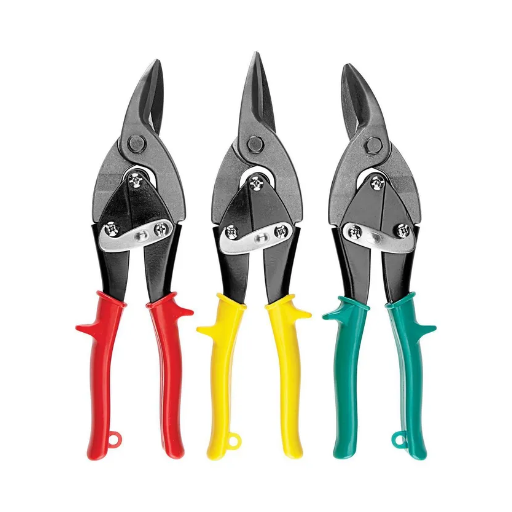
Tin snips that can cut in a straight line are assigned to the first group, while the blade-design is ranked next in order according to the requirements of different tasks:
- Straight-Cut Tin Snips
Snips used for straight-line cutting are best for trimming and shearing flat stability sections of the sheet metal with great accuracy. - Left-Cutting Tin Snips
These snips to the left are made for cutting curves, thereby facilitating the production of circular or angular figures on the material. - Right-Cutting Tin Snips
The tin snips that are right-cutting and left-cutting are the most commonly used and are much easier to control than the straight-cutting snips, especially when cutting curved or detailed patterns. - Compound Action Snips
The slitting shears are powered by a joint lever, and they are strong enough to work on different kinds of materials and thicknesses, for example, stainless steel.
Any kind of tin snip is good for some kind of project, and each has its own advantage that can be used by selecting the right snip for a specific kind of project.
Straight Cut Snips
Straight cut snips are planned to make accurate and linear cuts in metal plates and other materials. These tools have been made to be able to deal with materials in the most precise way, making them completely indispensable for construction with straight edges and very neat lines. In addition, the new straight cut snips very often are designed with ergonomic handles for easy holding and less tiredness of the operator, and even outstanding blade materials, like high-carbon steel, that provide them with improved cutting efficiency and durability. Furthermore, they are good for dealing with various materials and thicknesses, so the operation is highly consistent and is widely applied, such as the case of HVAC ductwork or producing panels. This is why straight cut snips are a very big help for the professional metalworkers and the amateurs too.
Left Cut Snips
Left cutting snips are produced to cut material in a very precision way and also to curve to the left. They are imperative for contour cutting and sheet metal working in a precise and artistic manner. They incorporate power grip handles featuring advanced cushioning which reduces user fatigue when used for long hours, and thus, they offer the best of both worlds – the utmost perfection in professional and industrial applications. The main material used for the cutting blade is high-carbon steel, but it can also be molybdenum, which gives the tool maximum durability, leading to resistance to wear, and an easier way of cutting through the thick stuff. Left cutting snips are specialized only for the hard-working materials of metal, and the very wide use of such materials is found in the aluminum, steel, and stainless steel sectors, being used in design work, construction, and automotive.
Right Cut Snips
Right cut snips are special, precision tools created to make nice, open-cut curves to the right. The main difference between them and the left cut snips is this. They are intended for top-level performance only and are usually made of the very best materials like high-carbon steel that has been made hard by heat treatment or premium-quality alloy components for the sake of their durability and efficiency. They are the best if you need to cut steel, aluminum, and stainless steel as the performance does not lack and in such cases when cutting right is a must. They are found in a lot of places like sheet metal fabrication shops, HVAC industry, and roofing contractors. Nowadays, new manufacturing techniques have made it possible to have very sharp and lasting edges for scissors. Right cut snips are also user-friendly as they are, in fact, designed in a way that one can work very easily and comfortably with them over a long period of time.
Understanding the Color-Coding System
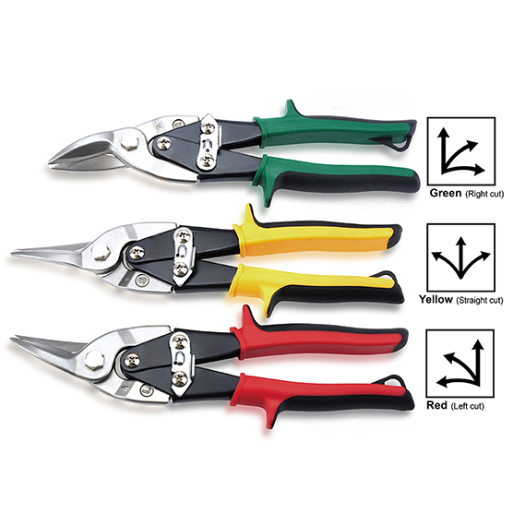
The aviation snips’ color-coding system is a standardized way to show the particular cutting direction for each snip. The left-cut snips are the ones with red handles and they are the ones for precise curves to the left. The right-cut snips are the ones with the green handles and they are the ones for layer-by-layer curves to the right. The handles with the color yellow indicate the snips, and only the handles which are designed for cutting in a perfectly straight line are those in yellow. These are the snips that can also be used for the gentlest curve cut. This is a highly effective system that provides technicians with a simple and quick choice of the right tool for the job. It greatly accelerates the work and significantly increases precision in the case of industrial applications. The tool’s handle color must always be the same as the cutting direction to be achieved for the purpose of obtaining the best performance.
Red-Handled Snips
Red-handled snips, also known as left-cut aviation snips, are tools tailored for extremely accurate cutting in a leftward direction. Their users are primarily professionals in the field of sheet metal who have gained the benefits of very good control and power for small-radius curves. They are less equipped to cut metals such as aluminum and steel with ease. Normally, the tools are provided with comfortable and ergonomically designed handles to give the user some relief from the stress of handling the tool for an extended period, at the same time giving them relief while working. And indeed, the red handle is both a mark of identity and the main part of the industry-standard color-coded system, and thus helps fast recognition in busy environments as well.
Green-Handled Snips
Debut applications of the green tool cutting the materials in delicate and straight cuts through metal sheets have come out. They are adjusted for the materials of the cutting line, like aluminum, vinyl, and up to the 18-gauge cold-rolled steel, and their use increases the versatility of the cutting materials throughout the project. With powerful and long-time-lasting, and even cutting-edge performance, the edges of the tools are the focal point of the high technology applications. Just like this red-handled model, they may also be organized in a color code to ease and thus promote quicker identification that aligns with the standard practices of safety and workflow in the industry. The design that fits the human hand, the strain-free, which may have been inevitable at times before, brings the user to the level of professional craftsmen, be it in metalworks, roofing, or construction.
Yellow-Handled Snips
Yellow handled snip tools were created specifically for cutting flatly and can also handle gently curves when needed as well. These type of tools are a must-have when it comes to cutting sheet metal and other similar materials, especially in HVAC and metalworking applications. They are built to last, and with the feature of precision-ground blades, they are able to present a combination of cutting aptitude and durability. The tool’s yellow color of the handle can easily identify them in the professional world aside from following industry standards that want tools to be quickly recognized. The tools are very efficient, and through their use, they can work with different types of substances like aluminum, vinyl, and thin sheets of the steel hence becoming an essential tool for the professional worker who seeks the highest level of precision and trustworthiness.
Applications and Uses of Tin Snips
- Sheet Metal Fabrication
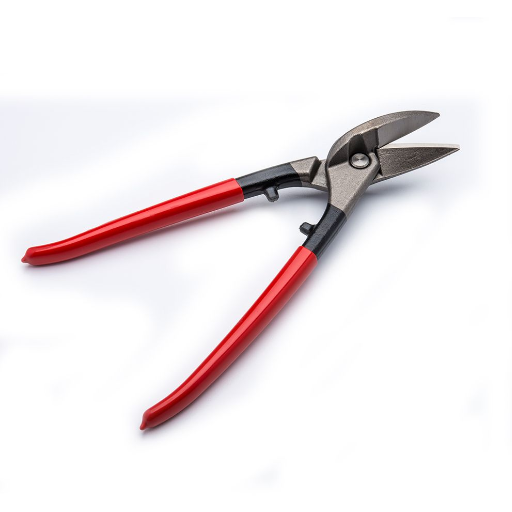
The metalworking industry frequently uses tin snips to cut and form thin sheets of steel, aluminium, or copper. One field in particular where the most precision is needed and where tin snips are regularly employed is the HVAC ductwork. - Roofing and Siding Installation
Roofers love tin snips as they allow them to perform the same cutting operations on metal flashing, gutters and siding materials. Because of tin snips, materials like aluminium and vinyl are easily cut resulting in a tight and weatherproof fit. - Electrical Work
The tin snip is a favorite tool for the electricians during their cutting and molding of electrical conduit and metal junction box works. Using these tools cut precisely and smoothly, which is of utmost importance in guaranteeing the implementation of electrical safety codes. - Automotive Repairs
Tin snips are a common tool in the car-making industry in order to cut the metal into the shapes that are wanted, most commonly for fixing or remolding. The metal panels have edges trimmed, and the custom components are assembled. - Crafts and DIY Projects
The handiness of tin snips always surprises people. They are a common sight in the hands of crafters and DIYers alike. These sharp tools are being used for all sorts of things including creating metal art, cutting thin materials, and custom ornaments. - Aerospace Applications
Tin snips are inevitably the right choice in the aeronautics industry because they are used to cut, shape, and sculpt the aluminum alloys for the airplane components, among other things. Also, the very tight tolerances in this sector are supported by the precise performance of tin snips.
Cutting Metal Edges
One must be precise in the selection of the tool and in practicing metal cutting in order to be successful and at the same time, work in a safe environment. The metal to be cut, such as a soft material like aluminum or a harder and tougher blend like stainless steel, is a major factor in the tool selection process of cutting. For example, tin snips are the most suitable choice for cutting thin sheets, while angle grinders or powered shears are more preferable for heavier gauge metals. By lining up the cutting part of the tool with the material, one gets to work with clean and straight edges and a lower risk of unwanted warping or rough cutting.
Furthermore, in the case of working with metals of high strength, cooling and lubrication are very often needed to avoid overheated metal and thus to keep the blade durable. After the cutting is done, getting rid of the burrs is very crucial and it involves removing sharp or uneven edges that are formed, and are risk to people’s safety. When it comes to industrial applications that demand high accuracy and complicated shapes, advanced plasma cutting systems or CNC machines are usually engaged, which means that the producing becomes quicker and more precise. When the operators know about these methods, it will be a piece of cake for them to keep the productions going and to always get high-quality metal fabrication projects.
Working with Metal Flashing
In construction, metal flashing is widely used for waterproofing and preventing water leakages through structures. Precise fabrication and installation are the finest ways in which maximum performance can be achieved. Metal flashing work is commonly done with the use of sheet metal brakes for making sharp, precise bends and tin snips or powered shears for cutting with a smooth edge. Thick galvanized nails or screws are more often used for fastening down the flashing in a number of locations. To complete, sealants such as butyl tape or silicone caulk are used to give two layers for the watertight seal.
The materials that are widely, in the majority of cases, used and at the same time the most impressive are galvanized steel, aluminum, and copper due to their toughness, weather-proof characteristics, and being adaptable. Steel that is galvanized is very durable and for that very reason is the most favourite together with being the lowest in a row as far as the cost and the weight are concerned. It is very disadvantageous to have a lightweight steel which is both strong and least expensive. Despite its expense, the least of the three in weight is the most beautiful – copper, which is the top choice for its beauty and lasting.
Getting the right installation for it means watching out for the overlaps and pitch so that water can accurately flow out of the structure. The best practices in the industry are that each section should be overlapped by at least 2 to 4 inches and the set slopes should be precisely roof or drainage system-appropriate. Furthermore, thermal expansion will be a problem, especially with the huge difference in temperatures in the environment, which can cause the material to change shape, buckle, or warp if not considered.
Choosing Snips for Specific Metal Types
Precision and material integrity are both at stake when it comes to choosing the right snips for cutting different metal types. To be more specific, for aluminum and other soft metals, hand-snips with Compound-Action are recommended as they have straight or offset jaws that make them very versatile and capable of both straight cuts and subtle curves. When it comes to stainless steel and other hard metals, snips for aviation should be used which have serrated blades that provide a better grip hence reducing slipping during cutting and giving a polished end.
Moreover, the use of blade color coding system that is purple for left cuts, blue for right cuts, and orange for straight cuts, and which has been embraced by the industry, is a big help in finding out the right tool for cutting in the direction one wants to cut. The machine’s compatibility with the thickness of the material is another aspect that needs to be taken into account; for instance, snips that are made for cutting 18-gauge steel would not be effective on thicker materials. Making sure that the tool is a perfect fit for the project requirements not only reduces the wear on the snips but also aids in extending the life of the hardware.
How to Select the Best Snips for Your Needs
- Identify the Material
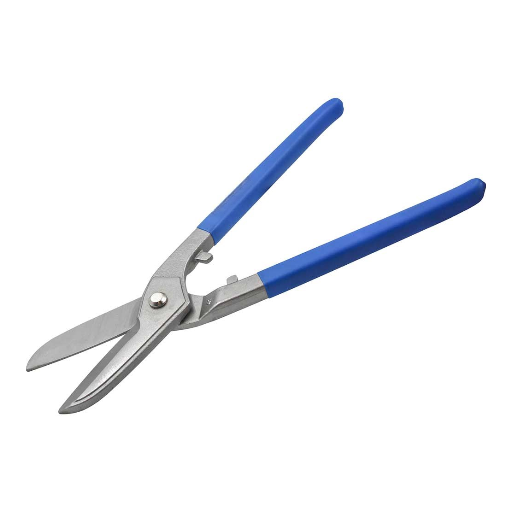
Select the snip by first figuring out the material and its type, then consider thickness. Choose the snip that is suitable for the gauge or material specifically (e.g., aluminum, steel, or other metals). - Select the Appropriate Cut Direction
Sort the cutting destination of snips with the right cutting direction for your project. Also, snip with a green handle for exact cuts, snip with the red for left cuts and snip with the yellow for straight or gentle curve cuts. - Check for Comfort and Grip
Go for snips that offer comfortable grip ergonomics and have non-slip surface treatment as the combination will make it easier to work for long hours and have more precise control. - Inspect for Build Quality
High-quality materials like forged steel will ensure that the durability of the snips will be top-notch and the performance will never fail you, even with time. - Consider Additional Features
Examine what you are going to be cutting and make the decision whether the snips with compound leverage mechanisms are necessary for these specific- and or locking mechanisms for needed storage.-
Following this procedure will certainly lead you to the customized selection of snips, which will significantly improve the productivity of the job and will be an essential part of the high-quality output that you will achieve.
Assessing Your Cutting Requirements
It is very important to know specifically what your cutting needs are so as to choose the best tools. The first thing is to check the material and its thickness. Aluminium, stainless steel, and sheet metal are extremely different in terms of their density and cutting resistance. For example, in the case of stainless steel, you will need some very strong cutting tools that can deal with the stress well without going out of shape or getting blunt easily. Also, do not forget to determine the thickness of the metal— this will have a direct impact on the type of blade and the cutting force needed for precise and efficient performance.
Subsequently, discuss the cutting direction and pattern that are required for your job. Simple cuts typically demand regular straight snips, whereas elaborate shapes or curves may need specialized snips, e.g., left- or right-cutting models, to guarantee the accuracy of the cut and user friendliness. In addition, consider the cutting task volume. If the usage is very frequent, then the ergonomically designed handles and compound leverage mechanisms should be included feature-wise to reduce the fatigue of the user and to increase the productivity level overall.
Evaluating Different Tin Snip Features
When it comes to choosing the best tin snips, blade material is possibly the most important factor that determines the lifetime and cutting ability. Top-quality tin snips are equipped with blades that are made of either hardened steel or chrome vanadium steel, both of which are noted for having a high degree of resistance to wear and excellent sharpness retention throughout extended use. A few examples of superior-quality models come with a titanium coating to swear by the augmented toughness of the cutting edge and the resistance to the effects of the environment, especially when the materials have been subjected to constant moisture or harsh conditions.
An additional key feature to be taken into consideration is cutting capacity. It is the primary factor which gives the maximum thickness and kind of material the tin snips can work with. As an illustration, the standard tin snips can be expected to cut through 18-gauge steel, while the heavy-duty ones will go higher on the scale and be able to work with other very thick materials like aluminum and copper. Picking the right cutting capacity is, therefore, a must in order to have the proper operation running and not to ruin the blades by repeatedly using them for a long time.
Tips for Effective Use of Tin Snips
- Choose the Correct Type of Tin Snips
Tin snips have their kinds, namely, straight-cut, left-cut, and right-cut, and this goes as per their cutting fashion. Straight-cut snips help you with straight cuts while the left and right-cut can come in the handy while the left or right side is being used for the cutting of the curved or detailed cuts. For instance, right-cut snips that will cut the curve at the right and left-cut ones that will be the best for the left curve. Selecting the right snip for the work at hand is a reduction in overall strength and an enhancement in the accuracy of work. - Inspect the Material Thickness
Material thickness is a prime checkpoint. For instance, if a couple of snips are specified to cut 18-gauge steel, one going to cut a 16-gauge steel plate with them, most likely ruin the tool or at least get a poor work condition. Ensured by this, it is very important to always test if your tin snips can deal with the job correctly.
- Maintain a Firm Grip and Cutting Angle
To have a smooth cut, the handle should be firm and never slip. Commence the cut by angling the snips slightly to avoid compressing or distorting the material. A constant pressure is what gives a high quality cut and further makes the straight and/or curved cuts automatically follow the path.
- Lubricate the Blades Regularly
You must patronize the tools the right way by lubricating the pivot and the blades frequently so that they run without friction and last longer. It is absolutely essential once you are using the tool under heavy conditions since the friction that is always present may either make the blades dull or wear out the tool by mechanical means.
- Use Marking Tools for Accuracy
Working on intricate projects requires the use of a straightedge in combination with a marking tool be it a permanent marker or scribe. The preliminary marking of the cut by a tool and with the help of a straightedge or compass altogether is like a safety net that does not let enemies come inside the castle - Apply Gradual Pressure While Cutting
Do not insert the snips forcefully into the material. If you apply a little pressure and then gradually increase it, you will avoid rough edges and bending or twisting the material. The cutting of hard materials may be easier if you make a few progressive cuts around the corners of the tight areas or the shape of the piece.
Reference Sources
Frequently Asked Questions (FAQs)
What are aviation snips, and when should I use them?
Compound-action snips for aviation are also known as aviation snips, and their purpose is to cut larger sheet metal and make curved cuts while allowing more control than regular tin snips. Different cutting directions are handled by the straight, left-cut, and right-cut versions of the dual-action snips which design also helps to lessen the distortions in the material. Aviation snips are the best for jobs like HVAC work, ductwork and metal fabrication, where precision and leverage are the main concern. Offset snips have to be your choice if your hand has to remain on top of the surface all the time when making long runs of cuts.
How do compound-action snips differ from traditional tin snips?
Compound-action snips have a newly designed mechanism with four pivots that considerably increase the cutting power, thus allowing the cutting of plates of metal that would have been very hard or impossible to cut with ordinary or straight cutting snips. In addition to that, the mechanism lessens fatigue of the hand and allows for cleaner cuts more particularly in stainless steel and aluminum. The models of Compound-action nippers are the most flexible ones since you can use them for left, right, and straight cutting, which makes them easier to work with on sharp and curved edges and also on the complicated design patterns. As a result of their high usage in aircraft sheet metal work, the compound action snips are commonly called aviation snips.
When should I choose straight-cut snips over left- or right-cut snips?
The most suitable tool for long straight cuts is the straight-cut snip which has a smooth and flat edge and the least curve among other types. When you mainly have very straight pieces of material to trim or just deal with the edges, then the straights and the tinner’s will provide quicker and more accurate results. In cases of tight curves or cutting around obstacles, it could be preferable to use snips of the left or right cut which are designed to cut in specific directions. Offset snips could be the choice when your work comes through the hands.
What tasks are left-cut snips best suited for?
The left-cut snip is for the top-class cutting of the inside curves – the left turns; during the cuts, the visibility of the cutting edge is assured for the right-handed workers. The tasks well-suited for these left-cut snips are cutting out the external edge of the shape which needs a left turn or during clockwise curve following, they can’t be outdone. As far as the edge collapse prevention is concerned, left-cut models are a great tool on a cut edge and are many times the first choice for the fine job of sheet metal trimming. It is recommended to switch to straight-cut or compound-action snips for processing of long straight sections.