
Wood Chisel Sizes: Complete Guide and Chart
Wood chisels are required for woodworking as they are the tools that contribute the most precision and flexibility of all. Any woodworker, if there is a need to make elaborate, minimal, or other materials being removed in the chisel selection process, will come across the professional level. This is a guide to help you to understand more of how to handle various chisel sizes in different woodworking tasks. It takes you from the simple measurements to the very profound ones and you need that kind of knowledge if you want to make the right decisions. Being a regular at the craft or just starting out, this article will be a helpful tool to improve the quality and to progress the skill level of your projects.
Introduction to Wood Chisels
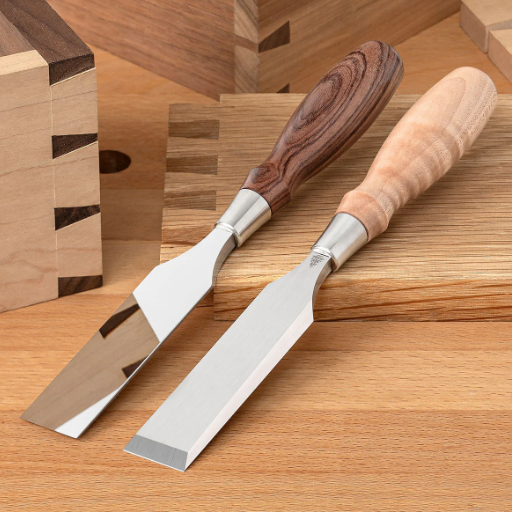
The impeccable tools for woodworking a wood chisel is, made for the purpose of cutting, shaping, and finishing wood with precision. Their composition is a cutting edge joined with a handle, typically wood or plastic material, which assists in controlled exertion of power. As an example, there is a range of sizes and shapes to choose from, and each one is optimized for a particular activity like mortising, paring, or carving. The correctness of selection and application by you of a wood chisel are pivotal, since its sharpness and dimension govern the output quality. Sharpening the blade and taking a firm hold on the handle are the two things that will improve both safety and regularity in work of a wood chisel.
The Importance of Chisels in Woodworking
Chisels are imperative in wood use because they can give the preciseness and little touches, which can be achieved by automation tools. Craftsman are allowed to joint tight wood, to apply some decorative touches, and to correct the projects through the shortest way to accuracy that nothing can compare to. A good example to that is the use of the mortise chisel which makes it easier to do and give the designer a whole variety. Above all, the paring chisels are quite good to remove thin layers of wood and more needed to have flat surfaces where a various of operations are needed during intricate tasks. Moreover, the effectivity of chisels is added up by the consistency of blades made of high-carbon or alloy steel that can retain the edges for a longer period and therefore there will be less need for sharpening. Hence, these knife effects place them at the center of the structural performance and the beautiful texture of the projects.
Overview of Different Types of Chisels
| Chisel Type | Primary Use | Bevel Angle | Typical Wood Type | Key Features |
|---|---|---|---|---|
| Bevel-Edge Chisel | General-purpose woodworking | 25-30 degrees | Hardwood, softwood | Tapered edges for tight joints |
| Mortise Chisel | Cutting mortises | 30-40 degrees | Hardwood | Thick, robust blade for leverage |
| Paring Chisel | Fine shaving and trimming | 15-20 degrees | Softwood, veneers | Long, thin blade for precision |
| Firmer Chisel | Heavy-duty tasks | 25-30 degrees | Hardwood | Rectangular blade for strength |
| Corner Chisel | Squaring corners of mortises | 25-35 degrees | Hardwood | L-shaped blade profile |
| Butt Chisel | Working in tight spaces | 20-25 degrees | Softwood, hardwood | Short blade for confined areas |
| Dovetail Chisel | Cutting dovetail joints | 20-25 degrees | Hardwood | Narrow, angled blade for accuracy |
| Carving Chisel | Detailed carving work | Varies widely | Softwood, specialty woods | Various shapes for intricate detail |
Why Understanding Chisel Sizes Matters
The choice of the correct chisel size is very essential in woodworking as it is one of the main factors that determines the accuracy and productivity level of your project. The blade width of the chisel makes it task-specific or tadk-specific for and cleanieng the joints, etc., while other selections of chisels are needed for different kinds of work. The bigger chisels are able to cut a lot of the material very quickly, however, smaller chisels are the best for working with accuracy and detail in limited areas. The length of the blade is another important factor as it has a huge effect on the lever and control of the tool, and this is why it is necessary that the blade size is the same (or close to the same) as the job needs in order to get the best performance.
Another issue that should be kept in mind is the right choice of the wood type plus the application that the chisel will be used for. Thus, a broader chisel can be a powerful tool when it comes to the removal of a material from the softer timber, where the process is quite simple, whereas the narrower one is good at the hardwoods, especially for the case of the dovetail joints. Getting the knack of how the blade size relates to the side bevel angle and the resistance of the material gives woodworkers ways of making more accurate and better quality works.
Essential Chisel Types
- Bench Chisels
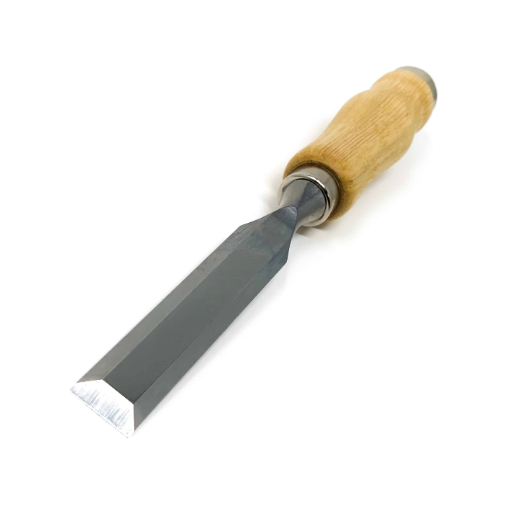
All-purpose chisels are versatile tools that are not uncommon to see in use in the woodworking trades for a variety of tasks such as chopping, paring, and trimming. They are most often selected for being of medium length, which makes them good for both rough and delicate work. - Mortise Chisels
The mortise chisels are made for the sole purpose of cutting mortises and have blades that are both thick and strong to handle the force required for making deep, accurate cuts in hardwoods. - Paring Chisels
The paring chisels, on the other hand, are the tools that have long and thin blades suited for doing the work which is fine and detailed. They are excellent for shaping and smoothing a surface to a high degree of precision, and usually require nothing more than slight hand pressure. - Japanese Chisels (Oire Nomi)
Among the most popular choices for working with precise joinery and tricky carpentry processes are the Japanese chisels, which are considered to be very sharp and durable. - Corner Chisels
One of the best applications for these chisels is to clean out the square corners in the mortises or other types of joints that are recessed and need to be taken out completely by means of the exactness of an L-shaped chisel.
Bench Chisel
Bench chisels are so versatile and frequently used that they are ranked as one of the most commonly used kinds of chisels in woodwork. Their designs are wide-reaching and so they can be used for as many things as chopping off mortises, to paring down joinery parts. There is a characteristic beveled edge in these chisels, which makes it possible to reach tight corners easily and make cuts that are to be very precise. The chisels that have been taken as a modern version commonly have high-carbon steel or vanadium-rich alloys as the material that the edges are made from, which result in perfect retention of the edge and longer life.
Besides, many of the new models have handles that have been designed in a way that they are ergonomic, they are either wood or synthetic materials that have been reinforced, help in the reduction of hand fatigue when used for long periods of time. Bench chisels are the tool that you can not miss in either of the woodworking fields, be it the one that runs with the traditional methods or the one of the modern ones. They provide the user with a very good blend of functional.
Mortise Chisel
The mortising chisel is a tough, very specific and hand tool which is made for the cutting of the deep, square-sided holes called mortises in the wood. Thick and heavy blades are what separate these chisels from a regular set and they are mainly made that way to be resistive against pressure and bending at the time of hard use. The blade, usually, is made of steel, hardened with the process of forging, which guarantees a long life with the precise cutting operation even in the toughest situation of wood hardness. Mortise chisels are also made in a way that they have a slightly beveled or a straight-sided design similar to the ones used in mortising work.
The development of surface materials has played a major role in the designs of these modern tools. They are now more ergonomic and efficient compared to their predecessors. The handle of a mortise chisel is typically made of an impact-resistant material like ash, hornbeam, or composite resin in order to guarantee its durability when hit repeatedly by the mallet. The tangs and ferrules are also made tougher for increased mechanical strength, and the tool is therefore less likely to break with usage. Mortise chisels thus continue to be the trusted companion of carpenters who build strong and accurate joints that are the basis of traditional joinery technologies.
Paring Chisel
A paring chisel is a tool specialised in delicate and precise woodworking tasks, such as, for instance, fine-tuning joints or cutting off unneeded parts. Paring chisels have long thin blades with a small bevel angle, typically between 15 and 20 degrees, in contrast to mortise chisels. Such a design minimizes the chisel’s resistance or drag so that the blade moves gracefully through the wood when a slight hand pressure is put on the chisel. The present-day paring chisels are frequently not made of the same materials but high-carbon steel or the alloy steel with hardness and abrasive resistance properties for many chippings. Handles are usually longer and rounded to let the worker hold the chisel more safely as this is the most frequently used chisel and the most difficult one to finesse or operate. Owing to their high precision and adaptability, these chisels become the essential tools in the situation where the joinery is complex and flawless finishing is necessary.
Common Wood Chisel Sizes
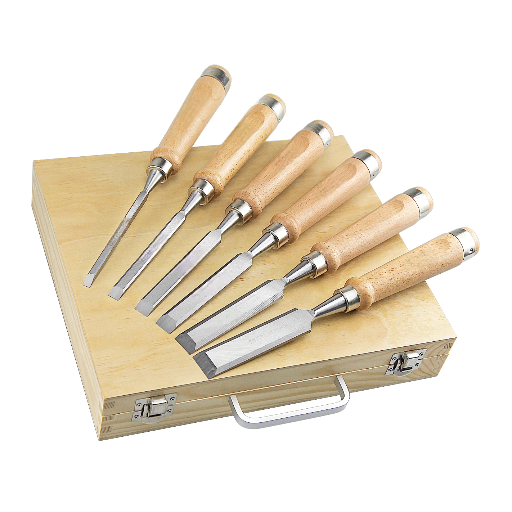
Chisels for wood come in standard sizes to satisfy the different woodworking requirements. The frequently used sizes are:
- 1/4 inch (6 mm): Ideal for fine detail work in small spaces.
- 1/2 inch (12 mm): A convenient choice which is great for all sorts of tasks.
- 3/4 inch (19 mm): Frequently used for moderate-sized cuts and shaping.
- 1 inch (25 mm): Great for big cuts in intervals and material extraction also.
- 1 1/2 inch (38 mm): Best for working on broad surfaces or heavy material removal.
These sizes are really fall for many, so they can easily benefit through the accuracy and efficiency available in the whole woodworking of various sizes. It is a must to take into account the size while selecting a chisel in order to get the best and the cleanest results.
Standard Sizes and Their Uses
To pick the exact chisel size, it’s a must to examine a series of issues first to get the best cutting quality and accuracy. The material type hugely impacts the selection of the size, hence larger chisels might be needed for harder woods, which can resist higher forces during cutting. Moreover, the very woodworking operation like mortising, paring, or fine detail carving is the final factor deciding on the size of a chisel for the purpose of precision and control.
For instance, smaller chisels (less than 1/2 inch or 12 mm) fall into the field of delicate and well-joined items carving. On the contrary, the larger chisels (more than 1 inch or 25 mm) are the tools of choice for processing and smoothing the larger areas in a shorter time frame. In the same manner, it is possible to choose the chisels with a beveled edge for entering tight corners and the chisels with a straight edge for making uniform and precise cuts on flat areas. Furthermore, ease of using with other tools like mallets or sharpening stones will add to the efficient use of the tools.
How to Choose the Right Size for Your Project
In order to determine the proper size of the tools for any project, you need to be able to still and carefully assess the material, the object of your work, and the level of detail involved. With a small tool, you can control and perform very detailed work of the size of a tooth and that way you can make small relief and nails very easily. Those tools where the width of the blade falls between 12 mm and 6 mm are medium-sized and have well-rounded working efficiency and the highest precision. Furthermore, they are used for both detail working and making basic shapes. The last category is tools with lengths of not less than 25mm.
Size is the first thing to consider when selecting a chisel. A softer material will mean that one can even use a smaller chisel but a hard case is the sturdier and larger tool. A larger tool can withstand more pressure if the wood is harder and hence the bigger the diameter of the chisel. On the other hand, wood is a hard material to work with and the sizes of chisels that can be used are restricted because excessive force is destructive. The best size ensures precision during work as well as optimal workflow by reducing the necessity for time and effort-spending on adjustments during the work.
Comparison of Sizes Across Different Chisel Types
| Chisel Type | Size Range | Common Materials | Best Applications |
|---|---|---|---|
| Bevel-Edge Chisel | 1/8″ to 2″ | Softwood, Hardwood | General woodworking, joints |
| Mortise Chisel | 1/4″ to 1″ | Hardwood, Dense woods | Cutting mortise joints |
| Paring Chisel | 1/8″ to 1″ | Softwood | Precision shaving, fine detail |
| Firmer Chisel | 1/4″ to 2″ | Hardwood, Softwood | Heavy-duty woodworking tasks |
| Corner Chisel | 1/4″ to 3/4″ | Hardwood, Dense woods | Squaring corners of mortises |
| Skew Chisel | 1/8″ to 1″ | Softwood | Angled cuts, detailed corners |
| Butt Chisel | 1/4″ to 1″ | Hardwood, Softwood | Shallow mortises, tight spaces |
Buying Guide for Wood Chisels
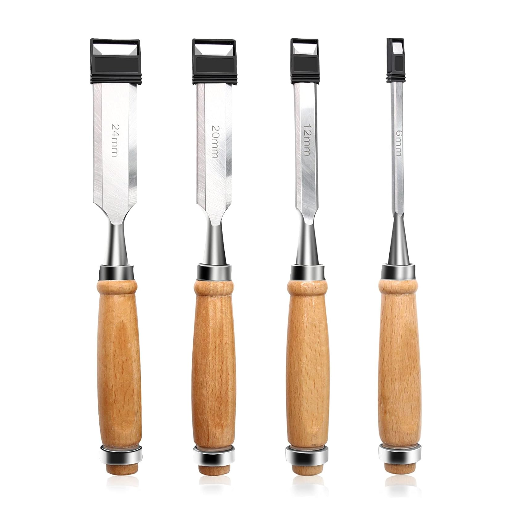
The subjective evaluation of the quality of the chisels and their compatibility with the tasks that you will be doing forms the biggest share of the work. The other key factors to keep in mind are:
- Blade Material
Go for chisels that are made of high-carbon steel or vanadium steel material as they provide the best edge retention and durability. These materials are hard to wear out and give the same perfect results all the time. - Blade Size
Find out the most suitable blade width which is needed for your project. For example, narrow chisels (e.g., 1/8″) are the perfect option for detailed work while wider blades (e.g., 1″ or more) are the best for the big part of material to be removed. - Handle Construction
Always use a tool that has an ergonomic handle and is made of excellent quality material, for example, hardwood or plastic with high impact ratings. It should also have a comfortable grip which in turn will give you a fine-tuning of control as to your project. - Intended Purpose
Match each kind of chisel to the very function that they can best perform. For instance:- Use a paring chisel for fine, delicate work.
- A mortise chisel is a powerful joint work tool.
- The corner chisel is great for square mortises.
- Bevel Edge vs. Straight Edge
Bevel-edged chisels can go to the toughest little corners, and at the same time, they can do the job of plain-edged chisels. The latter can mostly be relied on to put through heavy work. - Sharpening Requirements
Also, take into account the sharpening ease. There are chisels that are made with a polished edge that is ready to go and there are others that require initial honing.
If you consider these aspects, it is for sure that you would have made the right choice in terms of going for chisels that are long-lasting, efficient, and best matched to the specific woodworking tasks you have.
Where to Buy Quality Chisels
One good alternative that you could go for when selecting premium-quality chisels is to purchase from vendors with a good history of craftsmanship and product sturdiness. Well-known online merchants like Woodcraft and Lee Valley have in their stock a wide variety of top-priority chisels, predominantly from long-serving brands such as Narex, Lie-Nielsen, and Veritas. Also, Rockler Woodworking and Hardware stores offer both in-store and online shopping, so woodworkers can see the tools in person and have them delivered to their location. Auctions and woodworking forums that are meant to cater to specialized or vintage chisels also prove to be very helpful to some extent.
Local hardware stores, especially those that serve woodworking professionals, are an excellent source of high-quality chisels. Purchasing from small businesses is only one good reason of the many for shopping with these local vendors. Credible branded items can be found in the majority of these stores along with the free use of finished examples to compare and find what best suits the customer’s criteria. A genuine vendor or manufacturer will provide the right kind of assurance and repair of the tool purchased. Thorough research of the suppliers is the essential factor in buying a chisel of good quality that can be shared with both the beginner as well as the professional woodworker communities.
Tips for Beginners on Selecting Chisels
- Understand Chisel Types
Newbies are advised to go through the different types of chisels, so they can confidently decide which one will be of most service to them. Some of the most used ones are the bevel-edge chisels, used for fine joinery, and the mortise chisels, which are specially made to cut deep joints. With a complete knowledge of these two types, the improvement of tool selection and use efficiency happens consequently. - Choose the Right Blade Material
It is common for carbon steel or high-speed steel (HSS) to be used for making chisels. With carbon steel, chisels are within the budget and they are most suitable for light woodworking projects, whereas HSS chisels are harder and longer-lasting hence they are the right choice for harder woods and heavy use. Think about the requirements and budget that you have predefined. - Evaluate Handle Material
In the main, it is different kinds of hardwood that are made into chisel handles, such as ash or beech, or plastic materials, such as polypropylene. It is the hardwood handle that the user instantly feels and also, it is very good for shock absorption in cases of using a mallet, whereas plastic handles are more durable and they are good at standing up against environmental damage. - Inspect the Bevel Angle
The bevel angle is one of the most crucial factors that determine the efficiency of the chisel cutting. A 25-degree bevel is perfect for a general-purpose chisel while a 30-degree bevel would do better for tougher applications. Having knowledge about different bevel angles is of paramount importance in order to obtain accurate results. - Assess the Chisel Size
Chisels are available in different size ranges, often presented in millimeters or inches. It is probably a good idea for newcomers to rely on a multipurpose set that contains 1/4-inch (6 mm), 1/2-inch (12 mm), and 1-inch (25 mm) chisels due to the fact that these sizes are common and are being used in various woodworking tasks as well. - Set a Realistic Budget
Using the finest quality chisels is one of the ways to get better professional quality and durability of the work for a couple of years, while for the newcomers it will be the most effective way to go for the best-quality but yet the cheapest products. One thing that must never be forgotten is to stay away from the really cheap chisels, as they could either lack the necessary material quality or be made vastly different, hence the necessity of more frequent sharpening and thus higher total cost in the long run compared to well-made chisels.
Tips for Using and Maintaining Chisels
- Sharpen Regularly
You should always have your chisels sharp if you want to ensure that your cuts are clean and precise. Either sharpening stone or a honing guide can be used to take care of the blade angle and prevent the blade from having uneven edges. - Store Properly
Edges can be protected by keeping chisels in a roll, rack, or sheath. It is better not to let them be loose in toolboxes so that they do not get chipped or become dull. - Use the Right Mallet
The wooden or rubber mallet which is designed for chisels is what you must use in order to avoid breaking the handle of the tool. - Clean After Use
Blade wiping with a soft cloth should be done after every use to take out foreign particles, and to avert rust during long-term storage, put a light oil layer on it. - Work on Stable Materials
Securely clamp the workpiece so that the risks of chisel slipping are minimized, with the consequence of the increase in safety and precision during the usage of the machine.
How to Use a Chisel Effectively
- Understand the Correct Angle
The chisel should be held at the same angle with the workpiece for control and precision. The bevel usually faces the cut direction, thus giving less material removal burrs. - Start with Small, Controlled Cuts
Instead of instantly making deep incisions, it is better to opt for light and progressive strokes in the beginning. This method will lead to lowering of the chances of the material breaking off and as well will keep the surface of the work intact. - Use Consistent Pressure
Besides applying steady and even force while the blades are moving, it’s important to maintain this throughout the process to make sure the job gets done in a neat and uniform manner, Cutting through the wood by only applying more pressure could lead to the tearout you could have otherwise avoided. - Sharpen Regularly During Use
An edge that cuts through resistance might be the first that looks nice if you are making wood projects or marquetry. Frequent breaks to check the blade and the use of a sharpening stone when needed will help you to be more careful during the process of cutting. - Match the Chisel Size to the Task
To determine the desired width of the chisel that will be appropriate for the most accurate cut, it is necessary to find the best one that does not strain the tool. The wider chisels are more suitable for broad material removal and the narrower chisels are the most effective in detailed or restricted areas. - Utilize Proper Hand Positioning
Never loosen your grip on the handle and blade guard (if available) to keep control over things. This action lessens vibration and makes handling more precise, particularly when delicate work is being done. - Work With the Grain
It is, however, an important aspect to take note of that the grain of the material will determine in which direction you should go with your carving. The other way might lead to splitting or tearing.
Keeping Your Chisels Sharp
In any project, keeping your chisels sharp is of great importance and a necessary condition for accuracy and precision. In addition, a chisel that is not sharp enough will not only work poorly but also will require a lot of force, which, eventually, can become a risk of an accident. To ensure the quality of the edge, it is advised to proceed with different grades of stone and finish on with the finest one. Besides, knife makers recommend that the one who sharpens the edge shallow and keeps the strop tight helps the stropping process speed up. When a chisel is sharpened, the oil and pitch from the sharpening process tend to harden on the edges, therefore, it is necessary to remove excess oil and pitch; and protect the blade by rubbing it a little oil after the sharpening process.
Storage and Care for Longevity
Chisels would last longer and easier to use should they be properly stored and taken care of. To make use, they shall be kept in a place with a drill, a rack, or a tool collector having divided parts to separate the edges. Hesitation of moisture is one of the top things that cause rust; yet tools should be kept in a dry environment with some ventilation. By doing the above, one would actually save the surface and tooling. Hand tools, including chisels, are usually hand-held, and it is important to care for them and protect them from corrosion. If the damage gets bigger you can have a broken handle and no woodworker would like this to happen, so it’s crucial to replace or get it fixed as soon as possible. The use of appropriate storage solutions and regular maintenance would lead to chisels’ enhanced performance and efficiency for a longer lifespan.
Reference Sources
- Understanding the Indigenous Knowledge-Based Tub and Griddle Pan Handcrafting Business in Dessie, Ethiopia
Read on Taylor & Francis - Effect of Blended Learning Approach on the Performance of Technical College Students in Woodwork, in Oyo State, Nigeria
Access on Academia.edu
Frequently Asked Questions (FAQs)
What is a woodworking chisel, and when should a woodworker use a chisel?
A woodworking chisel is a cutting tool made to take wood away and shape it for fine woodworking, furniture making, and relief carving. This guide opens with the information that chisels are made with a sharp edge in the form of various chisel types that are available to deal with small amounts of wood or larger paring cuts. Chisels allow for precision work and when using along with a mallet or hand pressure, they do the job of sculpturing and finishing. Identifying the different types will help you to select the proper chisel for each task and at the same time you will have a good selection of woodworking chisels that are tops in their roles.
How do different types of wood chisels compare in a complete guide?
There is a detailed comparison of chisel types placed in a table which you can easily differentiate the bench chisel, paring chisel, mortise chisel, and beveled edge chisel and it also highlights the chisel design and the chisel styles. Chisels are always produced in the manner of either tang chisel or socket chisel which makes it possible for them to bear the strain from frequent usage while at the same time offering a decent grip for the user. The chart classifies the super fine woodworking chisels from the carpentry ones and leads you to the entrance of buying your first chisel set or the premium chisel for the ultra-precise work from the very detailed guide.
Which chisel types are essential for a beginner’s guide to woodworking chisels?
It is best to have the three main categories of chisels, which are bench, paring, and mortise chisel, and all of the shaping of the wood can be done with them. The newbies are faced with a hard and considerable task to pick the best type of chisel for them since their woodworking experience is very small. The chisel should be of a traditional western style, a modern one, or if the person has a great need, a conical-shaped one, and different types of wood as well as work to be done need to be taken into account.
When should you use a bench chisel versus a mortise chisel?
A bench chisel is a general-purpose cutting tool but at the same time it is also efficient in trimming joints and shaping wood in general, on the other hand, mortise chisel is heavier and its specialty is only cutting deeper mortises by removing bulk wood. This kind of close comparison will effectively lead you to your ideal chisel, and at the same time, it clearly shows you why chisels juxtapose with each other. The design and sturdiness of the chisel—be it a socket chisel or a tang chisel—factor in whether a mallet is necessary and to what extent the chisel can be subjected to force.