
Retractable vs Fixed Blade Utility Knife: Which is Safer?
Opting for the proper utility knife could really affect the efficiency and safety to a great extent in different kinds of works, whether being on a professional site or doing home improvement projects. The retractable blade and fixed blade utility knife is one of the most divisive topics in the line of design and technology which one is indeed the priority for safety and at the same time does not sacrifice functionality? This article will shed light on the advantages and disadvantages of the different types, giving a complete examination so you can come up with an informed choice. Starting with the deep comprehension of the structural differences between them and moving to the analysis of the most appropriate use cases, we will be leading you through the points that mainly concern the safety as well as the performance.
Understanding Utility Knives
The design of utility knives with retractable blades is exclusively taken care of the user safety aspect as the blade can be retracted into the handle when not in use due to a mechanism. Consequently, the risk of accidental cuts during storage or transport is minimized. Such knives are perfectly suitable for tasks that demand only occasional cuts, as the blade can be put away between uses just by locking it in a safe place.
Fixed blade utility knives, however, are more about the durability and sturdiness in mind. They are armed with a bit of a tough blade that still shows itself off at times of operating; totally perfect for cutting through heavy-duty materials like carpets or thick cardboard as accurately as the user wants to cut. On the other hand, the exposed blade brings the risk of accident along with it, so one must be very careful when using it.
Types of Utility Knives
| Type | Key Features | Best For | Safety Consideration |
|---|---|---|---|
| Retractable Blade Knife | Adjustable blade length | General-purpose cutting | Reduces risk of accidental cuts |
| Fixed Blade Knife | Rigid, non-retractable blade | Heavy-duty materials | Requires cautious handling |
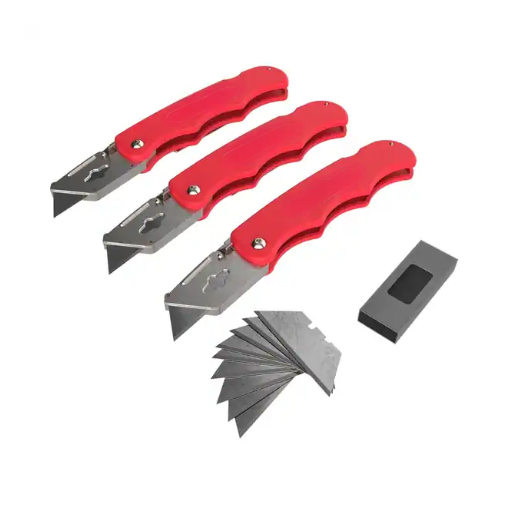
| Folding Utility Knife | Foldable for compact storage | Lightweight cutting tasks | Blade safely folds away |
| Snap-Off Blade Knife | Segmented blade for extended use | Precision tasks, thin materials | Dispose segments responsibly |
| Electric Utility Knife | Powered for effortless cutting | Foam, upholstery, lightweight tasks | Avoid improper blade contact |
| Hook Blade Utility Knife | Hook-shaped blade for curved cuts | Cutting roofing or carpets | Securely store when not in use |
| Multi-Tool Utility Knife | Integrated tools for versatility | Multi-purpose tasks, emergencies | Ensure blades/tools fold properly |
Fixed Blade vs Retractable Blade
| Feature | Fixed Blade | Retractable Blade |
|---|---|---|
| Blade Stability | Highly stable, no movement | Adjustable, may have slight movement |
| Safety | Always exposed, higher risk | Retractable, safer when not in use |
| Durability | Generally more durable | Slightly less durable |
| Blade Replacement | Often simpler to replace | Can be more complex |
| Versatility | Less suited for dynamic tasks | Highly versatile and adaptable |
| Portability | Can be bulkier | Compact and easy to carry |
| Maintenance | Low maintenance requirements | Requires more frequent checks |
| Precision | Ideal for precise, stable cutting | Adjustable depth for controlled cuts |
| Ideal Usage | Heavy-duty, static applications | Light to medium tasks, versatile use |
Choosing the Right Knife for Your Needs
The correct extraction of the support factor is critical and hence, the quality of the service is understood. You will need to check the primary use of the knife at first. It might be something precision-cutting-oriented such as filleting or just the general multi-purpose use like cutting, slicing or chopping. The material of a blade is highly important for the life of the knife and the edge retention; high-carbon stainless steel, for example, is very sharp and very resistant to corrosion, too.
Let us not forget that the contoured handle and the surface texture are just as important as the blade material, as these maladies become quite significant in the case of extended use or in wet conditions. Furthermore, it should also be regarded as whether the knife still performs well when used over an extended period of time and it is being carried around. By considering all these factors and your needs in great detail, a more positive and directed decision will be possible and this without mistake so be confident that the new knife purchased is right for your exact requirement.
Retractable Utility Knives
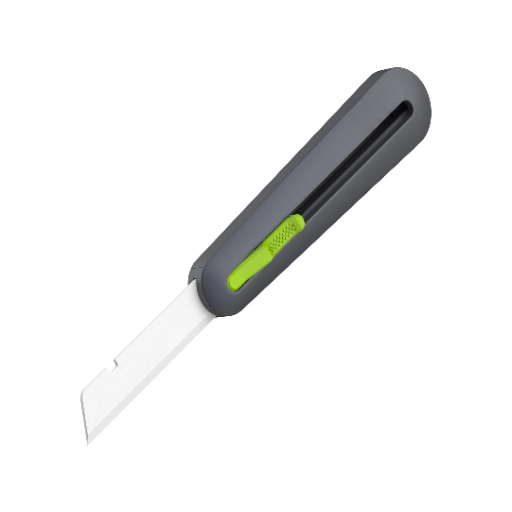
Retractable utility knives are really useful and multipurpose tools that have been made for the safety and the ease of use. The retractable blade mechanism is very useful in preventing undue cuts since it puts the blade into a position where it is completely shrouded when not being used. This particularity is very good for the places where security is of prime importance. Besides, such knives are equipped with the feature of changeable blade positions allowing one to set the cutting depth accurately which improves the cutting quality and reduces the wastage of materials. Retractable utility knives are often used in activities such as cutting cardboard, drywall, and the packaging of items, which in turn makes them an irreplaceable tool for those who have large cutting tasks to handle.
Features of Retractable Utility Knives
1. Safety Mechanisms
Retractable utility knives come with built-in security features like auto-retracting the blade. This very mechanism ensures the blade to go back right after being used thus minimizing the chance of getting cut accidentally to a great extent. Research has shown that manual retraction tools decrease work site cutting incidents by approximately 70%.
2. Blade Adjustability
These knives are usually featured with the different positions of the blade that can be easily adjusted to the tasks’ demands. For example, for the simple or superficial cut, users can use the minimal blade setting; the full extension is more needed for the thicker material and so on. The user thus has more—and more practical—options to choose from, leading to an overall more efficient and accurate cutting process.
3. Durability
With the challenges of the future in mind, a great deal of effort has gone into the development and production of retractable utility knives that offer the right balance between price, durability, and quality. Experimental tests point out that the user can apply up to 300 lb of force with premium knives at maximum, and still, they won’t show any sign of structural distress.
4. Ergonomic Design
These knives have a design such that the handle has a nicely-shaped non-slip grip and are made so that they are to be very comfortable for the user to use it for long periods of time by reducing hand fatigue and also getting an increase of the operational control. The cutting productivity can be increased up to 25% with the help of the ergonomic design of the knife.
5. Blade Replacement Systems
Some of the knife models offer a non-tool blade replacement system which is one of the fastest and safest ways to switch blades for users. This way of working is still ideal in high-demand environments as the downtime is completely eliminated.
6. Compact and Portable
Lightweight and pocket-sized are two keywords of retractable utility knives. So, they are very easy to carry and store. Still, having a small footprint, they do not reduce the cutting ability and are still among the best and most effective options.
Safety Benefits of Retractable Blades
1. Minimized Risk of Accidental Cuts
The likelihood of cutting oneself accidentally with a sharp edge is cut down when the blade is retracted fully. As per the studies concerning operability and security at the workplace, cutting tools with retractable blades are involved in incidents at a rate of no more than 45% compared to the fixed-blade models.
2. Controlled Exposure Through Adjustable Blade Length
The adjustable blades, on the other hand, let the user shorten the blade to the minimum length necessary for the job thus reducing the risk of overexposure. Therefore, this characteristic will not only prevent very deep cuts or damage unintentionally but also make the equipment suitable for work that requires great precision.
3. Automatic Retraction Mechanisms
The current generation of retractable utility knives features an automatic self-retract system. This feature helps that the blade goes back to the housing on its own as soon as the slider or the trigger is no longer under pressure, thereby giving an extra safety measure against the user losing hold of the knife.
4. Durable Housing for Impact Protection
The casing of retractable knife tools is primarily made of sturdy, impact-resistant materials that prevent cuts and other injuries from tools being dropped or damaged. Such a tough barrier housing secures and isolates that part of the mechanism which is dangerous as well as the user from it.
5. Enhanced Grip Stability
Due to the fact that the handle designs are of ergonomic type and they also have non-slip grips, the chance of the tool falling off the user’s hands is reduced. The prevention of injuries caused by the loss of control of the tool is a positive and important aspect of a secure grip.
6. Compliance with OSHA Standards
The use of retractable blades is one of the ways to comply with the Occupational Safety and Health Administration (OSHA) safety regulations which are set for the workplaces that have a need for knives. When the rules are in place, the tools are less likely than the prior to contribute to the trouble in the process.
Fixed Blade Utility Knives
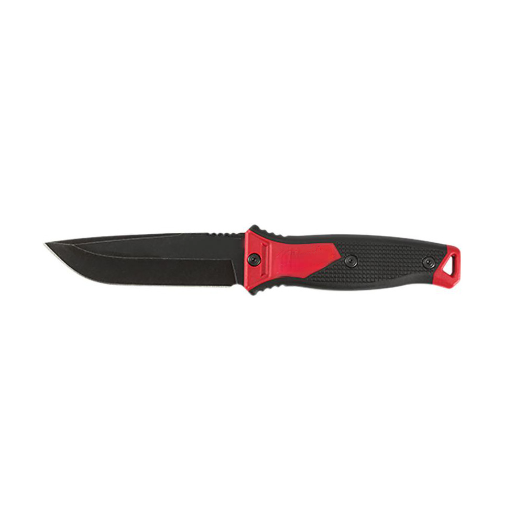
Utility knives with fixed blade are crafted for the most strenuous of tasks that also require precision. Their blades are not retractable like some other models, but secured fixedly at all times, which ultimately provides the best stability while in use. This kind of design reduces significantly the chances of the blades’ unintended movement thus making the knife a very dependable tool in the case of dense or rigid materials cutting such as carpeting, thick cardboard, or drywall. Minting the exact same cutting edge at all times, the knives cut through hours of work without faltering and are very convenient for tasks in need of blades which are not always to be set right.
On the other hand, the knife’s blade being out in the open is a downside which requires users to be extra careful with storage and handling and also increases the chances of encountering an accident. Keep in a sheath or in the sheath pocket while not in use. Their robust and non-stop performance has made them a vital tool for professionals and industrial workers alike.
Characteristics of Fixed Blade Utility Knives
1. Blade Material
It is a common practice to use sturdy material such as stainless or high-carbon steel in the construction of fixed blade utility knives. The stainless steel blade will not corrode, whereas the high-carbon steel blade has more strength and longevity for it can retain its edge better and is more durable. Both kinds of steel are perfect for heavy-duty jobs and are nearly impossible to wear out.
2. Handle Construction
The knives with the fixed blade utility are usually provided with a handle made of fiberglass-reinforced nylon, rubber, or metal. The handle comes with ergonomic comfort, high durability, and a non-slip grip that even works in a slippery or oily condition.
3. Blade Length and Thickness
The user may see these knives’ blades as very heavy, depending on their length, which is between 2 and 4 inches. The accuracy of the cuts is maintained at the highest possible level while the blade’s 2-5 millimeters thickness ensures that the blade doesn’t break via force.
4. Cutting Edge Options
Different cutting edges can be obtained on fixed blade knives, such as straight-edged, serrated, or a combination of both. Straight edges are perfect for making cuts that are as precise as possible, while the serrated edges are excellent in cutting through more rigid materials such as rope or thick plastic.
5. Safety Features
Companies release different models that have user safety as a priority, these usually have finger guards or textured grips included in the design to help avoid slippage during use. Also, in some cases, a knife is given with a ready-made sheath or a cover to protect it for the purposes of the use and transport.
6. Durability
Fixed blade utility knives are designed to endure tough jobs in tough environments, such as those involving construction, manufacturing, and large industrial tasks. Their single-piece structure brings the probability of mechanical faults way down as they are quite uncommon with folding or retractable cutting mechanisms.
Advantages of Fixed Blade Utility Knives
1. Enhanced Strength and Reliability
Utility knives with fixed blades have been purposely designed without using any kind of moving parts, and this is why these knives are mechanically more reliable than the rest of them. The absence of a folding mechanism makes the fixed blade much stronger and less likely to fail during hard-duty applications. With the blade going through the handle, the full-tang design offers the best force distribution for heavy-duty cutting jobs.
2. Longer Lifespan
On account of the sturdiness of the fixed blade overall construction, these types of utility knives usually have a lot better wear life than folding knives. High-carbon steel and stainless steel are among the most widely used materials, whose main benefits are the wear, corrosion, and impact resistance, even in unfavorable conditions.
3. Superior Cutting Performance
Being permanently set, they provide an unyielding and solid cutting edge which is the reason for absolutely accurate and uniform cuts. They will not be broken but rather pushed through the material with the same amount of force, thus the acceptable list of drywall, carpet, rope, or industrial packaging is their field of usage instead of the weak and gentle surfaces.
4. Versatility in Application
Fixed blade utility knives are the ones that can be employed for a wide variety of tasks mainly because of the very tough and quite simple design they have. These knives are much seen in construction sites, woodworking, out in the wild survival activities, and at factories that make for instance plastic beer mugs.
5. Ease of Maintenance
The fixed blade also eliminates the folding mechanism which results in an easier cleaning and maintenance process. Fixed blades are the easiest to have a sharp edge, and the uncomplex design prohibits any possible dirt, debris, and rust build-up. This will ultimately require less maintenance of the knives over time, keeping the peak performance nonetheless.
6. Improved Safety Features
Cutting edge fixes in the blades generally carry ergonomic handles featuring different texturized patterns with imprints or rubber coatings to ensure a firm grip this means that you can use them in one hand only. Besides, they are usually sold with tough and handy sheaths making them portable knives also protecting the blade and the user during transport and storage.
Comparing Safety Features
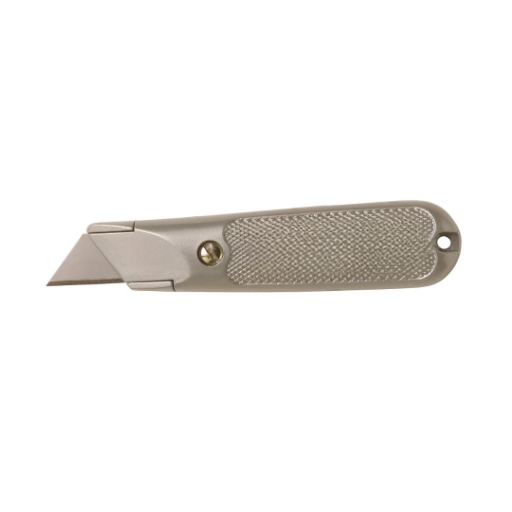
There is a major difference when discussing the safety features of fixed blade utility knives and retractable blades at the same time. The rigid structure of the fixed blade knife designs make them very tough and easy to handle, unlike the retraction principle. In most cases, non-slip grips and scabbards that are meant to protect the user when stored and carried are part of their design.
On the contrary, retractable utility knives have one safety aspect that surpasses all others, the fact that it is not open to see and only the cutting edge is with the user at the time of operation. It, therefore, decreases the chances of unintentional injuries in the handling or storing of the knife. Besides, a good number of these knives have a locking system that keeps the blade tight during operations and, as a result, all the cuts are to be controlled and precise.
In the end, fixed blade knives emphasize durability and safe handling, while retractable blade knives are all about the placements of blades that fully prevent an accidental expose. Which one is better depends on the use situation and the user’s preference.
Safety Mechanisms in Retractable Knives
Contemporary retractable blades come stock with various safety features that are intended for the protection of the user whether the knife is in the pocket or being used. The primary interface of these knives is through a mechanism that locks the knife with a turn and this ensures that the knife is only open when the user wants it. Hence this prevents any unintentional movement of the knife thus it reduces the chances of people getting hurt by not closing it properly. Even so, the other types of retractable knives have a slider or trigger that operates the blade in a safe manner, one can adjust the length of the blade to suit the purpose precisely.
Sophisticated models might feature dual-action locks which need several explicit steps necessary to activate or deactivate the blade. The extra complex mechanism prevents unintentional activation, especially in high-risk surroundings. Moreover, some sketches also incorporate human factors safety protectors and texturized handles to help the user control the tool and reduce slippage during the cutting process. By a combination of these highly-developed features, the retractable knives had become the safer tools for professionals and everyday users as well and thus dealing with the most crucial issues of workplace safety and productivity.
Safety Considerations for Fixed Blades
Although fixed blade knives are generally sturdy and dependable, they pose potential safety issues because of their non-retractable character, therefore requiring very cautious use. One of the main safety factors is the issue of storage. When it comes to storing fixed blades, the best practice is to keep them in a sheath that has been manufactured using strong materials like leather and molded polymers that will completely cover the blade thus preventing incidental contact. Moreover, when it comes to transport, security of the knife is of utmost importance, hence it should be tied to a belt or carried in a specially designed compartment to avoid any unnecessary exposure.
The user has to make sure that the blade is properly maintained at all times, the sharpened edges of the blade will greatly reduce the risk of accidents due to too much force being applied when used, and regular checking can identify possible defects like cracks or wear that can make a knife not safe. User instruction also plays a very important role; by getting the hang of the proper grip, cutting moves, and being aware of the location, a lot of injuries can be avoided. All in all, when the preventive methods, maintenance, and educating the user are combined, the use of fixed blades becomes a safer choice even in the toughest job environments.
OSHA Guidelines on Utility Knife Safety
Utility knife safety is the most important factor in lowering the number of injuries at workplaces and meeting standards set by the regulations. OSHA recommends employers to provide and make the use of good personal protective equipment (PPE) an obligation, also specifically pointing out cut-resistant gloves, when workers deal with sharp tools such as utility knives. Safety items like retractable blades, guards or automatic locking mechanisms should be present as to the OSHA policy that stresses, for instance, the necessity of knives with safety features to avoid unintended cuts and lacerations.
Employers should, therefore, set up regularly held, separate training sessions for each type of tool, focused on safe use and care, hand contact with the knife (tight grip), cutting always away from the body, and also not using too much force that can slip the tool. It should also be part of the safety plan to always bring utility knives back to their proper storage places and to have them with the blades retracted or covered because OSHA does not want accidents resulting from the employees’ carelessness.
Inspections and maintenances are very important for the safety of any activities. One of the most basic ways to stay safe and secure is to inspect utility knives regularly for any kind of visible wear or damage: the sharp blades or the handles in a bad condition. The damaged equipment should be instantly dealt with—repaired or picked out, in order to prevent bad working conditions from the equipment. So the employers who put these key points into practice, will not only meet the OSHA requirements but will also make a work environment that is more efficient and safer.
Maintenance and Blade Disposal

To make sure tools have long life and to maintain the safety of users, it is important that utility knives are cleaned immediately after every use so that no debris and build-up that could affect performance are left. Regular grease application of the knife’s components will not only increase the lifespan of the knife but also boost the overall performance. Moreover, it is recommended to always keep the knives in a safe dry place when they are not being used to avoid the possibility of rust and/or the knives getting damaged.
Care should be taken in the handling of used or blunted blades so as to avoid the risk of injury. It is good practice to get rid of the blades by putting them in a special receptacle marked as “sharp waste” or in a tough blade disposal unit. It is not right to throw used blades into regular waste pits since this could be dangerous to sanitation workers. Following the local laws on blade disposal will make that the site in question is going to be in-line with the safety and environmental standards.
Maintaining a Safe Edge: Care for Retractable Knives
Correct maintenance for knives that can be folded or slid into their handles is extremely important in preserving their function, safety, and life span. The process of maintaining knives includes cleaning to remove like layers of adhesive, dust, or humidity. A mild solvent and a soft cloth, that must be used, to remove the dirt from the knife, must not be left to accumulate or block the blade or the sliding mechanism. One way to ensure the clean and smooth sliding of the blade in and out of the knife is to use a light machine oil to lubricate the sliding track.
The knife should be checked regularly for any signs of wear, be it a blunt edge or a flaw in the handle. A dull blade needs immediate replacing because it will take more force to cut with it and also might make the user to slip and have an accident. In addition to this, it is strongly advised to check and see that the locking mechanism is doing well before the use of the knife each time, as it might be the reason for the blade to unexpectedly get back and consequently cause injuries.
To achieve the best results possible, you should keep retractable knives in a spotless and cool place, far away from the harshness of any environment or the effect of corrosive substances. Not allowing these items to be exposed in any of these ways is a measure that will certainly increase the merchandise’s life span with minimal danger to the user.
Fixed Blade Maintenance: Ensuring Safety
Maintaining fixed blade knives in a right way is significant for the users’ safety and the life of the knife. The process should be started by washing the blade after each use so that it does not collect dirt, which has a high potential to cause corrosion and in the long run to make the blade dull. Soapy water and warm water are the often-used materials; still, after the cleaning process completely dry, the blade to avoid the rusting that may occur due to moisture. Also, do the visual inspection of the edge at regular intervals to check if there are any signs of damage such as chips or cracks destroy the structural integrity of the blade and even elevate the risk of breakage when the knife is in use.
One way to keep the blade’s performance high is through its regular sharpening with the right sharpening tool or whetstone to restore the cutting edge. Another thing is that storage is extremely important—it is best to use a sheath that snugly fits or a case that protects both the user and the knife from the blade when not in use. The third point is to add a protective layer against environmental factors through the blade’s lubricating with a light, corrosion-resistant oil. Combining these meticulous maintenance measures will guarantee the retained reliability and overall safety of the fixed blade in the course of its usage.
Blade Disposal: Safe Practices for Both Types
It is really important to properly get rid of blades, whether they are fixed or folding. This is to make sure the environment is safe and that no harm is caused to the people who are handling waste. The first thing that needs to be done on both occasions is to wrap the blade very well in very tough and thick materials like cardboard or thick tape. It is to be seen that all the edges and points of the blade are securely covered so that the injury risk is none. So-called sharps disposal containers must be used, as they are tailored to the needs of sharp objects and, thus, prevent accidents during disposal or transport.
There are some places where specific recycling programs take place that accept metals for recycling including blades, providing these are labelled and well-prepared. Knowing the local laws by means of research or by coming in touch with the waste management services is required one to do in order to find the suitable place or program for the recycling of blades. It is not at all a good idea to dispose of blades improperly by throwing them in the trash without any protective measures as it would likely cause trouble both to the sanitation workers and the environment. A proper recycling procedure will not only help to reduce operational risks but also will be regarded as an environmentally friendly measure.
Reference Sources
- Next Generation Self-Retracting Safety Scalpel Design Results in 60% Reduction in Scalpel Injuries in Three Different Hospital Systems
Read the paper here - Release, Retraction, and Protection Instrumentation: Designed for Spinal Interbody Fusion Surgeries (P/TLIF, TFAR)
Read the document here
Frequently Asked Questions (FAQs)
What is the difference between a retractable and a fixed-blade utility knife?
The biggest difference is that fixed blade knives have the blade exposed and fixed in place, while retractable ones have a blade that is either retracted back into the handle by itself or can be done manually. Retractable knives open up as a preferable gadget from a safety point of view and even to store the blade in the handle. Fixed-blade knives are perfect for jobs that require more strength and the use of heavy-duty materials, where spring-loaded blade retraction can be less dependable. The correct choice for the knife will be based on the cutting applications that you have and whether you require swift change of the blade or the maximum degree of resilience.
How do I choose the right utility knife for general use?
Pick a utility knife by selecting the type of the blade, looking for types with replaceable blades and by practicing and studying the two types, i.e., a pocket knife and a larger Stanley utility knife like Stanley 199. People who do crafts work with paper, wood, drywall, etc., find the help of regular knife with adjustable cutting through the slot finding the blades and storage amongst the most convenient for their multiple activities. The possibilities for changing from the utility knife to the box cutter through the storage for extra blades are among the reasons why people remain glued on their combination tools. And, also keep checking the safeness by staying away from the cutting edge with the hand and increasing the familiarity with the utility knives before getting one.
Are retractable knives safer than a fixed blade?
Retractable knives can actually be considered safer because the blade can either retract itself or through the handle when not in use and thus decrease the risks of accidentally being cut by the blade. A large number of safety knives and snap-off models with auto-retract or spring-loaded mechanism mechanisms can be found, which are very helpful in the pinning down of unexpected contacts with the material or fingers. Nevertheless, the use of any knife as a safe tool depends on constant supervision, blade changes, and storage practices. The choice of the correct safety guidelines and the use of the correct tools throughout the cutting operation will always ensure that the correct cutting techniques for your applications are observed.
How do blade changes work on retractable and fixed models?
The blade changes differ greatly, retractable-type knives, for instance, have a compartment that can carry extra blades and they have mechanisms that facilitate the changing process while fixed type knives might require the knife to be taken apart or special replaceable blade holders to be used. With snap-off blades, the process is even simpler when you select and click-out the required length and then throw for immediate sharpness. Stanley utility and heavy duty knives, however, might be designed to accept thicker yet replaceable blades. A large number of modern knives are equipped with quick-release systems to make blade changing fast and safe.