
OEM Test Equipment: How to Build Your Private Label Brand
OEM test equipment lets you sell test and measurement instruments under your own brand while a manufacturer handles design, production, and quality control. It is the fastest way for distributors, brand owners, and e-commerce sellers to enter the growing global T&M market without building a factory.
The global test and measurement equipment market is projected to reach USD 76.38 billion by 2032. Asia-Pacific is expected to hold over 36% of that demand in 2026. Growth is driven by electric vehicles, 5G rollout, semiconductor testing, and data center expansion. Buyers want reliable, branded instruments at competitive prices. OEM manufacturing makes that possible.
Yet many companies fail at their first OEM project. They chose the wrong partnership model. They skip sample approval. Or they assume a manufacturer understands requirements that were never written down. This guide walks you through the OEM test equipment process step by step. You will learn how to launch your private label line with confidence.
Key Takeaways
- OEM test equipment lets you sell instruments under your own brand while a manufacturer handles production.
- The two main models are OEM (you own the design/spec) and ODM (manufacturer adapts an existing design).
- Customization can include housing, logo, color, firmware, language, packaging, manuals, and accessories.
- Successful OEM projects depend on clear specifications, approved samples, documented quality standards, and calibrated acceptance testing.
- China has specialized manufacturing clusters for electronics-integrated, precision, and mechanical test equipment.
What Is OEM Test Equipment?
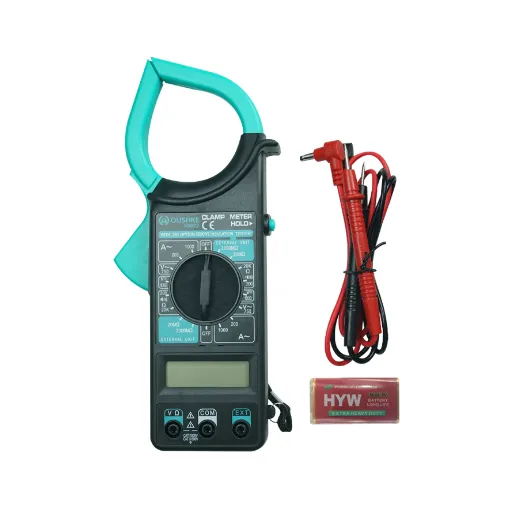
OEM test equipment is instruments made by one company and sold under another company’s brand. The buyer provides the design, specifications, and branding. The manufacturer handles engineering, sourcing, assembly, calibration, and packaging.
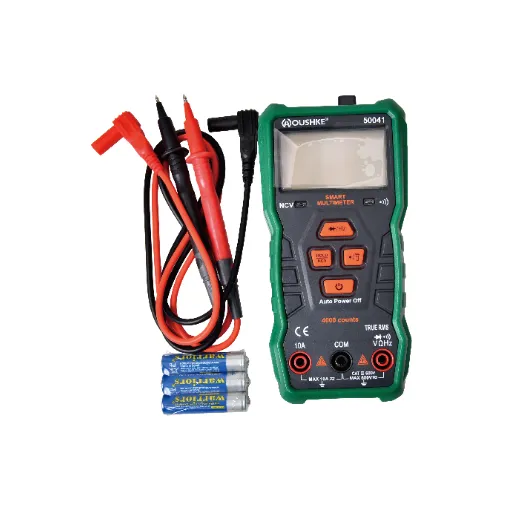
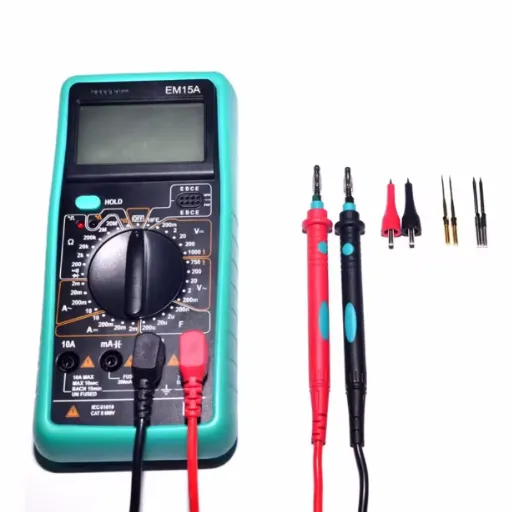
This model is common across the test equipment industry. A distributor in Europe might launch a private-label multimeter line. A trading company in Southeast Asia might rebrand insulation testers. An e-commerce seller might create a custom-branded tool kit.
OEM test equipment covers a wide range of instruments:
- Electrical test equipment (multimeters, clamp meters, insulation testers, power analyzers)
- Mechanical and material testing equipment (hardness testers, torque testers, tensile testers)
- Environmental test chambers (temperature, humidity, thermal shock)
- RF and wireless test equipment (spectrum analyzers, signal generators)
- Automotive and battery test equipment
The buyer owns the brand. The manufacturer owns the production expertise. When the partnership is structured well, both sides benefit.
If you are new to test and measurement products, our test and measurement tools guide explains the main categories, terminology, and selection principles.
OEM vs. ODM Test Equipment: Which Model Fits Your Business?
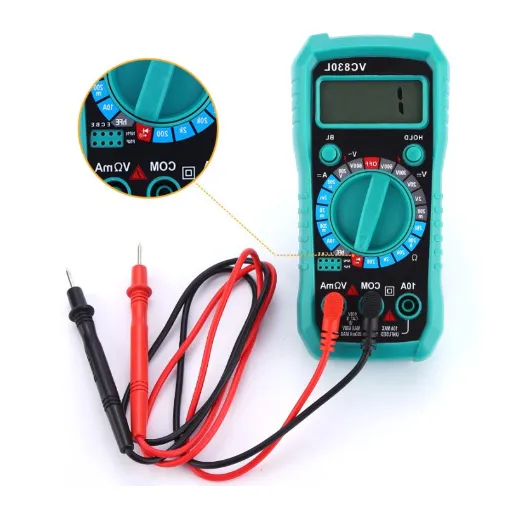
Before you contact a manufacturer, decide whether you need an OEM or ODM partnership. The difference is simple but important.
OEM Model
In an OEM arrangement, you provide the design or detailed specifications. You own the intellectual property. The manufacturer builds the product to your exact requirements.
This model works best when:
- You have a unique product concept or proprietary features
- You want to differentiate from competitors
- You are willing to invest in tooling, molds, or certification
- You plan to build a long-term brand around the product
ODM Model
In an ODM arrangement, the manufacturer already has a base design. You select an existing product and customize the branding, packaging, and sometimes minor specifications.
This model works best when:
- You want to launch quickly with a lower upfront cost
- Your customization needs are limited to logo, color, and packaging
- You need lower minimum order quantities
- You are testing a market before investing in a custom design
OEM vs. ODM Comparison
| Factor | OEM Test Equipment | ODM Test Equipment |
|---|---|---|
| Design ownership | Buyer owns design/spec | The manufacturer owns the base design |
| Customization depth | Deep (housing, firmware, specs) | Limited (logo, color, packaging) |
| Typical MOQ | Higher (often 500–2,000+ units) | Lower (often 100–500 units) |
| Lead time | Longer (tooling + sample cycles) | Shorter (existing platform) |
| Upfront investment | Higher (tooling, certifications) | Lower (branding costs only) |
| Best for | Proprietary or differentiated products | Fast market entry and brand testing |
Many successful private label programs start with ODM and move to OEM once sales justify a custom design. This approach lowers risk and preserves capital.
What Can You Customize on OEM Test Equipment?
One of the biggest advantages of OEM test equipment is the breadth of customization available. Buyers often assume only the logo can change. In reality, you can customize appearance, performance, firmware, packaging, and accessories.
Product Appearance
- Housing color, shape, and material
- Brand logo on the front panel, back label, or screen boot
- Button layout and labeling
- Screen size, display language, and user interface graphics
Technical Specifications
- Measurement range, accuracy, and resolution
- Sensor type and probe configuration
- Communication interfaces (USB, Bluetooth, Wi-Fi, RS-232)
- Data logging memory and sampling rate
- Safety ratings (CAT II, CAT III, CAT IV for electrical instruments)
Firmware and Software
- Language packs (English, Spanish, German, etc.)
- Measurement units and default settings
- Data export formats
- Mobile app or PC software branding
Packaging and Documentation
- Retail box design and branding
- User manual with your company name
- Warranty card and certificate of conformity
- Barcode, UPC, or QR code labeling
Accessories and Bundling
- Test leads, probes, alligator clips
- Carrying cases, holsters, and screen protectors
- Batteries, chargers, and adapters
- Calibration certificates and traceability documents
The more you customize, the higher the MOQ and lead time. A good manufacturer will help you prioritize changes that improve perceived value without adding unnecessary cost.
The OEM Test Equipment Process: Step by Step

A well-managed OEM project follows a clear sequence. Skipping steps or rushing the process is where most problems begin.
Step 1: Define Your Product Requirements
Start with your target market, not the product. Ask:
- Who will use this instrument?
- What application or industry is it for?
- What accuracy and safety standards are required?
- What price position do you want?
- What is your realistic volume forecast for the first 12 months?
Document everything in a product requirement sheet. Include technical specs, reference products, target price, certification needs, and packaging expectations. This document becomes the foundation of your agreement with the manufacturer.
Step 2: Choose the Right Manufacturer
Not every factory that makes test equipment is ready for OEM work. Look for a partner with:
- In-house R&D and engineering team
- Proven export experience
- Relevant certifications (ISO 9001, CE, IEC 61010, RoHS)
- Calibration capability or access to accredited labs
- Clear communication and documentation practices
For a detailed framework, see our guide on what to look for in a test equipment manufacturer. It covers factory audit checklists, certification verification, and red flags to avoid.
Step 3: Confirm Specifications and Sign an Agreement
Once you select a manufacturer, formalize the scope. A typical agreement covers:
- Technical specification sheet signed by both parties
- Non-disclosure agreement (NDA) if you share proprietary designs
- Tooling and mold costs
- MOQ and price breaks by volume
- Payment terms and delivery schedule
- Quality standards and acceptance criteria
Get every commercial term in writing. Verbal agreements are common in sourcing, but they are also the most common source of disputes.
Step 4: Approve Samples and Pilot Run
Sample approval is the most critical quality gate in any OEM project. Plan for multiple stages:
- Functional sample: Proves the instrument meets your technical requirements
- Pre-production sample: Confirms the production line can replicate the design
- Golden sample: The approved reference unit used for mass production comparison
Do not skip this step. A buyer who rushes into mass production without signed samples often receives units that differ from what was promised.
Step 5: Production, Quality Control, and Calibration
During mass production, quality control should be documented and traceable. A reliable manufacturer will perform:
- Incoming quality control (IQC) on components
- In-process quality control (IPQC) during assembly
- Final quality control (FQC) and functional testing
- Calibration against traceable standards
For instruments that measure voltage, current, resistance, torque, or force, calibration is not optional. Ask for calibration certificates and confirm the lab accreditation.
Step 6: Packaging, Shipping, and Scale-Up
After production passes inspection, approve the custom packaging. Then arrange logistics. Your manufacturer should provide export documentation. This includes the commercial invoice, packing list, certificate of origin, and any compliance certificates your market requires.
As your volume grows, negotiate price breaks. Plan reorder schedules. Consider holding safety stock. A strong OEM partnership scales with your business.
What to Look for in an OEM Test Equipment Manufacturer
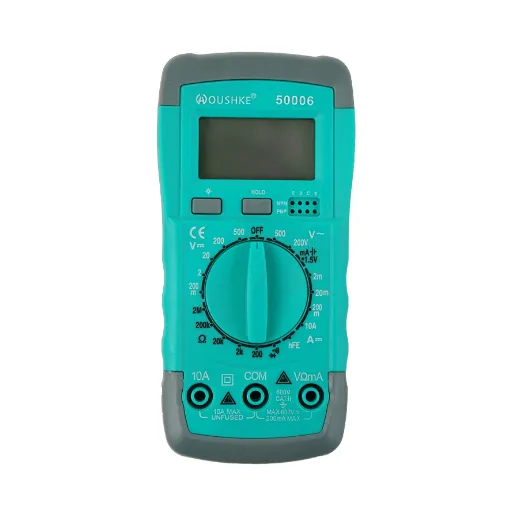
Choosing the right manufacturer is the single most important decision in your OEM project. Here are the capabilities that matter most.
Technical and R&D Capability
A manufacturer with an in-house engineering team can refine your production design. They can solve technical problems and support firmware customization. Ask about their R&D team size, project history, and prototyping timeline.
Quality System and Certifications
At a minimum, an OEM test equipment manufacturer should have:
- ISO 9001: Quality management system
- CE marking: Required for sale in the European Economic Area
- IEC 61010-1: Safety standard for electrical test equipment
- RoHS: Restriction of hazardous substances in electrical products
- FCC or UL: Required for certain North American markets
Always verify certificates directly with the issuing body. A PDF can be forged. Certificates can also be outdated.
Calibration and Traceability
Test equipment must measure accurately. This is non-negotiable. Confirm that the manufacturer has access to calibration labs. These labs should be accredited by CNAS, ILAC, or an equivalent body. Calibration records should be traceable to national or international standards.
Export and Communication Experience
Export experience matters. A manufacturer that ships regularly to your target market understands packaging requirements. They know documentation rules. They understand customs expectations. Clear English communication and fast response times reduce errors and delays.
Scalability and Lead Time Consistency
Ask about current capacity, typical lead times, and how they handle peak seasons. A factory that is already at 90% capacity may struggle to grow with you.
Typical MOQs, Lead Times, and Costs
Commercial planning is impossible without baseline numbers. While every project is different, the following ranges are typical for OEM test equipment sourced from China.
MOQs by Customization Level
| Customization Level | Typical MOQ |
|---|---|
| Logo and packaging only | 100–500 units |
| Housing color and label changes | 300–1,000 units |
| Firmware or spec changes | 500–2,000 units |
| Full custom design with tooling | 1,000–5,000 units |
Lead Times
- Sample development: 2–6 weeks, depending on complexity
- Tooling and mold production: 4–8 weeks
- Mass production: 4–10 weeks after sample approval
- Shipping: 2–6 weeks by sea, 5–10 days by air
Cost Drivers
- Tooling and mold fees (one-time cost for custom housings)
- Certification and testing fees
- Component quality level
- Order volume
- Packaging complexity
For a deeper look at volume pricing and distributor programs, see our guide on wholesale test equipment pricing.
Ready to explore OEM test equipment for your brand? Contact our team for a custom specification review and sample quote.
Common Mistakes to Avoid in OEM Test Equipment
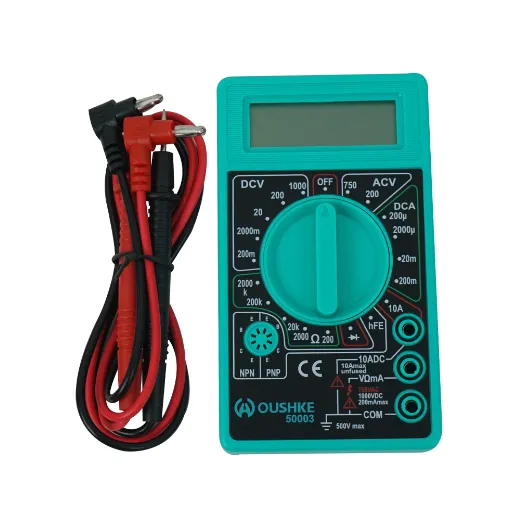
After years of supporting OEM projects, we see the same mistakes repeatedly. Avoiding them will save you time, money, and reputation.
Vague Specifications
A requirement like “good quality multimeter” means different things to different factories. Define accuracy, safety category, display counts, functions, and materials in writing.
Skipping Sample Approval
Mass production should never start before the golden sample is signed. This is the only reference both sides agree on.
Ignoring Certification Requirements
Electrical test equipment sold in Europe must meet CE and IEC 61010 requirements. North American markets may require UL or FCC. If you import without proper certification, customs can reject the shipment.
Choosing Price Over Capability
The lowest quote is rarely the best value. A manufacturer that underbids may cut corners on components, skip calibration, or miss deadlines.
No Written Quality Agreement
Your purchase order should include acceptance criteria, allowed defect rates, and what happens if quality fails. Verbal promises do not protect your business.
Real-World Scenarios
Marco, a distributor in Italy, wanted to launch a private label multimeter line. He targeted electricians. He started with an ODM model: a factory-standard meter with his logo, custom box, and Italian manual. The first order was 500 units.
After 18 months of steady sales, he moved to OEM. He added a backlit display, a higher safety category, and a custom carrying case. His brand now has a 12% share in his regional market.
Elena, an e-commerce seller in Germany, skipped sample approval to meet a seasonal deadline. The first container arrived with meters labeled CAT III 600V. But they lacked the required CE documentation. German customs held the shipment for three weeks. The delay cost her the Christmas selling season and damaged her seller ratings.
A procurement team at a Southeast Asian trading company focused only on unit price when selecting an OEM partner. The manufacturer delivered on time. But 22% of the units failed calibration during incoming inspection. The rework cost exceeded the original price difference between the low bidder and a more qualified supplier.
China Manufacturing Clusters for OEM Test Equipment
China’s test equipment industry is concentrated in regions that specialize in different product types. Matching your product to the right cluster improves quality, lead time, and cost.
Guangdong Province
Shenzhen and Dongguan dominate electronics-integrated test equipment. This is the best region for multimeters, clamp meters, environmental testers, and RF instruments.
Jiangsu and Shanghai
The Yangtze River Delta specializes in precision benchtop instruments, optical measurement devices, and lab-grade equipment.
Shandong and Zhejiang
These provinces are strong in mechanical and material testing equipment, including hardness testers, tensile testers, and torque testers.
Hebei and Henan
These regions have growing clusters in high-voltage electrical test equipment and industrial diagnostic instruments.
A manufacturer with relationships across multiple regions can source the right production base for your specific product.
Conclusion
Building a private label test equipment brand is a realistic goal. Distributors, e-commerce sellers, and industrial trading companies can all succeed with the right approach.
The key is to treat OEM manufacturing as a partnership. Not a one-time transaction. Define your requirements clearly. Choose the right OEM or ODM model. Approve samples before mass production. Verify certifications and calibration. Select a manufacturer that can scale with your business.
The global demand for test and measurement equipment is growing. Companies that move now with a well-structured OEM program can build brand recognition. They can capture market share while competitors are still comparing supplier directories.
At Shanghai Oushike Hardware Tools, we help businesses launch and scale private label test equipment lines. From ODM branding to full OEM development, we manage sample approval, quality control, calibration verification, and export logistics. If you are ready to start, contact us for an OEM consultation. We will review your specifications and provide a sample quote.