
Test Equipment Calibration: A Complete Guide for Manufacturers
Test equipment calibration is the process of comparing a measurement device’s output against a known reference standard and documenting the results. It confirms whether the device is reading accurately and whether it remains within acceptable tolerance limits for your application.
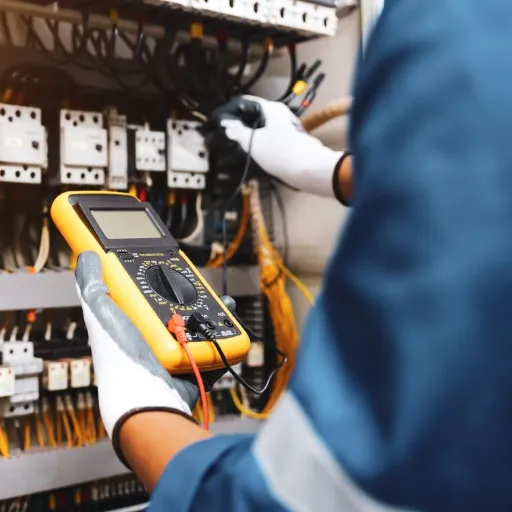
What if a single out-of-tolerance multimeter is shipping bad products every day? Many factories assume their instruments are fine until a customer complaint or audit reveals the truth. Calibration is not a formality. It is the difference between reliable data and expensive mistakes.
In this guide, you will learn what test equipment calibration really means, how often to do it, how to set up a practical calibration program, and how to choose between in-house and outsourced calibration. You will also learn how to read a calibration certificate and what to look for when sourcing calibration services from China.
Key Takeaways
- Test equipment calibration compares instrument readings to traceable reference standards and documents any deviation or adjustment.
- Most general-purpose instruments need calibration every 12 months; critical or heavily used equipment may need 6-month or quarterly calibration.
- ISO/IEC 17025 is the international standard for calibration laboratory competence and provides recognized traceability for regulated industries.
- A practical calibration program includes equipment identification, interval planning, documented procedures, certificate review, and record keeping.
- In-house calibration works when you have trained staff and traceable standards; outsourcing is often more cost-effective for complex instruments or small volumes.
What Is Test Equipment Calibration?
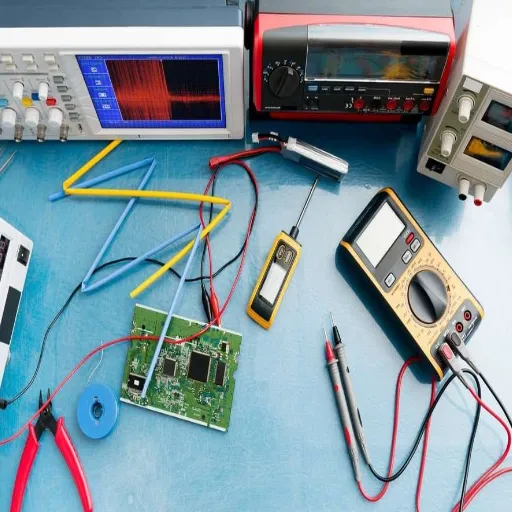
Test equipment calibration checks whether a measurement instrument produces results that match a known standard. A technician connects the device under test to a certified reference and compares readings across the instrument’s operating range. If the readings deviate beyond acceptable limits, the technician adjusts the device or reports it as out of tolerance.
The key idea is traceability. A calibrated multimeter’s reading should be traceable back to the International System of Units (SI) through national metrology institutes such as NIST in the United States or PTB in Germany. This chain of comparisons is what makes a measurement credible.
Calibration is not the same as repair. Repair fixes a broken device. Calibration verifies and documents performance. An instrument can pass calibration without adjustment, fail calibration and need repair, or be adjusted during calibration and then pass.
Why Test Equipment Calibration Matters
Measurement data drives decisions. Incoming inspection, in-process control, final testing, and supplier qualification all depend on instruments that read correctly. When those instruments drift, the consequences spread quickly.
Uncalibrated equipment can approve bad parts, reject good parts, or miss safety-critical failures. The result is rework, scrap, warranty claims, customer complaints, and regulatory findings. In automotive, aerospace, medical device, and electronics manufacturing, these risks are amplified because end-product failures can affect safety.
The global calibration services market reflects this importance. According to SNS Insider and Market Research Future, the market is projected at approximately USD 7–8 billion in 2026 and is growing at 6–7% annually through the early 2030s. More manufacturers are investing in calibration because the cost of skipping it is higher than the cost of doing it right.
How Often Should You Calibrate Test Equipment?
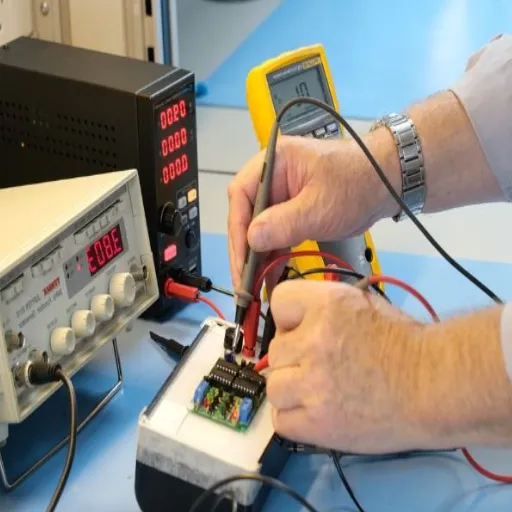
Calibration frequency is one of the most common questions in quality control. There is no single answer that fits every instrument, but there are clear starting points.
Typical Calibration Intervals
Most general-purpose test equipment is calibrated once per year. This applies to multimeters, oscilloscopes, power supplies, pressure gauges, hardness testers, and many environmental sensors. More demanding applications often shorten the interval.
- Multimeters: 12 months for standard use; 6 months for heavy industrial or field use.
- Oscilloscopes: 12 months for routine lab use.
- Pressure gauges: 12 months; 6 months or quarterly for process-critical or safety applications.
- Hardness testers: 12 months, often with intermediate checks using certified reference blocks.
- Environmental chambers: 6–12 months depending on temperature range and usage.
Fluke Calibration explains that intervals should balance risk and cost. Shorter intervals reduce the chance of out-of-tolerance use but increase calibration spending. Longer intervals save money but increase the risk of undetected drift.
Factors That Affect Calibration Frequency
Several factors should influence your interval decisions:
- Manufacturer recommendation: Start with the manufacturer’s stated interval.
- Usage severity: Daily use, harsh environments, vibration, temperature swings, and drops all accelerate drift.
- Measurement criticality: Tighter tolerances and safety-critical measurements need shorter intervals.
- Historical drift data: If an instrument has been stable for years, you may extend the interval. If it frequently drifts, shorten it.
- Regulatory requirements: ISO 9001, IATF 16949, AS9100, FDA, and GMP often specify or imply calibration requirements.
When Mei, a quality engineer at a Shenzhen electronics factory, reviewed her calibration records in 2024, she noticed that one production-line multimeter drifted out of tolerance three intervals in a row. She shortened its interval from 12 months to 6 months. The extra calibration cost was small compared to the potential cost of shipping out-of-spec products.
The Test Equipment Calibration Procedure

A consistent calibration procedure reduces errors and creates an audit trail. The exact steps depend on the instrument, but the general workflow is the same.
Step 1: Identify Equipment and Requirements
Every instrument should have a unique asset tag or serial number. Record the manufacturer, model, range, accuracy class, location, and the standard it must meet. Also note the acceptance criteria, which define the maximum allowable deviation.
Step 2: Set Calibration Intervals
Use manufacturer recommendations, usage data, and regulatory requirements to set the interval. Document the rationale. Intervals can be adjusted later based on calibration history.
Step 3: Select Reference Standards
Use certified reference standards that are more accurate than the device under test. The reference standard must itself be calibrated and traceable to SI units through an accredited laboratory.
Step 4: Perform Calibration in Controlled Conditions
Temperature, humidity, and electromagnetic interference can affect measurements. Perform calibration in a stable environment. For sensitive instruments, record environmental conditions on the certificate.
Step 5: Record Results and Calculate Uncertainty
Record measured values at multiple points across the instrument’s range. Calculate deviation from the reference and determine whether the device is within tolerance. Also estimate measurement uncertainty, which describes the doubt around each measured value.
Step 6: Issue a Calibration Certificate
The certificate documents what was done, what standards were used, what the results were, and whether the device passed or failed. It should include traceability information and measurement uncertainty.
Step 7: Label Equipment and Schedule Next Calibration
Apply a calibration label with the date calibrated, due date, and status. Update the calibration schedule so the next calibration is not missed.
Step 8: Maintain Calibration Records
Keep calibration certificates, procedures, training records, and adjustment history. These records are essential for audits and for analyzing instrument stability over time.
Tektronix provides a clear overview of ISO 17025 calibration principles in its ISO 17025 guide. Their explanation of traceability, measurement uncertainty, and competence requirements is useful for anyone building a calibration program.
How to Read a Calibration Certificate

A calibration certificate is only valuable if you know what to look for. Here are the key fields:
- Equipment identification: Model, serial number, and asset tag of the device calibrated.
- Calibration date and due date: When the calibration was performed and when the next one is scheduled.
- Reference standards: The certified standards used, including their traceability numbers.
- Measured values and deviations: The readings taken and how much they differed from the reference.
- Acceptance criteria: The tolerance limits are applied.
- Pass/fail statement: Whether the device met the criteria.
- Measurement uncertainty: The estimated doubt in each measurement result.
- Environmental conditions: Temperature, humidity, and other factors during calibration.
- Laboratory and technician identification: Who performed the calibration and where.
If a certificate is missing traceability information or measurement uncertainty, it may not satisfy regulatory auditors. Always request a sample certificate before selecting a calibration provider.
In-House vs. Outsourced Calibration

Manufacturers often debate whether to calibrate equipment internally or send it to a service provider. Both options have valid use cases.
When In-House Calibration Makes Sense
In-house calibration is a good fit when:
- You have many instruments of the same type.
- You have trained technicians with calibration experience.
- You own calibrated reference standards with valid traceability.
- You can maintain controlled environmental conditions.
- The instruments are simple enough to calibrate with internal resources.
The main advantage is control and speed. You can calibrate on your own schedule and avoid shipping delays. The main disadvantage is the capital and labor costs. Reference standards, training, documentation, and environmental control all require investment.
When Outsourced Calibration Makes Sense
Outsourced calibration is often better when:
- You have a small number of instruments.
- The instruments require complex calibration beyond your team’s skills.
- You need ISO 17025-accredited calibration for customers or regulators.
- You do not want to invest in reference standards and environmental chambers.
- You need a faster turnaround for critical instruments while others are sent out.
The cost of outsourced calibration varies by instrument and location. Basic multimeter calibration may range from USD 50 to 200. Oscilloscopes, pressure calibrators, and complex testers can cost USD 200 to 1,000 or more. ISO 17025-accredited calibration is typically 10–15% higher than standard factory calibration, but it provides internationally recognized traceability.
Hybrid Approaches
Many manufacturers use a hybrid model. They handle simple instruments in-house and outsource complex or accredited calibrations. This balances cost, control, and compliance.
Sourcing Calibration Equipment and Services from China
China has a well-developed calibration ecosystem. Major cities including Shenzhen, Shanghai, Guangzhou, Suzhou, Beijing, and Jinan host both calibration equipment manufacturers and accredited service labs.
Calibration Equipment Manufacturers in China
Chinese manufacturers produce a wide range of calibration equipment, including:
- Electrical calibrators and multimeter calibrators
- Pressure calibrators and deadweight testers
- Temperature and humidity calibration baths
- Torque wrench calibrators
- Flowmeter calibration systems
- ESD and resistance calibration tools
Notable Chinese companies mentioned in industry lists include RIGOL Technologies in Suzhou, Shenzhen Star Instrument, Kaifeng Instrument, Q&T Instrument, Baluntech in Beijing, Jinan Testing Equipment IE Corp, ESDMAN, Xianheng International, DearTo, and LIOCREBIF. Many of these suppliers serve both domestic and export markets.
Calibration Service Providers in China
For accredited calibration services, options include:
- Aries Marine China: ISO/IEC 17025:2017 and ISO 9001:2015 certified, covering pressure, temperature, dimensional, electrical, flow, and gas detection instruments.
- Trescal China: International provider with accredited, traceable calibration and repair services.
- Micro Precision Guangzhou: Global calibration company offering lab-based and on-site calibration, repair, and asset management.
What to Verify
When sourcing calibration equipment or services from China, check the following:
- Accreditation scope: Confirm the lab is accredited for the specific instruments and ranges you need.
- Traceability: Ask for the traceability chain to national or international standards.
- Certificate sample: Review a sample certificate before placing an order.
- Turnaround time: Confirm how long calibration will take and whether rush service is available.
- On-site capability: For large or fixed equipment, ask whether technicians can calibrate on your premises.
- English documentation: Ensure certificates, reports, and manuals are available in clear English.
If you need help sourcing calibration equipment or test equipment calibration services in China, verify credentials carefully. The lowest price is not always the lowest total cost if certificates lack traceability or if turnaround times disrupt production.
Standards and Compliance to Know
Calibration does not exist in a vacuum. It supports broader quality-system requirements.
ISO/IEC 17025:2017 is the international standard for calibration laboratory competence. Laboratories accredited to ISO 17025 have demonstrated that they produce valid results, maintain traceability, and operate under proper quality management. Their certificates are recognized internationally through ILAC mutual recognition arrangements.
ISO 9001 requires organizations to ensure that monitoring and measuring equipment is calibrated or verified at specified intervals. It does not always require ISO 17025 accreditation, but accredited calibration is the easiest way to demonstrate compliance.
IATF 16949 for automotive, AS9100 for aerospace, and FDA 21 CFR Part 820 / ISO 13485 for medical devices typically require ISO 17025-accredited calibration for regulated measurements. These industries also emphasize measurement system analysis and strict record-keeping.
ANSI/NCSL Z540.3 is a North American alternative sometimes used in defense and electronics. It shares many concepts with ISO 17025 but has different documentation requirements. Many manufacturers accept either standard depending on customer requirements.
ZERA GmbH offers a useful explanation of ISO 17025 calibration guidelines, covering structural, resource, and process requirements that laboratories must meet.
Conclusion
Test equipment calibration is a quality-control discipline, not a one-time task. Reliable measurements depend on a clear program that defines what to calibrate, how often, by what method, and with what traceability.
Start by identifying your instruments and their criticality. Set intervals based on manufacturer guidance, usage, and history. Choose in-house calibration only if you have the standards, environment, and skills to do it right. Otherwise, work with an accredited provider that can deliver valid certificates and a reliable turnaround.
For manufacturers sourcing from China, the calibration ecosystem is large and growing. Verify accreditation, traceability, and documentation before committing. A good calibration partner helps you avoid audit findings, customer complaints, and costly recalls.
If you are building a quality-control program and need reliable test and measurement tools, contact us today. Shanghai Oushike Hardware Tools Co., Ltd. offers factory-direct pricing, practical sourcing guidance, and long-term partnership support to help you keep your measurement program on track. For help selecting instruments and suppliers, see our guides on how to choose test and measurement tools and test equipment manufacturers.
Sources
- SNS Insider. “Calibration Services Market Size, Share & Industry Report.” https://www.snsinsider.com/reports/calibration-services-market-4092
- Market Research Future. “Calibration Service Market Share Report, Size Growth 2035.” https://www.marketresearchfuture.com/reports/calibration-service-market-29061
- Guidelines.” https://ips-us.com/how-often-should-you-calibrate-your-equipment-industry-specific-guidelines/