
M6 Socket Head Cap Screw Guide: Types, Sizes & The Allen Key You Need
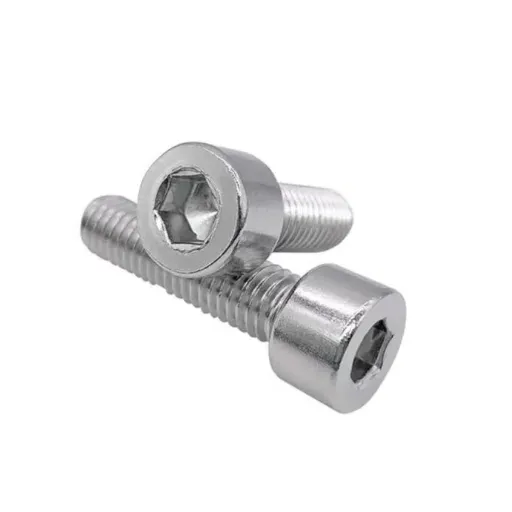
An M6 socket head cap screw is a metric machine screw with a 6 mm thread and a cylindrical head that holds an internal hex socket. It is made to DIN 912 / ISO 4762, has a 10 mm head, and is driven with a 5 mm Allen key. This guide walks through every M6 socket-cap and screw type, its dimensions and drive, how to choose between them, and what to stock if you supply fasteners.
The cylindrical head with the hex recess is the screw you see holding machine guards, tooling plates, and automotive brackets together. It looks simple, but the M6 socket head cap screw is actually a family. Standard, low head, button head, countersunk, shoulder, and set screw variants all share the same M6 thread yet suit completely different jobs. Choosing the wrong one means stripped drives, rounded sockets, or a fastener that cannot reach its rated strength. Our M6 screw size guide covers the full thread callout; here we focus on the types themselves, the tools that fit them, and how to make the right call for your application.
Key Takeaways
- An M6 socket head cap screw has a 6 mm thread with 1.0 mm coarse pitch, a 10 mm head, and a 5 mm Allen key drive per DIN 912 / ISO 4762.
- The socket-cap family in M6 includes standard, low head (DIN 7984), button head (ISO 7380), countersunk (ISO 10642), shoulder (ISO 7379), and set screw (DIN 916) types, each with its own head height and hex key size.
- Button head and low head M6 socket screws carry lower strength and strip more easily than the standard socket cap, so they are not a direct swap.
- A socket head cap screw generally out-specs a common hex-head bolt of the same size because it is offered in higher strength classes like 12.9.
- Match the drive to the job: internal hex is the M6 default, Torx resists cam-out under high torque, and Phillips suits pan-head machine screws.
What Is an M6 Socket Head Cap Screw?
An M6 socket head cap screw is a metric fastener with a 6 mm thread and a cylindrical head that holds an internal hex socket. It is manufactured to ISO 4762 / DIN 912, has a 10 mm head diameter, and is tightened with a 5 mm Allen key. Because the driver fits inside the head, it needs no side clearance and can be counterbored flush.
That last trait is what separates it from a hex-head bolt. A hex-head bolt needs a wrench or socket wrapped around the outside of the head, which means you need open space around the fastener. The socket cap screw turns from inside its own head, so screws can sit close together, deep in pockets, or under covers. It is the default choice for precision machinery, tooling, robotics, and any assembly where space is tight and strength matters.
Engineers reach for the socket cap for one more reason. It is available in higher strength classes than the everyday hex bolt, with alloy-steel M6 socket caps commonly sold as grade 12.9. That combination of compact head and high strength makes it the workhorse machine screw in metric design.
M6 Socket Head Cap Screw Dimensions at a Glance
Here are the reference dimensions for a standard M6 socket head cap screw (DIN 912 / ISO 4762). These are the numbers you need to size a counterbore, pick an Allen key, and order the correct screw. The full dimensional limits for the head and socket come from the ISO socket head screw standard tables on Engineers Edge.
| Property | M6 value |
|---|---|
| Nominal thread diameter | 6.0 mm |
| Coarse thread pitch | 1.0 mm |
| Fine thread pitch | 0.75 mm |
| Head diameter | 10.0 mm |
| Head height | 6.0 mm |
| Hex socket (Allen key) size | 5 mm |
| Socket depth (minimum) | about 3 mm |
| Common lengths | 6 to 60 mm |
| Threaded length on partial-thread screws | about 24 mm |
Length is measured from under the head to the tip, so the head is not counted. Short M6 screws up to roughly 25 mm long are fully threaded. Above that, the thread length stays around 24 mm and the rest of the shank is smooth, unthreaded body. If you are checking an unknown screw, McMaster-Carr’s how to measure screw size guide is a reliable reference for the measuring method. For thread-pitch and dimensional reference across the whole metric series, the ISO metric thread dimensions table from Accu is a useful cross-check.
To seat the head flush, counterbore the hole to roughly 10.5 to 11.2 mm in diameter and about 6 mm deep. Because the socket cap head is 10 mm, always confirm the counterbore against the exact head you are using before machining.
Types of Socket Screws: The M6 Socket-Cap Family Explained
All of the types below share an M6 thread and an internal hex (Allen) drive, but each has a different head profile, a different head height, and often a different hex key size. The table shows the head dimensions and Allen key for each type.
| Type | Standard | Head profile | Head diameter | Head height | Hex key | Typical use |
|---|---|---|---|---|---|---|
| Socket head cap screw | DIN 912 / ISO 4762 | Cylindrical | 10 mm | 6 mm | 5 mm | High-strength machine joints, tooling, automotive |
| Low head socket cap | DIN 7984 | Reduced cylinder | about 10 mm | about 4 mm | 4 mm | Tight vertical clearance, lighter load |
| Button head socket screw | ISO 7380 | Domed, low profile | about 10.5 mm | about 3 mm | 4 mm | Sheet metal, covers, snag-free finish |
| Flat (countersunk) head socket screw | ISO 10642 / DIN 7991 | 90-degree cone, flush | up to about 12 mm | about 3 mm | 4 mm | Flush surfaces, panels, moving parts |
| Shoulder screw | ISO 7379 | Precision ground shoulder | shoulder governs | varies | 5 mm | Pivots, pulleys, linkages, dies |
| Set screw (grub) | DIN 916 / ISO 4029 | Headless | none | none | 3 mm | Locking gears and pulleys to shafts |
The standard socket head cap screw is the strongest of the group. Its tall head gives room for a deep, wide hex socket, so the driver engages more of the screw and can transmit high torque without rounding. It is the type to pick for anything load-bearing.
Button head and low head versions trade that strength for a smaller profile. They are the right call when overhead clearance is limited or you want a smooth, rounded finish. Just remember that their shallower sockets are more prone to stripping, especially if you over-tighten them or drive them with a worn key.
Countersunk socket screws sit flush with the surface, which matters when a moving part passes over the fastened area or you want a clean look. The set screw is different in kind: it has no head at all and is threaded its whole length, so it locks one part against another, like a collar onto a shaft.
For the full tool map, including the wrench and socket sizes that go with these hex keys, see our M6 Allen key and tool guide. It pairs every M6 fastener with the exact driver you need.
M6 Hex Head Bolts, Machine Screws & Set Screws: The Other M6 Types
The socket cap is one head style on an M6 thread, but it is not the only one. When your assembly calls for a wrench-driven head, or a cross-recess machine screw, you choose from these types.
| Type | Standard | Drive | Notes |
|---|---|---|---|
| Hex head bolt | DIN 933 / ISO 4017 | 10 mm wrench or socket | High torque, needs wrench clearance, used with a nut or tapped hole |
| Hex nut (for M6) | DIN 934 / ISO 4032 | 10 mm across flats | Pairs with M6 hex bolts and cap screws |
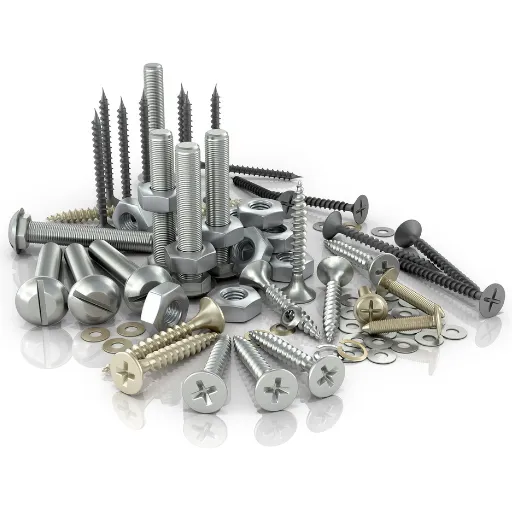
| Pan-head machine screw | ISO 7045 / DIN 7985 | Phillips or Pozidriv | General sheet and bracket fastening |
| Set screw | DIN 916 / ISO 4029 | 3 mm Allen key | Headless, for shaft locking |
A hex-head M6 bolt is the external-drive alternative. Because you grip the outside of the head, you can apply very high torque, which is why hex bolts dominate structural and high-load bolting where a wrench fits. The trade-off is clearance. If two fasteners sit close together or a bracket blocks the wrench path, a socket cap screw is often the better fit. The practical difference between the two is covered in our bolt vs screw guide.
Pan-head machine screws with a Phillips or Pozidriv recess are the everyday option for light sheet metal and consumer assemblies. They are quick to drive, but the cross recess cams out under high torque, so they are not for heavy joints.
Socket Head Cap Screw vs Hex Bolt vs Button Head: Which M6 Screw Do You Need?
When the drawing does not decide for you, use this quick map to pick the right M6 head type.
| Your need | Choose |
|---|---|
| Maximum strength in a machine joint | Socket head cap screw (DIN 912) |
| Very little vertical clearance | Low head (DIN 7984) or button head (ISO 7380) |
| Flush, snag-free surface | Countersunk flat head (ISO 10642) |
| No side clearance for a wrench | Socket head cap screw, driven with a 5 mm Allen key |
| Very high torque with cam-out resistance | Torx-drive socket screw |
| Bolt-up with a nut, high torque | Hex head bolt (DIN 933) |
| Light sheet metal or covers | Button head or pan-head machine screw |
| Locking a gear or collar to a shaft | Set screw (DIN 916) |
Strength is where buyers often misjudge. For the same nominal size, a socket head cap screw is generally offered in a higher strength class than a common hex bolt, with M6 socket caps routinely stocked as 12.9 alloy steel. That means the socket cap often carries a heavier load than an M6 hex bolt of the same material and diameter. It is one reason machine builders use socket caps for critical joints.
A quick story shows how the choice plays out. Marcus, a maintenance lead at a packaging plant, kept replacing M6 hex bolts that rounded off because the bolt head sat too close to an angle bracket for his socket to seat squarely. He switched to M6 socket head cap screws with a ball-end Allen key, which drove straight even in the tight spot. The rounding stopped, and his team stopped carrying spare impact sockets for that station.
One caution applies across the board. Button head and low head screws are not direct strength replacements for a standard socket cap. Their head geometry means lower practical preload, and their smaller hex sockets strip sooner. If a standard socket cap filled a load-bearing role, step up in grade or diameter rather than dropping to a button head.
Drive Systems for M6 Socket Screws: Hex vs Torx vs Phillips
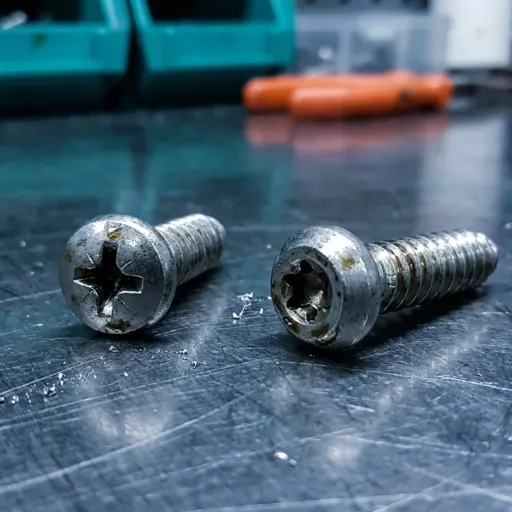
The drive is the shape inside or across the head that the tool grips, and it changes how much torque you can apply without damaging the screw.
Internal hex, the Allen drive, is the default for socket screws. It resists cam-out, seats the tool inside the head, and works in tight spaces. The M6 socket cap uses a 5 mm hex, which is one of the most common Allen sizes in any metric kit. A hex driver or bit turns it with a strong, centered grip.
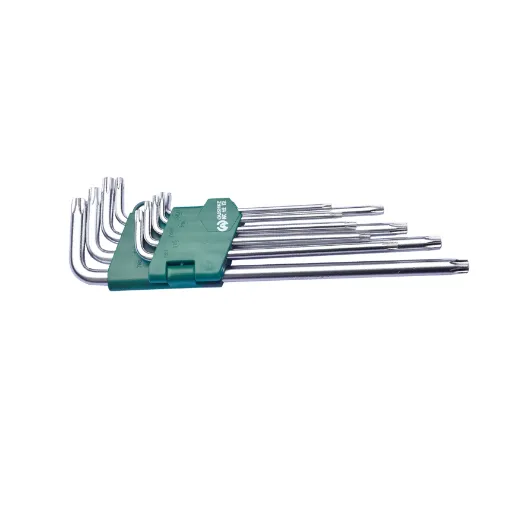
Torx, the six-pointed star drive, is the upgrade where you need even more torque transfer. Its design spreads force across more contact points, which reduces cam-out and lets you tighten harder before the drive rounds. For M6 fasteners in high-vibration or high-torque applications, Torx is increasingly common. If you stock Torx screwdrivers and bits, you can cover both drives with one driver set.
Phillips and Pozidriv are cross recesses, most common on pan-head machine screws rather than socket caps. They drive quickly and are everywhere in consumer and light industrial products, but they are designed to cam out under excess torque, which protects the screw and driver at the cost of maximum clamping force.
Whatever the drive, one rule protects your fasteners: always use the exact size driver. A slightly undersized Allen key is the fastest way to round out a socket permanently, and a rounded M6 socket cap is very hard to remove.
Materials, Grades & Finishes for M6 Socket Head Cap Screws
The M6 socket cap is sold in a few standard material and finish combinations, and each has a purpose.
Alloy steel socket caps are most commonly offered in property class 12.9, with 8.8 and 10.9 available for lighter duty. Class 12.9 is the high-strength default for machine tooling and demanding joints. Carbon steel versions come with finishes like zinc plating, mechanical zinc, or black oxide. Black oxide looks clean but offers almost no corrosion protection, so it is best indoors.
Stainless steel M6 socket caps come in A2-70 (about 304) for general corrosion resistance and A4-80 (about 316) for marine and chloride environments. Stainless runs roughly 70 to 80 percent of the strength of an 8.8 carbon-steel screw, so treat grade selection as part of the load calculation, not an afterthought.
There is one sourcing caution worth knowing. High-strength plated fasteners, such as zinc-plated 12.9 socket caps, can be at risk of hydrogen embrittlement if the plating process is not controlled. For safety-critical joints, source from a manufacturer with verified process control. We explain strength classes, stainless grades, and finishes in more detail in our screw strength class guide.
Which M6 Socket Screws Should Distributors Stock?
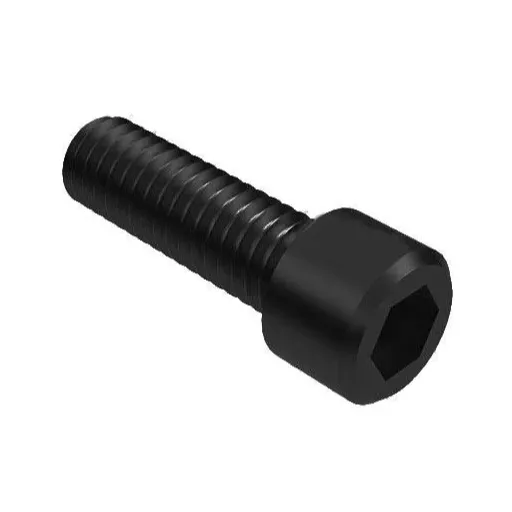
If you supply fasteners, the M6 socket head cap screw is a core line, because it is one of the most widely specified metric machine screws in service. Building a sensible stock list keeps fast-moving sizes on the shelf without tying up capital in dead inventory.
Start with the standard DIN 912 socket cap as the foundation, in both 12.9 alloy steel and A2 stainless. Stock the length steps that actually move, which for M6 are typically 10, 16, 20, 25, 30, 40, and 50 mm. Add button head and countersunk socket screws in the same key lengths, because those are the fast-moving low-profile types for covers and panels. Carry hex-head M6 bolts with hex nuts for wrench-access jobs, and keep a small range of set screws with cup points for shaft locking.
Finish matters for the market you serve. Self-colour and black oxide sell well to industrial and machine-building customers. Stainless A2 and A4 sell better in food processing, marine, and outdoor distribution. In humid markets, black-oxide stock moves slowly and corrodes on the shelf, so weight the mix toward zinc or stainless.
The distributors who do best with this line pair the screws with the tools that install them. A coordinated fastening line that sells M6 socket cap screws together with the 5 mm and 4 mm Allen keys, hex bits, and T-handle drivers gives your customer a complete solution and raises average order value. The externally threaded fastener segment is the largest in the industrial fasteners market, which is why a well-chosen M6 stock list earns its shelf space.
Sourcing all of it from one factory keeps quality and pricing consistent. If you are setting up an M6 fastening line, our M6 screw manufacturer and sourcing guide explains MOQs, grades, OEM and private label options, and how to bundle screws with driver tools.
M6 Socket Head Cap Screw FAQ
What size Allen key fits an M6 socket head cap screw?
A 5 mm Allen key fits a standard M6 socket head cap screw. Button head, countersunk, and low head M6 socket screws take a 4 mm key, and M6 set screws take a 3 mm key. Always use the exact size, because an undersized key can round the socket.
What is the difference between DIN 912 and ISO 4762?
DIN 912 and ISO 4762 describe the same hexagon socket head cap screw. ISO 4762 is the international standard that succeeded the German DIN 912, and the two are treated as interchangeable for standard M6 stock. Most suppliers list both numbers on the same product.
Is a socket head cap screw stronger than a hex bolt?
For the same size and material, a socket head cap screw is often stronger because it is typically offered in a higher strength class, such as 12.9 alloy steel, while common hex bolts are 8.8 or 10.9. The cylindrical head also concentrates the clamping load well, making it a strong choice for machine joints.
What is the difference between a socket cap and a button head screw?
A socket cap screw has a tall cylindrical head, a deep 5 mm hex socket, and high strength. A button head screw has a low domed head, a shallower 4 mm socket, and lower strength. Button heads suit low-profile, snag-free applications but strip more easily under torque.
What size counterbore is needed for an M6 socket head cap screw?
Counterbore an M6 socket cap to roughly 10.5 to 11.2 mm in diameter and about 6 mm deep to seat the 10 mm head flush. Confirm the dimension against the actual screw you are using, since head tolerances vary slightly by standard and supplier.
How is a socket head cap screw length measured?
Socket head cap screw length is measured from under the head to the tip, so the head is not counted. Short M6 screws up to about 25 mm are fully threaded; longer ones have about 24 mm of thread and a smooth body above that.
What grade of stainless steel is best for M6 socket cap screws?
A2 stainless (roughly 304) suits general indoor and mild outdoor use. A4 stainless (roughly 316) is best for marine, coastal, and chemical environments because it resists chloride corrosion. Match the grade to the environment, since stainless is lower in strength than high-grade alloy steel.
Conclusion
The M6 socket head cap screw is the dependable workhorse of metric fastening. It has a 6 mm thread, a 10 mm head, and a 5 mm Allen drive, and it comes in a family of types, from the high-strength standard socket cap to low head, button head, countersunk, shoulder, and set screw variants. Pick the standard cap for machine joints, button or low head for tight spaces, countersunk for flush surfaces, and set screws for shaft locking. Choose the drive to match the torque, and always use the exact Allen key size.
For a buyer, the practical takeaway is that the type and grade carry as much weight as the thread. A coordinated line of M6 socket cap screws paired with the right Allen keys and bits keeps workshops running and builds a dependable product range. Need a factory-direct quote for M6 socket screws together with the drivers to install them? Contact our team and we will help you plan a fastening line that fits your market.