
Screw Strength Classes Explained: 8.8, 10.9, 12.9 & Stainless
A screw strength class is the two-digit code stamped on the head of a metric screw that tells you how much load it can carry. The first number is one-tenth of the minimum tensile strength in megapascals. The second is one-tenth of the yield-to-tensile ratio. Class 8.8 means 800 MPa minimum tensile strength and roughly 640 MPa yield.
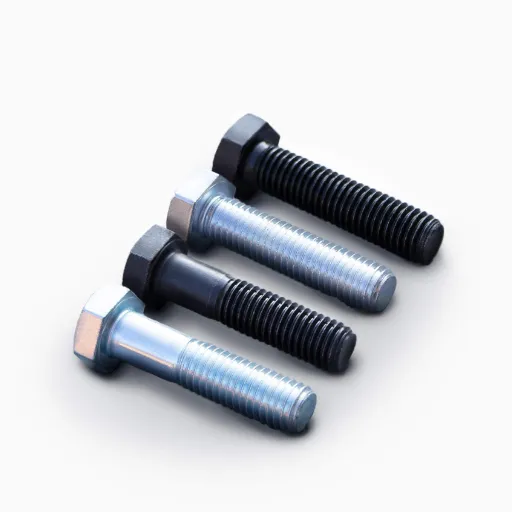
Two M6 screws sit in the same drawer. Same diameter, same thread, same length. One is stamped 4.8 and breaks at about 8,440 newtons. The other is stamped 12.9 and breaks at about 24,500 newtons. That is nearly three times the load, decided by two small digits on the head.
“M6 screw” describes a size, not a strength. The class decides what the joint holds, how it fails when overloaded, and what it costs per thousand pieces. Get it wrong and you either under-build a joint or pay a premium for a screw more brittle than the one you replaced.
This guide shows you how to read any strength class marking, metric or inch, the exact ISO 898-1 minimums, and what every class holds in an M6. It covers stainless and finishes properly, and it answers a question most supplier pages avoid: when is a higher grade the wrong buy? For the dimensional context, start with our M6 screw size guide.
Key Takeaways
- A screw strength class is a two-number code. For 8.8, the first number gives 800 MPa minimum tensile strength and the second gives a yield of roughly 640 MPa.
- The second number is a ratio, not a second strength. It is the most misunderstood part of the system.
- Class 8.8 and above must be marked on the head. Anything unmarked should be assumed low-strength, and a “0” prefix marks reduced loadability.
- For an M6, proof load runs from 6,230 N in class 4.8 to 19,500 N in class 12.9, a spread of over three times for an identical-looking screw.
- A4-80 stainless matches class 8.8 at 800 MPa, but A2-70 at 700 MPa is weaker than an 8.8 carbon steel screw.
- Higher is not always better. From 10.9 upward, screws are more notch-sensitive, more brittle, and at risk of hydrogen embrittlement when plated.
What Is a Screw Strength Class?
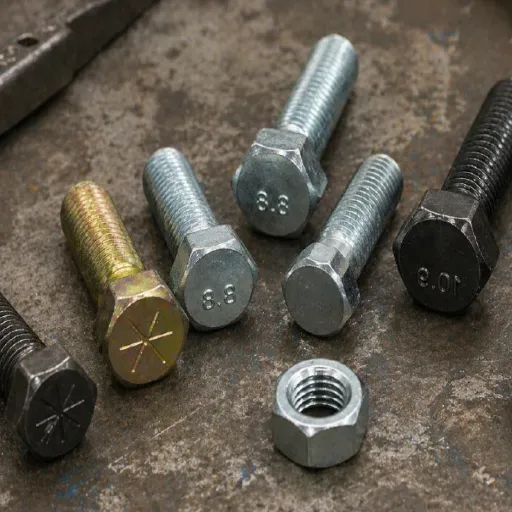
A screw strength class is an ISO 898-1 designation, stamped on the head as two numbers separated by a dot, such as 8.8. The first number multiplied by 100 gives the nominal tensile strength in MPa. The second is one-tenth of the ratio between yield and tensile strength. Metric fasteners use this system; inch fasteners are marked differently.
How to Read the Markings on a Screw Head
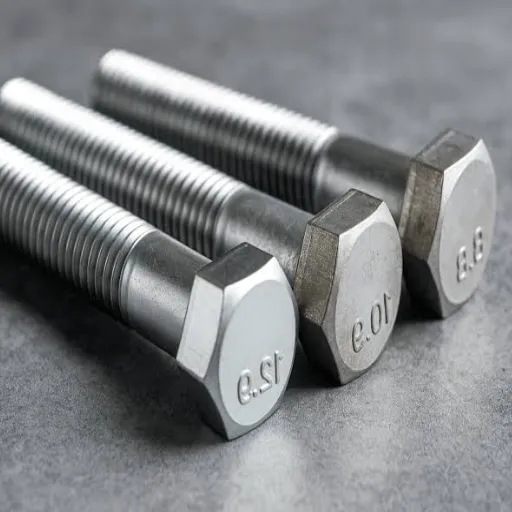
Reading bolt grade markings is mostly a matter of knowing where to look. On a hex head screw the class is stamped into the top face, and it should stay legible with the screw installed. On socket head cap screws it sits on the cylindrical head alongside the manufacturer’s identifier.
Three rules matter when you inspect a batch:
- Classes 8.8 and above must carry a marking. No stamp means the fastener is not certified to a high class and should be treated as low-strength.
- A “0” prefix means reduced loadability. A marking such as 08.8 flags a fastener that cannot carry the full load of its nominal class.
- A faint or missing stamp on a screw sold as 12.9 is a red flag about the supplier’s process control.
Marking requirements also differ by product type, the distinction we draw in our bolt vs screw comparison.
Metric property classes: the two-number system
Take 8.8 apart, because the arithmetic is the whole point.
- First number, 8: multiply by 100. Minimum tensile strength Rm = 800 MPa.
- Second number, 8: this is a ratio of 0.8. Yield strength = 0.8 x 800 = 640 MPa.
The second number is not a second strength. A class 12.9 screw is not “12 strong, 9 something else.” It is a 1,220 MPa screw with a yield ratio of 0.9. That misunderstanding causes more specification errors than any other part of the system.
One accuracy point separates a reliable reference from a careless one. The “x100” rule gives the nominal figure, while the standard specifies minimum values that sit slightly above nominal for the top classes. Class 10.9 has a minimum tensile strength of 1,040 MPa, not 1,000. Class 12.9 is 1,220 MPa, not 1,200. Quote both when you write a specification.
Inch grades: the radial-line system
Inch fasteners use SAE J429 grades, marked with radial lines on the head rather than numbers.
- Grade 2: no radial lines, roughly 74,000 psi (about 510 MPa)
- Grade 5: three radial lines, 120,000 psi (about 828 MPa)
- Grade 8: six radial lines, 150,000 psi (about 1,034 MPa)
These ratings apply to diameters between 1/4 inch and 1 inch. Above that range they step down, so check the specification for larger fasteners.
Stainless classes: A2-70 and A4-80
Stainless uses ISO 3506 classes, which combine a letter, an alloy number, and a two-digit strength figure. A2-70 is a 304 stainless screw at 700 MPa minimum tensile strength. A4-80 is a 316 stainless screw at 800 MPa.
One warning: do not read radial hash marks on a stainless head as a strength grade. On stainless those marks are not the SAE system and do not mean Grade 5 or Grade 8.
Screw Strength Classes Compared: 4.8, 8.8, 10.9 and 12.9
This table brings the grade and proof-load figures together, and serves as a compact bolt grades chart. It shows each class, the ISO 898-1 minimum values, and what that class actually holds in a specific size. That last part is what most reference pages leave out.
| Class | Min. tensile Rm | Min. proof / yield | Material | M6 proof load | M6 breaking load |
|---|---|---|---|---|---|
| 4.6 | 400 MPa | 240 MPa yield | Low/medium carbon | – | – |
| 4.8 | 420 MPa | 310 MPa proof | Low/medium carbon | 6,230 N | 8,440 N |
| 5.8 | 520 MPa | 380 MPa proof | Low/medium carbon | – | – |
| 8.8 | 800 MPa (830 above M16) | 640 MPa yield | Medium carbon, Q&T | 11,600 N | 16,100 N |
| 10.9 | 1,040 MPa | 940 MPa proof | Alloy steel, Q&T | 16,700 N | 20,900 N |
| 12.9 | 1,220 MPa | 1,100 MPa proof | Alloy steel, Q&T | 19,500 N | 24,500 N |
Note the size band on 8.8. Up to and including 16 mm, the minimum is 800 MPa tensile and 640 MPa yield. Above 16 mm it rises to 830 MPa and 660 MPa. M6 sits in the lower band, so the 800/640 figures apply.
What each class can actually hold: the M6 example
“M6” and “800 MPa” are abstract. The m6 screw grade is what turns them into a decision. Every figure below derives from one number: the M6 coarse thread stress area, Aₛ = 20.1 mm².
Proof load is the maximum force the screw carries with no permanent deformation, the practical elastic limit. A sound joint works at roughly 75% of it. Breaking load (Fm,min) is where the screw fails.
- 4.8: 6,230 N proof (about 635 kg), 8,440 N breaking
- 8.8: 11,600 N proof (about 1,180 kg), 16,100 N breaking
- 10.9: 16,700 N proof (about 1,700 kg), 20,900 N breaking
- 12.9: 19,500 N proof (about 1,990 kg), 24,500 N breaking
These proof and breaking loads are published as ISO metric minimum ultimate tensile loads, and the pattern holds across the M3 to M24 range.
An M6 in class 4.8 and an M6 in class 12.9 share a part number prefix, a thread, and a length. The 12.9 carries roughly 2.9 times the breaking load. The only difference is the stamp.
For the tightening values that match these loads, see our M6 torque specs page. Torque and strength are linked, but the wrong torque will undo a correct grade choice.
Metric vs Inch Grade Equivalence
A screw strength class means different things in different systems, so if you distribute into both metric and inch markets you need the equivalence, and you need to remember it is approximate.
| Inch grade | Head marking | Min. tensile | Closest metric class |
|---|---|---|---|
| Grade 2 | None | ~74,000 psi (510 MPa) | ~Class 4.8 |
| Grade 5 | 3 radial lines | 120,000 psi (828 MPa) | ≈ Class 8.8 |
| Grade 8 | 6 radial lines | 150,000 psi (1,034 MPa) | ≈ Class 10.9 |
| Class 12.9 | – | 1,220 MPa (177,000 psi) | Exceeds Grade 8 |
When you substitute one system for the other, round up, never down. Grade 5 at 828 MPa sits just above class 8.8 at 800 MPa, which is why they are treated as equivalent in practice. Thread dimensions are a separate question, which we cover on our M6 vs 1/4 inch page.
Screw Materials: Carbon Steel, Alloy Steel and Stainless
The screw strength class tells you the strength. The material tells you how the manufacturer got there, and what the screw will do in a corrosive environment.
Carbon steel: the 4.x and 8.8 workhorses
Low and medium carbon steel covers classes 4.6, 4.8, and 5.8 with no heat treatment: general fastening for indoor, dry, lightly loaded joints. Medium carbon steel that is quenched and tempered becomes class 8.8, the worldwide default high-tensile screw.
Alloy steel and why 12.9 behaves differently
Classes 10.9 and 12.9 use alloy steel such as 40Cr, 35CrMo, or SCM435, quenched and tempered to reach their strength. Here is the trade-off no ladder diagram shows you: as strength rises, ductility and toughness fall.
A 12.9 screw is stronger than an 8.8, and also more notch-sensitive and more likely to fail suddenly with little visible deformation to warn you. A joint that must absorb shock may be better served by a lower class. This is also where the socket head cap screw lives in practice, since 12.9 is the default class for that family.
Stainless: A2-70 vs A4-80
Stainless fasteners use ISO 3506 classes, and the strength numbers are lower than many buyers expect. The difference between a2-70 stainless and A4-80 is a strength question and a corrosion question at the same time.
| Class | Alloy | Min. tensile | Min. 0.2% proof |
|---|---|---|---|
| A2-50 | 304 | 500 MPa | 210 MPa |
| A2-70 | 304 | 700 MPa | 450 MPa |
| A4-70 | 316 | 700 MPa | 450 MPa |
| A4-80 | 316 | 800 MPa | 600 MPa |
Two facts matter here. First, A4-80 matches class 8.8 in tensile strength at 800 MPa, but yields at 600 MPa against 8.8’s 640 MPa, so they are close but not identical. Second, A2-70 at 700 MPa is weaker than an 8.8 carbon steel screw. Assume stainless is always stronger and you will under-specify a joint.
There is a hard ceiling too. Austenitic stainless cannot be hardened by heat treatment; its strength comes from cold working, which caps practical classes near 800 MPa. No common stainless grade reaches 10.9 or 12.9. Stainless also galls and seizes, so specify an anti-seize compound on assembly.
Surface Finishes and Corrosion Protection
The finish decides how long the screw survives its environment, and in one case it decides whether the screw is safe at all.
The common finishes compared
| Finish | Corrosion resistance | Notes |
|---|---|---|
| Zinc electroplating (clear / yellow) | Moderate | Indoor and light outdoor. Baking required after plating for classes 10.9 and above |
| Mechanical zinc | Moderate | Introduces no hydrogen; used where embrittlement risk is unacceptable |
| Zinc-nickel | High | Automotive and salt exposure |
| Hot-dip galvanized | Very high | Thick dull-grey coat, structural outdoor. Not suited to fine threads |
| Black oxide | Very low | Indoor only; preserves dimensional accuracy |
| Zinc-flake / Dacromet | Very high | Salt-heavy environments; no hydrogen embrittlement risk |
| Passivation | Stainless only | Restores the passive layer after machining |
| Phosphate | Low | Often a base for paint or oil |
Hydrogen embrittlement and why it matters from 10.9 upward
Hydrogen embrittlement is the failure mode that makes plated high-strength screws dangerous when the process is not controlled. During electroplating, atomic hydrogen can be absorbed into the steel. Under load, that hydrogen can cause a sudden brittle fracture, often with no warning and no visible deformation first.
The risk is material-dependent. It is significant for classes 10.9 and above, and highest for 12.9. Class 8.8 is far less affected, so do not overstate the concern for standard 8.8 fasteners.
The controls are well established. Plated high-strength fasteners must be baked promptly after plating to drive out the absorbed hydrogen, or the finish must introduce no hydrogen at all, such as mechanical zinc, zinc-flake, or Dacromet. For plated 10.9 and 12.9, source from a manufacturer with documented process control, and ask for the baking record.
Ray, a quality engineer at a Shanghai fastening plant, saw what happens without it. A customer ordered zinc-plated class 12.9 screws for a hydraulic bracket and rejected the post-plating bake. The screws passed inspection and installed cleanly. Eleven weeks later, three fractured across the thread with no measurable deformation and no corrosion. Failure analysis found hydrogen.
How to Choose the Right Screw Strength Class
Selection is not a ladder to climb. It is a match between the joint, the load, and the environment.
Match the nut to the bolt
A screw is only as strong as the nut it threads into. Match nut and bolt classes: a class 8 nut suits an 8.8 screw, and a class 10 nut suits a 10.9 screw. Pair a class 8 nut with a 10.9 screw and the nut becomes the weak link, wasting the screw’s capacity entirely.
Ductility, dynamic loads and when a higher grade is the wrong buy
For joints under impact, shock, or vibration, resistance to sudden fracture matters more than peak tensile strength. Because higher classes are more notch-sensitive, practice often caps the class at 10.9 for these applications rather than reaching for 12.9.
There is a quieter failure mode too: under-tightening. A high-class screw that never reaches its preload will fatigue and loosen, and its extra strength buys nothing. The joint design decides the class. Choose the class the load path requires, then control the torque.
Application quick reference
- General indoor assembly, light loads: 4.8 or 8.8 with zinc plating
- Structural and machinery joints, normal service: 8.8, the default high-tensile choice
- High-strength joints, controlled assembly: 10.9, with matched nut class
- Maximum strength, static, controlled environment: 12.9, with verified plating process
- Corrosive or washdown exposure: A2-70 or A4-80 stainless, accepting lower tensile strength
- Marine, coastal, or chloride exposure: A4-80 (316) stainless
- Food, pharmaceutical, or hygiene-critical: 304 or 316 stainless with passivation
What Strength Class Costs When You Buy in Volume
Grade is a cost decision as much as an engineering one. Moving from 4.8 to 8.8 roughly doubles material and processing cost for the same dimensions, because 8.8 requires medium carbon steel plus quench and temper. Moving from 8.8 to 12.9 adds alloy content, tighter process control, and, if plated, the baking step. Stainless follows a different curve, driven by nickel and molybdenum content rather than heat treatment.
Sofia, a purchasing manager for a Spanish marine distributor, learned the over-specification cost firsthand. Her team bought plated class 12.9 screws for deck hardware “to be safe.” The environment was chloride-heavy, so the plating failed within a season regardless of class, and the 12.9 premium bought strength the joint never used. Switching to A4-80 stainless cut her fastener spend by 31%.
Control both over- and under-specification by specifying completely and verifying at the source. “M6 x 1.0 x 20, class 8.8, zinc plated, DIN 912” tells a manufacturer exactly what to make. “M6 screws” does not. For supplier vetting, RFQ writing, and mill certificates, see our M6 screw manufacturer guide.
Screw Strength Class FAQ
What does 8.8 mean on a bolt head?
Class 8.8 is an ISO 898-1 property class. The first 8 gives 800 MPa minimum tensile strength (8 x 100). The second 8 is a yield ratio of 0.8, giving roughly 640 MPa yield. It is the most common high-tensile metric class.
Is 12.9 stronger than 8.8?
Yes, substantially. Class 12.9 has a minimum tensile strength of 1,220 MPa against 8.8’s 800 MPa. For an M6, that is 24,500 N versus 16,100 N of breaking load. However, 12.9 is more notch-sensitive and more brittle, so it is not automatically better.
Is stainless steel as strong as grade 8.8?
Only the highest common stainless class is. A4-80 (316) matches class 8.8 at 800 MPa tensile strength, but yields lower at 600 MPa versus 640 MPa. A2-70 (304) at 700 MPa is genuinely weaker than an 8.8 carbon steel screw.
What does 10.9 mean on a bolt?
Class 10.9 is an alloy steel fastener quenched and tempered to a minimum 1,040 MPa tensile strength, with a yield ratio of 0.9 giving about 940 MPa proof stress. Plate it only with a controlled, baked process or a non-hydrogen coating.
Is a higher grade bolt always better?
No. Higher classes are more notch-sensitive, more brittle, and more prone to hydrogen embrittlement when plated. For dynamic or shock-loaded joints, practice often caps the class at 10.9. An under-tightened high-class screw also fails through fatigue regardless of its rating.
What does A2-70 mean on a stainless bolt?
It is an ISO 3506 class. A2 denotes 304 stainless steel and 70 denotes a minimum tensile strength of 700 MPa. It is the general-purpose stainless class, suited to corrosion resistance rather than maximum strength.
Conclusion
Reading a screw strength class comes down to four things: the two-number system that defines strength, the marking on the head that tells you which class you hold, the material and finish that decide corrosion life, and the joint design that decides whether a higher grade helps or hurts.
For an M6 alone, the same screw dimensions carry anywhere from 8,440 N to 24,500 N depending on class. That spread is invisible until you read the stamp. Know the classes, verify the marking, match the nut, and specify completely.
If you need factory-direct fasteners with consistent class control, documented plating processes, and mill certificates on request, our team can help. Shanghai Oushike Hardware Tools manufactures standard and custom screws, bolts, and hand tools for distributors and brand owners worldwide, with flexible MOQs and reliable lead times. Request a quote with your full specification and we will confirm class, material, finish, and lead time.