
M6 Torque Specs: Recommended Tightening Torque Guide
A standard dry M6 bolt takes 9 to 12 Nm in property class 8.8, 14 to 17 Nm in 10.9, and 18 to 22 Nm in 12.9. Stainless A2 and A4 fasteners take less, roughly 7 to 10 Nm. Those are the M6 torque specs to reach for first.
Now the uncomfortable part. Search for an M6 torque figure and you’ll find 5 Nm, 9 Nm, 12 Nm and 20 Nm published with equal confidence, on pages that all sound authoritative. Every one of those numbers can be correct, because four variables move it: the property class, the friction in the joint, the drive geometry, and the material you are threading into.
That’s the whole problem with M6 torque specs. Charts hand you a number without telling you which joint the number belongs to. Pick the wrong one and you either strip the thread or leave the joint loose.
This guide gives you the values by grade, the formula behind them, and the four variables that decide which value applies to your joint. If you want the dimensions and tools first, our M6 screw size guide covers diameter, pitch, head and drive sizes.
Key Takeaways
- A dry M6 in class 8.8 takes 9-12 Nm, 10.9 takes 14-17 Nm, and 12.9 takes 18-22 Nm. Stainless A2/A4 sits around 7-10 Nm.
- The torque figure is not a property of the screw alone. It comes from a target preload, and it changes with grade, friction, drive geometry and parent material.
- Torque is derived, not memorised. For M6 8.8: `F = 0.9 x 20.1 mm2 x 580 MPa = 10.5 kN`, then `T = 0.20 x 0.006 m x 10,500 N = 12.6 Nm`, which matches the top of the 9-12 Nm band.
- Roughly 90% of the torque you apply is lost to friction in the threads and under the head. Only about 10% becomes clamping force.
- For small fasteners, a 1/4-inch drive torque wrench is effectively required. A 3/8-inch wrench is often inaccurate at the bottom of its range, and M6’s entire band sits there.
What Is the Correct Torque for an M6 Bolt?
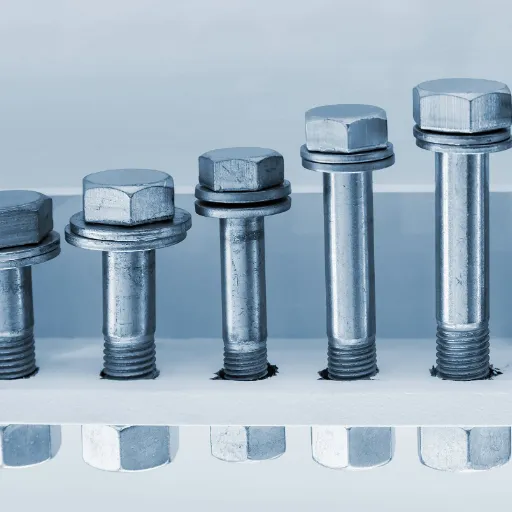
For a standard dry M6 bolt, use 9-12 Nm in class 8.8, 14-17 Nm in 10.9, and 18-22 Nm in 12.9. Stainless A2 and A4 fasteners take less, around 7-10 Nm. Reduce any of these values by 10-25% for lubricated threads, and use the equipment maker’s specification whenever one is given.
One line matters more than the table itself: torque is not a property of the screw. It is a property of the whole joint. Change the grade, the lubricant, the drive, or the part you are threading into, and the correct number changes with it. The rest of this page exists to tell you which number is yours.
M6 Torque Chart by Grade (Dry Threads)
Here is the master M6 torque chart, with the recommended dry values alongside the proof load each value is built on. Showing both columns is what turns an arbitrary table into something you can check.
| M6 property class | Material | Proof strength (Sp) | M6 proof load | Recommended dry torque | Derived at K = 0.20 |
|---|---|---|---|---|---|
| 4.8 | Low / medium carbon | 310 MPa | 6,230 N | 4-6 Nm | 3.7 Nm @ 75% to 4.5 Nm @ 90% |
| 8.8 | Medium carbon, Q&T | 580 MPa | 11,600 N | 9-12 Nm | 10.4 Nm @ 75% to 12.5 Nm @ 90% |
| 10.9 | Alloy steel, Q&T | 830 MPa | 16,700 N | 14-17 Nm | 15.0 Nm @ 75% to 18.0 Nm @ 90% |
| 12.9 | Alloy steel, Q&T | 970 MPa | 19,500 N | 18-22 Nm | 17.6 Nm @ 75% to 21.1 Nm @ 90% |
| A2-70 / A4-70 | Stainless (304 / 316) | 450 MPa (0.2% proof) | approx. 9,000 N | 7-10 Nm | See the stainless section below |
| A4-80 | Stainless (316) | 600 MPa (0.2% proof) | approx. 12,000 N | 9-13.5 Nm | See the stainless section below |
The proof loads come straight from the strength class system. If you want to know where 11,600 N for an 8.8 comes from, our screw strength classes explained guide derives it from the stress area of 20.1 mm2 and the proof strength of the class. Everything on this page runs on those two inputs.
Torque values are reference data. Confirm the grade, the lubrication condition and the parent material before you apply a number, and follow the equipment manufacturer’s specification when one is given.
Setting up a bench or a product line? Browse the wrenches, sockets and hex keys that apply these values.
Why M6 Torque Specs Disagree: The Four Variables
This is the section that no other page on M6 torque specs has, and it is the reason the published numbers range from 5 Nm to 22 Nm for the same fastener size.
When Tomás, a product designer at a small equipment maker, specified M6 socket cap screws for a bracket, he pulled 11.8 Nm from a supplier’s chart. The shop floor manual for a similar bracket said 9 Nm.
Both figures were for dry 8.8 steel, and neither was wrong. The two tables simply assumed different friction conditions, and Tomás had no way to see that from the columns in front of him.
Four variables explain every disagreement you will find.
| Variable | What changes | Effect at M6 | Why the confusion happens |
|---|---|---|---|
| 1. Property class | Proof load (As x Sp) | Going from 8.8 to 12.9 raises the torque roughly 1.7x (11.6 kN to 19.5 kN proof) | A single column per grade never shows why the grade moves the torque |
| 2. Friction / lubrication | K, the nut factor (0.10-0.30) | Halving K roughly halves the torque needed for the same preload | “Reduce 10-15%” and “reduce 20-25%” both describe the same correction, because “lubricated” spans light oil to molybdenum disulfide |
| 3. Drive / head geometry | Usable torque before cam-out | A shallow drive (low head or button head) caps out near 9 Nm at M6. A full-depth socket does not | Socket-screw tables, such as the TR Fastenings socket screw torques, publish per-standard maxima that read like strength limits |
| 4. Parent material | The weakest link in the joint | Steel into aluminium or plastic caps far below the bolt’s own limit, often 2.6-8 Nm for M6 | Charts are bolt-centric, but the joint fails at the thread in the softer part |
Once you hold these four in mind, the list of search results stops being contradictory. A 5 Nm figure is usually stainless in a shallow drive, and a 20 Nm figure is usually 12.9 at high utilisation. The number was never wrong. The label was incomplete.
Where M6 Torque Specs Come From: T = K x F x d
M6 torque specs look like rules handed down. They are actually the output of a short formula. Once you have seen it, you can sanity-check any M6 figure you meet.
T = K x F x d- T is the tightening torque in Nm, the number you set on the wrench.
- K is the nut factor, which lumps together thread friction and under-head friction. It has no units.
- F is the target preload, or clamp force, in newtons.
- d is the nominal diameter in metres, so M6 is 0.006 m.
The target preload comes from the strength of the fastener:
F = utilisation x As x Sp- As is the M6 coarse tensile stress area, 20.1 mm2.
- Sp is the proof strength for the class, taken from the chart above.
- utilisation is typically 0.75, and up to 0.90 for critical joints.
Work it once for M6 class 8.8 and the canon band stops looking arbitrary:
F = 0.90 x 20.1 mm2 x 580 MPa = 10,500 N
T = 0.20 x 0.006 m x 10,500 N = 12.6 Nm
At 90% utilisation that gives 12.6 Nm, at the top of the 9-12 Nm band; at 75% it gives 10.4 Nm, near the bottom. The published bands for every grade are rounded outward to absorb the dry friction spread, because K runs from roughly 0.18 to 0.22 across plating and finish. Hold K at 0.20 and the band is close to the 75-90% utilisation window; let K drift and it widens slightly at both ends. That is why a derived column sits just inside or beside its band rather than matching it digit for digit, and why the band, not the single figure, is what a chart is really telling you.
Now the single most useful sentence on this page. About 90% of the torque you apply is consumed by friction in the threads and under the head. Only about 10% becomes clamping force. That is why friction, variable two, moves the number more than anything else, and why the same torque on a dry joint and a lubricated joint can differ in clamp load by roughly a quarter.
It also explains why a torque number is a target, not a guarantee. The nut factor scatters by about plus or minus 25%, so a torque figure controls preload only to roughly that tolerance. For a critical joint, look beyond a single torque value and use torque-angle, or measure preload directly.
M6 Bolt Torque: Dry vs Lubricated
The rule of thumb most charts carry is that lubricated threads take 20-25% less torque. That figure is the mainstream case, not the whole story. Published corrections run from 10-15% for light oil up to 40% or more for heavy molybdenum disulfide lubrication, and all of them are describing different conditions under one word.
| Condition | Typical K | Correction to the dry chart | Note |
|---|---|---|---|
| Dry / as-received | 0.18-0.22 (approx. 0.20) | Baseline, use the chart as printed | Zinc-plated sits at the top of this band, near 0.22 |
| Lightly oiled | 0.18-0.20 | minus 10% to 15% | Treated as effectively dry in some standards |
| Lubricated / anti-seize | 0.12-0.15 | minus 20% to 25% | The mainstream lubricated case |
| MoS2 / PTFE / wax | 0.10-0.12 | minus 35% to 45% | The aggressive end, for heavily coated threads |
| Stainless with anti-seize | varies | Derate, and do not target high preload | Galling protection, with a lower and less predictable preload |
The framing to keep: a “lubricated” callout is a spectrum, not one condition. If you change the lubricant, you have changed the torque. Match the number to the condition it was published for, and when in doubt, torque to the low end and verify the joint.
One more modifier belongs here. A finer thread reaches the same clamp load at a lower torque, which is one reason M6 x 0.75 and M6 x 0.5 joints don’t simply inherit the coarse chart. Our M6 thread pitch guide explains when to specify a fine pitch.
M6 Stainless Steel Torque: A Different Set of Rules
Stainless M6 fasteners come with a trap that no chart on the first page of results states plainly. Search “M6 stainless torque” and you’ll find values from 5 Nm to 13.5 Nm. Here is what is actually going on.
What ISO 3506-1 Actually Specifies
| M6 stainless | Property class | Minimum breaking torque (ISO 3506-1) | Recommended tightening torque (dry) |
|---|---|---|---|
| A2 / A4 | 50 | 9.3 Nm | Well below breaking, use around 4-5 Nm |
| A2-70 / A4-70 | 70 | 13 Nm | 7-10 Nm maximum |
| A4-80 | 80 | 15 Nm | 9-13.5 Nm maximum |
The trap is this: ISO 3506-1 doesn’t specify a tightening torque at all. It specifies the minimum breaking torque. A2-70 at M6 must withstand 13 Nm before it breaks, and A4-80 must withstand 15 Nm. Neither figure tells you what to tighten to. Every “stainless M6 torque chart” you find online is therefore manufacturer guidance dressed up as a standard, and the spread from 5 Nm to 13.5 Nm reflects different friction assumptions, not different fasteners.
Two further stainless facts earn a line each. Stainless galls, meaning threads can cold-weld and seize under high torque, especially A2 against A2, so use a suitable anti-seize or a dissimilar grade and accept a lower, less predictable preload.
A4-80 is also roughly 100 MPa stronger than A2-70, with 600 MPa against 450 MPa at 0.2% proof. Lumping the two into one row understates A4-80.
A documented workshop case shows both failure modes at once. An A2 stainless M6 socket cap on a motorcycle was tightened to a 12-14 Nm spec on the assumption that stainless is strong, and the sockets rounded and split at about 10 Nm.
Two variables caused that failure: the grade, which was A2-70 rather than 8.8, and the shallow hex drive. The fix was a 10.9 steel cap, or an A4-80 at a derated torque. CERN’s mechanical torque guidance, which targets conservative values for laboratory hardware, gives 5.2 Nm for M6 stainless into steel, at the low end for the same reason.
When stainless M6 is a one-off, the values in this table carry the day. When it is a production line, corrosion resistance is usually the reason you chose stainless, so the faster route is to confirm the grade and the lubricant with your supplier before you set a tool. Need a graded stainless line with matched certification? Talk to our team about a torque-specified fastening package.
Torque for M6 into Aluminium and Plastic
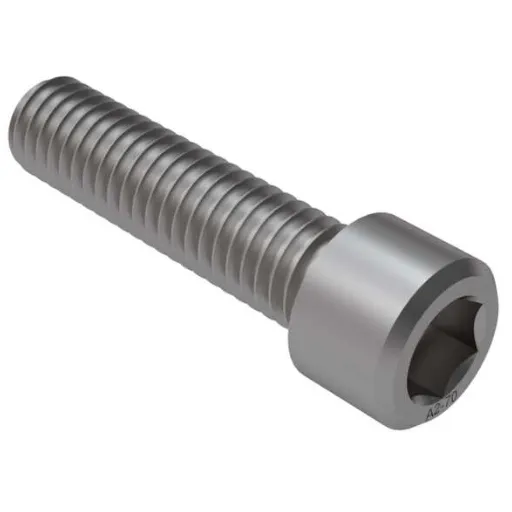
Every chart above assumes the M6 is threading into steel. Change the parent material and the joint’s limit moves to whatever the softer part can hold.
The Rule That Sets Every Value on This Page
| Female material | Guideline for M6 | Framing |
|---|---|---|
| Steel / cast iron | Use the grade chart value, 9-22 Nm | Standard practice |
| Aluminium | Around 8 Nm, or minus 30% or more, or 60-70% of the steel value | CERN guidance, plus automotive factory specs that cluster at 8-12 Nm |
| Brass / copper | Around 2.6 Nm | CERN guidance, targeting the softest case |
| Plastic (ABS / PS) | Use the manufacturer’s spec. A coarse thread into a boss is usually the answer, not a torque value | Industry practice |
| Two diameters of engagement | The structural alternative to derating, spreading load over more threads | Standard bolted-joint guidance |
Kenji, an assembler at a lighting manufacturer, learned this one the expensive way. His team torqued M6 screws into an aluminium housing to the steel value of 11 Nm, because that was the number in the general chart.
The joints passed at the bench. Six months later, field units came back with the threads pulled out of the housing. The fasteners were fine. The aluminium had simply given up long before the bolt was anywhere near its limit.
That case carries the governing rule for every value on this page. The safe torque is set by the weakest element in the joint, and it is usually the thread in the softer part, not the M6 screw. The bolt is the strongest link far more often than people assume.
If engagement depth is the concern rather than material strength, the alternative to derating is more thread in contact. Our M6 drill size guide covers how hole preparation and engagement affect whether a joint holds.
M6 Torque Wrench: The Tool That Applies the Number
A correct value delivered by the wrong wrench is still a wrong joint. M6 sits in a range where tool choice matters more than most people expect.
- Below about 20 Nm, use a 1/4-inch drive torque wrench. A 3/8-inch wrench is commonly inaccurate at the bottom of its range, and the entire M6 band from 9 to 22 Nm falls inside that dead zone.
- For 2-6 Nm specs, such as small stainless M6 or plastic joints, use a dial or digital torque adapter rather than a click wrench.
- Calibrate the tool. ISO 6789 defines the calibration requirement for a hand torque tool, and a torque value is only as good as the wrench delivering it.
- Never chase a number with a bigger wrench. The failure mode at M6 is a stripped thread or a rounded socket, not an under-tight joint.
Rachel, an assembler on a small appliance line, spent a week chasing a 12 Nm spec that would not repeat. Half her joints came in low, and a few rounded the socket. The wrench was not faulty. It was a 3/8-inch tool being asked to work at the bottom of its range, where its accuracy is worst. Switching to a 1/4-inch drive solved it in an afternoon.
Which tool turns the fastener is a separate question from how much torque it takes. For M6, the standard socket cap uses a 5 mm hex key, and the full drive map across head types is in our M6 hex key and socket sizes guide, with the wider range in our Allen wrench sizes chart.
Drive geometry also sets a ceiling on usable torque, which is the real reason some socket-screw tables read low. A low-head or button-head socket has a shallow recess that cams out earlier than a full-depth DIN 912 socket, so the table’s lower value reflects the drive, not a weaker screw. Our M6 socket head cap screw guide explains how head and drive styles differ. For the broader tool picture, browse our types of wrenches reference.
M6 Torque Specs FAQ
What is the torque for an M6 bolt?
For a dry M6 bolt, use 9-12 Nm in class 8.8, 14-17 Nm in 10.9, and 18-22 Nm in 12.9. Stainless A2 and A4 take around 7-10 Nm. Reduce any value by 10-25% for lubricated threads.
How tight should an M6 bolt be?
If you have no other information, 9-12 Nm in 8.8 dry is the safe default for an M6 into steel. Change the number if the grade, lubricant or parent material changes, and always follow the equipment maker’s spec when one exists.
What is the torque for M6 stainless steel?
A2-70 and A4-70 take roughly 7-10 Nm dry, and A4-80 takes 9-13.5 Nm. Note that ISO 3506-1 specifies the minimum breaking torque (13 Nm for A2-70, 15 Nm for A4-80), not a tightening torque.
Is 10 Nm enough for an M6 bolt?
It depends on the grade. 10 Nm is enough for a dry 8.8 into steel, but it is under-tight for 10.9 and 12.9, and it is too much for most stainless or aluminium joints.
Do I torque an M6 dry or lubricated?
Use the dry chart as printed unless the threads are lubricated or coated. Light oil calls for 10-15% less, general lubrication 20-25% less, and heavy molybdenum disulfide up to 40% less.
What torque wrench should I use for M6?
Use a 1/4-inch drive torque wrench for anything below about 20 Nm, which covers the whole M6 range. A 3/8-inch wrench is often inaccurate at the bottom of its range, where M6 sits.
What torque strips an M6 bolt?
Over-torque strips the thread, but the parent material usually fails first. An M6 torqued into aluminium or plastic to a steel value will pull the threads out well before the screw itself is overloaded.
Where can I buy M6 fasteners with matched torque tools?
Shanghai Oushike Hardware Tools manufactures hex keys, wrenches, sockets and driver bits, and supplies measuring tools to check the result. Contact us about pairing a graded M6 fastener line with the tools that install it.
Conclusion
The M6 torque specs worth remembering are short: 9-12 Nm in 8.8, 14-17 Nm in 10.9, and 18-22 Nm in 12.9, all dry, with stainless lower at around 7-10 Nm. Derate by 10-25% for lubricated threads, derate hard for aluminium and plastic, and let the weakest element in the joint set the limit. If you remember one thing, make it the derivation: the number comes from a target preload, not from a table someone wrote down.
That’s the difference between reading a torque chart and understanding one. The chart gives you a figure. The four variables tell you whether the figure is yours.
For distributors and product teams, this is where a complete fastening line pays off. Selling an M6 fastener alongside the 1/4-inch torque wrench, the 5 mm hex key and the sockets that install it solves a real customer problem and lifts order value on what is otherwise a commodity SKU. Shanghai Oushike Hardware Tools manufactures the hand tools and measuring tools on that list, with factory-direct pricing, flexible MOQs and private label support. For the wider picture of moving hardware across borders, see our hand tool import guide.
Pair that with our full M6 screw dimension reference and you have both halves of the question: the fastener and the torque. Request a quote for a torque-specified fastening line and our team will help you build it from a single size up to a full catalog.