
M6 vs 1/4 Inch: Metric vs Imperial Conversion Guide
No. An M6 screw and a 1/4 inch screw are not the same size, and they are not interchangeable. M6 measures 6.0 mm across the thread with a 1.0 mm pitch. A 1/4-20 UNC screw measures 6.35 mm with a 1.27 mm pitch.
That 0.35 mm gap is roughly the width of two human hairs. It is also the reason camera mounts get stripped, flat-pack kits fail, and workshops keep two bins of screws they cannot tell apart.
Here’s the trap. A 1/4-20 screw will start turning into an M6 hole. So will an M6 into a 1/4-20 hole.
The threads catch for about one turn, which feels like success. It isn’t. That first turn is the beginning of thread damage.
This guide settles the M6 vs 1/4 inch question with the numbers, explains exactly why the two threads destroy each other, and gives you a conversion table that includes the drill size, wrench size, and strength class you actually need. If your business stocks fasteners for both metric and inch markets, the sourcing section covers how to buy both without creating a mixed-bin problem.
The short version: match the thread, never substitute.
Key Takeaways
- M6 (6.0 mm, 1.0 mm pitch) and 1/4-20 UNC (6.35 mm, 1.27 mm pitch) are close in size but belong to different thread systems and are not interchangeable.
- The two threads have nearly identical tensile stress areas (20.1 mm² vs 20.5 mm²), so the mismatch is about thread form, not strength.
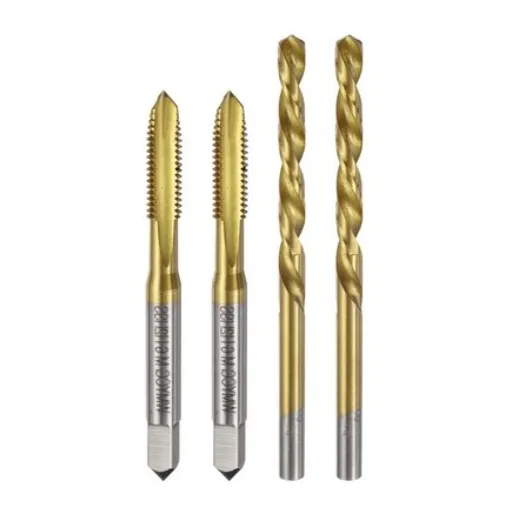
- Consequences differ by system: M6 needs a 5.0 mm tap drill and a 10 mm wrench; 1/4-20 needs a #7 drill and a 7/16 inch wrench.
- 1/4 BSW is the one true exception, because it shares the 20 TPI pitch with 1/4 UNC, though the thread angle still differs.
- Camera and tripod gear uses 1/4-20 UNC worldwide, even in fully metric markets, which is where most real-world damage happens.
Is M6 the Same as 1/4 Inch?
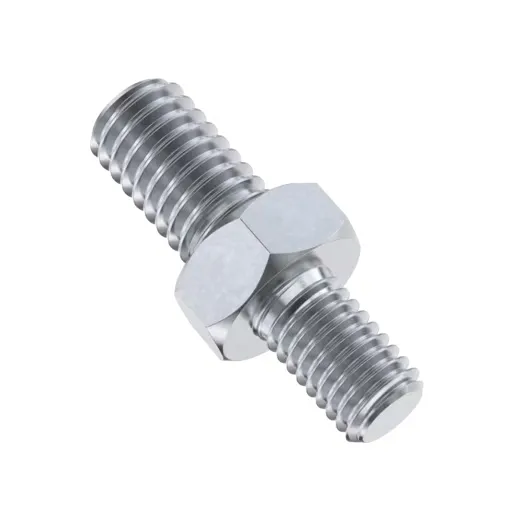
No. M6 is a metric thread measuring 6.0 mm across the major diameter with a 1.0 mm pitch. A 1/4-20 UNC thread measures 6.35 mm with a 1.27 mm pitch. The two are only 0.35 mm apart in diameter, which is why they feel like they fit, but they are different thread systems and are not interchangeable.
Fastener suppliers put it just as plainly: mixing metric and inch fasteners risks cross-threading and joint failure, even when the diameters look close enough to match.
M6 vs 1/4-20 UNC at a Glance
| Specification | M6 (metric) | 1/4-20 UNC (inch) |
|---|---|---|
| Standard | ISO 965 / DIN 13 | ASME B1.1 |
| Major diameter | 6.0 mm (0.236 in) | 6.35 mm (0.250 in) |
| Coarse pitch | 1.0 mm | 20 TPI (1.27 mm) |
| Fine pitch | 0.75 mm | 28 TPI (0.907 mm) |
| Thread angle | 60° | 60° (55° if BSW) |
| Tensile stress area | 20.1 mm² | 20.5 mm² |
| Tap drill | 5.0 mm | #7 (5.11 mm) |
| Clearance hole | 6.4 / 6.6 / 7.0 mm (ISO 273) | 17/64 in close / 9/32 in free |
| Wrench or socket (hex head) | 10 mm | 7/16 in (11.11 mm) |
| Hex key (socket head) | 5 mm | 7/32 in (5.56 mm) |
| Strength classes | 8.8 / 10.9 / 12.9 | Grade 2 / 5 / 8 |
The last four rows are the ones that cost money. A fastener substitution is never just a fastener swap. It is also a drill bit, a wrench, a socket, and a driver bit.
If you need the full dimensional breakdown for one size, our M6 screw size guide covers head dimensions, thread pitch options, and tool mapping in detail.
The Three Differences That Matter
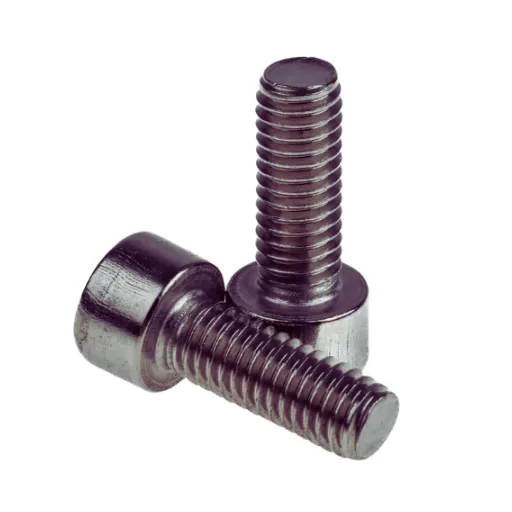
Diameter: 6.0 mm vs 6.35 mm
M6 is 6.0 mm across the thread crests. A 1/4 inch screw is 6.35 mm, because 1/4 inch converts to exactly 6.35 mm.
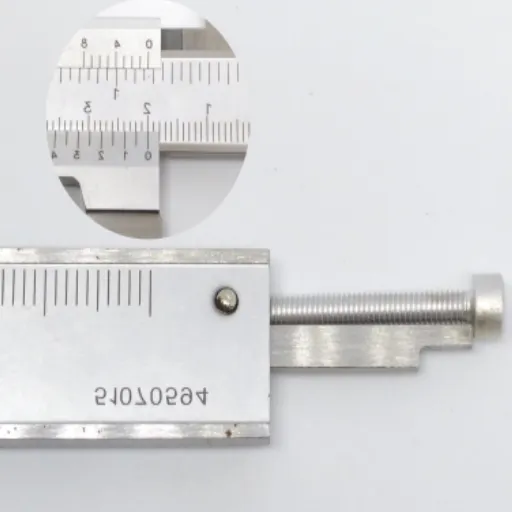
That 0.35 mm difference is small enough to be invisible by eye and large enough to matter under load. A caliper settles it in seconds. Without one, the two fasteners look identical in a bin.
Pitch: 1.0 mm vs 20 TPI
This is the difference that actually destroys parts.
Metric threads are described by the distance between threads in millimetres. M6 coarse has a 1.0 mm gap from crest to crest. Inch threads are described by how many threads fit in one inch. A 1/4-20 screw has 20 threads per inch, which works out to 1.27 mm between crests.
So the two threads sit 0.27 mm apart. Turn the screw one full rotation and the alignment error compounds. The crests climb over each other instead of nesting, and the metal starts to gall.
Thread Form and Standard
Both ISO metric and Unified inch threads use a 60° thread angle, which is part of why they look so similar. Whitworth threads, still found on older British equipment, use 55°.
M6 is governed by ISO 965 and DIN 13. A 1/4-20 screw is governed by ASME B1.1. The standards are not harmonised, and neither system defines a legal substitute for the other.
What Happens When You Force Them Together
The failure is mechanical and predictable.
An M6 thread drops into a 1/4-20 thread for roughly the first turn, because the 0.35 mm diameter gap allows it. From there the pitch mismatch takes over. Every additional turn forces crest onto crest instead of crest into valley.
Torque climbs sharply. The surface metal cold-welds to itself, a process called galling. In steel the screw usually seizes in place. In aluminium, which is softer and far more common on equipment housings, the female threads are often destroyed beyond repair.
Daniel runs a workshop in Manchester that services imported machinery. His team stripped the aluminium mounting boss on a control unit because a metric bin sat next to an inch bin and both contained what looked like the same small screw. The replacement housing took six weeks to arrive. The screw that caused it cost less than a penny.
If a fastener does not run in by hand, it is the wrong thread. Stop turning.
How to Tell Which System You Have
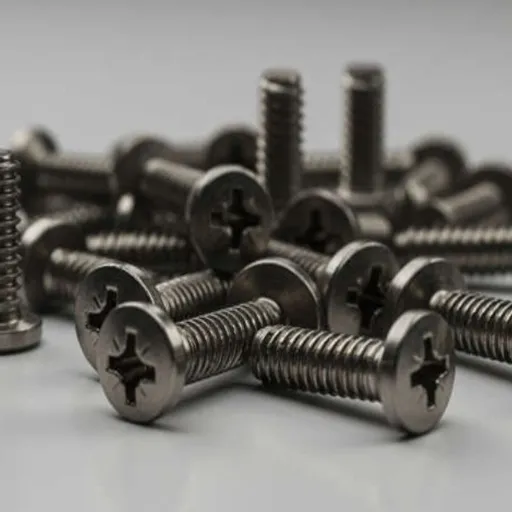
You have three reliable checks. Use them in order.
Read the Head Markings and the Callout
Metric fasteners are stamped with a class number: 8.8, 10.9, or 12.9. Inch fasteners use radial lines on the head instead. No lines means Grade 2, three lines means Grade 5, and six lines means Grade 8.
Packaging and drawings usually state the callout directly. “M6 x 1.0 x 20” is metric. “1/4-20 x 3/4” is inch.
The Camera Tripod Trap
Camera and photographic equipment is the single largest holdout for inch threads. Tripod mounts are 1/4-20 UNC worldwide, including in countries that use metric for everything else. This is where most people meet the mismatch for the first time.
Elena, a photographer based in Munich, replaced a lost tripod plate screw with an M6 bolt from a local hardware shop. It threaded in, so she tightened it. The screw seized halfway and tore out the aluminium threads in the tripod head. The repair cost more than the tripod was worth, and the workshop told her it happens constantly.
The lesson is simple. If the equipment is photographic, assume 1/4-20 until you have measured it.
The 1/4 BSW Exception
There is one genuine exception, and it is worth knowing.
1/4 BSW and 1/4 UNC are both 20 TPI, which makes them broadly interchangeable in non-critical applications. Older British and Commonwealth equipment used BSW for tripod mounts and similar fittings, so a 1/4-20 UNC screw normally runs into a BSW mount without trouble.
Be careful with the claim though. BSW uses a 55° thread angle and UNC uses 60°, so the fit is not exact. For loaded or precision joints, use the correct thread rather than the near match.
M6 has no such exception with either system. Nothing in the metric range shares the pitch or the form of a 1/4-20 thread.
If you are unsure which thread you are holding, our guide to how to measure screw size walks through diameter, pitch, and length with a caliper and a thread pitch gauge.
Grade Equivalence: Class 8.8 vs Grade 5
When you cross-reference systems, match the strength as well as the thread.
| SAE J429 (inch) | Tensile strength | ISO 898-1 (metric) | Tensile strength |
|---|---|---|---|
| Grade 2 | 414-510 MPa | 4.6 / 4.8 | 400-420 MPa |
| Grade 5 | 828 MPa | 8.8 | 800 MPa |
| Grade 8 | 1,034 MPa | 10.9 | 1,040 MPa |
Grade 5 and Class 8.8 are the practical equivalents. Grade 8 and Class 10.9 are the next step up. When substituting between systems, round up rather than down, and always match the nut to the bolt.
Dry-thread torque values sit in a similar range, which is part of the confusion. A 1/4 inch Grade 5 bolt takes about 6.3 ft-lb. An M6 Class 8.8 bolt takes about 7.7 ft-lb. Reduce those figures by 20 to 25 percent for lubricated or zinc-plated threads.
Metric to Imperial Conversion: M6 and Its Neighbours
A metric to imperial screw conversion chart is useful, but read the last column carefully. A nearest equivalent is not a substitute.
Published thread conversion tables make the same point in their own notes. The sizes listed are nearest equivalents only, and the thread systems are not directly interchangeable because the angles and pitches differ.
| Metric thread | Major diameter | Nearest inch thread | Inch diameter | Interchangeable? |
|---|---|---|---|---|
| M5 x 0.8 | 5.0 mm | #10-24 UNC | 4.83 mm | No |
| M6 x 1.0 | 6.0 mm | 1/4-20 UNC | 6.35 mm | No |
| M8 x 1.25 | 8.0 mm | 5/16-18 UNC | 7.94 mm | No |
| M10 x 1.5 | 10.0 mm | 3/8-16 UNC | 9.53 mm | No |
| M12 x 1.75 | 12.0 mm | 1/2-13 UNC | 12.7 mm | No |
Notice the pattern. In every row, the metric thread is smaller than its nearest inch neighbour. M6 is 0.35 mm under 1/4 inch, and M10 is 0.53 mm under 3/8 inch. The gap grows as the sizes get bigger.
That is why substitution feels possible and never is. If you work across both systems regularly, a full metric screw sizes reference is worth keeping at the bench.
Which Metric vs Imperial Standard Applies Where?
| Market | Dominant system | Governing standard |
|---|---|---|
| Continental Europe, most of Asia, Latin America | Metric | ISO 965 / DIN 13 |
| United States | Inch | ASME B1.1 / SAE J429 |
| United Kingdom | Mixed | Metric for new equipment, BSW and UNC on legacy |
| Camera and photographic gear | 1/4-20 UNC worldwide | ASME B1.1 |
For a buying decision, the rule is straightforward. Match the equipment’s origin, not your own location. A German machine needs metric fasteners even if you are servicing it in Texas, and a camera tripod needs 1/4-20 even if you are servicing it in Shanghai.
Where equipment is mixed, label the bins and the packaging clearly. Most cross-threading incidents trace back to storage, not to specification.
Adapters, Inserts and Re-Tapping: What Actually Works
Once threads are damaged, you have a few honest options.
- Thread adapter. A 1/4-20 to 3/8-16 adapter is standard for photographic equipment. Bushing adapters convert 1/4-20 female to M6 male and back.
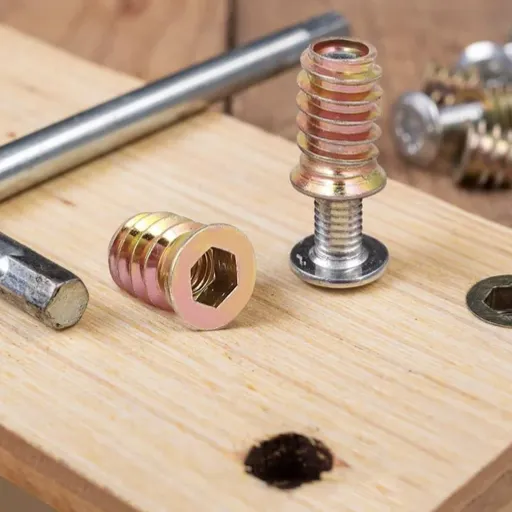
- Thread insert. A Helicoil or similar insert restores the original thread size in a damaged hole and is usually stronger than the original aluminium thread.
- Re-tap to the other system. This works, but it removes material and permanently commits the part to one system. Only do it if you own the part and understand the reduced engagement.
- Replace the fastener. The cheapest and most reliable fix. Buy the correct thread.
Never use a mismatched fastener to hold something in place, even temporarily. A cross-threaded fastener has already lost the preload that made it a fastener.
Sourcing Both Metric and Imperial Fasteners
For distributors and importers, the metric and imperial split is a stocking problem, not just a technical one.
The demand is real. A single market can need both systems at once: metric for locally manufactured goods, inch for imported photographic gear, legacy machinery, and US-origin equipment. Getting that wrong at the buying stage creates the exact mixed-bin risk that causes stripped threads downstream.
Priya supplies hardware to trade customers across two markets. She standardised on clearly labelled packaging with the thread system printed on the front of every bag. Return rates from cross-threading complaints fell sharply in the first quarter, and her trade customers stopped calling to ask which bin was which.
That is the case for buying both thread systems from one supplier with consistent labelling and packaging. It removes the ambiguity at the point of use.
Shanghai Oushike Hardware Tools manufactures hand tools and accessories for exactly this kind of mixed range. Factory-direct pricing applies across the line, MOQs are flexible, and private label packaging can carry your own thread marking, brand, and barcode. If you are importing hand tools into a market that uses both systems, a single coordinated range is easier to control than two separate supply chains. You can request a quote for any specification.
For the driver side, our Allen wrench sizes chart covers the metric and inch hex keys that match each fastener size.
M6 vs 1/4 Inch FAQ
Is M6 the same as 1/4 inch?
No. M6 is 6.0 mm with a 1.0 mm pitch. A 1/4-20 UNC screw is 6.35 mm with a 1.27 mm pitch. They are close in diameter but are different thread systems and are not interchangeable.
Can I use an M6 screw instead of a 1/4 inch screw?
No. An M6 screw may start in a 1/4-20 hole, but the pitch mismatch means it cannot seat correctly. It will gall the threads, and in aluminium it will usually destroy them.
What is 1/4-20 in metric?
1/4-20 UNC converts to 6.35 mm diameter with a 1.27 mm pitch. The nearest metric thread is M6 at 6.0 mm and 1.0 mm pitch, but it is not a substitute.
Will an M6 bolt fit a 1/4 inch hole?
It will not fit correctly. The major diameter is 0.35 mm smaller and the pitch is different, so the threads cross rather than mate.
Is 6 mm the same as 1/4 inch?
No. 6 mm equals 0.236 inches. 1/4 inch equals 6.35 mm. The difference is 0.35 mm.
What size drill do I need for each?
Use a 5.0 mm drill for an M6 x 1.0 tap. Use a #7 drill, or a 13/64 inch substitute, for a 1/4-20 tap.
Is M6 the same as 1/4-28?
No. M6 fine is 0.75 mm pitch. 1/4-28 UNF is 0.907 mm pitch. They are different in both diameter and pitch.
Why do camera tripods use 1/4-20?
The 1/4-20 UNC thread became the photographic industry standard and has stayed that way globally, even in markets that otherwise use metric fasteners.
Conclusion
The M6 vs 1/4 inch question comes down to four numbers. M6 is 6.0 mm with a 1.0 mm pitch, a 5.0 mm tap drill, and a 10 mm wrench. A 1/4-20 screw is 6.35 mm with a 1.27 mm pitch, a #7 drill, and a 7/16 inch wrench. The diameters are close enough to feel interchangeable and the pitch is different enough to destroy parts.
Remember three things. Match the thread system to the equipment’s origin rather than your own location. Expect camera and tripod gear to use 1/4-20 anywhere in the world. Round up, never down, when cross-referencing strength grades.
For buyers, the practical move is to stock both systems with unmistakable labelling, and to source them together rather than separately. That single decision removes most of the downstream risk.
If you supply fasteners or the tools that drive them, Shanghai Oushike Hardware Tools can build the range with you, from factory-direct pricing to private label packaging. Contact our team to discuss your specification, or request a catalog to see the full hand tool line.