
Pry Bar vs Crowbar: Key Differences & When to Use Each
Pry bar vs crowbar comes down to one inversion: a pry bar is the umbrella term for any lever-style prying tool, while a crowbar is one specific type, a heavy digging bar over four feet long with a pinch or wedge point. In everyday retail use, “crowbar” loosely means any demolition bar, which is exactly why the two names get confused.
Here’s the problem that creates. Ask ten hardware stores what the difference is and you’ll get ten answers. One says a pry bar is a longer, thinner crowbar. Another claims anything over 16 inches is a crowbar. A third says they’re the same tool.
Every answer sounds confident. None of them match.
That matters when you’re spending money. Buy a 60-inch crowbar for hanging cabinet doors and you’ll crush the door frame. Buy a 10-inch flat bar for stripping concrete formwork and you’ll bend it on the first pour.
This guide settles the terminology, shows the real sizes and weights from 12 to 66 inches, and gives you a straight answer on which bar to pick. If you’re stocking a product line rather than filling a toolbox, the last section covers what to order. For the wider picture of every bar in this family, our complete guide to pry bar types maps the whole category.
Key Takeaways
- A pry bar is the category. A crowbar is one type inside it, not the other way around. That single inversion fixes most of the confusion.
- In strict trade usage, a crowbar is a digging bar over four feet with a pinch or wedge point. A wrecking bar is a separate 1 to 5 ft demolition bar with a claw.
- The tools are not substitutes. A 60-inch crowbar weighs about 18 lb. A 12-inch flat pry bar weighs about 0.5 lb. That’s roughly a 36x gap.
- Weight and stock width are published numbers, not marketing. A 36-inch pinch-point crowbar is about 6 lb at 7/8 to 1 inch stock.
- Retail naming is unreliable. Shop by the ends and the length, not the label on the rack.
What Is the Difference Between a Pry Bar and a Crowbar?
A pry bar is any lever-style hand tool used to separate, lift, or align materials. A crowbar is a specific heavy type: a digging bar over four feet long with a pinch point for prying timbers or a wedge point for breaking concrete and stone. A wrecking bar is a third, separate tool.
This is the position most sources get backwards. They describe a pry bar as “a smaller crowbar,” which treats the crowbar as the parent category. It isn’t. A crowbar is one kind of pry bar, alongside flat bars, wonder bars, pinch bars, cat’s paws, and alignment bars.
Why does the inversion matter in practice? Because when you search for a “pry bar,” you’re searching the whole category, and when you search for a “crowbar,” you may only need one member of it. Getting the hierarchy right tells you what you actually need to compare.
Why Everyone Defines These Tools Differently
The disagreements aren’t sloppy reporting. They come from three genuinely different ways the words are used, and all three are correct inside their own context.
| Tier | What it means | Who uses it |
|---|---|---|
| Strict trade usage | A crowbar is a digging bar over 4 ft with a pinch or wedge point. A wrecking bar is a separate 1 to 5 ft bar with a gooseneck claw. | Trade press, safety manuals, standards listings |
| Loose retail usage | “Crowbar” means any heavy demolition bar. “Pry bar” means anything with a prying end. | Big-box retail, e-commerce listings |
| The umbrella | A pry bar is the category. Every other name is a type inside it. | Manufacturers and distributors building a catalogue |
The strict version traces back to the trade press. As JLC Online puts it, “crow bar” is widely used for any type of demolition bar, but its specific meaning is a digging bar over four feet, available with a pinch point or a wedge point. A wrecking bar runs one to five feet and is curved at one end with a nail-pulling notch.
The loose version is what you meet at the store. Retailers label a 24-inch wrecking bar a “crowbar” because that’s what customers search for. Nobody is being dishonest, but the shelf label tells you nothing about the tool.
A note on the “16-inch rule.” Several consumer sites claim that anything over 16 inches is a crowbar and anything under is a pry bar. No standard, manufacturer, or trade source defines that cutoff, and the documented length ranges contradict it outright: pinch bars run 12 to 36 inches, wrecking bars run 12 to 60 inches, and true crowbars run 48 to 68 inches. Treat the 16-inch threshold as a myth.
Where the name comes from. “Crowbar” is generally traced to the forked, beak-like business end resembling a crow’s foot, the same image behind the carpenter’s “crow’s foot” joint. It’s a good piece of trivia and a poor way to choose a tool.
Mini story worth keeping in mind: a maintenance supervisor at a mid-size plant ordered six “crowbars” from a catalogue listing. What arrived were 24-inch wrecking bars, too short to lever the plant’s formwork and too light for the load. The second order cost him a month of lead time and a conversation with his buyer about specifying tools by length and end type instead of by name.
For a full side-by-side on the demolition bar specifically, our wrecking bar guide covers its sizes, bend styles, and applications.
Pry Bar vs Crowbar vs Wrecking Bar: The Comparison Table
For the crowbar vs wrecking bar question and everything around it, this is the table to screenshot before you buy. It covers the three tools people conflate most often.
| Pry bar (umbrella / flat bar) | Crowbar (strict) | Wrecking bar | |
|---|---|---|---|
| What it is | The category name for any lever-style prying tool | A heavy digging bar over 4 ft | A 1 to 5 ft demolition bar with a curved claw |
| Stock | Flat spring steel (flat bars); round or hex for others | Round, hex, or octagonal long stock | Hexagonal or octagonal |
| Typical length | 5.5 to 18 in for flat bars; up to 48 in for alignment bars | 48 to 68 in | 12 to 60 in, with 24 to 36 in as the workhorse range |
| Stock width | 3/16 to 1/2 in | 1/2 to 1 1/2 in | 1/2 to 1 1/4 in |
| Typical weight | 0.2 to 2.5 lb | 6 lb at 36 in, up to 26 lb at 66 in | 1 to 6 lb; 9 to 13 lb at 48 to 60 in and above |
| Ends | Nail slots at both ends, 90 degree claw plus offset claw | Pinch point or wedge point | Curved gooseneck claw plus prying wedge or chisel |
| Damage risk to the material | Low, thin and springy on purpose | High, crushes and gouges | High, built for demolition |
| Does the material survive? | Yes, that’s the point | No | No |
| Force delivered | Precise and controlled | Maximum | High |
| Adjustable? | Some indexing models have pivoting heads | Always fixed | Always fixed |
| Best for | Trim, molding, baseboard, flooring, cabinetry, tile, light nail pulling | Digging, breaking rock and concrete, lifting heavy objects by the edge, moving timbers | Framing and deck demolition, form stripping, pallets, spikes |
| Also called | Wonder Bar, Super Bar, Utility Bar, cat’s paw, pinch bar | Pinch bar, long bar, housebreaker’s bar, jemmy, prise bar | Gooseneck bar, pig’s foot, ripping bar, salvage bar |
Two rows in that table do the heavy lifting. Damage risk and does the material survive are what you’re actually shopping for, and almost nobody publishes them.
The weight gap is the headline. A 60-inch wedge-point crowbar runs about 18 lb. A 12-inch flat pry bar runs about 0.5 lb. These are not two sizes of the same idea. They’re different tools that happen to share a shape.
Sizes and Weights: What the Numbers Actually Say
Weights and stock widths are published figures, pulled here from manufacturer and retailer specifications rather than marketing copy.
| Tool | Length | Point or end | Weight | Stock |
|---|---|---|---|---|
| Wrecking bar | 12 in | Standard claw | 1 1/4 lb | 1/2 in |
| Crow bar | 24 in | Claw plus wedge end | 3.2 lb | 3/4 in bar, 1 1/4 in end |
| Wrecking bar | 24 in | Standard claw | 3 1/4 lb | 3/4 in |
| Pinch point crowbar | 36 in | Pinch point | 6 lb | 7/8 to 1 in |
| Crow bar | 36 in | Wedge point | 6 lb | 1 1/8 in |
| S wrecking bar | 36 in | S-bend claw | 5 1/2 lb | 7/8 in |
| Pinch bar | 36 in | Point plus wedge end | 7.6 lb | 1 1/2 in bar, 1 3/8 in end |
| Wedge point crowbar | 48 to 66 in | Wedge point | 10 to 26 lb | 1 to 1 1/2 in |
For metric markets, nominal round crowbar standards run roughly 5 to 15 kg at 525 to 2,440 mm, with 20 to 32 mm diameters.
The leverage rule underneath all of this is simple. Every one of these tools is a lever, so length multiplies the force you apply and stock width sets the limit on how much force the bar survives. A crowbar isn’t “stronger” than a pry bar in the abstract. A 60-inch crowbar simply puts far more leverage behind a much thicker section, and charges you for it in 18 to 26 lb of steel and a lot of clearance to swing it.
That’s why the useful question is never “pry bar or crowbar?” It’s “how much leverage do I need, and how much damage can the material take?” Our pry bar sizes chart works through the full 5.5 to 72 inch range with leverage ratios if you need to pick an exact length.
What Each Tool Is Built to Do
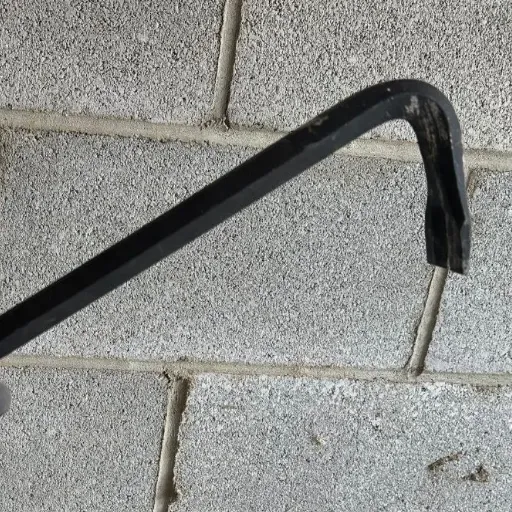
Match the tool to the job and most damage disappears.
When to use a pry bar
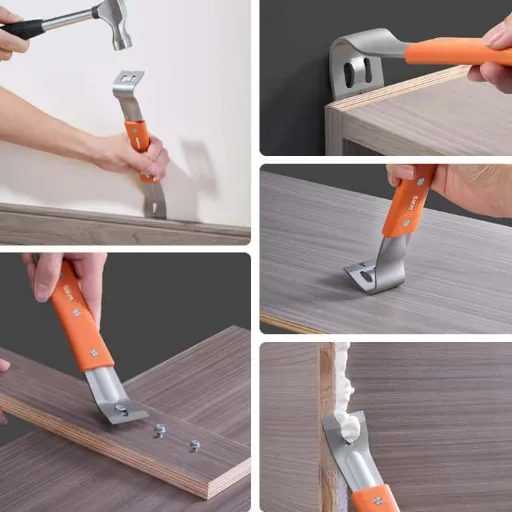
Flat pry bars are for work where the material has to survive. Reach for one to remove trim, molding, baseboards, and crown without cracking the profile. They lift flooring and tile, pull small nails from wood and drywall, scrape caulk and adhesive, and adjust doors and hinges during installation. A 6 to 12 inch flat bar handles most cabinet and trim work. The flat pry bar and wonder bar family covers the size selection in detail.
When to use a crowbar
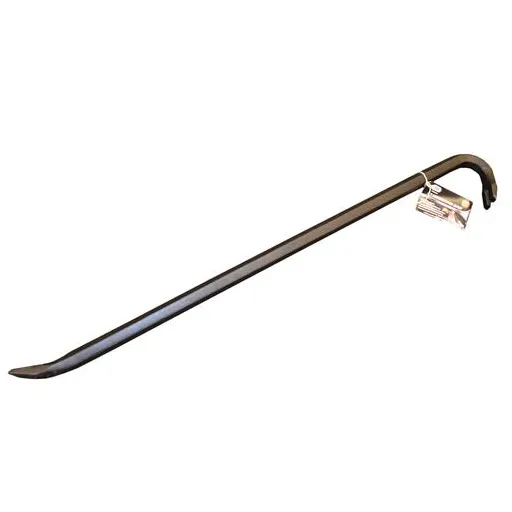
Crowbars are for raw force where damage doesn’t matter. They break concrete and rock, dig, strip concrete forms, move timbers, and lift heavy objects by their edge using the heel as a fulcrum. A 36-inch pinch-point bar is the standard working size. Longer wedge-point bars run 48 to 66 inches for maximum leverage.
When to use a wrecking bar
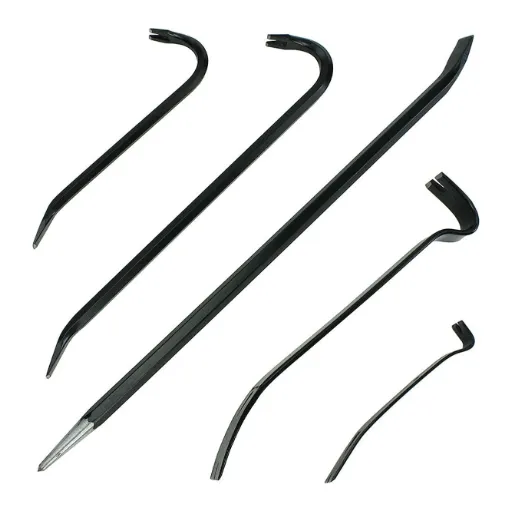
Wrecking bars sit between the two. They pull framing apart, strip decks and subfloors, break down pallets, and extract spikes and large fasteners. A 24-inch bar is the best first purchase. A 30-inch bar is the best all-day size.
The decision matrix
| Job | Reach for | Why |
|---|---|---|
| Trim, molding, baseboard without cracking it | Flat pry bar, 6 to 15 in | Thin spring steel spreads the load |
| Small nails in wood or drywall | Flat pry bar or cat’s paw | Fine claw grips without tearing material |
| Lifting a door, shifting an appliance | Crowbar, using the heel as a fulcrum | Mass and length do the work |
| Framing, decking, subfloor demolition | Wrecking bar, 24 to 36 in | Gooseneck claw plus leverage |
| Stripping concrete formwork | Wrecking bar or long crowbar | The named professional application |
| Breaking concrete, rock, or digging | Crowbar, 48 to 66 in, wedge or pinch point | Maximum leverage on a thick section |
| Aligning bolt holes in steel | Alignment bar | Tapered point, no claw |
How to tell them apart in a store
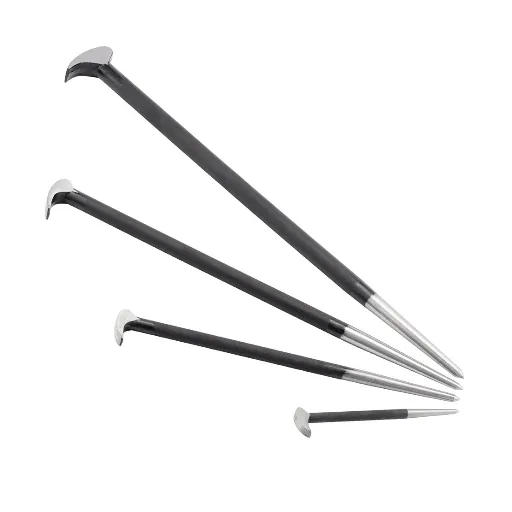
Ignore the label and look at the ends. A nail slot with a small claw and no curve is a flat pry bar. A big curved claw on a heavy shank is a wrecking bar. A long straight bar with a pinch or wedge point and no claw at all is a crowbar. Then check the length and the weight, because those two numbers tell you which class you’re holding.
Steel, Forging, and the Standard Behind Them
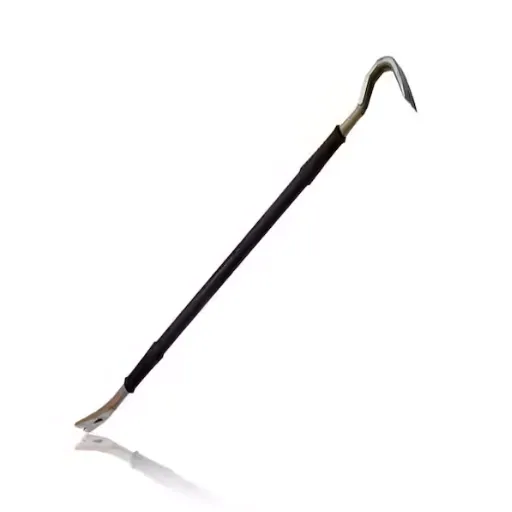
These bars are classified under ASME B107.52, titled “Nail-Puller Bars: Safety Requirements.” The listings behind that standard describe the pinch design as Type 3, Class 4, and the gooseneck wrecking form as Type 2, Class 2. The standard’s own text isn’t public, so treat those designations as classification, not as a hardness specification.
Construction matters more than any label. One-piece drop forging with no welds is the durability and quality control marker across this whole category. Welded joints are the primary failure point.
A good forged bar bends slowly when it’s pushed past its design capacity. A poor one snaps without warning. For the full treatment of steel grades, heat treatment, and factory QC, see our guide to forged versus cast pry bar steel.
Regional Names: Jemmy Bar, Prise Bar, Pinch Bar, and Gorilla Bar
If you’re reading an overseas listing, the same tool wears different names.
| Term | Where it’s used | What it means |
|---|---|---|
| Jemmy or jimmy | Britain, Ireland, Australia, New Zealand | The prying tool, most often associated with forcing doors and windows |
| Prise bar | Britain | The same tool. “Prise” is the British spelling of “pry” |
| Pinch bar | Australia, New Zealand, UK, US | In Australia a “crowbar” can mean a 2 m digging bar, while a pinch bar is the prying tool |
| Gorilla bar | Retail listings | A marketing name for a heavy wrecking bar |
| Gooseneck bar | Global trade | The curved-claw wrecking form |
| Pig’s foot | US and UK trade | A curved split claw with a hoof-like tip for pulling spikes |
This is why international sourcing conversations go sideways. A UK buyer asking for a jemmy bar and a US buyer asking for a crowbar may be describing the same prying tool, or two very different ones. Specify length, stock, and end geometry in writing, and use millimetres.
Safety: The One Mistake That Breaks Bars
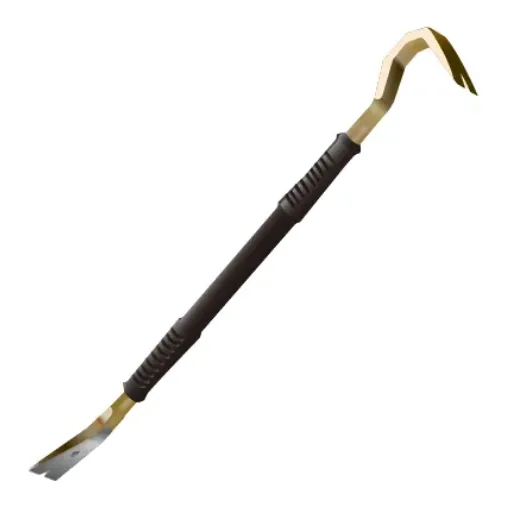
The most common way to destroy a pry bar or crowbar is the cheater bar. Sliding a length of pipe over the handle multiplies your leverage past the point the tool was designed for, and the failure is rarely a gentle bend. It’s a snap, and a snapped bar releases all that stored energy at once.
A few rules that prevent the rest of the damage:
- Never extend a bar with a pipe. If the job needs more leverage, buy a longer bar.
- Place a wood block as the fulcrum to protect finished surfaces and avoid punching through drywall.
- Check for wiring and plumbing behind the surface before you pry.
- Never strike a cracked, chipped, or mushroomed bar. Only a hardened, drop-forged bar with a purpose-built heel should take a hammer.
- Inspect before every use and retire any bar that has bent past straight.
- Never pry toward your body. Keep your weight behind the bar and your hands clear of the travel path.
Technique depth, including fulcrum placement and body-weight leverage, lives in our guide on how to use a pry bar safely.
OEM, Private Label, and Wholesale Pry Bars
Here’s the practical answer for buyers: most successful pry bar programs stock both. Flat bars serve the trim and renovation buyer. Crowbars and wrecking bars serve the trade. A range that offers only one is leaving a shelf segment to a competitor.
At Shanghai Oushike Hardware Tools, we manufacture across flat pry bars, wrecking bars, crowbars, pinch bars, cat’s paws, alignment bars, and sets. That means the customization conversation is a production conversation, not a reseller one.
What you can specify through our custom hand tool program: length in millimetres, stock profile (hexagonal, octagonal, round, flat, or I-beam), tip geometry (pinch, wedge, or claw), bend style, steel grade (45# or 65Mn), finish (powder coat, galvanised, enamel, or plating), logo marking, and packaging.
What to expect: flexible MOQs so you can test a single SKU before scaling a range, a sample process for private-label programs, multi-stage QC covering raw material, forging, hardness verification, tip geometry, and bend testing, plus export documentation and FOB terms from Shanghai or Ningbo.
One logistics detail worth planning around: long bars hit container cubic limits before they hit weight limits. A 66-inch crowbar is light for its volume, so configuration and mixed loading matter more than tonnage when you’re costing a shipment.
The factory-selection side, including what to inspect and which documents to request, is covered in our guide to choosing a pry bar manufacturer. Assortment planning, margin structure, and house-brand positioning against established names are covered in our guide to planning a distributor assortment.
Pry Bar vs Crowbar: Frequently Asked Questions
What is the difference between a pry bar and a crowbar?
A pry bar is the umbrella term for any lever-style prying tool. A crowbar is one specific type: a heavy digging bar over four feet long with a pinch point or wedge point. In loose retail usage, “crowbar” refers to any demolition bar, which is why the terms collide.
Is a crowbar a pry bar?
Yes. A crowbar is a type of pry bar, in the same way a claw hammer is a type of hammer. The reverse isn’t true: a flat pry bar is not a crowbar.
Is a wrecking bar the same as a crowbar?
Not in trade usage. Wrecking bar sizes run 12 to 60 inches, and the bar carries a curved gooseneck claw for pulling nails. A true crowbar is a digging bar over four feet with a pinch or wedge point. Retailers often label wrecking bars as crowbars.
Can I use a crowbar as a pry bar?
You can, but it will damage whatever you’re prying. A crowbar is thick and heavy by design. For trim, cabinets, and finished surfaces, a flat pry bar protects the material.
Is a pry bar stronger than a crowbar?
Neither is stronger in the abstract. A crowbar carries a far thicker section and much more length, so it delivers more force. A pry bar trades force for control and a lighter, thinner profile.
How much does a crowbar weigh?
A 36-inch pinch-point crowbar weighs about 6 lb. Longer wedge-point bars run from about 10 lb at 48 inches to about 26 lb at 66 inches.
What size crowbar should I get?
A 36-inch pinch-point bar covers most heavy prying. Go to 48 to 66 inches only for breaking rock and concrete, digging, or moving timbers, where the extra leverage is worth the weight.
Why is it called a crowbar?
The name is generally traced to the forked, beak-like business end resembling a crow’s foot, the same image behind the carpenter’s crow’s foot joint.
Conclusion
Once you separate the three tiers of usage in the pry bar vs crowbar question, the whole category clicks into place. A pry bar is the umbrella term. A crowbar is one specific type inside it, a digging bar over four feet with a pinch or wedge point. A wrecking bar is a third tool, one to five feet with a gooseneck claw. Retail naming ignores all of this, so buy by the ends and the length.
Then ask two questions. Does the material need to survive? If yes, take a flat pry bar.
How much leverage do I need? Twelve inches for cabinets and trim, 24 to 36 inches for framing and demolition, and 48 to 66 inches only for rock, concrete, and heavy timbers. Skip the pipe extension, and the bar will outlast the job.
If you’re sourcing either tool, the range matters more than the individual SKU. Shanghai Oushike Hardware Tools manufactures pry bars and crowbars in every standard length, in 45# and 65Mn steel, with full OEM and private-label programs. Request a bulk quote and we’ll send samples, specifications, and current lead times for your market.