
Flat Pry Bar & Wonder Bar Guide: Uses, Sizes & Picks
A flat pry bar is a thin, flat, spring-tempered steel bar with a nail slot and a claw at each end, used to lift trim, molding, and flooring without crushing the material. For most trim and light demolition work, a 15-inch flat pry bar (often called a wonder bar) is the size to buy. The one specification that decides whether your trim survives is not the length; it is the thickness of the tip.
That single number is where most guides stop short. They tell you flat bars are “for trim” and leave you to guess the rest.
Dana found this out the hard way. She was renovating a 1920s house in Portland and reached for the crowbar in her garage to pull a run of original fir baseboard she wanted to reuse. The thick, round bar acted like a wedge. It split three boards before the first one lifted, and the irreplaceable trim went in the skip. A $12 flat bar with a thin tip would have saved all of it.
This guide gives you the flat pry bar size ladder, the tip-thickness rule, the answer to the “wonder bar” question, a damage-free removal method, and what to stock if you buy these by the container. We are Shanghai Oushike Hardware Tools, and flat bars are one of the highest-volume tools we forge. For the full family of prying tools, see our complete guide to pry bar types.
Key Takeaways
- A 15-inch flat pry bar handles most trim, baseboard, and flooring work, and it is the size to buy if you only buy one.
- Tip thickness decides whether trim survives. Keep a bar under about 1.5 mm for trim you plan to reuse, and a thicker bar for material headed for disposal.
- “Wonder Bar” is Stanley’s brand name, not a separate tool. Flat bar, wonder bar, and utility bar are the same category.
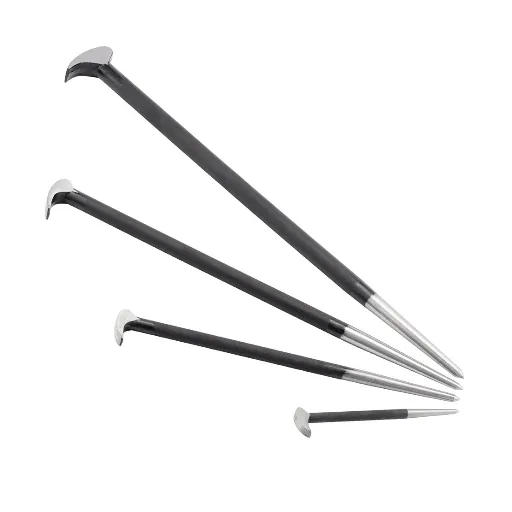
- The canonical 4-piece set is 5.5″, 7.5″, 10″, and 15″, which covers nearly every DIY and remodeling task.
- A flat pry bar cannot be struck with a hammer. It has no hardened heel, so headless nails need a cat’s paw or nail puller instead.
What Is a Flat Pry Bar?
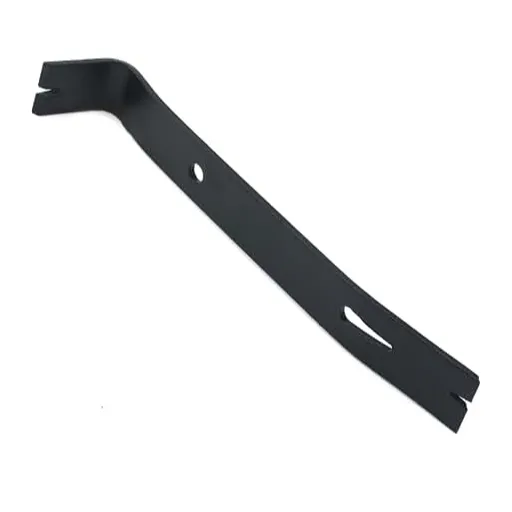
A flat pry bar is a lever made from flat spring steel, with a nail slot and a claw at both ends, usually one bent to 90 degrees and the other a shallow rocker head. It slides into a tight seam, spreads prying force across the full width of its flat tip, and flexes instead of transferring a rigid shock into the surface.
That flex is the whole point. A flat bar is the “protects the material” member of the pry bar family, while a crowbar and a wrecking bar are built to destroy whatever they touch. That is why the flat profile matters for trim, and why a round bar splits the very board you are trying to save.
The flat bar family is also the most common entry point into the category, which is why it sits near the front of any hand tools range.
Flat Pry Bar vs Wonder Bar vs Crowbar vs Wrecking Bar
Here is the question the search results answer so poorly, so let’s settle it. A “wonder bar” is not a different tool. It is a brand name.
Stanley trademarked “Wonder Bar” for its flat, hardened-steel prying bar, and the name stuck the way “hoover” stuck for vacuum cleaners. Vaughan calls its version a Super Bar, Estwing uses Handy Bar, and Barco uses Handi-Bar. Flat bar, flat pry bar, wonder bar, and utility bar all describe the same design.
The table below shows where the flat bar sits against the two heavier bars people confuse it with.
| Flat pry bar / wonder bar | Crowbar | Wrecking bar | |
|---|---|---|---|
| Profile | Flat spring steel | Round or hex long stock | Hex or octagonal shank |
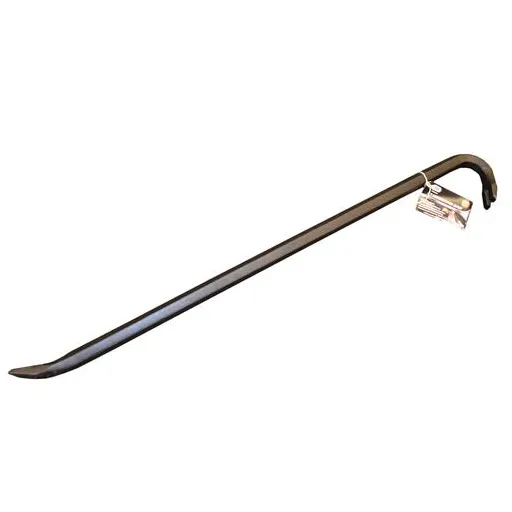
| Length | 5.5″ to 18″ (7″, 10″, 12″, 15″ common) | True crowbar is a digging bar over 4 ft (48″ to 68″) | 12″ to 60″ (24″ to 36″ common) |
| Ends | Nail slots, 90-degree claw, rocker head | Pinch or wedge point | Curved claw plus prying wedge or chisel |
| Weight | 0.2 to 2.5 lb | Up to about 30 lb at full length | 1 to 6 lb typical |
| Protects the material? | Yes, flat tip and spring flex | No, heaviest work | No, demolition tool |
| Best for | Trim, molding, baseboard, flooring salvage | Digging, lifting heavy objects by the edge | Form stripping, framing and deck demolition |
For the full head-to-head, including the strict definition of a true crowbar, see pry bar vs crowbar. When you genuinely need the heavy end of the family, our wrecking bar guide covers it.
Flat Pry Bar Sizes: 5.5″ to 18″
Flat bars run from about 5.5 inches, which is a precision tool, up to 18 inches for stubborn flooring and siding. The chart below maps each length to its tip width, weight, and the job it is built for.
| Length | Metric | Typical tip width | Approx. weight | Best for |
|---|---|---|---|---|
| 5.5″ | ~140 mm | 1-1/4″ to 1-1/2″ | 0.2 to 0.4 lb | Precision nail work, staples, opening paint cans, scraping in tight gaps |
| 7″ to 7.5″ | ~180 to 190 mm | 1-1/2″ | 0.4 to 0.7 lb | Light trim removal, shimming, small nail pulling |
| 10″ | ~254 mm | 1-3/4″ | 0.6 to 1.0 lb | The trim sweet spot. Molding, baseboard, tight-space use |
| 12″ | ~305 mm | 1-3/4″ to 2″ | 0.9 to 1.3 lb | Flooring, siding, crates and pallets |
| 15″ | ~380 mm | 2″ | 1.2 to 2.0 lb | Buy this one if you buy only one. Trim, flooring, baseboards, board lifting |
| 18″ | ~457 mm | 2″ to 2.5″ | 1.8 to 2.5 lb | Stubborn flooring and siding, plywood separation, longer reach |
Most flat bars are sold as a four-piece set at 5.5, 7.5, 10, and 15 inches. That spread covers the widest range of DIY and remodeling work, from the smallest precise nail pick to the longest lever. If you want the full spread in one purchase, a flat pry bar set is the fast route.
The Tip-Thickness Rule: Why Your Trim Survives or Splits
This is the spec no consumer listicle mentions, and it matters more than length for trim work.
A tip under about 1.5 mm slides behind most trim, casing, and molding without leaving a visible mark. A tip over about 3 mm starts gouging softwood and cracking MDF baseboard almost every time. The physics is simple: a thicker wedge drives the wood fibres apart before the bar can reach the nails.
The practical rule is to own two flat bars, not one:
- A thin bar, around 1 mm at the tip, for trim you intend to reuse. The bar flexes, the paint stays intact, and the wood comes off clean.
- A thicker bar, around 4 mm, for material headed for disposal, where speed matters more than surface quality.
One tested comparison makes it concrete. A 1.5 mm precision flat bar slid into a painted seam on aged trim with almost no resistance. A 1/4-inch (about 6 mm) bar split the same trim in seconds. Same force, same hands. Different tip. As the source put it, it is not about being careful, it is about physics.
Choosing a tip thickness? Tell us the material you are working with and we will match the tip geometry to the job. Request a sample before you commit to a spec.
What Is a Flat Pry Bar Used For?
The flat bar is the tool you reach for when the surface has to survive. Its uses fall into five groups:
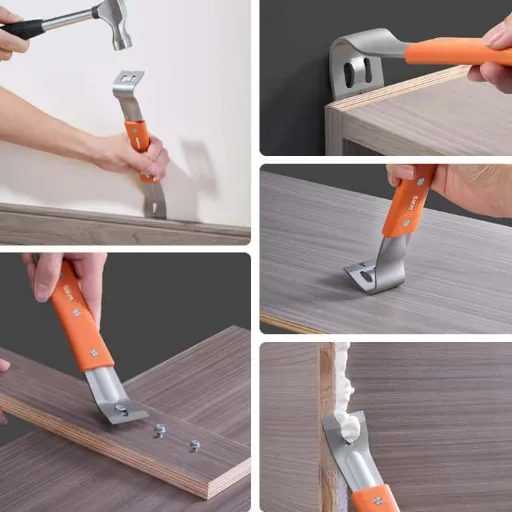
- Trim and molding removal. The flagship use. The flat tip and flex protect finished wood and paint.
- Baseboard and skirting. The thin edge slides behind the board without crushing the wall finish.
- Flooring and subfloor. Lifting boards, tongue-and-groove, and underlayment.
- Siding and plywood separation. Where a thicker bar would split the sheet.
- Nail, staple, and brad extraction. Through the nail slots at either end.
It also scrapes paint, caulk, tile, and even ice, and it is the classic tool for opening a paint can.
How to Remove Baseboard and Trim Without Damage
Follow these six steps and you can lift trim you intend to reuse.
- Score the painted seam with a utility knife first, so the wall finish does not chip when the bar moves.
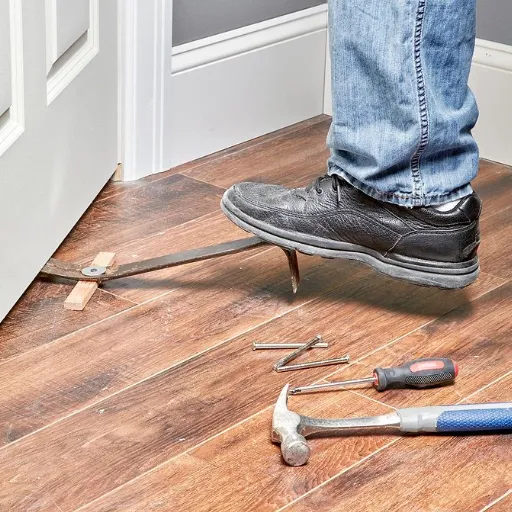
- Start at a seam or corner, the largest gap, and slide the thin bar behind the trim near a nail location, never between nails where the wood flexes.
- Insert a wood shim or scrap of 1/4-inch plywood between the bar and the wall to absorb metal contact.
- Work in stages. Lift a few millimetres, reposition, and repeat. Do not lever hard at one spot.
- Pull the nails using the bar’s slots, or a cat’s paw for headless nails.
- Pull the trim free by hand once it is loose.
One caution that applies to every flat bar: never extend it with a pipe. A cheater bar overloads the tool and is the leading cause of snapping. For the broader technique, including fulcrum placement and body-weight use, see how to use a pry bar.
Flat Pry Bar Steel and Build Quality
The steel is what lets a flat bar flex and spring back instead of cracking. Three builds dominate the market.
- High-carbon steel is the retail standard. Forged, heat-treated, and cheap to produce well.
- Chrome vanadium (Cr-V) flexes before it fails, rather than fracturing, which matters on a tool you bend on every use.
- SK5 and equivalent tool steels with differential heat treatment harden the tip, often to around 58 to 62 HRC, while keeping the body tough enough to absorb shock.
Two design details separate a good flat bar from a frustrating one. The rocker head, the rounded bend at one end, rolls the fulcrum as you pry, which spreads the load and reduces dents. The nail slots at both ends should be beveled so they grip a nail head rather than slip off it.
There is also one limit built into every flat bar. It has no hardened, hammerable heel, so you cannot hit it with a hammer to drive the tip under a headless nail. That job belongs to a cat’s paw or a nail puller. Attempt it anyway and you will mushroom the end of the bar. Forging and hardness depth is a topic of its own, but the short version is this: a flat bar should bend and recover, and a good one will do it thousands of times.
Marcus learned that difference on a job site. He bought four cheap flat bars for his crew, all listed simply as “steel.” Within a month, two had snapped at the claw end under ordinary trim work. He switched to forged high-carbon bars and the crew stopped losing tools mid-job. The price gap was a few dollars per bar. The downtime cost far more.
Flat Pry Bars for Professionals and Resellers
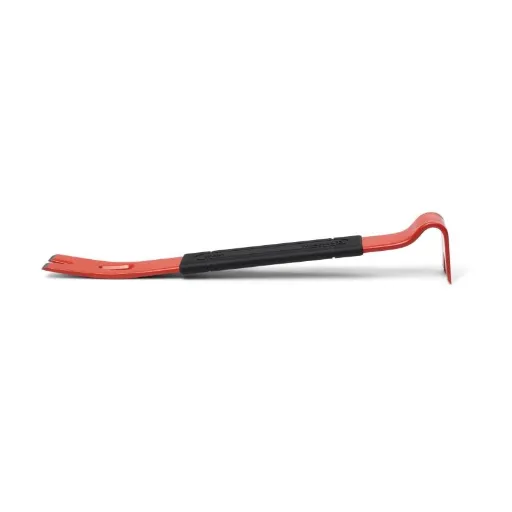
For a distributor, the flat bar is the volume SKU in the prying category. It is the lowest-cost bar you stock, typically retailing between 10and10and25, and the highest-frequency. Almost every trim, flooring, and finish job needs one, and buyers replace them. That combination of low price and high turnover is why flat bars belong in almost every assortment.
At Oushike, we forge flat pry bars to your specification: length in millimetres, tip width and thickness, nail-slot size, claw and rocker-head geometry, steel grade, and finish. Powder coat, enamel, and plating are all available, along with your logo and packaging. Production runs on flexible minimums, so you can test a single SKU and scale the range. See our pry bar manufacturing capabilities or jump straight to wholesale pry bars.
Building a flat bar line? We will send you spec sheets, samples, and MOQ options for your market. Request a wholesale quote.
Flat Pry Bar FAQ
What is a flat pry bar used for?
A flat pry bar lifts trim, molding, baseboard, flooring, and siding, and pulls nails, staples, and brads through its end slots. It also scrapes paint and caulk and opens paint cans. Its flat tip protects the surface, which is its main advantage over a crowbar.
Is a wonder bar the same as a flat pry bar?
Yes. “Wonder Bar” is Stanley’s brand name for a flat, hardened-steel prying bar, now used generically. Flat bar, flat pry bar, wonder bar, and utility bar all refer to the same tool.
What is the difference between a flat pry bar and a crowbar?
A flat pry bar is short, flat, and springy, designed to protect the material. A true crowbar is a heavy digging bar over four feet long, built to lever huge loads without concern for the surface. See the full comparison.
What size flat pry bar should I get?
For most work, a 15-inch flat pry bar. For trim specifically, a 10-inch bar gives better control. For a full range, buy the 5.5, 7.5, 10, and 15-inch set.
What tip thickness should a flat pry bar have?
For trim you plan to reuse, a tip around 1 mm or under 1.5 mm. For material headed for disposal, a thicker 4 mm tip is fine and faster.
Can you hit a flat pry bar with a hammer?
No. A flat pry bar has no hardened, hammerable heel, so striking it mushrooms the end and can crack the tool. Use a cat’s paw or nail puller for headless nails.
Are expensive flat pry bars worth it?
Often, yes. The difference is forged high-carbon steel, proper heat treatment, and a rocker head that rolls the fulcrum. Cheap bars snap at the claw under ordinary use.
Conclusion
Pick a flat pry bar by matching three things to the job: the length, the tip thickness, and the build. A 15-inch bar is the general-purpose choice, a thin tip protects trim you want to keep, and forged high-carbon steel is what lets the bar flex instead of snap. And when someone asks for a wonder bar, you now know it is the same tool with a brand name attached.
Priya, a distributor we work with in the Netherlands, rebuilt her prying range around exactly this logic. She stocks three flat bar lengths, two tip thicknesses, and one four-piece set, all under her own label. Within two seasons, flat bars became the fastest-turning line in her catalog, because the buyers who understood tip thickness came back for the right one every time.
If you are sourcing flat pry bars, or building a private-label range, we are glad to help you get the spec right the first time. Talk to our team about lengths, tip geometry, finishes, and minimums, or browse the wider hand tools range.