
Types of Circular Saw Blades: Every Type and What It Cuts
There are about ten types of circular saw blades worth knowing, grouped by what they cut: ripping, crosscut, combination, framing, fine finish, laminate, non-ferrous metal, ferrous metal, and two diamond families for masonry. Each one is defined by four numbers and a tooth shape, not by the name on the package.
Most blade guides disagree on how many types exist. You’ll find lists of five, eight, nine, eleven, and seventeen on page one alone. The counts differ because the lists mix three separate classification systems into one, and that mixing is what makes blade shopping confusing.
This guide fixes the classification first, then gives every type the same seven specifications so you can compare them directly. If you’re specifying blades for resale rather than for your own saw, the circular saw blades supplier guide covers the procurement side: standardizing a catalog, arbor strategy, MOQ, and landed cost.
Key Takeaways
- Circular saw blades are classified three ways: by cut purpose, by material family, and by dimensional variant. Most published “type counts” mix all three.
- Ten product families cover nearly all real demand, from a 16-tooth ripping blade to a continuous-rim diamond blade.
- Tooth count alone doesn’t identify a blade. The same 24 teeth can be a ripping blade or a demolition blade depending on grind and hook angle.
- Thin kerf and compact diameter are specifications, not types. A thin-kerf combination blade is still a combination blade.
- Dado sets run on a table saw arbor and can’t be used on a handheld circular saw, despite appearing in several blade-type lists.
How the Main Types of Circular Saw Blades Are Classified
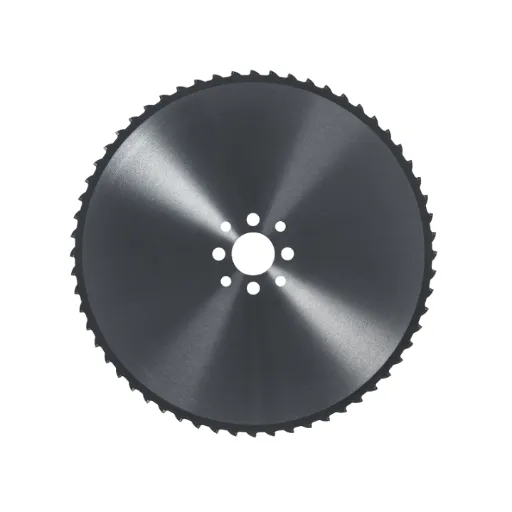
Circular saw blades are classified three ways: by cut purpose (rip, crosscut, combination, dado), by material family (wood, sheet goods, metal, plastic, masonry), and by dimensional variant (thin or full kerf, standard or compact diameter). Most blade “types” combine one option from each axis.
Keeping the three axes separate solves most of the confusion in the category.
| Axis | Question it answers | Options |
|---|---|---|
| Cut purpose | What am I doing to the material? | Rip, crosscut, combination, grooving |
| Material family | What am I cutting? | Solid wood, sheet goods, ferrous metal, non-ferrous metal, plastic, masonry |
| Dimensional variant | How is it built? | Thin or full kerf, standard or compact diameter, steel body or diamond rim |
Two consequences follow. First, a “thin kerf blade” isn’t a type in the same sense as a crosscut blade. A thin-kerf crosscut blade and a thin-kerf combination blade are both thin kerf, and they behave differently.
Second, a “dado blade” isn’t a handheld circular saw blade at all. It mounts on a table saw arbor, and several popular guides get that wrong.
Sort them and the list of types stops shifting.
The Main Types of Circular Saw Blades at a Glance
This table is the short version. Ten rows. Seven specifications. One consistent format.
Hook angle is given as a typical range because manufacturers set their own values. Read the exact figure from the blade marking or the product specification. A general guide is a starting point, not a spec sheet. Manufacturers such as Milwaukee and Bosch publish the same groupings, which is a useful cross-check.
| Type | Typical teeth | Grind | Hook angle | Kerf | Common diameters | Cuts |
|---|---|---|---|---|---|---|
| Ripping | 16–24T | FTG | ~15–20° positive | Full | 7-1/4″, 10″ | Solid wood, along the grain |
| Crosscut | 40–60T | ATB | ~5–15° positive | Full or thin | 7-1/4″, 10″, 12″ | Solid wood, across the grain |
| Combination | 40–50T | ATBR | ~15° positive | Full or thin | 6-1/2″, 7-1/4″, 10″ | Mixed rip and crosscut |
| Framing / demolition | 18–24T | FTG or ATB | High positive | Full | 6-1/2″, 7-1/4″ | Dimensional lumber, nail-embedded stock |
| Fine finish / plywood | 60–80T | HiATB | Low positive | Thin preferred | 7-1/4″, 10″, 12″ | Plywood, veneer, trim, melamine |
| Laminate / plastic | 80–100T | TCG | Low or slightly negative | Thin | 7-1/4″, 10″ | Laminate flooring, PVC, acrylic |
| Non-ferrous metal | 60–120T | TCG | ~0 to −5° | Full, thin body | 7-1/4″, 10″, 12″ | Aluminum, brass, copper |
| Ferrous metal | 60–120T+ | TCG or cermet | Negative | Full | 12″, 14″ | Steel, rebar, stainless |
| Masonry, segmented | None | Diamond segment | Not applicable | Segment width | 4-1/2″, 7″, 12″, 14″ | Concrete, block, brick |
| Masonry, continuous rim | None | Diamond rim | Not applicable | Rim width | 4″, 4-1/2″, 7″, 10″ | Tile, porcelain, stone |
Seven and a quarter inch with a 5/8-inch arbor is the dominant handheld size in the US market, which is why it appears most often in the diameter column. European catalogs express the same blades in metric: 160 mm, 184 mm, 250 mm, 300 mm, with 16, 20, or 30 mm bores. Same blade, different numbers.
For how tooth count behaves across diameters, see the circular saw blade tooth count guide. It covers the selection logic in detail; this article only gives one count per type.
Types of Circular Saw Blades for Wood
Five families cover almost all wood cutting. Each is defined the same way: teeth, grind, hook, and what it leaves behind.
Ripping Blades
A ripping blade cuts along the grain, and it’s built for speed rather than finish. Teeth run 16 to 24, ground flat top (FTG), with a high positive hook angle around 15 to 20 degrees. It’s the crudest blade in the drawer.
The flat tooth acts like a chisel, lifting chips out of a deep gullet. That’s efficient, and it’s also why the exit face tears. Tear-out on the bottom of a rip cut is the trade, not a defect.
One correction worth making: the common claim that hardwood needs fewer teeth is backwards. Hardwood benefits from more teeth than softwood at the same cut, because dense fibers shear cleanly while soft fibers crush.
Crosscut Blades
A crosscut blade cuts across the grain and leaves a clean exit face. Teeth run 40 to 60, ground alternate top bevel (ATB), with a lower positive hook. Twice the teeth of a ripper, half the speed.
ATB teeth alternate left and right bevels. Each tooth scores the fibers on its side of the kerf before lifting the chip, which is why the cut comes out clean on both faces. The cost is feed speed. More teeth means less chip clearance.
Combination Blades
A combination blade does both jobs acceptably. Teeth run 40 to 50, ground ATBR, with roughly a 15-degree hook. It’s the sensible default.
ATBR means ATB teeth with a flat raker every group. The beveled teeth shear. The raker clears the kerf they leave behind. It’s the blade that ships in most saw cartons, and it’s the right first purchase for mixed work.
Be honest about the limit. A combination blade won’t match a dedicated ripping blade on thick stock, and it won’t match a fine-finish blade on veneer. It’s a compromise that happens to be a good one.
Framing and Demolition Blades
Framing blades run 18 to 24 teeth, the same range as a ripping blade, but they’re a different product. The job is dimensional lumber and nail-embedded stock. Speed matters. Finish doesn’t.
This is the clearest example of why tooth count alone won’t identify a blade. A 24-tooth ripping blade and a 24-tooth demolition blade can share diameter, tooth count, and arbor while differing in tip geometry, body toughness, and hook angle. Demolition blades are built to survive hitting fasteners, and that’s the whole difference.
Fine-Finish, Plywood and Paneling Blades
Fine-finish blades run 60 to 80 teeth, ground high alternate top bevel (HiATB), usually with a thin kerf. They cut plywood, veneer, melamine, and trim without splintering the face. Steeper bevels, cleaner shear.
Here is a naming problem worth knowing. The same blade family is sold as a “plywood blade,” a “fine finish blade,” a “paneling blade,” a “cabinet blade,” and a “veneer blade.” Those names describe the application the seller wants to advertise, not five different designs.
The practical rule: compare specifications, not names. Two blades both labeled “plywood blade” can differ by twenty teeth. For a distributor, that’s also how duplicate SKUs get into a catalog. One product, two names, twice the inventory.
Metal, Plastic and Laminate Blade Types
These families share one feature that wood blades don’t: a negative or near-zero hook angle. That single change is what makes them safe on hard, grabby material.
Non-Ferrous Metal: Aluminum, Brass, Copper
Non-ferrous blades run 60 to 120 teeth, ground triple chip (TCG), with a negative hook angle around zero to minus five degrees. Note the negative sign. It matters more than the tooth count does.
The negative hook pushes the tooth into the work instead of pulling the work into the blade. That controls the climb and grab that makes aluminum dangerous on a wood blade. A standard ATB wood blade gums up, then grabs. Aluminum is soft, abrasive, and sticky all at once.
A few drops of lubricant and a slow, steady feed do the rest. For the full technique, see the guide to the best blade for cutting aluminum.
Ferrous Metal: Steel, Stainless, Rebar
Ferrous blades run 60 to 120 teeth or more, ground TCG or tipped with cermet, with a negative hook. Same geometry family, much harder material.
In practice, this is a different machine class. A low-speed metal-cutting saw turns far slower than a 5,800 rpm wood saw, and running a ferrous blade on a wood saw overstresses both.
Match the blade’s maximum speed rating to the tool before anything else. OSHA 1910.213 sets the US baseline for woodworking machinery guarding and blade exposure.
Plastic, Acrylic and PVC
Plastic blades run 80 to 100 teeth, ground TCG, with a low or slightly negative hook. Fine teeth, cool cut.
The failure mode here is melting, not chipping. Heat builds when a tooth dwells in the cut. The answer is a geometry that clears chips fast enough to carry heat away, plus a feed rate the operator controls.
A fine-tooth wood blade will cut plastic. It’ll also weld the kerf shut on thick sections.
Thin sheet is the hard case, because it flexes under the tooth and grabs instead of shearing.
Laminate, Melamine and Veneered Panels
Laminate blades run 80 to 100 teeth, ground TCG or HiATB. This is the chipping-critical family. Everything here is about the exit face.
Two faces matter, and only one is supported. The top face rides on the saw’s base plate, which limits tear-out. The bottom face is unsupported, and that’s where chips appear.
A high tooth count with a TCG or HiATB grind reduces the problem. It doesn’t eliminate it.
Types of Circular Saw Blades for Masonry and Stone
Masonry blades break the pattern completely. No steel teeth. No tooth count. No grind. These blades grind rather than cut, so the “type” question becomes a rim question.
| Rim type | Cutting behavior | Best for | Water |
|---|---|---|---|
| Segmented | Aggressive and fast; debris clears through the gaps between segments | Concrete, block, brick, asphalt | Dry or wet |
| Turbo | Faster than continuous, cleaner than segmented; angled slots in a continuous edge | Hard concrete, brick, general masonry | Dry or wet |
| Continuous | Smoothest cut, no gaps, least chipping | Tile, porcelain, stone, glass | Wet strongly preferred |
Match the rim to the job, not to the price. Segmented rims cut rough concrete and asphalt fastest and leave a rougher edge. Continuous rims exist because tile and porcelain chip at the first sign of an interrupted cut. Smooth edge, slow cut.
One safety point that most blade guides skip: dry-cutting masonry and concrete produces silica dust. That requires respiratory protection and, in many jurisdictions, dust extraction. Wet cutting controls both dust and heat. The HSE guidance on circular saw benches covers guarding and dust control in more detail.
Specialty Circular Saw Blade Types
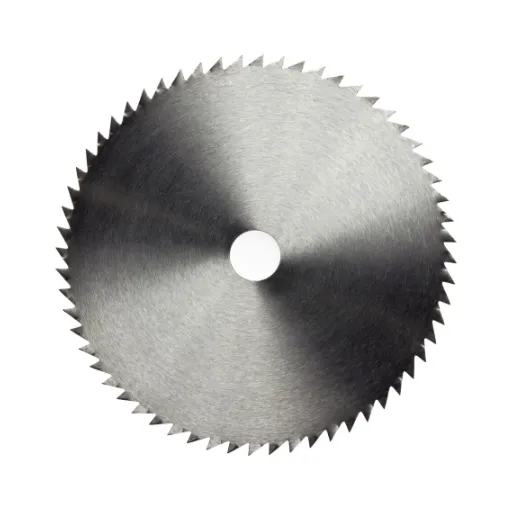
A few families appear in longer lists. Some are genuine types. Some are variants. One is a different tool entirely.
Dado sets. Stacked or wobble dado sets cut a flat-bottomed groove in one or two passes. They mount on a table saw arbor and you can’t run them on a handheld circular saw. Three of the ten highest-ranking blade-type pages list them as a circular saw blade type without that caveat.
Panel-sizing and cabinet blades. Large diameter, high tooth count, built for panel saws and sliding table saws. A different machine class, and not a handheld accessory.
Solid HSS and cold-saw blades. The tooth form is cut into the blade body rather than tipped onto it. Low speed, metal cutting, and long life if you resharpen.
Compact and mini blades. Three inch to five and a half inch, for compact and trim saws. A diameter variant, not a type, so it belongs on the same axis as thin kerf.
Thin kerf. A body specification that can apply to nearly every type above. Thin kerf suits low-power and cordless saws and removes less material, at the cost of stiffness under heavy load.
How to Choose the Right Type for Your Material
Start with the material. Then the cut direction. Then the finish. That sequence answers the question faster than any list of names.
| Cutting | Use | Typical spec |
|---|---|---|
| Solid wood, along the grain | Ripping blade | 16–24T, FTG |
| Solid wood, across the grain | Crosscut blade | 40–60T, ATB |
| Mixed work, one blade | Combination blade | 40–50T, ATBR |
| Plywood, veneer, melamine | Fine-finish blade | 60–80T, HiATB |
| Laminate, PVC, acrylic | Laminate blade | 80–100T, TCG |
| Aluminum, brass, copper | Non-ferrous blade | 60–120T, TCG, negative hook |
| Concrete, block, brick | Segmented diamond | Diamond segment |
| Tile, porcelain, stone | Continuous-rim diamond | Diamond rim |
For the fuller decision path, including power, feed rate, and saw compatibility, see how to choose a saw blade.
To identify the blade already on your saw:
- Read the etched marking on the blade body. It usually carries diameter, tooth count, and maximum RPM.
- Count the teeth if the marking is worn. A 40-tooth blade has 40, not about 40.
- Look at the tooth tips. All flat means FTG. Alternating angled bevels mean ATB. Flat teeth alternating with chamfered ones mean TCG.
- Measure the kerf with calipers if the cut width matters.
- Check the arbor, including whether a diamond knockout has been punched out.
- Compare the marked maximum RPM against the saw’s no-load speed before mounting.
Step one is the fastest answer. Almost nobody mentions it.
One rule applies across every type: at least three teeth should be engaged in the material at any moment. On thin stock or thin-wall tube, a coarse blade puts fewer than three teeth in the cut. The teeth straddle the material instead of cutting it. That’s why thin material often needs a finer tooth count than its thickness suggests.
What These Circular Saw Blade Types Mean for a Catalog
If you stock blades rather than use them, the type list becomes a portfolio decision. Volume and margin don’t come from the same rows.
| Type | Commercial role | Why |
|---|---|---|
| Framing and ripping (24T) | Volume | Highest turnover in construction channels; low unit price, high repeat |
| Combination (40–50T) | Volume | Default blade in most saw cartons; the first replacement purchase |
| Fine finish and plywood (60–80T) | Balanced | Steady trade demand, better margin than 24T |
| Laminate and plastic (80–100T) | Margin | Smaller volume, higher price, low price sensitivity |
| Non-ferrous metal (TCG, negative hook) | Margin | Spec-driven buyers who compare documentation, not price |
| Diamond (all rims) | Separate catalog | Different supply chain, buyer, and safety story |
Volume comes from framing and combination. Margin comes from fine finish, laminate, and metal. Diamond is a separate business, and a separate conversation.
For the mechanics of ordering, see the wholesale saw blades guide covering MOQ tiers, packaging formats, freight, and landed cost.
Frequently Asked Questions
How many types of circular saw blades are there?
It depends on the classification. Three by cut purpose, roughly six by material family, or about ten product families once specialty blades are counted. Published counts differ because most lists mix all three systems instead of separating them, and that’s why the numbers never match.
What type of circular saw blade should I use for plywood?
A 60 to 80 tooth blade with a HiATB grind and a thin kerf. The high tooth count and beveled teeth score the veneer before lifting the chip, and that’s what prevents splintering on the face.
What is the difference between a ripping blade and a crosscut blade?
Teeth, grind, and direction. A ripping blade has 16 to 24 flat-top teeth and a high hook angle for fast cuts along the grain. A crosscut blade has 40 to 60 beveled teeth and a lower hook for clean cuts across it.
Can I use a combination blade for everything?
For most woodworking, yes, acceptably. It visibly underperforms on two jobs: fine veneer, where a HiATB blade wins on tear-out, and thick non-ferrous metal, where the hook angle and grind are wrong for the material.
Can you put a dado blade on a circular saw?
No. Stacked and wobble dado sets need a table saw arbor. A handheld circular saw has no arbor long enough to carry a stack, and no way to guard it safely.
What blade cuts aluminum without melting it?
A triple-chip grind with a negative hook angle, 60 to 120 teeth depending on thickness, plus lubricant. The negative hook keeps the tooth from grabbing, and the TCG geometry clears the chip before heat builds.
What is the difference between thin kerf and full kerf?
Kerf is the width of the cut, and it’s a body specification rather than a blade type. Thin kerf draws less power and suits cordless saws. Full kerf is stiffer and more stable in heavy cuts, at the cost of more material removed and more motor load.
Do all circular saw blades fit all saws?
No. Diameter, arbor size, and maximum RPM all have to match the tool. A blade can have the right diameter and the wrong bore, and a blade rated below the saw’s no-load speed is unsafe regardless of fit.
Conclusion
Three things are worth keeping. The types of circular saw blades split along cut purpose, material family, and dimensional variant, and keeping those axes separate is what makes the category stop shifting. Ten product families cover nearly all real demand. And tooth count alone never identifies a blade, because grind and hook angle change what the same teeth will do.
The fastest route from question to answer is the material table. Find what you’re cutting, read across, and confirm the spec against the blade marking.
Oushike manufactures and supplies saws and saw blades for distributors, brand owners, and industrial buyers, with factory-direct pricing, OEM and private-label options, and export documentation. If you’re building or restocking a blade line, send us your specification and we’ll match it against our range.