
Circular Saw Blade Sizes: Complete Arbor and Diameter Chart
Circular saw blade sizes run from about 3 inches to 16 inches in diameter. Handheld saws use 5-1/2 to 7-1/4 inches, most commonly 7-1/4 inches with a 5/8-inch (15.87 mm) arbor. Table, miter, and cut-off saws use 8 to 16 inches with 5/8-inch, 1-inch, or 30 mm bores.
That’s the short answer. The long answer matters when the blade in your hand has no readable marking and the saw is due on site in the morning.
Ray (a composite of the blade-mismatch cases we see at the counter) runs a two-man framing crew outside Sacramento. Last spring he pulled a stack of loose blades from the truck box, all the same 7-1/4 inch diameter, and fitted one to a borrowed worm-drive saw. It wobbled.
The blade had been knocked out to a 13/16 inch bore somewhere in its past life. The saw had a 5/8 inch spindle. Ten minutes with calipers would have caught it. Instead he lost an hour and a good blade.
This guide gives you every circular saw blade size and arbor bore in one place, then shows you how to measure your own. If you’re specifying blades for resale rather than for your own saw, the circular saw blades supplier guide covers the procurement side. That includes catalog standardization, MOQ, and landed cost.
Key Takeaways
- Handheld circular saws use 5-1/2 to 7-1/4 inch blades; 7-1/4 inch with a 5/8-inch (15.87 mm) arbor is the dominant US configuration.
- 13/16 inch is 20.6 mm, not 20 mm. Blades knocked out for worm-drive saws will not fit a 20 mm spindle correctly, and the reverse is also true.
- Cutting depth is a property of the saw, not the blade. Two saws running the same blade can cut different depths.
- You can generally run a smaller blade than the saw is rated for, but never a larger one.
- Every extra bore in a wholesale catalog is a separate SKU, a separate return risk, and a separate support question.
What Size Blade Does a Circular Saw Take?
A circular saw takes the blade diameter printed on its upper guard, most often 7-1/4 inches for full-size corded and cordless models. Compact saws take 5-1/2 or 6-1/2 inches. Match that diameter, then confirm the arbor bore and the blade’s maximum RPM rating before fitting.
Three numbers decide whether a blade fits: diameter, bore, and maximum RPM. Diameter is the easy one. Bore is where most people get caught, and it’s the reason circular saw blade sizes cause more returns than any other specification.
Check in this order. Read the guard or the spec plate first, because it is stamped and it doesn’t wear off. Check the manual second. Measure the old blade third, and only if the first two are unavailable.
Circular Saw Blade Diameter Chart (Inch and mm)
This is the full range of circular saw blade sizes, imperial and metric side by side. The metric column isn’t a conversion of the inch column. Metric blade sizes are nominal, so a 190 mm blade is a European standard size, not a 7-1/2 inch blade with a different label.
| Imperial | Exact mm | Common metric neighbor | Typical machine class |
|---|---|---|---|
| 3″ | 76.2 | 76 mm | Mini and compact trim saws |
| 3-3/8″ | 85.7 | 85 mm | Compact cordless |
| 4″ | 101.6 | 100 / 110 mm | Compact, tile, mini |
| 4-1/2″ | 114.3 | 115 mm | Angle grinder and cut-off |
| 5″ | 127.0 | 125 mm | Compact cordless |
| 5-3/8″ | 136.5 | 140 mm | Compact cordless |
| 5-1/2″ | 139.7 | 140 mm | Compact cordless |
| 6″ | 152.4 | 150 / 152 mm | Trim and panel |
| 6-1/2″ | 165.1 | 165 mm | Most common cordless size |
| 7″ | 177.8 | 180 mm | Corded handheld |
| 7-1/4″ | 184.2 | 184 mm | Dominant US handheld size |
| 8″ | 203.2 | 200 / 204 mm | Bench and small table saw |
| 8-1/4″ | 209.6 | 210 mm | Framing and worm drive |
| 9″ | 228.6 | 230 mm | Industrial handheld |
| 10″ | 254.0 | 250 / 254 mm | Table and miter saws |
| 12″ | 304.8 | 300 / 305 mm | Miter, radial, table |
| 14″ | 355.6 | 350 / 355 mm | Cut-off and chop saws |
| 16″ | 406.4 | 400 mm | Industrial cut-off |
Three sizes do most of the work: 6-1/2 inch for cordless, 7-1/4 inch for corded handheld, and 10 inch for table and miter saws. If you’re building a range from scratch, those three diameters cover the largest share of demand with the fewest SKUs. Print this saw blade size chart and keep it at the counter.
For what the teeth on those blades should look like, TCT, carbide, or diamond, see the guide to types of circular saw blades. This page stays on circular saw blade dimensions. If you need the whole decision in sequence, material first and diameter last, how to choose a saw blade walks through it.
Saw Blade Arbor Size and Bore by Diameter
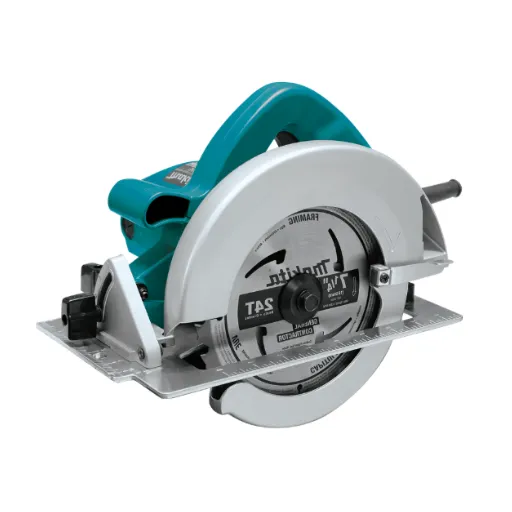
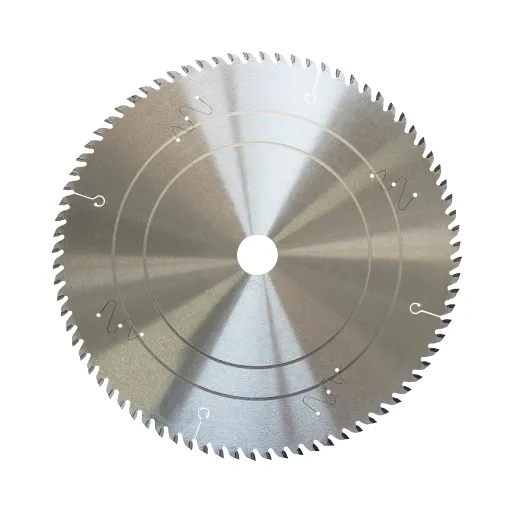
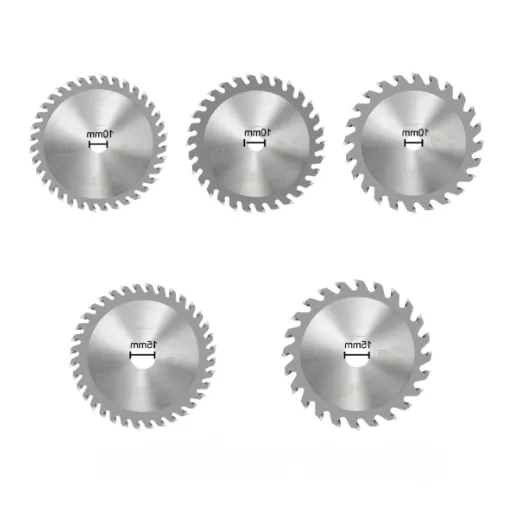
The arbor, also called the bore, is the hole in the center of the blade that mounts on the saw spindle. Arbor size must match the spindle exactly, because the bore centers the blade and carries the drive torque.
Circular saw blade sizes and saw blade arbor size are related but not locked together. Two blades of the same diameter can carry different bores, which is why you check both numbers rather than one.
| Blade diameter | Common US arbor | Common metric bore | Notes |
|---|---|---|---|
| 3″ | 1/4″ (6.35 mm) | 10 mm | Mini and trim saws |
| 3-3/8″ to 4″ | 3/8″ (9.53 mm) or 1/2″ | 10 / 16 mm | Verify per model |
| 4-1/2″ | 7/8″ (22.23 mm) | 22.23 mm | Angle grinder standard |
| 5″ to 5-1/2″ | 5/8″ (15.87 mm) or 3/8″ | 16 / 20 mm | Compact cordless |
| 6″ to 6-1/2″ | 5/8″ (15.87 mm) | 16 / 20 mm | Most common cordless |
| 7″ to 7-1/4″ | 5/8″ (15.87 mm); some 13/16″ (20.6 mm) | 20 mm; some 16 mm | Dominant US handheld |
| 8″ to 8-1/4″ | 5/8″ (15.87 mm) | 20 / 25.4 mm | Framing and bench |
| 9″ | 1″ (25.4 mm) | 25 / 30 mm | Industrial handheld |
| 10″ | 5/8″ (15.87 mm) | 25.4 / 30 mm | Table and miter |
| 12″ | 1″ (25.4 mm) | 30 mm | Miter, radial, table |
| 14″ to 16″ | 1″ (25.4 mm) | 30 mm | Cut-off and industrial |
Treat the bore column as common practice rather than a standard. Manufacturers set their own values, and small-format cordless saws vary the most. Makita’s 5007F, for example, is specified as a 7-1/4 inch blade on a 5/8 inch arbor, the standard 7-1/4 blade arbor pairing.
Three cells in this table are worth flagging. The 3-3/8 to 4 inch row genuinely varies by model, so measure rather than assume. The 10 inch blade bore is 5/8 inch on most US table saws but 30 mm on European models. And the 7-1/4 inch row carries two possible US arbors, which is the subject of the next section.
5/8″, 16 mm, 20 mm, and 13/16″: Why Bore Sizes Confuse People
Four bore figures get mixed up constantly. Three of them are close enough to look interchangeable on a spec sheet, and none of them are.
| Inch | Exact mm | What it is called in trade |
|---|---|---|
| 1/4″ | 6.35 mm | Mini arbor |
| 3/8″ | 9.53 mm | Compact arbor |
| 1/2″ | 12.70 mm | Older bench saws |
| 5/8″ | 15.87 mm | US handheld standard |
| 13/16″ | 20.6 mm | Worm-drive diamond knockout |
| 7/8″ | 22.23 mm | Angle grinder standard |
| 1″ | 25.40 mm | Large saw standard |
| 16 mm | Common European compact | |
| 20 mm | Common European handheld | |
| 25.4 mm | Metric designation of 1 inch | |
| 30 mm | European panel and table saw standard | |
| 32 / 40 / 50 mm | Cold saw and industrial |
The 13/16-inch diamond knockout
A blade sold with a “5/8-inch and diamond knockout arbor” has a 5/8 inch round bore plus scored diamond-shaped knockouts. Punch them out and the bore opens to 13/16 inch, which is the mounting style used on worm-drive saws.
Here is the trap. 13/16 inch is 20.6 mm, not 20 mm. A blade knocked out to 13/16 inch sits loose on a 20 mm spindle. A 20 mm blade won’t seat on a 13/16 inch arbor without a bushing.
In a catalog these two look like the same specification. They aren’t.
Knocking out a blade is also a one-way decision. Once the center is punched, that blade no longer centers on a 5/8 inch spindle without a reduction ring.
The 15.87 mm and 16 mm overlap
The US 5/8 inch bore is 15.87 mm. The European 16 mm bore is 16 mm. That is a 0.13 mm difference, and it is enough to matter at speed.
In practice, a 16 mm bore blade on a 15.87 mm spindle will mount but won’t center perfectly. Some suppliers sell them as interchangeable. They are close, not equal, and a distributor should not describe them as the same part.
When a bushing is acceptable
A reduction ring adapts a larger bore to a smaller spindle. It’s a legitimate fix for low-volume specialty sizes, and it’s a poor substitute for planning.
The bushing adds a part that can be lost, a fit that can be wrong, and a support question at the counter. Use it to serve a customer who needs one odd size. Do not use it to avoid choosing a catalog standard.
Planning a blade range and unsure which bores to stock? Send us your target markets and we’ll map the bore set against the diameters you need.
How to Measure Circular Saw Blade Sizes and Arbor
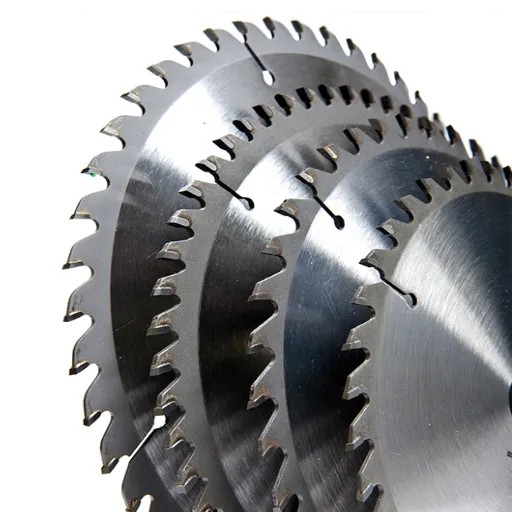
When the marking has worn off, measurement settles it in under a minute. A pair of calipers does the job better than a tape measure, and the measuring tools and calipers page covers the instrument if you need one.
- Measure the diameter across the tooth tips. Not the plate. The tips define the rated size.
- Measure the bore with calipers. Read the inside diameter of the center hole, not the outer edge of any knockout.
- Check whether a knockout is present. If the bore has a scored diamond ring, note whether it has been punched.
- Read the etched maximum RPM. It’s stamped on the blade body, usually near the center or the rim.
- Confirm against the saw’s spec plate. The guard marking is the final authority, not the old blade.
If the blade is still mounted and the manual is gone, measure the spindle instead. The spindle diameter is the bore the blade must have.
Cutting Depth by Blade Size, and Why It Varies
Depth of cut is the number people most often get wrong, because most published charts treat it as fixed. It isn’t.
| Blade diameter | Typical max depth at 90° | Typical at 45° |
|---|---|---|
| 5-1/2″ to 5-3/8″ | About 1-3/4″ to 2″ | About 1-1/4″ |
| 6-1/2″ | About 2-1/4″ to 2-1/2″ | About 1-5/8″ to 1-3/4″ |
| 7-1/4″ | About 2-3/8″ to 2-1/2″ | About 1-3/4″ |
| 8-1/4″ | About 2-13/16″ to 3″ | About 2-1/8″ |
The Makita 5007F, a 7-1/4 inch saw, is rated at 2-3/8 inches at 90 degrees and 1-3/4 inches at 45 degrees. That’s a real specification from a real saw. But DeWalt’s 6-1/2 inch models are listed at 2-1/4 inches on some versions and 2-1/2 inches on others.
The reason is mechanical. Depth depends on blade diameter, but also on base plate geometry, arbor flange offset, and bevel design. A compact saw and a rear-handle saw running the same blade won’t cut the same depth.
So use the table as a planning range, then confirm against the saw. Anyone who publishes a single fixed number per blade size is guessing. A blade arbor size chart tells you what will mount; it doesn’t tell you what the saw will cut.
For the installation side of the fit, see how to change a circular saw blade. And because a blade must be rated at or above the saw’s no-load speed, check the saw blade RPM rating before you fit anything.
Can You Use a Smaller or Larger Blade Than the Saw Is Rated For?
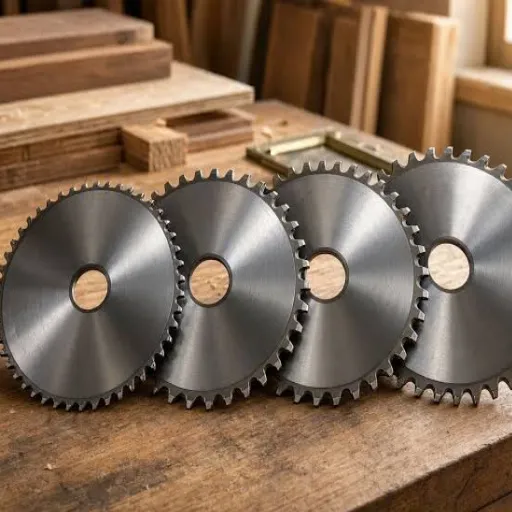
A smaller blade than the saw is rated for is generally acceptable. A larger one is not.
However, the larger-blade rule is absolute. A blade bigger than the saw’s rating protrudes past the guard, and the lower guard can’t close over it, a point DIY guides make consistently. That defeats the guard and increases kickback risk. No exception, no workaround.
By contrast, the smaller-blade case is a trade, not a free win. You lose cutting depth in proportion, and you still have to match the bore and meet the RPM rating. A 6-1/2 inch blade in a 7-1/4 inch saw works if the arbor fits, but it won’t cut 2x material in one pass.
Either way, two conditions apply in both directions. The bore must match, and the blade’s maximum RPM must meet or exceed the saw’s no-load speed.
What Circular Saw Blade Sizes Mean for a Wholesale Catalog
This is where size data turns into money. Every additional bore is a separate SKU, a separate line on the purchase order, and a separate way for a return to happen.
Standardize the bore before you expand the diameter range. A catalog built the other way around ends up with the right diameters in the wrong bores. That’s the most expensive version of a nearly correct order.
The supplier guide opens with a purchasing manager who hit exactly this in 2025: a mixed 7-1/4 inch order, half of it delivered on a 20 mm bore instead of the 5/8 inch arbor her contractors used. Every blade was correct except the one number that decides whether it mounts.
That’s what a mixed-bore catalog costs. The blades were unsellable to her largest account, and the replacement order ate the margin on the shipment.
Three rules prevent most of this:
- Treat 20 mm and 13/16 inch as different SKUs. They aren’t variants of each other.
- Pick one bore standard per market. A US 5/8 inch line won’t serve European 30 mm panel saws.
- Budget bushings as a support cost. They generate fit questions and warranty conversations.
For the full mechanics of bulk purchasing, see wholesale saw blades. For how tooth count scales across those diameters, see the circular saw blade tooth count guide. And if you are weighing thin against full kerf for the same catalog, thin kerf vs full kerf covers the body specification.
Frequently Asked Questions
What is the most common circular saw blade size?
7-1/4 inches for full-size handheld saws, with a 5/8 inch (15.87 mm) arbor. In cordless, 6-1/2 inches is the most widely sold size. Table and miter saws most often use 10 inches.
What is the arbor size of a circular saw blade?
It depends on diameter. Most 7-1/4 inch blades use 5/8 inch, and large table and miter saws use 5/8 inch or 1 inch. European blades commonly use 20 mm or 30 mm. Measure the spindle if the marking is gone.
What size blade does a 6-1/2 circular saw take?
A 6-1/2 inch blade, typically on a 5/8 inch arbor, though some compact models use 16 mm or 3/8 inch. Confirm against the guard marking before ordering.
What is an arbor on a circular saw blade?
The arbor is the center hole in the blade that mounts on the saw spindle. Also called the bore, it centers the blade and carries the drive torque. Arbor size must match the spindle exactly, which is why a blade with the right diameter and the wrong bore is unusable.
What is the difference between a 20 mm and a 5/8 arbor?
A 5/8 inch arbor is 15.87 mm, and a 20 mm arbor is 20 mm. They are different specifications and will not interchange without a bushing. Do not confuse either with 13/16 inch, which is 20.6 mm.
What is a diamond knockout arbor?
A 5/8 inch bore with scored diamond-shaped knockouts. Punch them out and the hole opens to 13/16 inch (20.6 mm) for worm-drive saws. It’s a one-way change.
What size blade does a 7-1/4 circular saw take?
A 7-1/4 inch blade on a 5/8 inch arbor, which is what most full-size corded and cordless saws are built for. Read the diameter printed on the upper guard before ordering.
What is a 5/8 arbor in mm?
15.87 mm. This is not the same as a 16 mm bore, despite the small difference.
Can I put a 7-1/4 blade on a 6-1/2 saw?
No. A blade larger than the saw’s rating protrudes past the guard and the lower guard can’t close over it. Going smaller is generally acceptable; going larger is not.
How do I measure a circular saw blade arbor without a manual?
Use calipers on the center hole and read the inside diameter. If the blade is mounted, measure the spindle instead. Note whether a diamond knockout is present and whether it has been punched.
Conclusion
Three things are worth keeping. Circular saw blade sizes run from 3 to 16 inches, and three of them, 6-1/2, 7-1/4, and 10 inch, carry most of the world’s demand. The bore is where fit actually fails, and 13/16 inch at 20.6 mm isn’t the same specification as 20 mm. And depth of cut belongs to the saw, not the blade, so treat any fixed depth chart as a range.
The fastest route from question to answer is the arbor table. Find your diameter, read across, then confirm the bore with calipers before you order or fit.
Oushike manufactures and supplies saws and saw blades for distributors, brand owners, and industrial buyers, with factory-direct pricing, OEM and private-label options, and export documentation. If you’re building or restocking a blade line, send us your specification with your diameters, bores, and annual volume. We’ll match it against our range.